He Built a $1.2B App that Lets You Insider Trade (Legally)
Brian Schardt built Autopilot, a $1.2B app that lets you automatically copy politicians' stock trades using public disclosure data. The company grew 150-400% year-over-year to $18.5M ARR by obsessing over onboarding speed and pricing strategy, including a controversial income screen that boosted conversions 70%.
Chapters
We're like, if we can't beat them, we might as well join them.
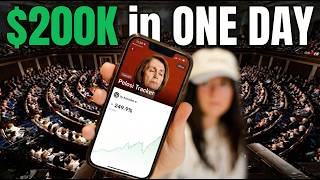
That was Brian. He made $200,000 in one day by building an app that copies Nancy Pelosi's stock trades. He took advantage of a simple legal loophole.
We just passed $18.5 million in ARR.
But that's not even the most interesting part. The difference between a $200,000 day and a $20,000 day for Brian wasn't just viral marketing. It was how they engineered their onboarding to make customers feel like they were winning before they even signed up.
If the screen is more than 100 mental calories, it's too much.
In this video, Brian walks us through his entire onboarding flow, including how to engineer magic moments, the controversial hiring practice that he swears by, and why he doesn't even care about subscription retention anymore because he tracks something even more important. But first, how did a political meme turn into something that generates over $18 million a year in revenue? Brian, first off, can you explain what this is?
The need money for insider trading started on Twitter, and we just saw 3 years ago that there are these politicians trading in the stock market. Hit right after legislation was passed, and the stocks would jump 20, 30, 40%. And my co-founder and I were like, there's so much corruption, how do we, how do we end it? And so we originally tried to talk to politicians by banning them from trading, and then we realized that that just wasn't going to happen because it was so slow. We're like, if we can't beat them, we might as well join them. Let's build an application that connects to your Robinhood, your brokerage, and it buys the stocks of the different politicians.
And for anyone who doesn't know, can you explain kind of the loophole that makes this possible?
Yeah, so in 2008, uh, there's a Stock Act passed, um, which mandated that politicians file every time they buy a stock. I think what happened before 2008, a lot of politicians, I think under the Obama administration, were like, there's so many people doing insider trading, um, but we don't know about it. One way to stop it and actually get a pass is if we expose it, maybe something will be able to happen. And so After 2008, every stock trade that a politician had to make became public. And so we analyzed that data and we're like, wow, they— now it's public, but they're still doing it, or allegedly they're still doing it. And that allows us to get that information and follow them automatically.
What has your revenue growth been like?
It's been crazy. It's been around 150% year over year. In 2023 and 2024, it's been more like 300%, 400%. Right now we just passed $18.5 million in ARR, and then we had our best month in January of like $2.8 million.
How much of that comes from the policy tracker?
Policy tracker? It used to be like 90%. Now we've diversified into a lot of different strategies and different portfolios. I think it's probably around 30 to 40% today. Before Autopilot, we didn't really focus on onboarding. About 80, 90% of my time was building the application. When we pivoted to Autopilot, we switched that entirely. We were like, we don't want people to get into the app without experiencing what we call the magic moment. And so we said we have to force the magic moment on people. And we'd rather people not use the app than not experience the magic moment.
Can you define the magic moment?
For a consumer, there's two phrases I like. If you have to catch two rabbits, you catch none. Or if like, if I have like balls of paper and I like throw them at you, and you're going to try to catch all of them, you'll probably catch none. But if you try to catch one, you probably will catch one. And so you really— the success lies in really being focused and determining what is that one thing that you want people to know or to do or to experience. And so for us, it was a trade in the Robinhood account.
Is there, first thing, a time horizon where you're like, okay, I want to deliver this value within 30 seconds of logging into my app? Like, what is that?
Yeah, that's a good question. If the person can't complete onboarding while going to the bathroom, it It's too long. So a lot of times when we'll do onboarding, this is a very weird thing, but I'll literally go on Instagram, scroll, then I'll go to the Chessflight app, time myself for about a minute and a half. I'm not actually going to the bathroom, but I time myself for a minute and a half, and then I try to get, like, distracted but also complete onboarding. When I think about, like, the product onboarding, which I think is where 80% of the focus should go if you don't have product-market fit yet, it should really be like, how do you onboard people and force them into the magic moment? The time it takes, it should be under 2 minutes to experience a magic moment. And once they experience the magic moment, that's when you've truly flipped their mindset outside of like this competing with Instagram where they're like really focused on your application. And so yeah, our goal is how do, how can we get them to the magic moment as quick as possible, but also do things that frame their mind correctly to experience a magic moment. So the thing that I was talking about that we do on onboarding. When we charge people, we're charging people $100 per year. And for a lot of people who invest, like if they're going to invest $500, $100 is a lot of money to spend if they're only going to invest $500. And so we started seeing a lot of people come in who didn't have that much money, and we started getting like negative reviews on the App Store. People were going, oh, it's way too expensive, this, that, the other. On onboarding, what we wanted to do was filter people out. But we ran an A/B test, we wanted to see what effects would actually happen. And so we actually put a screen that was a very, I would say, kind of a manipulative screen, which was, will you make more than $100,000 this year? Yes or no? And if you said no, we said, we blocked you from using the app. But we allow you to go back and change your answer if you want to and say yes. And so what we actually found out is the people who could not afford it, originally with our A/B test, a lot of them said no, then they said yes, and then they went through and paid at a 70% higher rate. We didn't really expect it, but when we reflect on it, it kind of makes sense because now Autopilot seems like a club for people who make a lot of money and they're getting access to something special. And when you feel like you're getting access to something you shouldn't have access to, you also don't complain as much. You're like, yeah, I'm not supposed to be here. And, but I want to be here. And so that's a very interesting screen. We still have it today. And a lot of people might think if you block people from using your app in a, in this way, you're going to have less conversions. It increased our conversions and increased the number of people getting through.
Can we onboard me?
Let's do it.
Brian's about to teach us how he thinks about customer onboarding by onboarding me to his own app while we're kitted out in his merch. And what was the first like principle of this?
So when, when we're like changing up onboarding or thinking about onboarding, we try to get in a very distracted frame of mind just to make sure that even if you're distracted, you can still get through it. And so there's enough dopamine hits, there's enough provocative marketing messages where you're just like, it stops you, it makes you think.
Cool. So we're going to do this in a very haphazard way. I'm kidding. Explore popular portfolios. Enter phone number. We're going to blur that part out. Oh wow. Okay. Pick a portfolio. Okay, select Pelosi Tracker. Talk me through some of these, like, decisions that you're making. This feels pretty seamless so far.
You'll see on this page right here, you only see the option for public. So one thing, not a lot of people know this, but with iOS apps, you're able to see up to 50 apps, which apps they have installed. So it's kind of interesting. So we know that you have public installed and not Robinhood. If you had Robinhood installed, we would actually just show you Robinhood right here on that public. And the goal is to not like— imagine you just see like a list of all these brokerages, then you have to read all of them. But if we're like, they don't even have any of these brokerages, why are we showing them that list? We'll just show them the ones that they have. But if you're like, wait, I actually do have something, you can actually just click show more and I'll show you all of them. Oh wow. But that, but that screen has a lot of mental calories and it might overwhelm you. So if you're in a distracted state, you might be like, ah, whatever, I'm gonna go back. So that will just allow you to select public. Wow.
And so the goal of that is to reduce the cognitive load on the Yeah. Customer? Is that how you think about mental calories?
Yeah, exactly.
Yeah.
Because we have a lot of screens that are cognitive load and we, like, this might be a more high cognitive load screen. And so if we could reduce cognitive load elsewhere, we can increase it in some other places.
If you're going through and you're auditing your onboarding, whether it's for an app or for really like a SaaS product, anything, are you asking yourself at each turn, okay, how many mental calories does this step have? And is it— is there a way to reduce it? Or is it necessary because it's giving context? Or how are you thinking through that?
So you're able to— what we've seen is like you're able to increase the mental calories of a screen if the person gets anxiety from that action, right? Because now you're outside of the— this— you're outside of the ADD Instagram, uh, like vibe. So right now when you're like— you just— you, you basically— you said you saw Invest Like a Politician You just saw like this provocative Pelosi AI World War III portfolio. You're now like not even thinking about— Instagram's not in the back of your mind anymore. That's really hard to get to. Most apps, when you go to them and download them, they're just so boring that you're still thinking about Instagram and going back to Instagram. And so already at this point, we've, I think, successfully gotten you outside of that frame of mind.
I got here pretty seamlessly to where I'm like, I'm just excited about this initial screen. And then now I'm about to have to make a big decision. Yeah, right. So like, how do you get me into this? Yes. I drained my entire bank account here. This close to making a good episode. Okay, select an account, choose minimum $500. Okay. And why is the minimum $500?
Uh, two reasons. One, because we're gonna be charging people $100. And if you put, let's say, $100 in and then we charge you $100, it's like you have to make double your money in a year to just return the cost. And so we're like, what's a good minimum that we could have where it's not super egregious? And we kind of landed at $500. Yeah, once you swipe up, it's going to make all of these stock trades immediately.
But to pause there, you're actually buying those stocks? So I'm already hooked at this point.
So we've actually like, they're buying the stocks right now. So on your phone, you're going to see all these push notifications for stocks being bought. And so we just showed you the magic moment without you paying yet. And the psychological factor is you now have these stocks in your account. When do you sell them is a question you're gonna ask.
Right.
Well, now you don't have— if you pay for it, you don't have to think about when to sell them.
What happens if I don't pay for it?
Then you have to think. Now we will not trade for you again. So if you go to free—
So now I'm just like, ugh.
You just have all these stocks.
Wow.
So you could see why people are like, really want to pay because it will now tell them when to sell and when to buy.
And if you were to reverse this, like I would have gotten to this screen, I would have been like, okay, I don't really want to pay $100 yearly and I wouldn't have seen—
Yeah, if we put it before, exactly. People would have been like, oh, I don't know if I want this. I don't know if, does it work? Does it actually trade? They haven't felt that the specialness yet. And so a lot of people, so we've done that A/B test and it was about 70% worse.
If you were going to walk any startup founder through how to like audit your onboarding and A/B test at every turn like you guys do?
What would you say? Yeah, identify what that magic moment is. Really try to figure out how do you make that as special as possible. Just like optimize that as much as possible, maximize it. Have like, have people go through it and if they don't say, wow, this is incredible, don't try to prompt them. If they don't say, wow, this is incredible, or have like an emotional response, it's not strong enough. You just got to keep doubling down on it. And that's mainly for consumer products. B2B products might be a little different. The second thing I would do is learn, is try to identify where's the resistance point mentally to get to that magic moment. I would say for us, it's connecting a financial institution. You're asking for a username and password, and then you have to look at how do you reduce the anxiety of doing that action. And that could be with like, you know, brand names. It could be with social proof where you'd be like, we have 3 million downloads, we have, you know, $1.2 billion of assets connected, then people feel safer as opposed to like not seeing those numbers. You're like, this is just a random app somewhere. And then 3, just don't shoot yourself in the foot. I think there's a lot of people who just have so much information that's just unnecessary. And if you're ever wondering about is it unnecessary, just A/B test it. The data will show you if it's unnecessary. And most, most things are unnecessary. The, the other thing that I would say is when giving options to people in an onboarding flow, you want to limit it as much as possible. So you'll notice we have hundreds of portfolios on Autopilot. When you went through onboarding, you only saw 4, and there's like a see more. And a lot of people, you know, it's been a big thing for us is like, do we want to show all of the portfolios or is that too overwhelming? And so we've done an A/B test, and once we show you all the portfolios, you're 70% more likely to not make a decision. As opposed to if you see 4, which is kind of common sense, but that data point I think a lot of startup founders won't necessarily appreciate. There is this saying, like, 3, not 2, in selling shoes. Let's say you go into a shoe store, say, hey, could I see that pair of shoes? They'll bring you that pair of shoes. Then say, oh, could I see that pair of shoes? They'll bring you that pair of shoes. So now you have 2. And then you'll ask for another pair of shoes, and they'll say, okay, which one do you want us to put back? And so then you're like, oh, so now you have to make the decision to put one back. So you put it back, and now you always have 2. And so that shoe seller, when you're faced with two options, you're gonna buy them, as opposed to if you have like 3, 4, 5, 6 pairs of shoes in front of you, you might be a little more overwhelmed. And so for us, we just look, could we, as much as possible, make every question binary, just a yes or a no? If we can't, could we make the options as minimal as possible?
By the way, Brian's a member of Hampton, the company behind this show. So if you're a founder doing over $3 million in annual revenue, you should check us out at the link in the description. Can you talk through your hiring process?
So very early on, it took a lot of time, and we were hiring in Orange County, and it was like me and my co-founders, uh, finding people. Um, and we've had like different versions of hiring with different questions that we asked, and eventually we were, we were hiring people and firing people at rates that are very high. I think we would, uh, for every 4 people we would hire, we'd fire 3 people. Um, and that was really tough. It gets expensive because we'd also pay them severance.
Within what time window would you fire them?
About 3 months. Some people like 2 weeks. It's very clear, it's like, hey, this— we should have done better in the interview process. But at around 15 employees, we actually hired a full-time recruiter, which a lot of our venture capitalists and a lot of people like, you guys are crazy, why? Like, I'm like, we're just hiring so much and firing so fast, we need to get this right. So we hired a full-time recruiter. He actually used to work at TikTok. He was a recruiter for TikTok, and they also had very, very high I think TikTok was actually 669, um, which is like they're working on weekends, working 9-hour days. And I was like, all right, he probably knows how to find people who are willing to give it their all and are really talented. And so he's really helped us refine, uh, the hiring process. And I think now with him we're at about a 50% success rate, which is still pretty bad. So for every 2 people we hire, we fire 1. But since we've moved to New York, we actually haven't fired anyone. We've hired a new New York. And so I think it's a testament to the— just the talent that is, that is here.
Is that explicit in the hiring process for you guys, is how kind of like— oh yeah, turnover there is?
Yeah. So we, after we, after we present an offer, right after, I do what's called a call to persuade them not to join. Um, and so I say, hey, it's going to be really tough. We historically fire a lot of people. 'Um, we think you're incredible, but just recognize this is like the culture that we have and what you're coming into. Um, it's going to be very difficult.' And for some people, that scares people, and some people get really excited about that. You could kind of tell the people that get excited about that are the ones who end up working. The people who are more hesitant generally don't end up working because they are hesitant for a good reason, where they're like, 'Oh, I don't know if I want to put that much effort into it,' or, 'I don't know if I will fit in there.' And Generally, they don't.
What do you tell them about the culture?
So I actually tell them two things. One, I tell them that we're actually specifically not 6-6-9, intentionally. I think working around at maximum 60 hours per week, like, like working, working, is probably the most optimal for people. But in where we differ is in that 60 hours, you're expected to be very, very productive, and your efficiency matters a lot. And the way you debug things, the way you come to decisions fast matters a lot. And I think what we also tell them is the reason why you're able to be very efficient in those 60 hours is because of all of the thinking you do outside of work. When you're going to bed, you're thinking about solving a problem. When you're in the shower, when you're watching— if you're on the marketing team and you see like a commercial, you like take a picture of it because you're like, oh, that was good copy. You're just very curious about the world. If you're listening to a podcast, you're like, oh, how is this done? And so I think even though we try to get people to work 50 to 60 hours, which I think a lot of people would say is not that much for a startup, we actually expect that there's a lot of curiosity beyond that. And that's where I think people struggle to fit into the environment. And so we actually do, in the interview process, we really try to measure for curiosity just in life in general. How? We'll ask them what's a belief that they hold that other people around them disagree with. And you could tell like how they answer that question. Usually the most curious people are going to have like 1, 2, maybe 3, and they might, they might hesitate because it could be like a political thing that they don't want to share, but it could be like just a worldview, or it could be something on like marketing or something on engineering. But usually the most curious people will have like, man, I have like this, this, this, and they'll like keep talking about that question. I'm like, okay, that person's very curious. And then also when you ask questions, generally they'll have multiple answers that are well thought out. Obsessive people obsess over whatever they're working on. So just try to look at historical examples of obsession. That could be in sports. Generally, we actually— there's a lot of people who have played like college sports here at like D1 universities. That's actually a great sign that they're gonna fit in for two reasons. One, they could be pushed really hard without taking it personally. And then two, they've already proven that they could obsess over something. That they're doing. So that's another thing we ask a lot about, about sports. If they play sports and it's not at a competitive level, I used to think that that was a signal, but it's actually not. So we really try to figure out what have they just done at a very high level more than most people. And if they've like, you know, if they play guitar very well and I'm like, oh cool, like do you have any YouTube videos? And like, oh yeah, I do. They'll like send me, I'm like, wow, they're actually really good. That's an obsessed person.
So you're looking a lot at things outside of work as well?
Yeah, rarely do I ask people what they've done at the companies they've worked for. And I think because most companies are not great places to work, um, if they've worked for a startup, that's kind of interesting. I— we kind of will ask. But if they're working for like Amazon, or if they're working for Walmart Labs, or if they're working for something, it's like those companies just have so much bureaucracy, it's hard to actually obsess over anything that you work for at those big companies.
Did you have a hesitancy at first around like this super high turnover approach? Like, you guys fire a lot of people.
I think I've always dreamed that, uh, that Autopilot would be the place where we had the best talent. And I think every company says that, um, but I do think it matters where is your bar. Um, and I think as we've grown, like, our bar has only increased. And so although it makes me very sad to get rid of people, it's actually very difficult emotionally. I think there's some people who could just get rid of people and not feel anything. It actually, like, I know it does suck for the other person, that's why we try to make it right with 3 months of severance. So if we hired someone for 2 weeks, we actually give 3 months of severance, which is very rare. We actually got this from the Netflix co-founder. He said, if you're able to give a lot of severance, it makes— the reason you do it, you do it for them, but you also do it for the culture because it makes it easier to get rid of people. If you have to get rid of people with no severance, that's very tough. Because you're like, man, this person has a whole life. But if you actually give people, you know, 3, 4 months, they could like use that to find another opportunity and not affect their life too much. And so although it's difficult and we don't like doing it, we do think it's necessary to just maintain the high standards that we have here.
We were leaving and then Brian dropped wisdom, so now he's gonna reiterate what he just said to me.
So the one thing when we first started Autopilot is we only had the ability to subscribe them one of our, like, one portfolio or one Autopilot subscription, which was $100 a year. And that was actually going great. We had around 70% retention for subscription retention after 12 months. We were meeting with our venture capitalist. His name is Jeff Forre. He founded StubHub. He kind of looked at me very sternly. He's like, so you're telling me users can only decay? You can only lose customers? You can't make more from the customers that you already have? And I was like, yes. He's like, at StubHub, 80% of our revenue came from 20% of the customers, the super users. If users can't pay up to 6x their initial subscription or more, you're not maximizing your, your super user base. And so after I heard that, I was like, man, that's so right. We need to have more subscriptions and the ability to pay up to $600 in our application or more. We implemented that, and now today our 12-month revenue retention is 110%. Which is way better than it would be if we didn't do that. It would have been around 60 to 70%. And that's one way that we've been able to scale that, increase LTV of our customer base. So we have different, different subscriptions. You can pay $100 here, $200 there, $300 there. So I think right now you could actually pay up to like $5,000 per year if you buy all of the subscriptions. But it's a marketplace, so you could just, um, depending depending on what portfolios, you could buy baskets of portfolios to get. If you're going to add up all the different things you could pay for, they should equal at least 6x your initial subscription. There's two ways you could think about it. One, you could have like a really high one where it's just like, this is going to cost you $600. Or you could think about it in terms of units, where each additional unit is an additional $100, and then the super users are just going to buy 6 of the units. Yeah, some products might be different, and you just got to think creatively about how you want to like get to that number.
And last thing I forgot to mention, we are making this video for you. Let us know what else you want to see here. What are some problems that you're having in your business that you think that we should cover here? Um, and if you are a founder, check us out at joinhampton.com.