#38: the creator of DOS
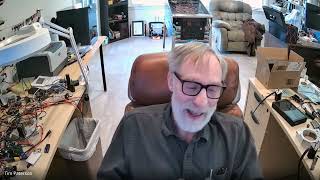
Robert Scoble and Jim Harding interview Tim Patterson, who created the original DOS at Seattle Computer Products. Patterson explains how he built DOS in assembly language for the 8086, why he chose FAT for the file system, and how Microsoft licensed it from him before IBM made it famous.
Hey, it's an honor meeting you, Tim. I'm Robert Scovold. So it's a Jim's Kitchen.
Yeah. This is on the ranch.
Yeah.
Buffalo behind us. And Seattle Computer product computers in front of us.
Yeah, we have one of the original Seattle Computer Works machines that you built over there. You know, you don't give a lot of interviews, so it's real honor to be able to talk with. With you about the early days of competing. And it's. I like to go back to first principles and understand where it all came from because we're heading into a new age of robots and autonomous car. Well, robots and Polydex, I call them, which you're building.
Yeah, the Paranet.
Yeah, the Paranet. Orchestrating all the machines and getting them all to talk about Ticket together. You know, can you.
You.
You built the, the original operating system that Microsoft used to build its business. Can you tell us a little bit about those days back in the late 70s?
Well, no, it was written. It was written in 1980. That's. It's kind of. That's kind of a general question telling about those days. What, what more can I. More specifically, can I.
Well, Tim, I think the cool thing would be like, so we've got that, you know, 1979 board of the 8086, and then the transition from when you went from building the board and kind of trying to get CPM to the point where you did qdos. That's the. Probably the fun part.
Yeah.
Maybe not fun for you, but.
A.
Lot of trauma in your life.
Well, okay, I can go through the, the steps of the creation of dos. So. So, Jim, you were, you came on board, what, in like, 82? So you were after 81? 81, yeah. Okay, so, Tim, remember when you did.
The interview with me, the reason you hired me is because I was doing. I had CPM on my Apple Iie with this, with the soft car. Come join us. That's how it happened.
So, so when I just after I start. So I started at Seattle computer in 78, just after I graduated from UW in computer science. And you know, when I first started, it was just. I was like, actually a contractor. I was being paid something like, I think it was $50 a day to redesign their memory. But that changed like in, in weeks or something. I was like, no, we like you. We want you here. And so the reason I'm going back this far is because at the, in like. So I, you know, when I say right after I graduated, I mean, you know, June of 78 like immediately after graduation and like on the, at the end of June I think it was in 78 or maybe it was July. Intel had this seminar on their brand new 8086 processor. And Rod the, the owner of Seattle Computer said hey, why don't you go check it out. And so I, you know, I went to the conference, spent a day there, thought it was great, you know. And he says well let's go ahead and design a CPU, you know, CPU card for this 100 bus. So, so that right there, you know, within a month of getting started at Seattle Computer, you know, all of a sudden we were going from a, just a memory builder, you know, S100 of S100 memory boards to you know, now we're going to just try to dive into the 16 bit computer, you know, make something that nobody else had yet. And so I worked on that design and Pat was a year behind me at the uw. Pat Ohelka was an engineer that I'd worked well he worked for me at the retail computer store. That's where I was. That's how I found met Rod Brock was my work at the retail computer store in which I was a technician. And I complained to him, it's like oh, your memories aren't, aren't as good.
As some other ones.
And so that's why I ended up getting hired to fix them. Well, Pat O Palco, we hired him there too. And then when he graduated a year later, it's like he was a great engineer. I brought him on to Seattle Computer. So he started working there in, in 79. So in the meantime, you know, I've got this design going and, and we have this first prototype that we got working. I think it was in, in May of 78. There was some crazy problems with the, with the, with the board. The, the guy who did the layout had made some mistakes. We like, like we had. He, he got mixed up on the, the, the inputs and outputs of, of one chip. And so we had these wire wrap sockets with the, with the leads, the big long leads bent around so they interchanged on, in, in pairs and stuck into four different sockets on the, on the chip. So that, so that when the, when the chip went, when the little chip went into that socket, the wires got interchanged when they went down and into the board. But we got it all working and then contacted Microsoft you know, well, two guys to contact Digital Research about, about getting an operating system. You know there's going to be a CPM86, right? And Microsoft about can we get some, you know, programming languages for it. Well, Microsoft was, Digital Research was like, oh yeah, we're going to have that by the, what, the end of 79. You know, so here it is mid 78 and they're going to have CPM by, by end of 79. I don't know if that was right when I heard that, but that was when we did contact and that was the story. So Microsoft was, was more interested because they were, they were actively working. They, they had a version of BASIC to run on the 886. And so they said, hey, can we try it out in your hardware? So in May I brought this big chrome Z2 box. It was this huge box that we, with the 886 card in it. And I worked with Bob O'Rear on getting basic up and it's, it didn't quite work. It didn't quite work and then, but it was, it showed a good signs and then finally figured out what he was doing wrong and, and boom, we had it, had it all running and they were, they were kind of excited about it and, and they invited me to go to the national computer conference in 1979 and take a spot in the booth they were in, which wasn't actually their booth, but then we were there showing, you know, the first, the first computer running Microsoft standalone 8086 basic. Well, so we're going along. We actually, so by the, so this was, that was 70 maybe. Okay, so that's 79. And that May 79 is when we got it going. June of 79 was when we were showing it. By the end of 79 we were actually shipping it and we had Microsoft standalone. BASIC is, it's basically, it's only software with it.
How are you getting BASIC running there without the operating system.
Standalone? BASIC is, I mean that's what Microsoft had started with in the very beginning. It's, it's how you, it's got a disk, you know, a disk operating system built in. And that by the way, is fat 8. So if you want to know where the FAT file system came from, it came from standalone. Standalone, just BASIC where their version of it was. You know, I, I've, when I did DOS, I did FAT 12. Well, they have, they had FAT 8 in and in for their Disk Basic. So I mean, if you know what those numbers mean. Fat 8, fat 16, fat 32, those. The number is, this is the length of the number of bits that are used to number the blocks on the disk. And so it directly affects how much you can Store. So Microsoft. So I started with fat 12 and then they went, you know, then they expanded to fat 16 and then, you know, by the time when they hit fat 32, they were able to do 2 terabytes anyway. So we were actually shipping this 16 bit CPU in very small quantities with standard, with basic. And it's that time that Digital Research is supposed to be having their operating system. The end of 79 was coming and it's like, I don't remember exactly what our interaction with them, if I was asking or it was just like, well, they're not doing anything. So in what, April of 1980, it's like, well, you know, there's no operating system yet from Digital Research. So, you know, I could whip up something, you know, myself. So that's what I set out to do. And so April, May, June, July. So it was, I always pegged it as four months working about half time to get that very first version running. And you know, so it's like 86 DOS 0.11, I think it was what, it was what we called it shipped in like August of 1980. And that's what that was what got us so that we finally had an operating system. Of course, we didn't have any applications that ran that yet. Okay, I'm going to take a breath and say, you know, yeah, how is this, how's this story going for you so far? You want to hear?
It's awesome because, you know.
You'Re telling.
Us how the beginnings of the personal computing age really came about. You know, there was a whole bunch of people like you who were building personal computers. You know, Apple had the Apple ii and there was what, there was a whole industry of people who were trying to build their own personal. And then IBM comes into the market, right? And IBM came. I heard the story that IBM came to Bill Gates and said, hey, we need an operating system for this new personal computer that IBM's trying to build because they saw what was happening at your retail store and other places. People were buying Apple iis and a new market was evolving. I mean, I built Apple II motherboards when I was 13 because they ran out of factory space. They couldn't make enough of them. They were selling so many, right? And IBM in their, what in about 1980, came to Bill Gates and said, hey, we're building this personal computer. We need an operating system. And Bill sent them down to Gary Kildall at DRI Research because he had cpm. Now I heard the story.
That's pretty much right, except you want to Say that they came to Microsoft saying we're building this computer. And Microsoft's it's not that we want an operating system from you, it's that we need software. And Microsoft's like yes, we have all these programming languages we'll put on it. But for the operating system, yes, for the operating systems go to Digital Research. They're the guys.
Yeah. And back then cpm. How much did CPM cost to buy back then? Because I know my dad bought us a memory card, a CPM card that costs like $2,000, the soft card and then CPM itself costs like $3,000. I heard in front of my.
No, no, it would have been, I don't remember what it was, but it would have, wouldn't. It would have been, you know, I don't remember if it was. Well, I don't remember. But it wouldn't have been more than like one or two hundred dollars at most.
Okay. Because I heard it was real expensive back back in the late 70s.
But.
Anyways IBM went down to Gary Kildall and Gary couldn't make a deal happen with them because they wanted to pay $25 for their operating system.
Right.
And then the IBM went back to Bill and Bill found you and well so at least that's what I've heard. I wanted to hear from your point of view because you built it and you sold it.
So I don't know exactly what happened with, with IBM visiting Digital Research. You know, so through a few, a few, you know, a third or fourth hand story it was, you know, Kilgo was not there at the first meeting and, and they, IBM complained to Microsoft guys that we cannot work with those guys. Well, first of all, as I understand the first meeting accomplished nothing because they were just buddy heads on non disclosure agreements. It's like they couldn't even get past that. IBM goes into Microsoft and says here we're doing this project, we can't tell anybody, here's the non disclosure agreements. And they just go sure, sign, sign, sign, we're on board, no sweat. And I've been Digital Research going no, no, well you know, as I understand so. And then they just, they just can't make, you know, it's just like they just complain we cannot work with these guys. That's, that's what I remember hearing from like you know, Gatestane or, or somebody down the line and you know, obviously they know all about us. We've, you know, I mean I've been up there working with, with their guys and you know, and after that you know, after, after the, you know, after writing dos, it was going, it was on the phone, hey, you know, I've got this operating system. Can you adapt your languages, you know, it's just, you know, to that. And you know, the response to that had been oh yeah, you know, we'll, we'll do any kind of custom work for a price, right? You know, it wasn't, wasn't like, you know, oh, that's gonna be an operating system we want to support. It was just like, you know, you pay us, we'll do it. And so now it's like, oh well, you know, we, we know they've got, you know, Microsoft people. We know we've, they've got this thing. So let's, you know, I guess we can, we can go pitch that to IBM. And so we heard at Seattle Computer, we heard, oh for Microsoft they have a, they have a customer that wants, it's going to want dos and you know, worked out, work out at some kind of deal and, and you know, so you know, IBM apparently was, was just glad to get, you know, get digital research done and, and move on. Whether or not it's, I don't know that IBM knew anything about us before Microsoft pitched us, but after they pitched us we did at one point, as I understand. So, you know, I didn't know what to make of the time, but the, the owner got a call from IBM about, about the operating system and it's, and he was what? I got an interesting call, you know, and then we, you know, and then we never heard it from him again. We didn't know what it meant, you know, and at the same time we're dealing with this mystery customer that, that Microsoft has and it's like, you know, could it be? Well, we don't know. So you know, and so the deal was Seattle Computer got. What was it? Oh, I've said, I've, I've told it so many times but now I've forgotten the specifics. It was something like a ten thousand dollar just fee to just sell the operating system for Microsoft and then $15,000 for flat fee customers. So flat fee deals were, were, were not, were still being done at the time. And you know, so, and that's, you know, that was, so that's kind of arrangement that they were getting. So it was like, I guess it was like a total of 25 grand that they were paying Seattle Computer to be able to distribute it unlimited quantity on the IBM PC.
So Tim. But there was a split on the BIOS stuff.
So What.
Who made that decision on splitting out the BIOS so you could continue owning a license there?
Those sound like two different subjects.
Well, the dos, the OS and the bios. Right, because you, you.
Well, I mean, you always have, you know, a hardware layer, you know, you know, HAL in, in Windows NT or whatever it is. You know, bios, you have something that, that interfaces to hardware. And DOS was no different. So, so there is an interface layer. The, you know, the deal we're talking about now that, that was done originally. So, you know, so it includes the cash payment, includes this list of stuff that IBM wants. You know, there's like 13, 13 checklist items that we had to add. And you know, so it's, it's done for this flat, flat fee. And then in July, I think, you know, so this is 1981 now, you know, so Microsoft is just before. So this turns out to be one month before the PC is announced. So. Oh, and by the way. Okay, yeah, and an important. So and somewhere in there. Let me think about this. So I had, I had worked. Let's see, get it all straight in, right, in 81, like so. So I wrote DOS in 1980. You know, we did this deal with, with Microsoft for IBM, right. Right at the end of 1980. And I'm working on it through 81, and then there's some little butt heading between me and Rod and, and I, you know, call up Microsoft and say, oh, you know, you got something for me up there instead. And so I end up in. What was that? June? I guess of, I guess maybe it was May of, of 1981. Switching from going, working for Seattle computer to working for Microsoft. So my first day there at Microsoft, I get to see, oh, you know, the customer is IBM and, you know, brought to the back room. And I become, you know, it turns out the Bob O'Rear, the guy that I'd work with on Basic, he was the guy working on that abstraction layer, the, the interface between DOS and the IBM hardware. So they'd take the disk, we said, which had interfaces to Seattle computer hardware, and they'd throw that out and, you know, put in their, their layer. So then I started working with him on, on getting that all ironed out. And so I'm, I'm at Microsoft. Then when in like in July, Microsoft has, has a meeting with Seattle Computer about taking, you know, just buying, just buying dos, you know, instead of, instead of this, whatever it was, 15 grand per customer, let's. We want to own it, you know, we'll pay you for it. You get to keep using it, you know, so you get money, you get, you get to use it forever for no, for no royalty. And you know, but Seattle Computer's not a software company. They're not going to, you know, they have no means, really means to market it. So, so that deal, it's. And so before as that deal was being finalized, I got called in as a, as a Microsoft employee that still helped out Seattle Computer. I got called into the meeting just, you know, it's like, hey, you know, Rod wants to hear what you think about this kind of thing. And I was like, oh, sounds good to me. You know, so it's sort of, sort of. I got to bless the Seattle Computer Microsoft deal that transferred the ownership Austin to Microsoft. So that happened, that happened in July, just, just, you know, weeks or month before IBM announced. So at the time, Seattle Computer did not know who the customer was. I knew and I didn't know that. I had no idea that IBM would be, you know, IBM's presence in the market would be this huge, you know, explosion of, you know, of interest. It's like, you know, the computer was not that impressive. It was like half as fast as Seattle Computers or, or so.
So that's the problem.
Right.
It's 888, but they had the socket for the 887 there, right, Tim, from the first war.
I didn't hear. What'd you say first?
Well, it was in, it was in theory because it was an 8088. Eight bit bus versus the six.
Right. That, and plus it had a bizarre 4.77 clock speed. Yeah, well, we were running eight. Yeah. And so that's. The clock speed was, was nearly half. Plus it was only doing eight bits of times in a 16. And so we, we had more than double the speed on it.
And anyway, which is a pattern. You know, the best thing doesn't always win. I sold Beta VCRs and VHS VCRs and the THETA was higher resolution.
Right.
And most of the engineers in Silicon Valley would buy it from the VHS because there was more context. It's hard to figure out what's going to be the path to market success in these areas where you're a real pioneer in building a new product.
Well, Tim, so I came in right after I graduated in May and we were kind of looking at this thing.
And going, well, ours is.
We got it right. So, so we thought, we thought like, hey, well that's great, IBM, go knock yourself out. But ours is faster. You've got 87 in there, you're getting those early chips from 87. You hooked all that up. And then what we were doing is just kind of running speed tests in all those languages. Remember we had that rack of all the languages, Tim, like PASCAL and FORTRAN and COBOL and stuff. We're testing and doing benchmarks. But then 1, 2, 3 comes out.
Well, okay, everybody starts, you know, so I'll mention while I was at, while I was at Microsoft, I mentioned I was still doing things with Seattle Computer. So I designed their first multi, you know, their first IBM plugin card. And that's what, that's what really sent their profits soaring is there was one of the guy, one of the guys at Microsoft said, you know, there was only five slots and there were so many things missing that gee, you really ought to put two, at least two things in one more. It should have memory and a serial port. So. Well, that's a good idea. And so Seattle Computer had the first multi function card where you got, well, you got serial port and memory on the same card, you know, so, you know, so that would have been what, you know, just after they announced, we, we got going into that space. That guy who said that was Bob Wallace, who, who I worked with at the retail computer store and then became like the fifth Microsoft employee.
What was the challenge of building an operating system back then for you? What was the hardest thing that you had to figure out how to do?
I spent a while just figure, just studying ways to track disk space. What, what's. How, how files are, are where the, where the space. You know, let's see, in, in college we had a class that talked about, oh, here's the way UNIX cracks, you know, where it puts the, the, the data for a file. And you know, and, and we did Seattle Computer. We'd used ucsd, Pascal, right? That was one of one of the few things that was, it was out there at the time. It was supposed to be portable and it was, it was. Had this horrible crimp where it allocated its space sequentially so if a file wanted to grow, it had to copy it somewhere else. And you know, so I was looking, you know, I knew how CPM did it with, you know, this. It had these 1k blocks and it.
Had a list of 16.
You know, we're getting down into the innards of how this happens. And, and I just liked, I liked what I saw in the Microsoft standalone Basic, Fat 8, except that it was just so. It was absolutely committed to, you know, a disk no bigger than the, you know, than a floppy disk. And you Know, so I just expanded it by 50% and it's like, wow, with this you could do a disk as big as 64 megabytes, which I'm sure is the biggest anybody would ever need.
And now we're in a petabyte world. Oh, man. What would you like to correct from people's stories or understanding of that early age of computing? I have my kids sitting here with me. They have no idea what you guys were doing back then. They didn't exist. They learned how to read on YouTube. Right. It's a different world now. Anything that you'd like to correct? For instance, I heard that Gary was really mad at you because he said you copied him or something like that. Could you take that on or correct.
Yeah, I mean that, that's, that's absolutely true. In when would this have been the kind of the, the mid to later 80s, he actually like looked me up and called me to, at me about having, he called it ripped off the words he used. You ripped off cpm. And you know, and there's this whole camp that, that believes that, that thinks that, you know, it's, that some somehow this is completely illegitimate. You know, what I did in designing dos I so intel, you know, so they've got, you know, the world had started out, you know, with the Altair. That was their 8 bit processor in the Altair, you know, so now we're using, we're using their 16 bit processor. And they had come up with a translation process that, that you could take a program written for the 8bit and their 8bit machine and there was this process that would translate it into one that would work on their 16 bit machine. It was translated at the source code. You couldn't take a program you bought and do it. This is something that, if you owned it, you had the source code for it. It would translate the source code into a 16 bit program. Okay? So I said, well, that's a nifty idea for getting things running quickly. I had a number of tools, for instance, myself that I'd written for the 8 bit version. I'm going, well, if I translate those, if I use this translation process, then the way it asks CPM how to do something, the way it says store this on disk or whatever it is, there's a certain sequence events that get Translated through the 16 bit world. So I'm going to make at least one interface to dos, except that translated interface. And so in that sense, you know, I was imitating the CPM interface. I was, you know, every function number in this what they call the file control block and all this stuff that was all, you know, from just lifted from their documentation. So like CPM says this is how those things work. And so it's like, well, when you translate that through the process, you know, you put the function number in the C register and CPM, well that means it goes in the CL register on the 886. You know, there was a specific set of rules and so, you know, did all the same functions with all the same, you know, associated things that went with it. Of course, underneath CPM had this clunky way of storing things on disks and FAT was much better. It was completely different. You know, so there was no similarity in the code underneath. You know, it was just this top level that said, here's how you ask for service. You know, it's like, okay, you can do it the same way. So that, that choice of mine to say, okay, I'm gonna, I'm gonna be. So I call that translation compatibility. I applied it to my own tools. I had an 8086 assembler. The translator tool itself, you know, I had had a tool that, you know, translated the 8 bit to the 16 bit. You know, I had like a handful of five tools and they, you know, just pumped them all through the translation and boom, they were all running on dos, you know, instantly. So it worked, you know, but I don't think anybody else in the whole world ever used it. And so there turned out to be no value whatsoever in having done that. You know, I had viewed it as, oh, here's a way for people to, you know, the software developers to get up and running quickly. But it's like, ah, nobody did it. And so I bought this grief about, oh, you've copied cpm. Well, you know, it's called implementing an interface and we all do it and it's all okay. You know, it's not a copyright. There's no code, you know, there's no 8 bit CPM code in 16 bit DOS. You know, it just implements, you know, so it's like, okay, we're going to publish a manual and explain the interface. This is, this is digital research. And all you guys that want to implement the, you know, the request side, you know, that's great. But if you want to implement the service side, oh no, that's illegal. You know, our interface is a one way interface. It's like, well, it doesn't really work that way. You publish it. It's like we could do it either way. So there was, you know, so what was the name. Harold Evans wrote a book about how this, you know, he has this book about the, all these great inventions and, and CPM was one of them. And this guy, Tim Patterson or that's, you know, cpm and dos. And DOS is just a ripoff of cpm. So it was really a Carol Gary Kildall program. And I sued him about, you know, for, about that. But I was ruled to be a. Because I had, was known somewhat in the industry. I was, I was a. The judge ruled that I was a limited public person and that people could say anything. They wonder about me.
Welcome. Welcome to being a public person. I have similar problems. Anybody can say anything about me.
Of course, the digital research camp, well just. Oh, that's a victory. It's been ruled that he really copied you. That was their take on that.
Interesting.
You know.
As the computing industry evolved into GUIs, Windows 3.1Windows and Windows 3.1, Windows 95, DOS was still running everything underneath, wasn't it?
Up to Windows 95 it was, yeah. I remember like I was at Bob O'Rear's retirement party in, in like the, the 90s and some guy came up to me and said, oh, but we love the way you wrote the, the time of day clock code. That was, you know, it's, it's, you know, it's still there in Windows now. It had something to do with the way IBM had this, had this weird clock system where it's like he said, well this, this thing is ticking and it's almost, you know, I don't know, overruling once a day and they thought almost was good enough. No, you've got, you've got to have it right, you know, so I had this, this calculation that like adjusted their, their, their, their ticks so that it's like, yeah, we're going to get actually right the exact right number of counts per day anyway, so there was some clever solo assembly. You know, every bit of this is assembly language, by the way. You know, DOS and all, you know, this bio stuff and everything was all assembly language and you know, so they were, you know, it's like this one guy was like, oh yeah, that's, that was the coolest code. He thought. So, yeah, it was, it was still alive and kicking through Windows 95, which I guess, I guess Windows 95 we get, you know, whatever. Windows 90. Yeah. Windows Me.
Well, Vista was based on the MT, so Windows NT was on a different kind of operating system that wasn't built on top of DOS. Right.
So that's Windows NT Windows 2000, that's a whole new.
That was Mark, that was. And let one did that one right, Tim.
Yeah.
Dave Cutler and all that team. The question is, Windows 95 never was a complete rewrite of an operating system from the scratch. And Bill Gates didn't believe in rewriting that way. He always wanted everything to be able to run on the current operating system. Did he make the right choice there? Obviously he's rich because he made the right choice. But would you have made different choices along the way after DOS if you had to do them today?
I think they handled things pretty well. So right away after I left, I did DOS 1 and 1.25, which are IBM's 1.1. Well, I was at Microsoft a year, then I went back to Scatter Computer, now that they're thriving, selling the IBM plug in cards that I designed while I was working for Microsoft. I went back to Seattle Computer and you know, so while I was at, at Microsoft, you know, I was the DOS guy. And, and then this guy, Aaron Reynolds was hired, like fresh out of school I believe, maybe with a Master's. And he, he was put under me. And, and he then, and then Mark Zakowski, who I'd worked with on the linker, he, I understand that he, and he and Aaron are the guys that took over dos and they really dove into, you know, they added the big deal, of course, adding, you know, hierarchical folders, right, instead of just having one top level directory, you know, so they went right after it. They made huge improvements, you know, you know, just changing, you know, providing this whole new interface, you know, where, you know, there was file handles instead of data in the user space, you know, just really cleaning it up, making much more units like. So, you know, they really did, they really handled it well. They, they, and you know, it made, you know, obviously there was, there was things built, you know, Windows was built on dos. And so, you know, you know, so, you know, of course it's just gonna, that's just gonna keep getting bigger and bigger. And then, you know, you got the parallel project of, you know, what they, what they called a portable Windows, which I didn't even know what they meant by that then. I thought portable Windows meant for portable machines. And then I finally figured out that it meant it could be ported from, you know, to different CPUs. It could, it was all in C so that it just, you just compile it for whatever machine, you know, whatever machine you want. I mean, I think, I think the, the evolution of all that made a lot of sense they might have, they might have made, you know, Windows 95 maybe should have been the last, you know, because nt was going by then, but you know, you know, so Windows 95 is strictly this cover over DOS. Yeah, for sure. But that's, you know, that's the way Windows had been designed through that point. So, you know, and then Windows NT finally caught up and did everything. So you know, it became time to switch. So I, I think they did a. It was a really appropriate evolution.
Yeah. Any fun stories from the early days that you like could tell us? Yeah, you know, going to computer fairs or working with people in the industry of the early days at Yahoo. Because you, you started. I don't hear a lot of these stories from you.
So. So. Well, so one, not much of a story. But they had. The linker was the micro. You know, the Microsoft linker was a really big program and it turned out that, you know, that they needed a. So an IB. IBM PCs can. Cannot. Are somehow restricted. Well, first of all, they got, it's got Robin in their memory space. So they're unable to have one megabyte, one megabyte of memory in real mode. Okay. So you know, these machines, you know, when they got the 286 and 386, they had 886 originally had a one megabyte address space and then the 286 and 386, you know, there became there. Well, there's the original one megabyte real address space and then there's the virtual address space. So the 386 could have all kinds of memory outside that. Well, the linker was only ran in real mode. And so for the linker to link itself, it needed a one megabyte machine. And Seattle computer was the only guys that made a 1 megabyte machine so that you could put 1664 K memory boards in a Seattle computer case and that was required. So that machine lived for years and years past when it really should have. It took a long time to get the linker to actually run like in 32 bit mode so that it, you know, so it didn't have any memory restrictions. So there was this Seattle computer machine sitting on the floor of some guy's office and, and like whenever the linker was going to be, you know, updated, it's like, okay, we got to link it on the Seattle computer machine. It's the only one that can do it. So that lasted, that was amazing how long that machine lasted in its lifetime. Seattle pewter in order to make that happen. So that every, every byte was available. Its boot ROM would disappear with, you know, this boot run, overlaid RAM for. For booting up. And then it would disappear and allow the whole, you know, one megabyte, end to end, available to the cpu.
That was a pretty expensive computer at the time, Kim.
What's that?
It was a pretty expensive computer at the time.
Yeah, it would have been.
It was like 900 bucks for each. Every 64k.
For 64k. Not. Not a mag, not gig, not terabytes.
Well, then. Well, then, Tim, you know what? When I started at Seattle computer, the 16K boards are 400. Yeah. And so to hear that a 64K was 900. Yeah, good deal.
But then, Tim, remember you did the. So we're selling these $900 memory cards, 64K, and then, Tim, you came out with a 256K dynamic RAM board.
Remember that? No, I don't.
It's four times the memory in and the same price.
Okay. Remember the gold?
Remember the gold chips?
Yeah, yeah. Okay. So vaguely. Yeah.
So then what you could get for $4,000, you could have a megabyte.
Yeah. The machine that Microsoft was using was an older one that had all 1664 gigabytes.
That's $16,000 of memory.
Are you shocked at, like. I'm shocked at how fast the computing world has changed in my life. I mean, I was. We throw away computers now. People who use vapes have little computers in them that are more powerful than what you had to work with back then, and they throw them in the trash. That's how much the world has changed. And now we're in this world of AI. You're talking to the computer. Does this shock you at all, or did you dream about this world even back then?
Well, obviously, I've never been one to accurately predict where the technology is going. If I thought a 64 megabyte drive would be, you know, last, I. I just. I just watch it go by. I don't think about it much. It's like, okay, there it is. Know I accept what's going on. I'm not. I don't use AI myself. I. You know, you get. You get the. You get stupid wrong answers once. It's like, yeah, I'll just turn off that and. And, you know, do things the way I've been doing it. So, you know, my. In my own work, it's like I've basically, you know, I'm building all kinds of little electronic gadgets and stuff like that. So I'm working with stuff that you know, I have 48 MHz low end arm processors, for instance. So it's, it's like, it's a, it is actually steps above what I, what I was doing. But we're talking small systems which got you know, one microcontroller chip and, and you know, that's about it. That's the whole. I, I have. This is a, this is a digital readout that I make. There are a couple of these installed at the local high school where I mentor on their, on their 50 year old Bridgeport milling machines. I make that essentially. I make that from scratch. I'm laying with this custom design circuit board that's just got an MCU chip and like nothing else. And so I love working. You know, I've got all these little projects around here where you know, there's a motor controller with, you know, every one of them's got the same, same little MCU in it. So I'm just like living in this super low end world. Everything's bare metal. I have no operating systems, any of this stuff. You know, my, my dro, we flip it on, it's fully operational like one half a second. You know, I have a dro, I, I started doing that when I bought a mill with a digital readout. You turned it on and it spins. Even that spent 20 seconds or 15 seconds like rotating a screen while it thought about starting up and it's like, no, I want it on right away. I build stuff that if, it's like, if, if there's a fault in some of my robot controls, you know, it'll, it'll reset and restart and the ro. You won't even seen the robot glitch. It's just like the robo just keep moving because it'll have restarted so instantly that it's like, yep, we're going in it relink to the radio and you know, it's, it's back online, you know, in like a tenth of a second. So no, I didn't see anything happen. So I love this, this bare metal low end, you know, as part of it, like I've written a math pack for this little processor. I've written a math pack, you know, so it's, it's at least twice as fast as what come, you know, is what. The run times that, you know, that come with the, the software that they give you, you know, so my GitHub, you know, public domain license, you know, anybody could use it. But it's, it's what I, you know, so I was writing math for the you know, I wrote all of the 886 math that they, they've ever, they ever use. So, and, and it's like, you know, that was kind of my, my thing. And so now it's like, it's just, I'm just staying in this world of this low, of the low end, you know, ascending language some of the time and you know, and just like, okay, yeah, you know, I've got a.
You're not going to go to the Apple Store and put on a Vision Pro and get, join. Join the weird holodeck world that I talk about.
Well, you know, so I just bought myself, I just bought myself what the Intel 9. I, you know, 285K, which, you know, which was the most expensive desktop CPU they have. Because, because I've been doing all this CAD and the CAD program is just like, it ground to a halt when my, what I'm building, you know, I build a, I have a battlebot design. I build, I'm building a robot to compete and it just, it just like, it went over the edge for the CAD program. It just so, you know, so, you know, I'm just. But, you know, I built the computer, you know, I buy a motherboard, I buy a CPU chip, you know, I put them in the case together. But, you know, that stuff all takes care of itself.
I think we're heading into a new age where people are going to have a choice of, you know, just disappearing in front of a slot machine and being addicted to the entertainment or whatever that, you know, is presented, or join the builders, join the creators, join people who, you know, come up with new things and build new things. And it's an exciting time to be a builder. I mean, we have 3D printing now. That's just amazing. And I see your workshop is full of little things that you can build. Right? How do you, how do you inspire somebody to, to try to build things, right?
Well, I don't know. I mean, I don't. So, so I'm, I guess my contribution these days is, you know, I, I do stuff that I, everything I do on that I think is useful is it's on GitHub, public domain, it's unlicensed. So, you know, I don't want to get in for anybody who needs it to be able to use it, you know, so I've got a number of different little things on there. But, you know, so I'm. But my main thing now is like, I'm just volunteering at the local high school for, you know, First Robotics, you Know, which we're about on actually this Saturday, we're kicking off the next season. We're going to build, you know, we're going to build our robot. It's going to go compete with other schools and you know, so it's showing those kids how it goes. And you know, as it turns out, even though my expertise, 20 year career or more in software and computer engineering, the role I end up playing at the school is the mechanical machining advisor, how to run the mills and all this stuff and the software guys, it's like, no, we're okay, we don't need your help, you know. Well, okay. But you know, I, I'm just trying to, you know, so I've been doing that for five years now and I'm, you know, so I just try to keep the kids excited about what we're doing and you know, I do the training, you know, how to use the machines and so that's, that's, you know, so it's at a really low, small scale. You know, just what this work at one high school. But you know, when the season gets going, I'll be there three days after school. We can at least one day on a weekend, you know, so I end up putting a lot of hours in and you know, drive the kids to the events and stuff like that. So that's my thing now. Other than what, you know, these bits, bits and pieces that show up on, on GitHub for, you know, my math, the math for this processor and all, you know, these things.
Well, it's been a pleasure talking to you. I could talk to you all day long. You know, I'm not technically enough to get in the weeds with you, which bugs me. I wish I, I wish I had more skill of being able to talk about a suburb with you or dig into some of the, the things you were building either back then or even today. Right. What, what would you say to the nerds out there who, who are building this world today? You know, maybe somebody who's, you know, trying to build a robot company or an AI company or.
I don't think I have any special wisdom, you know, I've, let's see. So, you know, my mantra is I've learned from my mistakes and I've learned a lot. So, so yesterday and the day before I was out, I was out in my, you know, I'm building this robot, I'm cutting my own gears, I'm out in the shop, I start cutting us bigger new gear and it's just all these teeth are great. For a while and then it start cutting them at the end. It starts cutting them on top of other other gears. So it's like, you know, the blank is. The blank which was not, is not easy to make is all ruined. And, and the big problem is I could not figure out what, what had gone wrong. So it's like, okay, all I can do is start another one and watch it. So that's what I'm doing. I'm watching this. It's like. And I finally see the. So I have a computer controlled mill. CNC mill. It's, it's turning the sky and cutting the gears. I finally noticed that the, the spindle case is bumping up. The gear is so big. The spindle case is up against the gear. And so what it's like pushing on it and it's all making it out of whack and it's turning a little extra. So it's like, okay, well there I've lost another gear blank. But I've learned at least I finally learned from my mistake. And so now I'm going back like, oh yeah, the, the gear cutter is, is a certain height that. Except that when you, you have a different actual blade for different sizes. So this is the biggest, this is like the biggest blade, the blade for the biggest, you know, 4 inch diameter gear. And, and it's, it's like, well, that may explain why the, the machine had, you know, the length of this, of this cutter is normally one, you know, 1.35 inches or something, but it was a little, it was about a quarter inch longer. It's like, oh, that's because there was a quarter inch spacer there to make it long enough so it didn't hit the spindle case anymore. I get it. Too bad I didn't remember that from a year ago last time I cut the gears. So just. I just feel like I'm a mistake making machine. And it's like, but I'll, you know. So the intent was to make eight sets of gears. So I've done three sets, I think three or four sets. So far I've gotten five out of each one. Three, three either depending on how many. Sometimes I started with seven blanks, some with eight, some with even nine. But I've only been able to get five good gears out of each set so far. So anyway, you know, I'm just, I'm just learning and I am. So it is my, one of my things that is. I just keep expanding what I'm learning, you know. So I, I, in 2017, I had, I had had combat robots before but I'd never, I'd never used a milling machine. I'd never, you know, gone, you know, and since then I've gone, I've learned manual milling and then I computer controlled milling and now I've got a lathe and arbor press and you know, I've, I've just, you know, now I'm cutting gears and you know, just, I'm just building just to keep expanding the range of stuff that I'm doing. I really enjoy it and it's going all different directions. I mean it's in software as well and you know, so yeah, so I'm just, I'm just, you know, I have a subject that I enjoy that allows me to just keep learning and I don't think, like I said, I don't think that what, like the knowledge. Well, what, what does happen is it's like I figure something out. It's like, oh, I'm gonna write a magazine article about that. So my dro there's a bit of magazine article about it. So it, by the way, see looks love that. Yeah.
I used to work at Visual Basic Programmers Journal. I think you were working in the Visual Studio team at that time or back in the 90s. Yeah. So I'd edit your article if you send it in. Anyways, it's been a real pleasure talking to you. It's, it's rare to be able to hear how a company like Microsoft started from an engineer's point of view. A person who's actually building the technology, not the CEO who's on TV or something like that. Any last things that you want to talk about that at early age?
Well, I guess one general thing is I see these things happen that alter courses and in my case, for instance, what got my. In college I met a guy that I, you know, we just really got along with and so we, so immediately the next year became, you know, cited ourselves up to roommates and he had, he earned a lot of money in summertime. So he was the one that bought the Yunxai computer that we used. You know, it was his money that made that happen. And so, and then that made me, you know, having built one of those, you know, he bought it, but I built it. And you know, then the ad appears in the retail computer in the Universal Washington Daily about a job at the retail computer store. So that's what gets me into retail computer stores. You know, I built one of these things. I know how to do it. Okay, so you're hired as A technician. And that gets me then talking to Rod Brock about how his memory boards aren't quite right. And that ends me with a job at Seattle Computer. And so, you know, having met this guy who's, you know, 50 years later, he's still my friend, we still, I still hang out with him at least once a year ago. And you know, it's like, but you know, him being there and being, you know, so easy going, it's like, yeah, we can buy that. That, that was just, it just changed the course of my life. You know, had that not happened, you know, I wouldn't have been anywhere near those, those small computers. And you know, so that one, you know, that's. I had that impact at a Microsoft, you know, I ended up going that route and then writing an operating system. I could have not done that if I had not been there writing operating system. You know, things would have come out a lot, you know, a little, a lot different. You know, they may have gotten there eventually, but, you know, they weren't operating systems at all and didn't want to be at that time. So that was, you know, was this event, you know, that changed their, their life, you know, their company forever. And I also mentioned my next door neighbor when he retired about the same time I did in the late 90s or. And, and his wife says, oh, Steve doesn't know what to do with himself. You know, will you help have him work on the robot with you? And so, yeah, come on, Steve, help. Help me out with this robot. Well then he actually spent the rest of his life. He passed away some years back, but yeah, he actually spent the rest of his life totally absorbed in robots putting on events and it's like, oh, wow, I had that impact on him again. So, so there are these things that like, you know, Cause you know, you. That happened, that caused, you know, this total vector off into a new direction that never would have happened. And not just one little thing happened that way.
I totally get that. Vicky Notra called me when I was working at ndc and he told me the phone call would totally change my life. And he invited me to work at Microsoft and I did.
Right.
So some of these moments happen in your life, you know, where you're just in the right time, right place at the right time, working on the right thing, doing something interesting and somebody notices you and changes your life or things evolve and companies are forced certainly certainly changed mine.
It's, you know, I was kind of hacking around on the CPM thing with Apple II and then Tim hired Me, like, that changed. That changed everything because I've learned like first principles on how operating systems were designed, how to do things fast and.
Decisions you used to make.
So, yeah, I always go, I always think about that. That's why, you know, I have this thing, I go back to it and think like, this is the roots of all.
But, you know, it's so one little detail, though. I didn't hire you. Yeah, you did. You got hired when I wasn't there. I know.
You came in to interview me.
Okay, I did. Okay. Did I. That was one of my little help micro help set up computer out things while I worked at Microsoft.
Because what happened was they weren't, they weren't wondering if this guy's going to be able to handle it. And you came in, I had my Apple 2D and, and his Z card. I was doing CPM. He goes, show me what you're doing.
I said, look.
He goes, oh, yeah, you're right.
You said, yeah.
Craziness and how, you know, an industry is born.
Yeah.
And now we're in a new world of robots and you're still working on it. It's awesome. Anyways, what else should we talk about? Well, did we cover enough? I'm trying to get people, you know, a little insight about how Microsoft Corporation started, how DOS started. I think that was the goal.
I think we covered it.
Yeah.
Yeah.
And so I appreciate it. Where can we. Where's your GitHub? What you publish under Tim Patterson.
Yeah, yeah, I'm hard to find. GitHub.com Tim Patterson 1t1t. Yeah. Great, love.
Thank you so much.
Thanks, Tim.
Okay.
Thank you.
All right.
And I like, I'm without it. So this is Tim's brother's computer. And so Tim's brother passed on, as Tim said, hey, look, you know, I know you lost your computer.
How about I give you my brother?
So that's how we got this one. So I'm so happy to have this. This is the, the original. So, yeah, we buy the OEM type.
Thing and this is very special.
We didn't even paint it.
We just bought these things. And then later I said, we stenciled on this thing and got rid of that.
Who are you?
Me?
Jim Harding. I used to work for Tim Patterson.
Tim Patterson at Seattle Computer Products.
The Tim Patterson started DAs and Bill Gates bought it from him and started Microsoft. So this is like before Microsoft.
No, Microsoft had already existed.
Okay.
And what was happening?
But he was selling BASIC product.
He was selling basic. And so if you remember.
I think.
It was Comdex 1979. Bill Gates came out with basic for Apple II.
Yeah.
And that was kind of their major launch. And so then the Apple II was like the bee's knees. And they had asked Tim to go build the soft card. So that was a Z80 chip that would fit in the Apple II so you could run CPM and other kind of things.
Which was the big OS of the time.
It was the big os.
My dad bought a card for our apple to run CPM. The Cardinals loan cost $2,000.
Yeah. Oh, yeah.
And CPM costs 2,000.
Yeah.
I was in college. I had an apple IIe, and I only bought it because I didn't want to work on vaccines and CDCs.
Yeah.
And I remember my professor.
I was.
Taking my final exam on an algorithms class or something like that, and his name was Ed Lazowska. He was a young guy, like 26, 27 years old. He went on to become chairman of your science department. But anyway, I said, hey, look, Ed, I'm not taking the final. I said, well, you're going to fail. I said, well, you can be in your office in other hours.
Yeah.
So I walk out, he says, you're failed. I said, nah, not really. So I came back and I plopped my Apple IIE down.
Yeah.
I had my soft card in there running Z80 and CPA. So up comes Apple to, you know, operating system, Apple dos. And then CPM comes up, TP slash M and a little blinker. And basically I've got a PASCAL interpreter, so it's the UCSD interpreter for Pascal. So now I'm running that. So now I can do all my homework, all my courses. And I was. I was a research assistant as well. And we're all doing Pascal at the time.
That was the hot language.
That was the language at the time.
Right.
So I go back to Ed, I plot my Apple, down he goes, what's this? It's a person computer.
What's a person?
Well, it's this Apple II thing here. So then I did my exam while he was in his office, finished it. He said, well, yeah, you get an A. Obviously, this is cool. Well, then, because of the. That CPM thing, I met Tim and said, what are you doing with the cpm?
Awesome.
I'm doing, like, all my assignments and stuff. He says, well, why don't you come work for us? So then I joined them. And then he's building this thing. He's got the car built, you know, and then he does this thing with.
Was this a retail Operation that people.
Go into the store.
I was. If we have time with you guys.
I should show you the. The office is still down there. It's. It's a 1116 industry drive in Tugwell.
Well, I grew up and lived there.
Within a mile of that place and so they located there. So I was happy and so I joined there. I'd walk or ride my bike down to the office in the early days and Tim was just building stuff and then he went to go work for Microsoft for a while and I lost my boss then comes back. But he was making sure that Microsoft, you know, had the right DOS and all the versions and the old fat table and all that stuff that he did. Only Tim could actually write it. Tim was like a speed freak. So everything is as fast and tight as possible. Like he wouldn't use high level languages. He wouldn't even use the macro somewhere. He'd only use asm.
That's similar.
Yeah.
So he would just. He didn't like macros.
He's just like now the AI can.
Write that for you.
Of course you can.
Yeah.
So he was just a speaker program.
An Apple 2 and emulated Apple 2.
I saw the other day. And a large language model.
Right, I know.
Well, the thing is like what.
So what he had. The reason there was a speed free.
Back then is because, you know we had a. We have this 8086, right?
Yeah.
And it's got, it's got 29,000 transfer resistors on it.
That's it. Right.
That's not a whole lot, but back then it was fantastic.
Right.
So he's, he's got to maximize how this thing uses the S100 bus and, and memory and so forth. So in order to make this thing scream, Timmy just had to write really tight code. And so yeah, if he's known for anything, of all the people who know him, he's like the speed freak.
Right.
Just it's.
There's no extra code. He puts no ops in there to get timing perfect. And he made this thing buzz, man. This is as far as we're concerned, this is a mainframe.
Right.
We loved it. And then so what was happening is Microsoft was building all these languages and Paul was really the guy making them all work on these PDPs in a special room. And they do trans cross assemblers and translators from PDP to 8080. But when the 8086 came out, well, we didn't have an operating system so they made translators to the 8086. And then Tim came out with his operating system. Then we got.
We would port.
Have that language run on our machine. So when they saw BASIC running on, they. This, you know, that was the. That was the new game. So that was the thing. So Paul and Bill were all about getting languages going. Bill, love basic. We showed BASIC running on this thing and that. That was the.
That.
That was the beginning of it.
All right.
We weren't great at marketing. You know, you'll see stuff in Bike magazine. You'll see an ad for seattle computer products. 86. 86 DOS, I think we used to call it at one point in time, and you would see these ads, and then some of the people call us up. You know, the phone would ring. Hey, Jim, you pick it up.
Okay, I'll pick it up.
What do you need? Okay. Well, this is super fast.
Wow.
886.
Yeah.
And so the Motorola was out there, and, you know, Apple had come out with this. This the Lisa, and they had a 68, 000. And intel had its own, like, 83. Yeah, well, no, no, no, no, no, no. 80, 81.
81. Yeah, yeah, yeah.
And so Tim chose to go. Yeah, so this. Tim chose to go with the intel system because it was 80, 80, 80 compatible. So he wanted to keep the family going.
Right.
404, 800, 8080, 80 and so on. So when he came out with this, he needed an operating system. And I'll let him tell you all the stories of Gary, because, you know, we said, hey, you know, when you see people. Oh, yeah, no problem. Was it ready?
Yeah, no problem.
Well, it wasn't. So that's where qdos came from.
Quick and dirty dos.
Okay, I'll write my own. You know, so team just cranks it out and. So what is this? So in order to get going.
He.
Had to go buy an S100 bus. Like, we were a small company. We're not gonna go build our own computer. I mean, back in the day, revenue.
Squad and build our own computer.
So you just buy one of these things from a hobbyist, you know, catalog, and you get this slate, clean slate. And then you build your own boards.
Yeah.
And so what's the secret?
You did some soldering?
They had a. Yeah, yeah, yeah. So we had a.
There's like.
There's four.
We made the apple tea motherboard in our mom's kitchen, and she taught me how to solder.
Yeah.
So we had a table, and we.
Would put them in our dishwasher to wash them off.
Yeah.
We had a table about 12ft long with four to six people working on it and they're, they're soldering them. They're pushing chips in and they're soldering. And that's, that was the assembly line.
Live, man.
You haven't built one of these things.
What is going on with this?
Because it's his was his brothers. This one's the one that was, I think is the one that was used.
To do the first demo.
Because this, if you look at the car, the wire wrapped there, that was really, really early. You know, this, this, you know, if you make a mistake, you know, and you don't have a lot of budget, you just kind of do a soldering job, like.
Yeah, yeah, right.
And so this had something to do with, with timing in cycles on the bus that we had to fix. So this is one, this board is probably used for Bill and Gates to Bill and Paul to see in the first demo of qdos. I'll let Tim tell you about that, but yeah.
All right.
So when this came together, it's the.
Beginning of it all. Yeah.
So then they did their deal.
This is the beginning of Microsoft Corporation.
Well, it's beginning, it's the beginning of.
Their, I mean, huge success.
Right.
It's probably, well, we probably did the worst deal for our, our side and they probably did the best deal on IBM and the OEM market.
Right.
So Bill was just a brilliant marketing guy. A lot of people think it was a lawyer.
So he had a bad little legal advice like, hey, you, you can sell dos to other people if you write it in the contract. Right.
He had support. And whether Bill's, and Bill's a super smart guy like Polyglot, but I think his greatest contribution to that company was figuring out how to do the business model for this. Like, we didn't have much money.
IBM wanted to only pay 25, $25 for an operating system per machine. Right.
I don't know what the deal was.
But I heard, I heard that from the DRI research people.
Yeah.
That, that's why they couldn't make the deal happen because they were selling CPM for thousands of dollars per seat.
Right.
That.
How much did it cost to buy CPM for this machine if you didn't have Tim Paterson?
I don't know.
I don't.
I know.
Remember my dad bought a card for Apple too. It was like 2,000 bucks.
Bucks.
And it was an expensive.
Yeah, that's the thing.
$2,000 in 1978.
Yeah, that's the Z. That's the, the, the, the, that Z80 chip.
Right.
The soft Car and then you had.
To buy CPM on top of it, which was like another two.
Yeah.
So when I was in college I bought the Apple ii. Then I bought this.
The people think the Apple Vision Pro is too expensive. You got to go back to that day. This machine probably cost a cliff of what, $15,000.
Oh yeah. Well this thing in today's dollars we're.
Selling them for about back then, 2,000.
Bucks is worth, you know, 10, $15,000.
Three and $5,000 for a Sony tour in 78, $9.
Yeah.
Right. So today this would be.
Well you remember when the, when PC came out for about five years, every year was $5,000 for a fully loaded thing.
Right.
Moore's Law didn't make things cheaper, you just had more things on it. Right.
It was expensive to be a personal computer hobbyist back then.
No even like that's why my dad.
My dad was an engineer, right. He had the money to pay for this kind of stuff.
Well the funny thing was there was.
People all over the world who were like richer, upper middle class to rich people.
Well we had business people who would spend $5,000 on a fully loaded IBM PC just so they could spend 495 on bonus 1, 2, 3. That's amazing because we, we didn't really have. All we had our disposal when we were doing silly products was selling apps.
Well, what were apps?
Languages, you know Paul Allen. We get basic.
Great.
Got that Paul. Can you give us a Cobalt? Got that Paul Fortran. Got that.
You know. Yeah.
So we were, we were dependent on the Microsoft off to give us the language so we could sell these things. In the meantime they're thinking oh this thing's pretty cool, let's go license that and go sell everything. And so they were smarter than we.
Were, that kind of thing. Right.
Bill wanted to, to sell his developer tools to his languages and he knew that if this didn't happen, if this to sell his languages he'd have to sell these. That's the beginning. Microsoft corporate. Yeah.
You know, figured it out.
He sent him away twice. I heard IBM, right. When IBM came and visited. That's where you hear that story.
That's the lore. Tim will probably know even better.
I heard it from the DRI research people that they met with IBM twice.
I didn't know that. Yeah, I thought it was just once.
I heard it was twice. And they just couldn't wrap their head around the 25 price that IBM wanted to pay for CPM. And so Bill finally figured out I gotta, you know, figure this all out to build. To sell basic.
Right.
If you don't sell a machine, you can't sell the developer.
He figured it out.
Yeah, he did.
About that. He figured it out.
So. Yeah. So listen.
All right.
Now you're making Robux.
We are.
We're gonna see some rebel. We'll talk about that. So, yeah. Anyway, that's. This just kind of the opener.
So you can talk.
We'll talk to Tim about that in a couple hours or so. So you'll get the full.
That's cool.
That's cool.
Yeah.
And, you know, it's. It's right to have you talk about it, right?
Because you go way back, you know? Yeah.
When I was his age, I was building.
Yeah, yeah, yeah.
I wasn't smart enough to build the company, though.
You know?
It's like, smart enough to solder the board, though.
I want to bring some friends up so we can.
All right.
More from Robert








45: Sandy Carter Unveils the Future of AI: Myths, Agents, and Creativity | SXSW Insights


