A look back at 20 years of Adobe Photoshop with one of the founders
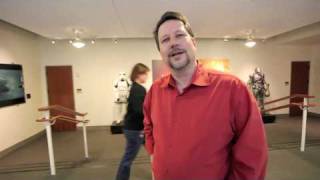
John Knoll, one of Photoshop's founders, talks about building the software in the late 1980s, the early demos that convinced Adobe to distribute it, and his visual effects work on Avatar. He still runs the original Power Macintosh with Photoshop 0.93 on it.
Questions this video answers
John Knoll — visual effects supervisor at Industrial Light & Magic.
Mid January 2010; Knoll says 'Next month is the 20th anniversary of the release of Photoshop 1.0.'
A Power Macintosh 8500 running Mac OS 9.
Version 0.93.
Knoll estimates the demo machine 'probably has 16 megs of RAM.'
So who are you? That's my first question on everybody.
Hi, my name is John Knoll and I'm a visual effects supervisor here at Industrial Light and Magic.
And you're the guy who wrote, or.
One of the guys who wrote Photoshop, developer of Photoshop. Yes, yeah.
And so you said there's a 20th anniversary coming up?
Yeah, well, as we speak, it's mid January 2010. Next month is the 20th anniversary of the release of Photoshop 1.0. Adobe's putting together a little celebration of that anniversary and I've been asked to do demonstration of early version of Photoshop. I still have, for reasons that I'm not completely clear myself, I still have fairly old Macintosh that I've been keeping in storage. It's a power Macintosh 8500 and I pulled it out because it's got OS 9 on it and so you can still run the very old binaries.
When Photoshop came out, it was OS 6.5, wasn't it?
Or 6th of. No, the 7 may have started shipping.
The 7 came out in 1991. Right.
OK, well then, yeah, it was prior to OS 7.
That's how I got my name, Scobalizer, by the way, because I loaded the beta of OS 7 on everybody's machines at San Jose State University and one of the people who worked there said, I've been Scobalized, I can't use my computer anymore. That's why I remember that year.
So I've done a reasonably good job of kind of keeping a historical archive. I pulled out one of my old backup discs and I have versions of Photoshop going all the way back to the original display program. I booted up. Display. Display actually will run sort of. I mean, you can boot it up, you can bring up the about box, you can see what's in the menus. Unfortunately, I think the API to the memory manager changed because any time there's an attempt to allocate memory, it just gives an out of memory error. So you can't actually do anything. You can't actually display an image with it, which is too bad. But at least, hey, I can still boot it up and I have some older versions. I think that the demo I'm going to do at Adobe next week is actually going to be 0.93. Wow. I think is close to the version that I originally demoed at Adobe to start the negotiations publishing it.
How much RAM is on this machine?
The one that I'll do the demo on? Yeah, it's not that old. I Think it dates back from 1995, so I don't know. Probably has 16 megs or ram megs, not gigs megs. Right.
And Photoshop ran in the original Photoshop. How much RAM did that need when it came out in 90?
As much as you could give. It had a virtual memory system for paging the images off a disk.
But I remember Steve Wozniak showed me off his new RAM drive back then. 1981, he bought a 400 meg ram drive, cost 40 grand, and he bought it just to run Photoshop. He had a $40,000 dye sublimation color printer, one of the first in Silicon Valley. And now a $70 printer does a better job. It's crazy.
Yeah. The first hard drive I ever owned, I got Macintosh plus and it was Super Mac XP 2020 megabyte drive was 750 bucks. Sounded like a jet engine about to take off.
So what are you doing here now at ilm?
I am working on a technical test for an upcoming maybe movie. Depending on the success of the test, the movie will either get a green light or not. I want to demonstrate that it's possible. And beyond that, I'm not really at liberty to comment on it.
Very cool. How has your world changed since Photoshop? What has changed about your world from the Photoshop one days to today?
Well, everything's advanced somewhat. The technology always kind of gets in the way. And one thing that we always try and do is to make the technology a little more user friendly so that artists can spend more of their time doing art and less of wrestling with screens of text and trying to figure out from the error messages what broke. So the more you can kind of get the technology out of the way of the artist so that they can be more directly doing the art, the better. But what ends up happening here all the time is because we're always trying to work on the newest cutting edge, the latest thing, often that hasn't had a. An opportunity to have been sort of productized into a nice user interface. So we always end up kind of on the leading edge of the wrestling with technology.
You worked on Avatar, right? What percentage of movies do you think from now on are going to be 3D? I don't know, because we were just at. Guy and I were just at the Consumer Electronics show and they were showing off all the 3D TVs and technology.
And stuff like that. I have to admit I was skeptical for a while about that. It was a gimmick back in the 50s. But this time for sure, it's going to be. It's going to take off because the technology is so much better. You can do it without the eye strain. And I wasn't quite sure how well it would help tell stories or what the real value was. Maybe it's still a gimmick, but some of the things that I've seen since sporting events are really cool in stereo. I think that there actually is a lot to be said for it. You know, Jim was just interviewed last week out at the ranch.
Jim? Who's Jim?
Oh, Jim Cameron.
Yeah.
If you're friendly with Jim, he's Jim, yeah. Had somebody asked him were you ever going to do a non stereo movie? He said no, because stereo is just better. It's just better. It doesn't really matter what the subject is. It's kind of like asking, would you go back to doing a film without digital sound? Would you go back to an optical soundtrack? No. Why? It's better to go with digital sound. So he feels the same way about stereo. That it's used properly just makes the whole experience more compelling. And if you look at the way that he used stereo in Avatar, he's doing it for immersion purposes. When you're looking at the stereo image, it gives you a much stronger sense of presence. You really feel like you are there in a way that you don't get from looking at it flat. And I think that made it a really special picture.
Back to Photoshop one days. What was the hardest thing to do on Photoshop? What kept you up at nights and kept you grinding your teeth? Or what cost the most pizza? Late night pizza or tell me a story.
Oh, I don't know. We were to some extent in a race because we had this idea. We launched into doing the application and we were probably about a year into it to the point where we were pretty committed. There was no backing out. When I started seeing stories in Mac week that that there were other. That letroset's working on a color image processing program or that what is it? Avalon Software has a product called fotomac that and you know, in the press release of course paints a rosy picture of all the great capabilities that it's got and that they were going to make it to market. Almost a year we were. And that sort of kept me up at night because I felt like, are we going to miss our opportunity? And so we decided, well, if we can't be first, we absolutely have to be best. And so we redoubled our efforts to make sure that all the algorithms that are in there the resizing, the rotating, all those were as fast as they could possibly be and as high quality as they could be. So that if somebody compared our product with somebody else, ours was always come out ahead. And I think one thing that that helped is that I use these tools.
Even today, even on something like Avatar today.
Yeah, I mean, now everybody uses it. But at the time I had started tinkering around with computer graphics and I was starting to do a little work over in our computer graphics department. And so I started actually using this tool in production. And when you're a user, when you're really using it to try and make imagery, that you develop a different focus about what's in the application. And I was constantly pushing on workflow things and additional features, improving the interface. And I think that shows in the product. I think it was a better product because one of the developers is an artist and uses it.
Yeah, well, I remember when I was walking through ILM once, back in your pre Photoshop thing, you handed me a data sheet and you asked me if I knew any software developers. How important was it that you hooked up with Adobe? Did you try and see if Apple was interested or.
Yeah, actually, probably I turned them down. What year was it when you approached Apple? Well, what happened was, was when I started at ilm, I was a contract employee. I was not actually on staff. So, you know, those of us who are job to job, hopefully, you know, it works out that one show ends and another one ramps up and you sort of transition from one show to the next. And that generally was true. But every once in a while a show would end and would be two months before the next one would start. And I'm sorry, but you're on your own. And I'd worked in the freelance world prior to that, so I was used to that situation. It's a little harder in San Francisco than it is in la, because in LA there's so much production going on that it's very easy to jump around. But I got to know some of the commercial production world up here and I got hooked up with a director named Trip Groover who did a lot of television commercials that had a high concentration of visual effects in them. And I had some of my own motion control equipment. And I got hooked up with this guy and we did a bunch of commercials together. And he called me up at one point because he got some deal to produce some video for Apple for. I think it was Jean Louis Gasset's like some big elaborate birthday party that was going on. And so I got involved in that. And so we had a bunch of meetings at Apple down there about it. And I got to know some people at Apple. And then when we started working on Photoshop, I called up a couple of friends at Apple for advice. And let's see, Jim Batson was one of them. Dave Fung was another. Boy, I'm probably forgetting a few, but there were some really nice, very helpful guys at Apple that had good advice. And they said, you know, I think you guys should talk to Supermac. Because at the time Supermac was developing Pixel Paint. And when I first talked to Apple about it, we weren't quite sure what Photoshop was going to be. In fact, it wasn't even called Photoshop at that point. It was still called Display. And it could read and write a whole bunch of different image file formats. And so the initial pitch to Supermac was to bundle it as a file translation utility with Pixel Paint. And so we went and met with them and I gave them a demo of what it could do. And they seemed interested and they did some back of the envelope calculations. Well, we figured we're going to be shipping about this many units Pixel Paint per month, and if we give you this royalty per copy, oh man, that's real money. That's actually worth doing. And since we had had this genuine interest and it looked like it was financially worthwhile, I called up Tom and said, oh, we gotta do this.
Tom is your brother.
My brother Thomas. Because when this first started, it kind of started as a hobby thing. And I kept encouraging Tom to add new features and put this in there. And he did it because he's a graduate student or PhD candidate at the University of Michigan and his thesis work was a little dry. And this was sort of a fun thing to do on weekends is to tinker with this. And one day I had this brilliant idea that I think we should sell this. I think this has commercial potential. Tom said, well, first of all, you're crazy. Second, do you have any idea how much work writing a commercial application is? And fortunately, I had no idea how much work writing a commercial application is. I was just sort of full of naive optimism and said, oh, well, hey, if you write it, I'll figure out how to make money with this. And so that's sort of what prompted me to go talk to some friends at Apple.
Take us back to. That was around 88, 89.
Yeah, it was fall of 87 87.
There were no digital cameras back then. There wasn't digital, I guess there was some digital scanners the first.
Yeah. You know, the first digital scanner I ever saw actually was at Apple. Somebody in the. I think it was Jim Batson in the Advanced Technology Scanner. And I had a picture that I had taken of my wife Jennifer. When we were first dating. We went on a vacation to Bora Bora and I took a beautiful picture of her on the beach. And I had that just a little 4x6 print of that and I got a scan of it on the scanner Apple. And then because scans were so hard to acquire at the time, that that image was like the main image I did demos with, doing things like cloning her over or changing the color of the water or there's a little island in the background that I could move around or make larger. So I did a lot of demo work with that image and I gave it to some people at Apple, I gave it to people at Adobe. Pretty soon it was everywhere. I saw some Next World magazine article where it was something about the new color next and there was a window on the computer screen. That was that picture of my wife that was kind of amazing. That image got everywhere.
Yeah, you got to get back into that time because how did you. Did you. When you were building Photoshop, did you realize that every camera within 20 years was going to turn digital?
Yeah, we had no idea it was going to be as huge as it was. We had a lot of confidence in it. I mean, I felt like it was really cool. It's going to be evident immediately to anybody who sees it what the potential is and how cool it is. So I was convinced that we were going to take over the world.
I remember going to the Photo Marketing association show In, I think 89 or 90 and working or just hanging out in a Kodak booth. Kodak didn't believe in this stuff. Most of the people. I had arguments on the show floor about whether digital photography was going to take over the industry.
Right.
Yeah. You know, it's so tragic because Kodak had such an early lead on everybody else. They were kind of on the forefront of it for a while. And then for whatever reason, they decided that they didn't think it had the future and they kind of pulled back their efforts and then everybody else shot right past them.
This guy talks about jumping to the next curve.
Oh, yeah.
So a lot of companies don't see the next curve coming. They fail to jump to it.
You know, when I was shopping Photoshop around, I met with a lot of different companies and it was really interesting how different the reactions were that I got when I did the demos because some companies immediately got it and they saw the potential. And Adobe was one of them. John Warnock, when he looked at it, he had a handful of very incisive comments to make about it, and he clearly saw the potential and it seemed like a good fit. And then other companies, not to single one out, but I will. Anyway, I did a demo for Electronic Arts and Electronic Arts, they have had paint programs in their repertoire, so clearly they should understand the value of something like this. Now, I went and did my hour and a half demo and at the end of it, but he kind of looked at me with sort of a puzzled look and said, why would anybody want to buy this? It seems kind of obscure. It's not as friendly and approachable as like a real paint program. Who's going to buy this? And I was a little surprised at the reaction. They just didn't get it.
So we didn't go with them and history was written. What room are we in, by the way?
Yeah, we're in the. Yeah, we're in the main hallway of the lower floor of ilm. We're on this floor and the one above.
Tell me about some of the stuff that's around here.
Well, these are the two doors to our two smaller theaters. So we do dailies in these two rooms here where we have really nice digital cinema projectors, both of which are stereo capable. So when we were doing Avatar, I have my dailies in this room with the crazy glasses.
Very cool.
Every day.
Well, thank you so much for giving us a little look at the 20 years of Fletcher.
Yeah, you bet.
Thanks.
More from Robert








45: Sandy Carter Unveils the Future of AI: Myths, Agents, and Creativity | SXSW Insights


