A tour inside the TED conference mother ship
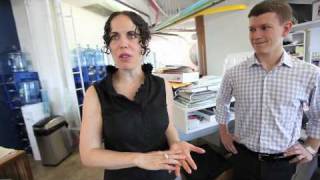
Robert Scoble tours the TED offices with Chris Anderson, Lara Stein, Rema Dejardin, and Will Allen. They show how TED produces and archives talks, explain the TEDx program and translation project, and discuss how the organization scaled from a single conference to a global community.
So who are you?
I'm June Cohen, I'm the executive producer of TED Media. We're here in the TED office.
I always see you on stage at.
TED.
Or behind the stage running around keeping things rocking.
That's right. So this is what happens without the stage makeup.
So this is like behind the scenes of TED Talks. This is where it all happens.
That's right, it all. Well, you know, as I was saying, it all really happens once it goes out into the world, but it sort of starts on the stage, then moves here for processing. This is like the TED factory. So give me a car. Okay, let's walk around.
There's the famous TED logo.
Famous TED logo. So we built the space out of a totally empty old printing factory, which is where we are, which is a good creative space. Windows all around and then this is, ah, watch the water bottles.
This is the main backwards in the things. I've done it all over the world.
The main creative space. We have a totally, you know, open style office which most startups favor because really helps us collaborate and we're big on sort of cross disciplinary collaboration and we have a pretty flat hierarchy as you might imagine. Imagine at a place like ted, ideas come from anywhere. So you have to.
I see Tom Reilly over there.
You see Tom, I mean all of the.
Introduce me to some of the people behind TED Talks.
Okay, good. Well let's see who's here. Part of my team really isn't here at 10am they tend to roll in.
A little later sometimes.
But don't tell anyone. Tom Riley, we're just going to come by for a quick hi. Tom Riley, community director at ted. He runs our fellows program. But the interesting thing about everything is interesting about Tom. But Tom has been to more teds than anyone on staff and probably anyone every Ted since 1990, which is quite a feat and very well known. Sorry we're completely barging in on Tom, also well known for the 18 minute satires he does as a wrap up of Ted.
And it was awesome.
Yeah, always awesome. Thanks a lot. Yeah.
So what's your job like here? What are you doing today?
Oh, what am I doing today?
Are you like me? Are you totally lost in Twitter every day seeing what people are saying about TED Talks? No, not exactly.
Today we're announcing the latest class of TED Fellows which come out at the ted. They're going to be at our TED Global conference coming up in July and we're announcing the next set of 23 participants in our fellows program. They're from all over the world. And they're amazing.
Very cool. Where do we read about that?
That'll be out on the net. I can send you a copy of the release, no problem.
Will you tweet it out? Oh yes, okay, we will.
But they're incredible. And they've been such an incredible addition to the TED community because we have to. TED is very expensive, but we don't want TED to be just about the people who can pay. And so the fellows are incredible young entrepreneurs from around the world. Not all entrepreneurs. They're artists, they're scientists. They do just incredible work. They have ideas worth spreading and they bring so much to the TED community. So we're excited about that program. And you have to look at the list of the fellows coming out there. They're remarkable and international and yeah, they'll blow your mind.
Very cool.
I was going to go there, but she disappeared. Oh, actually this is perfect if Lara won't kill me for it. Okay, so Lara Stein at our coffee bar, which is. We've completely outgrown. Right? We can't keep hot water in this. It's empty every three minutes. It's just for a blog. So Lars Stein, who we're. But I'll do most of the talking and you can just smile. So Lars stein runs our TEDx program which has completely taken off like crazy in the last year. Let me see if I can do the numbers for you. A thousand TEDx events planned or held in 80 countries. No, 70 countries. 80 countries and 25 languages. 43% of TEDx events are not in English. So this program has completely taken off around us.
And what's your favorite story from the TEDx experience? Because.
Well, she's just back from TEDx. Great one.
That's why I'm jet lagged and being on camera.
Isn't she TedX?
I'm jet lagged too. So we're all jet lagged here.
I'll jump in. Well, Irene, I did get back.
Just got back from an event under the Great Wall of China which was extraordinary. And in addition to that, there was a self organized organizers workshop the day before where all the TEDxH organizers got together and had a pretty remarkable experience discussing possible collaborations. So that was just a recent adventure, but all the events are pretty spectacular. Tedx Sydney happened a day later and Rema, who's a TED stuff, orchestrated an amazing one day event. And the list goes on. I hate to single out any one.
Those are the ones have just happened.
Those are the ones that are most fresh in my mind.
I was just in Tel Aviv and they just, I landed there day too late to go to TedX. But everybody was raving.
It was amazing. The one in Tel Aviv was extraordinary.
That's what we heard.
Tell me about TEDx, because you guys, each TEDx has a really loose tie back to the mothership here. You know, tell us about the idea.
Behind There are guidelines. The guidelines are fairly flexible, but they're very specific guidelines. And there's a 40 page toolkit and branding guidelines. And basically as long as the organizers are working within those constraints, they do have a certain amount of flexibility. But the event can only be a day long. They're charging per event, they can't charge more than $100 and they have to get permission. And if they're inviting speakers, they have to record the speakers and allow us to put them on Ted.com so there are some very specific guidelines and we do track all the events and we.
You know, do you guys get any revenues from them?
No, the license is free. And you know, we ask that they make the event free if they can and use sponsor revenue to fund the event.
It's just really in the spirit of spreading ideas. And what we found is like the TED format is just a really effective way of bringing communities together and spreading those ideas on a local level. And I think what we found in both the translation project and TEDx is, is that everybody who comes to us, 99.99% of people who come to us really want to do a good job. They just love the idea of TED and TED as a platform. And if we give them good guidelines, they do a great job. It's the same with translation project and TEDx.
I mean, these organizers across the world, extraordinary people who are just passionate about ideas and they're passionate about the concept of ideas being free and people who don't normally have access to ideas, having access through this free platform.
One of the coolest things about it, and Laura and I talk about this all the time, is how much we're learning from them. So, you know, we started off the program with both this and the translation program with, you know, with worries, like obvious worries that you would have, like we're losing the brand, like how do you control it? But what we found so interestingly is that these producers are bringing so much to it. They do these incredible events with a thousand people in a beautiful theater and a great speaker lineup and we watch the webcast.
I've linked to a lot of the talks from TedX and a lot of them are just as good or Better than I saw on the stage at the Real ted.
Right?
Yeah, we caught the Real ted.
Do you call it the Real ted?
Funny name. Real TED or Big ted.
Yeah, I mean we're constantly recalibrating based on feedback we're getting from all these amazing people all over the world. And we constantly, you know, sort of creating new iterations of the program.
For example, when Was the first TEDx?
How old is it? About a year, A few months. Just over a year ago.
Did you have any clue how big it would get or how many there would be around the world?
Yeah, I think we all thought it would either really work or it wouldn't. And I think there were only two rail options and it has taken off beyond our expectations in so many different ways. And you know, I was saying it has taken on very surprising iterations like TEDX Stockholm. The organizer stood on stage at his second event and challenged everybody in the audience to go off and hold their own TEDx Stockholm event. And so we had a week where there were 30 events in Stockholm, including at the embassy, There was a TEDx Stockholm week and a bunch of TEDsters got together and organized a table TEDx youth day that's happening in November and there's going to be a continuous live stream basically happening across the planet that are going to be youth oriented events. So there've been a lot of really surprising developments coming out of it that we would never.
What's the weirdest place you've seen TEDX held? I think I saw one held in a tent in Nairobi or something like that.
Well, I mean, not weird, but there have been some really interesting. I mean the Great Wall of China was pretty, pretty extraordinary. I mean, I can't even. You know, it's a 2,000 year old wall that's 8,000 kilometers long and you're standing on it and you're having this event basically Kibera, which was a, you know, one of the largest shanty towns in the world. We had a TEDx, we've had a.
Couple of the TEDx events there.
You know, there are lots of upcoming interesting ideas brewing, including the ice hotel. So who knows where it's going next.
You were stuck with a volcano, right?
You had a volcano.
TEDx volcano. Because you and other people were stuck in London.
We were stuck in London after the SKOL conference and there were quite a few TED students and someone pitched the idea of doing a TEDX volcano. And of course we jumped on that and so I helped organize and we pulled together an event in like 28 hours with 12 speakers and 150 people and 800 people watching online. And it's so interesting because that's a good example of something like you could never anticipate. We didn't build TedX. Yeah, I'm surprised people would use it that way.
Yeah, I'm surprised nobody's come up with one around the oil spill. Like let's, let's get a TedX.
You said that right after you were like, we need a TedX.
I mean it's so I just like every day I read and I cringe as to what's going on there. Like we need some great minds on the problem.
Yeah. And it becomes an interesting application of the program if you can do it around current events or news events or disasters and sort of bring to be like a flash ted, you know, to bring people together.
It was really interesting because I was watching T TEDx volcano because somebody was streaming it. And I love the idea that people are streaming these TEDxS. Do you think you're ever going to live stream the full blown ted?
Well, it's a good question. You know, we do stream it live with a feed that people can buy so they can buy an associate membership or the webcast for $500. We have experimented with opening it up for free, but one of the issues there, to be honest, is that you can't just dip in and out of ted. It's of kind not meant to be experienced that way. And so what we find is that when people dip in and out of the webcast, they're confused. They leave comments like what's going on? Who is that? You know, it's just, it creates confusion and we actually do really feel that people need to commit to the event. And that's as you know, that's what we tell attendees as well. If you're coming to ted, commit for the full four days, give the speakers your full attention. Like allow us to take you on a journey.
That is one of the things I found really interesting, that people actually sit in the seat and watch the whole event. Right. Other events, like right now I'm supposed to be at the TechCrunch Disrupt conference.
Right.
And yeah, people dive in for a couple sessions, dive out.
Well, the value of TED is really this cross disciplinary experience and if you're not there on the full journey, you're missing out on what it's really about. I'm going back to work.
All right, thanks. This is work. Thank you for the extraordinary job you do because it's really great.
I can tell you one more detail that I just love, which is that there was just a TEDx last week completely in sign language. So it's the first one held in sign language. And they're subtitling the talk. So we're sort of assessing those now to see what was that held. It was in Austin, Texas, and I'm forgetting the name of it, but it was in Austin and it was the first one completely signed. And. Yeah. So we're hoping to pull some of those talks out. And that's an interesting next step for us generally is taking these talks that are filmed in other languages, subtitling them in English. So I just find that so exciting. Like the idea of that. I can appreciate the best speakers in Hindi or Bulgarian or Korean. So how do you.
Maybe we can keep walking around.
Sure.
So we can see some other things.
Sure. We can see who's over here. So this is our video.
Your phone systems, they don't have 10.
I know. Production corner. Oh, sorry. Boxes. That's part of the nature of the video. Production corner. There's always a lot of boxes. We fight it looking like a garage, which sometimes happens. Jason is not here. Our director filming video. He was up until 5am so we will give him some slack for not being. So was I.
But I wasn't doing video production. I was enjoying the New York experience.
You can see Eric here and Angela on the other side if you want to wave. Hey, Tanya, do you want to wave? And Tanya over there, two video production specialists. And Tanya is our director of production development. And as you can kind of see the off. Well, you might not be able to tell. The office wasn't really designed to hold this many people. We sort of are coming. I heard your movie Shantytown. We're moving in July. Yeah. To a new office with more space.
Very cool. So this is where TED Talks is done.
Yeah. And actually after this, we'll walk over to the editing suites because we do have two on staff editors who each attempt to edit a TED Talk a day. So we spend one full day on each. And truthfully, we usually wish we had much longer because they're like a little short film. We keep. We don't. It's not that we cut anything out. It is the full talk. But we really work to present it in a way.
Well, you're shooting multiple cameras, right? And you have those multiple camera feeds. Yeah, and yeah, I have a professional editor. It's tough. It's a lot of work behind the scenes.
It is. And a lot of things, you know, we Always joke, we can talk. Maybe if you do it well, you.
Don'T even notice it.
Right, Exactly. Speakers generally don't notice it. We cut out sometimes the ums and ahs. We usually will cut out their opening remarks. They're sort of like, thank you, it's so nice to be here. Like, we just jump straight to where the talk should have started. But yeah, this is where it's happening. And actually, maybe this is kind of interesting. In all of these archives here, we actually have every talk ever given at Ted since 1984 is on film. And we've digitized and upgraded all of those tapes. But there's. We still have to go. Like, it's a long process of actually reviewing all of them and figuring out what's still relevant. So this is our sort of wall of archives. They are all backed up and on off site storage as well. But we keep the masters here.
Crazy.
Let's get on.
Okay.
I could talk video all day long.
Yeah. So we can say hello to Will Allen if he'll say hello to us.
Hey, how are you doing?
How are you?
Will is on our sponsorship.
Very nice to meet you, everybody.
That's the important part. It keeps everybody employed.
That's right.
Website up and running.
It's completely core to what we do. And we really believe here, anytime you're creating great content that people are really connecting to, and people connect to TED Talks on a very deep and engaged level, then anytime you're reaching an audience like that, you can find sponsors who want to reach that same audience. And if you do that in a way that's respectful.
How many people have watched a TED Talk at this point? Do you have any idea?
Yeah. So TED Talks have now been watched around 270 million times, and that probably equals out to around 150 million people worldwide on a monthly basis. We're at around 15 to 20 million video views, probably 10 million people a month, which is fascinating. Right.
When you started that ted, did you have any clue that you were going to build that kind of brand and that kind of worldwide attention?
No. I mean, this has definitely outstripped anything we thought we were building when we first started. You know, we thought.
We thought TED started as a conference.
Right? It was a conference. I mean, it was a great conference. And I went to TED before I worked here. So I have a sort of a loyalty that goes beyond just being on staff. I started coming in 98 or going to Ted in 98 and fell in love with it. And it's just a great format and the original founder came up with a great format. It's cross disciplinary. It's short talks that are always punchy and surprising and they connect in interesting ways. So we knew that those talks would find an audience online, but we thought it would find a small, devoted audience. Small, kind of niche devoted audience. And it's so interesting to watch what's happened. And I think there's all kinds of reasons for that. I think we've really grown up along with online video. You know, we started work on TED talks like the month before the video ipod came out. You know, it was still very video. Podcasting was still very new. And we've kind of grown up along with online video. I think we're also kind of reaching the zeitgeist. This is something Will and I talk about a lot. Just this is a moment in time when people are hungry for meaning. They are looking for ways to contribute to the world in a positive way. They're looking for meaningful stories. Stories, excuse me. And I think there's something about our format that really draws people too. Like there's such a power in just a single person telling you a story. And that's part of what I think people really connect to. It's kind of this lost art. Like we've forgotten how powerful it is to just have a single person who's telling you about their life and talking to you passionately. So it's been really interesting. And then really, we always joke that what's happened in the last year as we rolled out the translation project and TEDx's just amazing and humbling and a little overwhelming, to be totally honest. We were not prepared to scale to the level that we need to scale. So we have been hustling, you know, to build just the tools that our TEDxOs need and the tools that our translators need. And actually, since Will is standing, I mean, sponsorship is really a key part of that. Continuing to find the sponsors who support what we do and can help us.
When you walk into a brand that has some cash.
Which is a good day, what's your opening line?
How do you start that conversation? How do you pitch them? How do you get them to sign the. How do you start it?
It's a good question. Well, I mean, ted's about storytelling, sort of its foundation. It's about sort of a single individual telling their story to a very captivated audience. And I think companies have the same story to tell. And what I tell them is that he here is an incredibly engaged audience who is interested in what you are doing. And interested in powerful ideas. So they're ready for you, they're ready for your powerful ideas and you've got to give it to them. So we asked them to sort of bring the best game possible and here's a platform to share their story, whatever that story might be. It might be about IBM, it might be about ge, but what we offer.
Is or about them engaging in a broader idea about the future of cities or about the power of creativity or you know, what are those themes that are in their company. And so much of what will and our whole sponsorship does is work with companies to bring out those ideas. It's like you don't have to get your idea into a 30 second spot anymore. This is an audience that would love.
People don't get when they watch TED Talks is that there's a whole on site experience that goes with sponsorship, right?
Yeah.
There's couches and there's screens and there's a whole, you know, exhibit. It's not really an exhibit hall the way most conferences have an exhibit hall. It's not trade showy y, it's more experiential. Right.
It's very intentional. And I think the way that's all set up is that we want sort of the online experience to be separate so no user at home feels like oh my gosh, I wish I were at the conference. But it's sort of a standalone experience and especially at the conference we want to make them about self discovery. So it's about enabling a conversation, not show and tell. It's not here I am as a tech leader and here's all the great things that I'm doing. It's let me tell you about these things. Let's have a conversation. I want to hear what you are saying about it and what you're saying about it and how these conversations can sort of drive progress in a variety of fields.
Well, it's so interesting. So many of our sponsors now are actually what they're interested in is not talking at the people who come to TED but actually hearing from them like engaging them in open source collaborative projects and more and more that's what we're hearing is sponsors wanting tools to enable a conversation to make it a two way or multi way collaboration which is really interesting to us and we love that idea. Like the idea of finding these really genuine and interesting ways to help our sponsors connect with our audience. We know that our audience is open to it and they want it and it's really just fun. Creative challenge.
Yes, that's the fun Thing about these new media types, like what I'm doing here, I mean, underneath this YouTube video will be a comment area and people can ask you questions and keep the dialogue going.
And we read them. You know, we're very. We walk our walk. We're pretty sort of obsessive that way. We all have our Google alerts about TED Talks, TED conference. We read the. I mean, up to every level of this organization. I mean, Chris Anderson reads comments on every YouTube article. He reads the comments on our Facebook fan page. Like, we are really engaged with what people are telling us about and what they're saying about ted. It's super important to us. And that's, you know, that's how we keep the ideas developing. Yeah. Yeah.
Well, cool.
Yeah, thanks. Thanks, Will. Nice to meet you.
So what are some of the brands that we'll see next year?
Lots of great ones. People like ge, like IBM, Nokia, Lexus has been a big partner for a long time. Liberty Mutual just did a great spot on Ted.com.
You have to watch Liberty. Liberty Mutual spot.
Oh, really?
Yeah, yeah, it's just great.
It's another example of a brand who's really doing things. Something that's very innovative, you know, so they're not just putting a logo up somewhere. They're really thinking about what's their message, what's their story, and what's the best possible way to tell that story to their audience.
Yeah, it's a great little shortcut.
Those are the brands that we want to work with and that we're sort of bringing to the TED fold.
Very cool.
Excellent.
Thanks.
Thanks. Thanks so much. All right, what are we going to now?
Let's walk over to the editing studios. Okay. This is our server room, actually. So this is, you know, just a quick, messy.
If I unplug the server, does TED Talks go down?
We'd have a problem.
That's a lot of power to get.
It's not our outward facing server, it's not our web server, but this is our race, actually.
You're hosted at Rackspace.
We are hosted at Rackspace, which has been a delightful arrangement.
So I could turn off your server.
You actually could too.
No, I couldn't. They won't let me anywhere close to the data centers they go.
Nuh.
No. Scrap. Yes. No, we haven't. I am happy to plug Rackspace because we've been with Rackspace since We first launched Ted.com before relaunched because Ted.com always existed, but it was like a brochure. Aware site. We launched Ted Talks in 2006, and then six months. And then we immediately started working all out on a new website, and we launched Ted.com in. Oh, no, no. You know what? We've been with you since 2006, when we first launched TED Talks. And this is actually interesting. Or it's interesting to me because it was one of my. It's probably the closest I've ever come to having a heart attack on the job. It was right before we launched TED Talks, and I had thought a lot about the video streaming, because at that time, it was really more of a podcast idea that we did have. And we did decide to add streaming video to the site, but it was on our old brochureware site, and our sponsor was BMW. And I knew we were gonna have a lot of publicity, or I hoped we would have a lot of publicity when we launched. We had to be prepared for it. I like to be prepared. So I thought a lot about the video streaming. And we had that set up. We were ready to go. And then literally. I'm embarrassed to tell you this, but two days before we launched, I realized that we had not upgraded the server that Ted.com itself is on. So the video might be streaming, but our site was gonna go down if we didn't upgrade it. And literally, I was on the phone with our developer, George Riley, who's now my lead developer on staff. He was like, Yeah, I mean, Ted.com is on. Well, we call her Old Nellie. That was what our old server was. So literally in 24 hours, had to get the whole site up onto a new server. And I asked around to everyone I knew, where should I move it? I need the Riot hosting service. And what everybody told me was Rackspace, like, that's the only place you want to be. And so we moved it somehow 24 hours. It's not me, it's just true. That's why I'm happy to tell you it. And we moved to Rackspace then. And we've been. I mean, and it's interesting because we've been with Rackspace since then, and we've scaled from, you know, when we launched, Ted.com had almost no traffic. I forget. I mean, maybe we had a couple of thousand views. It's reviewed maybe 50,000 times there in our first month now. They're viewed 15 to 20 million times in a month. We get 25 million page views. We have around 8 to 10 million visitors a month. And we've had almost no downtown in that whole time. You know, we've really been able to scale. So it's something where it's like one of those little back end stores. We don't get to tell a lot, but we're quite proud of it. Thank you very much. Thank you. But yeah, this is our RAID server. This is actually where we keep all of the video for our internal use. Because we have around seven people on our video team here. Two editors and various production people. And we're all accessing the same media. And so this is the servers we use, which we are actually already outgrowing. And it's such a horrible mess in here, you know, that we keep it real here at ted.
Excellent.
So if we walk over in this way, we can take a look. This is through our main lobby and we'll go around here. Actually, on these bookcases up here you can see various TED bears. There were TED Bears at all of the early ted's. We don't actually do that anymore. This dog here was one of our last plush toys we distributed at TED. We sometimes still have them, but this is the TED 2003. There were all kinds of bears, each of which was based on a TED speaker. So Funny Bear, I believe was Emily Levine. The jazz bear was Herbie Hancock, who's been to many ted's. Oh, and there seems to be a. It might need new batteries. Yeah, the sounds don't work anymore. I'll replace those batteries. This philosopher bear is Dan Dennett. Dan. And then Amazon bears. Jeff Bezos. And I think it used to laugh. No, all the.
That's cute. Yeah, that sounds like Jeff.
It is actually his lab. So let's see if we have either editor here today. So these are our two editing suites. No, they aren't. But let's take a peek in anyway because we do have. We basically have. Each of our editors have to edit a talk a day, which is ambitious for them. Is it better if I turn the light on? Great. And so each of them, we need, you know, soundproof studios for that with a little light coming in. And it's a really interesting challenge for them. They just have great stories. And one of the things that. One of the interesting challenges for us now tell us a way around, you know, because we really work on getting these talks, optimizing them for online. So a lot of tight shots, pretty, you know, vibrant camera or editing that just keeps it very lively. We also edit out, you know, the very beginning of the talk, as I said before, and also small things within it. So if a speaker, if something happens on stage, if we have a tech problem, we edit those out. Because nobody online needs to see that. And so one of the things we always tell people at our speaker briefings at the very beginning of TED is that people now get very nervous before their TED Talk. And part of our job is just cheerleading is just getting them to relax and just be able to give the talk that they want to give. And so one of the first things I always tell them is there's almost nothing you can do on stage that we can't fix in post production. There can be tech problems. You can lose your way, you can trip, you can spill water on yourself. It will never. It's like it never happened. No TED Talk is quite as perfect as it is.
And this is sort of why you want to watch it live. Right. Even if you can't get into the main arena, you can watch it streaming. I think that's how I'm gonna watch the next one.
Yeah.
Because I can't afford the $6,000.
Me neither.
You got the in?
I do.
You got the inside shoot. You know, the inside way to get on into the arena. But you get to see some of these little moments where things don't quite work the way that it looks like on TED Talk. There's a few talks that are very risky for a speaker, too, and they don't seem to show up right. Some of the riskier language or there's some talks that are. You don't really expect. It's like, whoa, that word on stage.
Well, you know, there are always some talks that we have at the conference. Conference that we know may not actually be appropriate online at all. One of the things that's really important to us is to keep the event authentic. That the event is. It is not just a machine for putting TED talks out into the world. It's a meeting of people, and it's a meeting and collaboration between people. It's really important for us to keep it really real on site. And it's interesting because some people who come to TED who are new to it expect us to be like tv, you know, so we get comments of like, you should really use a teleprompter. Or, you know, that girl hosting, she's, you know, why does she have to carry cards? You know? And, you know, Chris and I host, and we host because that's part of what we do here. And we're real people, and we're really on stage. It's not like we're bringing in TV hosts to do it. It's really important to us to keep it authentic. And part of that is Having talks that are just for the room, that are interesting to the set of people gathered there, but maybe won't quite work put online to a wider audience. Or maybe it's a speaker who only wants to something for a smaller group and is uncomfortable with it going out live. And it's important for us to keep including those, including that is riskier speakers. Speakers who are kind of pushing the limits, using language that we wouldn't be able to use on Ted.com that's a sort of a self imposed rule. We know that there are a lot of kids and teenagers who use Ted.com and we try to really work within respectful boundaries.
Tell me some of the music that you get on stage that you don't really see on TED Talk.
Right.
Because every group of sessions starts out with a really cool song. Tell me how that music, what is going on on stage that people might not be aware of from listening to TED talks?
Sure.
Well, there is music and performance is a big part of ted. Some of those performances make it onto the site, some don't. Again, it really depends on the nature of it. We have two key people working on music with us at ted. One is our music director, Thomas Dolby. That Thomas Dolby, and he is blinding me with science. Yes, he blinds us with science. And he this year had such a great approach. He basically led a house band for us. And that house band was made up of the string quartet Ethel, who are a very innovative string quartet. And they started almost every session with just a really beautiful piece. Beautiful, but also beautiful and edgy. You know, string quartet plus, you know, electronics, string quartet plus, you know, what is it called? Bagpipes. But. And then we also. The other person who works with that is our music advisor, Bill Bragan, who is. He runs out of Doors programming at Lincoln center and he helps us along with Thomas on our music program overall. So we have musicians this year. We had Andrew Bird and we had Jake Shimabakura, the ukulele player. He's been watching, you know, millions of years.
I actually filmed him at the party at the TED party. And that's been watched a bunch of times. So that's on my YouTube channel somewhere. Search for Ted.
Yes, search YouTube. And then he became really well known for his ukulele version of While My Guitar Gently Weeps, which is on YouTube. And we will have his performances coming out on Ted. And who else did we have last year? I'm blanking, but Andrew and Jake. And there was at least one other performer that I'm. That's skipping my mind right now. But we really try to put together people who are rotten the gamut, who are interesting, who are edgy, but also just really beautiful performances. Cheryl Crow, that was the other one. So we try to have a really interesting range and some of that makes it to the site and some of it doesn't. But, you know, in the room, it's really important. There are also other things, like our video interstitials, as we call them. So in each session we have short videos, whether they're commercials or short films or sponsors. Do you.
Sponsors, by the way?
They don't. There was some confusion this year because sometimes we introduce them by saying, now a commercial break. But they're actually. No, they're. It's completely editorial, 100% editorial. In fact, we really hesitate to put a sponsor's editing in there. It's only if we really love it. Like, there was a Google Ad this year that I really fought for because I just was the one where you type in. It was the. The one about the Paris romance.
Yeah.
And it's just. It's just such a good spot and it fits so well into the. The program. But it's tricky because then it does just run that. You know, you walk that line. But it is. They're 100% editorial. Interestingly, though, and we really try. I mean, we look at hundreds of videos to find the 12 or so that we show at TED. But it can be really tricky to find very short video that delivers what we need for the program, which is usually something that's a palate cleanser, that has a real story arc, but that's. And a payoff at the end, but that's short, you know, 30 seconds to three minutes. And the truth is commercials are optimized for that. And that's why we end up having quite a few commercials there. But like I said, we do also have short films and vignettes and we. We look really hard.
It's really interesting because on the wall you have some hats there. And that got me thinking about the set the stage. Because you have a different stage every time we do. And a lot of. If you don't go to TED and you don't sit in the front row, you don't see a lot of the thought that goes into things lying around the stage and things. Because on TED Talks, you just don't see that level of detail if you're there in real life, you get to see. See a lot of stuff that doesn't show up on the videos that well. You can't see the little microscope on a stack of National Geographics right at the front of the stage. Right?
Yeah.
What's the process of coming up with a set? Design the stage?
Yeah. So we work on that through the year. The stage designer we've worked with is Tom Hennis and his team. And it's very much, again, a collaborative process. We're always trying to come up with a stage theme that works for that. For that year's theme. And this year, it was an interesting one because it was. What was our theme. What the World Needs now was the theme. And initially we started. And like any creative process, we, you know, we brainstormed around it. How could we build that out in an interesting way? And after going in a couple of other directions, what we landed on was this idea of building out sort of like the idea of the garage that a startup started in. Like, what the world needs now is to, like, start tinkering again. Like, our world is kind of broken, and we just need to kind of let go of our assumptions and just start working on new ideas of how to rebuild. And so we set the whole stage in kind of an attic of sorts and sort of like an inventor scientist kind of attic. We really tried to build it out with a lot of interesting items. That's one of the things we almost always do at TED is that there are a lot of just curiosities on stage that kind of just sort of capture the imagination. You know, microscope. I'm actually forgetting the name of it. There were globes. Yeah, there were globes. There were wading scales. There were interesting books. There were. There's a surfboard. There was various kites and telescopes. Just things that sort of capture the imagination.
There's.
In this one, we even had, like, that little balcony with the telescopes, which was actually, I think, my favorite moment at ted. Of course, my moment on stage was just sort of getting up on the balcony to try to use that space. But it's a very whimsical stage for us. And I think people respond to that because it gives them. It just adds to this overall vibrancy that, you know, I think part of what people get outside of really significant thing is not just the individual talks, but when you have all of these different talks and different disciplines, they kind of light up your brain in different ways. When you're going from music to poetry to famous physics to entrepreneurship, and then grab Marla's badge. So this is.
I just asked about the badge. My camera only goes 14 minutes at a time, which is sort of fun.
So this is a TED 2010 badge. It's not mine. It's Marlo Mischnick's, whose office I'm in, who's one of our editors. And they're very large, and they're very large for a reason, which is that they are really a social aid. So what it helps you is really. It's really important for us that people can connect with each other.
And with these.
The way we design these badges and.
Everybody wears a badge, by the way, even Bill Gates. And so if. Even if you walk by and go.
Is that really Bill Gates? That is Bill Gates. And, you know, and it's important that way, both because it gives you permission to start a conversation with someone, it also gets rid of that anxiety of, like, I know this person, but I can't remember their name. You can spot their name 20ft away. We emphasize the first name because that's the main thing that you. That you need for that social interaction. So they are big, they're garish people kind of make fun of them a little and laugh at them. But in truth, everybody loves them on site because they're so helpful.
So even though I wish every conference would copy them, because you can read the name from across the room, there's a picture there which helps with security. And you use a double lanyard so they can't flip over. And so everybody has the name facing out.
That's the key element. I'll show you this. Yeah, they don't do the flip that many other badges do. And that's another thing that we really optimize for. We also include on the bottom, we have conversation starters. So it says at the bottom, talk to me about this again, is Marlow's badge. Favorite places, Moose sightings, Contradictions. And the fun thing about those is, especially when they're very specific, they really do give you a way to just start talking to someone. And that's really the challenge at any event that I feel really deeply when I'm at other events. You're in a room with people. You know, there are so many interesting people around you, but you can't find the way to connect. You know, you can't find an opening line, or you can't find a starting point. And so I think that's the challenge for any event producer is just figuring out how do we get people to connect with each other. And by the way, we're always looking for ideas at other events as well. I think that's one of the fun things now is event producers can really learn from each other. And we're learning from our TEDx organizers, but also from other conferences. I'm a total conference geek, and that's part of why I work here.
That's actually a secret to ted. And I met Bruno, and I can't.
Say his name, Giussani, at the Lyft.
Conference in Geneva, Switzerland, and he's helping out with that conference. But several of the speakers that went to that conference showed up at TED a year later. So there's almost like a feeder system, right, that you guys are going around the world looking for the best talks to bring onto the TED stage?
Absolutely. I mean, we're constantly searching. You know, one of the most important things for us in finding speakers. This is going to sound incredibly obvious, but it's finding speakers who can really speak, who can really tell a story. And there's so much heartbreak involved. You'll find someone whose books you love or magazine articles you love, but who are great ideas, but who just don't have the vibrancy on stage that they need at ted. And so a really key thing for us is being out in the.
I'm almost out of card space, so better wrap it up this week. I'm having too much fun talking about ted. So what were we talking about?
I was just saying that we do really rely on watching speakers at other events to find ideas for ted, and that's both by seeing them live at conferences and speaker series, also watching the videos online. Now that a lot of people put talks online, it's helpful for us. And of course, our TEDx system is really helpful for us. We find so many speakers that way. Some go straight onto Ted.com, some we bring back and invite to speak at one of the main teds. It's very important.
Well, since I'm out of card space, I go to say goodbye. This has been a real joy. Thank you for giving me a little tour through the inside of ted.
Thanks for coming by. It's such a fun moment to have you here because it is this moment when TED is just. It's kind of really expanding in the world in ways that we never expected. And I think you've kind of seen on my face. And then others were sort of amazed and humbled and, you know, just slightly overwhelmed by what's happening around us. But it's really thrilling. So it's fun to give you an update.
Great talk.
And we can find you@ted.comted.com thank you very much.
Sam.
More from Robert








45: Sandy Carter Unveils the Future of AI: Myths, Agents, and Creativity | SXSW Insights


