Airobotics launches autonomous drones and $28.5 million in funding
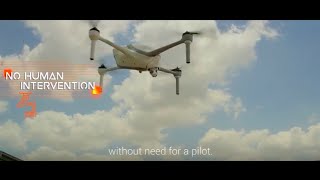
Airobotics raised $28.5 million to build autonomous drones that live in docking stations and swap payloads for industrial work. CEO Ron Defresne describes drones for oil refineries, emergency response, and inventory measurement, competing on reliability and always-on availability.
This is a cool company here in Israel, Aerobotics. Who are you?
I'm Ron, I'm the CEO of the company and co founder. Yeah.
And you're building industrial scale drones, Autonomous industrial scale drones.
That's the kicker. This.
So these are fairly big drones, these are not dji, you know, little hobby drones. What are they? What are you thinking companies you're going to use these for?
Well, we come from a background of drones, so we had the first service company in Israel and we flew a lot of drones for a long time for clients. And at some point we understood that, you know, consumer market is big and there's a lot of companies rushing into there, but we wanted to be able to take drones to the next level in terms of their potential. So using the drone as a tool, as something that actually does work, that has roi, that people can use, not just because they're cool and they fly and you know, it's nice to have it, but actually it's something that can produce value. That was our idea. That's why we had to take the technology to the next level in terms of having something that can actually perform, both in terms of how much time it works every day and in terms of what it can do in terms of technology. We wanted video that can go for miles so we can fly longer and see video live from where we want to have it. We wanted to be able to use use it as a multi tool, something that can do several missions and applications and grow that over time. Something that you have permanent in your hand, you don't need a pilot, you can fly it whenever you want or do it schedule, but use it as a real tool.
And these are meant to fly without humans, Right? So you're gonna fly it over a factory or oil refinery or some high value situation, right?
Yeah, well, like everything, I think in technology if you have an erro, usually a person that causes it, that's the situation. A computer usually does it better than you. So that's the idea. It started from cost reduction and added value. But as we went on we saw that it performs much better when it doesn't have a person interfering. So use the drone and you set up the mission. You just press the button, you don't need to worry about the flight at all. I can actually have a system somewhere and fly it from the other way all over the world. But it's not even flying it. Tell it what you want it to do, it'll do it. That's it.
How does this compare to a hobby drone from A Chinese company. What's the difference that you would notice?
Well, it's pretty much, I think the difference between a Boeing 747 to a Cessna. It boils down to the reliability of the components and the communication platform and everything down to the complexity of the actual components and how reliable they are. Everything is faced to do actual work. So, you know, the amount of energy that goes into engineering a plane or even a small Cessna or, you know, an aircraft that's for hobby, is just done on a completely different level than a professional kind of thing that flies 400 people in the air.
This box that is going on is over here. What is this? And how does this.
So this is the docking station. This is basically the home of the drone. This is where the drone docks. It protects it from weather. It replaces the payload. So we can fly one mission with a payload to do security and then use another payload to map or to do inspection.
So you can switch sensitive. When you say payloads, you're talking about.
Yeah, I'm talking about whatever the drone carries. So, you know, drones started because of, you know, it's fun to fly it, but at the end, what the drone carries is what brings you value. Right. So if you want the drone to perform a mission and you're not a hobbyist who just wants to fly for fun or take a selfie, you actually want the drone to do something. That's our idea. And we wanted the drone to be able to perform a lot of missions. Not just mapping, not just inspection, not just sampling, not just gas and everything. And so the idea was, okay, we don't want to have a bunch of drones. We just want to have one drone and change whatever the payload, whatever it's carrying to be different every time depending on the mission.
So you showed me a video where this drone was being used to check out gas lines and see if there was leaks or. And then use a different sensor platform to look at piles of sulfur and measure inventory.
Exactly.
In a big sulfur refinery.
Exactly.
What kinds of payloads can you do today? And which ones are you looking to talk to new corporate clients about?
So again, the idea is the multi tool, Right? When you buy a multi tool, you have a knife, you have a screwdriver, plier, you have whatever you need, you can just pull it out and use it. That's the idea here. So right now we have mapping, we have inspection, which means in terms of payload, we have ir, we have hd, we have sd, rgb, and we have. We're working now on gas sensing and lidar and several others, but that's gonna grow substantially. So whoever is developing sensors for drones, talk to us, because if you have a sensor that you think you know is a great application to sensor gas or it has a great application to map or scan, we're interested. We want to be able to introduce you to our ecosystem and have both payloads come with our drone and then, you know, we can use this as a platform. We are not interested in developing the payloads ourselves. So that's a great ecosystem. Also in terms of software, someone's developing an app that you know, can do motion detection on IR video. We want to talk to you as well because we can integrate that software into our app store and then have that use firefighters.
Now, you don't need this drone to have really advanced eyes and object avoidance and stuff like that, do you? Or do you?
No, we're flying in a, in a permanent location.
Yeah, you're flying like over a factory, over a mine or over a rail refinery.
We know where everything is. We, we're considering now using certain technologies for sense and avoid which are pretty common today. Either sensors for Even if it's LiDAR or using cameras just to do image processing.
I interviewed them. They use four camera to avoid trees. If you're flying through the trees, right?
Yeah, but you know, we're flying and we know where we're going. We are looking into sensitive void through video image processing. So that's relevant to someone's doing that.
What's unique about Israel here? Why, why is this company coming out of Israel? Why not China?
Why not? Well, you know, I don't know if it's fortunate or unfortunate, but the situation in Israel is that we have a lot of aerospace and defense industries in the country. Probably the top in the world like Elbit Systems and Rafael and Israel Aerosp Industries. And that gives us the advantage that a lot of people have. Great know how in terms of reliable aerospace hardware, which is really what this thing is about. We wanted to create an aircraft that's reliable as a missile and that's what we're doing. It takes a lot of development. We've been doing it for years. And Israel is a great place for that. You have a lot of people who have the experience some place, you know, other places in the world, maybe it's just hardware, just software. And Israel have a great mix of the two. So that was a big advantage.
Tell me about the company you're building. How many people are working here and how did you get funded? How did you get the funding? To build something this complex, because this is not something you do with two kids at a picnic table like Instagram.
This is, you know, autonomous drones are the holy grail of the industry. I think once you have that ability, there's literally limitless possibilities for you to go after. And we started the company about a year and a half ago, got our first round from Blue Run Ventures, Great VC in the Valley. Great people. They put their trust in us as though we were from Israel. And we didn't really know them before, but they gave us their trust and we're very happy to have them. Our B round was done by Charles Riverventures, another great VC that has really backed us up and that allowed us to do this thing relatively quickly. We had the necessary funds to move fast and get what we need done. This thing, there's a multidisciplinary engineering facet here is the only industries and engineering that we're lacking is nuclear and chemical. Every other engineering scope we have in here, mechanical, electronical, aerodynamical, communications machinery, everything needs to be incorporated and integrated together to do this thing. So a lot of funds are needed to build a machine like this, which is no less complicated than a car. So it takes a while.
Tell me about the competitive landscape because I know there's other companies that have shown me systems that they say are autonomous or heading that way.
Well, it's very difficult to do. I know that a lot of people want to do it. You can see videos in and out.
And there you go.
You can see a lot of videos of people who want to try and do this thing. I can tell you after two years of hard work on it, it's not easy, especially if you wanted to be able to fly in high winds and different temperature and different with different payloads. It's a very, very, very big challenge. And I am ready to challenge any company out there that says that they have an autonomous platform to go head to head with us. You're invited to be the judge. I don't think that there's anybody out there right now that can challenge us on reliability and how many cycles we can complete one by one. So if anybody thinks so, he's welcome.
So I have a friend who owns an oil refinery in Canada. He expect to pay for this to, you know.
Well, what I can't. What I can say in this point is that it's cheaper than having an operator fly for you daily and you get much, much more. For precise prices, people can contact me. I'll be.
2000S per day.
No, not even okay.
Because a human operator.
Yeah, it's much cheaper. That was that. That was the basic idea. Have it cheaper and it's more pre. And it does multiple things and you can have it on demand. So one example would be emergency response, Right?
Yeah.
Which would say that something goes on in your factory and a fire, and you want to be able to monitor that fire quickly. You want to see what's going on. You want to call the fire department, let them see what's going on. If you have a pilot, that's our secret sauce right there. That's cool. Yeah.
So this is the problem of interviewing somebody in the drone company. It makes a little noise when they're testing out the equipment.
We'll get over it. But let's take that example as the emergency response aspect. So something happens. There's a leak, there's a fire, there's an intruder. If you have someone on site, even if you have a 247 operator, it's going to take him time to take the drone, go outside, put the battery, wait for gps, and fly out would be ready in the mirror, too, and just goes there and gives you what you need in an instant. And that's something that's huge. It's not even about cost reduction. It's about saving lives. It's about being able to see what's going on quick enough to respond and, you know, prevent damage. It's really valuable.
The video cameras you have on the drone or that are potentially on the drone, because the payloads can change. There's like 4K standard video cameras.
Well, we're using different kinds right now. We're using.
Because obviously if my oil refiner blew up, I want to put the drone up and take video of it to understand where the damage is. Exactly where to send the fire trucks, where to, you know, try to build an emergency response to it.
So we come in and we work with the car to set programs into the. Into the drone that, you know, you don't need to think too much. If there's a fire in zone A, press zone A or fire route. It just goes there and it's what you want.
So can you have multiple drones in the air at the same time? So you could have one shooting. One shooting, maybe mapping. Mapping, and then one doing a sensor of chemicals so that you could map how bad the pollution is and whether you need to warn people.
This gives a completely new dimension to a factory. Right. They're in 2D now you get a drone, you get 3D. There's so much data. You can get from being in the air constantly, every day on a routine basis, which could drive you into, you know, just making better decisions, not just responding to an emergency, but just for your core process in the business to be able to perform better.
My friend who owns an oil refinery, how long would it take to work with your team to get this set up on site and get the. Three weeks. So you would come and map the site and then work with their team to figure out the kinds of workflows that they would need to build a pattern for.
Exactly. That's something that I told you this. We had the biggest service company in Israel for drones. So we know what we're doing with drones. We used to fly them for thousands and thousands.
You're the first commercial pilot in Israel, right?
I was and I started the first commercial service company with drones in Israel, which became the biggest one in the country and one of the biggest in the world. So we have a lot of experience flying drones. So when we set up a system like this, we know what it can and cannot do and what the drone should be doing. So it really helps us when we come out to a site and demonstrate what we need to demonstrate and pre configure all the routes to get the most value we need out of the flights.
Well, we're gonna go and see how it works. Thank you so much for showing me your very interesting company and giving me another taste of Israel. I'm getting a tour all week long of different startups in the ecosystem and it's always mind blowing what I find here. Yeah, thank you so much.
An interesting country. Yeah, thank you.
And where do we learn more about it?
You go to Aerobotics Co IO. Very cool.
Thank you so much.
More from Robert








45: Sandy Carter Unveils the Future of AI: Myths, Agents, and Creativity | SXSW Insights


