Interview with Tech Blogger, Robert Scoble #TOA13
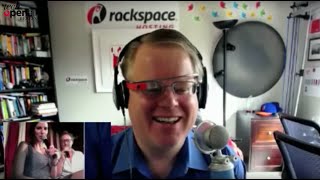
Robert Scoble on Google Glass as a sensor platform and the Age of Context. Hundreds of people tried his Glass unit in three months. Hands-free photography and eye sensors enable personalized services like Google Now and Uber, but raise privacy concerns.
Questions this video answers
Three months.
Hundreds.
49 grams.
37,000 people per year.
3.5 million users in two months (Scoble referenced 'three million' / interviewer recalled 'three and a half').
We're just getting a visual on you.
Awesome.
How are you doing, Robert? I heard you just saw Ayelet yesterday.
Well, two days ago, yeah.
Did she try hard at least to get you on a plane?
She did. So where are you right now?
So we're in Berlin at Tech Open Air.
Dang. You can fly all over, around the world.
Yeah. And you. You would love it here.
This is.
I love Berlin.
Beautiful, beautiful venue.
We're in a big sort of artsy club. This is actually a music location. Let's split the camera up. So you see, we're in one of the rooms. I just wrote you right that outside now the barbecue is starting. People are starting drinking. But we also have three different stages inside. This is one of the stages. Guys, say hello to Robert. And on the other side, some people too. We hear Robert. Yeah. And it's a tech, music, art and science conference. So we're trying to be multidisciplinary, include other disciplines. So thanks so much for having us, Robert. Awesome to talk to you. So I see you're wearing the Google plus.
Yeah, I usually wear it all. All day long.
So there it is now.
They see you.
They got visual on you in the.
In the board. In the board, Yeah.
I think we need it there.
Oh, Berlin, they don't have it yet. Right. So. But when you were in Berlin, at next conference, I got to wear yours. I don't know if you remember, but it was pretty nice. So how many people do you think have worn your Google glasses here? Because you're one of the first ones, right, to get them.
Hundred. I've had it for three months. Hundreds. Hundreds of people. Yeah.
And you promised to never take them off, right?
What's that?
You promised to never take them off.
Well, I promise never to live a day of my life without wearing them. Sometime during the day, I take them off to sleep and to charge them up and to download photos off of them and stuff like that.
But you take showers with them, right?
Well, I was staged. I'm taking one shower with them. So they're not really waterproof yet. They are water resistant. So you can take them out in the rain or in snow or whatever. And they're pretty water resistant. There's not too much electronics to them. There's four chips inside. And there's a blog that tore it apart and showed what's inside. It's pretty water resistant, but it's not good for really getting submerged underneath water.
So what's your favorite feature in them right now?
What's that?
What's Your favorite feature right now in.
Google Glass, beyond just the photos. I would buy this just to take photos, because I can just turn it on and say, okay, Glass, take a. Take a picture. And it takes a picture without hands. And it takes less than one second to take a picture. There's a new device coming tonight that'll take two, two seconds to take a picture. By getting it out of your pocket and taking a picture and an iPhone usually takes 3 to 20 seconds. The average is around 8, 8 to 9 seconds. So when I, when I had an iPhone or even my Samsung phone, I kept missing moments with my kids, and I don't miss those moments anymore. If they're doing something cute, I can rat five photos really fast. They also don't pose for the camera like they do when I pull out my cell phone. And that's quite unique. I've seen that over and over, that people just don't pose for you and that you get. You can take pictures in the natural moment, you know, just by taking pictures. But beyond the camera, that, I think that's the first killer feature. Getting phone calls in here is really nice because you see who's calling, and if you don't want to take the call, you just swipe it down and go back to your conversation. That's less disruptive than pulling your phone out, looking at who's calling you, sending messages, and doing Google searches. A lot of times I'm in a conversation, we can't remember who's the actor who plays, you know, in xyz Star Trek movie. And we could just go, okay, Glass, Google, Google, Star Trek. Who is the blind guy?
Or whatever.
And.
Does that happen also, like when somebody calls you? Because I know there's an app, for example, that when somebody calls you and shows you the last email that was sent between you two, that would be pretty cool. Do you know what I mean?
I haven't seen that yet, but there's a bunch of apps. I try the apps once in a while. A lot of times they get wiped out every time there's an update. So there's a lot of change on this platform right now. I did take off my Glass that you came over and gave it to an entrepreneur who couldn't afford Google Glass and couldn't buy them anyways. They're really hard to get. And so they were testing their Glass. So they developed a Glass app without having Glass, and they used my Glass to one, submit the Glass app to the store or to the. To the store, and also to test it out. So where was I going with that? Yeah, I haven't seen that app yet. When you call, it shows me your name and it would be cool to see that. See a little tweet or something that.
You just did or your Google profile.
Yeah, I think really what's different about this is this is a sensor platform that's different than your cell phone. So your cell phone has seven sensors in it. Right. And you're going to see a little bit more tonight why the sensors in the cell phone matter. I can't really talk about the Moto X because I'm embargoed until 9pm tonight, which is 12 more hours. But more about why the sensors. We almost went to see where it's aimed. This platform knows where I'm aimed and it also has an eye sensor, so it's watching my eye. Now. There isn't any apps or software or an SDK yet for that eye sensor, but I think when they release it to the public next year, that there's going to be several apps that use the eye, maybe in photography to decide where to put a focus point or where to expose. That would be really cool.
So since we're here in Europe, you know, we'd love to hear like, what's the coolest startups from Europe that you've met?
You know, all the usual ones that I can Remember, Spotify, Skype, etc. The last trip I took was a couple months ago and I met with a bunch of Internet of things, startups from Cambridge, UK that were doing things like taxi cab signs, digital signs, and they're just starting to be turned on in London. Dog tags or pet tags. A couple made a little tag with a sensor and with a radio on it, and she started that company for less than $10,000. So that's interesting. I think several people have written about the hardware revolution that's underway, partly because it's getting cheaper to make really complex hardware like that because the sensors keep coming down in price, the processors keep coming down in price. I think that's why this is happening right now. I mean, I heard an interview with Thad Starner, who runs this the Google Glass team, and he said what's really remarkable about this is it's 49 grams and it's more powerful than the first Cray supercomputer. So basically we have a Cray supercomputer that when I was in high school, cost Apple Computer a million dollars to buy and took an entire room. And now we have it on our face and that's it. Demonstrates just how much has changed in 30 years.
You just mentioned a startup that works context based. You're also writing a book, right, about context on based the Age of Context. What is it going to be about? Why is context so important these days?
Well, now that we have a lot of sensors on us, even if you just carry around a cell phone, you have seven sensors that can study us as we live our lives. And then we're also putting a lot more data into the Internet than we had 10 years ago. 10 years ago we didn't have Twitter and Facebook and Google and LinkedIn. We really, our email systems 10 years ago were much more, were not really this cloud based system. It was, you know, I used to have an email server underneath my desk at work and that would serve 20 people's email needs. And so there wasn't a centralized email system, which has some advantages. The nsa, you know, couldn't listen to us as easily. But the disadvantages is that now this new world can be studied and we can build highly personalized products. This thing now shows me my stocks or my weather, where I am, and when I get to an airport, it shows my airport ticket and on and on. That's all the Google now functionality that you're hearing about or trying on your cell phone. That only works if you have all that data to study about you. And then so it's personalized is one side and assistive is the other side. The codename for Google Glass was Wingman because. Because it's designed to be like somebody who just follows you around and tells you, hey, you gotta go to this meeting now or here's your airline tickets or here's the sports score of your favorite football team or on and on. And that's what it means for people. I think it's a pretty deep impact on people and certainly it's very controversial. We're having lots of privacy discussions and tonight we're going to have even more because the Motorola X phone does some stuff that's I think over what I call over the freaky line. I think it actually is really cool. But I can see why it will cause a lot of discussion tonight on the embargo's end on the company side, it means we have, you know, if you're running a company, you're going to have very, very sharp detail about what's going on in your company. And a great example of that is Uber. With Uber, you know, you pull out your cell phone, you say I need a ride. And you can see the rides coming to you. On your cell phone, you can see who's going to pick you up. You can text to them, you can call them, they can call you, they can see you. They know exactly where you are, that you know exactly where the ride is. And, and all the payments are done through the, through the system. So the guy who runs Uber, Travis, has very sharp detail about everything about his business. He knows what's causing people to call. He knows because he can do lookups. Well, there's a lot of people calling from this neighborhood right now. Why? Oh, there's a football game that just got out. Okay. On and on. They have very sharp detail about every transaction, every customer and everything going on in their business. They also are going to know their customers, customer very, very deeply in the future. You know, I live right by the Half Moon Bay Ritz Carlton, which is a famous chain of hotels around the world. And they have, right now they have four computer systems in there that run that hotel, right? They have an open table computer that runs their big restaurant. They have a spa finder computer that runs the spa. You can call those things on the Internet with your phone and get a reservation for dinner tonight. But they don't talk to each other. And at worst, they don't know anything about me. I go there and they're like, oh, hello, who are you? And it's like, you know, I've been here 220 times. You don't know who I am. Okay, great, here's my driver's license. In the future, they're going to know everything about me, right? And they're going to know it worldwide. So when I go to the rich and world London, they're going to go, hey, Robert Stonewall, welcome to the Ritz. And your Lagavulin, right, is waiting at the bar. And you know, go ask for Joe at the bar. You know, Robert, change how customer service is done because of that. And in the next 10 years, that's absolutely going to come true. Where the best customer service organizations are going to know a lot more about who you are, your buying behavior, your lifetime value of the company and on and on, your clout score, that kind of thing.
But taking a really long term perspective now, the motto of this conference is retrofuturism reset tomorrow. We had a few talks here today about futurism, about the singularity. You are probably, you know, one of the most forward thinking technologists out there trying these, trying these troubles, trying these tools, you know, experimenting with it. How do you see the long term future? Are we entering the age of Singularity. Do we need to morph with the machines, become one with the machines in order to keep up with machine intelligence? And is it alienating us or.
That's coming. I mean, I met a guy who's paraplegic, right? So he can't move his legs and he was walking around the Ritz with an exoskeleton and it had I think 130 sensors on it and a bunch of motors to help him walk around. That. That combination of machine, human machine interfaces is coming, is already here, really. And it's going to get better and better and better every year. I was just at PARC where the Ethernet and Macintosh and object oriented programming and all that was invented, and they showed me that they're building circuitry now with an inkjet printer. So they showed me sheet after sheet of circuitry that just was inkjet printed out. What does that mean you're going to have? Well, they said they're going to soon be able to print circuitry on product packages like this. Diet Snap will have a little circuit on it with a little sensor and a little radio. And to say, has that ever been above or under a certain temperature range? Right. So they said, think about that. Think about shipping perishable foods around the world or medicines around the world. You're going to be able to know whether that medicine has exceeded the temperature range. That would ruin it.
But are you always optimistic about on us?
I've seen many tattoos already where you just, you know, put a tattoo on in the morning and it tells you all sorts of stuff. SRI is working on a blood sensor that if they get a few drops, not even a few drops, a little bit of your blood, they can tell whether you have cancer or not. So imagine wearing a sensor that tells you, hey, you better go get your pancreas, Check, check, check out. Because we're starting to sense some cancer cells in you. You know, that's maybe 10 or 15 years from now, but it's already in the labs. That's why I'm not a futurist. I'm not the guy who's inventing that machine. I'm not the guy or the girl who's dreaming about where the future is going. I just get early access to the lab. So I know what's coming because of that.
And you feel almost solely optimistic about it. Do you reflect on the possible negative?
There's negatives to all technology. I'm not driving a car, for instance, right? It kills 37,000 people in the United States a year and yet we all do it because we want to go to the store, we want to go over our friend's house. But there's a lot of utility to the technology and there is a downside to it. In fact, in cars, they kill you. I don't remember any privacy problems killing me. Unless you're in China or Iran. Right. But there's a downside to all technology and there will be a have and have not. It's not because you can't afford it. There's going to be people who resist going into this new contextual world because they don't want to be studied. They don't want their employer or their government or their friends to know that much detail about them. And certainly if you're fully involved in this age of context and you have sensors on your face and sensors wrapped into your brain and sensors. I just saw a press release for sensors on your socks. So your socks are going to know whether you exercise or not to the utmost. Where you're going to be wearing 100 or 300 sensors. That world is going to know you at a very deep level. I was wearing a galvanic skin response sensor at one of the next web conferences and the guy who invented the sensor was standing next to me and he knew how nervous I was on stage. And then we started talking about different things and then he started talking to me about the red light district in Amsterdam and his graphics spiked up and it's like, oh, you're in my brain. That's really weird and scary. And there will be a downside to that. That information could be used against you and will probably because you won't get certain kinds of jobs because of that. Right. And I think we're going to see many, many benefits to it and we're going to learn a lot more about ourselves and, and we're going to play games with ourselves to change our behaviors. You know, I saw Jeff Pulver lost 80, what, 88 pounds, 90 pounds already in a year. And he's using Fitbit and other other sensors to help make sure he stays on track and does the exercise that he's planned out for his life. So there's a good and a bad.
So, Robert, you get exposed to tons, tons of startups in terms of technology. How do you differentiate? I mean, how do you, like, rise above the nois?
How do I.
No, not you, but I mean, as far as the startups, like what, like what turned you on the most from all the technologies you've seen lately? What?
It's intrinsic. It's you know, when I get that thousands per week of press releases and, and I watch Twitter streaming down my screen and Facebook and Google, I mean, there's so much inbound. So I guess the question is, how do you rise? How do you break through that noise as a startup? Well, one, you have to understand what you're up against. If you're not studying other startups and seeing, you know, I have a list of 2,500 startups on Facebook, for instance, if you're not reading that every day and understand how they are trying to break through, it's hard for you to build a media plan or a launch plan or, or a product plan that will help you get through. If you're going to watch tonight, for instance, good luck for you. You're not going to get through the Motorola noise, you know, because they're going to suck all the oxygen out of the room. Everybody's going to be talking about the Motorola fun. They won't care about your little startup tonight. Know two days from now that that'll change back. So if you don't understand that, you're going to make mistakes in pr, and that's why a lot of companies hire PR firms, because PR firms keep up on that. They know that tonight Motorola is launching a new product and they're not going to go against that unless they're Apple computers. Right? You know, we just had a PR event two days, two nights ago, and I talked a lot. We had a panel. One is having a story. Two is having a great product. And great product now isn't just a great product. It's a product that has a viral loop. So think about Waze has a viral loop. It gets better the more people I get onto it. So I liked it from the first minute. But if I could convince all of you to get on Waze, then all of a sudden it gets better for me. So of course I'm in. Tell all my friends, hey, you gotta get away. So I just told all of you, get on away. So you help my behavior.
You know.
A great product also thinks about how it's gonna help people share it. Google Glass is a great example. This is a very visible product. It's on my face. It's colorful, it's dorky, it's. It's a conversation starter. This thing is gonna take off just partly because of that. And we have lots of products that have done that in the past. A lot of startups put Facebook buttons in the product so that you can share the experience of using the product with Facebook. Nike Fuel Band is a great example of that. If you hit a certain point level or four squares, another one. If you hit a certain point level or get a badge or become mayor of something, you can share that with Twitter and Facebook and spread the knowledge of the product. The product can share itself in some way and that's something, if you're building or one of the mobile ecosystems like Apple or Android, you better understand what you're against. If you're coming out with a new photo sharing app for an iPhone, you better have some something that's 10 times better than Instagram because that's going to be the high watermark and Apple won't feature you. Apple has a whole editorial team that goes through each app. I talked to the guy who invented that to me a couple weeks ago and they go through every app and they, and they decide whether to feature it or not. And so if you don't understand, understand that you're really at a disadvantage. Robert, before a lot of people, entrepreneurs do it badly, but some of them do it really, really spectacularly well and they're the ones you see at the top of the featured list. By the way, when you are featured by Apple you get 10 to 20,000 new users a day. In fact, Ayala, you just brought me the founder of Glide and he bragged about being top on the social store. In two months he's gotten three million users.
I think he told us three and a half.
Three and a half million users, two months. Twitter after six months of being on the out only had 13,000 users. So that shows how much our expectations have changed in just five or six years. Today you have to have 3 million users in the first couple months to be seen as interesting to anybody. And back in 2006 Twitter was interesting to everybody because it got 13,000 users. So that shows you just how much the world has changed and how much noisier the world is today and how much better of a product you have to have. I think you have to have top rate design like path just as table stakes just to get up and get, get in a room that won't guarantee when you get on featured by Apple, but you have to have good design just to be considered.
Robert, before we take some questions from the audience and you have to tell us when you have to leave. Right. One final question from my side. With all this input, I mean all these Twitter streams, the input that you're getting must be intense. How do you switch up? How can you actually deal with it without being completely tired out?
Yeah, we, we talk about that a lot because people are getting addicted to these systems and it actually does affect your brain. I have a unique thing in my life. I do an interview every single day or a conversation which gets me away from my screens and makes me spend an hour with a human being talking about something, usually tech, but that gets that part of my brain exercised and gets me away from the screen.
That's a good.
Almost every day, every other hour, I'm staring at a screen. In fact, let me just show you what Twitter looks like. Twitter. A new tweet comes in on my Twitter every half a second. Right.
Feel free to tweet about tech. Open air, of course. Just kidding. All right, I'm gonna ask if there's a question from the audience. Anybody have any question for Robert? Two questions in the back.
With all the revelations that have come out with the NSA and people heard about prison etc, is there anything that the government, any kind of revelation that could come out to make you disconnect? Just say, this is enough. I'm going to disconnect everything completely.
I don't know if she got that.
You're asking the wrong person.
So basically, whether there's anything that could come out in the prison NSA scandal that would make you or even bigger anything basically to get you off the grid.
Now, I always, you know, I argued with, I went to the White House when George Bush was in the White House and I got a really behind the scenes tour. And even then we knew that they were, that they were spying on us because of 9 11. And I argued the EFF's role. You know, I said, why are you spying on us? You're supposed to serve us and not, you know, not build these systems that break our, you know, go against our fourth Amendment. And their thing was, hey, you don't understand, first of all, how politics works. We're here to get reelected and we won't get reelected if you have another 9 11. And we didn't do anything to try to prevent it. Two, they see their role as more importantly to protect Americans.
It's a big conversation.
I guess we could have. I didn't know exactly how they were tapping into everything. Now I know exactly, you know, how, in fact, how they go through the optic cables that are lying underneath the sea. They bend the cable a little bit, which doesn't break the cable, but light wants to go straight and they put a little sensor at one end of it. And so the light goes. A little bit of light escapes the cable and the sensor picks up the light. And that's how they tap into an optic cable. Right. It's pretty genius. But now we know why. Now we know how.
Any other questions for Robert? Yeah, I don't.
I, you know, people wonder why I'm always public because I knew that they were always studying me. And I said, well, I'm going to exploit myself before everybody else exploits me. And in fact, before I got a job at Microsoft, I knew this very deeply. In corporate life, you have no privacy. Every single employee at Microsoft had all of their email put into the public sphere because of the DM Channel lawsuit. So I knew very deeply back in early 2000s that anything I write on any system could escape and be turned over to the public or be studied or whatnot, particularly at work. And I knew when I moved my email to Gmail, I used to use Hotmail a lot. I knew that the corporation could study it. We talk about that at Rackspace all the time. It's like, oh, man, we're on Salesforce. Salesforce could be using access to study what, what our strategy is. We think about that, you know, so we don't, you know, we think about it. But on the other hand, everybody has mutual assured destruction at this point. I, I, I assume, by the way, that the United States is not the only one. Back when Phil Kaplan, who started pgp, pretty good privacy and now has a encryption system that lets you talk on the Internet with really good encryption. And so it's pretty resistant to being studied. You know, he knew that the Chinese government, anytime you went to China, was studying what you were writing back to the home base. So if you worked for Apple Computer and you had secret design plans, you better encrypt those things before you sent them back to the home. And in fact, my next door neighbor worked at Apple and they had special machines to take to China that didn't have anything on them. So if anything got onto them, they wouldn't be able to get back into the cloud computing systems that Apple used at home.
More from Robert








45: Sandy Carter Unveils the Future of AI: Myths, Agents, and Creativity | SXSW Insights


