Mike Shebanek honored by Vista (he built accessibility features at Apple)
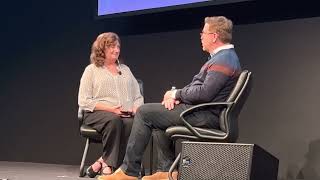
Transcript of a live interview and panel honoring Mike Shebanek at a Vista Center event (March 2022). Participants discuss Mike’s career building digital accessibility at Apple, Yahoo and Meta — notably the Mac and iPhone screen reader VoiceOver — the creation and impact of accessibility labs, Teach Access, and practical advice for embedding accessibility into product teams. The transcript also collects personal testimonials from users and colleagues describing life-changing impacts of accessibility work.
Good friend, Vista stalwart Mike.
I'll just.
Okay, thank you. Interviewing Mike, tonight is my good friend and Vista stalwart Alice Turner. Alice is the director of community and corporate relations at the Vista Center. Alice lost her sight mid career and as a flourishing client as Vista center successfully returned to her executive role for many years before she joined Vista Center's leadership team 16 years ago. Her tenacity and resilience paired with her passion to educate others on accessibility make her an excellent advocate for Vista center array of programs and support. She's also a great conversationalist. So over to you Alice.
Thank you.
So thank you Kare. Thank you John, and thank you Ned for setting up this wonderful evening and this conversation with my friend Mike. Are you having fun yet?
Yeah, I'm already overwhelmed. So thank you guys for being here, supporting Vista center and just raising awareness of accessibility. It's incredible. I mean, I never dreamed or imagined when we started working in this space that this would happen.
Well, it's wonderful because when you get to be with a community of people that are really committed to this, the conversation is going to go on for a long time. Not ours tonight. So what I thought we could do, Mike, is begin with that term accessibility. It means different things to different people and it becomes almost like this word that some people are not exactly sure what it means. So I'm focusing tonight on thinking about digital accessibility. And so for me as a blind person, having digital accessibility means taking away the barriers to access to information. So that could be through our computers, through our phones, phones, through any platform, and removing those barriers so that my experience in digital accessibility is the same and has the same ease as someone without a disability. And that's what I think of when it comes to accessibility. Now I know it must be tough when you have to describe what you do, you know, for folks, but how does that align with your definition?
Well, it's a great definition. I'll just say probably like all of us trying to explain we do to our parents doesn't always like, what are you doing work again? Can you do that?
Yeah.
And it is sometimes hard to describe, but I love your definition, particularly around digital accessibility. Because when we were thinking about accessibility, the word I often leaned on hardest was inclusion. It's like, why are people with vision loss not here? Why do they not have a voice? Why are they not able to get to the things we're building for the.
Rest of the world?
Nothing about us without us is a phrase that's commonly heard in the space. And we really Took that to heart. And so it's. And you can kind of. I think a lot of you can attest to the results when it's really put into practice.
Perfect. So when I think one of the things that I'm always interested in is people get to that work world, get to that space, that commitment for accessibility in a lot of different ways. Right. The doors are. You can come from many doors before you end up in the accessibility world. So how did you get into that?
Right.
Well, I think it would be called the back door. People ask me all the time. They're like, well, you must have gone to school. You probably studied this for years. You may even have a PhD. And I'm like, no, none of that. I was on a completely different path as a product manager as Ned was talking about working on some really cool products like the iMac and OS X and some of these other things that we use every day. And I think Ned mentioned this earlier, but my manager, Chris Borden, walked by my door one day and says, hey, I got something for you. I'm like, okay, well, what is it? He goes, well, probably take about two weeks, but we have this problem we need to solve as these kids have made two weeks.
Right.
18, 20 years later, I'm still working on that, too. Don't hold me to a schedule. But he just said, you know, we have this problem. These kids are blind. They want to use a Mac. And the part of that story that's interesting is that Apple had, well, I should start with the governor of Maine who had decided that technology was going to be the way for a lot of kids who didn't have access to break out economically. And so he said, we're going to mandate computers. Instead of in eighth grade, we're going to put in WI Fi, which was unheard of back then, through every school, and change the way school was taught. But there was this group of kids that people had forgotten. What do we do with this group of kids who are blind? And at that time, there was no screen reader technology for the Mac. And it didn't come to our attention in corporate, if you will, until very late in the game. And it came to me, and I'm thinking, well, I don't even know what a screen reader is. And There was no YouTube. There was no Google, was sort of new. I started searching like crazy, couldn't find a thing. And I happened across one small video, maybe 30 seconds to a minute of someone using Jaws. It was by Trace Research center in Wisconsin run by Greg VanderHeiden. A terrific, incredible hero of accessibility. And I remember that first moment when I was introduced to the screen reader and I was just shaking my head, my jaw was down. I was like, what is this? Is this really how people are doing this? You know, I'm thinking, this is incredible. First time, it's amazing. This is incredible. And then I was like, this seems really hard. And I just spent the last six years making computers that were easy. And I'm thinking, how did we get this big gap here? There's got to be a better way. And so that effectively was my introduction. I think Ned mentioned a special ed teacher and I've got to call her out. Her name is Mary Beth James and she was a special education teacher that was at Apple, working in developer relations, just worked as partners with other companies building things from the Mac. And I remember going down to her office one floor down and knocking on her door. I'm like, oh, yeah, I've got this problem. I said, I've got to do this work. I have no idea where to start. And she's like, I got you, man. What a hero for me. She's like, let me tell you how this works. Let me tell you how people use this technology. Let me introduce you to disability culture. Let me introduce you some people and some organizations and got me educated. And I remember just I leaned on her so hard and asked a million questions and then soon, of course, made contact and connections. Larry and Golder was one another. But what I think I took away from that was that there was this other culture going on I wasn't aware of. And I saw myself in this role of connecting the two cultures. Like, I ended up with some amazing friends and amazing people who are blind, low vision and working, sometimes working jobs normally, sometimes working in accessibility. But I wanted to introduce them to these other friends and my other friends to them. Like, this is amazing. You've got to know these people. And so for a lot of it was just figuring out, like, how do we bridge this? And so that ended up influencing a lot of my work. And as I said, you know, 18. I'm sorry, I'm going on now too long. We're going to be here for four hours. So, yeah, I mean, I think for me, looking back on this, and of course I'm thinking tonight of all the things and all the people here I've worked with and the work that you guys inspired me to do, who knew that would be the direction? I mean, it certainly wasn't in my mind, but somebody said, I retired. I did for a couple months in there. But I remember thinking, is this the work I want to do? And of course the opportunity came up and I'm like, how can we not want to do this work? It's incredible. And I'm sure we'll talk about people that have been using the technology and I know many of you do, but incredibly rewarding, just incredible.
So you talked a little bit about the folks that have really been a guide, right, for you in the area of accessibility. Any other thoughts? I know that you spoke about your friend Mary Jane. Is there any other folks that come to mind about folks that really help to assist you, guide you? And then what was the impact of them?
Man, I could go, I know I could literally just start from one end of the room to the other and talk about everybody and the work they've done. And even for people here that aren't necessarily involved in accessibility, I think most people who know me or working with me understand how hard it is to do. There's a lot of trainings, a lot of introductions, a lot of restating things that you think people would know. And there's walls, I mean, let's be honest, there's walls in front of us to get some of this work done. So the encouragement I got, I know there's a table over here, people from Apple, just the encouragement to hang in there and keep it going, even though, you know it's a rugged road. It's hard being a product manager generally, but for this it was particularly interesting. I mean, it's hard to pick a couple people I'll talk about, I talk about Mary Beth James. Let me talk about Alan Brightman. So Alan Brightman, effectively, I mean, such a great friend, a close friend and a mentor, he founded the Worldwide Disability Solutions group at Apple long before I got there and was unfortunately left long before I came. So there was a big 10 year gap in between where things didn't go well for Apple. When I first started, people thought I was crazy. Not because it's for the crazy people, because Apple was out of business. Like, we got so close. It was within 90 days of not making payroll. That's how bad it was. We're like, why would you go work for a company like that? But there was something gold there and I wanted to work for it. But Alan is the one who taught me the lesson, aim big. You know, when you and I asked, when you look back on your career, what do you remember? He goes, I remember the big stuff, the things. Even if I failed at it, I'm Glad I tried. And he said, if I could give you one bit of advice, to aim big and encourage people and help people shoot for the moon, like really go for it. And I think that was true of the spirit of Apple at the time, to just be creative and try things. In some ways, we didn't have much to lose, so we could take some chances. But when I remember when we talked about building a screen reader. And I'll jump forward because we started with the Mac, which is a personal computer, and then we came to this phone and you guys know this now, but at the time, of course, it's just a flat piece of glass. There's no tactile feedback, there's no dot on the five button, there's no. And you can hardly tell which orientation it's in. And people thought you were crazy. You can't make that work for someone who's blind. There's nothing. You're never going to know which way to hold it or what you're touching. It's going to do stuff before you. And so I think he gave me that sense of go for it, like aim, just swing for the fences. So he's been a huge helper to me. And when I, you know, I have those calls or like, Alan, it's not going well, what do I do? He's been there to really pick me up and get me on the road straight. So that was a good one. The third person I'll mention, too, and I'm so sorry, I'm missing so many other people, but a guy named Darren Burton. And Derek was the director of consulting at the American foundation for the Blind. And we met at a conference, I think, and got to know each other. And ultimately he came out and worked with me at Yahoo, which was really great. You know, I had five years working together, but before that, we had invented the voiceover system on the phone and the question was posed, so who's going to be the first one to use it outside the company? How are we going to know if this really is good, or do you just think it's good? And we're like, if it's not good, that could really tank things. If it is good, we need to know, but we also need that honesty. So we need somebody that can actually just be honest and say, this isn't it, or, oh, wow, okay. And the first person I thought it was Darren. And I remember putting that call in. I said, darren, I can't do this over the phone. I can't send it to you. I need you to Come to Apple and come on a plane and hang out for a day. He's like, well, for what? I said, I can't tell you.
But.
It'S going to be great. Can you come out here?
I was in shock.
He goes, I'll be there tomorrow. Like, really? And it turned out, I think Reader's Digest had given them a fund to develop new technology and travel money. And dutifully he showed up and brought them up to the fourth floor of our building at Apple and we just hung out for an afternoon. And I remember the first time I said, I'm going to have you put your hand out and I'm going to put something in your hand you've never felt, you've never used, you don't know how it works, you've probably never heard of it. And he goes, wow, okay, what is this?
Is it heavy?
I put the phone in his hand and he felt it. He goes, I don't feel anything. He goes, am I supposed to use this? I said, we're going to. I'm going to teach you how to use this thing called an iPhone. And he's like, okay. And we ended up working through this for an afternoon. And I'll jump to the end of the story, because the end of the story was. He goes, okay, that was really cool. Thanks. Can I take it with me? And we arranged for him to take it with him. And it wasn't until years later, I asked Darren, I said, darren, do you remember that? He goes, oh, yeah, I should remember that. And I said, what did you think when you left? Because I was really curious. I didn't get to ask him at the time. He goes, oh, I thought you were vadian. There was somebody back there with wires and there was somebody else in the room making a talk. It was too good. Like, nobody has this. We had a good laugh about that. I said, no. He goes, I took it home and it's still did the same thing I did. And that was if you huge help. And that was a great. We had a great friendship. And he's been. You know, it's funny, I think, when people ask me about him and I talk, I don't even remember. He's blind.
Yeah.
We're just so connected and so transparent and we goof around a lot and laugh and. And so it just has never. I don't know, it's just. He's just there and you need friends like that. You need friends, you know, wherever you go.
Absolutely.
Absolutely. Well, I'm going to shift gears just a bit. So you have had the joy and the challenge of working as an accessibility evangelist for several companies. And one of the things that I'm curious about is what are some tips or information or things that you can share about how it is that you can integrate accessibility into the mission, into the projects, into the products, really into the granular level of a company. And we have representatives here in this room that have done that. But as the head of Accessibility, what are some things that you have done?
Wow, it's a good question. And boy, this is the topic of conversation amongst all of us at all of those companies every time we get together. What do you do in this mortgage? How is that happening? What can I do? Can I use that? Is there something you've said? Is there something you wrote, like, how does it happen? And I think the lesson ultimately is it's different at every company. I've never yet encountered sort of the cookie cutter. This is the program, this is how it works. This is what you say. It opens up the door, you get the funding, you build a team. Suddenly the company says, hey, culture, this is right. It just, unfortunately, it hasn't really worked out that way. And I had someone ask me about this one time because they were going to head up a company, accessibility group for a company, and I was really perplexed. I'm like, I want to be helpful here, but I'm kind of struggling to figure out what can I offer? And the way I described it to him, which he has since said was really useful, so I'll offer here was I said, you got to first understand the culture of your own company, like what drives you. Are you trying to be like the world's best service company? Are you trying to be the most creative company? Are you trying to run by metrics and be strong, super efficient? What is the thing that drives that company? How do they make decisions? What do they value and reward? And I said, you've got to find a way to get accessibility on top of that. So, for example, at Apple was about invention and we talked about voiceover and inventing something that hadn't existed. When I think about Yahoo, it was about just being excellent and being social. And so we built labs. We talk about that a little bit.
Sure.
They were the things that happened in that space was incredible. I could go on for hours just about that. And then of course at Meta, you know, we're data driven, right? And we want to make sure we're like, we serve 2 million, more than 2 billion people in the world. It has to be Inclusive by definition. And so we leaned into that idea and that's how we've been able to sort of say, like, this is how accessibility fits into what we do here, and it has to be authentic. You can't fake that. And so. But we've been able to find ways to sort of like. And this is maybe one of the more interesting things. I've rarely gone to an executive at a company. In fact, I can't think of one where we talked about inclusion, accessibility and said, oh, I hate that. No, I'm not doing that.
Never, never.
They're like, yes, of course. Of course we want to do this. This makes perfect sense. What can we do? And that usually opens the door. And we usually have incredible people in these companies with tons of passion and energy who want to do these things. They'll call me all the time, like, what can I do? I'm not in. This is my main role. I want to volunteer. And so really, it's about finding that way to meet in the middle, right? And that's probably true for everything in a company. But, like, executives expect this to happen. Energy at the bottom. It's that middle layer that we've got to figure out, like, how do we make it easy, how do we take away excuses, how do we provide good tools? But the other thing, too, that's really crucial is always bringing it back to people. You know, I was talking to Alan when we were building a lab, and I remember he walked in. It's this incredible facility. You can describe it if you'd like, but the first thing he said is, I don't see any pictures or any images of people with disability in this lab. It could be any lab in the world. I'm like, ah. And so the purpose of this facility was to introduce people who don't know about disability or feel uncomfortable with it and were afraid to ask questions. We wanted to make it the most safe, comfortable, easy space to be in. But we wanted to remind people why we were there. And so we used to have a saying. We're not here to make the bits, the dots bounce around the screen and draw pretty pictures with computers. We're here to talk about the people behind the screen, the people with disabilities who use this technology, who we're building for, and introduce people to stories, to people. And so grounding it always in stories of people has turned out to be ultimately the really critical thing. And that starts at the beginning, where you say, what service do you need? What do you want to do? How do you want to do it? And then how can we use what we know to make that happen? So it has to be user centered always. So what I love about the business center.
Yes, absolutely.
It's funny because when you were talking.
About stories, that's our life and the.
Nonprofit, it is how it is that.
We change lives and help people to achieve their own goals. So let's go back to Apple for a little bit. So when you mentioned that when you came on board, it was an interesting time at Apple and we heard about some of your beginning days with the school in Maine. And I know you and I have talked about that as well. But if you had to identify some of the pivotal turning points for things that went on when Apple was really on this road and on this journey, can you identify a couple that stand out in your mind?
Yeah, there's a story. I mean, how every. I'm already fumbling for words. I was talking to someone earlier and they said, you should write this stuff down and probably should be a story. And you and I have talked about that. And I said, you know, working at Apple at that time was like being on a roller coaster. You are holding on for dear life as this thing takes you up and down and upside down and gaining speed and you don't have time to stop and take notes about the ride. You're just totally on for dear life. And that's kind of what it was like. I think that's the best description I have for it. I think after the fact you go back and go, wow, what a ride. That was amazing. What just happened? Did you notice this? And you kind of start to work your way through it, I think. I think we heard a little bit about sort of like how we kind of got the company to get going on this. But another one, like, I should have known better. He was like, I know you have something else. Why aren't you telling me? And I think for those students, particularly if you're making a pitch to a senior executive, they know what it takes to get the job done and they can smell out if you're not going bold enough and if you're not and you're thinking, I don't want to ask for too much, they won't give it to me. Like, no, they need to know you're serious and in your homework. Because if you're going to do this, you're going to need a lot, you're going to need a big thing, otherwise, why do it? So I think that was a good lesson to me for sure. And so in that vein, I Remember going to our VP Phil Schiller, who was notably tough. I'm sure there'll be a few laughs here. His immediate response was no, pretty much to everything. And so if you went in that office, you went with your whip and your lion taming chair and you were like, I gotta figure out how to get through this alive. And I remember going to him saying, we're going to build this screen reader. And he knew that. I said, phil, here's the thing. I'm going to ask you for three things you've never done before. And if I don't get a yes on all of these things, we can't do this like it's a full stop right now. And I was doing the bold thing. I'm like, okay, let's just see what happens. And I said, we've got to pre announce the next generation of the operating system for the entire company to the entire world. We've never done that. We're not ready to do that. But I need you to do that. And we need to be able to release a beta software. And so. And I need to be able to ask this thing publicly and so that we can get feedback. I can't remember what the third thing was, but effectively he said, yes, yes, yes. And I got out of that room faster than you can possibly imagine because I was taking yes for an answer and getting out. And to this day, I was talking to somebody. I said, I don't think that company's ever pre announced an OS and then shipped the code from the next generation OS to run a public beta around the planet for people to comment. Gets back to being user focused. It's like we knew we needed to talk to people who are blind who use screen readers to tell us what's good, what's not good, what do you want, how do you want it to work? And so that was, for me, for all intents and purposes, complete miracle. A little crazy to ask questions like that because, you know, it would have been easy to say, I'm not going to ask, I'll just get shut down, why bother? But you kind of just have to throw, as you would say in the old days, throw your badge on the table and risk of getting fired. Likely not. It felt like that. Trust me, it really did feel like that when you went into some of those things. The other one, too. This is maybe the end of that story with Bud Trimble, but we're in this meeting and my engineer, who had just met Eric Seymour, what a great lead for the project, right? That's his real name. And I always thought, something's going on in the garage. We go to this meeting and Bud's like, yep, I can sell it to Steve. We run out the door, the door slams. And I look at him, I go, steve, and I told us, right? He goes, I have no idea. I'm ordering it now because now we just told the company we're going to do this. And so the WIS unleaver. Unbelievable. And it was literally just the two of us not trying to figure out how it should work and how the features and the schedule. I had like a three year, two year, three year, five year plan and he was just coding like a madman. And just, I mean, I think this theme, I hope this thing comes across as we talk. But the only way this ever happens is to work with incredible people. And your job, your mission in life is to find those incredible people and be as incredible as you can be and help them be as incredible as they can be. Because there's no way any of this happens without a laundry list of people who are just amazing. And it's my, I mean, ultimately it's my pleasure, privilege to find those people and work with those people. That's been true of Meta for sure right now, of Yahoo when I was there, and certainly of Apple when I was there. But the cast of characters for sure, absolutely.
And I think one of the things that you and I have had conversations about is that superior work comes from superior teams. And it's finding, finding those teams and navigating together. And I know that this exists within this room. We have many great teams that I've had the pleasure to work with.
Let me just add one thing too. I think this is maybe quite unknown, so I'm going to give you a little bit insider secret and you probably, I think Karay mentioned this earlier, like the energy in the room. Something that's really unknown about this work, especially in Silicon Valley. When you think you heard that list of company names, those are very fierce competitors, they battle it out. But what's so incredible is what kept me in this is the people that you meet working on accessibility can own that, but then put it aside. And there's an unbelievable camaraderie amongst the people that work on accessibility in the industry. It's what attracts a lot of people to the work and keeps them in that work. But it's also what you feel when you walk in the room and we're all talking and, ah, how you doing? This is so great. It's a small world it's getting bigger for sure, and we're glad that it's getting bigger. But the quality of people that dedicate themselves to this work is just astronomical. And I've had lots of people say, why are you working in accessibility? You could be over here doing this or that or the other. And I said, because the people you meet and work with are second and other.
I agree wholeheartedly.
Voiceover at that term. You know, I'll tell you just a brief little story way back, I think it was in 2000, probably 8 Vista center hosted our very first technology program for assistive technology. And it was around the same time that all of these smartphones were coming out. So we had folks that were there presenting, talking about voiceover, talking about gps, all of those other type of things. I didn't have a smartphone at that time. I thought it was really interesting and someday I will get one was my conversation with myself then. But the term voiceover. So one of the things that I was doing at that time was writing a newsletter for our agency and I had to look up voiceover. Is it a V? Is it an O? Is it a capital V? Capital O? Is it all together?
So I would love to hear.
A friend of yours told me that there is a fun story about where the term voiceover came from.
Wow, thanks. And there was a lot of thought about this. It's an interesting one. I have to start the story with some of the myth and legends. This is going to be a Steve Jobs story. Gotta sneak one of those in. If we talk about Apple. And there was some things were true, some things were mythologically true, some things were just stories that were told and embellished. But there was enough truth in there that you took them very seriously. And one of the myths and legends was never get in an elevator with Steve, especially alone, because no doubt he was going to ask something about who you were, what you did, and if he didn't like the answer, by the time the bell rung and you got off the elevator, your badge probably didn't work anymore. And so there was always this sensation that you better have your A game, maybe your triple A game when you're in the speed room. So we get voiceover finished on the Mac and we need to get. Steve has this weekly meeting where he works with the design team and goes through kind of review. Speak of him as he's current. I still think of him as being here, but he would basically walk through and say, okay, show me what we're building this week or what's on the, you know, let me comment and suggest things. And a lot of the really heavy lifting was done at that meeting. He was really a good product manager. And because he was a good product manager, he didn't want to hear from product managers.
He didn't want.
He wanted to hear from engineers, right? That's his thing. So this meeting comes up where he's going to review voiceover and of course, Eric is the engineer. And they invite him to this meeting. And it's a really small set of people and pretty small room, maybe eight people in the room. There's sort of an L shaped table. Eric's in the front with a computer. And at some point they decide, I guess we gotta have Mike there because if something comes up, he's the only other guy working on this. Like, Eric's like, I don't know, what if I don't have an answer? Steve, we gotta have an answer. So I show up and they're like, oh, yeah, okay, sure, sit back. Okay, fine. So the meeting proceeds. Steve's watching this whole demonstration and he's hearing the voice. Eric's doing a mass producer job of demonstrating how it works and why it's important. And then all these designers are kind of like peeking over shoulder to shoulder and they're kind of bunched up in a little huddle. And finally Steve kind of leans back in his chair and goes, awesome. Okay, great. So what are we going to call it now? Remember, there's only two people in the room that had done any thinking about this at all. And Eric's the engineer, he's not the marketing guy. So he's like, well, yeah, what are we going to call this thing? And all of a sudden everybody started having ideas and they started going very sideways. And I thought, oh, no. And the part that was really scary is when Steve started going, oh, yeah. And then I thought, oh, no, this will be bad. Like if we name it, they. These were not really good names. Just to say that it would have been, oh, I know, I know. You want the example of what the bad names were. I will not even repeat them. I would just say they were called, they had. If you were heard them, you would feel it was a pejorative. It was like, yes. It just wasn't appropriate. It was just not appropriate. And as soon as he started giving me like this nod of oh, yes. I'm like, everything starts going a mile. And in my head I'm like, I'm not supposed to miss meeting. I shouldn't be speaking up. If I speak up and I'm wrong. I'm either fired or kicked out or embarrassed with people I have to work with. But if this thing goes out this way, it's a disaster. And I'm processing all this in half a second. And as these names start, I can tell he's starting to settle on this. And if you know Steve at all, once he sets his mind, it's done. You're never coming back. Another question. There's no more discussion. It is over. And I finally said, I have a great name. Everybody, like E.F. hutton moment.
I just.
Everybody stops and just turns like, who are you? Why are you talking? Steve included, right? And he's like, oh, really? And he spins around in his chair. But what I didn't realize was I was sort of back here. Everybody's huddled forward, leaning forward. When he leaned back, he rolled back. And by the time he turns around, we are nose. I am staring into those famous eyes, right? He's about that far inches away. And he goes, what's it going to be? And now I'm thinking, oh, oh, oh, please. And I said, we're going to. And I just had, like, as much as I could. I'm like, we're going to call it Voiceover because it's a great name and people are going to love it. And it refers to this idea of talking over and explaining things, like in a TV ad or in a movie, like a voiceover artist. And he gives it that one beat and I'm thinking, that's when I get fired. And he goes, that's what we're going to call it. I got that really, really fast. Take your gas and get out. And it uses capital, capital O. And I really like thought through. How would people abbreviate it? Would they nickname? So we called it VO Or V. O. Voiceover. Obviously the long form of the name. But we had a few others where the initials didn't sound too good together. So we gave that all that consideration. But people seem to really respond to it. I think one of the things that was really gratifying is that people said it doesn't refer to being like. It just tells me what it does. And that principle of just tell me what it does so we can just enjoy it and not have to be a blind person to use it. Because it turned out I don't have a lot of time for this story. If you go downstairs into the museum, you'll see ipod and you'll see ipods with no screen. And voiceover was on that device. We never imagined that would happen, but voiceover is voiceover wherever it goes. So it can be anything to whoever needs it, whether you're blind or not. And that was kind of cool as well.
So Ned referred to something, and I'm familiar with your work in this arena when it comes to the Accessibility Labs. And I think one of the things that happens for us, you know, at an agency, Photovoyant, visually impaired, is that we do try to let people know just what is it that we do? How do we do the things we do? How do we accomplish? What does technology mean to us? And I. I find that I'm having these conversations all the time, every day, everywhere. But I know that the Accessibility Lab had a very great mission. And so can you tell us a little bit more about that? And then what was the impact of it? Because it's still going on and it's a model that's being followed now.
Yeah, yeah.
So how did it start?
And.
Yeah. What do you see as the impact?
Yeah, this is a good Gary Bolton story about Gary. Gary, Gary. Gary Moulton is like an icon of this work and has been doing it for maybe certainly longer than I have, and so had the joy and privilege of working with him. But when I was hired to come over to Yahoo, they had gone through enough turnover and change where there really wasn't a team anymore for accessibility. And so Gary and I, first day kind of walk, and we're in the. If there is such a thing as a headquarters. We were across the street in a building on the fourth floor in an office which is eventually became the maintenance closet. That's how it was. Right. So I remember the two of us sitting in that room and talking about, like, how are we going to do this? How are we going to build this thing out? And eventually we came to this idea. We need to just get people to experience it. Because what we learned really quickly and through his experience, once someone was exposed to assistive technology and understood the value of, like, how this works. And the trick is successfully, because so many of these labs will bring you in and say, oh, isn't it really hard to be blind? Is this a really hard tool to use? Oh, it's such a shame. Like, we've got, you know, this is horrible. And we were all. I was super adamant, like, we've got to turn this around and say, this is what it feels like when it works great. This is how much people can accomplish. This is how independent they can be. And so people would leave this lab walking away. And we got this. So Often people would walk out the door and, like, I gotta go tell somebody. And they'd go home and tell their partner. They'd go to their work and they'd tell their team, like, you gotta come back and check this out. This is amazing. And so what we knew is we were building evangelists. We were giving people the most amazing first experience with disability or access or technology, and they couldn't wait to share it. And that's. I mean, and again, this isn't me. This is the team of people that were there. We had some amazing people like Darren and Gary Moulton and Larry Goldberg. And I mean, when you have a team of those kind of peak, that level of person and the experience they had, you give them a platform. And I thought that, well, that is literally their place to do their work. And we would laugh and we would stand back and, you know, they would just go to town and people were just loving it. And the thing that was so gratifying is people would come in and the first thing they would say in this laugh, maybe I should describe the Bible a little bit. We actually go back and tell the story a little bit differently. So we put this lab together really small, just cubicles and like three stations. We did a demonstration. Eventually someone said, maybe, Alan, you should make sure your executives see this. So we hosted an executive hour after staff meeting. They all tripped across the street, went through the crosswalk, over the building, up the stairs, down the hall, back of the building. And so they got a chance to understand, like, how far this was for people to go. See?
Sure.
And they walk in, and we did three demonstration stations. And walking through, we gave them screen readers. We gave them, like, a head tracker for, like, a mouse pointer thing where you didn't have to use your hands. We did some things with captioning. We went through a whole bunch of different types of assistive technology, and people were kind of into it. So the techniques were like, oh, that's kind of neat. I wonder how they're doing that. And they went off and off they went, and I'm okay, well, at least they know what we're doing. That's good. They haven't shut us down. It wasn't until maybe like a year or so later, after reorganization, I had a new vice president. And it turns out that vice President Mary Louis had been one of the participants there who I had not known at the time. And she remarked, even today, she's like, I can't tell you how amazed I was at what was happening in the space. It changed Me like, she has been a huge advocate of inclusion, disability and accessibility in every role she's had since then. And ultimately when I said, that lab's too far away and it's way too small, you were right. And they moved it to the center. The best location on the campus. You get dropped off. Every tour would get dropped off. Ours was the first room they saw. We doubled the size of it, we outfitted it. And as I was about to say, when people would walk into this lab, the first thing they would say is, this is probably the nicest space in the entire campus. And there was a reason for that, because we wanted to dignify disability and say, people, this, these are sort of the really big principles, like give people a good first experience. Always focus on the positive. Give them the tools to share what they learned with someone else and show just in the way we built the space. We had different types of chairs, everything from lawn chairs to bean bags to leather sofas so people, anybody could find something that was comfortable for them. We had tables that move up and down so people with wheelchairs could feel comfortable. We had computer screens on arms so you didn't have to roll up to a desk. You could have it come to you. We had double screens so people could see from any place they wanted to. We had maybe the best audio in the campus in that room. It was a delight to be in there. And people would come. This is how I knew we were on the right track. Maybe this gets back to that first question about how you change the culture of the company. People would come in and people always ask me, how do you know you're on the right track? People would come in and just say, can I hang out here? No business, just nest proud. I'm just going to hang out because something good's happening there. And that's when, you know, when it's like, that's where I want to be of anything I can be doing on campus. And eventually that became part of the VIP tour. So when we'd have people coming on campus, they said there's basically only three places we go. We had. And so actually it's kind of funny. We had a TV studio, like a real full on television studio that we broadcast on news that was sports and things.
Sure.
And we have the cafeteria because everybody has to go to the Silicon Valley cafeteria, Accessibility and accessibility lab. And that was the highlights of the tour. We did an open house for Joe and Jennison here, the founders of Global Accessibility Awareness Day. So thank you guys for that.
Awesome.
People Were saying, I've heard about this lab. Can we come visit? And that was a big question. Are we going to open this up to people outside the company? And so effectively we did. We said, you know, we should give back. Like, if this is helping people, let's share it. So we had an open house. We invited. Many of you may have come, but we had people from all over Silicon Valley and other places come. And eventually people started saying, can I bring my team in? Can we just explain? Like, can you bring them through this program, this process? And so it became the model for many other labs and many other companies. And still today people refer to it and are building these out. And so a lot of these companies you heard have these labs. And unfortunately, in the last two years, nobody's been able to visit them. But they are out there and they're getting more prominent, and we hope that those principles apply. It got to the point where we literally had to say, like, we have to slow this down because we could have done this every day pretty much for the month. So that's incredible. Yeah, really, really gratifying and really cool to see other people take that idea and run with it.
And you mentioned Yahoo is focused oftentimes on entertainment. And there's a lot of my friends in the world, my husband, myself, we have major sports fans. And then we had the chance at the last site tech level to see a video about the Yahoo fantasy football super pop. It was really, really, really fun. Can you just tell us a little briefly about how that, how that started?
Yeah, yeah. This is. This is one of those things that's serendipitous. You just never know when you're doing this work what's going to happen.
Yeah.
And it's been maybe part of the joy of doing the work. So if you roll back the story to that across the street, back of the building lab, or I'm in that lab, and Alan happened to be visiting Alan Brightman, who I mentioned earlier. And I'm just kind of talking to some good friends of Gary. We're just kind of sitting around talking and chatting. Like, you know, it's kind of this nap late afternoon. And now think about where we are. We're way in the corner, a guy walks by the door, kind of does a double take. Hey, is this the lab? I'm like, yeah, yeah. Can I come in?
Sure, sure.
Alan's like, okay, I'll let you do your thing. So he goes, yeah, can you show me how this stuff works? I'm like, yeah, okay, cool. Let's Come on over. We go through the three stations. I'm talking about accessibility and screen readers and, like, things you want to consider. And he's like, wow, this is really fascinating. And you kind of have to look you pretty intent. And then he goes, okay, that's really cool. Thanks. And he walks out. Alan looks over at me and goes, do you know who that guy was? I have no idea. He goes, do you know what he works on? No idea. He goes, do you think he got any of that? I have no idea. And I think it was about two months later. He comes back and he says, hey, I got something I want to show you.
What?
He goes, well, I work on fantasy sports. And he goes, can I run this by you? And he brings out a phone demo, like an internal phone with special software on it, internal builds, nobody had seen it yet. And he goes, let me walk you through this thing. And he goes. He goes, did I do it right? And I'm like, did you do it right? This is like the best example of accessibility I think I've run across. It was unbelievable. And I said, how did you know? He goes, well, I just came to the lab. He told me what to do. I went back. I had a friend that's fly. He told me, the average I can offer, you win. So you never know who's coming in that space or who you're talking to or what they're going to be capable of. And that's how fantasy sports became accessible. And I think I can share this now. It's not a story I tell often because it turns out, and I won't say it's been a few administrations, so I'll let you guess at which ones. But fantasy sports was being used in the administration because they were big on sports, and they changed to this because someone on their staff was blind. And the entire.
We go everywhere.
You go everywhere. And so they're like, this is the best one. We're all gonna use this so our friend can play. And off they win. So that was. I mean, what a cool story.
That was.
That was awesome.
Yeah.
But did a good job for that engineer, right?
Well, and it's wonderful because you don't know who it is and how it is that you impact his life. So talking about that, every person that I've ever talked to about you says that Mike is a mentor. Mike helped me in X, Y and Z. And I know that that's something. Passing it on is really important to you. And that was, I think, the germ, the seed for Teach Access which is a phenomenal initiative. And so for those in the room that don't know about Teach Access, can you share a few little bit about what it is and the impact?
Yeah, thank you.
Oh, and before we, before we do that, we have some Teach Access tables in the room. Can you guys clap for us?
Super important.
Super important.
So I mentioned earlier that there's a real camaraderie amongst people even at different companies who work on accessibility. And so I happen to run into a guy named Jeff Wickman, also an amazing guy who worked at Facebook now, of course, before long, before I ever considered working at that company. And we got to talking and it was a little bit like, is it okay to share? Can we talk? Like, what can I say? And he brought me on a tour to campus. I'm like, let me see where you guys do your work and this sort of thing. We kind of just got to talking and I said, can I ask you a question? I said, and this happens a lot, but it still felt a little weird. I said, you spend a huge amount of time, like just training people on the basic stuff, like what is disability and how do people use screen readers and how do you check and test the stuff? And he goes, yeah, actually we spent a huge amount of that time too. Said, is it like a lot of time? I said, yeah. I said, it's most of our time more than building it, just training people and explaining it. And that's why it's slow progress, because it's not taught. And so me graduated a four year computer science degree and had never heard the word accessibility, even though it's now required by law in many cases. It's obviously expected. It's competitive, right? You got to do this stuff. And so we both said, we gotta do something about this. Like, we can't keep doing this, can't keep going on. And so we said, let's do something to take what we're doing in the real, like in the trenches of these advanced companies and let's see if we can get that back in education and see if faculty will do this. And so we steamed up this idea of Teach Access. Larry Goldberg I brought on board to help run this. And the idea really was, can we train? As Matt May at Adobe told us later goes, we have a few people that know a lot about accessibility. What we really use a lot of people to know at least a little bit. And we're like, that's perfect, Matt, can I steal that? Yeah, go ahead. Okay, so there you go, Matt. Thanks, Matt. And so that's really what it is. It's taking the technology, the kind of late state of art and bringing back the curriculum and the tools we use and sending it back to faculty and saying, can you put this in your education curriculum? Can you create courses around this? Can you have this be a chapter of your book? Can you just make sure that when you have graduates coming to work in these companies, they're prepared, like, they understand the basics, they know what accessibility means. I don't know exactly how to do it yet, but they're like, set. And so what a wonderful thing it was. The reception was off the chart. And so we've got universities, we've got disability organizations, we've got lots of companies. I mean, you can go to teach access.org if you want to check it on your phone and kind of check into like this whole thing. And it is just skyrocketed. It's going like crazy. And we're noticing this. And so now graduates are coming saying, hey, I was in Teach Access programs. I've been a school that supports this. And they're getting hired. And in fact, I mean, for me, one of the really cool things is I hired for our own team at Meta, someone who had been coming through the Teach Access program for the first time, actually matriculated. The whole thing came as a contingent worker and we just hired full time. So we're seeing, I mean, hope that has a long life and could change the next generation.
Based on who the CEO is, I have no doubt.
Yes, absolutely no doubt.
She's amazing. Okay, so we want to talk just briefly, because I. The work that you're doing at Meta is it's also going to change the world in some ways. And one thing that means a lot to the people in this room that use a screen reader is the fact that Meta is operating as a conduit for bringing people together in a process that I'm going to let you explain.
I think NIB is accurate. It's really complicated.
You really said very briefly because they've all had wine.
So.
Yeah, yes, yes. Just like one of those, it's got.
To change the world for us that use the screen reader and we go to a different platform and we go to a different thing and it's, why does it work here? It doesn't work there. And then I have to call my husband and he has to help me. So.
Yes.
And that's the experience today. Right? I mean, as cool as voiceover is, and these other screen readers, they do great work. The reality is, let me See if I can describe this a different way. If you grab. If you want to go to a website, you don't think twice about whether you're using an Android phone or an iOS phone. You don't think whether you're using a phone or a computer. You just go to the website. It's a website. But if you're using a screen reader or other assistive technology, what you hear and what's described to you will be different depending on which product you use to get there. And that's not good because that's not inclusion, that's not consistency. It's hard to collaborate with people. And what you're hearing is different depending on what device you use. And for good reasons, people use different devices. And so there's really no sort of single standard for all of the companies who make these technologies for web web browsing, the operating system, the screen reader vendors, to sort of say, that's how you're supposed to describe it. And so they all do it a little differently. And we take this so for granted on the web today. Like, of course, just go to a website. In the old days, I don't know if you. It's a good thing we're at the History museum. Somebody here can tell you this. It used to be you'd go to a website and say, you need Microsoft Internet Explorer, you can't browse this site. Or you need Netscape Navigator, it doesn't work for you. And you'd be like, I gotta have five browsers to see which one's gonna work. That got cleaned up through the work of the World Wide Web Consortium, through these standards buys and huge amounts of work for people, tons of people in industry, to sort of figure out, how do we get this? So we can still have lots of cool products, but they work consistently. That's never happened for the accessibility world. It's 2022. It's still never happened. So we're in an interesting place at Meta, where we don't own an operating system and we don't own a web browser and we don't own a screen reader. But we care deeply that this problem can get solved because we serve 2 billion people and it's all through the web, right? And apps. And so we thought, can we do something here? And again, I'm talking with Matt King, an amazing guy has coached me in a lot of ways because he's like, so expert at web, not my strong suit. And he said, I've got an idea around this. And so effectively, what we've been able to do is fund the work through these standards bodies. It's all back, kind of back behind the curtain stuff. But at Site Tech Global, just this last December, we were able to announce our intention to create this standard and really ask a lot of the main companies who involved. Would you join us at the. Could you make this real and could we change forever how we build accessibility into websites and screen readers? And the thing that's really thrilling about this is today for a company who wants to do the right thing, they have to test every combination of screen reader and operating system and hardware device. And there's the matrix of this number of things you have to test to see if it works is so big that no company, even the big ones like us, actually can't afford to run through the entire test. And so we do the best we can with a few things and hope for the best on the others because there's just that much work in the future, if this comes to pass, which we hope it will, you'll test once. And now every company can afford that. Every company can be small. That's our dream. That's our hope. We had similar hopes waste over their things and we can look back now and go, oh yeah, that worked out. We actually don't know if this is going to happen. And that's part of the scary, interesting, exciting part is we've got an idea and we need help to do it. And so hopefully someday soon you'll be able to find out like it turned out. But that's the work that's going on right now.
You can explain that at psychtec.
Quote.
Yeah. Hopefully be back again. Tell me, make sure they sign up.
Exactly.
So let's bring it back to people just for our clothes, for our conversation. We could go on like this for a very long time. But it comes back to impact and people.
Yeah.
And.
I think you probably have been contacted by folks regardless of the work, the company, the product that you did, where someone said, you changed my life, does anything come to me?
Well, you're gonna get me crying. I know, I know. We were crying together. We were talking about this. I'm gonna hopefully get through this.
That's okay.
We can fake it. Yeah. I gotta take a deep breath here a second. So you know, you put these things out in the world that you've just done and I've told people this and I know it sounds trite but like literally, if it was for one person, it would be worth it because we know what it means. Life changing meaning for someone to Be able to be on a phone or connect with their family or call someone. I remember early on when we were doing voiceover and someone wrote me a letter. I got a lot of these. How do you not want to do this work when you get letters like this? It was a gentleman who said, I love computers and I'm lying, and my family wants to go to the Apple stores together as a thing. Like, it was a destination. And he goes, for the first time in my life, I was able to go with my family and experience that experience with them at the same time. Because of voiceover, I thought, man, that shouldn't be a thing. But it was. And it was for him, like, the first time he could feel really comfortable, and they were excited to be there, and it was a great experience for him. I respect. I remember I was visiting the Perkins School for the Blind in Massachusetts, and I was just touring a place, but I just wanted to learn about it. You know, Helen Keller had a lot of activity there and did a lot of things there. And I happened across this lab. It was just a computer lab, and there were maybe eight kids, probably junior high or maybe a little younger. And all parents were sort of in the back, and somebody was teaching the kids how to use a computer. And we walked in the lab and the conversation came to like, the parents were like, oh, who's this person? And why are they here?
Oh.
And somebody said, well, can you teach them how to use itunes? Like, on the spot, I'm just there touring. And I remember going. And I'm thinking to myself, I can't say no, but I'm not prepared to say yes. These kids like, how are we going to do this? And some crazy enough. I said, sure, why not? And so we started, and the kids were immediately like, well, what's itunes? Why is this a big deal? I'm kidding. And so I said, well, let me walk you through this. And so we started to teach them about voiceover. Voiceover ON I don't even know if they'd used a Mac before. I think they'd use Windows. And we started, like, how you move the cursor, hear the voice talking to you, describing all these songs and things on the screen. I will never forget the look of the reaction. You didn't have to look. You could just hear it. The kids started to work through it, and they sort of figured it out. And eventually, one kid. And there's always that one kid, right? Like the ram bunches, when he turns around, he goes, wait a minute, Are you telling me I Can play any music and play any sample and get any book I want and like books on, you know, audio and podcasts. I don't know if podcasts are out there, but at least the books part. I said, well, yeah, of course. I said, it's the whole App Store. You can sample anything you want. Oh, my God. And he turns around. Every kid suddenly more than listening to me anymore, less than over. They're dancing, they're doing their whole thing. That's not the story. The story is the parents watching this happen, looking at this, going, what is just happening here? Because their kids are excited, they're energized, they're learning stuff. They're talking to each other, and they're like, this is amazing. And I thought that's why we do this, because those kids now are probably. And then I got just kind of a different perspective on this. But I got a note from Kate Song, who's our executive director of Teach Access. And I have to say, I never put this together. And she said this, and it just was like, how did I not notice this? She had a career as a university professor, faculty advisor, a bunch of things. And she changed her career to take on full time this role of Teach Access. And she said, if you, if you guys hadn't thought this up and made this thing. And of course she's convinced. She's driven. Amazing. It changed her career. Like, her entire life is different now. I thought, I just never really thought about that. And I, you know, I met Juan who's out here somewhere this evening. They said, you know, I make films. I use Final Cut. Like I'm a producer. This is how I, you know, tell people about what I do. And I use voiceover. I couldn't do it without them. It's amazing. So, yeah, just, I mean, the stories will go on. Yeah, they will go on. And I'm proud.
So we have actually some people in the room that would like to share a few comments with you because I think those stories help us all remember why we're all here. So what I'd like to do is ask Will Butler. Will, if you don't mind standing and introducing yourself from the two people in the room that.
That don't know you. I'm already nervous.
Yeah. So my name's Will. I am a writer, really. And I work for a company called Be My Eyes that makes sense mobile app and the blind people use and it's the largest global community of blind people and volunteers sharing site around the world. Wouldn't be able to do it if it weren't for accessibility on the iPhone. I'm sitting here thinking about Mike. What am I going to say after such an amazing interview? I've interviewed Mike in the past, but I haven't actually spent that much time with you, Mike, outside of those times.
Right.
I'm just going to talk about myself.
Probably more interesting answer.
So sorry, my face. I lit away a second. When I was probably like 9 or 10, I learned about stock. I bought stock, stock in two companies, Toyleros and Silicon Graphics. You can tell.
So I learned my lesson there.
And then when I was probably 11 or so, I bought stock in a company called Apple Inc. And, and it was $18 a share. So then around the time when Mike was putting out the blueberry imac.
I.
Thought, well, it's not going to get any better than this. And I sold on my stomach.
I sold at 22.
I think it.
Was at like eight and a half something.
And I remember it was the ipod, but I was like, it can't get.
Any better than this.
And then about a year later announced the iPhone. I, you know, I stood in line for the very first iPhone 2006. And it was right the year before I graduated high school, I stood in line for it. I love this technology. Even if I had been totally ripped off in the stock thing. But, but. And it was like I was the first kid with the iPhone, you know, in my group. Then I went to college. I went to UC Berkeley. Go Bears. And I.
And I.
At the end of my freshman year, I had three retinal detachments and I came back. I spent four years recovering from four months recovering from surgeries, and barely made it back to Berkeley for my sophomore year. And when I did, and I opened up my laptop for the first time as a legally blind person, it had magnify. I learned that it had magnification built into it. And I was like, that's pretty cool. Didn't realize that this was a brand new thing. And then when I went and got the new iPhone, because I always got the new iPhone back then, it was the third edition of the iPhone that year, which was the first iPhone to ever have voiceover on it. And so I realized sitting here, Mike, that I'm like the first generation of blind people who never had to buy a screen reader. Shortly after that, I put my CCTV in the garage. Not because there's anything wrong with it, but. So anyway, I'm going on and on, but I just wanted to say, Mike, you've been sort of an angel on My shoulder and I haven't really even known it all as years. So thank you.
Thank you.
And next we're going to hear from Katie Hogan. And Katie, do you mind standing and introducing yourself?
Absolutely.
I've got.
Hi, my name is Katie Hogan and I am a client at Vista Center. I am a board member, I'm Apple. But I now know from meeting Kevin, who works at Apple and introduced himself as an accessibility evangelist. I know I'm a voice of her evangelist and I'm also a high school learning specialist. And so in the work that I do, voiceover is a game changer in part because it's just so easy. And when I started at a new school this year, my bellman IT team had my Mac. They did their research, they were ready, they had Vistas phone numbers. They're telling me about jobs, they're telling me about PCs. I'm like, yeah, no, I just need a Mac, just need a Mac. And so on my end, in my day to day, your voiceovers, knowing me all the time and the technology that works to help support my work, it supports my kids, it supports my students. So for my students with language based learning disabilities, they're using screen readers and we're messing around trying to get these other ones to work that are embedded in their computers because they don't need a job or anything like that. And it's just so hard when they say, can you just pull your phone? Do you have my phone? I'm going to show you how this works. And as much as it's a game changer in my work, it's a life changer in my life. And I think I first realized that when it came to texting because everyone could and I couldn't. And so here was this amazing tool of communication and I couldn't be a part of it. And it wasn't just about the details of like, where are we going to dinner? Because someone could call me and tell me, you know, we're going here and.
I can sort it out.
But it was about that relationship part of communication. So I was missing out on the jokes and on the chitchat. And man, minute that iPhone came out with voiceover, I was on it. And so I was thinking about just some of that relationship and communication I'd had just in the last week or two. And so for those of you, oh God, I reminded you voiceover sounds, but it's the first rumor. Everyone in here knows what voiceover sounds like in my world, but he always sounds like Alex. He sounds like he's young all the time because most of us who are violinists listen at pretty high rates of speed. So this afternoon he yelled at me.
That John is on his way to my college prep.
We'll be there in 15 minutes. Oh, God, I gotta get ready. You let me wish a friend happy birthday. Voiceover is the reason why I know my club ladies are out of control. They like and love and laugh at and oh, that's a fan.
No kidding.
You're having my kid got into college. It's pretty awesome. And voiceover lets me have a lot of fun. You're the reason why I can sound so silly at 45. You're the reason why I can't use something by myself. So I can, you know, find my stupid TV shows by myself. I can order shoes by myself. This is more of a combo of you and Instacart. But if you know when John and Audrey are out the same colleges in a couple of weeks, I can knock out the grocery store myself and I can learn and connect with the world.
And I can, I can look at.
My news, I can do my podcast, I can do my books. And those are all the really heavy, amazing things that voiceover lets those of us who are long and low vision do. And then there are the fun things. We can use emojis. That's one of our dinner table. I was talking with the kids because they love hearing what the names of the emojis are. And so I was like, oh, one of my favorites is when people mean to do the face of tears of joy and they send a loudly prank instead. And my daughter, who's 18, looks at me and goes, mom, we do that ironically. These are 25 year old ladies. I don't think they're doing it ironically. Thank you. Thank you for all that you do and all that everyone in this room does to make technology accessible. You guys are just, this is such a gift to be able to save people.
Next we have Sarah Hurlinger.
Sarah.
Introduce yourself to the two people in the room that don't know you.
Hey, Monk.
I am Sarah Herlinger and I work at Apple. The accessibility work at the stage. And I've known Mike for many years as both a friend and a mentor. I've often said I stand on the shoulders of giants and that includes both Mike and Alan Brightman. And I'm going to tell a story that actually has nothing really to do.
With accessibility, but I think just sort.
Of speaks to Mike and who he is and the heart he has, which is many years ago, I lost My parents, very roughly, and it gutted me. It was just horrific. And at the time they lived in Florida. And at that stage I pretty much said I never ever need to go.
To Florida again in my entire life. Like, that's it, I'm done.
And of course, because the universe laughs, a few months later was the ATIA conference, which for all of you who are in accessibility, you know, that is one of the major conferences that goes on in Orlando every year. And so not optional. We had to go. So Mike came to me and he basically said, I got you, we're going to be okay. I'm going to make sure that you are okay when you're down there. And so we flew down and he was just an amazingly wonderful tropical companion to be with, kind of culminating. And on the very last day, Mike convinced me, and I believe that it didn't take much but convinced me to play Cookie and go to Epcot center.
With him, where he introduced me to.
The just unbelievable love that he and Carol have for all things Disney. I had never met anyone who had.
Such a passion for this.
And so he's taking me around to every corner of Epcot, to all of the backstage area and pointing out all the things that like, you have to be a golden ticket Disney person to even know what any of these things are. And it was just the most amazing day. And it really made me realize something I kind of already knew, but all the more how much of a giant kid that Mike really is, how much.
That permeates.
Everything in what he does and how he just looks at the world with such wide eyed joy and willingness, willingness to jump into anything and find the magic and the happiness in it and to bring that to everyone. And I thank you so much for having me leave that moment with such a great feeling about Florida.
I would say, incredible people.
You do indeed. You do indeed. So our next person, Jesse beach from Meta Works in accessibility.
Jesse.
Jesse.
So I wanted to recognize you for.
Being a role model.
But then, man, that offered the word batting coach. So I wanted to recognize you for coming out for one more game to join this. Another ragtag, enthusiastic, clever bunch of technologists who needed a bit of structure, a bit of rigor, and really showed us how to take a program and make step by step progress to building something big. And to be bold, I also want to personally recognize you as a role model because the best time to be sentimental is front of 250 people. And I'll drop this little anecdote that I learned here tonight. The work that you did at Yahoo back in the day, introducing component libraries. And the concept of accessibility was the inspiration for a young technologist early in her career who was asked to make the Drupal content management system accessible and didn't know what that meant. And I found the Yahoo YUI library and immediately opened the inspector on my browser and tore that thing apart downloading JavaScript files, HTML files, figuring out how to build an accessible web experience. So who knew that 10 years ago you sort of set me on the path and then you now. I didn't know the connection.
Up here from Southern California, Steven Zimmer. Stephen, do you mind standing and saying just you.
Hello, Mike. Hello, everybody. Hi, I'm Steve Zimmer, and I have had the pleasure of knowing Michael about 27 years or so in that time frame. My role at App along the way was in the field. And one of the things that Mike had been very instrumental in, he started out in the field now as well. But the thing that I think really sets Mike apart in this area and in his career is the key things that he talked about. And I'm gonna go a little further, and that is being persistent and being absolutely dedicated to perfection and trying to get there. It doesn't always happen, but it oftentimes does, especially when you're really committed to it. And that, I think, has made a huge difference in the products and the projects that he's not only taken on, but in some cases fallen into. And as a result, you guys have had the benefit, we've all had the benefit of reaping the rewards of that type of persistence, that type of mentoring, that type of real hard, hard work. And that is, I think, both a beauty, I mean, a curse as well as a gift, if you will, because you worked really hard, my friend. And we're all benefiting from it. And I can't thank you, and I'm sure everybody else here in this room can't thank you enough for all you've.
Done in your career.
Just.
Just one word, my good friend, Susan Glass. Susan, will you stand and introduce yourself?
Absolutely. It is such an honor to be here this evening, Mike, to speak with you and put out such happy words for all the technology people in this room who are doing such hard, hard work. I am honored to serve on the Vista center board of Directors. I am also client of this. A lifelong client, as a matter of fact, but in my adult life, I have received the benefits of being a client when I have needed orientation, mobility skills. And this will play very strongly into the story that I'm about to tell you about how your work and Apple's work with voiceover has changed my life. So I was a full time English professor and I was working. And whenever I had a new campus to learn, it was a Vista orientation mobility instructor who would come and show me how to plan what those cane travel or dog guide dog routes to navigate from place to place. And when I would arrive home from school with a new guide dog who knew many things but wasn't quite sure about where we were going, anywhere that I was, it was a Vista mobility instructor who helped with that. And that was awesome.
Awesome.
The other thing you need to know about me is that I am an ardent, lifelong, committed reader of Braille. Go for it. Braille is people are so when people started playing with their iPhones several years ago, I was listening to the camera and going, yeah, that's fine, but that's a lot of time. There's like, I could be writing this and I could be doing this. And then I started noticing stuff like, oh, did you hear her mess? Oh, okay, we'll be there at 3 o'.
Clock.
What are they doing? Well, we're sending a message back and forth.
Wait, why?
Because I have a phone. I don't have a phone. I want to play. Man, this isn't fun. So I was a little late comer to the iPhone game, but I found my first iPhone in 2017 and immediately found a screen reader that was built in that was friendly, that could teach me as I went how to regulate my speed, how to access things on the rotor on the dial, how to get to different apps and programs. And suddenly I saw, oh, that's what's going on here. And this immediately came into play for the orientation mobility reason that I mentioned to you earlier, there are some wonderful navigation applications that make use of GPS, mobile positioning systems, and also 3D directional mapping. One of them is Microsoft Soundscape. Shout out to folks at Microsoft. And if you are wearing earbuds or you have, as I do, Bluetooth hearing aids, you could be walking through an outdoor space and you're getting a 3D sound map of what's around you. You know, Lincoln Avenue approaching straight ahead, fourth street bears off to the right, turn left if you know here, and you're hearing it on your right ear, your left ear, everywhere you're going. So my husband John and I, John's.
The board president here.
We're vacationing, as we often do in Nebraska, visiting cousins. Last summer and John was off doing something else one evening and I really wanted him to starve and I wanted to go to dinner. I wanted to take an independent walk because of the iPhone, because of being able to to use the voiceover technology, because of being able to combine it with the soundscape technology. I not only walked myself to a restaurant two blocks away, the lovely top displacement. Then I walked around the university for about an hour all by myself without anybody's help with the guide dog. And I was even able to invoke a street preview program to help me navigate. And that would not have been possible without the voiceover technique technology because I wouldn't have been able to get to the other technology in the first place. So there's independence for you. That's worked in airports too. When the dog has had to relieve or I have had to relieve and I need to get to arrest her and then I use another service, be my eyes or aira and I get some inside help walking through an airport. The other thing that voiceover has done for me that's been so wonderful is I have a lot of hobbies as a retired individual. I'm a working poet. I like to belong to poetry groups. I'm an avid birder, that is amateur ornithologist. And I ride horses. And guess what? You know, you know about these wonderful people. Facebook, you know, and they have all these cool groups out there, both because of voiceover. I can jump on Facebook and I've got friends in the care of writing say, look, I can go read the note from whoever says with the person who left the jump in the ring and didn't pick up their horses, please go back and fix it. So there it is, you know, it's right there. Or there's a. There's a posting from Limesquare Poets and it says, you know, Nancy Yanone is going to read on Tuesday at 3 o'.
Clock.
Click here if you want to join. Well, that's really cool being able to be a part of that whole scene. And finally, as a braille reader, I that the iPhone is an extremely strong computer. Wouldn't you all agree that just drives. So if I only need to navigate a website that's being cagey with me, or if I'm trying to do some work online and write and I really want a good keyboard, I can use a braille display. And then the iPhone is the driving computer that makes me able to do that work. I have been involved this week with the American Council of the Blinds of Audio Description Institute. Audio Description is an art literary form that delivers the visual tracks to visually impaired people when we are watching movies and the like or watching plays or visiting museums. And we have an institute, the American Council of the Blind, that happens biannual that teaches about that. Well, I was one of the five faculty, and the way I was able to do it was through zoom and the way I could get to zoom. You got whiskey. Voiceover this can't happen without this technology. To Mike and to everyone on the accessibility team at Apple, you are changing the lives of blind people and people with low vision worldwide, and you are changing them in positive ways, whether it's for profession, for recreation, just plain follow your life. We cannot thank you enough. So thank you very, very much.
So all good things come to a close. And so, Mike, to help you remember this evening, we're inviting Ned and Caray and John back up on the stage. We have something to present to you to help really commemorate this evening. And you're the first. There's going to be many more.
Thank you, Ned.
Mike Shabanik, on behalf of the Vista center for the Blind and Visually Impaired and on behalf of Site Tech Global, we would like to present you the first ever Vista Honors Award for your remarkable contributions to tech accessibility at Facebook, Yahoo, and Apple.
More from Robert








45: Sandy Carter Unveils the Future of AI: Myths, Agents, and Creativity | SXSW Insights


