Niall Harbison Interview With Techie Robert Scoble
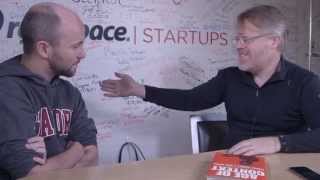
Robert Scoble, a futurist and tech evangelist, discusses mobile connectivity, wearables, and social media platforms like Facebook and Twitter. He explores privacy concerns in the digital age and his book Age of Context, offering insights into Silicon Valley culture and how technology is reshaping communication.
Questions this video answers
Approximately 26,000–27,000 copies
Roughly one-third in print, one-third on Kindle, and one-third on Audible
So we're here with Robert Scoble. I don't know what's the best way to describe you? Describe yourself because you have so many different hats lately.
I've been mostly a futurist. I go around the world and interview tech executives and innovators, mostly at startups because that's usually who's changing the future. And do it like what you're doing here and put them up on YouTube or Facebook and what's.
We'll just jump straight in. Like what's the most exciting thing you've seen? Like what's really.
Other than swarms of robots? I mean there's lots of fun stuff like that, but let's be honest, most people won't even touch a swarm of robots like that. They're little tiny robots that swarm together. You know, there's stuff that the R and D labs do that are really cool and crazy. Self driving cars like that. Right. Most humans are not going to have a self driving car for 20, 30, 40 years, you know, and is that.
What people in Silicon Valley are most excited about or like, where are the.
I mean if you went. Well, there's, there's a lot of ways to answer that question because there's what, 6 million people who live within an hour of me. Right. And some of them are researchers down at Stanford Linear Accelerator doing X ray research. You know, what they're excited about is very different than what I'm excited about. And they're. There's a whole pharma community here that's doing drug development. Generally I'm more connected with the consumer Internet companies. Facebook, Twitter, LinkedIn, that kind of thing. Google and all the startups that are feeding the ecosystem. So mobile is still number one. If you look at some of the trends that are springing off a mobile, right. You have the connected home or the automatic home. So my home now has a drop cam in it. It has a nest thermostat and a smoke detector. I have Sonos and some other audio gear so I can play off of my mobile phone.
Touches a lot on that.
Yeah, yeah. I wrote a book called Age of Context which is all on this new future of sensors and mobile connectedness. When you get in the car now, there's a whole bunch of startups that are dealing with the car. There's a whole bunch of startups that are dealing with things you wear on your wrist or on your body. And that's all.
So you famously wore Google Glass and got quite a bit of abuse in the shower.
Yeah, yeah.
So that Was quite a big step. You're obviously not worried about privacy or you have control.
Well, I am worried about privacy because I'm not going to give you my passwords to my Gmail or my bank account, particularly not that there's anything in there right now. But I'm not gonna give you those, and I'm not gonna give you a lot of data that comes connected with that kind of stuff. Right.
Let's just play devil's advocate. So your house temperature's controlled. Your music is in there. Google are gonna own a lot of that data. And already do.
They already do because they own Drop cam and they own Nest. So there's three sensors I walk by that Google owns every day. When I walk in my house, the drop Cam knows I'm home because it shows on my mobile phone every time I walk by that. That camera.
And even in the last few days, I was reading about maps, tracking you everywhere, even if you're not online.
We're gonna die.
It only takes maybe one person to go rogue in those companies.
You're confident? Well, I'm not confident with anything. But all technology has a good and a bad. Automobiles, when they were developed 100 years ago, people were freaking out about those too. And what they should have been talking about is, hey, you know, these things are gonna kill 30,000 people a year. And yet we drive every day because there's utility for the risk of driving. And so I know that people are gonna go into this new world, they're gonna scream and yell and have a lot of.
It's gonna happen.
It already is happening. It already is. Because there's deep utility. The Nest thermostat saves me money. Yeah. So if you don't like saving money, keep worried about your privacy. Right. Because it knows when I'm home, and it knows the pattern of me being home. So it turns off the thermostat when I'm not home, and it saves me money. So if you don't like saving money, keep being freaked out about your privacy. Right. I just had the founder of Human in here before. Right. Which is a new mobile app that helps us share contact information and all sorts of details about ourselves. You might want to know that before you interview somebody. Right?
It's true.
It's true. Oh, my God. Our privacy is gonna be eroded. I gotta put on my tinfoil hat here.
So in terms of. Let's just. So this is. Obviously we're talking to more mainstream audience here. So the big companies that people think about are Apple, Google, Facebook, Twitter, who's they're all just getting so big. And Akwihire and all these smaller companies who's really like, I have a lot of time for Facebook. I think what they're doing is really innovative.
I think Facebook is running away with the social game. The feed is dramatically better. And the reason it is is they've one. They know our social graph. They know our connection to friends and people in our family and people at work.
So you have a good argument about news coming through the feeds on either Twitter. You were saying it's better on Facebook.
If you're careful about what you click like on and you're careful about who you friend. The feed gets better and better if you're not careful. And if you keep clicking on those Kardashian videos, you're gonna see more Kardashian videos. And that might make you stupider. I just pissed off about a billion people.
People do get wound up about it. And what about, like Twitter?
But this is how Facebook works, right? If you click like on only Ted videos, you'll see Ted. If you click like on my videos, thank you very much. Then you'll see more of my videos.
So how do you get the good stuff? Like, let's say I'm not smart enough to follow Ted or Ted Cronejar. Like, how do I get that into my Facebook?
Your friends, hopefully you have some smart.
Friends, you know, who push it into.
Well, every time they click like on it. Once in a while, one of those things will show up on my feed and says, you know, Joe Smith liked this Ted video. What's this Ted video? It's not the Kardashians anymore. And sometimes. And that's how news gets into your feed, right? And also Facebook randomly puts some stuff in there just to test you and see, hey, are you still there?
A few days ago, Twitter started testing where if you favorite tweet pushes in it.
So that's.
They're kind of.
You know why? Because Twitter has an onboarding problem for me. I know how to do Twitter and I have 40,000 people that I've hand followed. I know who runs the tech industry and I follow them all. And therefore my Twitter feed is pretty nice. It is very noisy compared to Facebook, but it's pretty nice. But most people who come in, they see like, yesterday I was at an amusement park and it says, follow us on Twitter. If you just landed from Mars today and that's your first sign you see, you might go, what is this Twitter thing? Oh, I'll download Twitter. I'll get On Twitter, I'll follow this amusement part. Well, that's a stupid thing to follow. So you start following a few people, but you don't notice that there's thousands of journalists on Twitter and there's thousands of celebrities and there's thousands of interesting people in the world. Right.
They should try and like, I'd love to see. I'm used to my own and I'm the same. I follow journalists and all that stuff. But I'd love to see, like, I'd love to look at your feed for. For one day and experience see the information that I'm getting because, like, it's so different.
Let's pull it up. It's always fun. The other day I was sitting out on a cliff and somebody was like, show me your feed because I want to see what it does. But here we go.
It is work, though you do have to put work in to get.
Oh, I put thousands of hours into Facebook, mostly because I'm interested in the tech industry. So I've friended people like Dave Weiner's on my feed right now. Well, let's just go to the top. So. So.
So you are.
You actually get.
So say for.
Here's an ad that Esther Schindler liked. Okay. There's some Happy birthdays. Fred Davis writing about geekdom, San Francisco. Now, this is the second time in a row I've done this where it shows something about where I am. It's turning contextual because geekdom is right outside this door. And Fred Davis is probably sitting 20 yards there. Yeah. And he's also the co founder of. He's the gu who started Wired magazine. So I'm very interested in it. Now look at the second thing. Mandy Grignon, her husband is my best friend, so I might be interested in that. It's learning all sorts of weird shit about us, right? And then Tina is talking about the Gilmore gang that I was on. Okay. Dave Weiner is in New York, but he's a great friend and he writes about software and I like his stuff a lot of. Scott Jordan is CEO of scottevest, who makes my clothes. Can you see a pattern here? This is very contextual, very focused on who I am because I've given it so much signal. It is crazy how good a quality. And now we're into the tech news Pando Daily. Chris Heuer liked a thing about his new company. So I'm going to like that and I'm probably gonna follow Alind. I think I already did that. So. And Francisco Dow, we were drinking on Friday, this time, Mercury News is showing me news for my community. Here we had Scott Jordan again. Here we have breaking news here. David Sobisky, works at Disney, is writing about the tech industry. He's always very good. Boing, boing. I mean, you can see the quality of this feed is just crazy.
The one thing I'd say to you, right, so, like that. I totally get that. And that's brilliant. The two apps that interest me the most and that are. I think that it's sort of because they're so private, is WhatsApp. I don't know if you use WhatsApp.
I do, but it is so spammy for me. It's useless because my email and phone numbers are public, and so I get nothing but spam on those things, so I can't use them. I use messenger instead. Messenger is far better for me. And it doesn't have spam because Facebook protected us from spam.
It does. That's true. What I like about Snapchat, though, is, like, if I post something, like, I'll.
Just show you Snapchat's different than what? Because Snapchat does have a use.
It does. And if.
I'll see if you nail the use of it.
Well, what I like about it is, like, I thought so. Look, we just posted. I just posted a video. We were at Stanford yesterday. But that's seen by 178 people.
Yeah.
So that's seen by everybody in my social circle where Facebook chooses who gets to see. So it's.
But you know why Facebook chooses? Because we are actually really bad at generating content. In the past month, I've looked at 5,000 Facebook profiles, and it is full of the worst crap I imaginable. I'm sorry. You guys are really bad at this. When you take a picture of your kids, it's not well exposed. It's not framed right. It's not nice. It's not emotional. You're not Trey Ratcliffe. So I'd rather see a picture from Trey Ratcliffe because he actually does really wonderful, beautiful photos. Right. And you saw how good Facebook is at bringing me interesting stuff. It gets rid of all the crap.
I think Zuckerberg's worried about Snapchat, though.
He's worried about Snapchat for a different reason.
What's that?
Snapchat was developed because the kids realize there's consequences to even clicking, like, on somebody. Right. If you click, like, on the wrong girl's picture, then the other girls are going, hey, what about me? And why didn't you like my Picture. And that just there causes enough drama to make you go, ah. And Snapchat, the picture goes away after 30 seconds, right?
Yeah, they tried a couple of times to clone it and buy it.
Oh, there's lots of competitors to Snapchat, actually. There's a new one called Confide, which actually, you actually have to put your finger over the message to see it. So even taking video of it is hard.
That kind of brings us on to a different topic. So we're in Silicon Valley, which is the heart of it. A few of these companies. So Snapchat, Tinder, are starting to come out of la. Why is that now? What's changed?
Because of the celebrity factor. I have a niece and she's 21 years old. Yeah, 22 now. And when I told her, oh, I'm having lunch with Mark Zuckerberg, she's like, doesn't care. Doesn't care. When I tell her I'm having lunch with Ashton Kutcher. Oh, my God. I got it. I want to come along. Can I come along? No, you can't come along.
That's a big spot.
The celebrity has a pull on average people. And if you're trying to build a company, particularly a social company, that is going to talk about me music or do these social things with kids, celebrity matters a huge deal.
Ashton Kutcher was good to pick up on that early.
Oh, yeah. Well, he knew that he needed to convert his celebrity into another business, so he started investing in the tech industry and he invested in Flipboard and Airbnb.
Remember when he did the race to a million followers like that, like six years ago or something?
Yeah, he's very smart. In fact, my wife and I, when we had lunch with him, and go, man, he's nothing like he plays on TV because he plays this dumb teenager who's like, you know, you better watch out for the guys who play dumb.
What about Google Glass? I got a pair, used them for a couple of days.
Yeah, I use them for almost a year.
Have Google even given up on them?
Yes, somewhat. Although they're gonna come out with a new version next year, from what I hear. I believe strongly in on the face wearables. I think for some uses, like filming you skiing, it makes a huge amount of sense. Right. And GoPro is going after that on a helmet camera view or face view. You see it a lot of concerts we're filming. Yeah, yeah. When I went to Coachella, Everybody has the GoPro up on a stick and is, you know, recording everything. Everybody's smoking dope Nobody cares about being recorded, so. So it's not the recording. Although a lot of people keyed in on that. They keyed in on that. It made them feel uncomfortable. And they blamed it on the camera. Yeah, they blamed it on the wrong thing with. With this. If I pull out my phone right now and I start doing this, you can sort of see what I'm doing, and you can see that I'm on Facebook or Twitter and you can say something like, hey, isn't Facebook not as important as this interview right now? But if I was doing the same thing on Glass, you can't see what I'm doing. Am I recording you? Am I playing with Twitter? Am I looking at some porn? You have no idea. You know, the light's on and you know I'm paying attention to changed our social contract with each other, which has evolved over millions of years because we learned to look into each other's eyes to judge whether you're a trustworthy person or not. Right. And this messes with that social contract. So here's the problem. You can't put them away because they're not foldable. When they're foldable, I think they're gonna come back. There's a couple companies out here in geekdom that are making. Making them for vertical markets like surgeons, cops and stuff like that. I think that'll be a big market for these guys, not for Google. Google wants everybody, right?
And just on Google, because they're such a big company and they're everywhere. Like, it feels like they've had this series of close misses, Google glasses, all that sort of stuff. When did they come out with their Next. Like, obviously YouTube is big and stuff.
It's really hard. I've worked at Microsoft, and Google is going through a lot of the same kinds of problems. It's really hard to build a new thing inside a big company. Even at Facebook, Facebook didn't get Snapchat right? They could have. But if you try to spin it out, it's really hard to nail a new thing. And then if you're behind and you're having to chase something competitor at Rackspace, we're having to chase Amazon. It is really hard to chase a competitor and catch up. And a lot of times you start trying to make shortcuts to catch up. Google is a great example of this. They start suggesting people to me who have never posted. If they had been the first ones to do this, they would never have done this because they know that the community that's already on this thing is what really matters, not the other people.
Building out from there.
And it's really tough to do that in a big company because there's committees that are arguing about this stuff. And let's say we were all a committee and having to decide where to go to lunch. And let's say you have a Stanford shirt on. Let's say you're a PhD student, Stanford, and I'm a PhD student at Cornell. We kicked your ass in the self driving car and you want to go to Thai or something like that. I hate Thai. We're not going there. And then he kicks in and he goes, I hate Vietnamese food, which I might say, and I hate Thai. And I went to Waterloo and I have a PhD in wearable computers.
Is it easier to come from a startup?
Yeah, because one kid sees a new thing and starts building it for himself from Apple on up. Right. I mean, Steve Wozniak told me all I wanted was a personal computer. And my boss at HP and Atari didn't think anybody would buy one. So they didn't. He tried to get HP to build it because they can't see a market that doesn't exist.
So just to sort of finish up. So we're making this documentary and it's about a book. And I thought it was interesting to write a book because it's will people still buy this physical thing? And I think they will.
It turns out we sold 26, 27,000 of these so far. A third were paper like this. Amazon actually prints it. So please do buy my book. A third are on Kindle. So you can read that on your phone or on your tablet or on your desktop PC. And a third are on Audible, which Amazon also owns. And that's because people are on the subway or on their car and in their car commuting an hour every day and they're listening to books.
And how would you, in terms of marketing? So like if we were trying to get the message out, that's kind of what we're saying. Like, would you use social? Obviously. Does going on a TV show work? Does should you be standing in the street?
Should you.
Conferences.
It all works. Yeah, it all works. Try it all. I mean, try it all. The one thing I keyed in on, because I wrote another book with Shel before this called Naked Conversations and we had Wiley publish that book. And back then there really wasn't Amazon. Everybody bought books at a bookseller, you know, like Barnes and Noble or their local bookstore. I started this time. I asked my audiences, when I speak, where do you guys Buy books. How many people have bought a book in the last month? Okay, keep your hands up. If you did not buy that book on Amazon, not a single hand went down. So I said, okay, nobody is buying books on that. I care about. I don't care about the grandma in Russia. I care about the tech industry. Nobody is buying books except on Amazon. So let's just make a deal with Amazon. So they made my book. But to get on Amazon, when you say grid of books, there's a few numbers on that grid. One that you have to see a great cover. So we spent a little bit of money on a red cover so it would stand out in the grid number two, they show how many reviews does this book have? So you better have at least 100 reviews. If you only have one review, everybody's like, oh, that book's not serious. I'm going in the next one.
Right?
If you only have. Can only read one book a month, you're gonna look at your. You're gonna go tech books or business books? And you're gonna see a grid and you're gonna go, okay, who has a lot of. A lot of reviews? And then how good were the reviews? So our reviews are. We have 300 plus reviews and we have 4.8 stars. And that's why it sells. The book industry is not really good at getting those reviews. I had to send out 800 copies for free in PDF form before the book shipped. Yeah. And said, please, please read this. Say anything you want about it on Amazon. I don't care if you say it's a one star, it's a shitty. But please, please review it. Because it's so important to have those reviews on Amazon because that's what makes your book look credible. Right. And that's actually how we're all being rated. Did you know on Gmail we're being rated by how well we are at putting things in the. The spam folder?
Really?
You don't know this because there's not a number you can see, but we each have a number and we each are being tracked by Gmail on how well we are at putting things in the spam folder. Well, no, they give you more power if you're better at it. Because I can put something in the spam folder and it probably goes into everybody's spam folder. Right. Because I'm really careful with it and I'm really diligent with it. And if I see something in spam that's not spam, I pull it out when I ride in Uber. The Uber driver is rating us as well. Yeah. So if I wreck the car, if I get sick and barf in the car and cause that driver a lot of pain to clean up the car, he gives me a one star review and says, this customer was really a nasty customer.
Is there anything on that? I don't know if you remember. There's one called Empire Avenue.
Yeah, like a rating, it's still there, but there's obviously clout.
And there was another one. But like, could you see a system whereby you had like a Robert Scoville score for like, it's your Uber, it's your Gmail score. Like, I know that's what cloud was.
But we are, each system is being, is tracking us this way.
But they're kind of siloed.
They are very siloed. Most companies, I mean most of these companies don't want to expose you that way because you'll get angry if you have a bad review and you'll tell all your friends, oh my God, Uber sucks because they'll never come pick me up anymore. Right. Because you got a one star review or maybe five one star reviews makes you not be picked up.
Okay, so we'll finish up, I guess, just your prediction. So like, I don't. Are you writing another book or if you were thinking of what. Because this is ahead of its time.
Shella and I write books for decade long things and this is going to be a decade long thing. We're in the early phases of this contextual system where your phone, your wearable computers, even your shirt is going to be watching you and telling you that you might have cancer. You might be having. I saw a sensor that's being developed that can tell you you're going to have a heart attack tomorrow. That's pretty important to know. So imagine you have a thing on your wrist and it says, hey, it's, it's time to go to the doctor and go get your heart checked out.
IWatch will have some of that.
Well, it'll give you a little step, but I assume there's three or four iwatches in development and the first one is gonna just be about getting a watch out there with a few sensors and a nice display. And it has to look better than this one does. This is Runtastics, which is actually a pretty good one. Yeah, we're all waiting for Apple. I think the next year for Apple is gonna be a big, big year.
You're back on iPhone.
Yeah, because the best apps are on iPhone.
I keep going to Android, but then three, four months later.
Because the best apps are on iPhone and that's what I use a phone for. Now, I don't call people on the thing. I mean, my phone number is on the public Internet. Anybody can call this. Has anybody called since we started this interview? No, but they're all on. There was one of us who called.
Here and you could tell you were getting annoyed if my phone rings. Just annoying.
Yeah.
Well, look, it's brilliant. The book is Age of Context. You can get it on Amazon. And thanks very much for having us. It's been a real pleasure.
Thank you very much.
More from Robert








45: Sandy Carter Unveils the Future of AI: Myths, Agents, and Creativity | SXSW Insights


