Robert Scoble #Full Interview - Gutenberg Academy
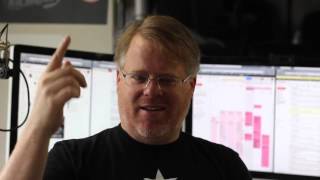
Robert Scoble, Rackspace's startup liaison officer, discusses how he discovers emerging companies through social streams and pattern recognition. He covers real-time reporting on Twitter, location apps like Waze and Foursquare, and predicts education will transform through cheap tablets and MOOCs while traditional publishing faces disruption.
Tell us your name and what you're doing.
Yeah, I'm Robert Scoble. I'm the startup liaison officer at Rackspace. That means I go around the world and I interview startups and do exactly what you're doing with video cameras. And do exactly what you're doing with video cameras and put that up on the Internet.
Okay, and why do you do this or why do they want to do this?
Well, I'm running a media company inside Rackspace that's sort of like Red Bull's media company. So Red Bull has 500 people who create videos of people jumping out of, you know, spaceships and all sorts of fun stuff and that. Doing that hacks your brain so that you buy Red Bull. Right. If they didn't do that, Red Bulls just cop sugar water with caffeine in it, and you wouldn't buy it. You would buy Coca Cola. But they've applied their brand to people who are doing cool things, and by doing that, they hacked your brain to think that you're gonna be cooler when you drink Red Bull. And so I'm doing the same thing. I'm applying Rackspace's brand to people who built Instagram or path or box.net or Facebook. Right. We've interviewed Mark Zuckerberg. I've interviewed Bill Gates. By applying their brands to Rackspace, the Rackspace brand becomes more relevant and more interesting. And when you think about buying hosting, you'll think about buying us instead of somebody who doesn't do this.
Okay, so it's. The company is in people's mind.
That's a good chunk of it. But it's also, I get to go to, you know, startups who use our competition, do research about why, you know, and that's invaluable. It's very, very rare that companies invite you in to talk about what they're doing and so on. The eyes and ears of Rackspace in the. In the innovation world, the world of innovation.
Yeah. But you can only do this because you had some jobs before.
No, I. I've been blogging since 2000. Blogging was a disruptive technology. Got me jobs at NEC and Microsoft and Fast Company magazine and. And ultimately Rackspace.
Okay. And, yeah, you don't have as many clicks as some, I don't know, gamer videos has, or most of the gamer videos or.
No, I'm not mainstream. Not. I'm not about going. I'm not Oprah. Right. Oprah talks to a huge audience of normal people. I call them normal people. I'm talking to geeks. I'm talking to people who are building companies, who are developers, who are CTOs, who. People who want to change the world with technology, with innovation. That's who I'm talking to. That's not. It's a very small audience, but a very powerful audience.
Okay, so you're in the long tail.
Yeah.
Because I found a lot of your videos while I was looking for other people, and you already had interviewed them. Yeah. Okay. And, yeah. How do these people will change the world? Have you any idea?
How will they change the world? Well, you talk about Uber, for instance. It's changing how we get taxis. We pull out a mobile phone, and you say, I want to ride somewhere, or a taxi or a limo. And it shows you where those taxis are on the screen. And one of them says, hey, I come and get you, and you see him or her coming toward you. You get in their car. You don't hand them any cash.
Right.
So payments have changed. The mobile phone has changed how we interact with the world. And then Uber, with its database and its UI and its relationships with all these taxi and limo drivers have changed the world. And that's just one small example. Airbnb, you know, I plot my mobile phone again. I need a place to stay this weekend, push there, and then look through the pictures and say, yeah, I want that one.
Right.
That's changed the world. That's opened up bedrooms like this to people around the world, which is very disruptive. And on and on. You look at polling from Go Poll Go, where they can ask in real time, millions of people a question like they're now being used by ABC News.
Right.
And on and on. I interviewed Mark Zuckerberg before many people did, before he went public. He changed the world by connecting a billion people so far.
Yeah.
Back then it was 80 million people. I was the 79th user of Instagram, and now that's 100 million people.
Right? Yeah. Okay. And how do you find these people?
Well, I watch incessantly the social media world, and yet I have 33,000 people on Twitter that I'm watching. And if somebody says, man, this. This new thing that just came out this morning is really cool, then I call them up. A lot of times now, though, I have such an audience that the PR people call me or my friends call me, or people message me on Facebook and say, hey, you gotta know about this company. Would you like an intro this afternoon, too? I'm going to Menlo Ventures. So I've built relationships with a lot of the venture capitalists and investors and they're the ones who really see things first. And so they signal to me and say, hey, this is actually company. You better go see it.
Okay. And, yeah, you have. I see how fast your Twitter stream is going. You have, I don't know, about a second for every tweet if you wouldn't do anything else. So how do you find out any information in these?
This is serendipity. I have this split up into 20 lists. So I have a list of tech journalists. So if I just want to see what the tech news is, I look at the list, and I usually look at it on flipboard on my iPad. And same thing for Facebook. I have a bunch of different lists over here that are split up into investors, tech journalists, programmers, tech executives, executives at big companies. And then I split up the companies into startups and big companies. I have pretty good list. So I can just click through the list and see what people are saying about various things. Like, here's my news list, and I can see what people are reporting on, and so on and so forth.
And how do you find out if the story is interesting? Is it a guts decision?
No, you can see signals, for instance, underneath Facebook, you can see how many people liked each story. So I can see which company or which person or which story got the most attention today. That's one thing. But part of it is just my knowledge of the industry and what captures my interests. If it captures my interest, it's usually something disruptive and interesting. I saw Siri. Siri was here in this bedroom six months before it launched, Right. And I saw it. And the guys who invested in Siri said I was the only one other than Steve Jobs to get what Siri's impact on the world was going to be. And so the reputation about that gets around, and that forces other entrepreneurs to come and see you.
So, yeah, in your talk with Howard Rheingold, you talked about pattern recognition. So you detect some pattern in this noise.
Yeah, well, you know, when you see this kind of flow. Let me see if I can get it going again. When you see this kind of flow, you know, my brain is looking for things that have changed in the last minute. I was the first American to report the Chinese earthquake because of this. Right. The 8.0 earthquake. And I saw earthquake and an earthquake and an earthquake. And I went and looked at the. At the cities from each person, and they were thousands of miles apart. And So I knew five minutes before USGS reported it that this was an 8.0 earthquake. And I reported that, and that Caused people around the world to start looking at me and passing me information and saying, oh, here's another guy. Here's another girl. Here's a picture, here's a video. We had more news. First of all, we were 45 minutes before CNN on Twitter because we saw this pattern. And second of all, by the time CNN reported just that there was an earthquake, we had videos and photos and firsthand reports. There was people in the city where the epicenter was that were tweeting. Right. And I knew how to deal with that. Now, most of the journalism organizations know how to deal with that. They have teams that watch Twitter now, But back then, they didn't, and they were really caught unawares, and they were embarrassed. Really?
Yeah. It's funny that you talk about these earthquakes. I had an earthquake and wrote it on Twitter, and then I looked up for earthquake, and I could find out the position of this earthquake just by looking at the locations, because there was in one area where not a lot of Twitterers are, there were a lot of tweets about the earthquake.
Yeah.
So I think in the end, it would be really easy just to map the locations to find out the epicenter.
Yep. It was certainly easy in the Chinese one because you could tell the language. Yeah, we, We. We didn't know quite the. The city where it was, but we knew it was in a certain part of China based on where everybody was feeling it. But within five minutes, the USGS nails, you know, their sensors. Well, they, first of all, they see the set, the sensor data in real time. They don't report it to the web until they verify it. And so it takes about five minutes for their scientists to verify that an earthquake has happened. And in that five minutes, I was, you know, I was just reading the Twitter, you know, the tweets that were coming off of people around Asia and sort of surmising. I guessed that it was an 8.0 before USGS reported it based on how far apart people were that were reporting feeling the earthquake.
Okay, but can you explain or how did you learn to recognize pattern? Or was it just in your brain all the time?
No, you know, to get to the level I'm at, you have to interview. You have to know something about the world. And I've interviewed more than 3,000 entrepreneurs at this point. And those entrepreneurs, what they've told me is like a map in my brain. So I know who Tim O'Reilly is, and I know why he matters. And so if he says something right now, I know how to count.
The.
Importance of what he's saying, particularly if he's a book publisher, by the way, and he runs conferences or his teams run conferences. And so if he says something about the tech industry or book publishing or conference industry, it's very important, it's credible. Right. If he says something about politics or wine, less credible. Right. And I know that for thousands of people. So I know, like Gary Minerchuk is the other way. He's credible on wine because his family owns a wine store. And he's credible on social media because he's built a social media company. And he's credible on the New York jets because he is fanatic about the New York Jets. If he talks about, I don't know, cricket, he might not be so credible about that. Right. And so out of these thousands of people streaming by, I have a map in my head of who they are and what their role in life is and what their credibility level is for what they're talking about. And so that helps me gauge whether something's a hoax or a scam or if it's really important to pay attention to.
Okay. And yeah, you have a very good knowledge about the sources. Most of the.
A lot of sources. I mean, I have the most in depth list of the tech industry on both Twitter and Facebook and on Google too, for that matter. So I look at my role in World as a curator, somebody who can tell other people who Tim O'Reilly is. And I've made that a study of mine. And so when I do what you're doing, I'm taking notes on who they are and I do research about them. And I also know how to find information in real time. So if I meet somebody new, like for instance, I met this guy, Peter Pyatt at the World Economic Forum. He had a badge on, so I knew his name. I knew he worked for the Bill and Melinda Gates Foundation. That was also on his badge. I knew he was smart because of how people I trusted were interacting with him and how he would. The language he was using and the kinds of topics he was talking about. I knew within a minute that he was in the, you know, biology, biology, biological sciences world. I didn't know how. I didn't know quite how he fit in that world or what he did, but I could tell he was passionate and authoritative on that topic and maybe wouldn't be so passionate authoritative about sports or art or music.
Right.
He kept bringing the conversation back to science and using scientific words and scientific language. I still didn't know who he was.
Right.
I still. He was important because he was at World Economic Forum, right? He'd done something in his life that was interesting because you don't get to go to the World Economic Forum unless you've done something interesting, unless you're the CEO of a huge company. I mean, I can't even get my own CEO, which is a $9 billion market cap company, into World Economic Forum. It's not big enough. You know, they say, oh no, you have to be a Fortune 50 company to get.
But you can go there.
I got invited because I'm one of the top tech bloggers in the world, right? And they wanted me to report on the tech pioneers program there. So. But everybody else is, you know, like the inventor of Dropbox, the founder of Google, you know, or Peter Pyat. So I knew Peter Pyte was interesting, I just didn't know what he done. But I walk away and I googled him and the first line was Wikipedia. The first line was he was the discoverer of the Ebola virus. So in real time, I can figure out who people are, what makes them tick and how they fit together.
You.
Know, which a lot of people don't think of doing that when they meet people. They just say, oh, that's a cool guy or fun person to hang out with. They don't think of turning away and Googling them and figuring out who they are, what they do, you know, and find them on Facebook or find them on Twitter and subscribe to them and start seeing what they're doing. I'm doing that in real time. That's why I'm really looking forward to these wearable computers coming from Google Next year. The Google project last. That puts a computer screen right here and it will let me do those Google searches in real time. It'll be very interesting.
Yeah, but not by thought. But we'll have some face recognition in future.
Unclear, because that gets into governmental regulation. They certainly can do it. The technology is done. Face.com, which is an Israeli company, has face detection. It works. I've seen it work. It's been on my iPhone. It works, works. It only works for France. They delimit it, they limit it to not freak people out. The database is there. I went to Facebook and they said, we have a billion people's photos. We can do face detection, no problem. The problem is governments would freak out and people would freak out.
People would freak out.
Yeah, right. People would freak out and governments therefore would freak out and cause regulations to happen. And so they both Google and Facebook told me they are going to be Very careful with that kind of technology because they don't. They can't afford to have the government regulating their businesses.
I don't know. You never know what they do with their data in the background.
I think it's going to be a startup.
That's who ignores all these.
No, it's going to be a startup. And like Highlight, for instance. Highlight's a great example of this little startup. When you start it up, you know what you're getting. It shows you other people who are using highlight within 100 yards and it shows you their Facebook likes that are in common with you and the Facebook friends that are in common with you. It's great. I love it. I have 2,800 people I've already met there. Wonderful tool, but it's completely opt in. Everybody knows what it's for. And so if you say that's intrusive, well, you joined it, so stop joining that.
Right?
Where Google and Facebook have had other use cases and if they try to add this new use case on, it freaks people out because they weren't expecting Google to surface their, their information that way. Even though Google has it right. For instance, Google knows every search you've made and it's stored that in a database somewhere. Most people don't think about that because they've never surfaced it. I can't go somewhere and look at all your Google searches, right? But there is a database somewhere that has all of your Google searches stored. In fact, you can look at your own history, right. If you turn that on, but they can't surface it. They can't change the expectation of what the product was. A startup doesn't have that problem. So a startup can come along like face.com and say, hey, we're going to do face detection and it'll be opt in and okay, you know, people will join it. I'll join it. I'll join it the minute it's out, right?
You're joining everything.
I join everything. And part of that is so I know what's coming at me. But also I live a public life. And I've found when you cross over to living a public life, like a public life in Twitter and Facebook, you start realizing that the cross improves your life. Whether you're at my level now or like, you know, my son's level and not many people know him. When you are able to ask a crowd whether it's 10 people or 100,000 people, where should I eat sushi tonight? You're going to get your life improved. Because one of those People is going to say, hey, I know a new restaurant that just opened up around the corner. It's really, really great. And that improves your life. And I've had thousands of those examples where my life has been improved by talking to the crowd and having the crowd talk back to me that I can't go back. And I'm gonna seek out any new tool that pushes that further. I use Waze on my iPhone. Most people don't even know what Waze is yet.
Right.
But Waze is a traffic app that shows me other people who've also joined Waze on the, on the streets. And I can report where the cops are, I can report where accidents are. I can take a picture of an accident. If I'm stuck, you know, behind an 18 wheeler truck that just overturned, I can take a picture of that and report to everybody else so that everybody else knows what's going on and has, you know, can make better choices about, oh, should I sit here and wait for a few minutes to see if the traffic goes away? Well, if it's an 18 wheel truck, no, that's not gonna happen. But if it's just a little wreck that gets moved off, yeah, 10 minute wait and all of a sudden the traffic starts moving again. Yeah.
But most of these apps are only working here in this area, I think.
No, Waze is worldwide. It was built in Israel, it works in London, it works in Munich, it works in Paris, works in China. Most of these, most of the companies I report on are worldwide companies. In fact, I, I don't like reporting on companies that only build for a local market.
No, it's not built for a local market. But it's in my experience in my hometown, Foursquare is not working at all because there are so few people, just 30 people.
That's not, not working. That means that not enough people are on it yet in your hometown. It's a chicken and egg problem. We went through that problem three years ago in San Francisco. Right. San Francisco didn't have. When I started using Foursquare, there was nobody on it either, and it sucked. And now it really, really rocks in a lot of the major cities. I go to London, check in, and there's dozens of tips for each of the restaurants I'm going to. Paris is the same way. Munich was the same way.
Right. Any big cities?
Big cities where there's a lot of people. To get to the local level, you have to have enough people. And it takes time for technology to spread to everybody.
Right.
The famous line, I forget who said this, but the future is here. It's just not evenly distributed.
Right.
There are 20 self driving cars in the world and they're right over the hill. I see them on the freeway. I don't have one yet. So the future is already here. We already know what the future is going to be like for me. But I won't have one for 15 years because of cost, because of governmental concerns, insurance concerns, people concerns. You know, it'll take 15 years before I get one and it'll take another 15 years before, you know, let's say 40% of the world gets them.
Right.
Because it takes a while for a new technology, even one that's affordable to get, get spread out to everybody. And then It'll take another 15 years after that before it shows up, before everybody in, in your hometown has a self driving car. So it's a 50 year problem. 50 year problem.
But is this the idea of self driving cars that you have your own self driving car? Oh yeah, not like taxis.
So you just, you could have an argument there. I want my own.
You want your own?
Okay, I want my own. I want, I like, I like my own car. In America, car is part of the culture, part of your identity. And having your own car with your own kids toys in the back and your own kids car seat and all that is part of the, it's ingrained in the American dream. Now you're right to think about how the car is going to change because of self driving car. For instance, if you really did have a self driving car and it could, could go everywhere and it worked great, why do you need a steering wheel? Why do you need to, why do you need to have the driver facing forward? Yeah, you could face backward, which is safer by the way, because if the car does ever get in a wreck, and I probably won't ever get in the wreck, spacing backward is safer. But more so if I, if I have four people in the car now, I can play a game with them while the car's driving or I could have a video conference or I could take a class or I could be building a 3D model on my 3D printer, you know, and working on my Surface computer or whatever is going to be next. Right? The car could be completely rethought and when you go down that path, yet it makes a lot of sense to rent the car out. So my car might go and pick up other people and charge them like at least.
Yeah, it can be used and to make some extra money and get your.
And also so in San Francisco, we're already. I pay about 25, $30 a day for parking where I work and some spots are $60 a day. So why does it need to park? Why can't it? Well, first of all, I could drive to a neighborhood where there, there's free parking and wait there until I get out of work and then come back and pick me up. Or I could go and pick other people up and actually make me some income and help pay for the car. So you're right to rethink when, when technology changes like that it changes what's possible and when. And most people aren't even thinking of the self driving car. I was racing Audi cars yesterday at the Sonoma Raceway and the, the instructor just can't, couldn't even die dream of a day where he's gonna have a self driving car. To him it's evil and it just, he doesn't understand why anybody would want a self driving car. I said, you're a race car driver, you get to have fun driving cars. So for you, fun and your job is wrapped up in a driving car, right? For me, driving is not fun because I, I'm always stuck behind a truck on Highway 92 or it's wasted time for me because driving is not fun. It's not racing, racing is fun. But driving on Freeway 280 at 70 miles an hour behind a truck, is that fun. And so why can't I turn that task over to a computer and let me go back to doing something fun for me? Reading a book, watching a movie, you know, reading Twitter or Facebook or doing editing my videos that I'm supposed to be editing. Why can't I go back and do those things with that 45 minutes and let the car drive itself? He can't understand that. Most people can't understand that. They resist change, they don't like change. We see this over and over and over again, right? Steve Wisenak, when he developed the Apple one, he, he wanted his boss at HP to build the personal computer and said, please build these things. I don't want to start my own company. I want to work at hp. I want to just be an engineer and come up with new things. And his boss says, nobody's ever going to buy a personal computer. He didn't get it. He couldn't grasp that there were people, billions of people out there who wanted a personal computer. He couldn't grasp it. But based on where he was in that world, it's understandable. Just like this guy who races cars every day For a living. He can't understand why somebody would want to have a self driving car. And in 15 years it'll all change.
So in my experience, it's one of the first times that younger people are teaching older people about the newest technologies.
Yeah, that's been happening for 30 years here.
Yeah, but I don't know, when books were invented, old people taught young people to write and all this stuff. So it was most of the time in society, it was the other way around. And this time it's the first.
Yep.
Or with computers, the whole story.
Yeah.
So. Yeah, but school hasn't changed. What do you think is.
There's a lot, there's a lot. I've talked to school, my sister in law is a school teacher. There's a lot of. There's a revolution coming and it's going to be due to the low cost tablet and the cell phone. Particularly the cell phone. And the revolution is happening for a number of different reasons. One is cheap. Two, it doesn't rely on any IT pro in the school. But my son went to a private school in Los Altos. So it's a rich school in the middle of Silicon Valley, in the middle of the most dense, you know, technological world in the world. And they couldn't even take my donated computers because they only had one person for the entire school to deal with all the computers. And she just couldn't deal with, with more. That's not going to be true when kids are bringing cell phones. Six year olds are bringing cell phones to school right now. And the reason why, by the way, is fascinating because there's, because of divorce. The parents are handing their kids cell phones so that they can call them without talking to the other parents that they don't like anymore. But back to the point. Cell phones are bringing a revolution to education. Over the next 10 years you're gonna see deep effects and you're starting to see some of the early, early signals. The Khan Academy is a great early signal. The fact that I can watch a YouTube video from this guy who recorded videos in his closet in Los Altos and I can do that whether I'm in China or India or Germany or here, you know, near him is transformative, it's changing education. But there's deeper things. I talked with one of the computer science professors who taught, I think it was Larry Page, and he's working with at risk youth in Detroit that is poor kids. And he says the problem in those neighborhoods is if you're carrying around a math book, you're going to get beat up and the book is going to get torn up and taken away from you. And so your ability to escape is retarded, is hurt. The chances that you're going to be able to read a book and get out of your situation, improve your life, is very hard to do. And this happens. Right. The guy who invented clear type, which is how the fonts are smoothed on the screen, was Bill Hill. He was my first interview at Microsoft. He escaped poverty by going to the library and reading every day and educating himself and pulling himself out of the situation. He was, and getting smaller, smart enough to get a, you know, to go to a university. And so it's possible. We know it's possible. I have examples in my own life where that has happened, that he was the first person in his community to go to a university. Right. The problem is how he had to put a lot of energy, of his own energy into doing that and maybe even take on his people, peers who didn't want him to go to library and wanted him to go play sports or go drinking or do whatever they were doing. A phone now brings the world's information into your hands. So you don't even need to go to the library anymore. You just need to have a phone in your hands where you can watch those Khan Academy videos or chat with people on Facebook who are smart. You know, I have people. I have people who are in the White House right now on my Facebook. They're in my hands. That's transformative. That's. Something is going on here that's different. I mean, when I was in school, we thought we were in a cold war with Russia. And now I have friends who are Russian generals. And last Sunday I was hanging out with an astronaut who's been on a Russian Soyuz spaceship. The world is shifted, and our access to information is shifting very, very quickly. I mean, you're holding a GoPro camera, which is a $300 camera. When I was a kid, a TV camera was $200,000 and it wasn't even 640 by 40. That's a 1080p camera and has the ability to distribute its video now worldwide. That's a revolution. There is no doubt there's going to be a deep revolution in education. I think this is why also the venture capital community is starting to invest in new startups for education, because they're sensing now there's a market that they can build because of these transformative technologies. But take it deeper now, the kid has access to information. Every kid who has an Android Phone or an iPhone in their hands, has access to the world's information, has access to the Wikipedia, the YouTube. Now they could use it to goof off and watch stupid cat videos on YouTube. That's gonna be a choice that a lot of people make. Or you could watch TED videos, right? And each TED video you watch puts something in your brain and teach. It rewires your brain to maybe go and learn a little bit more about that topic and become more proficient. Learn a little bit more math, a little bit more science, or learn photography, right? Learn something that has some value to the world. So the kids are gonna. The smart teachers. When you talk to the teacher of the year, like over here in Palo Alto, which is one of the best districts, the smart teachers talk about being a curator, a connector, a facilitator. They say the classroom is being flipped, where you learn the lesson at home by watching Khan Academy videos on your tablet PC at home. That's your homework is to learn. And then you come to the classroom to practice. Because there you need a teacher who can help you see the world a little bit differently or get past a block. I remember being in junior high here and we had a metal shop.
And.
You know, it's one thing to teach how metal, melted metal works and how to make a cast and make something. It's one thing to teach you that on a TED video, for instance. It's another thing to actually try to do it. And it took me 20 times to make the stupid horse work. And the teacher was there not to teach me how to do it. I already knew how to do it and I did it 20 times before it finally worked. He was there to say, okay, why didn't the metal get into the foot on this iteration? How did you vent it? Let's look at your cast. You didn't do it quite right. And he was a facilitator for learning. And that's going to be the place where a lot of where I think this revolution is going to come. And it's. You're going to see new apps. Calcanis already has a conference on new apps that are coming to help teachers facilitate this kind of new learning. You know, we're seeing Khan Academy and Creative Live. There's a new company, they just got seven and a half million dollars to do new kinds of video and new kinds of learning, lifelong learning for people. We're seeing. You know, some of the colleges are starting to react to this. I talked to Tina Selig at Stanford, and she's teaching a class right now on creativity, 30,000 people are watching her teach this class. So Stanford and Harvard and the better colleges are already learning. Oh, if we share this information with the world, stuff happens. It causes the learning to get better because the audience, as the audience gets bigger, the learning gets better because there's going to be somebody in that audience who's smarter than the teacher. Right. And who is probably more creative than Tina Selig. Right. And is seeing something happen in the world. I interviewed a surgeon, a lung surgeon at Stanford, and he said, everything I learned in Medical School 30 years ago, this is an older guy who's quite accomplished, is obsolete. He said, we don't do anything the way we learned it 30 years ago. And he carries around an iPhone now to know the latest science, because some kid who's studying in Helsinki or London or China might have discovered a new thing about the disease he's trying to cure and might have come up with a new drug, a new, a new procedure, a new way to get to it. And the science changes. And he has the latest learning in his hand. That's. He said, that's how I do surgery now. Before I go in surgery, I stop and look to make sure I know the latest science because the world changes. It's understanding of these things. Revolution is coming. We have access to the world's information for the first time. It's quite exciting.
Okay, and what about the old media?
It's funny because, you know, when you get into a hotel, they ask you like, I got into a hotel in Dublin a couple weeks ago. And they ask, they asked, would you like a newspaper in the morning? I go, and my answer was no. I don't read 18 hour old news because I know when you press ink onto paper, it takes a couple hours just to do that and store up enough copies. I toured the Wall Street Journal printing plant, which is over on Pagemill Road, which is by the way, right across the street from where Facebook used to be. Sort of ironic. And so they have to run those presses all night long to print enough copies to distribute enough news to the world. And so the news you're reading in the morning when you wake up and there's that newspaper on your doorstep, that's eight hours old at minimum. And usually it's 18 hours old because they can't afford to put real time news into a newspaper paper right at the end of the shift, right. They can't put all brand new news and even if they did, it would still be eight hours old. The world changes overnight and the world Changes on Twitter and new news happens here. And so I like this. This makes me feel like I'm seeing the news in real time, up to date. So you take that, and then you get the iPad and you put the stream into flipboard, and it makes it look like a beautiful newspaper. And the world has shifted. I can't imagine going back. I haven't read a paper newspaper in years. So that's one way to look at it. The other way to look at it.
Is.
You know, if you look at TV or radio or news, anybody who owns a transmission tower, you know, which costs millions of dollars, and then you have to have an FCC license to spray that information through the airwaves. That's an expensive proposition. And it's a. It's a scarce proposition. There's only. In San Francisco, there's only know what, four TV stations, really, that can do independent stuff. If I want to get my information on one of those four TV stations, I have to convince a committee. I have to convince an editorial board, hey, my video that I shot on a camera like yours is good enough to go out in the real world.
And.
And convincing a committee is very, very difficult. I worked at Fast Company magazine. I know what that means. We have meetings to decide what goes in the magazine, what goes on the COVID what's the biggest article, how many words does each article get to have? Do we invest in a photographer to go cover that article? And even after all that, it's still three months before publication. It's still old when it gets. When it gets done on Twitter and on blogs and on YouTube and on Facebook and Flickr and Quora. I don't have to convince a committee to distribute my information. If I want to put a video up like you're doing, I just put it up on YouTube. I don't have to convince a committee. That means publishing is frictionless, fast, and there's a lot more of it. Every minute, 48 hours of YouTube videos get uploaded. So there's far more videos to watch than you can possibly watch, right? So this supply. Now, there is no scarcity on supply because there's no scarcity on distribution anymore. So now what. What is scarce? My attention. My ability to pay attention to that tweet right there, because it's gone right in 10 seconds, that tweet, which is from Cirque du Soleil, is gone. And if you can't find a way to get me to care about it, then you're. You're not going to get read. You're not going to get, you're not going to get distribution. And that's the new limiting thing. It's not the committee that's going to keep that tweet from getting on my screen. It's now you have to get me to care about that thing and that and that. And that's where the mainstream media is coming back. And there's this competition because people like me, I can publish a lot, but am I credible? Am I reliable? Do I have the best information? Do I have the best written information, the best produced information? If I have a photograph of a fire, is it the best photograph of that fire? Maybe not. Maybe somebody else who's a Pro has a $3,500 camera and maybe I'm shooting it on a little $300 camera. Maybe he has a press pass so he has access or she has access to the fire scene. Maybe he or she has built a relationship with the, the fire chief and so he or she can ask the fire chief what caused this fire? What, did anybody die in the fire or was anybody hurt? I, as a guy who just is, you know, taking pictures with my iPhone, might not have the best story. And so there's gonna be this friction back and forth for years between brands like the New York Times and people like me who are just putting stuff up on Twitter and Facebook and WordPress and YouTube, Flickr and stuff like that. But I'd much rather have this world where I can publish than have a world where there's gatekeepers and there's people who decide what's important to put out into the world. I'd much rather have this world of oversupply where I can see everybody's reaction in real time. I'd much rather have this world where I saw the Chinese earthquake 45 minutes before CNN reported it. And even after CNN reported it, it wasn't accurate or interesting or on the street or anything. Now after a day, they started doing better stories because they flew helicopters and satellite trucks and all the machinery that they have to cover stories into Chengdu, China and around, around China. So after a day, the, the amateurs were at a disadvantage to the pros, but that's switching. That's, it's going to be an interesting fight for another decade to see how this all works out.
But okay, but the amateurs don't need to make money.
Not necessarily, you know, not necessarily.
But these professional journalists, they do need to make money.
And that causes biases in their own reporting behaviors. And we're seeing this in the tech press for sure. The tech press will Overcover Apple. You know, for instance, when Facebook's CEO spoke, there was one satellite truck. When Apple spoke, there was six or even more, maybe even 10. So why does Apple get six times more coverage than Facebook when Facebook has a billion users and Apple doesn't have a billion users, you know, they sold 100 million iPads, a few hundred million iPhones, right? So why is Apple being over covered? Because more people want to read news about Apple, so there's more payment for covering Apple. And this is why we get the number we get. Why do we get Fox News? Why do we get the sensationalist news? Why don't we read more stories about Syria or about Egypt or about the Middle east or about politics or about science? Why do we get more stories that are sensational about sex scandals and stuff like that? Because more people want to watch that news. And when they want to watch that news, they click on it. And when they click on it, the journalist or the journalistic organization gets paid because the ads on that page, you know, for instance, even on Facebook, right? There's ads, you know, the ads on that page. Every time I refresh that page, Facebook gets paid.
Right?
And that's the whole game is to get you to refresh that page as often as possible. So it brings a bias to the world. Having to get paid brings a bias to the world of journalism, which is usually more sensationalist. And they have a very keen sense of what people want to are actually clicking on. And they'll just give you more of that. And it leads our public discourse down a bad path because people get less educated and. And it's like feeding everybody McDonald's. You know, McDonald's once in a while is okay. I like McDonald's. I eat a lot of McDonald's. But if you eat too much, you get unhealthy, Right? And if you don't eat broccoli, broccoli is not so fun. It's not as nice to eat as a Big Mac, right? But if you don't eat your broccoli, you get sick. And the problem is the journalistic industry right now is still trying to figure out how to get paid with the Big Mac as well as give the broccoli. And it's really a problem.
Yeah. Okay. And yeah, last question. Do you still read books?
I have a lot of books. Do I read them? I read them on my Kindle. What's really ironic is the pr. I have a lot of books that are even. Even on a shelf. The PR industry keeps sending me paper Books. It's like, dudes, the only time I have to read is in a plane or when I'm away from my home. You know, when I'm on vacation or when I'm, you know, on the beach and just want to sit there for a couple hours, that's when I have time to read a book and get into something deep. And they keep handing me paper, which is heavy. And. And not to mention, it's expensive to distribute. They had to mail that thing to me. It costs many times more to make a paper book and press ink on paper and get that paper into my hands and take room in my office than putting it on my Kindle app, which I could read on my phone, which I could read on my tablet, which I could read on my big screen here. I have Kindle running here, too. I don't understand the book industry. The book industry is really screwed up. And this is an example of an industry that's going to radically change because of the forces that are happening right now. Because bookstores are going away and we're demanding books be on our devices, right? I see people on planes reading Kindle books all the time on a tablet or even on a phone. Who imagined you'd want to read a book on a phone? But that happens all the time. And Amazon's making a lot of money off of it. But the PR industry for the book companies still send me paper. It's like, who the hell is in charge here? Who's thinking about this? What's going on? I would read many times more books if you sent them to me on digital format. So, yeah, I do read books, but less and less frequently because I'm more into this snacky kind of media. You know, the Twitter and the Facebook. And I'm more into. And I also go around and interview book authors. Just the other day, I met Amy Tan, you know, and I was at her house. She wrote the Joy Luck. The Joy Luck Club, right? I told a few friends I met Amy Tan and they didn't know who she was. I was like, she's a famous author. She won awards. She got rich because of this book she wrote in the 1980s. And you don't even know who she is. It's very interesting, but I hang out with book authors and they tell me about their books. And then once in a while I'll read them. But my life is a bit weird. It's more experiential than having to read.
Okay, let's discuss about your vision. What will happen to nations?
You asked me about nations. I don't see nations going away unless they do something wrong. And wrong could be like genocide. Wrong could be over taxation generally. You know, humans hate change. And the idea of your. Of your belonging to a country or state is part of your identity, it's really hard to rip that out of people's heads. And so I can't dream of a world where there's not a California, you know, that there's just. You're part of the world, you know, or you're not an American or. Or you're not a German or you're not a Chinese. So much money, I mean, I was just at the Olympics, right? So much money is spent in marketing and reinforcing the idea of your country. You know, we have songs, we have cultural music, we have movies made about, you know, your countries. We have dance about, you know, we all know the Gangnam styles from South Korea, right? How do we unhook the idea that you belong to a nation or a country or a state or a city? Wow. I can't imagine that kind of world. I could imagine a world where one nation goes away and changes leadership or gets joined with another nation through war, through whatever, you know, or particularly if that nation does something really bad. I can see California government getting not overthrown. But right now we're bankrupt, right? We don't have enough money and there will be changes, but the idea that nations go away completely is. I can't imagine. I can't even dream about such a world. Such a world would be like an alien world to me. Maybe a science fiction author can bring me there, but I can't imagine that. I could imagine a world where.
The.
Importance of government gets disrupted a bit because we have the ability to vote in real time. I mean, I was sitting next to Randy Zuckerberg at the World Economic Forum and she was listening to. I forget the of speaker at the time, maybe President Clinton, and she was asking everybody on Facebook questions and seeing hundreds of thousands of answers in real time within seconds. Come back. Is that a new kind of governance? Couldn't a government govern this way and. And be able to hear from its constituency what people want in real time? And everybody could see it. And everybody could, you know, on go. Pull, go. This kind of. That started up that ABC News is using. You can click on a city and see how that city voted versus New York or versus Dublin or versus Munich or versus Shanghai, right? So you could see difference in people's behavior patterns. I could see that leading to a new kind of governance. Certainly taxation is going to change because money, you know, when I was growing up, money was paper. You put your pocket, or coins, you put your pocket. And then we got credit cards, a piece of plastic. And now we're using Uber, which I could pay for a taxi without even passing anything to the driver, right? I just buy. Just the mere fact that I'm in the taxi means that the taxi driver gets paid and I, and I something from my accounts goes to his. But so taxation could radically change and will radically change because of the payment systems are changing the way, you know, when you're out here, by the way, on a day when like the iPhones get delivered, you see FedEx truck, FedEx truck, FedEx truck or UPS truck, UPS truck. All day long just delivering these things from Amazon and from Apple. And you can tell the world has changed. We don't go shopping at malls anymore. We're buying more and more every day on our screens and asking it to get delivered to us. That's radically changing what a government, what a state is. Because states used to get sales tax from the store when you went to buy a vcr, right? Now that VCR comes from out of state and they're not able to collect the taxes easily. And there's new laws being written that as we speak about that, what else would they. Okay, I mean, you know, there's still going to be needs to be somebody to pave the road and teach the kids and take care of the poor and you know, build hospitals and build infrastructure for our lives. And government is still going to be the most efficient way to do that. I don't see that changing. So, I don't know, you gotta ask somebody with a more futuristic mind than mine about where the future of the nation or future of the state or future of the city's going.
Okay, but so what is about work, what I experience is I think we will run out of work or we start to create.
I just totally disagree.
Or not out of work, but I think the idea of eight hours, days.
I totally disagree with that too.
Let's go work.
You know, and part of this is I grew up in Silicon Valley and when I grew up, Silicon Valley was still largely agriculture, still, you know, I lived on an apricot orchard, which now Apple computer paved over, right? And so the jobs went from agriculture. Those jobs disappeared. And the farmers used to talk like this. Oh my God, kids are never gonna have jobs. Where's my kids gonna work? All the jobs went away. Something replaced it though, which was manufacturing. I worked on A soldering line in high school at hp. Right. And built things. Those jobs went away. And people have been, how are we gonna replace these manufacturing jobs? My kids aren't going to be able to do soldering or putting machine screws into metal in a car plant or building things. Those jobs went away. They largely went to China.
Right.
And other places. And now, you know, we're arguing about a new kind of work. Oh my God. We have to compete with the Chinese, with our minds. How are we going to do that? We're not as smart. We don't have as many people. Everybody's like, but the human mind is a crazy thing. We find ways to do new things and when we do new things, we want new things. And when we want new things, we create jobs for people. And I don't see that ever stopping. The optimist is always right in this equation. The pessimist is always wrong. And yeah, there are dislocations. There are 20% unemployment, but there have been 20% unemployment. The depression happened, there was 40% unemployment. And we survived and we moved on and we found a way to create need and create new things. It's called marketing. You know, I just drove some race cars from Germany on Tuesday and I want one now. It's a hundred thousand dollar car. Did that create jobs? Yes. I can't afford it, but I have a need now, right? And humans are, are good at coming up with new things. I just drove yesterday. There was this new company from Y Com called Boosted Boards. Makes an electronic skateboard. $1,200 not possible to build five years ago. Today they can. I want one. And so do a lot of other people. They're selling dozens a day of these $1,200 skateboards. We didn't even know we wanted one five years ago. We, it wasn't even possible even if we wanted one. Right. And the human mind is brilliant at coming up with new things to do and build and dream about. And you know, there's a lot of people who I meet who want to go to space. You know, that's not possible today. But Richard Branson's building something that'll take, you know, rich people up and another 20 years it'll take normal people up. And so God bless this world. I love it.
I just ask myself, because I don't think that there will be oil left when I'm 90 or I don't know.
There'S more energy spraying down from this thing called the sun. I know, you know that we are wasting. We are not Collecting any of that energy here in Half Moon Bay, even with the fog.
Yeah, we. It's true, but you have to start with it.
And the other can build things. My dad was a nuclear engineer. We can build nuclear plants. They, you know, they might cause new weird cancers, you know, when they blow up like they did in the Japanese earthquake. But we know how to build these things. We know how to take care of energy. It's just, are we willing to. And we will be willing to. When oil runs out, we will be willing to pave every surface of this world with solar cells to collect energy for batteries because we don't want to stop driving and going places. We don't want to stop flying places and going on vacations. We don't want to stop dreaming about going to space. We don't want to stop building more and more things to let us entertain ourselves. So, no, that problem will be solved. The worst problem is going to be the global climate change, the global warming, the seas going up, the dislocation of billions of people, including a lot around here. I mean, if you go down the street, Half Moon Bay is largely near the surface of oceans. San Francisco is built on landfill, right? So if the Ocean goes up 6ft, San Francisco's in trouble, New York's in trouble. That's going to be a deeper problem for my kids, I think, and a much harder one to solve long term than figuring out how to replace oil, replacing oil. I can see that. So if I can see that, no problem, it'll get solved as long as there's a financial incentive to solve it. And there will be, because people don't want to stop driving, right? When their gas runs out, they're gonna put lots of pressure on everybody to figure out how to do a solar car or solar panels along the roads to charge the cars. That will get solved. The global climate change is gonna be a tougher one because maybe we solve it in the first world, But I've been in China and the pollution there just torrid, right? They're going through their industrial revolution, and then India is going to go through an industrial revolution, and then other places, Africa is going to go through an industrial revolution, and it's going to be very difficult to convince those nations not to pollute while you are realizing that the pollution is causing massive dislocations to societies. So that's not a problem for my generation, but certainly for the next one.
Yeah. Okay. Thank you very much.
Yep.
Yeah, that makes sense. Yeah, it makes sense, but it's real. A great way to show the American dream. Yeah. Or it's some. Yeah, in some way it's the American dream.
The problem is everybody else wants the American dream too. China wants the American dream. They're building cars, right? They weren't.
They were.
You know, people are not satisfied with their own. With their own. Like I was in China in 95 and they all had bicycles.
Right. In Germany, there's a different trend. It's really going. People are driving more bicycles.
Happening here and there. In America it's hard because in Germany, in Europe, you guys have had high gas taxes for a long time. So you're paying what, $9 a gallon, $10 a gallon for gas. And you've used that money to subsidize really great public transportation. When you get to Germany, you can take a high speed train anywhere. And it's beautiful and it's nice and clean and efficient and it's always on time. I mean, the Swiss trains in Switzerland, they leave when the second hand gets to the top of the hour. They're running like a Swiss watch. And we don't have that here. Here we, our trains are bumpy, they're slow, they're. They don't go very many places. Right. I don't have train. I can't go on a train here. I'd have to drive over the hill to just get on a train. So it's. American culture is one about cars. And so it's going to be very hard to, it's gonna be hard to unlock that from American psyche, I guess.
You know, But German culture was a lot about cars as well. But I don't know, maybe we don't have so big roads in the big cities and more people are moving to cities. So it's.
And also the public transportation is better in Germany. So you can take a bike on the train, get into the downtown and then take the bike around the town. I don't have that capability here. I would if I lived, you know, along the train track, but it, it's tough, it's tough to do that here. And it's also so spread out. I mean, I'm 45 minutes from Twitter that way. I'm 45 minutes from Apple that way. I'm 45 minutes From Oracle that way. And so it's very, very spread out In Germany and Europe, kind of the cities are more compact up now. It's not always true. There's still suburbs, but I don't know, it's needs to be a lot of rethinking of cities and where we Live and to get to the point where we can go back to riding a bicycle. But the problem is, even if every American and every Chinese or every German rides bicycle and stops driving a car, there's a billion Chinese who want to drive cars now and they're buying them, they're building them, and there's a billion Indian people. So if those two nations want to drive cars and the rest of us are going to bicycles, it doesn't matter. We've not changed the world. The world has, you know, we've changed ourselves, but we haven't changed the pollution that's going on. Right. So we need, we need to really rethink a lot of things and it's, it's gonna be tough.
But if you look at these self driving cars and they are like taxis. Yeah. So you just open your app and say, I want from here to there and then three minutes later there's the car in your, in front of your house.
Well, that means you can make fewer cars and you can spread the cost over more people.
And you don't have so many people there.
You have to change the culture. So you have to change, you have to change what's in my head. That I want to own a car that's possible, that I can see happening. I can see getting to a place where, okay, I can just order this car and it'll show up when I need it and there'll be enough of them and it'll happen consistent. You know, it has to run like a Swiss watch. It has to. You know, when I want a car, it has to be there, otherwise I want to own it. The reason I want to own the car is it's there, it's in my garage. I can, yeah, it's freedom, right. I can always go somewhere and I never have to wait for a bus or a train or a taxi to pick me up. Uber has happened because the taxi system is really crappy. Right.
And yeah, but, yeah, but you know, to come back to work if you, I don't know, normal car is standing around for 23 hours if you a day. So if you just extend the usage time to 8 hours so you 8 fold it, you only need 18 of the cars or maybe for the rush hours, double the usage. But you don't need every false car.
There's 3 billion people in the world who don't have cars who want them.
Okay.
And so while we're buying less cars here, we're gonna spread, spread that, that cost out over the world and enable more people to have more access to transportation, right?
But I want to, where I want to get to is the idea of working eight hours is very young compared to human history. I find people worked only as much as they needed. And I think, yeah, but when you're.
In an idea age like, I do what I love, right? I do what I love. And it's part, it's my identity, my life. If you told me I could only do that for eight hours a day, I wouldn't know what to do. I really wouldn't know what to do. So I don't. The idea that you have to clock in and work, you know, work is something you do from 9 to 5 is totally foreign to me. I don't understand that world. I did that when I was in high school. I can't imagine doing that today. And as the economy of the mind increases and more startups happen and more of these entrepreneurial behavior happens, people do more what they love, therefore they're going to work more even if they don't have to. And there's not going to be an hour that you work. That idea is just foreign to me. I do want to get more productive at what I do. And so I've written 1500 Gmail filters to filter out my email so I don't have to pay attention to email and I can do more enjoyable things. But the goal is to have enjoyment, which you know, to me that still is some form of work or some form of hardcore play. You know, racing cars was fun, which leads into new work, right? Because even if I was rich and I had the time, I wouldn't want to sit on a beach, I'd want to maybe learn how to race cars for a while. Now I have to buy a million dollar race car and I have to go and take lots of lessons and do lots of practice and all that. Now I'm all of a sudden a fit at racing cars. Well, that's new. That's work. Now. Once you get to that level, it's work. Snowboarders, you know, I was just hanging out with snowboarders and skiers in Aspen. That's work to them is skiing down this, you know, mountain that's like this and that's work. To me it looks like play, but when it turns over to that point where you're proficient now it now it's a job because you can make money with this and to keep doing it almost needs that, right? Unless you're just a trust fund baby and independently wealthy. But I interviewed the guy who invented Hotmail and he has hundreds of millions of dollars and he's starting a new thing. He's working on building a new city of the future in. And I said, why are you working? And he goes, well, I tried to sit on a beach for two years and it was really boring. Work is part of what we're driven to do. If we're not doing something productive, something that's evolutionary in our mind isn't satisfied, we don't like just sitting on the beach doing nothing. It doesn't feel right into our brains. Doing something to improve the world feels good. And you know, look at Bill Gates, right? He has so much money. He could, he'll never be able to spend the money that he has never. He could try. He could try to spend all that money. He can't spend $60 billion. I mean, he's given away billions of dollars and he's still the number one richest person in the world.
Right.
He's actively trying to give away as much. And he still is number one.
Hard. I can't help him. But.
But he feels good by doing something with that wealth, trying to improve the world and going to India and sitting with school teachers and, and it makes you feel good. It makes you feel, you know, alive. And so I don't believe for a second that work hour is going to get shorter. I think it's going to get longer because people are going to find things to do that are more satisfying.
Okay, that's a much better answer. Yeah. And I don't know. I have more recorded more than an hour. How would you. You would upload it in one or. How much do you edit?
Well, this kind of thing, I would edit a bit because it's sort of. I ramble. I don't know.
I don't know.
I, I usually put it all up, so.
Okay, but I'm.
I'm a lazy editor though, so. And I don't like editing. You know, I'm. I don't like editing. Part of that is. Part of that is my, My style is very conversational and I just want to people to hear the conversation. I don't want to hear the sound bites because sound bites reduce context, I think, you know, But I don't know. I don't know what I would do with this.
Okay, but you would get more clicks if you would not necessarily make sound like.
Not necessarily. I found, I got, when I did short videos and long videos, I got about 30% more, partly because there's, there's an audience that wants just the facts and then there's an audience that wants to see it all. But I found that if people actually started playing the video that they would watch for hours, you know, if it's interesting, if it is still delivering what they wanted out of that click. I mean, I was at startup school for eight hours, right? I sat in a chair listening to speeches for eight hours. And I was not. I was very happy to do that. Felt good. And so, I don't know, I've always resisted the thing to cut it up into two minute videos because that's the rule to get a lot of hits. I found it doesn't get a lot of hits. It does get a little bit more, but not dramatically, not three times more, 30% more.
So you have more minutes if you upload the longer video. So if you have only 30% more clicks.
But yeah, that's true. I don't look at it that way. I just look at are we having an interesting conversation? And if we are having an interesting conversation, put that up. People will figure out where they're not interested anymore and they'll drop off, right?
And you can see it in YouTube.
Yeah, on YouTube you can see where they dropped off, you know, and yeah, I think that's cool. You know, I've listened to talk radio all my life and I dive into a show and listen for a couple minutes and then dive out and go to music and I think it's just fine. Telling me that talk radio, 24 hours of talk radio would only be shortened down to 22 minute segments is ridiculous to me. It would never be fun. You know, it would be like McDonald's eating McDonald's all day long. It's fine. When you need something short, like a news brief, you know, this Egypt is blowing up. Fine, make that short. But if you want to have a Charlie Rose conversation with the prime minister or the president and go into depth, no, you need an hour.
More from Robert








45: Sandy Carter Unveils the Future of AI: Myths, Agents, and Creativity | SXSW Insights


