Robert Scoble Interviews FanCrank At SXSW
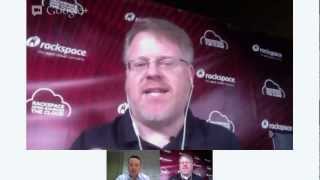
Lion Lee, founder of FanCrank, explains how his social-loyalty platform rewards timely Facebook interactions to boost visibility on large Pages. The service costs around $100 per month per 10,000 fans. Lee's four-person team closed a seed round in December and plans to expand beyond Facebook.
Questions this video answers
Lion Lee.
Pages with about 10,000 or more likes.
About $100 US per month for 10,000 fans (≈ $200/month for 15,000 fans).
Four (including the founder), plus some part-timers.
They closed their seed round in December (year implied 2012).
From Rackspace. We're at the Rackspace Open Cloud experience here at south by southwest 2013. We have a huge area here at the Champion Sports Bar. And we're interviewing all day long all sorts of interesting innovators and tech executives and startup entrepreneurs. And I'm happy to have to be here talking on Google to somebody new. So who are you?
My name is Lion Lee. I'm the founder of Fancrank.
And what is fancrank?
Very quickly, fancrank is a social loyalty platform built to drive sales. So we work for big Facebook pages.
And so I just interviewed the woman who does Subways social media. Hey guys, it gets crazy in here. There's lots of people drinking.
I'm jealous.
You know, rub it in, Robert.
Thank you.
Absolutely. The party is just about to start at 6:00 here. It's 5:15 right now and we're just about to get crazy, so we better hurry it up. But where was I going with this? So Subway. Earlier today we interviewed the woman who does Subway's promotions or campaigns. And they have 30,000 restaurants around the world. It's the biggest restaurant chain in the world. Now would you work for somebody like that? Or tell me a little bit about what size company you would work for.
So ideally, FanFrank works great on Facebook pages with 10,000 or more likes. In the case of someone like Subway, what we would do is we would help identify on behalf of Subway who their most engaged people are and provide them incentives for the entire fan base to really get more engaged and to get rewarded for that engagement. And then with that engagement, or rather those rewards, those users can go through fan crank to redeem for things like gift cards, coupons, swag, prizes, doesn't really matter. But the whole goal is just to really get people engaged and just interacting more on these big Facebook pages.
Yeah, it's interesting because of how EdgeRank works and we should go into what EdgeRank is. Basically, if you have 1,000 people listening to your Facebook page or who have clicked like and that page puts some content out, it probably will only go to maybe 50 or 100 of those people. Not everyone will see that content. Now that's changing. With the new Facebook page design that just came out. I have the page design and there's a way to see all the content, but on the main newsfeed, it's filtering the content using an algorithm called EdgeRank. For sure, EdgeRank has been influenced by engagement and that's a big reason to figure out how to get your fans on your pages to like you, share you, comment on you, et cetera. Not to mention, it's. It's also good content and it pulls more people in if you have really good comments from people and people are participating. When I visit a Facebook page, if there's no likes and no comments, it's like, well, this place is pretty lame and this brand is pretty lame, and it's not engaging and not happening. Right.
For sure. I think Facebook has done an amazing job with EdgeRank. It's a great algorithm. It really works. Works well. In regards to EdgeRank and Fan Crank, we do things to help EdgeRank scores go up. So if there's a currency component to that Facebook page implementation of fancrank, we can reward users for liking or engaging on any content on that page based on time. So if you like it within the first hour or within a certain amount of time of it being posted, we can reward that activity. And we do that because a time decay aspect to it and then there's a waiting score of. And the affinity score, obviously. So we, we've taken that into consideration and, and, and, and do our best to help get people engaged earlier. So those ed rank scores obviously go higher and more people can see that post on their news feeds. I think. Robert, you just muted me. There we go.
There you go. Sorry, I'm gonna try to mute my microphone because it just got really noisy in here. They're playing dj. Yay. But how do you get paid for this? What size of company? Cause my brother owns a bar and he has a Facebook page.
Yep.
And he probably doesn't have all that much money to spend on this. But what size company and how do you get paid?
Sure. So very quickly, Fan Crank offers a free version. It's a very simple app. It basically gives one customized badge and one customized reward for the most engaged person on your page for that month. Very quick and easy way to start using fan cranking, learning everything that it can do. And then from the paid version, if you wanted to create more reward opportunities or do more customizations, then there is a fee for that. And the fee is basically about $100 US per month for 10,000 fans. So if you had, say, 15,000 fans, you'd probably be paying about $200 a month.
Yeah. That's pretty cool. What else have you learned by doing this business? Obviously, you're deep into Facebook the same way I am. Most business people aren't. They're trying to run a restaurant or try to run a manufacturing company or whatnot. And they don't have the time to spend on Facebook all day long the way you and I do. Is that going to be a problem for businesses in the future if they don't have a team helping out with social media all day long like we do here at Rackspace?
You know, that's a really good point, Robert. One of the things that I wanted to do with fan crank was build it in such a way where the time commitment would stay the same or in some cases be reduced. And we do this by empowering the users on the Facebook page to get more engaged. So they're creating content and they're engaging with each other today. What happens in a lot of cases, and we see this very often, is, you know, brands or Facebook Pages sort of shout to their fan base. There's no engagement, they'll just come back and say a like or something. What we wanted to do was try to create a mechanism for people to interact with each other on Facebook Pages. And in our initial trials, in our betas with some of our great partners, we've seen that. We've seen people start talking together on the page as opposed to this one to one like milk box shouting scenario that we've seen. Yeah.
You know, it's ironic that we're on Google talking to each other, talking about Facebook fan pages. Are you thinking about the business of helping people do this on Google or on Twitter or on LinkedIn and being a holistic social company?
Yes. That's a long term play. Right now we wanted to focus in on Facebook because to us that was the lowest hanging fruit and the biggest opportunity for us. But you're absolutely right. There's great properties online that these companies and brands want to leverage from a community aspect that'll happen later this year.
Very cool. Well, thanks for joining me. This is really interesting. Just one last question. What's the competitive landscape? Because I know Wildfire Interactive was doing promotions. I don't know if that's quite on point of what you're doing, but can you give me a sense of what you see as competition for this?
Sure. Wildfire does a great job. There's a lot of other companies out there that do amazing things with Facebook Page applications. One of the things that we wanted to do to differentiate ourselves was to come up with a really in depth, holistic sort of opportunity with this application. So where normally you would see multiple applications being utilized by a Facebook Page, we want to consolidate a lot of those features that our competitors offer into one app.
Cool. And one last question. Tell me a little bit about your business. How is it funded, and how many people do you have working there?
Sure. We've got a handful of employees. We're up to four, including myself with some part timers. We closed our seed round back in December with our great partners at Kinetic Cafe here in Canada, and we'll be doing another round shortly. So if anyone's interested, by all means, please reach out to me.
Very cool. Well, we'll get this up on YouTube. Thanks for joining us.
Amazing. Thank you so much.
Being part of our south by Southwest experience. Where do we learn more about you?
You can go to fancrank.com or look for us on Facebook at facebook.com fancrank We've got our video there that won the video contest. You can check it out there and we'll take it from there.
Very cool. Thank you so much. By the way, are you hosted on Rackspace or what kind of infrastructure do you use?
So we do leverage the cloud. We never got that cool Rackspace credit. We're trying to get it, but actually, to be honest with you, that's one of the things that we need to do in the future because the offering from Rackspace is amazing, and we've designed fan crank to scale, and it lines right up with Rackspace and the offering.
Very cool. Thanks for joining me.
Thank you, Robert.
It sounds like the party's getting kicked off here, so I got to go, so thank you very much.
All right. Have a great time in Austin.
Thanks for joining us. And if you're seeing this and you're still at south by Southwest Interactive, we're at the Champion Sports Bar right across the street from the convention center, and having a lot of events Saturday, today, Sunday, and Monday. Thank you for joining us.
Take care, everyone. Bye. Bye.
More from Robert








45: Sandy Carter Unveils the Future of AI: Myths, Agents, and Creativity | SXSW Insights


