Robert Scoble Talks Wearables In 2025
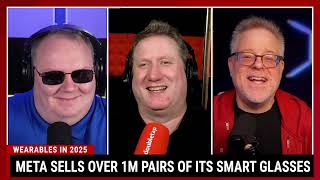
Robert Scoble discusses wearables in 2025 with Stephen Wilcox and Sean Douglas. Meta Ray-Ban smart glasses have sold roughly 1 million units, driven by style and affordability. The conversation covers privacy risks from always-on cameras, optical advances like silicon-carbide waveguides, and how devices range from lightweight sunglasses to Apple Vision Pro's $3,500 headset with a 90-degree field of view.
Questions this video answers
Over 1 million pairs (per Zuckerberg, cited in the conversation).
Possibly reaching 5 million by the end of the year (mentioned in the call).
$3,500
A few hundred dollars (several-hundred-dollar price point suggested).
About 30 degrees for some waveguide (Loomis) prototypes.
Hey guys, let's talk about meta ray bans, because you know, Sean, we haven't talked about them in, oh, five minutes.
Yeah, something like that.
Six minutes perhaps. Let's welcome in our guest of the day. Robert Scobles is with us. He is the host of Unaligned. Good to have you here with us on Double Tap. Robert.
Hey, glad to be here.
Yeah. Listen, great to have you here. Tell us first off, for those who don't know what is Unaligned? Sounds good.
It's my media company. I interview entrepreneurs in the AI space. So I put up videos. So I do the same kind of thing you guys are doing.
Yeah, you do it with professional people. I mean, you're professional. So we get a chance to talk to you. Listen, let's talk about meta once in a while.
I get somebody interesting on.
Wow, well, let's hope they're not watching this. So listen, let's talk meta because obviously the big news is that they've sold over 1 million pairs of its smart glasses. This coming out in a call with Mark Zuckerberg giving away the number. First time they've really done that with the sales figures possibly hoping to reach 5 million by the end of this year. Tell us what you've been reading about this, what you know about this and what the, the impact has been of Metro ray Ban on this wider public.
It's the AI wearable or, or hardware that really is stuck with everyday people around me. I, I see a lot of people wearing them and they like using them. They love the multimodality. So you can look at something and ask, you know, for more information. If you're walking around a museum or something like that and you're looking at a Picasso, you can ask it for more information on what you're looking at. Right. And people really like that. They also like this, the speakers, because they're not like, they're not like AirPod Pros where it blocks the real world from your ears. It lets that come in and it mixes the digital audio in with the real world audio and people like that for doing calls and stuff like that.
Do you think the, it's, it's difficult for us to sort of understand the mainstream appeal quite as much as it does, you know, for us because, yeah, using it to tell me what's in front of me is incredibly useful.
Right.
And using the camera to make a video call with someone who can help me, you know, not walk into the car on the sidewalk is great, but for the mainstream, I'm kind of thinking yeah, they look the Picasso example and, you know, looking at a landmark and tell me more about this all sounds cool. It's great for adverts and marketing. That's what we always see at keynotes. You know, what's the temperature, Is it going to rain and things. But does it really take off? I mean, that million number, I was really shocked at that. I mean, could it have anything to do with it? It's just, you know what, it's Ray Ban. The design sort of helps.
It certainly doesn't hurt. And you know, first of all, they look stylish, right? It doesn't look like a dorky device. I mean, I have an Apple Vision Pro and that, that does a lot more, but it's big and heavy and very expensive. I mean, these are only a few hundred dollars where, you know, the vision Pro is 3500 bucks. So it's not a purchase for very many people that very many people are going to make. So, yeah, I think there's something to that is a Ray Ban and it's a cool tech product and I'm sure somebody bought it for, for that purpose, but it is actually pretty useful, you know, whether, whether or not you can see the real world with eyes. So.
Yes.
Yeah.
No, it's interesting though. It always does fascinate because like, Sean, I'm like, okay, what do the mainstream get out of this? And I'm calling you the mainstream. And I don't mean to do it that way, but, you know, it's time.
In my career that I've been called mainstream. I mean, I'm usually called an outlier, early adopter or something like that.
But you get my point, right? It's like, you know, for people who are not disabled, essentially, what is it in it for you? And, you know, for us, it's like we look at these things as devices that can help us. I mean, you might have heard about the partnership that Meta has done with Be My Eyes, a volunteer network of millions of people who are coming together to help blind people every day. That's a great use case for us. It's a great reason to buy them. But from your point of view, they're just great headphones or great earbuds when you're out and about, right?
And great camera. I mean, the camera is not the best camera you'll ever see, but it's pretty good. And it's always on your face. And if you're, if you have kids and they start doing something cute, you know, your camera's right there, ready to go and you can play with them with your hands and be shooting video of them. So I hear that a lot that people love the camera. You know, if you're going skiing or something like that, you can turn on the camera and shoot it from your point of view. I wore Google Glass for a year, every day. And that was the thing I bought the Google Glass for, was to have a camera on my face all the time. In fact, that's one thing I do with the Vision Pro even. It has six cameras on the front of it. And it's really an amazing camera to shoot with, particularly like today, I'm going to Jeremiah Oyang's AI event in San Francisco and I'll be bringing the Vision Pro because I can walk around and have my hands free and be talking to people like I normally do, but I can shoot the video from my point of view and the viewer is in my head and seeing my point of view and I don't have to hold something or steady something. It's just. I just look at them and talk. And it's. It's a quite unique camera. I mean, it's sort of funny that people are like, oh, it's so expensive. Well, my first TV camera cost $110,000 and had tubes and sat on a tripod. Right. You know, you know, 3500 bucks for a cool camera is, you know, I mean, it's, well, you know, it's painful, but it's not, it's not outrageous like my first camera was.
There is a lot of crossover here because, I mean, Stephen, you got the Ray Bans before I did, and that's the first thing you said. You know what? I'm actually taking photo and video again. Yeah. Because obviously, you know, using a viewfinder for us, out of the question. Right. There's, you know, the camera apps on the iPhone and Android, they all have accessibility features. It can help you frame up something. It's all great and fantastic. But the point is that with the meta ray bans, you know, you just tell it to record. And yes, there is a time limit there, but, you know, as long as you've got your head or face point in the general direction, you're going to capture it. And I find that a lot of people, you know, in our community, blind people, are using it. And for the first time, actually, you know, I'm going to take some video and I know it's going to be. It's not going to be perfectly framed. It never is. But I know that what I'm Trying to capture is going to be captured. So there's definite overlap between the, you know, disabled people in the mainstream there.
Yeah, I agree. It's you know, having a camera on your face is, is really, really useful. You know like I said, if you kid starts walking in front of you, well, where's your camera? Oh you know, did you leave it in the bedroom? Did you leave your iPhone in the bedroom or something like that? Oh, you just lost the moment, right? And having your camera right there and being able to turn on instantly is really, really cool.
And no, no privacy concerns for you because this was a big issue starting to come out, right was you're walking around with the camera and you're face.
I'm a public figure, I have no privacy. All the large leng language models and there's a large language model running on inside the well in the phone, close to your glasses that's talking to you, right? That's, that's the technology that's actually talking with you and you know, telling you what, what you're seeing. I'm built into that large language model in a pretty deep way. It read my blog, I had a famous blog in Silicon Valley for a long time and I read all my blogs to build the model. So I have no privacy.
Thus.
But it, it's quite, it is a concern. I mean you know, with these technologies, with wearing a camera and with a multimodal model, it knows everything you're looking at. So it does bring up a new kind of privacy problem like oh geez, it's gonna. These things in, in theory and, and coming soon are going to be able to map out your entire home and know everything about where you left things, where did you leave your keys or where, you know, where's your Coke can or whatever.
It's great, isn't it?
Yeah.
No. Are you like me? Because I just, you know what, I don't care, honestly don't care if it gives me the features, the service, the convenience that I want. Take whatever you want. I don't care about my privacy. But I know there's lots of people. I honestly don't. Hey, do you think Google are giving me all these free services just because they're really nice people? No, of course not.
They have all my data, they have my emails, they have everything.
I want to talk about what's coming down the line with Meta because of course, you know, we had recently with this Oakley partnership which kind of continues on because Oakley is part of the same company, isn't it with Ray Ban.
Yeah, it's, it's part of Esselor Luxottica. Esselor is the parent company. Luxottic is the division, and then Oakley is the R D division is where they do the R D. So actually, the Ray Bans were designed at Oakley. People don't know that, but that, that's where they design their glasses, our Ray Ban brand glasses. And so doing something with Oakley makes sense. You know, I, I just visited the optics show in San Francisco sp, and I interviewed Loomis, who makes the wave guides for future glasses. So let's back up. Waveguides are like a piece of glass that sits in front of your eye, and there's a little tiny projector that shoves light into this glass. And the glass has lots of mirrors that reflect that image into your eyes so you see a TV in front of you. And the Loomis company had the best optics at Spies show here in San Francisco. And I put up a video interview with them and they're coming along pretty nicely. So you can sort of predict, oh, well, sometime in the next 18 months, you know, somebody like Matta will have a pair of glasses with a display along with all the other things, a microphone and a large language model that's doing your multimodality. You're telling you about the Picasso you're looking at and stuff like that.
And look, I'll be honest with you, Robert. As blind people, we don't particularly care about the screen on the glasses. We want the cameras, we want the audio, we want the microphone. So we've got what we want. But there is a lot of people out there. Well, no, in fairness, there's a lot of blind people out there who have low vision. Right. They're not all blind people. And obviously the mainstream. That's you, Robert.
So, you know, by the way, there's a lot of low vision people that can't see, like in the middle of where their, their eye is. Right. They can see on the outside. Well, using a display, you can spread the, the information you're trying to see out from where, where you can't see to where you can see. So it improves your vision that way. So display might help a lot of people with not complete blindness, but some partial blindness. Right. Vision problems there. I mean, I can zoom in on a newspaper or a book that you're trying to read. Right. And make it easier to read text for people, which is, there's, there's uses for displays.
Absolutely.
For those of us who still can see, we, we, we need displays because we We. That's how the computer is going to communicate with us, right?
Yeah, that's right. I mean, talk to us about Orion and Hypernova, these names that are starting to come out. Tell us what that means for the industry.
Orion is a wave guide made with silicon carbide. So it's a very expensive material, and that's why it's a prototype right now, because it's very hard to manufacture at millions of scale and it's expensive. They haven't been able to figure out how to get the cost down. They're working on that. But it gives you a much brighter image, a much less reflections around the image. So it's starting to fix some of the problems with the displays because even the Loomis has a beautiful tv, but it has a lot of reflections around it and it's sort of distracting and. Right. It's not perfect. And so they're working. They're spending a lot of money in R and D to try to get a virtual display in front of you. That's perfect. Right. And we're not quite there yet.
Yes. Do you think almost like the smart glasses that we currently have are almost a stopgap you mentioned, you know, that's what we want because that's how the computer is going to communicate with us is visually. Of course it is. So do you think people are waiting until we want that sunglasses form factor, but we want the display built in. And so far, I don't think anything's come particularly close to looking like a normal pair of sunglasses.
Well, there are some. Okay, so there's three categories of wearables on your face. Right. There's the lightweights, which are like the sun sunglasses. I went to Consumer Electronics Show a couple weeks ago and looked at a bunch of them. The even realities is the one that looks like a Norma pair of glasses. It has two green and black displays in front of you. So it's not a full color display. You can't watch CNN on it. Right. Or something like that. Fox News for those who like that.
Yeah, Moving on or whatever.
Netflix. But. But it's very. They are very, very attractive. They're. They're lightweight. They. They look like a normal pair of glasses. They do have a. Even. Even Reality doesn't have a camera, so I can't do the Ray Bans. Right. So it's like, do you get camera. Do you got a display for the, for the blind community? You want to be biased towards camera because you need to look at. You need the device to be able to tell you what you're looking at, right? If something, if somebody's handing you a two dollar bill and they're handing you a twenty, you need to know that, right? But anyways, there's a whole, there's a whole bunch of ones there, There are some with camera and a green envelop black display in like one eye. Because they're trying to save battery or save cost because these things, these, they're, they're trying to get down to about a 3, $400 price point of the lightweight glasses so that everyday people can buy them. Then there's the medium weights. These have a thicker display, like technically it's called a bird bath display and I'm thinking of xreal. This is a quarter inch thick display instead of a, just a real thin piece of gl, you know, a 16th of an inch thick display which is what it's in the wave guides or the even realities ones, but it gives you a full color display and they're about 700 to $800, you know, so if you want a big TV in front of you or you want to work in them, that's good. And then there's the heavyweights like the Vision Pro and the Quest 3, which give you full immersion, almost a wraparound screen front of you so you can do really amazing augmented reality and be working on multiple monitors around you or, or whatever you're going to put around you. Those are really great for people like me, but they are heavy and they're expensive or more expensive than the other glasses. So yeah, that's sort of the break breakdown right now. The, the thing that's coming from Loomis, these newer wave guys are going to show up in products probably in a ultra lightweight side which will give you a color display. And so next year you'll see glasses, glasses that have a color display and, and a camera and microphones and an AI computer inside.
That's very interesting. Yeah, I mean it's developing at some speed. I want to talk a little bit about Apple because, you know, I kind of hoped when Apple announced what became Vision Pro that it was going to be a pair of glasses. Instead it was that VR style headset. And you know, I just wonder, you know, where we were going with this, you know, and I want to ask you, do you think Apple's lost its way here with this product or do you think it's.
They're just slow because they know the market's not ready for it. You know, they had to get something in the hands of developers. So that Developers could build software for future pairs of glasses or future devices. It's really an amazing device. I mean, you go to the Apple Store and put it on and you see your hands in front of you and you see the store around you.
You.
Well, you're not seeing that at all. You're seeing a mixed reality world. I call it a holodeck. You're, you're, you know, you're looking at two Sony 5K chips, right? You're not looking at reality at all. It's presenting what looks like reality to you digitally. And that's real interesting for a lot of things like controlling a robot or watching a movie or playing a new kind of video game. These are pretty mind blowing devices. But, but they do come at with a cost of being heavy. Now Apple, Apple has like the next decade all planned out. You know, this is sort of big companies and they know they're going to do glasses at some point. There was a lot of rumors that they give up on glasses. That's not true. I talked to the team and they said no, no, they killed one team that was working on one kind of glasses because that just wasn't going to work. And that's what big companies worked at Microsoft and they would have three teams all trying to do the same thing. They might not even know about each other. Right. So Bill Gates would fire up three different teams trying to do something to see who would actually get the best technology out and then he would pick that team and kill the other two teams and you would never really hear about it. And same thing is happening here. I mean in five years, I assume Apple and Google and Meta and who else, you know, Snap and a few others will have glasses. Samsung with Google and all that, there'll be a, a bunch of glasses over the next few years coming out. So I'm not worried about Apple. You know, they're a big boring company now and you know, that's.
You can't say that.
I can. I, I was Apple's first child labor back in 1978, you know. Well, it's a big boring company. It's not like Tesla where it's changing a lot and has a charismatic leader. Tim Cook is not somebody I look to as charismatic sometimes.
That can get you in trouble. That's the only thing.
It certainly can.
Yeah, I think you're right though. I think Apple had to, I mean, almost lay down the foundation of where developers were looking to go. I mean, you could argue they did it way before that, years before, before with the augmented reality SDKs, right when they were doing the iPad, you know, the gaming on the tabletop, which was absolutely amazing at the time.
But yeah, I mean I, I wrote two books on spatial computing. You know, the Infinite Retina was the last one. We wrote that four or five years ago and that was before Apple came out. The reason I, I was able to write all these books is I, I was going around to R and D labs and talking to, to entrepreneurs who are building weird ass, you know, 3D sensors and like that. And they kept getting bought by Apple. And that, that was over the last 12 years. I mean it took a long time for the Vision Pro to come out. Even after I caught on when that they had patents and that they were building a product and a building, building teams by buying companies, there was a lot of work that went into that. So I want to go back to.
This point though because you know, I, I, I hear what you're saying about the glasses side of it because I guess the question is, is do you think that Apple are going to develop a pair of traditional glasses that will rival the Meta Ray Bans and do you think they would abandon Vision Pro to do that?
I mean, for the next decade I think you're going to still have two devices because the 4K chips that you can buy for a VR headset right now, the displays are just better than the displays you can put on a small pair of glasses. And, and like the wave guides that I saw at Spie have a 30 degree field of view, which is if you're, if you're standing in front of a MacBook Pro for instance, and you look at that monitor, it's a little bit bigger than that, 30 degrees. The Apple Vision Pro has 90 degrees. So it's like a big wraparound TV on your desk. Right? Much better for working or being immersed or watching a movie or playing a video game kind of thing. And so I think you're going to still see a heavyweight category and a lightweight category in these wearable devices for a long time because there's some advantages to having a big heavy device that has a lot of computer in it for doing all sorts of crazy video gaming and stuff like that and having these really nice 4K displays. Now the displays in the Vision Pro are very different than a display like in the even real reality's glasses or, or the Meta, the, the Loomis glasses. The, the Loomis, the wave guide glasses, you can see through to the real world, right? So you're seeing the analog real world through them. The Vision Pro, if the battery goes off, you're in blackness, you can't see anything. Right? Right. Yeah, we, we join your world, but we're not seeing, we're not seeing any of the real world. What it's doing is digitally represent representation of the real world that looks pretty, pretty close to the real world, but it's, you're looking at two Sony chips, you're not looking at the real world at all. And there's advantages to that approach because you can control everything. Right. You can make a movie really black, you know, really colorful, really bright, and you can see in bright sunlight. Right. And stuff like that. The glasses have a lot of problems with like if you're trying to read something in bright sunlight, it's going to be pretty hard because the bright sunlight's going through the glass into your eyes and it's trying to lay over a digital layer on that. It's, it's not perfect for everything. Right. So I, yeah, I think you're going to continue seeing a lightweight version of glasses and a heavyweight for different things.
You mentioned the Vision Pros that you have. Have. Do you actually use them, let's say productively?
Yeah, it's, it's really cool. You can live, you can airplay a, a Macintosh screen into it and you get this big, huge screen, much bigger than any of the screens I have in my house. I have like an 83 inch Sony TV, right? That's cool. But the Vision Pro, the TV is as big as my entire wall. Right? That's amazing.
It's nice.
Yeah, it's pretty cool. What about beyond or like if you're traveling and you know, going in a airplane plane, the TV on the seat back in front of you is a little like 10 inch display, right? My TV is the entire plane, right? Yes.
Yeah. What about beyond glasses? I mean, do you see there's lots of ideas. Rings. Lots of cool stuff, right. That people are talking about.
Ring.
Yeah. I mean, is that, is that real? Is that something that is going to, I mean, is it is a useful functionality device?
There's a bunch of them. You know, a friend and humane has a little pin that has a camera with a little projector in it. You can talk to. You can't see the projector.
Well, I mean, you know, there's other.
Like I said, if you're blind, why, why pay for a display, you know, But I do. Right. But yeah, there's a whole bunch of these and they work okay. It's really useful to have as like a little AI assistant, but the, the people who have the Ray Bans have that. I, I think this is why the Ray Bans are interesting. The, the eyeglass form factor is just the right form factor because it's, you know, for instance, I have to wear glasses if I, if I take off my glasses. You all are blurry, right? Reality to me is blurry. Right. So that's why one reason I don't, I mess. I like I, I'm attracted to this field because this makes reality better for me. Right? Improves reality for me. But anyways, if I have to wear glasses, might as well wear a computer glasses that has a microphone and a computer inside. Right. That, that I can talk to in a camera gives me more utility than my, than my glasses that I'm currently wearing. Right?
Yeah.
And I think that's why the Ray Bans are, are doing real well. Because it's the right form factor. Getting people or a pen or something like that, that's just not is, it's, it's not a normal behavior in society yet. And, and so you have to teach people to do that instead of. Glasses are a normal thing. Right. 60% of us have to wear glasses. So putting on Ray Ban glasses is, you know, not, not much different than these glasses that I'm currently wearing. Right?
Yeah, absolutely. Unaligned IO is where we'll find more about you and of course, subscrib newsletter as well. How else can people find you, Robert? If they want to check.
I'm on X. I'm always on X. I'm following 26,000 people in the AI community. I've built a bunch of lists of 26,000 people and 6,000 companies on X. So you can watch my list and join in the fun and watch the world go by. Amazing. I use X Pro so I can see, I don't know, 10 different lists on my screen at one time. And so I can watch. Literally I'm watching it right now. The world is just going by.
It's the new coffee shop. Right. It's amazing. Virtual turn square, as they say. Robert Scoble, thank you so much for coming on today. Great to talk.
Thank you so much.
Thank you.
Thank you, Robert.
Honor to be on. Thank you very much.
Thanks.
More from Robert








45: Sandy Carter Unveils the Future of AI: Myths, Agents, and Creativity | SXSW Insights


