Scoble on Curation
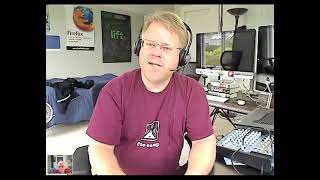
Robert Scoble explains why he curates information streams and how he does it. He uses Twitter lists, TweetDeck, and Flipboard to spot patterns in real time, like detecting earthquakes before news outlets report them. His advice: start narrow, vet your sources, and build lists that surface what matters.
Hello, Howard Rheingold.
Hi, this is Howard Rheingold. I'm writing a book about digital literacies. Those include participation, collaboration, attention, critical consumption, or as Ernest Hemingway put it, crap detection and network awareness. In regard to both participation and collaboration, an important emerging literacy is that of curation, both for yourself, for individual empowerment, and as a digital citizen, helping to improve the state of the web. Whether you are tagging a photo on Flickr or social bookmarking with Deego or Delicious or favoriting a tweet or liking something for Facebook, you are selecting what you think is the best of what's out there, both for yourself and for others.
I interviewed Robert Scoble, one of the most prolific and I think, important and useful curators, about how he does what he does and what advice he might have for others about how to be a good curator, both for yourself and for others. I've got two questions for you. One is you do a lot of curation.
Yeah.
Why? Why is that important? And secondly, what advice do you have to people about how to be a good curator?
Ooh, that's a tough one. Why I do it. God, I don't even know why I started doing that. I think it started back in college, back in the 1991 and 92 timeframe when I ran the Associated Press wire machine at San Jose State University. And I just fell in love with that. And I, I remember I was running the machine when OJ Was found not guilty. And in an hour there was something like 650 stories filed from hundreds of journalists who were hanging out at the courthouse. And the Mercury News picked two or three stories the next day to put in the newspaper. And I always wanted to have more. I wanted to have more viewpoints and more. I wanted to have the Associated Press wire machine, which now today Twitter is really the replacement for that Associated Press wire machine. I have a Twitter list of all the world news brands, things like the Economist, Financial Times, cnn, New York Times, Wall Street Journal, even my local newspaper. I put them all into one list. And now I can see the world's news happen in near real time, where I don't need to wait for the paper to come out tomorrow morning. In that world where you get to see the world's information streaming at you, I don't have tweetdeck up right now, but when you get to see the world's information streaming at you in real time, most people can't put up with that. I try to pick interesting things for a geek audience, so I'm curating for geeks or people who are interested in technology. But if I was doing that for a newspaper, it's really a newspaper editor's job. And I sort of always wanted to be a newspaper editor or a front page designer or something like that. I did that in college too. And so I just enjoy it. I just enjoy picking out interesting things. We're seeing patterns that other people don't see in the news. And part of the pattern. So the second part of your question was, how do you become a good one? Is to see patterns in the stream that's coming through Facebook or coming through Twitter that nobody else sees. Part of the reason I'm good at that is I've met a lot of people around the world and I know what their passions are. I know who Tim O'Reilly is. And if you don't know who Tim O'Reilly is and you see a tweet from him come through your Facebook because somebody liked it and shared it with you, or somebody retweeted it and put it into your view, then you're not going to be able to see, you're not going to be able to get the most value out of that tweet. Because I know he's a book publisher and I know he's started things like food camp, I'm wearing his shirt. And he's connected geeks all over the world and he's very passionate about technology and also now E government. And so I know when I see a tweet from him that it's more authoritative on those topics than most other people who might tweet or might publish on that content.
So knowing something about sources is a good guide. I mean, you don't have to be Robert Scoble, but you may know something about a particular subject and you may know who is more credible than others.
Yeah, that certainly helps in a lot of contexts. Now, something I was the first American to tell somebody else about the Chinese earthquake because I was watching Twitter, I watched tens of thousands of people on Twitter. And so I was just watching as Entertainment one evening and I saw five different people say earthquake or something equivalent to earthquake, my room's shaking. And these people were located in five separate cities in China, thousands of miles apart. And I started saying, well, either I'm getting hoaxed because these guys all got together and decided to play a late night prank, or actually it was middle of the day day there or early morning there, it was about 11:30pm here in the west coast, or something's going on that I'm seeing. A pattern. I don't know enough about these sources. I don't know if they're trustworthy. I don't know who they are. But I'm going to start watching this pattern. Whenever there's an earthquake, the first thing I want to do is see it verified by the USGS website. I opened a browser window and just started refreshing that. And I immediately went to Twitter search and started searching on earthquake and China to see what else was going through the system. And I immediately tweeted there's something big. Here's three separate people who just said earthquake. And it sounds like there's a huge earthquake in China. I predict it's going to be a huge one because it's in three separate cities. This was before USGS website came up. And USGS website usually comes up after a major event three to six minutes after an earthquake. So you have three or six minutes before the USGS website comes up. So I was refreshing USGS website. I was refreshing Twitter search and just watching what was coming on. And the news started. You know, people started reporting more and more about what they were feeling or experiencing. And USGS website came up and said 8.0. And then I knew that the story was accurate. It was not a hoax. At that point, I wasn't being played by a group of people who decided to get together and see if they could get the world to bite on a hoax. I mean, yesterday TechCrunch was hoaxed by a girl who said she was quitting her job with some signs, right? And I always start out the world skeptical, I guess, because I've gotten hoaxed like that before, and it's not fun. And it's not fun for your brand to be pushing along stuff that doesn't prove to be true. So I started out skeptical and see if I can verify what I'm seeing. The patterns I'm seeing evolve through some other source. But once the USGS website came up, I knew that everybody was telling the truth. And then all of those people became very authoritative on the earthquake. I immediately started following them and watching everything they wrote because they were on the ground. And they were able to connect me to information that other people weren't. And that was true. One of those guys became a curator over the next hour and started linking me to all sorts of news about the earthquake. You know, pictures, videos, news reports, et cetera, et cetera. It was interesting that night. It was 45 minutes before the Associated Press came online and said and even admitted there was an earthquake. And it was. And CNN Shortly came on after the Associated Press admitted there was an earthquake. So because the world's news journalists were asleep, CNN's in Atlanta, it was like 2:30 in the morning back then. They didn't get the story and they didn't see the story for a good 45 minutes while the Twitter world was going crazy. But it takes a curator, it takes somebody to see pattern and know how to verify the pattern and then know how to expand that pattern and bring in more information so that people have have up to date information about what to do.
That's a great answer and a good story.
I mean in the Haiti earthquake, the pros came online within a few minutes. So it's interesting how the old school news brands now have teams. I mean I visited CNN and now they have a team, 24 hour team to watch Twitter and make sure that they stay up to date on the news.
And of course we're really in the early days of people curating news and news news in the term in terms of AP and CNN is of course not the only thing you do a lot of technology startups that are happening on your radar. As somebody who watches technology, I notice you also make a lot of lists. You curate lists on, on Twitter, you favorite a lot of things on Twitter and I think you use Facebook like as well. What are all the different ways you.
Curate well and also I go and visit the companies like skygrid or Flipboard who are building new services that do some curation on their own algorithmic curation if you will. Because like skygrid is following the speed at which news travels through networks. So they've built algorithms to know I release a press release here and does it travel? Does it get retweeted, does it get forwarded, does it get shared, does it get liked on Facebook or does it get reblogged and its algorithms can study that and then bring you the best news.
So you use are interested in using tools that can magnify your innate skill?
Yeah, because for instance, when I sign on in the morning, I just did it a few minutes ago. I go to a website like techmeme which shows me the world's tech news, the big story. So did anything happen overnight? Did HP fire a CEO or something like that, which happened last week. Then I go to memorandum to know the big stories of the rest of the world. So non tech stories, things like did President Obama do something last night? And then I look at Twitter and I look at the people who replied to me overnight. Did they reply to me and Say, hey, Scoble, you should know about something that happens a lot because people past journalist tips of what's going on in the world. And that's how a lot of us get our stories. And even TechCrunch, they want you to email editorechcrunch.com and tell them about what's going on. Or I want you to come over to Twitter and tell me something new. So then I look at my replies, then I look at Twitter's Retweet page, which is actually how Flipboard works. Flipboard is now. And I should pull up Flipboard so you can see what Flipboard looks like. So, you know, there's now hundreds of thousands or millions of people who are using the retweet feature. Actually millions of people. And so if I put like last night I put up a video, and it has gotten so far retweeted by 10 people that will raise its score up in these systems so that it'll show up on things like Flipboard. So Flipboard is just a nice magazine that builds a magazine out of your Facebook and Twitter feeds. So what stories is Flipboard picking? Have a lot to do? The algorithms that pick these stories. Because it's not everything on this. If you looked at this Twitter list, on just Twitter, there's a lot of stuff that's being published that doesn't show up here. And so how does it pick these stories? Well, one, it's picking them based on the number of retweets, but it's also looking for things with media. It's also looking for things with some content to read. In other words, it's not just a tweet about what you had for lunch, but it's a tweet with a bitly link that links to a blog or a news article on the New York Times or something like that that has some meat to it that Flipboard can then paginate and lay out in this beautiful online magazine.
This is a tool that's built on mass curation. Of course, the tool wouldn't work unless a lot of people were retweeting things. Paperlee is another one.
Yep.
Do you know what do they use? How do they decide what goes on the front page?
I don't know, because I looked at. I'm biased. I got Flipboard a couple weeks before Paperle came out. And I looked at Paperlee and I said, no, it's not as cool as Flipboard. So I spent most of my time working on Flipboard, and I check in Paperly once in a While to see if it's interesting. I think it's interesting for people who don't have iPads. I think that's the second best one to Flipboard. But I just love what Flipboard does by choosing photos from my friends and letting me put Twitter lists in here. If I care about politics, I can put a list of politicians or people who care about politics in here. And now I have a political newspaper. If I care about sports, I can put the world's athletes in here as a Twitter list. And now I have a flipboard done by athletes or people who care about sports. You know, like ESPN or something like that. Yeah. I need more time to give you a good answer to the paperly question. Any.
Anything off the top of your head in terms of advice to. To people getting started on curating. Because I can, I can imagine a response to this interview as well. That's Robert Scoville and he's. He knows a lot and he's been around a lot and he has a lot of people feeding him. I'm just getting started. How do I do this?
I would start by building a Twitter list or a Facebook list of people that you trust and you like reading and work out from there. You start out with, let's say, four news organizations or four journalists that you know and like. And don't add anybody into that list until you've understood who they are and vetted them a little bit and watched them for a little while and seen whether they're interesting or not to put in your world. A quote that was going around from me the other day was if you want more followers, you have to follow better people because your inbound will inform your outbound. And if your inbound is crappy and jumbled and not, and you don't understand what you're reading and you don't understand who's writing it, then you're not going to be a very good person on pushing stuff outbound. And therefore you won't gather an audience that's interesting to you because you won't be informing them very well. So I look at it as a funnel. Who do I put in my funnel? I want to put people that I trust for some reason now I'm pretty broad on that. I have lists where I'm very hardcore about who gets on those lists, like my tech influencers list. You actually have to have some tech influence to get on that list. You better be Steve Jobs or Walt Mossberg or Dave Weiner, somebody who's done something in tech that has influenced the world in some way. I have a very strict filter for that list. But on my main Twitter list, I just want to follow geeks. So if I find somebody talking about you and you're a geek and I can verify you're a geek geek and not a spammer and not somebody who's going to talk about politics all day long, I'll follow you. That's it. Find good people to follow and read them and understand who they are and try to meet them, try to interview them. This is a good way to figure out what people are passionate about and how when they say something that it's more important than the next guy. But on the other hand, you're fighting. It's going to be interesting. You really need to use tools now to keep up with this world. It's moving so fast. I should pull up the new tweet deck I just got last night, which has the live scroll bar and it just flows. If you're trying to watch 20,000 people, that will drive you nuts, especially if you don't know a good percentage of them.
So you've recommended TweetDeck and Flipboard. Are there any other tools that a curator ought to think about? And you use your favorite things on Twitter?
I use a lot of news. I go to Yahoo News a lot. I go to Google News, I go to techmeme. Those are. Once you visit all those, you're going to hit the high level stuff. To me, Twitter let me see the birthdays people were having and the smaller stuff. The stuff that most people would say is noise. But I like noise because if I see a lot of noise, I can see the needle in the noise pretty easily. It's sort of like seeing a lawn with a dandelion. It's easy to see the dandelion if there's a lot of lawn, but if there's only dandelions, it's hard to see the dandelions.
This is really useful.
One thing, if I was going to start today, I wouldn't try to compete with me or Mike Arrington or Huffington Post or anything like that. I would try to pick a very small niche and own that. Really understand it. In other words, if you wanted to study the White House, don't study the White House. Study what the pet's doing at the White House or something. Pick something very specific and very niche. Understand that and become an owner of that. And that will let you then build other off of that. If you're the world authority on what the pets are doing in the White House, Then all of a sudden you can branch off of that and say, what coffee is the White House staff drinking? And then you can branch off on that and start talking about more serious topics that might get into where a Huffington Post or Fox News might cover today. But you're not going to be able to compete with Fox News and Huffington Post on what's happening in the White House. You got to pick something that they're not seeing and own it and totally cover it. And totally. Anything that moves in that little smaller niche, it better be up on your Twitter page before anybody else has it or sees that pattern. By doing that, you're building a pattern recognizer in your brain and on your systems, using either Flipboard or Paperly or Twitter search to look for the pattern that you care about. If you're covering Walmart, and covering Walmart isn't going to do you very well, but maybe covering the cereal aisle of Walmart, if you became the worldwide authority on what was going on on the cereal aisle, I think that would be an interesting blog and Procter and Gamble probably would start watching it and might even sponsor good advice.
Thanks. Some of the things you talk about I call tuning and feeding. Tuning is who are you putting into your attention, and feeding is who's paying attention to you and what are you going to distill from what comes to you from that?
It's interesting. I recently met Kathleen Kennedy, the daughter of Robert Kennedy, and she had never been on Twitter. All she thought about Twitter before I talked with her and showed her Flipboard was that Twitter is for telling your friends what you had for lunch. That's what she thought Twitter was for. But I said, you're a politician, you're interested in the political world. Let's go over to this site called Listorious.com, which has Twitter lists and Twitter lists on a lot of topics, maybe not every topic in the world, but if you can't find it there, it probably doesn't exist anyway. So I went over there and searched politics and found several lists on politics. There was world politics and local politics and politicians and political journalists. I mean, there was lists on all sorts of stuff. And I grabbed a couple of the good ones because you can see a preview of what that list is and who's on the list. So it's easy to figure out is that list interesting to you and is it authoritative? Because you can see if one list only has Rush Limbaugh, Rush Limbaugh and Fox News on it. You know it's going to be Pretty biased toward one angle of the political spectrum. Or Sarah Palin and Rush Limbaugh. Right. But you can easily see the biases of the list. You can see a preview of the list, you can see who's on the list and then you can see and whatnot. And you can grab the URL for that list and stick it in Flipboard. And now it paginates and it builds a world newspaper for that Twitter list. And Paperly does the same thing. That's actually one thing I liked about Paperly. You can just grab a URL from the list and stick it in Paperly. I think they give you 10 lists on paperly and nine and flipboard it. And that'll be going up according to the CEO. And now you have. I showed her it. It was like a world newspaper of what was going on in politics right now. And she said, oh my God, this is something I've always wanted. And it's not just the New York Times. Right. It's every news source you stick in that Twitter list or somebody else stuck in that Twitter list. So you have dozens or hundreds of news organizations, newspapers. You can stick the Congress people who are on Twitter in there. You can stick the PR who write on blogs and write Twitter in there, you can stick Barack Obama in there. And now you have a newspaper, a real time newspaper or news thing, because it's not paper anymore. That is just about what you care about. She said, man, this is mind blowing. I never considered Twitter could do that. That's really, to me, a good example of how Twitter is changing thanks to these newer news display applications, I guess.
So that's curation for yourself. You may not be curating for others, but a little bit of knowledge. You can curate and tune information that comes in.
Absolutely. So if you steal somebody else's political list and then all of a sudden you find your local congressman isn't on that list, well, you can add them. And now that changes. That newspaper, that news thing that's on your screen every morning and you have a custom news display. I don't even know what to call these things. News display application that is very powerful and unlike anything you've seen before, by the way. It has pictures and videos. If somebody like when I toured Congress, I met a couple people who were using cell phones on the House floor to do quick videos and put up videos of what they thought about what they saw going on inside Congress. From a congressman's standpoint of view, we've never had that before in human history. To be able to have that kind of direct connection to the powerful people and see what they're thinking. It's very interesting, Sam.
More from Robert








45: Sandy Carter Unveils the Future of AI: Myths, Agents, and Creativity | SXSW Insights


