The King and Queen of Location-Based Services
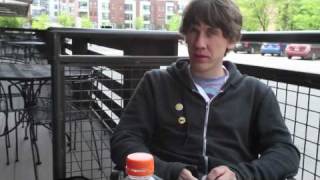
A recorded on-stage interview (May 2010) with Robert Scoble, Alexis Kim (founder of Foodspotting) and Dennis Crowley (co-founder of Foursquare) discussing the emerging location-based ecosystem. Alexis explains Foodspotting (visual food recommendations: take a photo, tag dish/place, search by dish, create guides), and Dennis describes Foursquare’s goals (making cities easier to use via check-ins, friend-location, badges/gamification, contextual recommendations). They discuss product differences (visual food-focused vs. social check-ins), technical/scale challenges (storing/serving photos), growth and geographic adoption (unexpected pockets of activity globally), algorithmic personalization (expert-weighting, malleable social graphs), business opportunities for local merchants (hyper-local specials, loyalty), startup realities (fundraising, hiring, delegation), and community enthusiasm around these services.
Questions this video answers
Launched in March (at South by — SXSW) 2010.
About 100,000 users in roughly three months (post-launch).
Approximately 500,000 check-ins on weekdays; weekend daily check-ins often break 600,000–700,000.
Honolulu.
Foreign.
I'm here with the location. King and queen.
I wish.
Who are you?
I'm Alexandra Jewski. Started food spotting.
Yeah. And who are you? I am Dennis Crowley, one of the co founders of Foursquare.
Yeah, and so where do we start here? Foursquare is just white hot right now. Look, the location in general is white hot.
Where do you.
Because everybody knows where you are right now. Where do you think you're taking this? You know, you said over the summer you're going to ship a lot of stuff that you've been dreaming about for 10 years. Can you give me some sense of what that is?
You know, we've just always had this idea of, like, you build software that makes cities easier to use. And a lot of it's based on the fact that, like, I've been in New York for 10 years and a lot of my friends have been New York for 10 years. And, you know, we're finding that when we build things specifically for, you know, for us and our use case in New York, like, they tend to translate pretty well to other spots as well. So, you know, you know, we're. I don't know, we've got this product that is great at letting you know where your friends are, and it lets you know about places that are nearby. But we should do more in terms of, like, recommendations. Like, we're finding that, you know, game mechanics are fairly successful at encouraging people to actually do things that they haven't done or maybe be more adventurous than they normally would be. And I think there's still a lot of opportunity there to make these things, just make things that change the way that people experience their everyday lives.
I think that's really inspiring because food spotting was actually started for similar motivations because I realized how many foods people never even hear about in the US when you think of Japanese food, you think of sushi. And it's really about how can I get people to try new things and not always eat the same old stuff at a restaurant and actually know what's good there and to kind of encourage that more adventurous eating.
I feel like I'm being interrupted by Twitter here because of all the tweeting.
I was not happy about.
There's all these birds.
Ed Williams in the corner with a remote control. Awesome.
And so show me what food spotting is, because I think this will lend into an interesting conversation.
Back and forth.
Yeah. So Food Spot is a food recommendations website and app. Recommending food is easy. All you do is you take a picture, you say what it was and where you found it. We match it up with our place database and then you can share that picture. But basically when you turn on the phone, then you can actually see the good foods that are nearby. And then when you're at a specific restaurant, so if you tap in here, like the boiler room next door is apparently really good. It'll show you what's been recommended the most there. So. So it's just basically super simple food recommendations and visual. Because that's really how people make decisions. It's more like having a bakery window you can look in everywhere. Like being able to see through. It's like food X ray vision everywhere you go.
Yeah, absolutely.
I love the pictures. I love just scrolling through them and finding a good sushi place or a good steak place just based on picture, right?
Yeah. And the thing that's different about it is you can actually search for specific food too. So if you're looking for the best filet mignon in Omaha, you can use food spotting to find that.
We found out that's Omaha steaks might be the most spotted baki by Omaha. Thanks. What do you think because your service was about telling people where you are and finding like text tips and stuff like that you haven't used yet. Photography to present, you know, different experiences. What do you think about that? And do you think you're going to move that way?
Yeah, I mean, ultimately, like, I think we're both just about sharing experiences and like, it was easy, easier for us to share experiences with text than it was with photos. You know, that's something we'll do eventually. Like, users ask for it all the time. It's one of the most requested features and we'll do it. So it's like, you know, it can be a scaling nightmare. Like, it gets real expensive to store the photos. It's really expensive to serve them up.
Rackspace, though, help you out.
Sponsored by Rackspace.
This whole show is sponsored by Rackspace.
No, it's one of those things we do. We just have to make sure we get it right. I think.
I mean, for us, what we're hoping, of course, is, you know, we want to post our tips out to Flickr and post the pictures out to Flickr. And I mean, for us, you know, being a somewhat a more focused service, you know, for us, it's important to integrate with everything that's out there in people's lives already ready. You know, it was basically built on a behavior we saw people already doing, which is taking pictures of their food, posting them on Twitter and, you know, just Continuing to be integrated with people, things people are already doing, is really important to us. So.
Tell me some of the stats, because in the hallway you were telling me that Tokyo is about to become the number one city on it.
It's funny. Like, we, you know, I got to go back and double check some of these numbers. Like, some of these, these are things that like Harry shouts out in the middle of the day, like, oh my God, you know, Tokyo has, you know, more check ins, you know, per whatever than New York does. But it's, it's weird. It's like a different thing. It's a different thing every day. Like we, you know, there was all these swarm badges going off in Indonesia and it's like, what's an Indian, what's, what's happening in Indonesia that we need to be knowing about? And we see weird pockets of four square activity, just like in Buenos Aires, in Kuala Lumpur. It's like we don't really have any way of really tracking it. We don't have good internal tools for measuring what are the most popular cities. We should have this stuff. We just don't. But the thing is, the service, it's just growing and growing. We're consistently doing, even on Monday, we'll do half a million check ins a day. And then on the weekends we'll break 600, 700 sometimes it's like tough to keep up with. So you collect all these data points.
About, sorry, my camera went off. So we're talking about the difference between a place like a restaurant and a place like an event, like across the street. And how can you show heat maps and show differences and stuff like that.
Yeah, and I think one of the big challenges for us and one of the things we're excited about doing is we get all this great data from users. Like, it's really like how people are moving around in physical space. And so we do this with the swarm badges and we do this with trending. It's like we know something hot is going on in the corner, but we don't really have a good way of knowing is it a conference, is it a concert, is it a happy hour or is it a birthday party? And you know, we could take contextual cues from things like Twitter and we can take them from the shouts that come out, or we can take them from event listings and figure a lot.
Of that stuff out.
I'm really excited about what your algorithm people will be doing with the data. Yeah, that's going to be really cool.
Yeah, it's just like, you know, it's trying to add context. Like the check in action is super simple. I'm here at this date and time at this lat long and you use as many other data feeds as you can to try to add context. Who were you with? What was the event? Why were you here? What pictures were taken? What were people tweeting about?
What do you like to eat?
What do you like to eat?
That's really the future. I mean, right now it's just, you know, a flat stream of food, flat stream of tips. And how do we surface the right things for you based on all this data that we know about you? So now you're live streaming, you know, everything you eat, everything you do, where, every place you are. How can we show stuff that's more relevant? And I think that's where, you know, the potential for location based, you know, specials and advertising really has potential is because we can, you can target things in the real world in a hyper, local way.
What advice would you have? The business people like this winery wine store here, how would they use your two services and where do you think they're going to take that in the future?
Yeah, I mean, I'd like to see, you know, I should reach out to these guys, but I'd like to see, we do see some of this already where, you know, venues offer specials to people that are regulars there. If you've shopped here five times, if you brought three friends here, if this is your fifth time this week, you know, you're entitled to a VIP type of discount. But it's also feasible that, you know, this place just opened up and there's other wine stores in the city. Hey, you know, if you come here, if you're a regular at some of these other wine shops and some of these other bars and restaurants, and you come here and you can show us that you've checked in, then we'll give you something to entice you as a new customer. And so I think there's an opportunity there that really hasn't existed before. I look at one of the great things about Twitter and local merchants. It's like a toy for them. If you own a bar or restaurant, Twitter is like this toy you get to use to communicate with your users in a way you haven't been able to do before. And they love using it. They love playing around with this stuff. And I think we're just giving them another set of toys to play with. And I think that's part of the reason a lot of the venues are excited about it.
I Think what's really been fun is just putting things out there and discovering how businesses and other people are using them. So we started this guides feature just because I realized I would ask people where should I eat in New York? People would email me a bunch of recommendations. I would never have time to look up on a map and see if they're anywhere near where I wanted. So we just created this feature where anyone can just type in a bunch of recommendations. It maps them really simple. And then as you try those things, you get a little stamp checking them off. But lately we've been seeing a restaurant in San Francisco, picked it up and created a sake guide to 10 of their sakes. We try a ton of their sakes. You get the free bottle of sake, this free bottle of special rare sake. And it was really cool just to see what, what they're doing with it that we would, you know, we might not have thought of right away.
Yeah.
So I think it, I think. And it's probably been the same for you guys. It's like seeing what people are doing and then acting on that, formalizing that.
Your two companies are at different stages.
Right.
You have a million users and you have what, 25,000, 100,000 app users.
That's awesome.
Very cool.
And when did you launch?
We launched in March at South by the iPhone app.
So, yeah, 100,000 users in like three months.
Yeah, it was probably most being featured by the app store helps, but.
Yeah, that's great.
But it's. Yeah, it's definitely. It's been great for us. Like, I mean, I was coming up with the idea for Food Spy in January before you guys launched for Fair Share. And I was working on like a game, game like learning site right then and for my work. And a lot of those ideas actually came from that. And then when you guys launched and just, I guess you guys are kind of a year ahead of where we're at.
Yeah.
I don't know. It was really great hearing your story today and just the, you know, it's not all like this giant success story because, I mean, we get discouraged. We go, you know, oh, my gosh. Another competitor popped up and Robert Scoville loves them and what are we going to do?
Hey, Yossi, you're talking about Feed Me. You know, it's fun to watch these competitors go at it and coming from different regions in the world.
Yeah.
And their different philosophies.
Well, it's validating too. I mean, it's, you know, seeing people share the same passion and the same vision you know, I tried this great thing, and I want to share it with the world. How do I do that? And, I mean, it was really awesome what they're doing. But anyway, I mean, there's things that get discouraging at this phase and you know, going, like, hearing that, you know, when you went out, I figured, you know, oh, people are probably just throwing money at you the first time. Yeah, maybe not. I mean, that's not the actual thing.
It took us, like, six months to get anything. You know, it was a lot of trial and error.
You know, we've been raising for, like, two months now. We feel like, oh, it's been so long. But, you know, we're probably lucky to have people we have on board already, so.
Yeah, yeah, yeah, yeah. What.
What surprising has happened or have you learned from doing PRT companies? You know, because you're in the middle of a firestorm. That's really interesting. And I. Yeah, I imagine you're learning a lot of stuff that's just mind blowing.
Well, I mean, personally, like, it's like a crash course. It's like getting an MBA, you know, getting an MBA in, like, 10 weeks, you know, but, like, you know, learning how to build a company and manage people and build products. But, like, you know, what's the most. That's easy stuff to answer. Like, the most surprising stuff is, like, you know, I used to think that the Dodgeball user community was pretty passionate. Like, the Foursquare users are awesome. Like, they're like, they're so supportive and, like, they make stuff for us. They make T shirts and buttons and patches and stickers and pins, and it's. That's awesome. You know, like, I've never experienced anything like this, and it's because I think they're really excited about, you know, not just the product now, but, like, where they. Where they think the product's going.
I'll get back to you. I remember driving with a group of geeks from San Francisco to Montana and playing dodgeball all the way along.
Oh, yeah. Yeah.
This was before we really got into Twitter.
Yeah. Yeah.
What did you learn from that experience? Why didn't it go so supernova like Twitter did?
It's just early. I mean, to be honest, part of the reason I think Foursquare is going the way it's going is we piggyback on the success of Twitter and Facebook. The first two years of Dodgeball, all we would do is talk to magazines and try to explain why people would ever care about your location. And then Twitter and Facebook have done this for sharing everything. Why would you ever share what you had for lunch? Why would you ever take a picture and share it with your friends? They've answered those questions. And so now it's like, hey, you share your location, it's just much easier to explain to people. Phones are better, people are smarter, people are more apt to share. People are more open about things. There's a lot of different factors.
The soil is really right for it now.
Yeah, timing's real good.
So what have you learned? Surprising in the last.
I was gonna say something surprising, but it's not. Something that I learned was that my dad was in West Virginia eating at some local West Virginia restaurant, and he was telling the waiter, oh my, I'm taking a picture of this steak because my daughter started this food spotting thing. And then like this girl in the booth behind him jumps up and is like, food spotting. I love food spotting.
Really?
West Virginia. And so I think that what's been surprising to me has been the regional pride that's emerged through food spotting. It's people showing off that look, we have sushi in Ohio, and it's great. And, you know, seeing that and seeing the. Honolulu is our third biggest city, actually. And there's just so much regional pride around food that really comes out. And I think that's something that we can really celebrate is the food that comes from these small towns, the best food in Freeport Pen, where I grew up, and, you know, things like that. And I think that's been fun and awesome just to see that local, local spirit. And, of course, that's something we're really seeing here at Big Omaha as well.
Yeah.
One thing that I keep talking about malleable social graphs, the reason I keep talking about that is on Yelp, there's a problem. And I have a. I'm an advanced sushi eater. I've eaten sushi in Japan, New York, all over the world. And so I'm at the top level. Well, one of my favorite restaurants in San Mateo has a lot of four star ratings from people like me, but has a few one star ratings because they don't do good California Americanized sushi, like California rolls or teppanyaki stuff that normal people can eat. And so I only want to see reviews from people who are advanced like me, people who have earned the badge, for instance. And where do you think that's gonna go? And how are you gonna present tips from people who have gotten. Who've earned the right to tell me, you know, where to go for a winery or where to go for cg.
You'Ll see a lot more of that stuff from us, you know, you know, coming. I guess, you know, the next coming months or so, like, we've got. Every time users check in, like, they give us a little bit of information about the types of places that they go to. Like, they, you know, they eat at fast food or they eat it at, like, really nice restaurants. They go to dive bars, they go to wine bars. And we can use that to rank, like, someone's sophistication at a certain level. So, like, if you really want a steak, like, we should populate this. Tips from people that go to lots of steakhouses. You know, it's like if you're. If you're looking for, like, a, you know, a great music bar in New Orleans, and we should be able to populate tips and people that have, you know, been to music festivals all over the country, and it's like, you know, you're just. You're using some of the data to, like, you know, bunch people into categories based upon, like, what their, you know, what you think their level of expertise is, and then, you know, just bubble content up based upon those. Bubble that up.
Yeah, yeah, we thought about that really explicitly because we were going. You were kind of going against the Yelp. Yelp model and trying to really think, how can we build a better rating system? And so, I mean, it's very explicit in our system. If you're an expert, if you've tried, you know, multiple steaks, multiple sushi, then your rating for that thing counts more, you know, for everybody. And then I think the smart thing will be down the road doing more of this algorithmic stuff where it's more, you know, what's the best for you might be different than the best for me right now. It's just, you know, this very explicit thing that if you. The more you contribute to the system that other people like, the more ratings you can give out. So we actually use this blue ribbon thing, and you only get so many. And then once you, you know, once you've used them up, you have to earn more by posting things other people like. And so we're really trying. We didn't just, like, slap on five stars, because that's what everyone does. We were really thinking, like, what would mean the most to people and, you know, trying to build a better rating system for food spotting.
I bet a lot of companies and people are offering you money to sell out. You know, how are you dealing with that? And you told me in the hallway, you told Your mom that out. I think the quote was, I'm going to run this thing in the ground before I have an exit where the company gets killed.
Like dodgeball. Yeah, we just want, I mean, we couldn't, you know, we couldn't anticipate that things wouldn't go very well for dodgeball. Right. And so, you know, talking about this in the talk that I gave, but like, you know, I looked at that experience as like a failure. Like, we didn't get to do the things that we wanted to do. The product didn't mature, the product eventually died. But you know that the knowledge that we got from that experience I think will shape, like if we end up working with another company someday. I think I have a pretty good idea of how to bring a startup to a larger company and make it work. That's something that I've had experience in and I know the specific things we could set up to make it work again. But at the same time, there's so much to build. I've talked to a lot of different entrepreneurs about this and trying to get a lot of advice from people and we're just like, there's just things that we really want to accomplish and I think we just got to keep running at it and building is as much as we can. Just really excited about just, he's really excited about all this. Like, just we've timed it right. Like we've got the right team and the right product and the right ideas and the right culture and he's operating on a huge, huge scale. But you know, like, we do things now, right? Like, so we'll do like we, you know, one of our designers started like Thai Tuesday and then there's like fast Food Friday and like we're all going to the Mets game next weekend. And you know, like, these are things like, I've always wanted to run a company. This is funny. I always wanted to run this company, run a company like this growing up kind of wanted to do that. And then I didn't even realize that I was really doing it until like a couple weeks ago. I've been so busy with everything else that I was like looked up one day I'm like, holy shit. Like, this is it. This is the 20 person startup I've always wanted to have. Like, now we can do the thing where we go to movies on Fridays and we go to baseball games together. And like, no, it's this kind of stuff starting when you miss figuring it.
Out are the things you miss doing now that it's gotten big. Like, for example, I mean, the classic story in user experience design is once you move up the ladder, you never get to design again.
Yeah.
Yeah. And, you know, that was the thing you loved in the first place. For you, has that been like that at all? Have there been things that you've missed doing? Yeah, like your role has expanded so much.
Yeah, I like to. I really. I'm the pro. I'm. I'm a product guy. I want to be the product guy. That's what I want to do. And so, you know, it's tough. You know, someone asked me, what's the hard thing, the hardest part about this? It's like, you know, delegating certain things. Like, I don't have to run the blog and the Twitter and write all the copy and just give it to good people. So, like, when I brought Alex on, my old partner from dodgeball, it's like, that's like. I don't know if I trust product with anyone else. Like, he's the guy that's lived it before. Like, he's the guy that does it.
Anything else that you'd like to tell me about what's going on in your life? You both are living pretty extraordinary lives.
And building extraordinary products. It just seems like, you know, it just seems kind of normal now, just working all the time and just kind of used to it. It's funny. Like, everyone's like, oh, my God, you guys are living the dream. I'm like, if the dream is, like, being sick all the time and not sleeping and traveling and, like, stressing out all the time, I guess. But no, it's awesome. Like, at the end of the day, like, you stress all day long, and then you go out and you get a drink with your friends, and, like, you know, there's six other people checked in here, and it's like, that's crazy. Like, people using our stuff. I'm sure you see it all the time. You know, you see when you see people using the stuff that you're building, it's like, forget it. I'll get up earlier tomorrow and get to work, you know, because it's just. It's just really inspiring, right?
Yeah, definitely. Yeah. I mean, I think just not letting. Not letting fear take hold of, you know, any of whatever it is, you know, because it kind of seems like, well, there's one hurdle after another. You know, once we finally finish raising money, then we're finally gonna have to know we're starting hiring, and then we're one thing after another, and. And at first, it's like, well, you know, once I get to this point, then I'll be done. Then we'll have made it. As soon as we have that round of money, we'll be done. That's totally not true. And I'm sure you know that now. You know that. I think for us is like, learning to be content at each phase and just be, like, excited about what we have right now. And, you know, it always can be better. And, you know, I always want to, you know, fix things or change things, you know, do that, want to do more. But just being happy at each phase and enjoying it, I think is going to be really important. Otherwise, it's just going to be a constant chase.
Yeah, it's so funny. It's like the companies aren't totally different. You know, it's just we're in the same spot. We're just like, we're a couple months ahead of you, you know, and, you know, saying what you're saying, like, oh, that we'll close the financing, then we'll hire, and it'll get better, and it'll get better. And I keep telling myself the same thing. I'm like, I'm thinking, it doesn't get better. It's gonna get crazier in the meanwhile, I'm thinking, like, oh, yeah, it's gonna get better right away. And I'm sure if, like, we were sitting next to Jack, you know, from Twitter, you'd be like, not gonna get better. It's gonna get crazy here. And it's just like, it just keeps going on and on and on. You always think you're, like, a month away from nailing it. Yeah.
And I think learning to just be happy now with what we have, you know, where we're at now, and enjoying that.
Enjoy the ride. Right.
Are you going to. Are you thinking of merger or buying companies to grow faster, or do you have any ideas on that?
No, you know, are you going to buy food spotting.
And I want 10% of this deal.
Tell your Feed Me friends to come join us in San Francisco.
Okay. No, but, like, you know, this is when we talk about doing, like, another round of financing. It's like, I guess that's what you do as a company. Like, your job is to grow the product and bring the best people. And maybe that, I don't know, maybe that means acquisitions at some point. I don't know. That's just. I really just started thinking about it for the first time a couple days ago, and it's, like, blowing my mind. I get so many other things to stress about. Like, I don't even want to think about that. But. Yeah, that's. That would be. That'd be really cool if we. If we grow up and we become a company that, like, other people want to get acquired by, like. Yeah, that's. That'd be awesome. That'd be fun. You know, we'll see.
So are you gonna buy a four square next week?
We've been raising massive amount. All right.
Can you outbid Yahoo? Oh, yeah. Well, thank you so much. And thanks for changing my life. To Buffy.
Oh, thank you. That's super humbling.
So thanks so much.
More from Robert








45: Sandy Carter Unveils the Future of AI: Myths, Agents, and Creativity | SXSW Insights


