Unaligned #:1 AI Generative Music
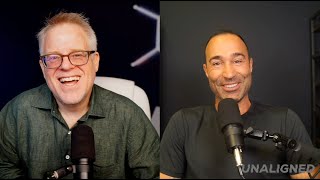
Edward Balasan, CEO of Amy, explains how generative AI breaks songs into musical phrases so producers and hobbyists can create continuous functional music for playlists, video games, and restaurants. Amy's approach works with raw ingredients rather than full recordings, enabling both personalized soundtracks and traditional songs.
Questions this video answers
Edward Balasan
Late 2019
About 40 people
About $8 million
Great Mountain Partners (investment arm of the state of Michigan)
Welcome to the first episode of my new AI focused interview show titled Unaligned. There are some incredible companies out there that aren't being covered anywhere else in tech and I'm bringing them to you on X.com I even made a bunch of lists of 3800 of these companies. This show will bring you these companies founders every week to discuss what is going on in the AI world. My first guest on this show is the CEO of Amy FM and Edward Belisonian. Amy is transforming the way we create and interact with music thanks to generative AI. I chose Amy because in the future we will have dynamically reacting music that tailors itself directly to its users in real time. It's incredible. And here Edward gives us a deep dive on the generative AI music space and shows us how you can create new music with his service. So I'm Robert Scoville and I've been going through thousands of AI startups. I have a list of 3, 600 AI startups on X.com and I've been splitting those up into buckets. And one of the buckets is music, generative music. And that's how I found amy. I have 29 little startups that are doing all sorts of stuff with audio or generative music and I wanted to get the best on the show. And so it's a real honor to be doing this with you. Who are you?
I'm Edward Balasan and I'm the CEO of amy, which is the AI Music Initiative, a generative music platform.
Yeah. And I, I found these 29 startups so far and there's probably a few that I'm missing. Tell us what's going on in AI and music from a 30,000 foot level and then how does Amy fit into that?
Well, let's define AI because I think there's a bit of confusion and misinformation around it. AI kind of encompasses expert systems and machine learning and I think there's a variety of different approaches that you're seeing out there right now towards using AI for generative music. There's also sort of two buckets of generative music. There's creating static music, in other words, using AI to create what we traditionally listen to, so songs, and then using AI to create real time, interactive and dynamic music. So those are sort of the different buckets. We're building a platform for generative music, which means we want our tools and our services to be useful broadly to the music community and industry for both static and dynamic music, but also in a way that embraces the industry without alienating rights holders, catalog owners, and other industry incumbents.
So, I mean, online, we've seen a lot of hype that, you know, that people are creating music with AI, no humans at all. Is that what you're doing and. Or tell me what your philosophy is of how music is going to be created in the future?
Well, I and our company frankly, don't believe that monolithic neural nets, copying finished music is an effective way to use AI in the music space. First of all, it just doesn't sound good. There's so much nuance to music that you lose in the finished signal. When musicians make music, they make it from raw ingredients, much like a cook makes a beautiful soup from raw ingredients. You source the best ingredients, you do things to those ingredients that matter in the final recipe that you're making. And music making is very similar. So our approach to music making is really to provide technology to creators to enhance what they already do, as opposed to try to replace them. So we work with raw ingredients, we work with recorded music, and our tools allow that recorded music to turn into generative music. So we're not displacing anybody. We're really just accelerating the creator's ability to take content that they already have and turn it into generative music.
And so the founder of Pandora told me, showed me his system years ago, right, where he had listeners go through millions of songs, categorize them, tell the database what kind of timber was in the music, what kind of vocal was in the music, you know, what kind of music it was. Was it. Was it hip, hop or country? Stuff like that? You're this age now is way more detailed than that. The I think you and I were talking about the music is being decomposed into the separate pieces of the music. Can you tell us a little bit about what music looks like to you today?
Yeah, sure. So going back to the analogy of a cook using raw ingredients, if you have the raw ingredients, you have so much more flexibility in what you can make. Think about a kitchen full of a bunch of ingredients that could be used for any recipe or for any meal. So we work with artists, with catalog owners and other content creators to take their raw materials. And then our machine learning algorithms are focused on deconstructing that music into smaller, reusable musical phrases. And then we extract a ton of information from each of those musical phrases. That's what gives us the information to feed into our algorithms. And the algorithms essentially are recipes for making music in various genres, whether it's hip, hop or Reggaeton or trap. We work with expert producers to create expert algorithms, much like an expert chef would give you an expert recipe for making a soup.
And who, who is the same that is the same that a teenager is playing with their phone and want to create some fun thing to put in, you know, a game or something, or show that their friends. Or is this for the musician to make their process of making music much more efficient?
Musician to us is a very broad term because we want to enable anyone to express themselves musically. And the tools that we've created allow an amateur like me to express myself musically while still giving a professional the creative input that they need to really steer the system to create sophisticated music that matches their, their desires.
And music is, has a wide variety of, of needs and things, right? That on one side is the professional music, you know, the Beatles or whatever that you're listening to on a, on a pair of headphones or in, in your house or on a sound system. But there's a lot of music that gets played in dentist offices and elevators and lobbies of hotels and stuff like that. That doesn't need to be so human performed as the other kind of music. Right. We're starting to see a split up of the kinds of music that the industry generates. And tell us what you're seeing there and what you can enable with this new generative music.
Well, we see a spectrum from kind of the bedroom DJ or someone like me who wants to express themselves musically but just doesn't have the know how, to the professional producer. But then similarly on the consumption side, functional music is becoming a very important category in music. You see this with a lot of smart playlists that Spotify is making and Apple's making. This kind of music is really geared towards filling time and space. You're less interested in the Weeknd or Drake. You're more interested in music that occupies that part of your brain while you're working or maybe you're having a dinner party. Hopefully you're not in the dentist's office. But outside of that, functional music is over 40% of listening today. So it's an important category. And one of the things that I think generative music does really well is create continuous music that can fill time and space without fatiguing you, but can also be hyper personalized, meaning the listener can take part in the journey so that the music is played for them, not at them.
That's pretty mind blowing to consider. I mean, I have a hundred thousand tracks in my playlist, all Dolby Atmos. We should Talk about the role of spatial audio in this new world. But that, that kind of music. First of all, I have some music playlists that are for the doctor's office. Right. Meditation music, music that you might play while programming or working, that doesn't have very many lyrics to. It doesn't have. Right. It's not interruptive. But this new system can create that kind of music really well. Right. Like you could ask it to play some house music and it'll play house music for hours and keep going. Right?
Yeah. And that on the interactive sort of functional side, that music's being made in real time, meaning you hit play and the music's being composed as you listen to it. And for this category of filling time and space, playlists are going to be difficult to compete with this kind of generative solution where you just don't have the song or track fatigue anymore. Having said that, the same technology that we've created applies to creating static music. So more on the professional producer side, you can use our technology to create songs and you have the input, the steerability, if you will, on the platform to create pop songs or songs with lyrics if you want. Both of those are valid in our model. It's just they have different use cases. Right. A song is something that you're going to release on your Spotify or you're going to produce for an album deal that you've cut with a. With a label. The interactive music is more about creating music that fills time and space for functional listening.
And there's a lot of places for that kind of music. Right. If I'm creating a video game and I need some music to set a mood, add some atmosphere, I don't need AC DC to be playing in the background. Right. So I might go to a tool like yours and have you create my video game music. Is that where I think you're going with this?
Yeah. So the interactive part of it is really critical for real time playback, where you need the inputs from the environment to steer the way the music is being made. That could be a video game where you turn a corner and something happens in the video game that needs the music to change dynamically. And if you're just trying to switch songs, you don't get the kind of steerability with the music that you would if you're actually composing it on the fly. And then the flip side of that is if you want to make. Let's say you're a music supervisor at a label and, and a video production company comes to you and says, I've got this five minute section of my movie and I need music for it. Your producers kind of go back to the catalog and they dig for music that they can find that can appropriately fill that 5 minute space. With Amy, that's a button click. You feed it the music brief, it can analyze the music brief and then create music exactly to spec into the brief that it got based on mining your catalog and pulling all that content together dynamically for you.
This is going to be really important as we go into the Metaverse. Right. And we could argue about whether people really want to do that or not, but I think they will. And I. I see a whole raft of new 3D technology coming for augmented reality glasses that are coming soon. Right. Like Apple's spatial computer, the Vision Pro.
Right.
If I was building a castle, let's say, on the metaverse with 100 rooms, I want different kinds of music in each one of those rooms. One room might be a jazz room, one room might be a rock and roll room, one might room might be a classical room. Your kind of system is really good for creating that kind of music. Breadth, right?
Yeah. This goes back to the question you asked me earlier, like, who's this for? Everyone should be able to express themselves musically. So if I'm in Roblox and I want to make a scene in Roblox, where I've got music, I shouldn't have to go and strike a deal with a label to do it. I should be able to access generative music as a service, and that's what we've created. Similarly, if you look at the way artists make money, their preference is to be on the road touring. That's where they make money. They don't want to stand in a suit and perform in the real world and have that map to the virtual world as a recording. They'd rather have themselves virtualized and then have a virtual version of them dance and make music. But it needs to be in their voice and their style. So we enable both of those scenarios where an artist can really express themselves in the platform or a hobbyist can access generative music as a service without necessarily having the skill set to make the music themselves.
If I was a performer like Skrillex who plays EDM music, right. He's generating, he's creating each note on an app on his macintosh. Right. In 3D. And. And he's really defining a new kind of sound with. By doing that. Is. Is your tool good enough for him to do that kind of work?
Absolutely. We've got a lot of Artists like him who are using our technology for exactly that. And the benefit is kind of twofold. One, if you look at the way a Skrillex makes music, he starts with raw ingredients. So imagine he's got a kitchen full of all kinds of raw ingredients that he spent years building, and he's constantly creating new ones. When he needs to make a song, he taps into those raw ingredients to put them together to make a song. That last step there, the arrangement, the mixing, the mastering, the producing of the song, Amy does that 20 times faster than real time. So you just feed it ingredients and it'll make music for you. As an artist, like Skrillex, you can take the output of Amy, stick it into your favorite tool, whether it's Ableton or Pro Tools, and put the finishing touch on it. So think about Amy as being your prep cook, doing all the sort of legwork, and then you come by and taste the soup and see if it's to your liking or not, and add that last bit of seasoning on it. So for an artist, it's a huge time saver. That's in the sort of traditional world. What Acrilix could also do is take our tool and create a live channel on YouTube where Amy just explores the work of Skrillex over years, never repeating itself and constantly exploring new combinations of his musical ideas. It's in his words, in his voice, and his style.
All royalty free, Right? If I'm listening to that, nobody's I'm. Well, tell me about the business model of your app. Right, because am I paying you, like, 20 bucks a month to do this? How do you get paid and how does the music.
Well, royalty free is a really dangerous world word to use in the music space. So we've created a vault of these raw ingredients, and it's our. We call it our community vault, and it's specifically for our consumer apps. Everything in that community vault has been licensed and royalty cleared, meaning we know exactly who the rights holders are, we know who the publishers are, who the labels are. In other words, who has the recording and publishing rights. And all of it has been cleared. So if you play music in Amy, it is being played with all the rights being appropriately addressed in advance. If a Skrillex uses our technology to make a YouTube channel, he's using his own content and he gets to keep the revenue from YouTube. So if YouTube's paying him an ad share or he's doing a subscription model, he keeps all that money. We charge a hosting fee, and you'll see that consistently from Us, we don't want to make money off music. It's not our job. That's the creator's job. We provide them with tools, services, and a platform to accelerate and enhance their ability to make money off music.
One reason I wanted to get you early on my show is because I see a new kind of music coming. And let me try to explain it. If I was wanting to listen to a marching band, I was in a high school marching band, right, back in the 1970s, right. And I knew what it sounded like to walk between the tuba and the drums, or the tuba and the clarinets.
Or something like that, right?
And it's pretty mind blowing. But using today's Dolby Atmos, yes, we can do spatial audio, we can do surround sound music, but we can't do that. We can't walk between the, the, the, you know, the drum and the singer or the flute and the clarinet in an orchestra. I want to do that someday. And I think as we move into augmented reality and spatial computing, we're going to want to do that. But now I have to think about how would the music industry record a marching band, Right. And how would it distribute that marching band to my headphones or my glasses, Right. And how would I be able to walk around through the marching band? I, I, the music industry keeps telling me that's just impossible to do for a lot of reasons, because they can't record a hundred different people walking around the field with microphones. They can't distribute it to my house. In fact, Dolby Atmospatial audio is actually two channel audio, right? It's, it's two channel audio that a computer decomposes and then puts around you. It's really pretty cool technology, but it doesn't do what I'm dreaming of. Is this where we're heading with you, you know, into this new world of generative music where the music could be generated on each marching band member around me and I could walk through the band.
Well, the, the term generative music, and this is one of the confusions around this space, a true generative music platform is generating the music in real time. So the music that you're listening to is being composed in real time. And in our platform, we're doing that with the raw ingredients. The raw ingredients in our case are the melody, the harmony, the beats, the bass, the pads, the tops. And we can have any number of those that we want, just limited by computing power. So what you're listening to is really the mixing, mastering and producing of those live. One of the things that we've done and exactly what you just described is we created a virtual world in Roblox, and we created an avatar. We taught the avatar dance moves, and we map the dance moves to specific events in the composition. For example, a build or a drop or sections where the avatar might want to do specific dance moves. Then we were able to move each of the different elements of what you were listening to in 3D space. So if the avatar moved around, his voice could move with him. And if different instruments were with other avatars, maybe a drum player, maybe somebody on another instrument, those could move in 3D space as well, because we're actually mixing those live, so we have complete control over where they are in 3D space. Now, a hundred person marching band, maybe the compute power isn't quite there yet, but we have support for 24 different channels on a decent computer. And we could make a 24 person band and move each element in 3D space with no problem.
Can you give me a demo of what this looks like?
Yes. Let me show you a video on YouTube. So this, you're not going to hear the spatial part, but this avatar is generative. In other words, it's dancing to the music in real time, and the music that you're hearing is being played and created in real time as well. So we could create any number of these avatars, and any one of them could be mapped to any piece of the music that you're listening to, whether it's the melody, the harmony, the beats, the tops, or if there was vocals, there could be a vocalist singing as well. The point of this is, if you create a concert in the metaverse, you no longer need the DJ or the artist to actually perform in the real world, to copy it and map it to the virtual world. So this, this kind of technology really lends itself well to virtualization of the music experience, whether it's the visual part of it or the audio part of it, like you actually in the physical world, virtually, so that that thing will run forever. And, you know, one of the things that we want to do in the virtual world in using our technology is to allow artists to create an avatar, map their avatar to specific events in the music composition, and then we can allow them to create a generative version of themselves that just plays 24. 7 and continues to just explore their musical ideas. And this can also be put on YouTube or it can be in the Metaverse setting where you can interact with.
It live so you can start thinking about new ways to make musical experiences that you know, listening to AC DC or the Beatles just ain't going to do. For instance, maybe your avatar has a certain music playing and my avatar has a certain music playing. And if we get close together, the music could start changing because we're together. Right, because you're generating the music live. Is that a use case that you're starting to think about?
Yeah. So we. We actually did a collab with a gaming company. We're under NDA, so I can't talk about the name of the company, but I can describe what we did. They built a virtual dj, and the virtual DJ was purely programmatic. In other words, it was responding to the crowd of people around it. So as more people gathered around this dj, the DJ amped up the music, the energy of the music, and as people in the audience started dancing, the DJ would amp up the music again, and then the audience could stop moving and the music would stop. And then when the audience moved again, it would pick up the music. So you can create really fun interactions between the listeners or the, you know, the audience for the music and the actual music that's being made in the virtual world, or even in a real world, for that matter. We've done. We did something very similar to that at Burning man, where we created a music experience over four hours that was timed to the sunrise. So the second the sun rose, we had these Gregorian chants kick in with no one touching the system, and it was pretty magical to see.
That's interesting. So you're changing music over time, or you might even do an Internet look up and say, is it sunset or sunrise or what time of day is it? Tell me a little bit about how you can hook music onto the environment that you're in and change it.
Well, if you download our app, you'll see that as a listener, you can interact with the music in real time. And that same interaction is available through an API. So, for example, with businesses, you could use our music in your restaurant and address one of the key problems that restaurants have, which is when the music starts to yell over the restaurant patrons or vice versa. So you can have a microphone input that steers the music being created, whether you want to increase in energy or decrease in energy. You could have the music change based on the time of day or the average age group in the audience. You can also monitor the sales per hour on the cash register and adjust the music that's being created based on the sales per hour on the cash register. This all becomes possible when you're composing music in real time. It's really no different than having a really, really gifted DJ who's reading your audience and you can change the way that they're making music by monitoring the audience effectively. If you're creating music in real time, you have that capability.
That's really crazy. And how much am I paying for this? What's the business model of your company?
So we, as I said, we're in the platform business. So what we've done is we've created a consumer app that's really there to allow artists to provide their superfans with these interactive experiences. It's also designed to attract casual listeners who might not know that they want to actually become creators. We show them how easy it is to interact with music with the hope to get them to go download Amy Studio, which we do charge for. We will charge a subscription fee for our consumer app for the premium content. This is content that's been licensed by artists and 80% of that revenue goes back to the artists. So it's really there to provide content creators, rights holders, labels, publishers with another medium to monetize their existing music. They don't have to make a song, they don't have to make a track or an album. They just feed the system existing content. It turns into generative music and they make money.
Years ago, I met one of the people who was trying to do this stuff years ago, right? Generative music, and he. He let me listen to a bunch of music and he. His system was also creating an avatar as well. And I turned to him and I said, this, this ain't going to win American Idol, right? It wasn't. It wasn't the quality that we come associated with, with somebody who gets on American Idol and gets to the finals and is that talented. Where are we today? How close is it to, you know, being American Idol? Quality music where people listen to it and go, man, I can't tell that's not a human done.
I think there's a degree of empathy that exists in music that's really important and is probably irreplaceable. You have an empathetic connection with the singer, with the artist, with the person who is emotionally providing you with this experience. I don't think that's going to be replaced. Having said that, for over a century, we've been recording music created by humans in the hope to monetize it when the human can't perform it. And generative music is really no different. What we're doing is we're taking content that was created by these beautiful artists, and we're turning it into a medium that can play interactively and continuously. So it's really the evolution. You know, you saw the album to start with, then we went to the song, and now we've deconstructed the song, and we're turning it into something that can speak in the artist's voice, in the artist's style, and carry on when they can't. So I think it's not going to replace the experience of watching an artist really pour their heart into something, but it'll give that artist the ability to make money when they're not out there performing live.
When we met earlier, you told me that completely AI Generated music doesn't test that well with humans for the reasons you just gave us. But if you put a little human performance, a little singing in there, somebody playing a great saxophone solo or something like that, all of a sudden it starts testing better, it starts sounding better, and people start responding to it better. And your tool can. Let's say I sing a little, little part which you don't want me to sing, and maybe Taylor Swift, you got wanted here. Sing. But let's say Taylor Swift lays down a little singing track. Your. Your program can generate the music around her, right?
And look, that's already happening when. When a producer sits down with a tool like Ableton or Pro Tools, they're not creating all the different elements that go in there. There's generative drum tools out there. There's other generative systems that can provide bits and pieces of what you're doing. We've just kind of brought it all together. So if you are Taylor Swift and you do have a beautiful melody that you sang, your production studio's job is not much easier. You know, they can use our platform to fill in all the pieces around it, and they can adjust and modify whatever they want. So this isn't. This isn't meant to replace that human element. It's really meant to accelerate the way we bring music to the market so you don't have to sit there and produce the sort of filler material. You can leverage a platform like ours to do that for you.
A lot of people, in fact, most people. I give a talk at the Music and Tech conference one time and ran a panel discussion on generative generational shifts in music, I. E. Old people didn't go into the Sahara 10 at Coachella. I kept noticing this over and over again while I was shooting pictures there, and I started talking to the old people who were, like, dropping their kids off at the Sahara Sahara tent. Okay, so Coachella is a big music festival. It has six venues. Right. Sahara Tent is one where there's a lot of electronic music, newer kinds of music. The old people would drop their kids off there and then go and go to the other venue where there's Arcade Fire or some rock and roll band playing.
Right, right.
In other words. And I started interviewing them and the old people were like, oh, those people aren't playing instruments is one of the excuses they give me. Or there's not many lyrics in that, you know, kind of music. I want to hear a story. I want to hear Taylor Swift tell me a story in the music. Right. Where I'm going with this is people attract to music that they heard when they're 16 to 20 years old.
Right.
And they imprint on it. My, my old producer used to force me to listen to 1960s rock and roll music, which is pretty good. But that's all he would listen to. Right. He hated it when I put EDM music on. So tell me a little bit about how you're seeing the shifts of music listeners. What, what are, what are people going to respond to this and, and use music in a new way and, or can we recreate the old music that people still love? Right. You know, the, the, the music they grew up with when they were kids.
Look, singer songwriters are never going to go away. It's just part of the human experience and nor should it. You know, there's something beautiful about somebody having a story to tell and then creating a musical journey for the listener to be part of so that you can experience that story with them. It's kind of uninteresting. If an AI makes up the, the verse and the, the words to a song, ballad, and then you listen to it, you're not going to have that empathetic connection with it. Having said that, the original sort of long form music was classical music. When you go to the symphony, you'd listen to music for three hours. You are on a journey. And electronic music is the new version of that. There's very few genres where you can watch a DJ play for eight hours. I did see a DJ play for eight hours. And before that I was mostly just listening to classical music. And it really was a profound experience because this particular DJ had full control over the audience. For eight hours he was, they were puppets on his string. And it was masterful in the way that he moved them, controlled their energy. The second you left the space that he was owning, your energy dropped to zero. When you were in there, he kept you going. Electronic Music is unique in that respect and I think it's part of the reason why it's one of the top genres in the world outside the US if you look at Europe and a lot of other countries, electronic music is number one or number two in terms of consumption in the U.S. it, it lags, but it's also catching up quickly here as well.
I was at Coachella while it was taking over. It went from the Sarah 10. Now it's on the main field where 50,000, 80,000 people can be. Right? It's crazy.
And look at the top paid artists in the world. I mean, a lot of them are electronic musicians.
Where else, what else do we need to worry about music in this new world, where it's going? I mean, I have lots of dreams of walking through fields of music that Skrillex or somebody like Skrillex generated for me and put around me. And I'm walking around in my living room playing a new kind of game that gets me hot and bothered. But tell me where you think this is all going to.
Well, look, I think the first thing is as we see tech and music kind of come together as an industry, the history of tech and music is not pretty. There's a lot of carcasses in the landscape from tech companies being belligerent. Music is not like other art forms. If you see a picture of an elephant created by Dolly and it looks a little twisted and maybe it has three eyeballs and seven toes, it's kind of interesting. But if you listen to music that's out of key or off tempo or rhythmically clashing, you can't listen to it. It's just there's a universality and a truth to music that just is hard to ignore. And it requires a bar that's pretty high. Like your music has to be good to great for people to consume it. You won't get away with crappy music. You're seeing this with a lot of fan generated music solutions out there where fans are making music but no one's listening to it. You're uploading a song and 10 people listen to it, but 100 million people did that. So that paradigm I think is going to shift to where you're going to see tools that allow fans to make music that they actually want to listen to. The first customer of the music you make needs to be you. If you're not going to listen to it, your friends certainly aren't going to listen to it. So that's one thing that I think you're going to see changing Something I think that we do really well. The other thing that I think you're going to see is hyper personalization of music. Meaning that I as a listener can take part in the journey and I can craft the music the way I want it with no knowledge about music and in a way that still stays true to the artist's original intention and that requires real time composition. So I think you're going to see a lot more of that. You're going to see almost fans demanding that the music be played for them, not at them. And that's, you know, again, that's where generative music is really going to shine. I say that the third thing is you're going to see a lot more incorporation of different technologies into this music making systems, for example, systems that can create sung vocals, right. That there's a lot of companies working on providing text that the user can then provide some voice samples to that'll then be sung on along with the other music that's playing in key in tempo. Those kinds of technologies I think will plug really well into these generative solutions. One thing that we're looking at on the ambient side of things is providing the listener with ways to dial in different kinds of therapeutic elements into the music. For example, you can dial in the different binaural frequencies to focus, to meditate and choose which of those you want for your music because the music's being created in real time. Again you get to have a hand on that steering wheel and take part in that journey.
So mind blowing new world of music. I started this show because I saw business people all over the America particularly who are using AI, usually these large language models like ChatGPT to run their business. What would you say to people who need to use music as part of their business? My, my brother runs a bar. He uses music all the time. He's pretty conservative about music because it sells beer, right? You start playing, you know, you know, like ACDC or some famous band and gets everybody to go to the bar and buy some beer, right? So he knows that. How would you, how would you, what would you say to the business owner who's trying to use music in a new way? What should they pay attention to this genre of companies like yours?
Well, there's a new era coming for them. I think in many ways businesses have been highly marginalized in the music world. It's difficult to even play music without breaking the law. It's complicated, it's tedious, it just hasn't been. Despite the fact that there's over 100 million doors, addressable doors in the music for business space. 50 million of them are pirating the music. And I don't fundamentally think it's because 50 million of them are bad actors. It's just a pain in the butt to play music legally. So I think there's a new era coming where it's going to be easier, you're going to get better music, it's going to be highly personalized for your environment. You'll finally, just like I, as an individual will get to have music played for me, you'll be able to have music played for your venue. And I think that that's not five years away, that's months away.
Tell me a little bit about your business. How was it founded? Who funded it? You know, how did you get the capital to build this? Because it's not cheap to do what you're doing.
No, it's not. So we have 40 people or close to 40 people in the company now. Our team is kind of distributed between Melbourne, Australia, San Francisco, Louisiana and London. Most of our engineers are in San Francisco and Melbourne. We founded the company in late 2019. We kind of launched into the pandemic partly on purpose because artists were back in their studios being creative. And again, we've always put the artist at the forefront of what we're doing. The first initial funding I provided, so kind of the A round was myself and a few friends. That was about $8 million. And then we raised a round of institutional capital with Great Mountain Partners. Great Mountain Partners is the investment arm of the state of Michigan. And the reason that we took their capital is because they own a controlling interest in Concord, which is one of the largest independent music labels in the world. We understood tech, but we didn't understand the music industry. So having that connection and the ability to vet our ideas in front of a friendly potential customer was invaluable. It helped us really understand that we need to be smart about creating technology and solutions that the industry can embrace as opposed to try to bulldoze our way into the music industry. And as I told you, there's a lot of carcasses in the landscape of tech companies that have tried to take on music without being mindful of that.
At early Y Combinator startup schools, there was a couple of ventures entrepreneurs who stood up and said, do not go into the music industry because it's so hard to disrupt and get a new idea going. Right? Because it's a very conservative industry about their.
Their product.
They don't want it to be used in new Ways, right?
Yeah, absolutely. I think the problem is that we're trying to replace what they have instead of embracing it. And what they have is a massive body of recorded audio. Why not use it? Why not give them new mediums to make money off the content that they've already created instead of trying to convince them that you can copy it and somehow, you know, retroactively figure out who should get what.
Well, cool. This has been an honor having you on. Thanks for giving me a little peek at it. Do you want to close this out and play some music for us and then tell us where can we find this app?
So the app is available in the App Store. We have over 100,000 downloads to date. Perfect. IPhone and Android or iPhone and Android. This app lets you play interactive experiences created by Amy and Amy artists. On the left, you can see Amy experiences, and we've got experiences from hundreds of artists around the world. Many of them are well known artists who have art at the heart and their endorsement was a big deal for us. The Amy experiences are more genre specific. So, for example, we just released Trap. If you like trap music, you're going to love this because we work with some of the top Trap producers in the world. Yeah. And you can interact with this. You can give it a thumbs up and thumbs down, and it teaches Amy about the combinations of musical ideas, those raw ingredients that you like. You can also see Amy making music. And this is part of our goal of helping you understand the music shouldn't be intimidating. As a listener, you have every right to take part in that musical journey. So you can jump in here, you can give a thumbs up and thumbs down on the harmony. You can shuffle it out if you don't like it. You can also change the game. We also have this screen which lets you interact with the music at a more abstract level. You can add and remove vocals. Some people like vocals, some people don't. And these are song vocals by real human beings who went in a studio and sang. Amy figures out how to incorporate it in there harmonically, rhythmically, temporally and stylistically correctly so you don't have to worry about that as a listener. And then in about two months, we're releasing Amy Studio, which will let anybody make one of these interactive music experiences. You can browse all the sounds from all of our artists, all of our labels, and make your own customized interactive experience for yourself and for your friends to listen to as well.
That's awesome. Well, thanks so much for being on my show and giving me a taste of what's going on in the music industry. Is there anything else that we should be paying attention to going on here? Because there's 29 companies in my bucket. It's crazy what these companies sprung up in the last three years, you know, and. And they're doing quite interesting things. You're more integrated with the music industry than the others that I've seen.
Right? Yeah. And I think, look, that's. I think that's what's the differentiator for us is that we've really focused on bringing the music industry along. We have over 200 artists signed, over 100 labels signed. We're in the process of finalizing agreements with all the top independent music labels, and we might have a surprise on the majors front as well before the end of the year.
Get Beyonce and my friends, my family will go crazy.
I hope she's listening. Beyonce, we want you on the platform.
I bet that, you know, when you have superstars like that, that the fee gets a lot bigger. Right. There's a whole lot of musicians under who who aren't quite Beyonce or Taylor Swift who work a lot more affordably.
Right? Well, even more so beyond affordability. We wanted to give independent artists and early new and up and coming artists an opportunity to really succeed on this platform before we took the oxygen out of the room by bringing in bigger names.
Very cool. Well, thanks so much, and I really appreciate the time and look at what you're doing.
My pleasure. Thanks for having me, Robert. I really appreciate it.
It.
More from Robert








45: Sandy Carter Unveils the Future of AI: Myths, Agents, and Creativity | SXSW Insights


