World's Biggest Tech Blogger Robert Scoble's in-depth interview in Dubai
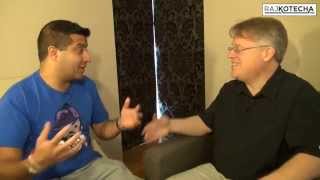
Robert Scoble discusses emerging tech trends including VR, wearables, and beacons. He compares Dubai's startup scene to San Francisco and Tel Aviv, and advises brands to follow consumers to social platforms and mobile. Near-term opportunities he sees: 360-degree video, location-aware services, and app-driven commerce.
Robert, welcome to Dubai.
Hey, thanks for having me.
Great to have you on the podcast, as always. You know, we're here. It's an emerging market as far as, like, technology and marketing is concerned, and it's such a huge privilege to have you on the video today. For those of the people in Dubai that don't know who you are, and it's actually quite shocking, disappointing as to how little the marketing and technology industry knows people like yourself.
There's people in San Francisco that don't.
Know who I am.
But, like, don't beat them up too.
Much, people like yourself. Kevin Rose, Tim Ferriss, Gary Vaynerchuk. In Dubai, I've noticed just those names go over a lot of people's heads. So why don't you please just give us a nutshell summary of who you are?
Yeah, I'm Robert Scovell. Yeah, I go around the world and interview tech executives, mostly startup executives, but sometimes people who work at Microsoft or Google or Oracle, that kind of thing. But usually I'm looking for the startup who's doing something new, you know, even newer than Uber, which is sort of crazy because Uber's only four years old. Right. But I'm always looking for either new technologies or new businesses that are building quickly to a global scale. And I've been very fortunate. My Siri was launched in my son's bedroom. I was one of the first ones, or the first one to see Flipboard. I was the 79th user of Instagram. So I get to see things pretty early, and therefore I get to. And I get to see a breadth of things. So I get to see a pattern happening before anybody else. And that's why I can write a book like Age of Context, which is all about sensors and wearable computers and big data and how it's making a new kind of software possible.
You're the archetypal influencer. I mean, there are so many people around the world that follow almost every social media feed you put out, from Twitter to Flipboard to obviously, Facebook, where you're one of the dominant voices in technology for the people that are kind of getting their heads around what an influencer is here in Dubai. How would you describe an influencer and tell us a little bit about how brands see you?
I mean, at the core of it, I would say it's somebody who can influence somebody else to do something.
Yeah.
Which is hard because, first of all, you have to have somebody listening to you.
Yeah.
And they have to think that you're good enough to warrant taking action, you know, Buying something or doing something, you know, And I've been fortunate to be early in blogging. I started blogging in 2000, and I built a sizable audience. And then I got a job at Microsoft, and it got even bigger when I left Microsoft, I was getting 4 million views a month on our little video site that we were doing. And so that just continued to the place where I'm seen as one of the influencers or people that a lot of people listen to or talk about. But the truth is, if I pitch a crappy thing to you, you're going to write me off. So I work hard on making sure that if I say this is really, really important, that it actually is really important. Otherwise, I lose my influence. I'm always trying to keep my influence and trying to reward my audience with something new that nobody else is.
How do you remain authentic as a journalist and as a blogger and as a publisher? Because these people have got to have budgets in the millions, if not hundreds of millions, to get someone like you to say that their stuff is good. And the temptation must be there with the worldwide parties that you go to with the rock stars and stuff. You know, someone brings Bono in front of you and says, here's a new app. They're trying to get you to write something, knowing that people will listen to what you say.
I interviewed Neil Young at ces, the series, the Consumer Electronics Show. And, you know, just because you have some celebrity on doesn't mean anybody's gonna.
Listen to him, Right?
How many people have bought a Pono player that he makes? It's pretty nice, but it's not very convenient. And, you know, you see it in my comments are open to the public. So if I pitch something and everybody's like, no, that's not gonna be a good thing. You can talk, but word gets around. When you sell.
When you sell, sell out, I guess.
When you sell out. Well, and sell your audience out and not tell them, right? If I say, hey, I just took $100,000 from you to pitch your thing, that's one thing everybody knows, right? If I admit it, if I. And I always disclose where I'm getting free things from or. Or if I get something free to say something or if I get paid, I disclose that.
Yeah.
Because I believe the audience deserves that.
Right?
And this world changes so people can connect the dots so fast that you'll destroy your relevancy. And then what do you have? You have nothing. You have no reputation.
And you, as an individual, in the various countries that we've hung out in Dublin, London and so on. You are a magnet for entrepreneurs. When we met in London, so many people would just come out, just have a drink with you. Yesterday, we spent a bit of time together over lunch, and it was just a table full of incredibly interesting people. Have you been able to benchmark at least in the first 24 hours that you've been here in Dubai, in the Middle east, where the ambitions and where the sentiment is in terms of entrepreneurs in Dubai? Is this a region that excites you? This limited time you spent here?
So far, it's a new ecosystem and everybody in the EcoSystem says, yeah, five years ago nobody really wanted to start a startup and now it's just starting. So it's not a Tel Aviv, it's not a Beijing, it's not a San Francisco. Those are probably the three biggest places where you see big companies that have a global impact coming out of maybe London. This Dubai is only 15 years old. I mean, the city is only 15 years old. And also this city has sprung up out of nowhere and it is becoming now a tourist destination. So you're seeing tech conferences and other kinds of conferences here. You're seeing entrepreneurial activity that's more regional focused, you know, like, who's the competitor of Uber here?
It starts with a Kareem.
Kareem?
Yeah, with a ce.
I met the CEO this morning.
Okay, what do you think?
I think that's really smart because he sees a way to compete with Uber on a regional basis. Right. And there's a few competitors of Uber around the world like that, that focus very regionally and do a better job. Or see a. Like he has cars with.
You can pay cash.
Yeah, and pay cash because there's a lot of credit card usage in the emerging markets. So he can exploit a local market better than Uber can coming from San Francisco.
And so for you to get to where you've got to now, at 50 years old, how would somebody looking at this, who's discovered you for the first time out here in the Middle east, think to himself, well, I like what Robert's doing. I feel like that's the kind of career I'd like to have for myself. What are the lessons you've learned getting to where you've got to in life? And if someone was looking at you, saying, you know what? That would be one of my ambitions, to be a guy like him, what advice would you give?
Well, I'm really a media company. I mean, I'm not a company, but I'm a media brand or something like that and if you're trying to build a media brand or a media company trying to build a TechCrunch or whatnot, I recommend finding a niche that nobody else is seeing serving, but that is getting more important. So covering to buy startups doesn't seem all that important today. There's not a whole lot, right? A large number. TechCrunch is probably going to ignore it and or isn't going to do a good job. But you can start out maybe there's 15 startups in this area, maybe a little bit more than that. So you'd start writing about just to buy startups. I can't do that. TechCrunch can't do that. So. So you become now the girl or the guy covering Dubai startups, and all of a sudden your little blog is getting more and more important as the ecosystem gets more and more important. And then maybe you get so important that you start covering all of Middle east, right? Maybe you get to the place where you can hire a couple of people to cover Israeli and Iranian startups. Because there's another. I'm speaking at an Iran startup event. So there's startup ecosystems all over the Middle east that are springing up. So now maybe you become the Middle east guy, not just the Dubai guy or the Dubai girl. And all of a sudden you're being seen as the expert on this part of the world and the entrepreneurial activity that's going on here and it keeps growing. Maybe you get bought by aol or maybe you buy aol. This stuff can change so fast, right? It's building a media brand, right? It's about building an audience, keeping the audience in a place where they trust you and will take action when you say to take action. Because that's really what you want an audience for, right? That's why brands would, why Red Bull would sponsor you, because you have an audience that trusts you and believes that you know where the next thing is coming from.
So tell me, you know, working in and around the agencies and the brands here, I hear a lot of account managers, account directors, senior folks having frustrations with talking to their brands about getting on board with new technology and new social networks. All I hear over and over again, without calling out any individual names of brands or senior folks, is the brand managers don't get it. They're not putting budget behind it. You and I both know, working in the US and the uk, that everybody's got a smartphone now and everybody's engaging with a series of apps where what are the consequences for brands in the Middle east not getting their head around it.
I look at it as, where are people spending their time? I asked this morning at the conference, where have you posted in the past week? And I said LinkedIn. And 60% of the hands went up. Twitter 75, 80% of the hands went up. Facebook 95% hands went up. And so that if you're not, if you're not listening to that and understanding where people are spending their time and getting their information and talking to their friends and you're not putting money where they are. I mean, it's like buying an outdoor billboard, but you put it in the middle of the desert where nobody drives.
But that's my point. There are so many brands and so many brand managers and so many people even in agencies that are considered to be forward thinking agencies here that are just flat out in denial about where consumers attention is. And the fact that everybody's walking around.
Like this, their competitors are not going to be in.
Right. Yeah.
You know, I mean, Gary, you know, Gary Vaynerchuk, he has 500 employees in a few years. Why? Because he bet early on social. He saw the trend early. And if you're not in social today, I don't get that. I don't get how you keep your job.
Yeah.
You know, yeah. Because that's where the people are.
Right? Right.
Even old people. It used to be just the kids would do this. Right? No, I'm talking to people who are 50 years old at a conference and they're all on Facebook. If you're not on Facebook, you're not reaching them. And if you're not reaching them, you're not spending your dollar wisely or your money wisely.
So let's take this opportunity then to leap even past. I mean, we're so done now with social networks. It's almost like a two years ago conversation.
But looking into. I wrote a book about vlogging and social stuff.
Early 2000s. Right. Yeah. Let's talk about the next stage. I mean, heading into 2016. One of the things that I'm super big on, I've been using Oculus Rift for about a year. Tell me about what's happening with virtual reality and any other things that you find interesting. Talk us through this device right here.
Well, I'm using a camera now that does 360 degrees. Yeah. Because I see this new thing coming. YouTube just turned on the ability to view this camera camera about a month ago.
Wow.
It's a brand new technology.
So explain that from the ground floor. Virtual reality is putting A mask on.
Well, you don't even need a mask with this. This is a 360 degree camera. So it grabs all around you.
Right.
So if I'm showing you a headquarters, like if I wanted to show you what Google looks like, you know, Google's headquarters, or what I. What? You know what, the bay in Dubai. I was shooting with this yesterday. You want to see 360 degrees instead of just like your camera.
But to consume that, you need to put the.
I don't. YouTube lets you scroll all the way around.
Okay. Okay.
YouTube now supports 360 degree even on a web browser. Wow. So you don't need the headset now. When you get the headset, then you get to look around. I'll look at you for a little while and then I'll look at. You know, and it's immersive.
Right.
And for brands who want to build, who want to take you someplace and show you something, you know this for travel.
Right.
You know, if I was Emirates Airlines, I would be betting big on this. I would take this camera everywhere Emirates flies.
Yeah.
So now you can experience what it's like to be in Moscow or what it's like to be in London or what it's like to be in Shanghai or what it's like to be in Bali or what's it's like to go to Yellowstone National Park.
Right.
And you just look around and it's like, wow, I want to go there.
And how does that happen?
How much travel is that gonna drive?
Yeah, yeah.
How many people are gonna get excited about travel just because they can see what it's like to be in Yellowstone National Park?
The same way that if you see some concert footage on a phone, you think, I have to be at that concert next year. But this is that times infinite. I mean, this is that time that's on steroids right through this experience. And you were talking about sensors as well. And the best example of this, I've not seen many of these in Dubai, to be honest. So just if you sort of show it to the camera. Yeah, the Apple watch. Here we are at version one. What should the marketing community and the tech community, from startups right through to brands be thinking about this new real estate that Apple has drawn people's eyeballs towards?
I think it's not just about this. It's about we're now able to market where you are and we're seeing a raft of companies. Uber is probably the most famous example. You pull out your phone, you say, I need a ride. The Driver sees where you're standing, and you see where the driver is, and you see the driver coming toward you on your mobile phone. It serves you. It comes to you. It's at where you are. You didn't have to go to a taxi stand. You didn't have to go to the taxi. It comes to you.
Especially with the weather in Dubai, where it's so hot that if you're waiting for a taxi, it's really a painful experience.
You want to go out in the street. You want to just sit in a bar and order one. And then when it gets close, you want to walk outside, or your watch.
Just vibrates, and you go, okay, it's two minutes away, or it's one minute away.
Now we're seeing a range of new technologies. I call them beacons. Beacons are little radios that spit three numbers into the air, and your phone can tell how close it is to the beacon.
Yeah.
So we're. Coachella music festival in the United States had 160 of these beacons around the field. So as you walk around, your phone told you stuff. Hey, you're standing at the VIP section. Why don't you come in and have a beer?
Right?
That kind of thing. Or you get some loyalty points. Or here's the art you're standing in front of. There can be a beacon underneath a picture, and so your phone can say, hey, this artist just created this.
But are we gonna see people walking around like this? The same way we see people walking around? What's the relationship that people can have?
Actually, there'll be more of that.
Yeah.
The problem is the screen is small.
But is that on purpose? Do you think Apple have thought about it that way? To not completely submerge the person, Maybe to protect the person from addiction by keeping it a little bit smaller.
This is really good for. For lightweight things, right? Walking around.
Yeah.
And it buzzes and it tells you something. Like, you know when. When you ask it to navigate you, like, if you want to go to the sale or to. I don't know the building names, but yeah, if you. It'll beep. It'll tell you. Take a right here.
Right, right.
And it will touch your skin. And if you turn the wrong way, it'll tell you, hey, you went the wrong way, and then it'll navigate you. The basics are there to do. This kind of system where it helps you live your life, it tells you things that you need to know at the time you need to know them. But the world needs. This world needs to get a lot More contextual. It still isn't contextual enough yet. The fundamentals are sort of there. But in five or 10 years, this world is going to be much different. It's going to know who you're sitting with, it's going to know where you are, it's going to know what your calendar, what you put on your calendar. So like right now I put this meeting on my calendar. Right. So why would the watch bother me?
And if somebody wants a deep dive into that, we may as well do a quick plug for your book now as well. So you've really gone into that subject in depth. Give people like a kind of a 15 second summary of what answers that book has with regards to content. Wearable technology.
Wearables, sensors. Because there's a sensor here.
Yeah.
And it knows something about me that it didn't know a week ago. Right. And data, my heart rate, it knows how good exercise I am. So now it can play games. I mean, it already is playing games. Hey, why don't you go for exercise? Why does my watch need to tell me? But it does, right? And it can tell you other things. Soon there's going to be other sensors. I visited Samsung and talked to the guys who are building the sensors and they're saying, oh yeah, we're thinking of sensors that are going to study your glucose level for diabetes or other startups that I've talked to say there's possibility that this would save your life. It might in the future be able to predict you're having a heart attack before you have it. You know there will be more sensors on us.
Right.
They are going to listen to our speech, they're going to study our blood flow, they're going to listen to our heart rate and other things. Like as blood flows through you, it makes a sound that can be picked up by a sensor. It also has a color, oxygen levels and other things change the color of the blood. So if you have a sensor that can see that, you can tell things. Right. So we're gonna see a whole bunch of sensor packs that are gonna come out for our skin and other things. There's brain sensors. I mean if you get really freaky out 10 years, there's gonna be things that you're gonna put on your brain, maybe like these glasses.
Yeah.
That are gonna steady your nervous system and your psychological behaviors and be able to say, hey, a little depressed. So on and on. Medicine is changing, taxis are changing, shopping is changing.
Education. Education is a two hour conversation in itself. Right. In terms of the way that's being spun in its head.
Education is changing because of how we're able to sit in a hotel room and learn how to code on a plural site or a whole range code.
Academy and so many different sites.
Yes, right. On and on. A lot of things are changing. It's really interesting.
And speaking of health. Yeah. Drones. Drones is, I mean, and that's the thing is that when I put this video out to the people out here in Dubai, now that I'm based between here and London, it's like I want to kind of give people a high level summary. But each of these subjects, whether it be drones, whether it be education, whether it be like neuro, data collection through sensory technology in itself, you could build a whole three day conference just around those subjects. And undoubtedly we will.
I'm speaking at cards and payments here and.
Yeah, right. There's another one talking about payments and.
How, you know, apps like Downtown or Topingo are changing how people buy things. Topingo is an app that college kids use and 70% of all transactions at Santa Clara University are going through Tapingo.
Right.
And that's incredible if you think forward.
Yeah.
Because Facebook started that way. Right.
So Topingo. I was so interested in what you said about this yesterday. Topingo is an app where they put a physical box, which is an infrastructural move. They put a physical box inside, let's say a cafe. A kid wakes up, he's got a lecture at 9 o', clock, he wakes up at 7:30, he needs his flat white coffee, he orders it from Topingo. Tapingo says, sure, show up at the Starbucks in 24 minutes or whatever, your coffee will be waiting. He doesn't need to go to the counter, he doesn't need to pay for it. But that then, that then for brands is an interesting one because brands then become a pipe. Right? Because you're not engaging with the customer service, not doing anything. You're literally going into KFC to get your bucket, you're going into Starbucks to get your coffee. When you sit down at a restaurant, you're not engaging with the menu. Just order what it is, it sends it to the chef, comes out.
You know, in such a world, if I own the Peet's and you decided on Starbucks, hey, maybe I'll bid to get your business.
Right, right, right.
Maybe I'll say, hey, there's nothing for you, for you today. If you cross the street, I'll give you one for free.
Right.
To see if I can get you.
Into my restaurant if you own Custer or Tim Hortons or somebody like that.
Or I'll give you loyalty points. Or I'll, you know, I'll start building networks with other retailers. Hey, if you buy a coffee with me, why don't you buy a coffee and a sandwich? We'll give you a 10% discount, right? We'll give you loyalty points extra. Loyalty points extra.
Because then you end up with combined offers, right? Where if I buy a coffee from you and a sandwich from the place down the street, my total bill on my app gets reduced by 10%.
Maybe not reduced, because, let's be honest, this stuff is gonna be used to increase sales, not decrease sales.
But there'll be some loyalty points or.
Things like loyalty points. But let's say I have a Starbucks, and at three in the afternoon, I know the data, it's empty. Nobody comes in because everybody buys their coffee in the morning. And maybe on the way home at work, so maybe at 3, 3 to 4, I send everybody a note. Hey, half alpha lattes.
Right?
Now, all of a sudden I have people coming in and using my, you know, and I'm all of a sudden making more money because I'm using a dead time.
Yeah. And in Dubai, it's even crazier because when you say half a flatte, because there's such a delivery culture here in the Middle east, you could just say, sure, send it to my office on your watch, and it's on the way. You don't even need to pop in there to go and pick it up. Just as a final closing, I don't really want to end with this, but what about when something starts off as an avalanche? And, you know, I'm going to refer to one thing here, right? Which is, which is tidal, and also the increased amount of celebrities. I mean, Snoop's just created a 25 million dollar fund for something that we can't talk about in Dubai. But what do you think about the. You know, there are people that are credible that people have got time for. People like Ashton Kutcher and people like that. And you now see that it's Ben Horowitz, right, who's pulled Nas in on a few bits and pieces. We're talking heavy on the hip hop thing here as well. But what do you think about that? Like, when things start off well built with that celebrity and that money and that capital, are we gonna see more of that?
Probably, because I think Apple's gonna. I think where this is going, a piece of it. It's a club. If I was at Apple and I had $130 billion, and I had Jimmy Iovine, who started the Beats brand and knows everybody in the music industry. I'd be like, how do I build a club? How do I maybe buy nightclubs and in exotic places and say, only people with Apple watch get into the club? Now what's happened is I think at least I've gotten smarter about how marketing works. So I know this game, and we know it's a game, and we know we're being misled by the game. So I think Tidal comes in and just puts celebrities up there, and it's like, really, do you multimillionaires need more money? Really? For every multimillionaire Madonna, lady gaga type.
There'S 150,000 independent artists who are singing.
To a bar with five people.
Right, right.
And struggling and doing it just because they love it and dreaming maybe someday I'll make it big or, you know. And most have even given up that dream. They're just trying to play music. They're trying to have fun for the local bar. You know, if they had played it different, the storyline would be different. This is what. That's why I usually don't start out with companies talking about social media. It's not about social media. It's what's your story and what do you want?
Your story is kind of oxymoron, right?
Yeah. And I just don't think they built the story right. The product is actually pretty good. But let's be honest, Apple owns the music fans. 90% of the people who go to Coachella, which is the most influential Music Festival, and 90% who go to south by Southwest are using iPhone.
Right.
So when Apple comes in with Beats, they're doing a music service for Apple.
Right.
I don't get how anybody competes with that. I think that'll be pretty dramatic. Now, the rest of the world is on Android.
Right.
So I don't know that Beats is going to be so popular on an Android phone, but on an iPhone, I don't get how that title competes with that. And they didn't signal to the world. But what makes them different?
What if Jay Z now goes into the. You know, Jay Z's got great relationships with, like, the. And we're focusing on Jay Z. I know there's a whole team behind him, but. But he's obviously got great relationships as a music artist with people like Live Nation, Ticketmaster. What if he just says, okay, well, as a streaming service, we kind of messed this up in terms of. And it's Difficult to reverse that. What if we now say, okay, Tidal is going to be like live concerts and it's like, you know, Tidal Nation, like, for example, like Tidal meets Live Nation meets Roc Nations.
They need content that's exclusive and interesting.
But is that enough still even to have exclusive content when things can be pirated? And is it more about this? Isn't it more about Tidal Beat offering almost exclusively virtual reality concepts?
Well, that would be a whole nother.
Right.
That would be a new brand.
Right.
And I think there's a new business for Oculus Rift for music. Absolutely. When I get my Oculus Rift, if I, let's say I spend thousands dollars on Oculus Rift, there's gonna be a few things I want. I want a couple video games to show the kids, you know, to let the kids and maybe shoot them up, maybe, you know, some casual games, you know, the usual kind of games. I want at least one or two examples of a great video game for this.
Yeah. Some of my best in classic experience.
I want to see a couple of new movies that are designed for experiential movies. That takes a different skill set than somebody using a 4K camera.
Right, right.
So there's going to be need to be a new movie company that uses, well, better cameras than this, but similar cameras to this that does 360°. And then music is certainly going to be one. I want to see a whole bunch of music concerts where I can watch.
From various premium seats.
Skrillex, you know, be in a living.
Room with Prince for a private show.
Wouldn't that be.
Yeah. If you're sat there with Prince and you've got Paul McCartney here and everyone's just jamming and you're like.
And the interviews and the.
Yeah, that'd be cool.
Yeah. Yeah.
Sat here in this hotel room with me and you geeking out, talking about technology or something more exciting.
Yeah, maybe more exciting. But, you know, having a 360 degree experience like Prince playing here. Yeah, that would be.
That would be unbelievable. Right?
I want that.
Or even on the flip side, you get to sit in the houses of Parliament for the election or the congress or whatever it may be. Dude, it's always so much fun to talk to. I want to be really respectful. Your time. I know you've given me so much over the years and today especially. Thank you so much. It's been a great pleasure hanging out with you in Dubai. Is there any way that the folks watching across the Middle east and of course the world, where the rest of my audience is, where they can contact you and start following Facebook. Facebook is your number one de facto choice. Right.
Facebook, Twitter, LinkedIn. But Facebook is where I spend most of my hours and where I do the most interaction with people. And it's also where the best network is because everybody's on it.
Right.
Anybody who's not on Facebook. You're weird. Seriously, every time I give a speech, I ask that question, who's on Facebook? And there's always one person in the back. I'm not on Facebook because I have five girlfriends and they're all too much drama.
And, you know, and your post Ice Bucket Challenge as well. Like every new video that I put together now, I'm thinking, okay, what clips are gonna go on YouTube, you know, maybe even the long form version. But I'm always thinking about micro content and paralleling it onto Facebook as well.
And just doing this. Right. And so if you don't grab them.
Yeah.
In that quarter second.
Yeah.
See you later. Well, that's what, that's what I would want to really think through with Gary Vaynerchuk or other people who are doing these agencies. How are you gonna do those three things? Stop play and then convert.
Well, I'm sure two titans like you could easily get together on either coast and have that conversation.
Yeah, that sounds like a good book title. Stop playing convert.
Stop playing convert.
Yeah, send a jab, Jab hook.
Yeah. I'd love to see, like a collaborative, collaborative effort with, you know, folks like you, where you kind of put out. And I think that's what's gonna. Personally, I mean, just to end here. I think what's gonna happen next is that you're gonna have, you know, Tim, who puts out his kind of content on. On health and life hacking and. And now his podcast, which I just think, you know, he's done so well with that.
Podcasts are really great, just brilliant.
Yeah. In fact, my agency, Creative Content Agency, was originally set up in, when I was establishing it, at least in my mind, in 2003, 2004, as a strictly podcasting agency, we bought mics and mixing boards and things like that and. And obviously YouTube then spiked from there onwards. But I think that the same way that you'd have like a Jay Z and a Kanye album like Watch the Throne, I think eventually you're gonna have a Scoble and Vaynerchuk or a, you know, you've already got like Tim Ferriss and Kevin Rose putting out combined content. I think you're gonna start seeing more and more of that, like, collaborative where they're they're both putting their perspectives in. I know he just did that thing with I know Vaynerchuk just did with Jack Welch on AskGaryVee. And that was awesome. Right. So I think we're gonna see more and more of that coming in, more celebrities coming into the world, technology moving forward. It's a really positive time. And obviously you're at the front of it. Your efforts are much appreciated. Thank you very much. Robert Scoble, Thanks. Stay tuned. Wherever you saw this, it's not even worth saying subscribe on YouTube anymore because you probably saw on Facebook and who knows, any other video, Twitter video, please subscribe. Please follow. You've got Robert Scoble, myself, Rajka Techa, appreciate your attention. Thanks very much.
More from Robert








45: Sandy Carter Unveils the Future of AI: Myths, Agents, and Creativity | SXSW Insights


