Scott Duffy: How Companies Should Be Doing Right Now? Episode 40
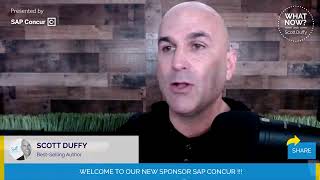
Scott Duffy walks through pandemic relief options like unemployment, EIDL, and PPP, then tackles the emotional toll: isolation, anxiety, arguing. He recommends gratitude practice and small daily actions to build momentum when everything feels stuck.
Chapters
Good morning, everybody. Good Wednesday to you. This is Scott Duffy and I want to welcome you to what now was Scott Duffy presented by SAP. Concur. And we have so much to talk about today. I've been off of. I've been off the air for the last three days, the last three days. Getting ready for a big event that we're going to announce next Monday that will be coming up May 21st that I cannot wait to share with you. And I missed you and I'm excited to be back here today and I just, I want to welcome you, all of you, to the show. We're going to spend just a couple minutes to let this stream propagate across the Internet. We're coming to you live on Facebook and YouTube, on Instagram, on Periscope and soon to be on LinkedIn. And again, I just want to thank all of you for joining. If you're new to the show, what I'd love to ask you to do is please drop your name into the comments. Drop your name into the comments to say hello. Let me know what industry that you're in and the biggest challenges that you're having today, the biggest questions that you have. Because I want to do everything that I can to shape this show around you again. So excited to be back and to be back with you. We have, I have so much to share, a couple of cool things to announce, and I'm just ready to reset. There's been a lot that's happened over the past week and a lot of good news. I think we've had a lot of really positive things happen in this fight against coronavirus. I've had some really incredibly inspiring stories shared with me that I want to share with all of you. I have seen over the past few days incredible examples, incredible examples of businesses that are pivoting and they're doing different things and finding new customers and they're finding new revenue streams and so my goal is to share all of that with you. Patrick Carney, I want to say good morning to you. Rima, great to see you this morning. Sarah Lakin, always good to see you. Duchess. Sarah Lakin, Sita Thompson, great to have you in here. I see. Ashley, matey, so good of you to to join us today.
So like I said, I've been gone for a couple days and I'm so happy to be back. A lot to announce, a lot to share and I just want to thank you for joining.
So here we go. We got one minute. Here we go. Good morning. My name is Scott Duffy and this Is what Now was Scott Duffy. Presented by SAP. Concur. I want to welcome you from wherever you're listening. You can tune in each day at 10:00am Pacific Time to watch the live broadcast on YouTube and Facebook, listen nationwide throughout the day on Dash Radio or download the podcast. Now, this show, this show is for entrepreneurs, small businesses and those thinking about starting their own company. It's for people who are affected by this, this coronavirus in this economy. Maybe, maybe they lost their business, maybe they lost their job, they were furloughed or they saw their consulting contracts canceled. And for a lot of us, that happened and it seemed like it happened overnight. This is for people that are asking the question, what should I do now? And how do I come out on the other end even stronger? So again, we have a lot to talk about on today's show. I have been away for a few days and so what I'd like to do today is spend a few minutes resetting and kind of resetting where we are. I want to talk about money. I want to talk about these programs, these stimulus programs, like the ppp, like Eidl, like the personal checks that we're supposed to receive in the mail. Because there's been a lot of new news over the last week. And I want to make sure that you are best positioned to take advantage of all of these programs that are available for you out there. We're also going to talk about how companies are answering the question and how industries are answering this question. What now? What do I do now in order to adapt and best position myself to start generating revenue again, to start generating income hopefully faster than we even did before? How do I position myself today to come out stronger on the other side? And as we all go back to work now, beginning on Monday, every single day, we are going to have a special guest. And you know what? We tried to do it today. And this is just, I think just one of those things that happens, like in this coronavirus lockdown, like we're being forced to do new things and to try new things. Like I'm supposed to be in a radio recording studio right now. Coming to you. But of course, all of those things are locked down here in Los Angeles. So I've done everything that I can to try and build that whole thing on my own. And maybe some of you have gone through this kind of experience where I needed to get parts or I need to get equipment or supplies, but they're back ordered on Amazon or the thing that you need doesn't work, but you can't run down to the store in order to make it happen. And so it's really been a lot of work and it's been a heck of a journey. But starting next week, we're going to have a special guest every day beginning on Monday, which we're really excited about. And these are people who are really the very best, the best of the best at what they do. I have gone to people who are really the true leaders, the, the innovators, the biggest voices in, you know, industries like, like, like the travel industry, in hospitality, in apparel, in the training industry, in the events business, celebrity entrepreneurs, entertainers and athletes who will be joining us every day as we lead up to a big event that we're going to announce also next week. Coming up, May 21st. So mark your calendars for May 21st from 8am until 12 midnight. We have 16 hours of incredible original programming coming to you. And again, the very top entrepreneurs, entertainers and athletes in the world will be joining us to share their stories, which are not unlike yours, what they've learned during this period, how they are adapting and what they are doing to position themselves to come out of this crisis even stronger. So again, mark your calendars for May 21st from 8am to midnight. Now, before we jump in again because we're resetting, there's a couple things I want to share. The first is this, and it's some big news. So.
When the market crashed seven weeks ago tomorrow, actually, seven weeks ago tomorrow is what's now known as Black Thursday. And that's the day that the market really saw its first big impact from from COVID 19 when the market crashed, you know, I immediately, you know, asked myself, what is it that I could do, you know, what could I do to help people? And the reason, and I've shared this with, with you on the show before, is that, you know, as a young guy, I was, I was, you know, pretty successful. I started my career in the training business. I worked for Tony Robbins. I promoted Jim Rohn, Les Brown and some of the iconic trainers, you know, of that time in my late teens and my early 20s. And then I moved up to the Bay Area and I was really early in consumer Internet. And I helped to launch and was really early stage in a series of companies that, you know, were scrappy, you know, bootstrap startups that became big brands. And today are CBS sports.com and NBC Internet and foxsports.com you know, and then I started a company that was like Expedia, but it was for private jets And I sold it to Virgin. And I had a chance to work side by side with Richard Branson a bit. And it was incredible. Until 2008, 9, when the market crashed. When the market crashed, you know, I lost everything that I had made. I went, you know, $400,000 in debt. We had our first kid pregnant with the second. I lost my business. I. I actually ended up in the hospital three times, three times in the next, like, 36 months because of all the stress. And I felt totally isolated. I felt totally alone. I felt like I was the only person that was going through this. It was incredibly frustrating and discouraging because I couldn't figure out how to see to the other side. I didn't know how to get out of it. And it seemed like the harder I worked and the more I tried, the deeper I went into the hole. And like I said, it was just. It was awful. And.
Until, you know, until one day I talked to a good friend, a mentor, and I'll tell this story later, I named Dave Meltzer, and he started to work with me. And it changed my life. The reason I tell you the story is this, is that when the market crashed seven weeks ago tomorrow, what happened is I woke up and I remember what that felt like. And I didn't want anyone else to feel like they were alone or without resources. So I started to think about what it was I wanted to do. And about a week later, it was about 10 o', clock, 10:30 at night, I got a call from a good friend, a great friend named Steve Fielding. And he was over at SAP Concur and someone had forwarded to him one of the episodes of the show. And he said, Scott, he said, over at SAP Concur, he said, we're trying to figure out what we can do right now to get behind entrepreneurs and small businesses. And he said, what would you suggest? Like, what would you suggest we do? Could we maybe sponsor your daily. Is there something else? And I said, let's think bigger, right? And I encourage you, like, if you're going to think, why not think big? I said, how many people, like, what can we do to impact, to empower others. To empower others to basically create the results that they need to create in their lives today. And so what happened was SAP Concur came in and it was incredible. Full force and provided money and resources and people and the things that we needed in order to put on this big event that we have coming up. And starting today, they're also the sponsor of this show. And so I Just want to thank them and give incredible shout outs and props to SAP. Concur. And also what I want to do is I want to thank two other people today, Kent Speakman, who is our show producer, who is just working 247 right now to make this a big success. And also Katrina.
Katrina Fernandez, our event producer. So again, I wanted to make sure to share all that this morning. And now let's drop in to the news. As of this morning, the number of total cases for coronavirus have jumped to just over 3 million worldwide with the number of total deaths just over 218,000. Now in the US the total number of COVID cases just passed a million over the weekend with 58,000 dead. But there's good news. And the good news is that in virtually every western and developed country in the world, we're starting to see a flattening of the curve. We're starting to see in areas like New York and Los Angeles a flattening in the beginning of some recovery as well. And it's also great to hear from Governor Andrew Cuomo of New York and the mayor of Los Angeles who are beginning to share their plans about how we're going to reopen states and, and we're going to reopen businesses not just kind of locally, but within the region. So this is like really positive news. And for me it couldn't come at a better time because I'm really starting to feel, and I think that people all over are starting to feel a lockdown fatigue. We're feeling a lockdown fatigue, we're feeling a zoom fatigue, we're feeling a live stream fatigue. And it's really starting to catch up, catch up with a lot of us. And what we found is that we have 16, I believe that by the end of the week we're going to have 22 states that will have begun to reopen, which is awesome news.
LA and San Diego beaches down here in Southern California are still closed, but in Newport beach, where I live, they actually opened up the beaches last week. And I have to say it was crazy. I'm not sure if it was a good idea or it was a bad idea, but it felt like everyone from LA and everyone from San Diego came to the same place. And I can't tell you how amazing it was to see people out and whether they were, they weren't wearing a mask. To see smiles on people's faces and just to get outside, it was so amazing. And I think that it's important because there are three things that we're Finding that the data is showing are really starting to impact people today as a result of this lockdown. The number one thing that is really hurting is loneliness and this feeling of isolation. It's loneliness and a feeling of isolation. Because if you're going through tough times as it is, and you're locked in and you're alone in your place, oh, my gosh, how much more isolated could you be or could you feel? If you're going through tough times and you're looking for fresh perspective and you like to be around people, being at home can be awful tough. And so we're finding that isolation has become a really big problem and significantly increased depression in our population. The second thing that we're finding is.
The arguing, Arguing with loved ones. When you see these lists ranked up near the top, the second biggest problem that people are having, that couples are having, that families are having, is because they're cooped up, they're arguing with each other. And so if you're going through that at your home, if you feel like things are falling apart, you guys are just on top of each other, all over each other. You can't stop arguing. I just want you to know that you're not alone. These are tough times or challenging times. Being inside, being isolated, wearing a mask, having everyone in small spaces, it's tough on everyone. And the third thing that we're seeing is anxiety. So it's the isolation which is creating loneliness. It's the arguing in your home, and it's the anxiety as a result of everything that's going on. And what I'll say is, and that I find interesting is there's such a big disconnect right now. It is an incredibly big disconnect. And it seems like it keeps getting bigger every single day. It's a disconnect between what's happening on Wall street and what's happening on Main street. What's happening with 1% versus what's happening with 99% of us out there. It is such a big disconnect. For example, Wall street dropped at an unprecedented rate in March. I mean, Wall street tanked. The stock market tanked in March. But I want you to know this April is one of the best months for the stock market in history. And we're on a path right now to recovery. All of the losses in the market since the beginning of this coronavirus correction.
And it's a trip, because industries are getting bailed out, companies are getting bailed out. Employees are being put to work because these big industries and big companies are Getting so much money, they're able to bring people back in and back on staff. And so there's so much optimism on Wall Street. There's so much optimism in that part of America, and it really is remarkable how much it's recovered.
But what's happening on Wall street in no way reflects what's happening on Main Street. And I want to say that because.
I just want you to know that when you watch the news and you see, like, recovery and you see what looks like these big companies and those people getting money and all that, like, all of this stuff out there in the media, when you see that and it looks so good, I don't want you to feel like you're alone. I don't want you to feel like you're the person in your home that's not getting these results. And you don't know why. What you see on the news about Wall street is completely disconnected from everybody else. 99% of us are going through the exact same thing.
And think about it this way.
Entrepreneurs and small businesses make up 80% of companies in the United States and hire 50% of the workers. And those are the people that are getting wiped out.
Real unemployment, when you add up all the things. So the government every month publishes unemployment data, but the unemployment data takes out so much of the important information so that the government can show you a really rosy, the positive, most positive picture possible. But when you add it all back in, real unemployment today is over 26%. And that rate is even higher than the Great Depression. We've lost every single job created since the bottom, the bottom of the 2008 and 2009 market crash.
People in industries like travel and energy, they're getting totally hurt. For example, in the travel business, seven of 10 people in the travel business have been laid off or furloughed in the last six weeks. Hotel occupancy rates are higher than the Great Depression. Hotels that rely on business conferences, if you rely on business conferences, they're being told from their own association, their own industry association not to expect any sort of recovery until 2023, 24. And on the airline side, so I had a private jet business. I was in that industry. So I'm really connected to CEOs that run big airlines. On the airline side, it's not any better. Think about it this way. LAX after 911 saw a 30% drop in traffic and airport traffic. Commercial airport traffic is an incredibly important gauge of what's happening in your local economy, because you have people coming in for travel, people coming in and out for business. It's a really great gauge.
Lax traffic dropped 30% after 9 11. It took 10 years to regain that 10%. In the last six weeks, lax traffic is off 95%. And here in Los Angeles, when you look at the real unemployment data, over 55% of the people in LA are unemployed or furloughed. Most important, 30% of Americans report they won't be able to pay their rent and or buy food by the end of this week. Now, here's the thing that is the most Debbie Downer. Like, I know that none of that is good news, but I wanted to share it for a reason. And the reason I want to share it is because I know that when I went through my tough times, you know, 10 years ago and I was struggling to get back, I know that when I would look out there, it seemed like it was better for everybody else. The grass is always greener. It seemed like other people are moving forward faster. It seemed like everybody else was getting loans and assistance and help. It seemed like the stimulus was getting to everybody else's bank account but mine. It seemed like all these things. But if that's not happening for you, I just want you to know that you are not alone. And so the question is, you know, like, and as you're looking around, what are you thinking? So, like, for me personally, I look around at everything that's going on and I get awful confused. I get confused as I'm trying to figure out how to plan my life because, you know, I have applied for these programs like ppp, haven't heard a thing back. Eidl haven't heard a thing back.
I have friends, I have family that have applied for those stimulus checks, haven't heard a thing back. So I get confused. And I see other people in my network having all of that stuff come in. I see Donald Trump bail out his good friend Mickey Arison last week who runs Carnival Cruises. Carnival Cruises has been nothing short but a freaking disaster over this crisis. Like, they are the poster child. They will be a case study on everything that you do wrong. And they just got completely bailed out by Trump. So I get confused. I get confused where the stimulus checks. I get confused. I have a lot of people say they haven't heard back about unemployment. I just want you to know if you're in that bucket too, like, you're not alone. You're not alone. So the question is, what do we do now? That's the question. What. What do we do now? What should we be thinking about? How should we be preparing? And the bottom line is this. We're not control of any of that stuff. All we're in control of is two things. We're in control of what we focus on and what we do. We're focused on what we focus on and what we do. And here's the thing. We have to continue right now to feed ourselves really good, really positive, really awesome information. Because here's the thing. Our brain hates uncertainty. Our brain hates uncertainty. If you have a pocket of uncertainty up here, what happens is your brain goes back to a past memory and it fills that pocket. And if that past memory was good, great. But if that past memory was negative, which is the memory we normally go back to when we're in fear, then what happens is it creates more fear. And so our job right now is to focus on control. What you can focus on two things. What we focus on and what we do. Our job right now isn't to look at all the data out there and get on our heels. It's not to be paralyzed because we're in fear. Our job right now is one thing. Our job is to get on our toes. Our job is to get on our toes and do the things that we need to do, take the actions that we need to take today in order to start to develop the momentum that. That we need to push through this.
And it's not that you have to do that much. You know, I always like to say that, you know, just by doing something, you're lapping the person that's sitting down every day on the couch, you know, eating Cheetos and watching tv. Well, here's the thing. In life, I believe that there is an exponential effect in terms of the results that you get, whether they're good results or they're bad results. There's an exponential effect. And here's how it works. The way it works is, let's say as an example, I want to lose weight. I've given this example before. Again, we're resetting today. I want to lose weight. That's what I want to do in 30 days, in one month, I want to lose 10 pounds. So here's what happens on that first day. You eat great and you exercise great. You do all those things. And so you get the exponential power, that multiplier power of what you just did times one. You do it two days in a row. You get that thing to the second power on Wednesday, to the third power, the fourth day of the fourth power. Here's the thing. You are building and stacking momentum exponentially. But on the seventh day, what happens is on the seventh day, you completely blow the diet and you don't exercise. So you've lost all that momentum. And on Monday, you have to start over. You get the results of that thing to the first power, the next day, the second. So here's what happens. At the end of the month, you have two people, two people in front of you. One of those people, they lost ten pounds and the other didn't lose anything. And here's the difference. The difference is the person that lost 10 pounds did that thing every single day where the person that lost nothing, they had to keep starting over. What I need you to do is I need you to build momentum today, to build positive momentum. And it's not hard and it doesn't take much. What it means is give it whatever it is, at least five minutes a day. Five minutes to exercising, five minutes to meditating, Five minutes to thinking about how you're going to adapt. Five minutes to getting outside and walking. Five minutes to getting on the phone and making calls and reconnecting and adding value to your network. And the reason is because of this exponential effect. Now you get the point. Doesn't have to be five minutes. But I'll tell you this, you will get a better result in the next 30 days if you spend five minutes on something every single day versus you spend five hours on it once a week. And that's what most people do. So in order to develop momentum, what we need is consistency. And consistency doesn't mean that we have to spend all our time, just a chunk of time. Do it every single day and don't miss it and watch the results that you get. Because the day that you take off is the day that you have to start over kind of with the way that this universe works exponentially. It's really, it's. It's an amazing thing. So it's all about skills, it's all about reinventing, and it's all that re improving. Re improving yourself. And I wanted to ask. So one of the things that's really given me joy over the past three days.
Is I started watching John Krasinski. So in good news. Because I would love to share some good news. First, the thing. First of all, here's some good news. The good news is, no matter how bad things seem today in this economy, no matter how bad things may seem for you, we will get through this and we will come out stronger and we will come out stronger together, because that's the only way we're going to do this is together. And wherever we find along this journey, things that make us smile, they make us laugh, they give us fuel, they make a change in our state. Right. They help us to perform better. Right. They help us to get back in the fight. I think we need to celebrate those things. And one of those things, for me, the past three days has been John Krasinski. So if you, if you don't know who John is, John was in the office. He was. What was his character's name? It wasn't Jim. It was Jim. He's in one of my favorite binge shows, Jack Ryan, which is on Amazon prime. And he's been in a bunch of other stuff he was in. Anyway, you know who I'm talking about. John has a show right now that is called Some Good News and he does it at his house. And all they do on Some Good News is highlight great things that happen during the week. That's all it is. They make you laugh, they make you smile, and they show you what is the best of the best in all of us. And it's really cool. So I not only encourage you to go and watch John, but what he shows me in that show is a process of finding goodness. It's a process of finding gratitude. And so again, we're resetting today. So I want to reset on gratitude. I've shared with you this story before. I've shared with you the story about when I was. When I was a. When I was going through a tough time and, you know, after the market crashed in 8 and 9, I really wasn't sure what it was that I was going to do. I didn't know how to get out. I didn't know any of that stuff. And I was so frustrated and I couldn't see anything good. And it just would take me into these negative loops until a good friend said to me, I need you to do one thing. And he said, if you do this one thing for 30 days, I promise it will change your life. He said, what I want you to do is to drop in to double down on gratitude because gratitude changes everything. And it changes everything because it gets you to shift your focus and focus on what you have versus on what you don't have, which obviously is so important in today. Focusing on those things has never been so important. So if we want to build a muscle, and the muscle that we want to build is we want to build a really positive, powerful mindset because that's the most important thing we need to get through this right now. We need to build the most powerful mindset that we possibly can. If you want to do that, if you want to make sure that when you start thinking, if something's not working, that you go to something positive versus having your brain filled up with something negative. The simplest way to do that, to build that muscle, is this exercise. It's your gratitude exercise. So what I do every single day is at 7:00 o', clock, 7:30 in the morning. And I'm going to show you. Let me pull that.
So I do this every single day. I don't know if you guys can see this, but so over here. So at 7:30 in the morning and it's 7:30 at night, I've got my gratitude alarm. And my gratitude alarm, when it goes off, I say three things out loud that I'm grateful for. I'm grateful for this, I'm grateful for that, I'm grateful for the other. And I say it out loud. And as you get better and you practice, you start to feel what it is that you feel grateful for. And then I do it at 7:30 at night. And so what's happening twice a day? Now imagine we talked about momentum and the exponential effect that doing something every day has in the universe. And so by doing that every day, what happened was I started to develop momentum. I actually started to find gratitude in everything. I started to see it. And so I said, I'm not going to do it once a day, I'm going to do it twice a day. 7:30 in the morning and 7:30 at night. Here's what's cool. You want extra credit? What I did is I said, how can I get my kids involved in this and teach them a mindset? So what I did is I make the song, the alarm sound that goes off, their favorite song for whenever it is that we're listening. So when we started, my gratitude alarm, when it rang was the Barney song. The Barney song. I love you, you love me. Like from that big purple stupid dinosaur. But you know what? Every time they heard it, they got conditioned to yell out loud, thank you. We all come together and say three things that we're grateful for. If you've been with me, it's 7:30 in the morning and 7:30 at night. You know, I drag you into this. Now you really want extra credit? If you're the person, you're the kind of person that, that needs help. You want help. You really want to develop momentum right now because you got to get your together, you got to make sure that you get back to work that you're earning, that either you, you turn your business around, you write the ship, that you get back to work, you get your job back, you know, you're hoping to get furloughed, you lost your contracts, you got to go out there and generate some new contracts. You need extra momentum and maybe you're not feeling so great. Here's what you do. Here's your extra credit. Again, we're resetting today. What you do is you start at 7:30 in the morning. And this is what I do.
I want to show you.
Because I do it so you'll see here on my alarm, if you can see. 7:30, okay, I do the same thing. So the first thing I do is I say thank you. And then the second thing I do is this. It's. I tell my. I say three things that I love about myself. So here's the thing. When things aren't good, it's really easy. We're really hard on ourselves. We beat ourselves up like crazy. I got two daughters, they're 10 and 11 years old. And I really don't care what they do. I love them unconditionally with every piece of energy, like every cell in my body, all that energy. It's unconditional love. And the question I have for you is, and again, it's so easy to beat ourselves up when times are tough. The question I have is what would happen if you turn that unconditional love you have for someone or something else and you turned it on yourself? What if you gave that to you? Well, here's how you start every day when you're saying your gratitude, three things, then what you do is three more things. Three things I love about myself. And by the way, I. I have a lot of people I work with that really struggle with this. But you get better. And the last thing you're going to do is this. Three things that you forgive yourself for. Three things you forgive yourself for. And this one is so important, at least it was for me. Because when I was going through the toughest time in my life or the toughest times again, I would beat myself up and I would just, I'd make myself feel awful. But by acknowledging that stuff and just forgiving yourself for it, you know, forgiving myself for the financial position I got in, forgiving myself for not taking care of myself at that time, forgiving myself for the way maybe I handled something yesterday by letting that energy go. What happens is you clear a channel and you open a pathway. You open this pathway to basically having more energy, more of the types of ideas, more of the type of mindset that you're going to need to come to the table with every single day while working through what's. What's going on here, you know, with. With COVID So we talked about mindset again. We're resetting today. We're resetting.
Taking care of yourself. When the market crashed in 0809, I was invited by Richard Branson to his home on Necker Island. I was there with 35 to 40 CEOs of Virgin branded companies. And we were talking about how, like, what the heck was going on and how are we all going to work through this? And we were sharing ideas. And I remember that I was talking as I was leaving that. That thing. I was just. I was scared, I was frightened, I was anxious, I was embarrassed. I did not know what to do. Like, I did not come out of this feeling any better. I actually came out of it, I think, feeling more fearful. And I remember I was on the, like, the tarmac about to take off. You take off from this place called Tortola. And. And there was this Richard, there's this. This guy here that he ran Virgin Atlantic, iconic aviation CEO, been there for like 20 years. And I walked over to him and I said, I have a question before you leave. I have so much respect for you. I have to ask you, what is the most important thing, the number one thing, the number one thing that I should be doing today, like, in my business, like, what is it? Is it, you know, is it something about leadership? What's the most important job for me as an entrepreneur? Is it leadership? Is it. Is it communication? Is it team building? What is it? And he looked at me and he said, the answer is easy. Exercise. I'm like, exercise? What are you talking about? I'm surprised you'd say exercise. And he looked at me and he said, scott, I am disappointed in you that you're. That you'd say you're surprised. And he turned around and he walked away. And I don't think I ever talked to him again.
So he gets on his plane, he goes back to Europe. I get in my plane to go back to the States, and I'm sitting next to David Kush, and David is the CEO of Virgin usa or Virgin America, they called it. And so we're on our way back and I said, david, I said, just have this, the craziest conversation. And he didn't hear it. I said, I gotta ask you a question. I said. I asked him, I said, what's the most important part of your job today? Because I wanted to learn. I said, david, what do you. And he stopped me and he goes, scott, the answer, that's easy. Exercise. And I'm like, wow, two of the most powerful people in their industry and one of the biggest industries in the world. And when I asked them, what is the most important part of my job today as an entrepreneur, as a small business owner, as a medium sized, as a leader in my business, what is it? And the answer was exercise. And I asked him why. And he said this. He said, when times are tough, you got to be the toughest person in the room. And if you're not taking care of yourself, there is absolutely no way that you can be. And so again, I shared with you a lot of. I shared with you some good news at the beginning of the show about how markets or countries all over the world seem to be reaching the peak, leveling a plateau as it relates to this virus. I shared with you good news about states and counties and cities talking about how they were going to open up. I shared with you all kinds of good news. And then we talked about the difference between kind of what's going on on Wall street versus what's going on with Main Street. You know, 99% of the people out there, business owners, business leaders, entrepreneurs, micropreneurs, solopreneurs, momopreneurs, datapreneurs, what's happening on Main Street. And the data isn't good. And so we said, you know, what is it that you can do in light of all that? What can you do? And we said, look, there's only a couple things that you can control right now. And we're going to reset today. Number one, you control your focus, what you focus on, because whatever you focus on determines how you feel, how you feel determines how you behave. How you behave determines the results that you will get. We said that you can focus on how you move, your physiology, how you take care of yourself, your exercise. And we talk so much about focusing on action, not being on your heels, not being paralyzed in fear, but actually getting on your toes and taking the actions that you need to be successful today.
Now, before we get into money, I've got information on the PPP and some other government programs. I just want to go back and say hi to some people real quickly here. So, Craig Collins, I wanted to say hello to you. Brendan, Hello, Brenda. Hello. It's great to see you. Brenda Mason, wonderful to reconnect with you. Duck, Doc V, always great to have you here. Cheetos, baby. Cheetos. Sarah, good morning. It's great to see you. Brian Hardy. Brian, your beaches are open. Craig, your beaches are actually. Brian, you're down in Arizona.
Kent, so great to see you. And yes, we are live on Connect starting today. Steve Mellon, always great to see you. Steve Duchess, Sarah Lakin. And to all of you that are joining over here on YouTube and Facebook and Periscope across Connect next week we're going to be on Apple tv. Starting on Monday, we're on Roku and other OTT channels. I want to thank all of you guys for joining.
So let's talk about money. One of the things again we're resetting, that I suggested that all of you do the first day that the market crashed was this. I said the number one thing that you have to do right now as a business owner, as an entrepreneur, right? As a contractor, the number one thing that you have to do in business has absolutely nothing, absolutely nothing to do with business. The number one thing that you have to do is learn how to protect yourself. So if things don't, don't, don't work out as planned, they take longer than planned, they go sideways, you can recover quickly and you can bounce right back. And so what I said at that time was this, what I said was I need you to print out your last two months bank statements. I need you to go through those bank statements and look at all of the auto pays and anything that's there, that's an auto pay that you don't absolutely need. Delete it, cancel it, you don't need it. That's number one. Number two, I said get on the phone. And by the way, with May 1st coming up this week, I recommend you do this again. Get on the phone with the people that are your biggest lenders. This could be the company that holds your mortgage. It could be the company that you're paying for rent. It could be your credit card companies, your utilities, all of these folks, your car, whoever you're paying, your car payment to, your insurance companies. It's a great time to renegotiate. What you'll find is that a lot of these companies deferred payments or they cut payments until the end of April or till the end of May. And what I'm learning is that a lot of those companies are now pushing payment back payments back again one or two more months because of where we are today. So it is a great time to get on the phone and to renegotiate all of these things. Exceptional time to do that. And then the last thing is let's look at some of the government stimulus that's available to us today. So I'm going to go through this list really quick and I want to share some tips and some ideas. So the first and again, we are resetting today. The first is unemployment. If you have not heard from or received unemployment, just keep checking. So there are a couple of states that ran out of unemployment funds that had to be replenished. There are other states that have been so completely overwhelmed that the odds are that electronically what you have may have been processed, but a person may not have been able to get to it in order to get cash to you and in your account. So this money, I believe, will come. I would just stay on it, and I would stay. I would stay as patient as you can. I know that's easy to say. And go check, go check on those websites that you apply to just to make sure that your thing is still being processed and there aren't any issues. So that's the first thing. The second on Eidl, I don't want you to give up on this program because Eidl just got more funding. Again, the Eidl program was the first thing that most people applied for. It was a $10 billion fund that had already been established. It is the economic injury disaster loan program. This program was really created for, like, natural disasters, hurricanes, tornadoes, earthquakes, things like that. It was a program that had already been funded. It was sitting there. And when the government was like, we gotta get money into people's pockets, this was already here. It was already there. And so we were all told to apply there first. Now, with the Eidl program, there was 10 billion in it. What we were told is that you could get an advance of up to $10,000 in your account within three days of applying. And we were told you could apply for a loan of up to 2 million. Here's what really happened. What really happened is.
They were so overwhelmed in this program that they had to reduce the number of loans from.
The maximum loan from $2 million down to 15,000. And the average person, if they hear back, has gotten one to $2,000. And so that's kind of the way it's played out. I have talked to a couple of people that in the last week have gotten Eidl loans. I'm hearing more about that. So again, I wouldn't completely let it go. I want you to know that they are funding and with this new government stimulus package, they've gone from 10 million to, I believe, 60 billion or 10 billion to 60 billion in that program. So I do expect money to start hitting soon, the ppp. So last week, new government stimulus was announced. I wasn't here to talk to you about it. I was off the air. But what we learned. What we learned is this. There's a lot more money that's available for small business and the government is even more overwhelmed than it was the first time. So when this stimulus was announced and then a website was open for you to be able to go apply, the site crashed within the first 10 minutes. And the money is expected, just like the first program to be gone in days. So here's what you need to do because I know a lot of people now that have gotten approved for the ppp. A lot of people, I know a lot of people that actually have had the money hit their account. The most important thing, again we're resetting today, is that you go to a local or community bank. Those are the ones that have been the most effective for helping small business. Small business, micro business, those are the businesses. Stay away from the big banks. If you can. Go to the small banks, go to the local banks, go to the community banks. They're the ones where the most action is happening. Go to sites like lendio. So lendio is a site where they will help you to put everything together and they will push it out to over 300 banks for you. And then if anyone picks it up, they immediately delete the request with the other banks. But it's like the do it once, get many type of approach and then you can just keep following up with Lendio in order to get assistance. I know somebody that got a huge PPP loan and payoff through here. Now, a lot of people were disheartened last week because news started to break about companies that had received the original PPP financing. We learned that over 75 public companies, we heard that my favorite team, the Los Angeles Lakers, got PPP funding, but the corner store didn't. And that was incredibly frustrating. Well, this new round is going to make it much harder for public companies and for bigger companies that can go to other sources to get the financing because they have to certify that there is no way they absolutely can't get this money from anywhere else. And those bigger companies, they're not gonna, they're not gonna be able to certify that. So this is the language that's in this particular version of the PPP to help people that have small businesses like, like you and me. I would. The other thing for the big companies if you get more than $2 million from the PPP, so you've gone and you've successfully gotten approved and monies hit your account, you've gotten $2 million or more on the PPP, you will be audited by the government. Okay? They announced yesterday they will. There's 100% chance you will be audited on how you use that $2 million and if it was in alignment with what you certified and told the government when applying for that money and to certify that you use the money in the same way that you said that you would and in line with the government program. So if you are getting 2 million or more or you've received it, I highly recommend count every penny, count every dollar, make sure that your bookkeeping and accounting is super tight right now because the government is going to audit you. That is a hundred percent certainty. What would I expect? What I expect from this PPP program, again, because so many people are applying, is we'll still have some drama over the next couple of weeks. Work with the community banker small lender and really compare your notes with other people that have gotten it and with other borrowers because that's where we're finding the secrets about what is actually working. I mean, there's so many businesses looking for money right now. Yesterday I was talking to a person. So this person has a, this person has a company that's valued over a billion. They're actually a billionaire. So their company is a multi billion dollar company.
And, and this person set up a fund and the fund that they, that they set up was to help small businesses and it was funded with, you know, I don't want to give it, give it away, but let's say it was funded with under $7 million. So this person, this billionaire, personally funded like a $7 million fund to help small businesses. In the first week and a half.
They had $250 million of loan requests. So they funded for seven, that's like $250 million in loan requests. So that's what it's like out there. And we're actually working together to try and figure out how to get more money into their fund. But this is why I'm telling you. What we know is working is small banks and community banks. So talk to people that have worked with these groups to figure out how to get there and to get the money even faster and put yourself in the best position to possibly succeed. Tomorrow we're going to talk about adaptability more because we don't have much time today, but I want to share with you what I call kind of black T shirt psychology. And again, because we're resetting today and we're talking about what, you know, with all this stuff going on out there that we can't control. And by the way, we're going to live in this world for months and with all the stuff going on there, we can't control. We talked about, because we're resetting what we can, we can control our psychology, what we're focusing on. We can control our body, how we're taking care of ourselves to make sure that we are as strong as we need to be to get through this. We've talked about getting on our toes and taking action. And the people that are doing that, because I talk to a lot of people, the people who are doing that every day and building momentum, they are finding money. Money is changing hands, like commerce is taking place. There are some friends I have right now that are doing extremely well, better than they ever have. What they've done differently is they've gotten on their toes, they've been consistent, and they don't suffer from what I now call black T shirt psychology. Black T shirt psychology. This is a hoodie. So I don't think it passes. Black T shirt psychology. And here's what it is. I was thinking about this today. I was at an event. I hosted an event about 18 months ago, and it was a big event. You know, there were maybe 2,500 people there. It was in an iconic location in Los Angeles. There were probably more big branded influencer speakers than just about any other event I'd been to. And it was like a 10, 12 hour event. It's amazing. And I remember thinking to myself, the energy, like, it just feels the same. A lot of it feels the same. And at the very end of the day, I walked into the green room and there were probably, you know, 15, 16 people. And they were all speakers and they were all guys, all dudes. And every single one of them had on the same black T shirt and jeans. Every single person. I was in a sport coat. I was doing a little different thing. Every single person had the same black T shirt and jeans. And I thought to myself, that is exactly the kind of herd mentality that's not going to work today. That is exactly the kind of thing that will put you out of business and make you broke today. You see, because the narrative that people tend to have and tend to hold on to when times are tough, the groupthink tends to run toward negativity. It tends to run toward what's not happening, what I'm not getting, what I don't have, what I'm not seeing, what people aren't doing for me. What happened out there, that's what happens. That's black T shirt psychology. When like everyone piles on those things. What I need you to do right now is I need you to go in a different direction. I need you when everyone is over there, I need you to go over there. This is what I need you to do. And I need you to focus and to think differently. It's never been so important. And the way that we think differently is to start again. We're resetting today. The way we think different is we forget everything that we knew seven weeks ago. Every single day when we wake up and we approach every single day that we're working like it's the first, it means we only have two ears, we have 200 ears. And what we do is we listen and we ask the same questions over and over. We ask, what do you need and what has to happen? How do you know that you're getting what you want? And when we come from this non black T shirt psychology and we're completely open to new things, new patterns, new thoughts, new ways of doing business, that's when the magic happens. That's when the breakthrough happens. That's when we get to where we need to be. That's how we get to the other side of this thing.
So with that, I want to drop in for just a second more. I want to say hello to everybody and let me know if you guys have any questions. Is there anything going on with you right now that you're running up against? Is there anything in your business that you're struggling with? Is there anyone that you're seeing get a result that you're not getting and you want more of that. If you could drop those into the comments from wherever you're listening, whether you're on YouTube or Facebook or these other social channels, if you could drop that in.
That would be awesome. And I'm just going through your comments, your comments right now.
So someone is sharing with me right now that.
An idea about people being uptight. Like when they're talking to their clients, there's a lot less patience. There's. It's just, it's a different energy right now. I just want to share, share this with you. What I want to share is people are under a lot of stress and they're cooped up, they're locked up and their tempers are short. So whether you're in the line at the grocery store, or you're talking to your customer or prospect on zoom, or you're talking to a family member or you're talking to anyone else. I think the best golf club you can have in your golf bag is a mulligan. I think what you need to do is today more than ever, give everybody a break and give them the benefit of the doubt. Because there's so much that all of us are up against today that I think it's really important that we, that we not only give people the benefit of the doubt, but I think it's also important that we diffuse energy. So if we're in a situation where we're up against something or we're talking to someone or, or we're in a kind of an environment where tensions get high, get away from it, like go in the other direction. Because not everybody has the same patience or the same ability to control their views the way, the way that you do.
Helen, you have a question. You say that a fellow business person said they heard you reapply for PPP because of the extension shutdown. Is that true? Is the one time deal or do you apply again? What I would do is I would ask your bank, I would ask your bank with the eidl. I remember it was first opened up on a Saturday. I got a call from Kadma O, who is with the sbdc, works with the sba, and she said, here's a link, apply, tell me what you saw. I'll tell you what I saw. We'll go share it with others within two hours. I applied for it. A week later I got an email and it basically said, here's a new form, a new process, you need to reapply again. And so I did that. So it wouldn't surprise me, it wouldn't surprise me if you have to reapply for the ppp. But what I would do is I would work with your bank and I would ask them for the guidance on that. Okay. And you know, I know we have a lot of people from the hospitality business and the hospitality industry that jump in and that I hear from this live stream. And what I wanted to share, you know, in the hospitality business is I think it's never been more important to listen again to customers. I was talking to somebody over at Marriott on Friday and he was telling me some of the different things that they're looking at in order to reopen their facilities. And he shared with me this idea of people coming back to Marriott and different types of travelers coming back at different stages of our reopening and how each type of traveler would have different types of needs that had to be addressed. And so I think it's never been more important to understand what, who our target customer is, everything that we can possibly learn about them and what they really need and what really drives their purchasing activity and what will drive it going forward. And then, and then take a look at who else we serve, because it could be different things. You know, as an example, I think it's millennials and young people. Well, first of all, you've got people that are in the luxury market. And I believe that people in the luxury market tend to be older. And so I would expect a fraction of the luxury market to come online sooner. And then I would expect younger people, like millennials, who may be more risk taking. They're younger, maybe they're healthier, to be the types of people that, that start to travel first. And so, you know, again, they're different age groups, they're different things. I encourage all of you with your businesses. What do different types of customers need? And as we start to roll our business back out, like, what does that look like? You know, will customers all come back at one time or will they come back in stages? And if they come back in stages, who comes first and who comes second and who comes third? And what does each one of those, those groups look like? And then what has to happen? You know, how does each one of those groups know that their needs are being met? Like, these are the kinds of dialogues that you need to be having with yourself, with your team, with others around you in order to be ready to go. So, you know, when I was talking to my friend over at Marriott, he was saying, yeah, Scott, we're reconfiguring the lobby right now for our locations that have buffets, buffet service. We're trying to figure out how we do that. He said, we may never have buffets again. He said, everything may be prepackaged and built for you. And so you don't scoop your own eggs. They're in something that's contained and packaged and you just grab it and go, you know, he said that all the people at the front desk are going to wear, will probably wear masks. He said at some hotels, they'll probably wear gloves. Also. He said, when it comes to elevators, we know people are going to be nervous about touching an elevator button. He said, we're trying to figure out, do we have to hire people to be on the elevators to push the elevator button? He Said, do we have to find now a way, an electronic way of being able for that to happen, maybe through speech, where instead of pushing a button, I say 21st floor, and it pushes the button for me, you know? He said, what do we do with our pools? He was talking about the pools and he's like, do we let people lay out in the sun right now? If you're out in the sun, do you have to wear a mask? Do we even let you get in the pool? What kind of restrictions? What kinds of things that we do? He talked about room service. He said, will room service ever be the same? He said, you know, are we going to be able to come in and bring the table and have you sign, or do we have to leave everything outside of the door now? And how does that impact our older guests? And does that mean because they can't carry the tray, we need all new trays and all new tables and all new things? Like, this is the level of impact that Covid is having. And if you ask, and with each one of those, by the way, there's a business for you. If you were talking to him and you said, okay, with the elevator thing, what would be most important to you? What has to happen? How do you know you're getting what you want? You got that person's criteria, and you saw that one problem. Here's the thing. Richard Branson taught me this. He said, scott, solve if. Go into a big market. Ask one person what one problem they have is. Solve that one problem for that one person. If it's a big market, it's a billion dollar business. And this is what I'm saying to you. Go and ask questions. People have a lot of problems right now. Figure out what those problems are and how you can solve them. And that is where the real juice is. I want to thank all of you guys for joining today. It's time to wrap. I want to thank SAP Concur once again. This show is now called what now with Scott Duffy, presented by SAP Concur. Mad love to SAP Concur. Starting next Monday, we will have a guest every single day. So the top. The bottom half of the show will be a special guest. They are top entrepreneurs, entertainers and athletes that will share with you what they're doing today to pivot and to grow their companies and come out stronger. And I just wanted to share this last message with you, and I will each and every day that we will get through this and we will come out stronger, stronger together. You guys have a wonderful day.
More from Scott









Business & Burgers-Sequence Collection bracelet for National Entrepreneurship Week

