Scott Duffy interviews Aaron Hagemon: Open Up New Opportunities, Episode 50
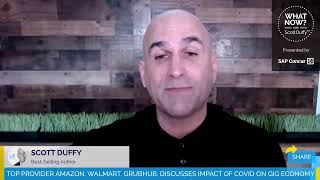
Aaron Hagemon, founder of Delivery Drivers Inc., discusses how his company handles HR and last-mile labor for gig workers. DDI screens and tests drivers at scale while navigating the legal complexity of classifying workers as 1099 contractors versus W2 employees, a challenge that intensified as restaurants pivoted to grocery and delivery during COVID.
Questions this video answers
May 21–22 (next Thursday and Friday as stated by host)
Episode 50
Aaron Hagemon (founder of DDI — Delivery Drivers, Inc.)
Third‑party human resources support for last‑mile delivery (onboarding, accounting/taxes, risk management, background/drug screening, dispatch support)
Chapters
Good morning, everybody. This is Scott Duffy and welcome to what now what now with Scott Duffy presented by SAP Concur. It is Friday and I am so happy to be with you here today. We have so much to share. I have got an incredible special guest, Aaron Hagman who's going to join us in just a few minutes. But today I want to start by making an announcement. I want to talk to you about the Kovade Business Festival presented by SAP Concur. If you haven't seen it already on social media, I want to share with you what it is that we're doing because we're bringing amazing content, amazing content to all of you and I'm just so proud and I can't wait to share it and to share with you how you can get involved in this once in a lifetime experience. It's next Thursday and Friday, May 21st to 22nd, Covid will be taking place Covid Business Festival.com is is where you can learn more and check it out. But for now I just want to say again, this is Scott Duffy and our show is what now with Scott Duffy presented by SAP Concur. And if you're just joining for the first time, doesn't matter where you're joining, on Facebook, on YouTube, if you're on Instagram, LinkedIn, if you are watching, we broadcast over to Apple and to Roku, if you're watching from wherever you are, if you could drop into the social feed and write down, write down your name if this is your first time, the industry that you're in and the biggest challenges that you're having in your business so that we can address those today. And we're going to let this string propagate for just a couple more minutes. We're on radio here in just about a minute. So again, I'm just so happy to be with you today. So much to share and it is so it's so great to be connected to all of you today. For all of you jumping in, I want to say hello over here. I want to say hello to Michael. I want to say hi to Aaron over there in Santa Monica, Bill Spencer, good to see you guys today. And over here I want to say hello, we've got Kelly and Ann. I want to thank all of you for joining. Thank you so much. So good to see you today. So here we go.
Good morning. My name is Scott Duffy and this is what now with Scott Duffy presented by SAP Concur. I want to welcome you from wherever you're listening. You can tune in each day at 10am Pacific to watch the live broadcast on Facebook and YouTube. You can listen nationwide on Dash Radio or download the podcast. This show is for entrepreneurs, small businesses and those thinking about starting their own companies. It's for people affected by this economy. Maybe they lost their business, their job, they were furloughed or they saw their consulting contracts canceled. It's for people asking, what do I do now and how do I come out of this period even stronger now on today's show, we're going to focus on the gig economy. We're going to talk about who's winning, who's losing and what are some of the things that you need to know. What are the things that you need to know about new opportunities that are opening up? What are things that you need to know about gig workers? If you're a gig worker or you're hiring a gig worker, we literally have the number one person in the country who's going to be on our show to talk to us all about that. Our special guest today is going to be Aaron Hagman. Aaron is the founder of DDI Delivery Drivers, Inc. And they are the biggest provider of delivery drivers to companies like Amazon, Walmart, grubhub and more. So we can't wait to have Aaron join us now today, before we get into the news and before we get into anything else, what I want to do is first announce Kovade Business Festival because I didn't really spend time on it yesterday is we were getting things organized. The Kobe business festival is May 21st to 22nd from 8am to 4pm Pacific Time. You'll be able to watch it all over. I recommend you come here to Facebook or to YouTube and that's probably going to be one of the best places to watch. We have an incredible lineup for you. The world's top entrepreneurs, athletes and entertainers who are going to come in and they're going to share with you what they are doing now, how they're pivoting, how they're adapting, how they're finding new customers, how they're launching new products, what they're doing today to thrive in this economy. And I'm telling you, it's going to be so exciting because.
Here'S what was happening. I started this show. This show. What now? It was, it was, gosh, it was eight weeks ago, actually nine weeks ago, almost yesterday that we started the show. And when I first got started, it was because I had so many people asking me, what should I do now? What should I do now? And over the past few weeks, I've had more and more and more of you call or DM or write. And I've done everything I can one on one to help. But I just thought, wouldn't it be awesome if I could pull together some of the people, these amazing people in my network to share from their perspective. So it's not just me, but it's their perspective in a variety of different industries, doing a variety of different things and people who, who, who our audience, who you guys could relate to. And so that's what we've done. And again, I'm so excited. Go to kovade covaid business festival.com so you can register. And by the way, when you register, you can also get a gift bag. And the gift bag is filled with things like free books, digital downloads, free memberships to online courses that have been provided by our speakers and sponsors, which is super cool. So download your, your virtual gift bag and if you need help, if you need more one on one guidance, if you need group support, you'll find resources and programs for that as well. Again, Covid Business Festival.
Now in the news today. It's kind of a trip. So I was talking yesterday about how we have 50 states, over 3,000 counties and over 19, 30,000 cities here in the United States. And as we come out of the stay at home period, it feels like everyone's got a different agenda, everyone's got different rules, everyone's doing a different thing. And I go back and forth during the week between LA and Orange County, Newport beach where my home is, and, and I can tell you just in those two places 50 miles apart, it feels a lot different. Well, let me tell you what the new battleground is today. It's not whether or not you're going to wear a mask at the beach. The new battleground is what is the definition of a fever? And this is really important because if we're trying to travel on a airplane versus on a train versus in an Uber, if we're trying to go to a business meeting, we need to understand what the rules of engagement are, what a fever actually means. So this is like a hot topic this morning. In Ohio, A fever is 104 degrees. In Minnesota, a fever is 99.5 degrees. So I'm really hoping that we can figure this out because again, it's just, here's the thing. What we all want is certainty. I think that what concerns us the most about this economy for many people is the uncertainty about what it all means, about what am I going to do about when I can open around what the rules are. And without certainty, it's really hard for us to get our arms around kind of how we should act. The other thing that we're all looking for, I believe, is meaning we want to know that, you know, staying at home meant something, that it worked on somebody, that, you know, that it really meant something. And I think that right now, what we're having trouble finding, getting our arms around, is what is the meaning of all of this? And in that certainty that I was just talking about a minute ago. So a couple more things before I bring on Aaron. The first is this. Hackers overnight doubled down their ransom against probably the most famous or prominent entertainment attorney in the world. This hacker or this group of hackers hacked into the attorney's back end and was able to get access. They were able to get access to a whole bunch of documents. And, you know, this is for people like Madonna and Lady Gaga and U2 and some of these big entertainers.
And they asked for $21 million in ransom not to let this stuff out. Well, overnight, they increased that number to $42 million. And the question I have is, does anyone even care anymore? Does anyone even care about somebody else's dirty laundry? And it really brings up another point to me. You know, it feels like in this age, the age of Kobe, the status, or at least the definition of what status is and celebrity is, seems to be changing. I think, you know, in this age of COVID where there's no fancy production for celebrity, and, you know, you go on Instagram or something, you see your favorite glamour star in their pajamas or with no makeup, with no production.
These people just look and feel like you and me. And I think that what some of that does, taking away some of that mystery and that intrigue in that production, is it makes celebrity just a little bit less appealing. And so, you know, today, first of all, do people even care about other people's dirty laundry? Number one? Number two is the definition of what status is really, really changing. I mean, to me, it seems like, you know, status isn't necessarily if you're on a TV show. To me, there's more status if your Internet works, you know, if technically you've been able to keep yourself up today. To me, that is. That's pretty. That's pretty cool, man. That's who I want to be. The other thing before I bring Aaron on, I want to talk about is. And it's in line with all this, you know, the definition of what status is, is. Is. Are we at the end right now or a pause in the age of the influencer. And this is really important because there's a lot of people who have successful personal brands or successful businesses and they've been told they have to build their brand and they have to become these uber influencers on social media so they could attract and convert people into selling, into sales. And here's the thing I'm wondering, is the age of the influencer dead? Because travel influencers can't travel. Fashion influencers can't really. Fashion influencers in different categories can't really do that. People who are taking, you know, bikini shots on the beach can't even go to the beach. So what does that mean for influencers? What it means is from a revenue standpoint, what we've, we've seen is I just saw a report today that revenue kind of for influencers was down something like 70, 80% in the last month. And will it come back? And again, will any of the. So I don't know. These are the things I'm thinking about this morning. The other thing I'm thinking about before I bring in Aaron is adapting. And this is like we always talk about adapting. Every day I try to give you examples of what people are doing to pivot, adapt, how they're changing their thinking, how they're changing what it is that they're selling in order to help stimulate ideas for you. And what really makes me happy is I have heard from, from so many people about how they've listened to what we've talked about in the show and they've created changes in their businesses that are really paying off today. And that is just so exciting. It's so super cool. So here's a new one. Here's another one. First, I'm going to tell you a story about Fox and my time at Fox Sports. And then I'm going to tell you what Fox is doing today. So I heard this story when I worked for Fox Sports, okay? Now here's the thing. I was never able to have it confirmed or denied. So let's just wrap a bow in that. I was never able to have it confirmed or denied. But the person who told it to me, told it was so much passionate that I thought maybe there's elements of something there that really happened. And I think that, I think that it's a very instructional lesson for all of us. So here it is. When Fox got the deal, they signed a deal with the NFL to create Fox Sports Sport. I'm sorry, NFL on Fox. The NFL had been on, on NBC, I believe it was NBC and CBS forever. And then you have this newer network, Fox, and they went and they bought and they won the rights to the NFL. Well, this is what I was told. And again, so you take it with a grain of salt, but really just focus more on the message. Okay? What I was told is the person who was running Fox Sports at the time, who is just an incredible geni, what he did is he took his. His small. He took his creative team to Vegas. And on the first night, what happened when they were in Vegas was he brought everybody together and they thought they were going to work, and instead they had like the best meals, the best this, the best clubs, the best time. That's what they did. And then the next morning, people got up and they got together and they thought, okay, we're going to get to work. But instead, they had the best meals, the best activities, the best is the best, the funnest everything. That night, the same thing. The next day they got up, the same thing happened. The best of all these things on the next day, when I was told this person did is he got everybody together at breakfast and they didn't know what to think. What he said was this. What he said was, okay, for the last three days, what I've done is gotten you completely out of your head, Completely out of your head. And I've gotten you to focus on other things, to really clear your mind, and I've gotten you to meet and engage with new people in the company that you wouldn't necessarily talk to every day. And he said, and so what I'm going to do now is this. While you're sitting here having breakfast, there's a video game player and two video games being put in each one of your rooms. And your job for the next 24 hours is to do nothing. But this is to play. It's to play the games that our target customer watches. Okay? Or plays. Plays the game. Play the games our target customer plays. Do that and think about what are the sounds, the sights, the graphics, all of these different things that Fox, the NFL and Fox and Fox Sports is going to be. And that's. They did. And when Fox launches, launched Fox Sports, their TV production, everything about what they were doing was so different, so unique. The sound phones, the robot, the graphics, all that kind of stuff. Well, today I learned that what Fox is doing is they are experimenting with new technology and new ways to make it feel like you're watching a game on television that is more like a game with a filled stadium because there's a very good chance that the sports, the, the professional sports are going to go back to work. NBA is going to go back, NFL is going to go back, soccer is going, they're all going to go back. The thing is, will they, will these leagues, will they have fans in the stadium right now? And so what Fox is doing is they're experimenting, this is what I've heard. They're experimenting with some kind of imagery, something that makes it look like the stadium is full, like actually piping through sound and things like that. So when you're watching on television, you get more of a full game experience. And so, you know, I just. Hats off to the innovators. I mean, hats off to the innovators. It is so super cool. You know, necessity is the mother of invention. Give an entrepreneur a big goal and not enough time and it's amazing what they can achieve. Hoorah. I gotta love you gotta love entrepreneurs. So with that, what I want to do is I want to introduce today's special guest. Today's special guest. I'm gonna, I'm gonna bring them on here in just a second. Here we go. Today's special guest is Aaron Hagman. Now, Aaron is not only a business dude that I respect and have so much respect for, he's a good friend. He's a member of our breakthrough mastermind. Aaron is the, the founder, he runs DDI Delivery Drivers Inc. Which is.
Just, it's really the leader, it is the number one leader in delivery drivers and you know, for, for companies here in the United States. And so if you're a big company like an Amazon or you're a Walmart or you're a grubhub and so many others, the odds are you have drivers that were in some way provided by or touched by, by Aaron. Aaron has also been a leader in helping to work on legislation with regard to how you classify delivery drivers and gig workers as independent contractors and non independent contractors. And so he just has a wealth of knowledge. And I just want to welcome you, Aaron and I want to thank you so much for joining us today.
Hey, buddy, how are you? It's great to be on your show. Thank you so much.
Well, I'm doing great. So my first question to you is this. First of all, describe what DDI does. What does DDI do? What is the market that you serve? And then from there I want to talk about how has this Covid crisis impacted you?
Sure, sure, of course. But a couple quick things. One, you always spell my last name wrong and you have it wrong on the screen. And I'm gonna get your name for the last time because. Because I love you and we've known each other way too long. This last time I do your show, you can spell my last name wrong, but no, no. All jokes aside, congratulations. I just want to take a quick second because you know, I love you. First and foremost, congratulations on Kovade. I am so excited to join again, everybody. May 21st. Make sure you're there for Scott's, you know, whole thing for the whole day. It's going to be amazing and next level. And then also I noticed congratulations on, I think I saw today episode 50. So I feel very honored to be episode 50 of your show, you know, on that end. And you know, congratulations on this. I watch as often as I can for the show, so I'm really proud of you, buddy. You've done a great job. All right, so to what we're here to talk about today, the gig economy, the last mile drivers and all the things around it. I have so much to talk to you about and we'll try to stay focused. What does my company, Delivery Drivers Inc. Ddi, what do we do? We are the third party human resources support for the last mile, for the whole economy, for the last mile labor. We help our clients in everything delivery, you know, whatever the product is, you know, grocery or food or products and brown boxes or medical products from hospitals to diagnostic testing centers. We handle all of the human resources work to support our clients to make sure they do the 1099 program properly, excellently and you know, hyper fast and efficiently from onboarding, accounting and taxes and risk management insurance programs. Support these days with new stuff in the unemployment claims for the 1099 world. All of that work in a nutshell. That's what we do to support our clients in the whole industry. We are last mile labor. That's what we like to say.
So the gig economy is one of those. It's like one of those. I don't know if it's more of an industry or if it's a. It's an idea. But. But the gig economy seems to be something that has benefited where there's been job creation as a result of. Of COVID 19. Where are the opportunities in the gig economy? And like, what are you seeing? What are your customers asking you for? What are they saying? We need this, we need this now or we need this different or here's a new thing that maybe would be great for delivery drivers. What are you hearing out there?
Yeah, gosh, again, where to Go. So one of the biggest impacts on the gig economy and the last mile is what advice told you sort of behind the scenes, fuel to the fire. It is busy. You know, everybody is busier. And if you think about it, not just being busier and more jobs being created on the front lines, but something that I want a lot of people to think about as the world changes, as some jobs go away over in this sector and we're looking for new opportunities to, you know, be agile and, you know, so these uncertain times they're talking about, there's a lot of jobs around the gig economy beyond just the frontline delivery jobs, dispatchers, technology, management, strategy, leadership, sales jobs out there and growing. So that's, that's one sort of large impact on this is just fuel to the fire. It's, it's exciting in that everybody needs things delivered to support not just the current pandemic status we live in, but the evolution of what this is going to look like on the other side. Because we all know there's going to be a new normal. We like to talk about what that looks like.
You know, Aaron, one of the things that we talked about is when restaurants were shut down and they were forced to close and you had, you had waiters and you had waitresses and you had cooks and people in the kitchen that did not have work. I know that you were working on a really, I think, creative way of helping them to find. Find some work. Can you share what you did?
Yeah, exactly. So, and that's the next part of this. Beyond the first side of, okay, delivery is bigger. There's an evolution of the retail world that includes restaurants that we talked about. But if you think about this, it goes further. The brick and mortar businesses, your mom and pop shops of all natures. In a word, retail is having to evolve and figure out how to get their products that everybody still wants and needs beyond the Amazon channels and things like that to their customers. So the restaurant world had a dynamic shift to immediately supporting takeout and delivery in a much higher volume. What does that look like? You know, did they have delivery partners like, you know, Grubhub, DoorDash, those things at all? To start with, did they have their own staffs? In a lot of cases we may think about, oh, yeah, there's restaurant delivery everywhere. But to your question, in the restaurant world, a lot of the restaurants had to figure out how to immediately service their customer beyond, you know, letting somebody come get takeout. So it was transitioning their staffs, finding from waiters to delivery or to chefs and takeout staff or finding contingent workforce where my company would come in and say, hey, we've got a big restaurant group. We've got a large retail group like 711 or something like that. Or actually we've been talking to a lot of grocery chains that just never were on the online delivery game and they've had to evolve very quickly. And that's my point. They've had to jump on and our company's been built, help them with the labor piece and even down to some of the logistics pieces of, you know, dispatching or we have partners that have customer facing software to, you know, let a restaurant get their menus online and delivery out to the customers that, you know, in a week that they weren't able to do a week ago.
Sure. And so I'm curious, have you worked with any restaurants or have there been any, any restaurants, grocery stores, anything like that that have done anything particularly interesting around innovation? And here's what I'm getting at. We have somebody who's going to be joining us next week during our business festival who had a restaurant in, I believe it was in New York and they converted it to a grocery store and have been doing extremely well as a result. When they've got restaurants to the left and the right that didn't make a change like that, you talk to so many people in so many different businesses. Have you seen anything that you thought was kind of particularly interesting in terms of adapting out there?
Yes, that's, you know, there's a couple of things that I think of and that's actually one of the examples I would have given is a lot of the restaurant world has figured they have food supply, they have prepared meals. But beyond the prepared meal dynamic, they have all the product, they have the bread and the eggs and the milk that they would otherwise use in their kitchen to turn into local markets. And then in our world where we come in at Delivery Driver's Inc. And the delivery side is then some supporting getting that out as well. There's a limited dynamic of time that customers are allowed to get out in certain markets and cities, you know, and social distancing and rules that limit customer flow. Simple restaurant revenue economics. Revenue per square foot, it's limited there. And adding in incremental delivery on top of that has been the big, big shift of where we come in to help these restaurants evolve. So the restaurants are doing exactly what you said, shifting suddenly to a local market and to a local grocer. You know, the old school, you know, hit 19th century local local goods store. But then they're adding in the delivery component because of coronavirus, because we can't leave and we need goods brought to us in a safe and fish manner. And so that's one of the evolutions. The other side of this, as we know, and I think everybody's familiar with the term is non contact delivery. So we've been on the front lines and trying to continue to support some of the very specific coronavirus dynamics like non contact delivery, the evolution of technology, allowing drivers to choose those scenarios, customers to choose those scenarios, communication around that. And then I'm really excited to announce Scott, you're one of the first people I'm here to tell. We're working on a new product with some partners in a new program and ddi. My company is really moving fast right now to be on the front lines of rapid testing for the Last mile world and working with some of our partners. We're involved already in screening, drug testing, background checks, motor vehicle reporting, a lot of the screening components.
So you, you already do that for your, the people that you bring on as delivery drivers.
We already do that piece now adding in coronavirus testing because the Last Mile is deemed essential. All the Last mile workers we have been and even my company, although we're allowed to work remote and I'm proud of my company and team's agility in that context. Different conversation. But you know, to this end we're really excited and I'm happy we could talk more later to share. But large mass scale national testing, accessibility for those in the Last mile. You know, I'm one of the things we do at ddis. We work with thousands and thousands of drivers and it's important to us to take care of these people. You know, that's something that's changed in the gig economy. To your earlier question, there's a lot of understanding and respect for how hard and how at risk the gig economy and last mile delivery force are. And so what we're working on at DDI that's really new is broad testing, accessibility and prioritization, candidly for all of the participants of the the Last Mile so that workers can get testing on a regular basis on, on their ongoing dynamics because that's going to be the new world we live in. And I'm proud that my company's on the front lines to be able to help support that and make everybody from drivers to consumers safer in this whole space.
Let me ask you a question. So, okay, so there's this whole idea of. By the way, I saw Somebody sent me an investor deck last night for this new technology. It was so amazing. You walk up to it and there's like a little, a kiosk. And the kiosk is. It looks like it's about the size of a, of a big iPad. And you walk up to it standing. You don't have to touch anything within a certain distance within like 2 seconds. It detects your temperature. It can tell if you're wearing a mask. It can do a visual facial recognition. Like it was insane. It was incredible. And I really, you know, it's interesting to think that that could become a new normal. When walking into a building, going into a company, walking into a restaurant, I think these devices were like 2,500 bucks, up to $6,500 to install and to run. But it was a, it was a tech like honestly it was like watching Star Trek. It was really, it was really a trip or Star wars, one of those shows. So Aaron, when, when you're talking about the, the, the testing, are you, because this is an incredible like story about adaptation and pivoting, you're talking about testing and you can obviously test your drivers. Is there an opportunity that you have to like, I don't know because I don't know how this works. Take the testing to a big company and then you take all the results away or like what is the whole, what does that whole testing world look like trying to find opportunity?
We're just getting into it, to be candid. But it's about structure, infrastructure, accessibility for us and then ongoing maintenance because again, in some of the frontline worlds, I believe 2021, 2022, and honestly let's, I'm assuming maybe moving forward in the new Coronavirus Earth that you know, for certain jobs regular testing is going to be required and it's gonna be, you know, a component on that and you know, you have your certification or whatever that may be almost like in the restaurant world. For years and years we've had serve safe certifications, regular testing or you know, certifications. But here it'll be ongoing testing. Let me shift because, you know, I, I love sports and this is very related to this. I was reading a great article this morning and you were talking about earlier, listening to your intro, how the evolution of sports is going to go and what's going to happen with that. And I love soccer, as you know, and Bundesliga, German professional soccer is opening. I'm gonna send you an article because they have very exciting, interesting rules on the limitations of who's going to come into the stadium where the players are going to go, the rules, the contact, everything. But to this conversation, tying it all together, the regular testing, as in every two weeks that the players will be undergoing on an ongoing basis, plus some of that space age technology you were talking about, you know, walking through the scanners before the games go live, going in there to be able to play that. But I'm anticipating, hopefully soon we'll be able to attend these games in our virtual headsets and they'll put you and I together, together, we can have a beer together at a Rams game, together again, you and I, and virtually. And they'll project our image and our noise and sound down to the players so they can feel us there. And that'll be our new weird world. But I'm getting off topics.
That's awesome.
Somebody who's watching today had a question. How does the testing world that we've been discussing tie back to hipaa?
Yeah, that's a great question because, I mean, I think there's going to be some personal privacy disclosures for certain jobs because that's what HIPAA is all about, right? It's your personal privacy act around, you know, the health insurance rules. And so to that end, if you're choosing to be in a certain line of work, maybe construction, for example, where you got to go out there, you got to work and build things, or of course in the delivery world that I'm in, that you're going to have disclosure and acceptance to that. And so when you choose regular testing, there's sort of a trade off of, I believe, privacy that's going to say you get your sticker. You know, I'm good and certified. You know, I was thinking about this from I have a couple of friends that are in the massage and masseuse industry. They own a few salons and a couple of friends that are actually masseuses. The same thing in these contact worlds where it's just going to be how it is. So I believe you're going to trade your privacy for that opportunity to sort of work and then just say, yeah, but you also get that opportunity again, I think is the key here right now, at least because testing is still limited in 2020 to have access to regular testing. So you'll know I'm a delivery driver, but man, I get to go get tested twice a month for my own safety and confidence in my family and things.
You know, it's just so interesting, you know, when we talk about that, we talk about the testing. I mean, I'm just thinking about My friends that have small businesses, I've got, you know, a couple of friends that are in the spa world and the wellness world and they have these amazing facilities. I have one that has a, a massage place. They've got like 20 or 30 people when they're busy that go, nobody wants to come back to work. Anyone that is on unemployment and getting that extra 600 a week, you know, they would rather stay at home. In fact, I was, I was just talking to somebody before we went on who works at, he runs somewhere out of the state. He runs a, a big arena and one of the big sports arenas. And we were talking about how they're planning and how, you know, all that kind of stuff, bringing sports back in and, and it was the same thing having people that had to be furloughed and then getting people and then going back to these people and saying, great, we've got money when we want to bring you in. And, and, and there people are saying, no, no, it's okay, I'm making more right now. I'm totally cool. The problem is that when the small business can't open now or can't take in the money that it needs because nobody's working, it's going to do one of two things. It's actually going to do one of three things. Okay, so here's going to happen. Number one, they're going to report you. So if you turn down because unemployment is contingent on you taking a job, if you're offered a job, so they are going to report you because they don't want to be disqualified from having to give money. Have that grant effectively become a loan, that they're on the hook for that loan from the government. That PPP like that grant becomes a loan if they don't bring their people back and pay them for like in eight weeks. So issue number one is in the way is they're going to have to report or it's going to really come back. It could really come back negatively and hurt them. So that's number one. Number two that's going on is if people aren't coming back and they've got to hire people, they're hiring other people. So you've lost your job. Right? That, that's number two. And then number three, that business, because it might not be able to staff upright, may not be able to fully come back. And so there's no job to come back to even if there was one open for you. And so it's, it's put both sides. I understand both arguments and it's put both sides in a really, really tough position right now. And it's just, it's one, it's, it's just, it's one I don't envy. And I guess this really doesn't have anything to do with testing. This has everything to do with, with the way the PPP program and unemployment were both set up. I don't know if it hit at the same time, but in relatively short periods of time. And maybe they didn't consider the people authoring both those bills the impact it would have, you know, which people were working fast. I, I just, I just don't know.
It's an awesome conversation, man. And just quick thoughts or. Yeah, I think at a. I get this conversation a lot about, you know, workers not wanting to return to work, kids are being supported by boosted unemployment and things like that. And I think at a macro level, you know, we have a shift in the labor pool and you know, it used to be this and it's something in transition right now and it's unbalanced. And I also think right now it's also temporary on a high level. So what we're feeling is a short term, but it is very hard when you look at the PPP dynamics and some of the rules of conversion and forgiveness on the loans and the money, of course. But it's just a short term labor market this year. And I say short term at a higher level, macro level that's supported by the government because like in California where we're at, for example, you get $450 a week on unemployment, but it's 600 from the federal government supplemented right now. That's not going to last forever. There's not enough funds. Accessibility is going to be challenged to your earlier point points and, and it's going to be challenged. So we're in a transition phase. That's all I can really say. It's hard to be an entrepreneur right now. What the other side looks like is to be determined. And does it look like it used to? Probably not. I think it's going to change. I know in my world in 1099s yeah. Changing benefit accessibility is suddenly a thing and that's changing as well. So yeah, it's not.
Aaron, let me ask you this. A lot of us that have businesses with this gig economy and gig economy workers don't even know what the definition of an independent contractor is versus an employee today because that keeps changing. I want to mention that we had at one of our mastermind groups, we had somebody who used to work in government, in the office of the president. And, you know, I know one of the things that he had shared with you and with the group is when it comes to legislation, if you're in an industry that looks like it's going to become regulated or more highly regulated or new laws are going to pass, don't wait, get on your toes and be a part of the process. Go find out who's writing that stuff and be a part of the bill. And, and I know that as it related to gig workers, you got very involved to try and, you know, craft this stuff. So my question for you is what is the multiple questions again?
Yeah.
What's the definite definition of a gig worker?
What is the difference between a freelancer and a employee today as it relates to this gig work economy? Right. And number three, what are the best ways for us to stay compliant?
Because this is what you, this is a big part of what you do. You know, Amazon, Walmart, I mean, they've got thousands and thousands of drivers and, and, and through your company, you bring all these people in and you manage a lot of this stuff for them on the back end. Correct?
Absolutely.
So complex.
Yeah. All right, here we go. Big question. You ready? All right, here we go. But I can answer the first year, the first two questions together, Your first question was, what's a gig worker from a definition standpoint? And then secondarily you say, you know, what's the difference between a freelancer and an employee? So, so I want to put these together because gig worker, freelancer, independent contractor, all labels, all synonyms to the same thing. Independent, you know, entrepreneur. Heck, when you're starting off by yourself, sometimes we fit into these independent categories. What it actually comes down to, to be technical, to your question, is a definition of status. That is the difference between either is the individual a 1099 worker? Do I have a 1099 relationship at the tax implications and all the working formal business relationship dynamics to that and that set of red tape, if you will, or is the individual a W2 employee and that set of red tape, if you will? And we have people and partners out there for all of these things. You got our friends liking. This isn't a plug by any means, but, you know, paychecks and ADP and all of our payroll software processing companies that help us keep up with tax tables and the automation software to pay our employees. And to your question, segueing forward, manage the jurisdictional nuances, I have employees in Arizona, California, New Mexico, etc. You know, what are the state payroll tax tables, etc. Right. And then on the other side of things for the W, from the W2 world to the 1099 side, you have companies like mine that literally are sort of the ADP for the 1099 world. You know, sorry for that analogy, I don't know if I like that one too much. But you know, it fits into this conversation to help support these companies. So that's part of the answer. Third, your next question, how do we stay compliant? You know, we work with this on and my company works with things on a localized level for small business, you know, the small restaurant, you know, or small grocery group that's got six stores in, you know, Southern California. And how do they set their thing up to the large national enterprise, you know, grocery delivery companies, things like that. And the answer to staying compliant is invest. From an entrepreneurial business standpoint, my coaching advice would be to invest into these human resources management tools. You know, like we have things like ADP and you pay your sign up fees and your accessibility fees and the scaling fees based on how many employees you have for programs like that to make sure that if the state of California changes our state unemployment insurance rate by 0.02% that you get it and reporting's done and deductions are automated. So you gotta invest into these companies. Don't assume as an entrepreneur, what do we say, Scott? Surround your people with, you know, people are smarter than you and everything. The best. Most of us didn't get into business to do our HR management red tape. So I really think invest into this and understand the rules as an entrepreneur, as a business owner though, you have to understand intimately what is the definition of a W2 to 1099.
Yeah.
The right decision for your business and the relationship with the worker.
Yeah.
You can get consultants and advisors. Heck, to your audience and our friends. I mean, reach out to me through the networks and we can always talk about those things. The definition, understanding. But then when you choose the path W2 or 1099, make sure you do it right. Don't cut corners and invest into those. The thing a thought of knowledge I would offer to our audience today, understand because I understand and appreciate your audiences. You know, national, global, all over. You and I may be in Southern California, five miles from each other right now, but on a global basis. The definition of what defines a 1099 workers to focus on that side, which is my world, just like employees is juror, we have to understand is jurisdictionally defined as and different from state to state to state to State. What does California say? With the whole debate and conversation around the bill and legislation, bill around AB5 versus what does the state of Oregon right next door say with regards to the definition of an independent contractor? And they have their own by the way, separate specific law, you know, in Oregon labor code that's related to AB5. So if you run a business that does delivery or whatever, you know, maybe you're a graphic design house and you have independent contractors and freelance artists on your team that are in Portland, Oregon and Newport Beach, California, you have to understand you have two different sets of rules, just as if you had two sets of rules of employees. So if we understand that at a high level we invest into the professional support and we don't cut corners, I think that's my answer to your question.
Awesome. So, so how can, if somebody wants to engage with you, they have questions or share with us what your. So we talked about the big branded clients. Clients. These, these big boxes. Do you only work with these bigger companies? Do you work with smaller restaurants? What, what does that look like?
No. I'm really excited. Our company is so cool. I've done it forever. So proud. We have a really, really agile technology platform that is truly scalable for small business to enterprise level, national business. So I have clients with, you know, a local mom and pop business we would say that might be a delivery or a courier company or something like that with 10, 15 drivers that I might support in their local city, whatever that city is on there, down to of course larger different levels of enterprise. So we're our platform being very technology based is super scalable. So to then your audience and I think maybe where it's going and again because we're friends and to your audience I would say find me with my name spelled correctly on LinkedIn. LinkedIn. But no, find me on LinkedIn. Aaron Hagman.
And you know, Aaron Spell Hagman.
It's H A G E M A N Eggman. So anyways, I think it's on the chat here. But regardless, you know, reach out to me, put it in the chats here. I'm good friends with Scott. Reach out to Scott. He'll happily connect us, I'm sure. And I am happy, true, honest, like offer to your audience if you will to, to take a couple of minutes talking about your business super high level and just help you understand, you know, am I 1099 even at risk or whatever, I talk too much. I happen to jump on a zoom with anybody one on one for you know, 15, 20 minutes just to kick the can around for a few amazing.
I want to thank you so much. Thank you so much, buddy, for coming on.
I love you, my friend.
To Aaron Hagman, we love you. We love you. We love you. You have an amazing day. I'll reach back out to you later, everybody. Aaron Hagman, DDI Delivery Drivers, Inc. Thank you so much. And for everybody else who who's joined us today and all of you that are listening and watch, I want to thank all of you for joining what NOW with Scott Duffy, presented by SAP. Concur. We will be back on Monday. And don't forget the Kovade Business Festival which we just announced, the Kobe Business Festival, May 21st to 22nd, that's next Thursday and Friday, 8am to 4pm Pacific Time. We have got an incredible lineup, some of the world's literally the world's biggest brands, the top entrepreneurs, entertainers, athletes that are going to be sharing what they are doing, how they are adopting, pivoting, how they are coming out of this crisis, what they're doing to stabilize themselves, how they're coming out stronger. We want to do everything we possibly can to help everything we possibly can to help you through this period to know that you're not alone, to know that you're not without resources. By the way, if you go to kovadebusiness festival.com today, you can register and you will get you'll receive a free virtual gift bag that is filled with free books, free tools, free digital products, free online like academy things, all these these gifts that are sponsors and that our speakers are all giving away for free to help entrepreneurs like you and me to rise out of these ashes even stronger. So again, this is WHAT NOW with Scott Duffy presented by SAP. Concur. I want to thank all of you for joining and have an amazing weekend. Bye bye.
More from Scott









Business & Burgers-Sequence Collection bracelet for National Entrepreneurship Week

