Scott Duffy interviews Amilya Antonetti: How We Lead, Manage, & Stay Focussed In Uncertain Times
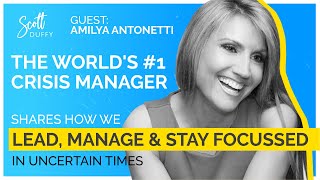
Scott Duffy talks with crisis expert Amilya Antonetti about leading through COVID-19. She advises entrepreneurs to identify their unique value, pivot quickly using test-and-measure cycles, and lean on peer collaboration. The COVID Aid Business Festival runs May 21-22.
Questions this video answers
May 21 and May 22, 8am–4pm Pacific Time.
Amelia.com.
He states the $600 weekly bonus attached to unemployment goes until August.
Small business owners fear PPP loans may not be forgiven if they can't reopen or employees refuse to return (because some workers earn more on unemployment).
Chapters
Good morning, everybody and welcome to what now. We have got a lot to talk about today. Welcome to what NOW with Scott Duffy, presented by SAP. Concur. We have got a huge show. I have so much to share. It has been a race since the moment, the moment I woke up this morning to get up and get on with it. I have so much to share with you this morning. Things in the news, ideas for you to help you to grow your business. We have an incredible guest who's joining us in just a little bit today, Amelia Antonetti. And also I have a new event. I've been talking about it, I've been teasing, teasing it. But I have an event that we're ready to announce today. It actually just hit the wire, so I'm really excited to share the COVID Business Festival and we're going to talk all about that. If you're joining us for the first time on YouTube or Facebook, I ask you to do this. Please, if you're here for the first time, write down your name, the industry that you're in and the biggest challenges that you're running up against so that I can go in and I can adjust and I can adapt this program just for you. Again, I want to welcome you from wherever you're joining, whether that's Facebook, YouTube. If you're here from Instagram or Periscope, listening on Dash Radio nationwide. If you are watching on Apple or Roku, I want to welcome you. And again, if you're watching on social, please drop your name in the comments, the Instagram that you're in and what you're working on so that we can customize this show for you. We have so much to talk about today. I'm just going to drop right into it. Here we go. Good morning. My name is Scott Duffy and this is what NOW is Scott Duffy, presented by SAP. Concur. I want to welcome you from wherever you are listening. You can tune in each day at 10am Pacific Time to watch the live broadcast on YouTube and Facebook or download the podcast. This show is for entrepreneurs, small businesses and those thinking about starting their own companies. It's for people affected by this economy. Maybe they lost their job, their business, they were furloughed or they saw their consulting contracts canceled. And for many people it happened just like that. It's for people who are asking the question, what do I do now and how do I come out of this crisis even stronger? Our focus today is going to be around crisis. It's going to be how do you manage crisis? And I am Bringing in possibly the top crisis manager in the United States. What do you do when things go sideways? That's what we're going to talk to Amelia Antonetti about today. Amelia is one of the top crisis managers in the world. She works with Fortune 100 companies and top celebrity brands like Steve Harvey, Justin Bieber, Justin Timberlake to help them navigate through difficult times. And we're going to discuss her outlook for Covid and also what she's telling not only big companies, but also her SM about how to manage through coronavirus, how to build great companies and how to get through the challenges that all of us face. And by the way, if you are having, if you're in crisis, if you are in a business that is really struggling, if you're really up against it right now, I really recommend that you stay tuned to this show and fire your questions away in the social comments so that we can ask Amelia, because I have to tell you, this woman is amazing. And again, we can't wait to have her on in just a second. In the news today, the number of COVID 19 cases worldwide and here in the United States keeps going up. The number of deaths keeps going up. Areas around the U.S. actually, areas around us meat plants have become breeding grounds for infection. Anthony Fauci says that we have at least eight vaccines that are now being tested. Meanwhile, Wuhan is testing all 11 million of its residents as a new wave seems to be emerging in China. And the question I have to ask is if Wuhan is able to test 11 million people in one city, if in South Korea, I can go to every corner store, every 7, 11, every, you know, every little grocery store in the market, and I can get a free instant test or an inexpensive instant test and know immediately whether or not I have this thing or not. Why in the heck can't we do it here? The biggest, the greatest, the most entrepreneurial country in the planet. How can we not do it ourselves? I just find this baffling. Now, it was another interesting day yesterday, so the country started to open up. States are letting small businesses open their doors under very strict guidelines. Yesterday, the governor of California laid out his plan for allowing restaurants and additional types of small businesses to reopen. So it's awesome to see us moving to that next step. And I had a chance to get out yesterday and it was just weird. I just think there's a huge vacuum for national leadership. I'd like to know what the plan is, because right now we got a lot of plans. There's 50 states, there are 3,000 counties in the United States. There's 19,495 cities. And each one seems to have their own idea of what we should be doing. And so, as an entrepreneur, as a guy that's just trying to get by, it is really awfully confusing. I'm in favor of one plan. Let all small businesses open their doors, practice social distancing and safety precautions. That's the plan that I'm the most in favor for. Because you can't tell people that they can't work and then throw them under the bus by not suspending things like mortgage payments and rent payments and car payments. You can't tell them not to work, but that they've got to pay everything and pay it all on time. It just doesn't make sense.
55% of SMBs say they're going to shut their doors within the next few weeks. Think about that. One in every two SMBs reports that it will be shutting down within the next four to six weeks. And the reason many of these just don't have a shot. They don't have a shot because they're not allowed to open up. Now, to make things even more difficult, we have what is becoming a PP nightmare for many small businesses. And what does this mean? What this means is owners have accepted money from the government to bring people back to work. Now, if owners took that money in, and they use that money for some very specific purposes to bring back. To bring back workers. So that means spend 75% of the money on payroll and then spend the majority of the rest of the money on things like mortgage payments and interest, utilities, rent, things like that. If they were to follow a certain set of guidelines, again, the biggest guideline was bring their people back to work, then what would happen is that money that they were given would be waived. It would be a loan, it would be forgiven. Or it would not be a loan. It would be a grant. It would be forgiven. And the problem that they're having is people don't want to come back to work. People don't want to come back to work because they're getting not only unemployment, but they're getting a $600 weekly bonus on their unemployment. So many of them are making more money by staying home that they would be if they go back to work. And this leaves small businesses in a really tough position. It leaves them in a position where they got to bring people in, but the people don't want to come back. And so now, because they're not getting any additional, you know, commentary, they're not getting any direction, any feedback, any advice from the federal government or the SBA who provided them with that money. They run the risk now that they've taken it, of having that money convert from what they thought would be a grant by bringing their people back into alone that they're going to be responsible for paying back. And some of these loans range from hundreds of thousands to millions of dollars. So I'm talking to small business owners all over the country, and they're just asking Scott, what do I do? Is really, really interesting, interesting thing. So the $600 bonus attached to unemployment goes until August. That's when it ends. And that's when you would get your regular unemployment payment. Now, the Democrats have proposed a bill where that would actually run through the end of the year. We'll see what happens there. But again, it is a challenge. Finally, there's several parts of the US that still have not opened at all and have expanded stay at home restrictions into next year. So again, people who took the money thinking they would be able to use it right away and deploy it the way they were supposed to deploy it in order to have that money waived in these states, they don't have a fighting chance because they still can't open up. So it's just, it's a really interesting time out there. And where does this leave small business? For many, it leaves them frustrated, angry, hopeless, confused, because they're in crisis and they're not sure what to do next, which is why we're bringing in Amelia today. And this is actually her calling. So let me do this. How's this for real? Time?
We are on right now. How can I help?
I will send you another right now. Thanks.
So how is that for, like, doing something in the age of COVID All right, so what she needs is she needs a new link. So what we're going to do is we're going to copy that link and we're going to go over here. And this is just how we roll today. It's just how we roll. And we're going to send her this link right here.
And then she's going to join us. And she is amazing. She's absolutely amazing. There we go. So we're back.
Where I left off was where do businesses go from here? So I want to talk about the travel industry for just a bit. And I want to talk about the travel industry because you guys know I love the travel industry. I was a part of the travel industry. I had a business that was acquired by Virgin, which is a huge player worldwide. In the travel industry. But man, the travel industry is taking a beating. I love the people, I love the culture, and it's really hard to watch what's happening. Travel is the largest employer in the world. Travel employs over 100 million people, but it may be the hardest hit industry of all of them.
It's really interesting. I'm just looking at these numbers right now. James Fallows had an awesome article yesterday in the Atlantic, and he was talking about air travel. What he mentioned is this. The airline industry, both directly and indirectly, impacts an estimated 10 million jobs in America. Now check this out. In April 2020, airline bookings were down 98%. And the average domestic flight in the United states only had 12 and a half passengers. Imagine that. Total airport visitors dropped from 2.3 million to 95,000 a day. Now, a big reason this is happening is that people don't feel safe. And there's really two things that are going to need to change. Number one is the idea of a vaccine so people know if they get on a plane with all of these people in tight quarters, that they're going to be safe. And number two, people are going to have to be able to afford to travel. So that's another big factor today. And rebounding in the airline industry takes time. As an example, after 9, 11, traffic was down in LAX and Los Angeles, 30%. And that 30% took 10 years to recover. As of yesterday, traffic at LAX is down over 95%. So think about what it's going to require for them to recover now. Airlines, it's not simple. There's a lot that kind of goes on here. You know, this industry is super highly regulated. And one of the reasons they're suffering so much today is really ironic. They're being forced to stay open while other businesses like restaurants are being forced to stay closed. Every time that plane flies with 12 passengers, it's losing money. Now, all of this creates some really interesting opportunities for entrepreneurs. And really, that's what this show is about. It's not just reporting what's happening, but how do we leverage what's happening in order to help propel us forward. So just as an example, the booking process today to get on the airplane, is that something that we can make easier? The security process? I want you to think about this as an entrepreneur. New needs that are emerging. We have scanners at airports for explosives that we all have to go through when we check in to the airport. So what about fevers like in China? What kind of masks will you wear at the airport? You know, In China, you not only go through a scanner that checks to see if you have explosives on you, but you go through a scanner now to check to see if you have a fever. It actually is able to detect that. What kind of opportunities does that create for you as the entrepreneur? Are you going to wipe down your luggage? Are you going to wipe down your luggage trays? What does that mean in terms of the passenger process? Again, let's think about how we can maybe apply some of these ideas to our businesses. In terms of the passenger process, you're going to have to bring your own pillow and your own blanket because those things will no longer be on plane. You'll probably need to bring a sack lunch. You're going to have to bring your own food. It won't be available in flight. Your seat is going to be UV cleaned before you get on it. But you may want to wipe it down. Does that create a product opportunity for you as an entrepreneur? And who's going to wipe it down? Remember, carry on bags? You carry all these bags and try and stuff them in the upper compartment thing. Well, those are probably going to be a thing of the past. And the reason is when you put those up, what happens is there's too much of a risk it's going to touch somebody else. And so you'll probably just be able to bring your one bag and that's it and not an additional check in. Now, again, this is just how an industry is changing. As an entrepreneur, I want you to think about what this could possibly mean for you and for your business. If you're thinking about what you do next, is there an opportunity here you might be interested in solving or a problem you might want to solve? Think about the crew process. The crew is what's being floated around right now is they'll get to a city and instead of being able to travel outside of that city, they're going to be quarantined to their hotel until they actually get back on the plane. This is already happening in China. If you're stuck at a hotel, what kind of new opportunities does that create? And think about the innovation like, this is what I really love. When there's a big problem and you put an entrepreneur in front of it, what kind of innovation takes place? Think about this. Is this the time that we start to really develop electric planes? Is this the time that we double down on low emissions? Is this the time that we start to create and really focus on personal flying vehicles? Will there be more investments in high speed rail? You know, are airlines I really want to ask this question, seriously. Are airlines the horse buggies of the past? I really don't know.
So, you know, the question again I have is how can you apply this thinking and attach it to your business? What if you opened your mind and you opened your mind up to all possibilities for serving your customer? You know, how would that help you through this crisis? Now I'm bringing up the word crisis again. And what I have is like something just so awesome for you guys. I'm going to bring Amelia in here in just a second. And Amelia, when it comes to crisis and crisis management, now this is just a part of what she does, but there is nobody better on the planet. And so I'm going to have her join us right now. There she is. Amelia Antonetti. How are you?
I'm doing great. I loved your intro. That's awesome. I'm bringing my whoopee on the plane now.
Bring your whoopi on the plane. Hey, before. Before we start talking and digging into this, you know what I want to do? We still haven't talked about this. I want to announce Covid.
Oh my God. Yes.
You are one of our featured speakers. And so this is like perfect. So what I wanted to announce today is May 21st and May 22nd we will be throwing the COVID Aid Business Festival. And the purpose of this festival is to help people. Help businesses that are struggling to stay open or they're being forced to close entrepreneurs. It's being for people who have lost their job. They've been furloughed, they've seen their consulting contracts disappear and they are wondering, they are asking the question, what do I do now and how do I come out of this crisis even stronger? And we have assembled an incredible group of speakers over a two day period. The 21st and the 22nd, 8am to 4pm Pacific. And I just want, I want to pull this up and share some of who we are going to have at this amazing event which is presented.
That's a great lineup. It is an amazing lineup. It really is.
It is presented by SAP. I just want to make sure to share that with everybody. Is the Kobe Business Festival brought to you by and presented by SAP. Concur. They made all of this possible. An example of some of the people that will be speaking at this event. We have the founder of Ugg Boots. Of course we have Amelia, who will be there as well. We have Grant Cardone. Many of you know Grant Cardone, the founders of Pictionary, Priceline.comVH1Host, the founder of Make a Wish motivational speaker Les Brown. We've got best selling author and speaker Greg Reed, David Meltzer, Forbes Riley sold like over a billion dollars or something on QVC and hsn. We have Ryan Deiss, the founder of digital marketer Joe Theisman, NFL hall of Fame quarterback Andre Reed, NFL hall of Fame wide receiver. We have Michael Gorton, he is the founder of Teladoc. Teladoc. I mean this is so cool. Like the biggest telemedicine company on the planet.
$13 billion.
13 billion bucks. So we have got this insane lined up. We have got some musicians and entertainers that we can't talk about yet, but we can talk about tomorrow that are also going to be joining us. So Amelia, I want to thank you so much for, for, for coming on and kind of kicking things off.
I'm excited to be here. I mean this is, this is a huge opportunity time in I mean everybody's life. This is the biggest change and reset we've ever seen. And so as an entrepreneur I'm like game on, on, let's go.
So let me ask you a question. You are out there, first of all, it seems like most of your life you have been managing crisis from the time you were 15 and we talked about this. Can you share a little bit of your background?
You know, I think I'm very much like most entrepreneurs, you know, is I always kind of ticked to my own drum and was a little bit outside of the box. And so I started my first company at 17, I sold it at 19. It kind of put me on the map, especially back then, you know, there wasn't a woman who was running like a hundred million dollar company. So they're like, who is this chick? And then somebody asked me if I could do it for somebody else. And I was like, I don't know the answer to that question. And I accidentally stepped into sports and did it for sports personalities. And then they asked me if I could do it in music. And so I did it for music personalities. And then they asked me what about entertainment. And so it just kind of slowly went from there. And then I started working with really big brands who were specializing in distress management, distress companies and those big turnarounds. And I just really been all over the gamut. But the, you know, the thread of the commonality is really working in crisis, right? Or conflict management, change management. It's changes title, it's the same thing. And I am a human behaviorist. That's really where my foundation started. And it started that way because I had to figure out how do I run 49,000 employees when I'm not paying the top in my industry, which how do I understand what people problems are and how do I decode that? And that's what we've been doing and that's what we continue to do. Right. We're big change agents working in the space from entertainment, sports, top Fortune 500. But we really excel in times like this to help leaders and executives approach the problem entirely differently than have they been trained to. Right. This is this big myth out there is that CEOs are like, oh, you know, and I'm like, wait a minute. There is no shame in pivoting a plan. There's no shame in that. Right. A CEO or an executive is trained to look way out front, right? Look at Z where they're trying to go and go, how do I get make a plan from A to Z and then close that gap? That will kill you in a crisis, Kill you. So it's not that leaders and executives don't know what to do. They just haven't learned the skill set of crisis. Right. And the last time we were really tested in our skill sets was in 2008. Well, a lot of the CEOs were not in the game in 2008. Like I remember 2008. It handed my ass to me. And so I'm like, oh, I remember that. Let's put bring back some of those tools. And that's what we're doing, is we're teaching skill building for crisis. Quick change, pivot planning opportunities in the marketplace, how to take something antiquated, reinvent it like you were talking about, make it new, hit the opportunities where it is and not look at as it as, oh my gosh, this is the worst thing that's happening. Let's take a look at your industry and decide that the best thing that's happening.
What do you do? So we talked about this today. There are so many people out there that went and they got the PPP loan and they thought they were getting the PPP grant is what they thought they were getting. They thought that they were going to get this money would come in, they would spend the money the way they were supposed to spend it, according to the sba. Right. On people and on mortgage payments, on utilities and rent and things like that. And then that money would be. Waste, would be waived. Like they. It would be. They wouldn't have to pay the money back as a loan. It would be waived. It would become a grant. And so they went out and they Took this money and now they're finding a couple things. One, they're finding their stores can't open because they're still under restriction. They're finding two, that their people don't want to come back. They want to stay on unemployment and they're pulling out. I can't do it. But they're pulling out their hair.
And they're trying to figure out what do I do? What would you tell those people? Because this is the, this is the number one thing that's coming at me right now from entrepreneurs.
Well, you know, I think it's the approach. Right. To the problem. Right. It just even same with your relationship with money. Right. Is the concept of having money not work for you. Right. So why do investors come in and they go, I don't want to pay for any past debt. Right. So anytime you have a dollar, cash is king. And you try to go backwards, you're losing.
Yeah.
Right. It's about getting money to work for you based on where the market is, not where your problem is. Right. And so that's a different mindset. So when you talk about somebody pulling their hair out because they're like, oh my gosh, I'm in a restaurant and, and I no longer can function in my business plan as a restaurant. Great. Stop thinking about yourself as a restaurant. What do you do better than anybody else? Is it the branding of the restaurant? Is it the service of the restaurant? Was it the people building of the restaurant? Was the menu creation of the restaurant? Was it the experience of the restaurant? Right. Entrepreneurs have to remember that. You have to decode what is the one thing that you do better than anything else. Don't look at about the problems that everything else causes for you. Because once you can name your genius, then you can say, okay, based on the market, how are all of the ways that I can get out there with my genius? Yes. Then you're going to have to look at this is the business that I'm in, that's the business that I'm going in. And then how do we close that plan? That's crisis management. Right. Getting you from where you are to where you want to be, but not all the way out on the plan. Because you got to remember every time you take one step towards the right direction or the wrong direction, the universe gives you more information. So you can't have a long term plan. In crisis, it is step, analyze, measure, pivot, step, analyze, measure, pivot to start saying what's working? Why is it working? Right. Or where is the problem that Scares the heck out of somebody else. But you actually are attracted to it, right? The problem of saying, oh, my gosh, now I'm gonna have to get onto an airplane, right? And I'm not gonna be able to take my luggage with me. All right? There's an opportunity. How else can luggage get there? Like, so for myself, personally, I haven't carried carry on in five years, right? I ship my stuff to my hotel, and it gets there before I do. Clothes and all right? Because I don't want to be without my shoes. So, you know, so it's just. It's just reinventing the space. But not getting so married, right? To the business that you're in. That's the problem you're having right now. People like, but I have been in this business for 10 years, and I've spent millions of dollars. And I. And I. And I. Well, guess what? That's over. Yeah, right. What business are you going to be in? And then we'll solve the problem of how we fix the old thing. But sometimes it hurts like hell. But sometimes you just got to cut that dead weight and start again. Because the longer you're rooted into what's holding you down, it's stopping you from jumping forward. And that doesn't mean that that's easy. But a lot of us in 2008 had to do that. Like, we had to take some big hits, right? I mean, I was heavily into real estate in 2008. Like, I was choking, right? And I had to realize, going, okay, as hard as this is, I gotta let it go, right? Because I had to free myself up to restart again with the least amount of weight I was carrying. So that means letting go of employees and people and real estate and investments and portfolio. A lot of time in the trenches that I had with stuff that it hurt because I didn't want to let it go. But you see people all that time, well, I'm going to stay in the relationship until the kids get older. All right? So you're going to be miserable for how many years before you start your life. Same thing with the business. So you're going to hold on to this business that's not working for what, Till you prove what? Maybe. Let's think about letting it go, right? Letting it go and starting again.
And, you know, I think one of the biggest mistakes that I made in the past when 2008 hit and I was trying to figure out what to do next is, you know, sometimes what we do is we double down on what it is that we know. So we do the same thing, but we do it more and harder. More and harder, More and harder, more and harder, instead of going out and learning a new skill. Because, yes, we've been doing something for a long time. It worked for us. We knew how to do it. We weren't afraid of it. And right now, maybe being afraid of something is actually a good thing. Maybe that's the forcing function to get us to develop a new skill, to adapt to change. We were just talking about rest. You were talking about restaurants. And I talked to a restaurant owner yesterday here in Los Angeles, and he actually converted his restaurant into a grocery store. Boom. He's open.
I mean, I've seen all kind. Listen, I've watched people in hospitality that's going out, right, and reinventing the hospitality industry, right? They're going out and repurposing properties. They're changing with their service, offering all kinds of stuff. And just like for you, for example, in 2008, you didn't learn a new skill. What you did was you modernized the skill that you had, right? That's what you really did. And that's what people need to take a look at that. If you've been in business more than five years, you need to come up to speed with where the world is now. How is technology changed your skill, right? How does systems and automation, how does all of it change your skill set so that you can get ahead of what may be your next great business?
I always like to say that whatever it was five years ago, like your superhero power, that thing that made you you over the last five years, that thing that you are so good at, is your baggage today. And that's the hardest thing to leave behind. And, and so, but, but we, we just, we. We have to do it. And you just asked the question, like, how long do you wait and why. Why would, why would you wait instead of just getting started?
This, this market no different than what we learn. What do we hear? We hire slow and we fire fast. It's the same thing with the problem. Identify that problem slow. Once you know what it is, cut it out. Even if it's you that's in the way, right? So I'm bringing a lot of my clients right now. There's perfect time. They're bringing in their proteges, right, to take a look at their business through a younger, quicker, fast pace or even a different category. We're going to see a lot of mergers and acquisitions that are happening right now. A lot of things are going to happen that you would have never thought possible as we onboard our people back and as we reinvent ourselves as business people. But that's what we do. That's why we're entrepreneurs, because we don't want to do it the old way. So let's just dust ourselves off, right? Let's let go of all of that shame and guilt and all that stuff that's holding us. Let's be vulnerable, let's collaborate. Your biggest asset right now is collaborations with your peers. And let's go after it collectively to win.
Yeah. Amen. What do you think the biggest mistake is that you see entrepreneurs making right now? I mean, I think Jack Welch spoke at an entrepreneur event years ago, and the iconic leader and somebody asked him, what is the number one piece of advice that you would give to entrepreneurs if you could only give one piece of advice? And he said, this panic faster, he said, and it's not about living in fear. It's about accepting and acknowledging the situation and taking the action that you have to take today. What else do you see people doing that are trying to manage through this crisis that might be holding them back?
Number one thing that I see, and I think the reason why people end up hiring me is solo thinking, right? They really live so much in their head and they have this unrealistic point of view that they are supposed to have the answers, right? That they're supposed to see it in clear, moving pictures, this plan from here to there, that they're supposed to have the answers, right? And they spend so much time in their head that if they just took literally from that idea, bouncing along your colleagues, right? Those people that you trust to hear it out loud and get the different perspective, you're going to move faster to an answer and solution. So if you're living in your head right now, all your person you're hurting is yourself and your business, right? Collective right. We. What do we learn with this universal reset is the power of we, right? Together we are stronger.
I have a question. If you're in the. Say you're in the travel industry. We talk a lot about the travel industry. If you're in the travel industry and you spent the last 20 years in the travel industry and you see all these people that are laid off in the travel industry, nobody's on the planes, the hotels are all shut down. Are you thinking about how do I pivot and adapt and find something to do and travel in leisure, or are you suggesting we look somewhere completely different? What do you do if you're in that space?
It's closer than that, right? Because we are not our industry.
Okay, Right.
So if somebody is in travel and they've been traveling, like you said, for 20 years, they become very efficient. They have efficiencies. Right. They have logistics. Right. They also are spotters for usually local trends for their destination. They can land on the ground and they can find something interesting to eat, place and sleep and do faster than anybody else. So don't look at the industry you're in. Look at the skill set that you have acquired.
Look at the skill set that you've acquired. And what do you think are going to be some of the most important skill sets that people adopt during this time of crisis and kind of going forward, like, if I was going to go and I was going to double down on acquiring a certain set of skills, what would those skills be?
Agility, communication, technology. Right. All of that. How fast can you utilize the tools from the quarantine? Right. That's what I've been looking for when I'm, you know, we're. We're hiring and expanding right now. We're doing exactly the opposite of everybody else because that's where our top talent is out there right now. They're fishing, right? And they're fishing for new opportunities because they're going, you know what? Maybe I want to homeschool. I'm going to take back those three hours of commute. You know what? Maybe I don't want to go work for my employer anymore. You know what, Maybe I don't want to be in this industry anymore. Right? So a lot of changes are happening because people are asking themselves the deep, hard questions, right? The reflection in the mirror that they've been avoiding for such a long time. And because of that, we're seeing that disruption in the marketplace. People are fishing for other opportunities. So if you're an entrepreneur, you should be fishing right back because that could be the person that you find that loosens up your brain to go, you know what? Maybe this is the right answer. Maybe this is the right product, the right services. Right. The right pivot in the industry. And it's going to be somebody who's outside of your industry who sees it differently. Right? So you're not going to find the solution in the people that have been doing the same wrong thing for 20 years too. Right. It's going to be from somebody else who disrupts the industry because they see it objectively for where we're using it now. Right. So a lot of. We're not going back. I keep saying that. What do we think we're going to do. We're going to go back Monday morning. We're all going to go back to the same way. No, not all of our staff is not coming back because they don't want to. Right. Not all of our staff are coming back in job descriptions and titles because they don't want to. Right. We have to solve the problem based on where the people are at and what's important to them in their language. And when you understand what's important to people right now and what they're learning is, and then you look at what the marketplaces, you'll see where the market isn't serving them. And that gives you the opportunity where you start digging and then collectively talking to your forum group, your masterminds, your peer group, to say, hey, listen, I have this idea. This is, this is where I've always been making money and here's where I see the gap and here's what I think the pivot plan is. And for somebody to go, well, hang on, that's a little bit of a risk. What about this? Or here, let's try this first. First, before you jump. And all those, all those kind of things that are happening right now, that's the best thing about what's going on for me and for my colleagues is we are picking up the phone call and talking to people that we haven't spoken to five, 10, maybe 20 years, saying, hey, listen, you were a game changer then, you're probably a game changer now. What do you think about that? It's the conversations with colleagues that are going to unlock you into getting to where you need to do. Because, listen, if you're an entrepreneur, if you've been in business, you've got the fire in your belly, you're not rolling over in this, you're going to push through.
There's a couple things that you just said that really stand out to me. The first is thinking outside of your industry. And I think that that is so important because in times of crisis, what I find is that people in the same industry, it becomes just a lot of groupthink and everyone's talking about doing the same thing, and maybe the same thing isn't working. And so that's why, for the COVID Business Festival, we have people from all different industries that are coming in because they'll share a perspective from a different place. You'll hear maybe the same thing, but in a different way. And then you can take that and you can apply it to what it is that you're doing. Also, you were talking about Getting out there and reaching out to people and talking to people and connecting with people. I think it's never been more important to get on the phone. It's like we become afraid of the phone with email and text. It was created for you to talk to people. For those of you who don't know, who are too young to know this, it was created so you could talk on it. So originally, so call people and talk to them if you can get live one on one with them so you can read the body language and really understand where the pain points and the points of high energy are. I think that that's really important to make those personal connections because not everyone is doing that. It is really a way that you can stand out today in your market by connecting to somebody one on one in a personal way like that.
Yeah. Part of the way to survive a crisis is vulnerability, being vulnerable. To say, I'm going to get outside of my comfort zone and I'm going to look and I'm going to be honest and I'm going to be authentic, say, hey listen, I haven't talked to you in a long time, but I would really love your feedback. Hey, listen, I usually wouldn't tell you like that, but right now I'm really afraid, you know, hey, listen, I must think this thing that if I make this move, I'm going to lose everything. The minute you get it out of your head and you start talking to somebody that you respect, they're going to go, hey, listen, the reality is you're not going to lose everything, right? That's in your head. That's not actually going to happen. You have an opportunity now to negotiate more than you've ever had before. Right? And so the minute you get out of your head and stop that solo thinking and start bouncing out, you start to see the realism, that there's more opportunity here than there is risk, right? It doesn't mean it doesn't hurt, right? So one of my famous things I say all the time to people is real learning is painful. So if you're not uncomfortable, you're not learning. And so right now we're all uncomfortable because we got too comfortable. So now that we're uncomfortable, we're going to come out better than we ever were before because we're going to get more in alignment in what we really love to do. Right? And that's what I can find for myself and my clients. I really took a look at saying, you know what, I spent a lot of time, I looked at all my calendar, all my Tasks for the last year. And I was like, you know what? All these things I can do, but I don't love doing. These are the things I love doing. And guess what? There's my next business.
Yeah, it's amazing. Like, this is a time to reinvent. If you're a person that is trying to figure it out if you've been laid off, if you've been furloughed, if you're trying to figure out maybe what is that thing that you do next. How do you start a business? A little side hustle on your own. Start with what you love and then go to people in that space, in the what you love space and ask them a couple of questions. Ask them what's most important to you today, like what do you need today? And then what has to happen? How do you know that you are getting what it is that you want? Super important. Because again, I give this example that say, for example, I'm building an app. Actually, no, say I'm building an exercise solution. And I go to somebody and I ask them what's most important to you? I'm building an exercise solution. And they say, well, that it's easy to use and easy to do. Well, here's the thing. We all have a different definition of what easy to use and easy to do is. So the second question to ask, which most people don't, well, then what has to happen? How do you know it's easy to use and the person will give you their rules? That's their buyer blueprint. Hey, you know it's going to be a tech solution because I got to do it from home. I want it to be an app. I want it to live on my iPhone. By the way, I use an iPhone, not an Android. And they go on and on and on and on. So, you know, start with like Amelia saying, start with what do I love? And then ask people in the what I love space, what do you need? And how do you know you're getting what you want? And that can be life changing.
Right? And so we have something that we give our clients when they onboard with us. And it's called a letter to my friends. Right? Because what we figure is the first gap that, that leaders have is they don't know what value they bring to the people around them. So we sit with an executive and I say, tell me the 10 reasons why people are friends with you. Tell me why. 10 reasons why they work for you. 10 reasons why they're friends with you. Why is it? And they give me 10 reasons and I go, great. We send up the exercise to the letter to my friends. They send them out to their employees, their friends, their family, whatever. They come back. In most cases, they're not even close. Not even close of why it is that people. Right. And. But you find is the commonality. So the three things that are common between all the people that you ask on why they're friends with you shows you what your value is, Right? And when you start to understand what your value is, your value proposition, you stop wasting time on the other things that you thought you were doing that was valuable, because it's not. These are the three things that are valuable. So now when you take a look at what those things that are valuable now, take a look at it in your company, in your category, and in your industry now, you're getting closer to a bullseye.
That's so funny, because, you know, most. Most people sell. I think the biggest mistake salespeople make is they sell what they think is most important. Now with other people.
Oh, drinking your own Kool Aid. Yep.
You drink your own Kool Aid. Or. Or you were told by your boss or by your manager, this is what we need to push. And you wonder why you're not converting. You're not converting because you sell what other people think is what you think is important, not the customer. And that is a great example. I had a guy. I love this story. So I had DirecTV installed, and it's probably three years ago now, three and a half years ago. And the person came over. He was such a nice guy. And we were walking around the house because we're trying to figure out where to put the dish. So it was like pointing to the right place in the sky. So I got to know him. I said, hey, how long have you been doing this? And he said, I've been doing it like, 20 years. I said, you must love it. And he said, I absolutely hate what I do. And I said, well, why don't you do something else? What do you want to do? He said, I want to have my own business. I said, well, what would you do? He said, I don't know. That's why I don't have my own business. So I gave him an assignment, and I said, here's what I want you to do. I want you to do the five people you spend the most time with. Your friends, your family, whatever. Because every day we refer people to other people. So somebody calls and they say, I need a crisis manager. I refer them to you. Somebody calls, and they send me this I refer that person to that person. So ask your five friends, if they got that call and they were going to refer somebody to you, what would they be referring you for? And so he said, great. And I said, here's my phone number. Text me. And I'm curious what they say. So he doesn't text. He calls me that night. He says, check this out. He said, I talked to five people. They all said the same thing. I would have you install, like, a home theater system for me.
Oh, wow.
Yeah, it was right before the Super Bowl. And so one of the guys said, I would love it if you would install a home theater system for the Super Bowl. And he said, they'll pay you to do it. Here's the thing. The guy said, yes. And then he said, but I won't take your money. And I said to him, why not? He said, well, it's common sense to use and common sense to everybody else. He's going to pay somebody. Let him pay you. So he took the money. Took the money at that thing. He got a whole bunch of referrals and installed. A year later, he was making 75,000 a year with his own home installation business.
Love that. I love that. Right? So again, it's that jumpstart. It's making that connection between who you are and why people are naturally attractive to you. It's not. You know, the universal reset right now has showed us that push, push, push, push, push no longer works. You have to lead people in, but you can't lead them to something if you don't understand why you have value to them. Right? And that's what the skill set we're holding on, right? And to stop trying to be something that we're not. Right? Living on that our Instagram thing, that everything looks all peachy and rosy, right? And start being authentic with, this is who I am, and this is the value that I bring to the world. And I'm going to align myself with other people who bring complementary value, right? So what I do for a living, right? And what you do for a living, it complements each other, but it's not the same skill. Well, don't you think if we were both doing it on the same client, it would cause a bigger value? And that's the power of the collective. And I think that's the thing that business owners are thinking about right now. They're like, listen, how do I jump in the boat with other people? So we're all paddling in the right direction for all the right common cause.
To serve and I think you know, and you also, you look at that person. So I don't know how many people are installing home theater systems right now? I don't know. But the question I ask, because I'm always asking is how does that person pivot today? So what's a big problem that people. So I'm asking, ok, so if I'm him, I might be thinking, I understand this techie stuff and I know how to get.
Listen, people are trying to install. Everybody is right now, how do I use zoom? How do I use this, how do I use that? I mean, everybody now is working from home again, crisis. I fix problems, right? People are calling me, going, oh my gosh, I've got four kids home sitting, schooling, what do I do? They need more bandwidth, right? And so it's just problem solving, right? So he solves problems, right? Utilizing technology into somebody's home, that's always a business. It may be a different service, but it's always a business, right? Because people always need to figure out how to bring their home and their business together no differently, that there's somebody out there who's teaching the tools on how to separate your business from your home, right? Because that brings a whole mess of problems in it. And so when you figure out what you're great at, right? Which you hear this all the time, figure out what you're great at and then figure out how you serve others. Nothing's changed about that. I'm saying the same thing. What makes you a genius? Why do people come to you, right? Because that's the pull in, not a push, and then say, okay, what have I been doing in my current business and how does it apply today? Because things have changed, right? So are you see all kinds of innovation that are happening now and in delivery servicing the deliveries have now changed, right? How we communicate, that's changed. Our need for people, that's changed, right? And so all of these opportunities on how are we going to do things differently? Because we are going to do things differently. People are not going to randomly get on the plane and travel as freely as they did before, right? And so we saw change happen after 9 11, right? It used to take me, I used to go show up at the airport 15 minutes before flight. Now I'm there hours before flight. But all of the entertainment in the airport changed to service that extra time. Well, guess what? Now things are going to change, right? So how are we going to service the difference on how the industry is going to change, right? We're not going to stop collaborating with People, that's not possible. We're just going to collaborate differently.
I can't stop thinking about this home theater installation guy. I can't. I mean he could be helping people with their Internet. He could be selling a kit. Imagine if you sold a kit that was. I will set up your home office for you. I'll do the computer, I'll get you set up with your printer. I'll bring the whole thing. Like he should be calling, I gotta call this guy. He should be calling every one of his customers right now and saying that this is something that he's doing. It's an add on service.
Hey, listen, that's how, that's how Instacart and Shipt was created, right? If you would have said before they were, people were like, come on, nobody's going to pay you to deliver the groceries to the store, to the doorstep. Yeah, they will. Yeah, yeah they will. You know, and so everything is changing and we see with change these new innovations that didn't seem possible just a moment ago, but they do now. A whole lot of people now are building studios in their home, right? Trying to figure out how to do photography. They're looking for better sound and more mic and they'll try to figure out how to use their technology so, so they can communicate to more people. Right? We've seen it with the bandwidth, with zoom, right? Everybody's on zoom and all these other things. There's just all of those things are going to provide opportunities to bring another type of service because people are going to have to get organized, different, they're collaborating differently. They're using different task management tools, project management tools because they're no longer can just walk down the hall and go talk to their colleague.
And it doesn't have to be hard. So you just mentioned everyone's at home and you mentioned zoom and all this stuff. I'm always live casting. I'm live casting all the time. And it is, it is such a pain in the neck.
Everything about it right now.
But you're doing so well.
It just seems like everything about it is really hard. So yesterday we were supposed to be on and the Internet went down. Not just at my house, the Internet went down for the neighborhood for three hours. So we had to cancel. So there's that issue which we don't control by the way. That's old lines, you know, from the house to the hub to the street. Like that issue's not going away. That issue is not going away with this, this bandwidth being, being so squeezed. So I've got that issue. I've got what kind of mic do I get? And here's the thing with the mics. You may get a referral to one, but you know, on Amazon it's going to take you six weeks to get it. Where else do I go? I need it today that, you know, I set up a, I have a, I have a video switchboard.
It's so funny that people have forgotten how to order stuff outside of Amazon. It really was only a year ago we knew how to order without going to Amazon. Trust me, there is ways to do it, right?
So, but here's the thing. So the whole livestreaming thing and everybody wants to live stream, right? Right now the whole lighting stream can be so tough and there's such a steep learning curve if you're trying to do certain things, if you don't have to. Maybe you're a TV person, right? Maybe you're, I don't know what you, maybe you're a video person, whatever. Like it doesn't have to be hard. Put together a little simple course. You don't have to record it. You can do it over zoom with somebody or go to their House Social, stay 6ft away if you got to. I don't know. But here's the thing, just sit down and show the person. It has taken me weeks to learn this stuff where if somebody had marketed themselves and I've searched for it, that I'll show you how to do stuff, I would have paid them so much. By the way, if you're watching and you're out there, put it in the comments. I will pay you to teach me this stuff.
I mean, I'm doing the same thing. People are calling me and they're saying, how do I approach a crisis? Like, let's pivot our thinking, right? How do I problem solve? How do I get uncomfortable? How do I look at these options? And it's literally we're solving problems in 20 minute phone calls, right? Because that's all I've done is crisis, right? From being called to the Vegas shooting to stuff in 911 to storm Sandy, to, to bankrupt companies, right? To M&As, to, you know, one partner saying, I'm done, right? You know, I do more. I've done 700 mediations last year, right? And so it's literally about just taking somebody from an outside perspective and saying, okay, tell me what you see. And then let me show you what I see. Because it gets the gerbil back on the wheel for us to go, wait a minute, maybe I'm just thinking about it. Wrong. Right. They're not expensive solutions. Right. It's just to get you moving in the right direction. Because you got to remember from a behavior standpoint, your conscious brain wants to hold on to what it believes, whether it's good for you or for bad for you. It wants to hold on to it. And the reason why it's doing it is it thinks it's surviving. Right? And so you've got to get pushed through to get very uncomfortable. And the minute that you get uncomfortable, you realize, wait a minute, I'm actually more comfortable now. It's like waking up from a bad dream. You're having a bad dream, you wake up, you're panicked, and then you go, wait a minute, I'm actually okay, Right? Same thing. That's crisis. You're going to panic first, but then you're going to release the false belief and land on solid facts to realize that you can take this option, this option, this option, or this option, none of them are perfect. And you're going to pick the least of the evils. And when you start moving in that direction, you're going to get more information. And guess what? It's not set in stone. You can pivot again.
Damn.
That'S good. It's so important. I don't even have to say.
I think that that's what we have to do. And it can be very uncomfortable and it can feel very painful, and it can be very unsettling. But you know what's more unsettling? Being stuck. Being stuck is more unsettling.
Waiting for a rescue. Right? Waiting for rescue. Nobody's coming. Yeah, nobody's coming. Nobody's giving you free money. Nobody's coming. Right. Nobody even understands us, let alone somebody's gonna come rescue us. We're gonna rescue each other. Entrepreneurs are gonna lean on other entrepreneurs. Executives are going to lean on other executives. We're going to collaborate together and we're going to say we have a win personality and we're going to get to the other side better than we were before. Because trust me, there was a lot of baggage we were all carrying around. We were not exactly that happy.
Isn't it amazing in this time to think about how little we actually need? Like, I look at my house or I look at the things or the things I thought that were important, but how much we really need, you know, and versus how much we actually have or try to have or things like that. Hey, I want to just want to mention a few things that have come up in Our comments from the different channels. Number one is we really encourage people to support their small businesses. You don't have to order on Amazon if you can buy locally, if you can order locally, if you can go eat locally. Support. Support each other. Support entrepreneurs. That's number one. Number two, I want to shout out the Good Men Project. I'm familiar with. It is really awesome. Michael Wolbright is a part and has put this together. The Good Men Project is a great place to go for community, for guys through this, through this period. And so I think that is. That's some really awesome stuff. Also, there are a couple of people that I'm looking at over here that I know where they are with their business. And I know that they're resisting change and they're resisting letting go of what has worked for them for so long. And it feels. I know this feeling. I know what they're feeling without them. Tell me. It feels so unfair. It feels so frustrating. It feels. I did a great job. I served my client. I had the perfect plan, the perfect team. I executed flawlessly. It's not cool. Like, this isn't. What do you tell those people?
So, you know, it's like what any growth, right? It's like for those of us who have kids, we know something that they don't know.
Yeah.
Right. And as much as we want to tell them, they want to stomp off and they want to go with, this is not fair. Look at all the kids that they're stealing their. Their high school graduations. Right? People who just invested in businesses, they had the grand open the day before this whole thing happened. Right. And so, yes, things can seem unfair. Things can seem impossible. It's just because you can't see the other side yet.
Yet.
Right. Because it is coming. It's no different than one of my clients I was talking to was just getting ready to purchase a building. They thought that it was $10,000 a month. Right. They negotiated down to 96. Right. Well, guess what it is today. It's 66. Right. If they would have closed then, it would have been way more than if they. They closed now. Right. And so even though you're saying you're holding on so tightly because you believe it's not fair, I worked hard, and I deserve whatever it is the universe thinks you deserve more. And the only way you're going to get to more is if you let it go. And if you really want to get vulnerable and honest, let's really look at what you're holding on to. Let me take A look at your calendar from 90 days ago where you're telling me now you were so happy. It's like a bad marriage, right? You go, oh, you. Yeah, but you know that one time, right? You forget the bad things and you want to hold on to the good things. Weren't you the guy who was just saying, my employees are lazy and they never really want to show up and they don't take things seriously and why don't they care like I care? You just said that 90 days ago. Now you're like, oh my God, I had this perfect team. I had this perfect. What? You're lying to yourself. You're lying. So let's get to what's real, right? What are you really letting go of? Because everybody's replaceable, we're replaceable. So let's not take our ego so seriously here, right? What are you great at? What are your people great at? What problems do you solve? And what changed from when you open that door, Whether it was 90 days ago or right 10 years ago, what changed in the marketplace that you have not examined with the level of detail that you need to examine it now and say, okay, what does my business now mean to teenagers? What does it mean to the 20 somethings? What does it mean to the 30 somethings? What does it Mean to 40s, 50s, 60s? What does it mean for people globally? What does it for me, people in my community? Ask yourself all these questions and it's going to lead to the answer. But the only way you're going to get to the answer is if you let go of your old answers, your old thoughts, let's pretend none of those exist and let's lead it that way. And I'm telling you that is what a mentor is doing with you on a phone call. They're kicking your ass and they're going, really? Because you told me you hated your employees. Really told me you hated your marriage. What? You told me you hated your kids. Let's look at the notes. So let's get to what's real, right? Because the minute you get to what's real, you're like, actually, I really value my employee because you know what? He does so great. Now you're spinning your thinking and you're putting together what makes each of your team member great. And then you go, wait a minute, you know what we're doing really great at? Which goes to any industry. Then you can make your choices on what the plan is to come back. That comeback plan is 100% dependent on how vulnerable you are willing to get collaboratively with your colleagues, you won't see the answer by yourself. If you're in your head by yourself, you won't see it. That I can guarantee you. That's why they say there's no solo in success.
Oh, that's awesome. That's so good. Amelia, how do we get a hold of you? How do people get in touch with you?
Amelia.com. that's that easy. If you can spell my first name.
You can find me Amelia.com. we want to. Well, we want to thank Amelia Anthony. Thank you so much for coming. We're going to see you next week at the Kobe Business Festival.
I can't wait so much.
And I know for people that want to get started now, we have much more that we're going to share throughout the day and throughout the next week. But if you go to kobaybusiness festival.com Amelia also has a free gift for all of you. So you're able to download that gift as well. We'll get that to you as well. Just an amazing thing that she's offered and provided for our community. I want to thank all of you. This is Scott Duffy with what now with Scott Duffy, presented by SAP. Concur. We will see you all tomorrow. Thank you.
More from Scott









Business & Burgers-Sequence Collection bracelet for National Entrepreneurship Week

