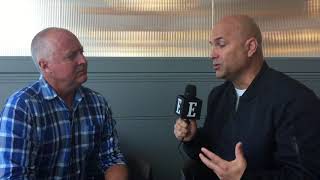
Andy Walshe, Red Bull's Director of High Performance, identifies what separates elite performers: passion, resilience under pressure, and the ability to persist over years. He stresses that time off and mentoring relationships are essential to staying motivated.
Chapters
Hi, my name is Scott Duffy with Entrepreneur magazine and Sports1 Marketing. And I'm here with Andy Walsh, the director of high performance for Red Bull and. Okay, so that sounds like the coolest job on the planet. So tell me more about what you do.
My job is really simple. It's. We get exposed to these extraordinary individuals who obviously at the top of their game in sports and business, music, arts, culture. And the framework is we try to understand how they perform, how they get the best out of themselves, such that we are able to set up processes and systems to support them. So it's fundamentally they come with a dream or a vision of what they want to achieve and we're in place to help support that journey.
What's the most common trait or a couple of the most common traits that you find in high performers?
I mean, you know, the fundamental stuff that we anchor on first and foremost is the passion. They bring a love of what they do. And you got to think about it. No matter what you're doing at a certain point in time, year in, year out, it sucks, it's terrible and it's boring and it's hard to get up out of bed that day. And without that passion, you wouldn't make it through those times because they all have this long history of work, dedication, perseverance, that smart allowed them to develop the skills to get where they are. The other thing is what we spoke about today. An interesting characteristic is the top people typically thrive when things are going terribly wrong and it's not always the case. But that capacity to bring the best version of yourself forward when it's not the ideal scenario really is a skill that we've worked hard to try and understand and also train.
There's that stick to itness that you're talking about. I was just with Diana Nyad, who was right, the first person to, I think the only person to have swam from Florida all the way over to Cuba. And she was telling me about this 35 year journey that she took. I was with Tony Hawk a couple weeks ago and he told me it took him over 10 years to create some of these killer tricks. So what do you think that these high performers do to keep them motivated over these long periods of time before they're really able to achieve peak performance?
It's a great question and I'd love to give you a simple answer, but I think, you know, we spoke about passion, that you've just got to love it because if it's not part of who you are and it's not inherently what you really want to do and achieve. It's going to be hard to push through those times when, you know, it's easy to walk the other way. But I also think they all develop their own way of maintaining motivation some, you know, I think that's the interesting cycle. There's no one way, there's, there's opportunities either to take time off. I think that's a real big part of it. They step away from that grind and they reset and reframe. I think another way is surrounding yourself with other like minded individuals. You know, you go down, you're practicing, you're working, you bring other people in. Young kids especially bring that energy and sort of enthusiasm back and you sort of gotta reset and take stock and you say, all right, it's a pretty good opportunity in front of me. If I can stick to it and if I really follow through on this dream, the opportunities could be immeasurable. And I think that's part and parcel. I mean, it's a much bigger conversation. But yeah, love for what you do and keeping the energy and enthusiasm going is the trick.
You know, you talked about the young energy and I remember I had a mentor teach me one time, he said, he said, always have two people that are mentoring you and have two people that you're mentoring. But here's the key, with the people you're mentoring, they need to be half your age. And he said what that's going to do is that's going to keep the young fresh ideas flowing and stuff like that. And I found that to be so true. One last question. What are you most passionate about today?
What I'm most passionate about today is, well, to be very honest, I have twin 6 year old daughters and I'm really. And they're twins, identical twins. So in my field that's a unique opportunity to understand sort of what's going on. And I'm really passionate about making sure that they can learn from what I've learned. But I'm not overwhelming or overbearing in that approach. I'm obviously sitting on the sidelines watching them now. A unique experience. I'm really passionate now of if we can take some of the principles we've learned from all these extraordinary high achievers and not just people like myself who have been lucky enough to sit on the sidelines for a long time and watch this, but share those ideas with the broader community and influence the next generation of kids, give the tools and tricks that we've learned down to that community so that they stand on our shoulders. I think, really that's the opportunity. And I'm trying to figure out the best way to harness what we've learned. Package it and deliver it in such a way that they engage. So that's what I'm really focused heavily on right now.
Well, that's awesome. And I look forward to you making that happen for my daughters as well.