Scott Duffy interviews Brian Smith, UGG Founder: Authenticity Business & Burgers: Season 2 Ep. 2
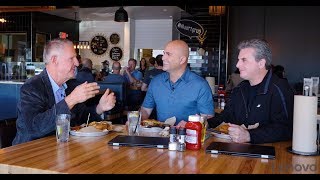
Brian Smith brought Australian sheepskin boots to America and sold 28 pairs in year one. He pivoted to surf culture marketing, hit $220,000 in sales, and shares lessons on authenticity, financing, and persistence.
Questions this video answers
500 pairs
28 pairs
$20,000
Approximately $10,000 in year two, then reported $15,000 and $20,000 in subsequent years before hitting $220,000 after changing ad strategy.
$220,000
Chapters
I'm Alan Taylor. My buddy Scott Duffy and I are in search of the best burger in America. Each month we visit a new city to try some of the top restaurants, pubs and brewhouses while sitting down for a candid conversation with some of the top entrepreneurs, athletes, entertainers and celebrities. I don't know about you, but I love talking business over a burger. Welcome to business and burgers.
We're back at Grub Burger bar and I'm told they'll be putting some of their house made beer battered onion rings on our burgers today. Can't wait to try it. We all know UGG as the iconic boot seen all around America. But our guest today, Brian Smith, did not have an easy road to success when he started UGG Australia. With every hurdle he had to jump, Brian learned an invaluable business lesson. Despite his rocky path, he built UGG into the behemoth that it is today. And he came away from the experience a hardened business expert. Today he's agreed to meet with us and dig into a good old American burger and share some of his beefy business advice.
Ryan, thanks for joining us.
Hey, my pleasure, Alan. Thanks for having me. Scott. Always a pleasure, buddy. Love you.
So you're an icon. You are somebody that I look up to. And you have an amazing story about how you started in Australia as a young guy, you came to Southern California.
Sure.
And started a business.
Yeah, well, I was an accountant down there and I hated it. So I came to California because I thought all the big trends are coming out of California. So I was going to find the next big thing and bring it back to Australia. And when I got here, it was about two or three months and I hadn't found the next big thing. But I realized, God, there's no sheepskin boots in America and they're all over Australia. So I decided to stay in California and start importing boots. And I bought some samples in because everybody in Australia owned them. I thought it would be an instant millionaire. But I didn't realize that Americans don't understand sheepskin like Australians do. So it wasn't easy. We went out and talked to all the shoe stores and they just said, we're crazy trying to sell sheepskin in California, dude. Critical thing for an entrepreneur is you've got to be able to pivot right. I got a shutout by all the shoe retailers. So I thought, well, wait a minute, all the guys I surf with at Malibu know about UGG boots because they went to Australia and they brought pairs back with them. And so we switched and pivoted to surf shops. Every one of them just said, oh my God. Sheepskin boots. Ugg boots. Those are the best, man. You're gonna make a fortune. We were just so sure we were gonna be instant millionaires that we, we raised 20 grand and we bought 500 pairs. Oh, no. Yeah. And we got them in and then we went back to the same surf shops and then they say, well, fantastic guys. But we couldn't sell them out of our shop. We just sell surfboards and trunks and wow. And they're too expensive. And this went on every single shop, you know. And the first year's sales, guess what the first year sales were.
Okay, so 500. How many boots did you buy?
500 pairs.
500 pairs. How many did you sell?
28 in the first year.
That is so.
And you know what's crazy about that is you started by selling your product to everyone.
Yeah.
And then what you did is you basically fell into some market research. You were asking people, why isn't this selling you refined who your target market was.
Well, even that, that was an evolution too. My theme is you can't give birth to adults, right? Every business, someone conceives it and then the first action's taken. Like buying samples of boots, Right. And then every business goes into this infancy and it doesn't matter if it's a product or a service that goes into the youth. When you got orders coming in and production's great, you can have a really good $10 million business in the youth. But if it's a really cool business like ahg, it'll hit the teenage years and it wants to be everywhere and you don't have the financing for it. And that's when most companies go out of business, you know, because they get out of control and then they mature. To answer the, you know, finish the question. 28 pairs that should have been trying to give up. Right. But. But no, I had all this inventory, I had my investors money tied up, so I started doing swap meets and I had my van full of product and every time I'd surf at Malibu, I had a little retail store going and people.
Out of your van?
Out of my van. And then. So, so the next year I sold like $10,000 worth. So the following year I started advertising with. I got these models and posed them on the beach with perfect hair and clothing and the boots like front and center in the ads and $15,000. So the next year I got better looking models and more expensive photographers and posed them on the beach again. And $20,000. And I couldn't figure out what I'm doing wrong. And so I was having a beer with one of my surf shop owners and he just said, ah, shut up, Brony. Cause these little 12 year old grommets from the back room and he says, what do you guys think of Ugg? And every one of them just came out and said, oh, those Ugg boots, man, they're so fake. Have you seen those ads? Those models, they can't surf. Wow.
There was no authenticity to it.
I just like instantly realized I'm sending the wrong image to my target market. Wow. And so again, pivoting, you know, I called up a buddy who was running the National Scholastic Surf Association. He had all these young high school kids and I said, Pete, any of these kids going to turn pro soon? Because I can't afford it, but I can give them boots, you know. And he gave me Mike Parsons and Ted Robinson. So instead of the expensive photographer, I just got my little canon sure shot and we went surfing and I did shots of them going to Blacks beach and trestles, you know, and, and these are iconic walks for any surfer. And when I started running those ads in the, you know, Surfer magazine and Action Sports magazine, that sales went to $220,000 just because I nailed the shooting.
From your own camera. An authentic ad with somebody who really embraces the brand.
Super cool. And that's the authenticity is critical for every single person trying to build a business.
So the birth of the brand, the book, it's been out about a year now. This story is really great because it's so many people can relate to it, starting something and you know, struggling with it and then finally hitting that sweet.
Spot that was like the three or four years of infancy, right. And when I finally. Now that I went into the toddling stage and then business started going.
Do you have a philosophy that you live by in your life?
There's probably two of them. One one is that the most disappointing disappointment will nearly always become your greatest blessing. Another one, which is, well, actually this is four little mantras that I've lived by. Feast upon uncertainty, Fatten upon disappointment, Invigorate in the presence of difficulties, and enthuse over apparent defeat. That's the fourth one. Now they're all addressing bad things, but every one of those is a positive statement. So you look at what's happening and you turn it into a positive. Man that's picked me up after. My book is just a series of disasters. Everybody tells me it's a Page turner. And I think it's because they're never sure, I'll be there next chapter.
But using those four principles, after every disaster comes a growth spurt, right?
So I was asked one time in an interview, what do I attribute my success to? And I was thinking about it. I'd have to attribute my success, whatever success I have, to my failures.
You learn a hundred times more from a failure than from any success.
So it's easier to embrace those things and go, what can I learn from this lesson?
The problem a lot of people have is that some bad thing will happen. They hang on to it, and if you can't let it go and say, well, learn from that and move on. You must live in the now, never in the future, because then that brings up fear of stuff not happening. Never live in the past because there's nothing you can do to change it.
That's right.
Just look at what's in front of you now. Hey, gentlemen, Are you ready for some grub? Yeah.
Yeah.
Today we get to try one of Grub's signature burgers, the Lockhart legend. This all beef patty is smothered in Sweet and tangy Dr. Pepper Barbecue sauce and topped with some dill pickles, cheddar cheese, applewood smoked bacon, and the star of the show, two Scheinerbach battered onion rings. The burgers came with two kinds of fries at Grub. If you can't decide on one side, then you can order a split decision. Two half orders of different side dishes. Perfect for those of us who like to try a bit of everything. All right, here we go.
Man.
That's good. This is so good. That's so good.
All right, so I'd love to talk to you about relationships and the value of building relationships in your business.
When I was forced to go out and start selling the product, you know, after those three or four hard years, I would go into the stores and I would meet with the owners and I would. It didn't take just a few years. And I figured out that the profits they were making from the product that they handled was pretty substantial. It was contributing to their overheads and becoming a real source of income for them. And so I started to realize that I wasn't selling trying to get from them. I was actually selling, trying to give them more profit.
Wow.
And they became partners. So instead of me the salesman, and them the buyer, it became friend to friend, and so we all became friends. We would surf together, we'd play golf together, and selling now became fun. So those relationships were so Key. And later on, there were several things happening. You know, years down the road when we were doing 10, 12 million and my supplier sort of abandoned me and picked up a different distributor and I was losing. You know, my retailers stuck with me. They could have all bought the opposition's product, but they didn't. They would rather sell less product for the year than pick up a knockoff. You know, just by me being honest and upfront with them, they were just like, so loyal and literally saved the company.
You know, a lot of people that have businesses with inventory will go out and they'll win that big order. But what they don't understand is that you can literally grow yourself out of business in a business that requires inventory because you have to pay for that inventory. And I'm wondering, is there any advice that you give to folks that have businesses that are growing quickly?
The biggest mistake I made wasn't a mistake. It was a lacking in me is I did not understand financing when I was broke. Let's say I just had a million dollars in sales, right? And I'm broke. I think, okay, I can fix this. I'll sell 2 million next year and then I'll have tons of money. But what I wasn't realizing that to sell 2 million, I've now got to get the funding to buy double the amount of inventory. So now I've got to deal with equity investors and all that. And then when I get the product in, I've got to have the financing to have the shipping and distribution. Then I've got to finance the retailers for two or three months, and by the time I get my money from them, I've doubled the sales. I'm still broke. The bigger I got, the bigger the problems became because I didn't understand the financing side. Looking back now, I would have brought in somebody who could have taught me that before I got into the, you know, the 10, 15 million range. Because then, you know, and let you.
Work your strengths while they came in and they focused on the money and the cash. What is the number one lesson or piece of advice that you give to.
Entrepreneurs today if they're starting out? It's almost a requirement to have a certain level of ignorance, because if you knew what you were in for, you wouldn't start. If I knew what I was in for with the seasonality, the amount of inventory, that I would never have done it. The other thing is just have patience through that infancy, because that's when 90% of entrepreneurs give up. Yeah. And it's so sad.
How about listening to your family and friends when they tell you you need to give this up. Did you have any of that?
All the time.
How did you deal with that?
Emotional.
My first few warehouses were in my second or third bedroom. Right. So people were always coming over the house and they're always saying, I thought.
This was supposed to be easy.
You're crazy, man. Yeah, you're crazy. No one's going to buy those things. Give up. You know, that happened for the first three or four years. You have to have the belief. Passion is an overused word, but belief, if you believe that this really has a value and you see the end result of it, hang in there.
Every time I'm with you, I learn so much. And I just want to thank you for joining us today.
This was a hoot. Yeah, it was a great concept. I love it. Oh, look at that.
Brian learned everything he knows about business the hard way through personal experience. His story left us with some great fun. Food for thought. The most disappointing disappointment will often become your greatest blessing. You will learn much more from a failure than a success. Don't dwell. Learn what lessons you can and move on. Relationships are key. Loyal business partners can save a business when the going gets tough.
Next time, Scott and I sit down with Sam Karamian and Oliver Graf, co founders of Big Block Realty. Big Block Realty sees themselves as the change the industry needs. They strive to be the most agent centric platform in the country and they must be onto something because they recently landed number 26 on the Inc. 500 and they've been named San Diego's best real estate brokerage four years running. Join us and hear more about Sam and Oliver's unique approach to real estate. Next time right here on Business and Burgers.
Check out more episodes of Business and Burgers and our BNB blog at our website, businessandburgers. Com. And don't forget, visit business and burgers on Facebook and give us a big thumbs up. See you next time right here on Business and Burgers.
More from Scott









Business & Burgers-Sequence Collection bracelet for National Entrepreneurship Week

