Scott Duffy interviews David Meltzer: Three Steps To Manage Through Crisis & Uncertain Times
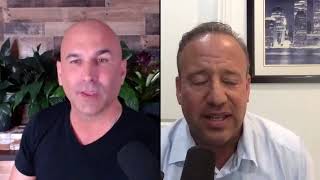
David Meltzer shares daily practices to manage crisis: clarify what you want to give and receive, identify who can help, and define your occupation. He recommends four mental shifts: take accountability, forgive yourself, find the lesson, and practice gratitude. Ask successful people what they need and what they'll pay for it.
Chapters
You.
Good morning, everybody. This is Scott Duffy. And welcome to what now with Scott Duffy. And I am really excited today to present to you from the what Now Academy a very special guest. This is one of my favorite people on the planet, probably the best and most influential mentor that I've had in maybe the most pivotal period of my life. And I'm going to bring him on here in just a second. David Meltzer. And so let's see, I know we got Dave here. Here we go. Dave Meltzer, good to see you, brother.
I was going to say don't give any more bio or any intro because that may be the best intro I've ever gotten in my life. So now you're going to devalue what you said by listing out a whole bunch of accolades.
Okay, well, so, well, here's what I'm going to do. I'm going to list out the accolades, but the other thing that I'm going to do is, is I'm going to share later in this, in this, in this segment, I'm going to share.
Really how you impacted me. I mean, I've shared this story all over. It's in my books, it's in the things I do. But I want to share a very specific moment that you stepped into my life and some, some counsel that you gave me because I think it's also a great lesson for other people that have gone through big shifts in the last 12 months as a result of COVID But first, the accolades. So for those of you who don't know Dave Meltzer, first of all, I don't know where you've been, but for those of you, and for those of you who do, let me just go through Dave's background again. Dave is the co founder of Sports1Marketing. He's the host of entrepreneurs podcast, the hit podcast the Playbook, which has been a top 10 podcast on Apple and iTunes. He's a top 100 business coach, a global public speaker and a three time international best selling author who has been honored by Variety magazine as its Sports Humanitarian of the Year. He's also an Ellis Island Award Medal of Freedom winner and he has, if you haven't seen it yet, Dave has a new hit show that's on Bloomberg called the Two Minute Drill. And Dave is not only the star, but he's the executive producer of the Two Minute Drill. So go check it out on Bloomberg. And I think David's also going to come to Amazon Prime. Is, is that true?
It's on there already. Yep.
Okay, cool. It's on there already, so make sure to go and check it out. And if you're not following, Dave already, Dave, where can people find you on.
Social media at David Meltzer or everything? David Meltzer, David Meltzer. If you go to Dave Meltzer, it's the World Wrestling Federation, guys. So people get us confused. So David Meltzer.
Okay, well, here's the thing. Once they see both you guys, they won't get you confused because I don't think that you look like a wrestler. Right.
Okay, so here's where I want to start. The last 12 months have been really tough on, I think, everybody. It doesn't matter if your company has been really successful and you've been really well positioned during this period, or maybe you're a business owner, maybe you're in the live event business, you're in the restaurant industry. You're in a space that's been hit particularly hard. Maybe you've lost your business, you're fighting to save your business. You're recently unemployed, you're furloughed, maybe you're a consultant and you've seen most of our consulting contracts go away. The question I have is for these people who maybe don't know how to restart, maybe they don't know what to do, where is the best place to start to get back into flow? As we come out of this Covid.
Period, you know, I've created five daily practices to help people transition into flow. And I think it's indicative of the story that you'll probably tell because you were at a point in your life, pre pandemic, that you need to get back into the flow. You know, you're a guy who was dealing with the spheres of influence that I love to be in. The Richard Branson's of the world and, you know, the biggest network tv and, you know, everything that you did was extraordinary. And yet both of us had periods in our lives where we fell out of the flow. You know, me, myself, I lost over $100 million. I was running the most notable sports agency in the world. And although all of my outside surroundings seemed as if I was in the flow, I had this interference, voids and shortages in my life that were creating this obstruction to what I'm truly connected to and through. So I created five daily practices to help people. Never more valuable than today with the pandemic coming in through and outside of it. Number one, most people, they're trying to find their why. Don't you already know your why? Your why is connected to you at all time. You are here to serve. And you just need to know your what. See, our why is always to give something or to help someone. We need to know our what, not, not our purpose. Right? We know our purpose. We're connected to our purpose at all time. And so we just need to have that purpose be greater than the pain. And to get the purpose to be greater than the pain, we need to know our. And so how do we know our what? I found a simple way. Every day, take inventory of your what. Say to yourself, what do I want today? Personally, what do I want today? Experientially, what do I want today? To give? To provide service or value or production? And then what do I want to receive? Which is the most difficult one, which is one that I worked with you on, is, you know, what do I actually want? Am I worthy of receiving it? Am I thinking big enough? Am I asking big enough? All of these things and they don't have to be balanced, right? Your what's don't have to be 25, 25, 25 and 25%. Now here's the nuance that also is important. Don't be afraid of being a hypocrite. So many people are.
What does that mean? Because I've never heard that. What does that mean?
Yeah, so we're all stuck in these snapshots from our past. So when we're with our family, like in, look, when you're with your mommy, Scott, you're stuck in a snapshot sometime of an opinion that she has and she'll put you in the snapshot of when you were 13 or 18 and you'll say something at 52 years old and she'll like, oh Scott, why? Because she's putting you in a 16 year old snapshot. So you cannot be afraid of being a hypocrite. Meaning this. Don't be afraid to stand up for yourself and say, I've changed my mind, I've changed what I'm about, I've changed who I am. I'm not 16 year old Scott, I, I'm 50 year old Scott and I change. And you don't be afraid to change your mind every day. People are afraid of going to their high school friends when they tell that story about them and they sit there instead of telling them. I get it, you know, I was that guy. I'm not today. You know why? Because I'm a learner, I'm a grower. I'm sitting here accelerating. I'm not the same person as I was yesterday. In fact, I know one thing to Be true about myself. I don't know what I don't know. So tomorrow I may tell you I didn't know what I was talking about. Today I'm a new opinion and a new person. If you take inventory of your values and you know your what now, you could take a second step to get into the flow. Know your who. This may seem out of order to people. I immediately go to the who. I believe that the easiest way to get my what is to find someone that has my what or is where my what and ask them for directions. You don't have to pay the dummy tax. That's why they created, you know, the, the gps. They find out where you want to go and they give you directions. So who knows who's the source of gps? People who sit in the situation that you want to be in. You're what? Personally experientially giving and receiving. So I spend my initial inertia finding out who can help me. And then as a as to me being in the flow, I, I make sure that I ask enough questions to find out how I can help them. But I do my woo my who first. After you know your who, now we get pragmatic. One of my favorite lessons, know your how. So many people are like, yeah, but how do I do it? I'll tell you how to do it. Study. Now, I'm not talking about academic study necessary. I'm talking about occupation. So all these people talk about work and job. I had for years told people, I don't work. I, I have activity I get paid for and I have activity I don't get paid for. Don't say the word work. It creates resistance. I have moved to occupation. What's your occupation is how you can get it done. What does that mean? What occupies you, what occupies your attention, what occupies your intention, what you think, say, do believe. Even your unconscious competencies of personality traits, characteristics, obsessions and addictions that occupy us. We want to figure out what our occupation is. And if we do, we then can study what we want. Because we've already indicated at the beginning of the day, this is what I want. So now I make that my occupation for the day. The what and the who become the occupation. And I use my calendar, what I have planned, what I don't have planned, and my sleep in order to effectuate productivity. How productive I'm going to be. Accessibility. How accessible am I to other people? This is part of the flow. And what, how am I accessing what I want? Accessibility is a key component of being in the flow, along with productivity, which incorporates, as our friend John Asaroff says, the law of Goya. Get off your ass. Don't just sit about and dream. Don't just focus and pay attention. Give your intention. But if you take attention plus intention, you will equal coincidence. Mathematical equation of luck.
Attention plus intention equals coincidence.
A mathematical equation of luck.
That. That is. That is awesome. The mathematical equation of luck. Okay, I. I want to go back to something you just said that ties in, which is you talked about receiving. And I think that what happens when people sometimes, particularly you and I, spend a lot of time around trainers and coaches and things like that, and it's all about giving. All they talk about is giving. And they're not good at receiving. And what they find is they attract the opposite energy. As a result, they're surrounded by takers. Can you talk energetically about the role in the strategy of becoming a good receiver?
Absolutely. And it's a matter of scarcity and abundance. So, big portion. I was a millionaire nine months out of law school. Big portion of my life is I thought I was philanthropic, I was a giver. And I learned the more that I give, the more I would receive. The problem with that is it's truly a scarce saying, because what happens is it's a trade or negotiation. I would give so I would get acknowledgement, or I would give so I would receive or credit. And it creates resentment and guilt. And it also attracts bleeders, right? People that will bleed us. Once I shifted the paradigm from what I. This is the world of for me, believe it or not, givers live in a world of for me. They buy things they don't need to impress people they don't want. They trade what they give to receive something else. Or. And that could be acknowledgement, it could be, you know, recognition, it could be love, you know, all of these different things, attention. But they're always trading. If you live in the flow, in a world of more than enough, more than enough of everything for everyone, if you have faith that there's more than enough of everything, then you're going to want to receive first. Why?
Interesting.
Because if I'm in the flow, if I truly believe in abundance, I want to have as much as I can because I can't give what I don't have. And I take a different energy because instead of everything happening to me as a victim or for me, it now happens through me. So I have a different motivation or energy when I'm receiving. Because instead of feeling guilt, resentment, trading, negotiation and scarcity, I now feel abundant that I am receiving all of this to come through me with appreciation, which means I can add my value to it and give it away. I now have that same good feeling about giving when I receive as I did before. Most people won't receive because they feel resentful or guilt. Those two are the things. And those are ego based consciousness that creates resistance, void shortages and obstacles to being in the flow.
Interesting, interesting. You know, I was talking to Dave Austin this morning, our mutual friend, and one of the things that we were talking about was the difference between the highest performers, number one in the Olympics, or isn't that in number two? And he was talking about the it factor. And I asked him, he said what is the it factor? And what he said is the it factor is. It's, it's a level of trust that you have that even if you don't know how you're going to connect the dots right now. You put in the practice and the time and you have this belief in this trust that it will all come together. And the question I have is, number one, do you agree with that? Number two, if there is an important, if trust and trusting the universe and believing in abundance is so important, how do we develop that trust when we can't see, we can't see how we're.
Going to get there?
Does that make sense?
Yeah. And I, and I agree and I state it in a different way and hopefully it'll resonate with the same or different people because of it. The first step of the ID factor is to be happy where you're at. And a lot of people don't take this into consideration because you want again.
Because that is a big deal.
Yeah. The first step is to be happy where you're at. And because what we do, you asked how can we have the faith or the trust? Well, number one, you cannot understand or have faith or trust unless you're happy where you're at. That doesn't mean you're not pursuing your potential, but you have to be happy where you're at. You're at the right place at the perfect time. Now the next. And I call that the law of gravity. Right, Law of gravity. My two feet are here, I'm happy to be here. Then we have the John Assaroff law of Goya which says this angle to what you want. Now notice I don't say go get what you want. I believe in the enjoyment of the consistent, persistent pursuit of your potential, not somebody else's, not what's missing, not what you don't want. Right. Remember the law of luck. You know, we want to pay attention and give intention to what we want, not what other people want or what's missing or what we don't want. Because 99% of the people, they are paying attention to what they don't want. It's called worrying. Right? Worrying is wishing for what you don't want. Think about how much time you and I both, we. We both could have literally made a billion dollars, saved half of our relationships and so much time and energy if we didn't worry throughout our life, right? And we're just wishing for what we don't want. We're creating interference to the flow. But law of gravity to the law of attraction. The law of angling and attraction says this. I'm doing everything I can. I have a desire, which Dave Austin would agree with. I have a desire that I must be what I can be. So I'm enjoying the consistent, persistent pursuit of what I can be, my potential. But I know I have this trust or faith and wisdom as earlier stated. I know I don't know what I don't know. So I call it angling to what I want. Meaning that along the way there'll be failures, mistakes, and pain that are only indicators, not stop signs. They're indicators that I have a better place or a better position or better situation to be in. And that's the faith part, which I call the law of attraction, which says happy where I am. I do everything I can to reach my potential, but I have faith and trust that I'm going to end up somewhere better. So instead of, oh, this isn't what I planned, I'm going to quit. Stop. No. What lesson is there to learn? Because pain's an indicator. You have a lesson to learn. And if I learn the lesson, the pain goes away and I end up somewhere better. And so that's where faith and trust is a foundational principle. But you need to take the first two laws, the law of gravity and the law of, of, of Goya, and put those into effect so you truly can implement faith and trust.
You know, one of the things that stands out the most about that was so, by the way, you guys. So when I, when I, I read, I study like crazy. I'm, I'm an avid, like meditator and energy, like all that stuff. And you can go out there and you can find, you know, today Sri Sri Ravi Shankar, you can find Sadhguru, you can find Deepak Chopra. The person I always listen to around this stuff is Dave Meltzer because of how.
Because I've stolen all their. I just literally. I just literally interviewed Sagura yesterday.
But here's the thing. What you do is you have this ability to create a practical application of the principle in modern life, basically. And I think that that's the differentiator. And I think that the gurus and mystics and things like that of the past maybe had the right message at the right time and were able to say it in the right way so that it resonated. And that's what I love about. About the way you teach. By the way, if you haven't read Connected to Goodness, go buy it today. It's on my shelf.
Or. Or I will give it to you for free. I'll ship it, pay for shipping, sign it davidmeltzer.com so if you can't afford it or you don't want to pay for it, at least allow me to change your life and give it to you. Pay for shipping. If you like audiobooks or the ebook, I'm happy you can. David melter.com just. Sorry to interrupt. I also, before I forget, Scott, because I have add. I h. I had SAD guru yesterday.
Okay.
And talk about transcoding, because that's what you're saying, Dave Meltzer. We study the same stuff, but I really believe one of my superpowers is being able to articulate the quantifiable value in terms in which people can understand it, because I learned from Lou Holtz, the coach at Notre Dame. Not what you say, David. It's what people hear. And so look for what they're. Look for what they want to hear, not for what you want them to listen to. See, when we're speakers, I see a lot of guys out there. Some are my friends. They don't understand, you know, why our speaking career has accelerated so much and theirs has stayed the same because they're still speaking to people instead of understanding what they're listening for. Right. I'm. I'm trying to understand first, what are people listening for so I can then communicate what they're listening for in terms of what they're listening for. Here's the gem that I got from Sard Guru. And this is transcoded. He said it in his own eloquent, mystic way. Yeah, basically this. If you want to live a long life, this is gold, bro. If you want to live a long life, either be miserable or productive. Let me explain. This is cool, right? So what do you mean, Dave? So if you're miserable, time goes so slow, right? Like, if you're miserable, you're like, oh, this is the longest movie. It's right. If you're a miserable person, time goes really slow. But the only other person that time goes slow for you live a long life is productive people. Oh, man, I got so much done today. Right? Time has a different meaning. So you make your decision. You want to live a long life. If that's in your what, then? Either be really miserable or really productive. I prefer productive.
Amen. So one of the things I'm taking away from this part of our conversation is we're talking about transcoding. We're talking about the power of being able to translate. We're talking about the power of language. And I remember when I worked for Tony Robbins, he used to always say, language is everything, right? You change the one word, this. So I want to give a very practical example of how you shifted my language and kind of. And created the change. So you were just talking about.
Gosh, I was writing so fast. And I'm gonna get. I'm get this wrong. But anyway, we were talking about. There was one word that you were using. And can I just tell you, I'm not wearing my glasses.
Is it occupation? Is it occupation? What occupies us?
It may have been what occupies us, but. But I'll just go to what you taught me, the lesson. So the lesson was I reached out to you because I said I wanted to. I was repeating a mantra every morning when I started my prayer. And I would say, and I still do to this day now. I've been saying it for years. Dear God, my creator, my infinite source, please show me what I need to see to. To. To increase my awareness. And. And basically at the end, I was saying, achieve or find something about. About my potential. And what you said is the way that I was saying it made it look like I didn't already have this potential inside me. And so your shift was access more of my pure potential. And the word access more assumes I already have it. And so again, the shifts just in language that you create are really powerful.
Accessible was the word because we sh. Remember I said, as we are productive, accessible and gracious with ourselves, meaning providing them a service or valuable. But accessible is key because it puts you in the flow. It's not just being accessible to others. It's accessing what we already have. So let me give you the classic example evolved from our conversation. Most people try to get healthy. They try to get wealthy, right? They try to get happy. No, you are happy. You are wealthy, you are healthy. You need to figure out what are you doing to interfere with that.
Oh yeah, right.
What am I doing to interfere with my health? Am I not exercising the body enough? Am I eating to the wrong things? What am I doing to interfere with what I'm already am, including when I see the mountains in front of me. I spent years of my life trying to go over them, under them, through them, around them, oversell them back and sell them, lie to them and cheat them. Instead, when I realized those mountains are what those mountains are created by is inside of me. That which walks with me and inside of me created that mountain. There's no reason to go over it, under, through it. I'm part of that mountain. It's part of me. I just have to access all of these things by clearing the interference, what with what I already have, my health, my wealth and my happiness.
And by the way, for people who are wondering what the prayer was. So the prayer was, dear God, my creator, my infinite source, please show me what I need to see to increase my awareness, raise my vibration and help me access more of my pure potential. And that's what we worked on together. And, and, and it's been years. For those of you who are just joining, let me just reset real quick Dave. For those of you who are getting to see Dave for the first time, this is a treat. Make sure to follow Dave Meltzer everywhere on social media. Dave for years has, has not only been a dear friend but, but a mentor who really created incredible change for me, helped me to create incredible change in my life by providing those little shifts, those lessons around little shifts that I needed to make in some critical times in my life. And so let me just share your background again, Dave, the accolades for people just joining. Dave is the co founder of Sports1Marketing. He's the host of entrepreneurs podcast the Playbook, which has been a top 10 podcast on iTunes. He is a top 10, a top 100 business coach. He is a global public speaker and three time international best selling author. He has been honored as Variety magazine Sports Humanitarian of the Year when the Ellis Island Big award I believe, the Medal of Freedom. Just an incredible dude. And I want to share Real quick Dave, that time I keep referring to where you really stepped in and helped me. I think sometimes as entrepreneurs, as business owners, we're in a really tough spot because part of our job is to put on a brave face, to put on a brave face about how our business is doing, how we're doing in order to inspire confidence in our team from our investors. Things like that. And I was going through in a time in my life where I had lost a bunch of money. And you've shared how you've lost as well and turned it around. And I hit a point where I just. It was like, what do you do when you don't know what to do? I didn't understand because I had such an incredible network. Everyone I was talking to was telling me that I was doing the right things. I mean, I had reported into Richard Branson, I'd done Fox. So I did all this stuff, and I was completely upside down. And on what I think is the worst day, I had the hardest day. I was in Costa Mesa, and I was driving, and I just started bawling my eyes out. And I pulled into a parking lot, and I'm like, I don't know what to do. I'm going to call Dave now. I was able to have this conversation, and this is an important lesson, because Dave has been vulnerable. You see, when you're vulnerable with other people, it creates this connection in this rapport. So I felt safe, not only because he was my friend, but because I called him.
And Dave said to me, he said, starting today, Scott, we're going to stop working on your business, and we're going to start working on your head. I'm actually going to cry right now. Me, too. We're going to start working on your head. And he said, here's four things that we're going to do. He said, number one, starting today, you're going to take accountability for everything in your life. It was no longer the market. It was you, you know, and that was a big deal. Number two, you're gonna forgive yourself for everything. And I gotta tell you, that was the hardest part. Number three, he said, you're gonna find the lesson in everything. And I'm like, yeah, right. He said, I'm gonna help you. And number four, you're gonna be grateful for it. I'm like, you got to be kidding with the grateful part. And he said, starting today. He said, take out your phone. He said, set an alarm. And he said, every day, when that alarm rings, he said, you're going to say three things out loud that you're grateful for, and you're going to feel it. Feeling was important. And I'm like, this doesn't make any sense. He said, but here's the thing. Do it for 30 days. I promise it will change your life, because gratitude changes everything, because it shifts your perspective from what you don't have to what you do have. Let's rebuild that muscle and that wiring.
But here's what really. And this. This tells me everything. This is everything you need to know about Dave. This freaking guy would not let me get away with not calling him every day for a year because he checked in because he wanted. And here's the thing. For entrepreneurs that may be having a tough time right now, maybe going through struggle, maybe you're trying to. You don't want people to know what you're really going through.
People who have been successful have all been through it, right? And they're willing to help, and they want to help. And the answer may be one phone call away, like it was with Dave. Dave, what would you say to those people right now that are struggling as a result of what's happened with COVID and trying and feel alone, isolated, and without resources?
What it basically told you in the same thing, but in a different way. You can't find outside of you what you can't find inside of you.
And I'm still choking up here, listening because. And I'll tell you why real quick as I get to that inside, that same advice. If you don't listen to that advice, I use the bravest thing I ever did as a coach. A woman, I won't have her name, but she's pretty public about it. Called me bawling. Her husband had committed suicide about a week earlier. And she called me crying, and. And I understood that. And she could barely get it out. But she said, my son just killed himself because his dad did.
And she wanted my help far worse than pandemic. Yeah, I was brave enough to give her the same advice. Scotty. Imagine telling someone whose husband killed himself and then their son because the husband killed himself. Killed himself. I was able to say, what you got to do. We got change inside of you. You have to take accountability. She immediately screamed at me, yours. It's not my fault. It's not my fault. I said, whoa, whoa, whoa. You're speaking liability. That's blame, shame, and justification. There's no fault involved. This is like, you're not liable for your husband or. But you are accountable. You need to ask yourself, what did I do to attract this to myself? And what am I supposed to learn? And you got to work through forgiving yourself. You have to work through finding the lesson and being grateful, finding the light, the love, and the lessons. And believe it or not, she still is someone like you that will tell everyone this exact story, how it changed her life. And I am telling you today that you have control of three things and this is what I want people to focus in on. Number one, like I told Scott, you have control of your mindset. Use gratitude, forgiveness and accountability to reset the inspiration in spirit. Realize that motivation will get you up, get you back up, get you started, get you back started. But it's not going to get you there. Fear will motivate you, but it's not going to get you there because it'll suck your soul dry of its energy. And we confuse motivation and inspiration. I want inspiration for people. I can motivate you. I can bring the best out of you. I can scare you. I can do all the things perturbate you. I've read Marshall Thurber. I'm very well versed in how to motivate people. But I want to be an inspiration to get you there. You need to take control of your mindset. Two heart set people don't realize this.
I have control of my feelings. And you know what actually helps you control feelings, Scott? Not logic. How many times have we sit there talking to ourselves about the way, oh, let it go. Why am I so. Why am I worried? Why am I frustrated? Why am I angry? And logic tells you there's no reason to be worried. Worry doesn't help. It's a wasted emotion, you know. But you know what does help? The way we feel. And you take control. Action.
Amen.
People don't realize, man, when you take action, you get in the pursuit. It takes care of the feelings. So don't try to reason with feelings. Don't try to utilize logic. With feelings. You use action. Get off your ass. Rule number four is do it now. Right? Do it now. 100% of the things you do now get done. When you're doing, when you're active, it changes the the feeling. Let me give you an example. I have worked out on and off, hopefully mostly on my entire life. I'm 53 years old. I played college athletics, two different sports. And I have will tell you this. I have never started out feeling like I wanted to work out. But I've never ended a workout like loving, like, oh, this is gonna be great. I've never ended a workout. Not happy I did it. Yeah. And that's because action resolves feelings. So you have control of your mindset, your heart set. And then finally you have control of your conscious, which affects your subconscious, which dictates or communicates with your unconscious, which sets out your frequency. You talk about frequency or vibration in your prayer. Because we can only be aware of that which vibrates equal to or less Than us. We raise our awareness by raising our vibration. The way we raise our vibration is through our frequency of unconscious being. I call it quantum. But what impacts it? We have control of our conscious. It'll impact our subconscious. It creates the neural pathways, the 40,000 of the same thoughts that communicate with our unconscious, which then communicates a frequency that allows us to be more aware. To make things simpler in our lives. The higher your awareness is, the easier life is. For example, the greatest awareness that I want to to have is the awareness of buying or selling. Meaning if I could have a pure awareness of when to buy or sell, I'll never have to work.
I go right to the gold market right now, is it time to buy or sell? And I just keep buying and selling. I don't have that awareness, but I'm.
Working on it, you know, so two things that just really stood out to me. The first is I want to ask you after I make this point about momentum. So you get started. And then one of the things you shared with me is the exponential factor that kind of leads to true momentum. So I want you to talk about that. But first.
What I did is I took the gratitude exercise that you gave me. I've been doing it for years now. I actually wanted extra credit, so I do it twice a day. I do 7:30 in the morning, at night. I wanted my kids to do it. So. Dave, you'd be so proud. Lily and Lexi, they do gratitude whenever they're with me because. So here's what I did. This is like how you. You tweak these things. So I made the ringer on my phone. My kid's favorite song when I started this. So it was literally that stupid purple dinosaur Barney song. It was I love you. I know they would hear that. And they got conditioned to say thank you. That's what we do, is we all thank you. So today they do this. The alarm rings. Now they're just like, ah, gratitude, right? And then they do the three things. So that's the extra credit thing because you want to pass these things onto your kids. The other thing that I did. So now I don't just do gratitude in the morning. Now what I do is somebody said, if you could do like, anything, what would you want to? And this is like a year ago. And I said, I just want to love more than I want to be able to give. Like, I just. I just want to love. And what they said to me is, you can only love as much love as you have in yourself and for yourself. So you have to become a better container before you can have that goal and love more than anybody. So now I say three things that I'm grateful for and three things I love about myself. And that probably sounds really cheesy to a lot of people, but gosh damn, does it change the way you wake up in the morning and feel about yourself and perform your every single day?
You nailed it. And in fact, the two most powerful words that have changed in my lifetime, 11th grade, I studied existentialism, Kierkegaard, and I learned I am. And my genius teacher is like, these two words are the most powerful words. And at 11th grade level, I'm like, oh, I know what I am is. You know, I get it. Well, I'm 53 years old and I have studied I am. And the way that you have described what you do when we say I am love you, then will be loved.
That's right.
I am happy, I am healthy, and that's exactly what we do. And I don't care how corny or cheesy. Let me just tell you this about what other people think, right? I'm a man who's on a mission to empower over a billion people to be happy. I have been laughed at, scoffed at, and made fun of so many different times in my life. Never more than when I told people I wanted to play football in college. I really evoked a lot of humor. But guess what? In the end, no matter what, I set forth to do the same. Thank you. And I'm going to give you some credibility in that mission, by the way, because they always end up applauding me. They laugh at me, they scoff at me, they make fun of me, then they applaud. Let me tell you this. Out of all the things that I do, all the mission and the content and everything that I do, there's two things that people will tell me change their lives. And both are things that I learned before I was three. One is to say thank you twice a day before I go to bed and when I wake up, period. The other one is to ask both things, right? You gotta ask, and that's part of receiving, etc. But those two things people will tell me, you changed my life, Mr. Meltzer. I say thank you or I ask and ask big and ask often. And that's what I teach, asking and loving. With that gratitude, man, you're there.
So earlier I talked about. I said, something just came out. What do you do when you don't know what to do? I asked you that question in the parking lot. I don't know what to do. And I said.
And you said to me that when you were asking yourself that question, what you learned was to ask two questions. What do you need? And what are you willing to pay for it?
Oh, yeah.
So. So this is. So if you're in a position today where maybe you're not sure what to do. And we'll talk about this in a second, too, Dave. I think a lot of people, when they're in transition, are looking for the perfect thing. And so we want to talk about the legs feeding the lions. Okay. All these lessons I've learned from Dave.
But.
But the two questions. Because. So what Dave did is he had me write down a list. He said, I want you to write down 20 people that you know, that you know are killing it right now. And he said, those people that are killing it, call them, he said, and ask them. Because people that are killing it, they know what they need, and if they're making money, they're always willing to pay for it. And so my approach was, what is it that you need? And by the way, I'm a resourceful guy. Like, maybe I can do it. Maybe I know the right person. If I know what are you willing to pay for it? And then I just pitch myself for everything. And that turned into business, which turned into momentum. Dave, can you share how we create momentum exponentially?
Yeah. And you have to understand that negative behavior works in the universe's favor because of compound interest and acceleration. Meaning this is that it takes 90% of our effort to get to a place where we can be aware of any result. Therefore, it works in the favor of negative behavior. Let me explain why. If, for example, we drink and do drugs, we drink and do drugs 90% of the way, until all of a sudden we're like, whoa, this may be a little problem. You know, I'm starting to lose my money. That you're already 90% down the road. Well, why is that a negative? Because we don't see the negativity. It becomes even a duplicative problem because we don't see the positive results. So if I say to myself, I want to go work out every day, well, it takes 90% of the effort to see a result going, oh, hey, and everybody's been there, right? When they're dieting, no result, no result. Then all of a sudden, one day they're like, whoa. Well, it's even worse for entrepreneurs. Yeah, it's even. Because the segmentation is much longer. I say, it's 17 and a half years, segmentation. What does that mean? If I told you Scott, you'll be a billionaire in 20 years, you're like, whoa, really? But here's the problem. In 10 years you're going to think that you should have a half a billion dollars, that you're halfway there. Yeah, well that's not the way it works. Yeah. At 90% of the way there, in 18 years, after everyone's laughed at you, scoffed at you, made fun of you, you questioned yourself, you put all this investment of your time, em, money and relationships into it. At 18 year point, you finally are 25% of the way there. And then it's the 19th year that you're 50% of the way there. Then the last 5% that 20th year, you get to be a billionaire. Yeah. And meanwhile, before you get to 18 years, because of the exponential value, things double. Right. And this is how momentum is created. Through consistent behavior, persistent behavior in the pursuit of your potential, angling to what you want, having faith. You want something better. Because if you stop, if you zero out, this is another part of exponentiality. I say it's X to the zero. When you start X to the first day one or segment one, X to the second, X to the third. Well, if you zero out of a behavior, it's X to the zero again, which puts you back to one. So two minutes a day meditating is worth more than two hours on a Saturday.
So that's, that's, that's the killer point right there. Is that, is that, Let me, let me use like, go back to your exercise example. So let's say there's two people that want to lose 10 pounds or they're going to compete for a month. Day one, they, they eat right, they exercise right. They get the power of that to the first power, right. To the second power, to the third power, the compound momentum. That happens Saturday, Sunday comes, one person totally blows it goes and eats whatever they want. The other person works out. You zero out on Monday and that person has to start over. You get to the end of the month, day 30, one person loses 20 pounds, one person loses two. What's the difference? One person didn't zero out. They had the momentum of the universe behind them for 30 days, exponentially compounding. And the other person had to start over at zero every day, every Monday. It's simple, right?
Absolutely. And you're forming, you're utilizing the conscious continuum to momentum things as well. Because the way that our actual biochemistry is set up is that you have data that's inputted every Day. And so your cellular memory is stupid. First of all, it relies on the way you see things, smell things, hear things, touch things, and taste things. And we all do that differently. And our memory, our short term memory stinks, meaning we need to do it every day. So it starts communicating to our subconscious. Now this is where people get lost. Because there's this thing that people say, habits are formed in 21 days, right? That's when a neural pathway is. Yes, neural pathways are formed. And then it goes from being one of the 10,000 new thoughts you have to one of the 40,000 subconscious, continual thoughts you have. Here's the problem that doesn't effectuate your personality, your characteristics, your obsessions, addictions, or your frequency or your energy. What you need to do now is take into account what your quantum being, what your true self is that you've inherited from four generations or from multiple lifetimes. So let me give you an example. If what people say are true, you should be able to stop drinking in 21 days if you're an alcoholic and never want to have another drink again. Yeah, but that's not true because your quantum being, you may have inherited this obsession from four generations or four lifetimes. So it's going to take you a lot longer to continue to input the data that drinking is not good for you, that it's interfering with what you already have, your health, in order to shift the quantum being that you are. So whether it's this lifetime or the next, when they talk about breaking the chain, right? We want to break the hereditary chain. And you see it in all types of obsessions, of ego based consciousness. Not just drinking, drugs, eating, exercising, academia, all these things. We can program ourselves through consistent, persistent behavior, this exponentiality that we talk about in the short term to build these habits, to get the results, but also to understand the time continuum of exponentiality and compound interest in the longer term effect of knowing that we may not be aware of our results until we're 90% of the way there.
Yeah, yeah, that's, that's, that's just awesome. Now a lot of people that are okay, so now they understand how to develop momentum, they, they're thinking about maybe what it is they're going to do. Maybe they're, you know, in transition, maybe they're shifting their business maybe, and they think they need to come up with the perfect thing. And I remember one time you talked to me about this idea of the legs feeding the lions. And you said, scott, this is where a person starts. Can you share that story?
Yeah. So you know, Miracle on Ice is one of my favorite movies. Herb Brooks coached what was ultimately voted the greatest sporting occurrence of the century. Not decades, century, 100 years. And basically he was training inferior hockey team to beat the professional Russian team, which he ended up doing and getting the gold medal. He would say he would run him to death. The legs, feed the lion the legs. So what I say is this. Take inventory of your skills, your knowledge and your desire. Take inventory of that and say to yourself, what do I do that's synergistic and supplementary, aligned with what's doing well right now, what's aligned with what's stable right now. And then also what, where are my capabilities, skills, knowledge and desire aligned, supplementary or synergistic to what may be doing well in the future. But where you want to lay is in the stable side of what's going to pay me today. See, money. What, what provides in business, money provides two things. Time. Yeah. And opportunity. Time and opportunity. The more money that you have. And so people will go ahead and put themselves into a defense efficient position because they'll go ahead and say, you know what, I'm going to go do this. And then what happens is the primary money source that they had is diminished because they're putting all their focus in onto something that's not always evolved yet. And so then they end up running out of money on both sides and then they can't get either done. Where if they would have leaned into their capabilities and looked at saying I need more time and money from what I'm doing today. Because if I get more time and money from what I'm doing today, I'll be able to feed another set of legs and then those legs will feed me. And that's how the terrific entrepreneurs work. When people look at, you know, and I'm blessed over the last 16 years to be able have built off of an initial idea of going around asking people what do you need and how much are you willing to pay for it? I called it the margins of millionaires. And then build off of that, continually do that while I build a second thing. And that's how I was able in the last four years to take what I do really well. And then all of a sudden I had plenty of time and plenty of money to build my brand. And all of a sudden the speaking and the content and the TV shows, all the things that I've seen other people destroy their lives pursuing something that isn't aligned, synergistic and supplementary to their capabilities.
Big hit. And they put Everything.
The lottery ticket. The lottery ticket.
The lottery ticket, yeah. So. Wow. So I think I got so much I want to talk to you about. Bear down. So we're talking about the lottery ticket. We're talking about the. The legs feeding the lions. We're talking about if you're in transition, it's almost like having the legs underneath the tabletop to create a foundation so that when you energetically. You're feeling. You're feeling better because you know that your rent is paid, your car is paid, those things are paid, that you'll be able to show it better for that other thing. Right. As you bring in. As you're bringing more, more and more cash.
One of the things that came up yesterday with somebody that I was. I was working with was they were a situation that was similar to something I've been in. And I think you. You talked to me about it as well, where you come out of a period where there was loss. So there's a lot of people right now that may have lost a restaurant or they may have lost this or that or the other, and they're trying to get themselves that momentum for whatever that next thing is, but it feels like they're carrying a ton of weight from the past. They can't outrun the debts or the collapse of that thing. What do you tell that person that is trying to move forward but feels like they're being pulled by all this weight backwards?
Yeah. So that's the great chain of bleeding or feeding. And so what. What I say to do is go ahead and start identifying those things that feed you.
Okay.
And focus in on feeding that which feeds you. Look at the things that don't feed you and allow them, in a variant degree, to fall away. Right. We pay less and less attention to that which, you know, doesn't feed us. And then you need to fire those things that bleed you. Yeah. So if you're in a home that's bleeding you, then get out of the home. If you're in a relationship that's bleeding, you get out of the relationship.
Look and see what's feeding you, and lean into what's feeding you. Feed. That was feed you. And I will tell you that things change really fast. The problem is people don't get rid of what bleeds them. And I'm not just talking financially. You got to do that. But I fired friends. And I'll tell you, if you're worried about how do you fire a friend? I had to fire childhood friends when I was moving in the wrong direction with the Wrong people and the wrong ideas, surrounded by people who were bleeding me, you simply say, I don't like myself when I'm around you. This has nothing to do with you. And I'm just going to let you know that I love you, I appreciate you, I pray for your happiness, but unfortunately, I can't be around you because I don't like myself. And there's the problem, because I will tell you, your life will change fast when you start feeding the things that feed you and firing the things that bleed you, your life will change really fast. And that albatross that hangs over you, the weights that you carry, you know, it's incredible. And you may not think about it, but if Scott was twice as strong as me or twice as fast as me, and every time that we ran a lap, he had. We both had backpacks on. You take a brick out of my backpack and you put it into his. How long do you think it'll take till I pass Scott? No matter how much stronger and faster Scott is than me?
Great metaphor.
Yeah. And that's what. People will not take the bricks out of their backpack. You know, they won't and they won't, you know, and then you feed the legs when. While you're taking the brick out of there, you get that exponential result where I'm getting stronger and lighter and you're getting weaker and heavier.
You know, I was talking so kind of in parallel to that thought, I was talking to Miles Kovacs. So Miles kovacs from East LA, kicked out of high school when he was, like, 15, 16, couldn't read, had a passion for cars, ended up teaching himself to read by reading Car and Driver magazine. Like that was his motivation to learn how to read. When he was 25, he had a publishing company called Dub Dub Magazine, the biggest for wheels in the world. It was a $50 million company. It's an incredible story. And I said to him, what's the number one takeaway that you had from the experience? So there's one thing that you would teach me from that experience. And here's what he said. He said, when I started to take off, I had all these friends around me when I started. We're all kind of in the same place. He said, I started to take off, and he said it was like climbing Mount Everest for me. He said I had to get up there. And he said I was wearing a backpack. He said, and then everybody else wanted me to give them something. They wanted something for me. And he said, so before you knew it, it felt Like, I had a thousand backpacks and I got to the point where I was at my knees, I couldn't climb up. He said I had to learn how to take off each backpack, get to the top myself, take care of myself first. And then what I could do is I could look down and I could pull people up, but only the ones up that were willing to take their own steps and do the work. And for me, that was a, that was a really interesting metaphor. Dave, as you've seen over the last, you know, several years, your public image, your profile, all the, the zillions of followers and stuff grow. What are a couple lessons you've learned?
Well, one is the two words that sit on my nightstand, which is radical humility. You know, I think that when we realize we don't know what we don't know, it's an essential thing because it allows us to live in the flow, to take us back to the beginning and purpose. So, you know, that humility is so important. I think the second lesson is the size, scope, and scale of opportunity. What has happened over the last year is that we have an extraordinary opportunity to access what we want because everything's so much more accessible. And what I mean by that is that when I was young, if I needed help, we know rule number two, ask for who. When I asked for who in my life when I was young, one of my parents would say, oh, this lady's in my moj group. Or my dad would say, I play golf with this guy. Or they're at the church. Church or, or a card game. You know, on average, most people are connected to at least a thousand people. And we have access to billions of people. Even if you were a successful business, your. Your spectrum was 300,000 people. Yeah. Now it's billions. And I think, you know, to understand the size, scope, and scale of the accessibility combined with radical humility that says I don't know what I don't know that there's multi. Billions of variables. Whether it's in digital marketing, traditional marketing, telephone, in person, there's billions of variables. And my quest is to enjoy the consistent, persistent pursuit of my own potential by learning lessons. Here's. If you go way back to Sanskrit, before they could even write there's lessons, there's these 12 lessons that I live by. And some of them are this life is about lessons. The lessons will keep on coming until you learn them. They'll result in pain to indicate that you have to learn the lesson. The greatest thing about all lessons is you're going to Forget every lesson I've ever taught. You and I both know how hard it is sometimes, which is why you have six different mechanisms to remind ourselves, even to say thank you. I tell people all the time. I taught people to say thank you. And it took me nine months before I could say it. Every single day without missing a day. It took me nine months to get to 30 straight days. And we have the ability not only are we going to forget every lesson, the easiest ones, but here's the best thing. We have the ability to access even lessons we haven't learned at any time because they're already there. Just like everything else. I have everything I need or I wouldn't be here. So decide what you need and access it. It's already here. Figure out what's interfering between you and what you already have, want or need. It's already here. That's why I always in my mantra is finished with it's done. It's done. It's done. Because it's just confirming that it's already here. I have everything I need because I wouldn't be here unless I didn't. And I do. And it's done.
Let me ask you one more question because we're running out of time here and it's on answers. So I have everything that I need, but I don't know what the hell to do. So one of the things that I do when I'm meditating is I ask for answers to questions I don't even know to ask. And for things, how does that align or not align with. With what you teach and what you believe and what can we share with others?
Yeah. So those answers are lessons. Those data points are already there. And so I think one of the most difficult things about meditation is people are actually searching for something or analyzing something. For me, the best thing that helped me with my own meditation was when someone said, you know, meditation, Dave, because I was ocd, hyper aggressive, kind of like you. Right. My mind moves way faster than anything else. I'm like, okay, what am I doing here? What am I waiting? Where's the message from God? What does that mean? You know, why am I thinking this? I would like be more exhausted after meditation than anything and in more insecure. But then I realized that meditation is a practice. And it just like playing golf, but it's a practice of being quiet. And when we're quiet, when we're at center, when we're at peace, we are accessing those answers, they'll come to us. And what only thing that stands between Us. And the answers is faith. The faith that we're going to end up somewhere better. Because a lot of times the answers are there and we're not willing, right? We interfere, we don't believe it. It's my favorite story about faith and answers is the guy's drowning and another guy comes in a boat and he goes, can I help you? And he said, no, God's going to save me. I have faith. And then like another boat comes by. Can I get you. No, God's going to save me, you know, and the third boat comes by, no, God's going to save me. And then the guy drowns. So he goes to heaven and he says to God, God, I've had faith my whole life. I was drowning. Why didn't you save me? He said, I sent three boats. What more do you ask, right? It's like the guy's hanging. He's hanging. He fell off the cliff, he's hanging. He looks up, anybody, anybody there can help you. And God says, it's me. Let go.
Yeah.
And the guy looks back up, he says, anybody else up there? You gotta have faith. The answers are already there. You got to let go. And allow the blend the temperance of persistent, consistent, aggressive behavior with what? Faith and allowance. It's already there.
I, I know we're out of time. Can I ask you one more question? Yeah, okay, one more question. So there's, there's the faith. And I, I, so I met with somebody, I worked somebody a while ago and she was an intuitive and she used to, to work with Richard Branson and like Elon Musk and, and Jamie Oliver. And I asked her, I said, what is the number one? Because I remember one time, Dave, I asked you, I said, when you're out there interviewing world class performers, what is the one thing they have in common? And what you said to me, they all feel like they're vibrating at the same level. When you sit down, there's a, there's almost like a feeling. And what she said to me is, she said, the top performers, we all have intuition, but they have this ability, they trust their intuition more than anyone else. How do we learn or develop our practice of trusting our intuition and, and accepting what the universe is telling us?
Yeah.
Yeah, it's practicing ending fear. So there's four things, and I'm gonna have to go because I love you, man. And I told him, I said, this is, tell them 45 minutes because I know it's gonna to go an hour. So here we go. Four things. One, identify what you're afraid of. Yeah, right. What gets in the way of intuition is identifying the need to be right, offended, separate, inferior, superior, anxious, frustrated, angry, guilty, resentful. We waste our lives with that fear based emotion. So identify it and then instead of trying to resist it, go over it, under it, threw it around it, oversell it back and sell it, lie to it, manipulate it, simply stop. Which is very hard. I call this the practice of being a ferocious Buddha. Because if you can stop when you're angry or you're in an argument, when you have a need to be right or offended, if you can just stop and then breathe and drop down, counterintuitive, drop down to your higher self, your higher frequency, your higher vibration, drop down to center, then you'll be able to roll in the right trajectory. You'll be able to clear the interference. So identify what you're afraid of. Stop, drop and roll. Just remember this as we finish. When you're in ego based consciousness like you suggested, your mind, your body and soul are on fire. Everybody knows when you catch on fire, you got to stop, drop and roll. You got to be happy. Empower others to be happy. To empower others to be happy. Be kind to your future self. Do good deeds. Life is not that difficult. Make it simple and Scottish. I love you. I appreciate you. I can't wait to come back and do this again. Awesome.
Take care, brother.
Take care. Thank you.
Hey, I want to thank all of you for staying with us today. That was Dave Meltzer and and this is Scott Duffy and I'm here with the what Now Academy. We come live to you every week Now, Thursday at 11:00am Pacific Time over Facebook and across all social media. If you want more information on the wetnow Academy, let me just share with you what we do real quick. The whatnot Academy is not a direct consumer site. What we do is we build online schools for big companies, for government programs, things like that that are all branded. So a big company is looking for a branded academy or university to share with its customers. We create all the branded content, the courses, the events, we run, everything for you. And so what we'll do is we'll take this interview, we'll cut up the video, we'll create an article, we'll create quote boards, we'll create worksheets and workbooks with lessons in them, all that type of thing. So if you have a company and you're looking to provide another service for your customers, check us out at the what now academy www.what now.academy or just leave me a Note inside of the comments. You know, one thing that I'd like to say, though, before we leave is Dave has just been, you know, Dave has been an incredible mentor of mine, and he's, he's such a dear friend for the last several years. And we shared today some of the lessons that I've learned from Dave. Working with Dave. I used to be in his office downstairs.
But he said something that reminded me of what another mentor, David Meltzer or another mentor Dave Corbin had shared with me. And it's this. When Dave was talking about, instead of running through it or around it, whatever. What I want to share is if there's something going on in your life, if you're trying to create a change in your life, if there's something that is. Is creating an obstacle in your life, what most of us tend to do is we tend to avoid it. We tend not to face it directly. We get cognitive dissonance. We see it's there, but we don't see it's there. What I want to share with you is this sunlight is the biggest disinfectant. If there's anything out there that you see that is a problem and obstacle, instead of getting around it, go right to it. Shine the brightest possible light on it. And that's how we solve the problem and how we eventually get through. So, again, this is Scott Duffy. This is what now is Scott Duffy. By the way. You can go to Apple and Google and you can go to Spotify and about a million other channels and. And you can download the podcast what now with Scott Duffy. I think this week we dropped my good friend Jesse Itzler, and it's a wonderful podcast about how to grow and scale companies. Jesse, among other things, was the founder of Marquee Jets. He's a former rapper. He is a part owner of the Atlanta Hawks. He is the founder of Zico Coconut Water. Great lessons. Check out what now with Scott Duffy, the podcast. Make sure to download that. We're going to actually take this. We'll put it up as well on this recording. And again, thank you guys so much. Invite your friends to come next week. This is what now with Scott Duffy, 11am Pacific. And we'll see you next week. Take care.
More from Scott









Business & Burgers-Sequence Collection bracelet for National Entrepreneurship Week

