Scott Duffy interviews Greg Reid: Think and Grow Rich Series Author
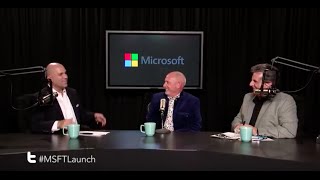
Greg Reid, author and founder of the Secret Knock, talks about building businesses through persistence and action. He shares lessons from interviews with Steve Wozniak and Truett Cathy, and explains why facing fear means doing the thing anyway.
Chapters
Welcome to the Microsoft launch program. I'm Alan Taylor from Inc. Radio. We're celebrating the National Entrepreneurship Week presented by Microsoft. I'm Alan Taylor and that is Scott Duffy. He is the guy that wrote the book launch. Scott, I've been hearing about this man for a long time. Greg Reed, best selling author, speaker, filmmaker, founder of the Secret Knock. What is the Secret Knock?
Well, we're a private invite only organization.
I'm not invited.
I don't know the knock. Well, you got to know the knock, baby. So it's funny. Years ago I started on a journey interviewing the most powerful and influential people of our generation. And people kept asking, how can I meet your friends? So I started an event called Secret Knock where you literally had to know a secret knock to get in. And from there it grew in my living room to now a standing room only. Forbes listed must attend event for entrepreneurs worldwide.
Wait, let's stick there for a second. Forbes ranks the Secret Knock one of the top three events in the world that entrepreneurs must attend.
It seems like so many of these events you gotta learn from coaches and teachers and authors. I said, wouldn't it be neat to have an establishment where you learn from the horse's mouth that people have actually done what they're teaching about? So if you want to start a non profit, we bring in the founder of Make a Wish foundation and talks about how to do it. If you want to start a new clothing line, the founder of Uggaboots, an invention, the guy who invented the credit card. And what happens is these people can speak from experience and give you counsel rather than just opinion.
What's the difference?
Well, it's interesting. One of the greatest interviews I ever did was with a gentleman named John Schwartz who invented string theory. And he says successful people seek counsel, but failures listen to opinion. He says, opinions based on ignorance, lack of knowledge.
Hold on, let that sink in for a minute. That hurt. Am I bleeding? It's like a punch in the nose.
There he goes. Well, it seems like so many people seek, you know, opinion like their family friends who've never done what they're going to do. Counsel is based on wisdom, knowledge, mentorship. People paved the way. If you've never written a book before and you go to a family friend, they're going to tell you every reason you'll fail. But if you go to Mark Victor Hanson, who wrote Chicken Soup and sold 100 million copies, will say, hey, before you get started, it's not an easy task. Here's what you need to know. But give you Counsel based on wisdom, knowledge. John Schwartz. If we would spend our activities only seeking counsel and ignoring people's opinion, that's a day your life would change.
So instead of saying, what do you think? You say, what do you know?
Interesting. Interesting. Greg, what is you have a best selling book? Stickability. What is stickability?
Yeah. One of the greatest interviews I ever did. I was watching 60 Minutes and I see this gentleman named Marty Cooper. Now, you might know his name, but you know, he invented the cellular phone. And I went to him and says, you know, what is stickability? The power to persevere. What does that mean to you? He said, stickability has to be parallel with flexibility. Says if you're not willing to adapt and adjust, you'll get stuck. And he told the story about a spider monkey. He said, in the rainforest, there's a spider monkey. It's the most quick, nimble creature. You can't harpoon it, spear it, catch it. One hunter figured it out. He took a heavy log, drilled a tiny hole, left it at the base of the jungle, and dropped the peanut inside the hole. He'd walk away and the monkey would smell the net come down, reach his hand in, and his fist becomes so big he can't pull it back out and become anchored to the log. The hunter comes by an hour later and captures the elusive spider monkey. Now all he's got to do is let go. But that monkey thinks that's nutrition and saving him. But the moral is, are you holding on to your own nut right now? But it might be in the form of a bad job or that relationship or a car or a deal. And what we think is saving us, just like that monkey could be leading to your own demise. Sometimes we have to have the courage to simply let go so we can live to fight another day.
Didn't Kenny Roger write a song? You gotta know when to hold them.
And know when to hold them. I've also seen that commercial.
Yes.
You know, one of the things that entrepreneurs tend to do is they plan, plan, plan without taking action.
Yeah. Well, it's interesting. Another gentleman kind of set me up on a T ball in that one. Thank you very much. When I was going on the journey, I had a chance to sit down with Truett Cathy, the founder of Chick Fil? A restaurants. And he's a billionaire. And at the time I wasn't a billionaire and I'm still working toward it. And I went to him, I said, I want to be a billionaire like you. What do I do differently? And he looks at me and Said, don't plan.
What? That goes against everything we're ever taught.
Wait a minute. Now it's coming back around to me again. So I'm feeling better now.
Exactly. He says, don't plan. I go, how's that possible? He goes, last year, you had a lot of plans. I go, yeah. He goes, how did that work out for you? And so you might have a goal that you hit from time to time, but how it came to fruition, I guarantee didn't go as expected. He goes, look for unexpected opportunity and then capitalize on it. So what do you mean? He says, well, if I'm at my house and I want to get to the end of the street, and that's my goal, I have to get off my backside, take action, and move towards that destination. A planner's gonna plan every step or they're gonna pause and take a break. I'm looking for opportunity. Did a kid leave a skateboard or a bicycle out to make my journey short? If I get lucky, I'll wave down a neighbor driving by and hitch a ride to the end of the street. He goes, either way, I'll get to my goal, to my destination. I'm just not caught up in exactly how it has to happen.
But, Greg, if you steal that skateboarder bicycle, you're going to jail.
Borrow. That's all how you look at.
You know, another thing that entrepreneurs do is they fail to either get started or they start and stop because they think that they don't have all of the resources that they need. And there's this belief that you gotta wait before you jump in. What have you found?
You know, it's interesting. One of the biggest chapters of Think and Grow Rich, the bible of personal development, was the Six Ghosts of Fear. And they talk about fear in a very interesting way. You know that old coffee mug at Disneyland that says, you know, what would you do if you knew you couldn't fail? Well, here's the big thing. What would you do if you didn't care what other people thought? Because we realize that the fear of criticism is what holds most people back.
Wow.
It's not the money, it's not the resources. It's what other people will think. And I realize that all successful people do something when they face their fears. It's called a duck dive. Now, I live on the beach in La Jolla, California, and I notice these surfers. And you can also notice the newbies that are going out there because a new person, when they see a big wave coming up, they'll hold onto that board because they get scared, and the wave will crush them and push them to the bottom, that board in half. But a good surfer does a duck dive. They take the tip of the board and they go right into the belly of the wave and pop back in the side. They hardly even get wet. And I realize that successful people, you know, you're scared, I'm scared, we're all scared. But successful people do it anyway. They face their fear rather than run from it.
Yeah.
Wow.
I just gotta breathe for a minute after all that.
You know, Greg. You've been telling me about Greg for so long. I get it now. Yeah. And it's all these relationships and these conversations you've had with entrepreneurs, with business leaders, with people that have done it and not faked it. Because you can't fake success.
Correct.
One of the things that happens, you're an entrepreneur and you have a business and you go through your day to day challenges and your day to day struggle. And you hear names like Ugg Boots, who you mentioned in this brand and that brand, all these successful brands, and you feel like you don't necessarily relate because you haven't gone through the, you know, they must not have gone through the same problems that you're going through today. What have you found interviewing, like, the most successful people out there?
Well, one of my favorite ones, the first one I ever did, was a guy named Dave Lineager. Now, no one knows his name, but you probably know his company. He wanted to get into real estate back in the 70s. I says, was it hard? He goes, oh, yeah. He goes, I wanted to quit every day, but I couldn't because I knew in my heart I was on something special. He goes, but for two years, every phone call that came in was from a bill collector. I was so embarrassed when the phone would ring, I'd run across the hall and pick it up so my secretary wasn't put on the spot. The third year, they threw me in jail. Call me a fraud and a liar. Wow. I said, what'd you do? He says, well, I took my attitude from trying to prove them wrong to something more important and just prove myself right. I knew I wasn't what they were making me out to be. I had the courage to pick up the phone and call the bill collector back. Said, look, I'll be honest. I don't got 50 grand I owe you, but I got 50 bucks. I'll send it to you with a promise, I won't quit. Don't give up on me. He says, I called every Bill collector every month until the fourth year. Someone finally believed in him and bought the first franchise called ReMax Real Estate.
Wow. My brother's a ReMax realtor, which is great, right? Yeah.
He says, I'm nothing. He goes, but how many people's lives were changed because I wouldn't quit? How do we know someone watching this right now isn't about to give up on their own dream because maybe Visa's calling them on the other line.
You know, it's interesting too, because I think all of us have had the bill collectors and I've had to face that myself earlier in life when I had four children and I remember saying one time to this one person who was very talkative and I said, look, I won't quit until I'm dead and I'm very healthy, I'm very alive. I'm going to keep going. And I remember knowing inside of my heart that I just was not going to give up. I couldn't give up. I have a family, I have a wife, and you know what? Things turn around and interestingly enough, everything that I had to get rid of and give away to pay my bills has come back tenfold.
So it reminds me of Ron Glasser, a gentleman who ran Hershey Chaka. And I said, what do successful people do than others? He says, successful people never make their major life changing decision while in a valley. What do you mean? He goes, well, people make their major life changing decision when they get sick, laid off, divorced, go bankrupt. How can you make a positive life changing decision at your lowest point?
So true. It's so true.
He says, but that's what it is. Because what you do is everything's cyclical. You have up and a down. So when you have it down, you ride the storm to have a little bit of a rise, a little bit of wind in your sail, a little giddy up in your step.
Yeah.
Because if you can make a decision from that point of view, when things start going your way, you'll save over 10 years of your life on this planet.
Wow.
From having to go back and correct the wrong choices because you made them based at your lowest point.
You know what happens though? I mean, as an entrepreneur, you know, things maybe aren't going your way and you get frustrated and you start to equate your value with, you know, it negatively as a result of what's going on and the circumstances in your business. And how do you get out of that?
Yeah, I went through that myself. You know, there's a thing called the bad case of the one size, meaning I'm gonna take action once I get the kids out of house, you know, once I get the big break. But we also have a thing called the Eustas. Like I used to have a bigger house. Exactly. I used to have a nicer car, I used to have hair.
What is it?
The older we get, the better we used to be. The better we used to be.
And I remember when I was going through my journey, I had a chance to meet with this woman named Gen VF Boss who started Pink magazine. And I went to, at my lowest point, I said, I feel like such a failure. I used to have this multi million dollar house. I used to have all this fancy stuff. And she looked at me and she said, never let your mistakes, setbacks or circumstances determine your value as a person. I said, well, that's easy for you to say because you're rich. And she pulled out a hundred dollar bill. I'm not rich like her, but I'll pull out this for the sake of doing it. And I remember she looked at this and she pulled it out. She goes, here, do you want this? I go, yeah, I could use that money. She goes, there you go. Crumpled up goes, here, do you still want it? I go, absolutely. I could use a couple bucks right now. She throws it on the ground, steps on it like a cigar butt. She goes, here, do you still want that piece of paper? And I go humbly, I don't even know how I get a taxi ride back to the airport. I could really use that. She goes, and why is in life when you get beaten, when you get kicked, when you get crumpled, thrown to the ground and stepped on, you think your value as a person changes.
Tell us more about stickability.
You know, stickability truly is the power to persevere. I had an opportunity to meet everyone from the founder of Make a Wish to all these amazing people. When you talk about Ugg boots, he's in my latest book, it's Thoughts are Things. And you know, it was one of the greatest messages. You know, he'll tell it a little bit different than I, but I'm still his line. Basically, he says, you got to learn to listen to your audience as an entrepreneur. He says when Ugg boots were rocking and rolling, they started making some dough and they took out these full page ads in the local surfer magazine. And he got excited because he got these hot models that wear the boots. But all of a sudden sales just went flat. But they kept spending money and his sales went flat. Couldn't figure it out. One day he went to a surf shop and he was sitting out front, look at this magazine. And these little surfer kids came walking out, 12, 13 years old, and said, hey, guys, look at this, would you? Boots. Not a chance. What are you talking about? These are for you. And they said, no. Look at that model. She's all perfect. That's a nice word. Beach rats. Aha. Hired those same kids to model the Ugg boots and came out the next ad, and next thing you know, people.
Started buying them off.
So awesome.
Sometimes you gotta listen to your own client base to tell you exactly what you need.
Right. Who is the most interesting person that you've interviewed so far in your career?
You know, it's like picking your favorite child. Right. It's a really. Kind of a tough one.
You have one, though, that stands out.
Yeah. You know, out of all, especially lately, is Steve Wozniak, the co founder of Apple Computers. You know, it's really interesting. I said, how did you and Steve have so much success in your life? He says, we embraced our lack. Why? He goes, we embrace what we did not have. Most entrepreneurs run out and they're so fearful, they run from it. He goes, we embraced it. He said, when microchips came out, they were so expensive, we could only afford one chip. Hewitt Packard was rich. They could go from point A to point B with 20 chips because they had all the money of God. He says, so I had to take five away and get it to work, and take away another five and get it to work, till finally we could go from point A to point B using our one chip. He goes, we weren't trying to be cool or slick or innovative. We could only afford one. He goes, but by embracing that as an opportunity, I found the shortest, cleanest path and changed the way people do personal computing for the rest of the world. For the rest of your life by embracing the lack. Where would you be right now in your own world, if you stop looking at your greatest obstacle as perhaps a blessing in disguise?
It's so interesting how our whole world changed because of the lack of this, but it actually led to lots of this.
That's right.
That's right.
It also seems from the people that you've talked about today that they've been so successful over time. So successful. But did any of them ever get close to quitting and just throwing it all in?
Yeah. One of the common denominators, it was interesting. A lot of them, and I won't name names, but a lot of them would say, there's A time they went, go to the bank, cash out all the money, gas up the car and just take out. I go, me too. And I went, wow, that's a common denominator that we all kind of run to this wall. But 100% of them stopped and said, that is an option, but it's not mine. And they decided to turn the car around, go back home and do it.
It's always darkest before the dawn.
Exactly. They duck dive towards their fears and by embracing that. And it's really funny, you know, fear's greatest enemy is action. And usually when we handle it, things go away. My mentor, David Corbin, a fear friend of ours, has a book out, it's called Illuminate. And the concept is there's these dancing bears back in the day, says you got to accentuate the positive and eliminate the negative. He says, that's wrong. Accentuate the positive and illuminate the negative. He goes, if you got a big pimple when you got a first date, you knock on the door and say, let's get this out of the way. Kill a majoro right here. Laugh about it. You don't have to hide it for the rest of the night. Same thing in business. Just recently I had one of my books hit bestseller and it was pretty cool. But one person said two words, it sucks. And I went, oh my gosh. I go, my friends and family and all my fans are going to see this. What do I do? And I went, dave Corbin, Illuminate. So I sent an email out to 35,000 people and said, hey, my book seems to be a hit. 148 people love it. One guy says it sucks. Here's the link. What do you think? It became a best seller again because all of a sudden they went there and all my friends and everyone else started illuminating and, you know, giving this guy a hard time. I didn't even need to.
I'll bet that was the best lemonade you ever made.
Lemonade out of lemons. I love that.
Greg, tell us more about secret knock.
Well, secret knock is kind of a neat little thing. So we actually pre screen each and every person that comes. So just because you want to give us a bunch of money, you can't go. The whole thing is you have to go through an interview process. So if you got a tinfoil hat or talk to dead aliens to your cat, you're probably not coming to my type of event. Right? And the whole idea is to surround ourselves with positive, like minded people. You don't have to be a billionaire. You don't have to be a multimillionaire, but you have to have the mindset that you're ready for more. It seems like great entrepreneurs. Not the new people, but the people. They start a bagel shop the first year, and everyone says they're crazy. Well, the third year, they proved themselves right, but now they want to go and take a quantum leap, but they don't know how. It's that association we offer, that association.
Where they don't have the people around.
Them to cut to the front of the line, hang out with the people doing what you want to do. That one connection can change your life.
Right. So it's where you want to go, not where you are today.
Correct. And sometimes we realize it's kind of like in a, you know, a nightclub. You know, you see that long line of people outside, and then one person's got the velvet rope and can let you in. That's what secret knock is. And what we do is open up the velvet rope so you can hang out with these world thought leaders, knees and knees. Not just walk them on stage, but have a, you know, cocktail with them or have a lunch and pick their brain because that's where success comes from.
It's interesting you just said where you want to go, not where you are right now. And I take in a lot of driving schools. I'm a big car guy. And the first thing they teach you is where your eyes are looking is where you're going to go. And if you're looking at the wall, you're going to go right into the wall. So look where you want to go, because at the end of the day, that's where you're going to go.
And surround yourself with people that are already there.
Yeah, yeah, yeah.
I agree to that one. It's interesting to get what you want, surround yourself with people who are already getting those results. My wife and I, you know, a couple years ago, went to Africa and climbed Mount Kilimanjaro. Speaking of Kilimanjaro. And she's the first Filipino woman in history to do it. And people said, how did you go from the beaches of La Jolla to the roof of Africa? And the answer is, I did not hire surfer kids to take me up the mountain. I found the sherpa that have climbed it 5, 600 times. Wherever they put their boot print, I put my boot print. I didn't reinvent the wheel. I knew they'd make it to the top. Same thing in life, same thing in business.
Unbelievably good advice from Greg Reed. Greg, where can people find out more about you?
Go to secretknock Co. We left the M off. We just made a website, but we left the M so no one could find us. It's only for private invite only and fill it out if you think you'd make a good fit for us. We'll get back to you and bring in awesome.
I think also Thoughts or Things. Is that a recent book you wrote?
Yeah. Bob Proctor. You might know him from the Secret. He and I co authored it together. It's called Think and Grow Rich. Thoughts are Things. And it was interesting, that one. We had to interview everyone from Holocaust survivors to the founder of JetBlue Airlines, from the mother of holistic medicine to all these amazing people. And we realized that thoughts are not things. It's thoughts backed by action. If thoughts were things, I'd be a slice of pizza, because I'm thinking about looks right now. But when I leave here and I go to Luigi's and get a slice of pizza, it becomes a reality, because it's the action behind the attraction that makes your dream come true.
MSFT launch again, this is Microsoft Launch Program and Scott Duffy. I got to tell you, all your friends are a. Okay, right here. This is the man right here, Greg Reed. I'm Alan Taylor with Scott Duffy. There's more of the Microsoft Launch program coming, so keep watching. Celebrating the National Entrepreneurship Week presented by Microsoft.
More from Scott









Business & Burgers-Sequence Collection bracelet for National Entrepreneurship Week

