Scott Duffy interviews Greg Reid: Tips To Accelarate The Growth Of Your Business In Post-Pandemic
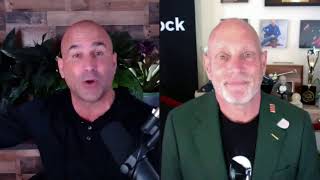
Greg Reid shares how to grow your business after the pandemic: find mentors who are actually getting results, partner with complementary businesses instead of competing, and be specific in what you ask people for, like a 12.5-minute meeting instead of vague networking.
Chapters
Hey, you guys, this is Scott Duffy. And welcome to what now with Scott Duffy. And today we have a really special guest and his name is Greg Reed. And I'm going to bring Greg in in just a minute. But before we get started, if you're new to watching this show, please feel free, drop in, tell us who you are, where you are and questions that you like us to ask. Greg, we're coming to you right now across a bunch of social media. We're on LinkedIn and Instagram and Facebook and, and where are we? Periscope and all those other places. And today is going to be a really. This is an interview that you want to sit in on and you want to listen to. My buddy. Greg Reed is going to share some incredible wisdom. He spent the last over 10 years, over the last decade traveling around the world interviewing with and meeting people who are the very best, the best of the best at what it is that they do and, and breaking down their secrets to success. And he's going to share with you some of the gems, some of the things that he's learned over the past 10 years. In addition, what he's going to share are some of the key things that people who are really crushing it today. The top performers are doing kind of post Covid in order to stand out and help accelerate the growth of their business. So again, our special guest today is Greg Reed. And, and before I get in, let me introduce him to you. So Greg Reed was listed and rated as one of the top 10 keynote speakers by both Entrepreneur and Forbes magazine. He's published in over 92 books, has 34 bestsellers, and he's published in 45 languages. He check this out. Greg has a star on the Las Vegas Walk of Fame. He's the producer of the Oscar qualified film Wishman, which is a story about Frank Shankwitz and the founding of the Make a Wish Foundation. And he has been featured in, you name it, countless different media appearances from television to radio to print. I'm sure you've seen Greg along the way. So I want to welcome him. Greg Reed.
And you also probably saw us at the same barber, so don't forget that.
We have the same barber. This is true. So Greg, you're in San Diego today, correct?
Yeah. The main streets of Carlsbad, California.
The mean streets of Carlsbad, California. So the first question I have is how did you go from a successful business owner because you were an entrepreneur, a business owner, to this mission that you've had of traveling around the world and meeting with People who are the best of the best and breaking down their secrets to success. What was it that led you to make that transition?
You know, it's interesting. I had a great mentor and, you know, a good mentor will tell you what you need to hear, not always what you want to hear. And I had a really good one. And one day he sat me down, says, what would you do if you could do it for free? You've heard that cliche a million times. See the bumper stickers? And I said, I'd be a teacher. I go, you know, I'm not overly educated, and more importantly, there's not a lot of money in it. And I like my lifestyle. He says, what are you good at? I says, well, I'm kind of full of hot air. I'm a good communicator. And he goes, well, how could you take action with the right people? And I said, well, maybe I could become one of those motivational speaker, author people. And he looked at me and says, why don't you do that? And I said, I go, I could do that. And he said, absolutely. Three days later, I put my business up for sale, sold it for my first big seven figure deal, and here we are today. It's so interesting how sometimes you said a million times, all we need is one person to believe in us more than we believe in ourselves, to be the catalyst to kick us in the pants to move forward and impact lives.
So it's really important what you just said. All we need is one person to believe in us maybe even more than we do, right? To help set us on the right course. But I think that sometimes what happens is we get to these patterns where we surround ourselves with people that aren't pulling us up. Instead, they're holding us back or they're pushing us down. And I think that during COVID it's been a really interesting time because people who are in our networks, our friends and family who've gone through hard times, who potentially possibly were the kind of people that we relied on to help pull us up, are dealing with their own stuff. And we're so in this world, how do we make sure that we're around the right people and that we're also empathetic to the ones we love, but not allowing maybe some negative energy to pull us down.
Well, I love how you set us up our T ball because you and I have been saying the same stuff back and forth for people tuning in. Scott and I are like, fricking Frank, we're back. So we are great minds Beside the haircut, we think the same. And what's interesting, because our good friend Ruben Gonzalez says, look, surround ourselves with people that we have respect for, not just people we have influence over. Surrender some of people you have respect for, not people you have influence over. Who's getting the results that you want for yourself. And then ask that person for guidance or for counsel. As you and I talk about the difference between successful people seek counsel and failures. Listen to opinion. Opinions based on ignorance, lack of knowledge, inexperienced, like maybe a family friend who's never done what you're about to venture upon. Where council's based on wisdom, knowledge and mentorship. If I went to a family friend and say I'm gonna write a bestselling book, chances are they're gonna try to talk me out of it to protect me, to keep me safe, because they know I'm dyslexic and they've never written a bestselling book. But if I go to Mark Victor Hansen wrote Chicken Soup for the Soul, he's gonna say, sit down, here's what you need to know and give you counsel based on wisdom, knowledge, mentorship. If we would spend our activity only seeking counsel and ignoring opinion, that's the day our lives would change.
Sometimes we have to walk away from our network and from the people that we'd spent a lot of time with. It can be really, how do we do that? How do we move ourselves from toxicity and put ourselves in a place where we're empowered and we're encouraged and.
We'Re driven up.
Yeah. Again, surrenders are with people that are getting the results you want. I don't know If I can 100% agree. We have to cut people out all the time. For example, I got great friends that I shoot pool with and go golfing with. I'm not going to talk to them about my next movie. They wouldn't understand. It's shame on me for putting my hopes and dreams on people that can't comprehend it. It'd be any different than me asking my 9 year old son to do my taxes. I mean, they just. It's not the same comprehension level. So what I do is I surround myself and share my goals, dreams with people I have respect for, not those I have influence over. And door number two, here's that way to do it. For some reason, if we were sitting in our house and someone came to our door with a trash bag full of dirty diapers, rotten cheese and old eggs and started dumping it into our living room, we'd say, stop. Get that out of here. What are you doing? But for some reason, we'll let people open our brain and put all this garbage in and we sit there and take it. Successful. People will say, stop and sit there and say, I understand you're going through this. Please deal with that. On the same note, I got to focus over here. And they don't allow that to happen because what you allow will continue.
One of the things that you have said to me in the past is this I shared with me in the past this idea of what's common sense to you isn't common sense to everyone else. And we've talked. So right now, what's happening in this world, there's a lot of people who are starting their own business, many for the first time. Some of those people, maybe they had a business, another business that was successful pre Covid and unfortunately they lost it. Or maybe they're struggling to keep it open. Maybe they're recently unemployed or furloughed. Maybe they're a consultant who lost some of their contracts or consulting contracts and they want to take an idea to market and they're trying to do all of these different things or come up with these things. But there's something that they already do naturally, right, that people think that they're great at, but they're afraid that they can't charge for. What would you tell those people?
Yeah, essentially, Bob Proctor and I wrote a book together called Think and Grow Rich Thoughts are Things. And he gave me some of the greatest counsel ever. He said the way to create wealth and prosperity is to find a way to get people to pay you money to do something you're already going to do. Now let that sit in for a second. Right? How do you get paid money to do something that you're already going to do? And so, for example, I remember when I did one of my first big bestsellers. It was called Three Feet From Gold. I invited like 300 people to go with me to, you know, interview everyone from the founder of Chick Fil a down to the starter, you know, a guy who started nascar, Miss America. No one showed. And then finally Bob taught me this. And I says, well, you know what? I'll charge a a mentorship fee, a mastermind group for people to pay X amount of dollars to do my follow up book. And guess what? There was a line out the door and we made six figures before we even wrote a word. By doing something I was already going to do. And the value associated with it is just like Steve Sims says, until people pay, they don't pay attention. And the answer your original question is, what could we do differently and things of this nature. I think it's time to start truly looking at the whole power of collaboration. You and I talk about this offline all the time. This is the greatest time. Look, if you got an idea for a cool logo and someone else makes T shirts and they've been furloughed and they got the equipment in their garage, another person makes great websites will come together as a collective collaborate and start a new clothing line that could inspire people as you open up again, because things are about to do just that. And then here's another example. Rather than fighting when things open, how can you collaborate in this way? Example, you're in a strip mall, you own a pizza parlor in the corner, the other guy is a liquor store at the end and you guys hate each other. You're fighting over parking spaces and the whole bit. What about coming in the middle and saying, let's change our perspective, let's collaborate. In fact, moving forward, here's a peace treaty. Every time someone buys a fancy bottle of wine, give them a discount for 50% off one of my pizzas. And tell you what, every time we deliver a pizza, I'll give them a discount for 10% off your beer. And by doing that collaboration, that simple thing, all ships will rise. And that's the way we need to start thinking.
One of the things I loved about the time I spent up in the Bay Area was I always felt that there was this collective consciousness around entrepreneurship. And up there we used to call it coopetition. So we were cooperating, but we were in competition. And it was this feeling of all boats rise together. It's funny because it feels like so many people are afraid to help others, particularly in the industry or the space that they're in, because of this feeling of this sense of lack, like if I'm not bringing it all in, there's not enough for everybody. But the value of cooperating, like you're saying, and I think to your point, what you're talking about is people that have, maybe they have similar audiences or customers, non competing products, but they're really complimentary, like, why can't you work together?
Amen. Yeah, it's interesting. I just ordered grubhub and they brought me from a local Italian restaurant some amazing pasta. And inside there sure enough was a coupon for someone like house cleaning service. And I went, well, that was pretty brilliant. It cost them nothing to put this little magnet in here. But now all of a Sudden, I know about Betty's House Cleaning Service. And I went, why isn't everybody having that same mentality? I want to tell a quick story, if you don't mind, because I do it, you know, I like telling my stories. One of my favorite interviews was Steve Wozniak, the guy who started Apple Computer with Jobs. Now, Wozniak was the brainchild who was making everything. You know, Jobs was a spokesperson and the visionary. And I sat down, Wozniak, and I said, how did you and Jobs have so much success? And he said, we embraced our lack, just like you said. And I said, what do you mean? He said, where most people run from what they don't have, we ran toward it. And so give me an example. He said, well, when these little microchip processor things came out, they were so expensive, we could only afford one. He goes, job sold his car. I sold my calculator. We pooled our money and bought one. He goes, for Packard, IBM would make machines that go from point A to B. With 20 of these chips, they had all the money of God. He said, I pull away five and go from A to B with 15, I pull away five, get it to work with 10. Eventually went from A to B using our one chip. He goes, listen, we were not trying to be innovative because we can afford one chip. He goes, but by embracing that as an opportunity, we found the shortest, cleanest path. And by doing that, we change the way people do personal computing for the rest of the world, for the rest of their life. He goes, where could you be right now in your own business if you stop looking at something as the greatest challenge, an obstacle, but it could just be your greatest blessing and opportunity in disguise.
Oh, my gosh.
All right.
Can I tell Steve Wozniak story?
That's a great story. Yeah, let's do it.
Here's my wise story. So I used to be a member of ted, and I was at a TED conference. It was in Long beach, and there are all these amazing people there. And I remember I was. I wanted to get a water. And so I was walking towards this cold beverage case, and Steve Wnak was there, and he. He opened the thing and he pulled out a water. He said, you want one? I said, sure. And he had me his water. And he had this watch on that was.
Right.
We've talked about this. It was insane. I've never seen a watch like it. I was really into watches at the time. So I asked him, I said, where did you. Where did you buy that watch? And he said, I didn't buy it, I made it. I said, you made it, that's awesome. I said, so it's the only one, right? And he said no, there's two. I said, where's the other one? He said, well, a friend of mine liked it so much that I made him his own watch. I made the same thing. He said, but the second watch I made is so much better. And I said, so you're wearing the second watch? And he looked at me totally surprised and he said, why would I ever give anything that isn't my very best work to somebody else? Right?
Brilliant.
And you're talking about the. Wait, you're the one with the tubes on there, right?
Oh man, it was, it was, it was wild, right?
I remember he was wearing that exact watch when I met him.
So, so Greg, when we first met you were doing work. You were like, you were the lead champion for the Napoleon Hill Foundation. Could you share the story of who Napoleon Hill was and what you kind of took out from that experience? Maybe one or two of the best interviews or stories or lessons that you learned through that organization.
Yeah. So Napoleon Hill as we know, wrote the 20th best selling book in history called Think and Grow Rich. But a lot of people don't know the backstory. See when he was 23 years old, he was a magazine reporter and he gained access to the richest cat of the world, Mr. Carnegie. And was supposed to be a 30 minute interview, was three full days and at the end of it Carnegie says, here's an opportunity. He says, work for me for free for 20 years and also a mission to meet all my friends. You'll write their ideas and concepts down and create the first ever formula for success and a point he'll reach in his pocket to even have two nickels to rub together and said, you know, work for free, for 20. He says, Mr. Carnegie, not only will I accept that mission, I'm going to complete the task. Carnegie says fine, you got a job. And then Hill says, why are they going to talk to me? I'm just a kid, I'm nobody, I'm not connected. He says, I'll write you a letter of recommendation. When they see it, they'll know I sent you, give you all the time you want. Sat down with Edison, Einstein, the Fords Rockefellers and wrote the 20th best selling book, the bible of personal development. But what's cool is that Carnegie was a stickler for action and gave hill just 60 seconds to make up his mind to work for free for 20 years. And when the Point Hill said yes, Carnegie pulled out a stopwatch and there was 31 seconds left. He made a life changing decision in 29 seconds. But the best part about the story is that Carnegie made that same offer to over 250 men before Napoleon Hill. He was the only person to say yes. Everyone else had something called the bad case of the One size. I'll take action once I get that big break, once I get the kids out of the house. But the best time to take action is the moment it strikes you. And that was in 1908. And you fast forward 100 years of 2008. The surviving grandkids in Napoleon Hill and the foundation that bears this name gave me a letter very similar where basically a Willy Wonka ticket to meet any human alive to write the Think and Grow Rich series through the Napoleon Hill Foundation. And we did Three Feet From Gold and we did Sharon Lecter did Outwitting the Devil. As you know, together we did Thoughts are Things with Bob Proctor. Stickability, the whole bit. And now we've had a chance to meet amazing human beings, to tell their story in a modern light, to inspire the masses and the future generations to come.
I remember you telling me a story. You had an opportunity, several opportunities where you go, you went back to the Napoleon Hill foundation and you had a chance to look at old archive footage that nobody had ever seen. Books and videos and things like that. And I remember after one of those trips, he told me a story and I believe it was connected about Henry Ford. It was also about taking action and the challenge that he had when they started to do mass production. And so they were mass producing cars but they couldn't sell them. Do you remember this story?
Oh, I remember the story and I haven't told it in years. On the same note, you just inspired me. I just pulled something down. You want to see it? It's kind of, I've not shared this with many people. We went back to the archives and Don Green, who's the CEO of Napoleon Hill foundation, found checks. Check this out. These are handwritten checks from Napoleon Hill from the Napoleon Hill foundation to Napoleon Hill, signed by Napoleon Hill when he was promoting and marketing Think and Grow Rich. How cool is that, right? There's, there's, there's, there's a little piece of history right there. And the story I remember of Henry Ford is things were going so crazy there. Had so many orders for cars, they couldn't keep up with them, didn't know what to do. So he took the top 100 people from the line and says, we're going to give you an opportunity. He says, you're going to get paid the exact same amount of money, but you'll work like half your shift down on the normal assembly line and half up here in management. We're going to train you and the few people that rise to the top of the list here, you're going to give the opportunities, open the first franchises, you're going to open up the dealers, the, you know, all the different things. And it says what we want you to do is they give out a hundred of these little 3 by 5 index cards and say I'm in and write your name on it and give it to us right away. And what happened is that the next day only 23 people turned in their card. Everyone else had a bad case of the one size. Everyone else said, my wife doesn't want me to do this. Or they sat there and said, I want to earn my money down on the line. I'm working myself, whatever their story was. And then the next day, believe it or not, everyone else showed up and says, I'm in. And Henry Ford says, no, it's done, it's gone. That opportunity is gone for the rest of your life. You had it given to you, but you wouldn't take action. Well, the 23 people that did say yes right there on the spot, those are the people that opened up the nationwide franchises that not only became millionaires, but they became multimillionaires for their kids and their grandkids, generationally, for the rest of their lives. And the moral is, how many times are we going to let our butt keep us from success? Not the one we sit on, but we sit there and say, I'd go do that too. And it's that.
But yeah, it's such an amazing story. And it reminds me of the whole Elon Musk problem that he initially had, right, with the electric cars where Henry Ford, they were pushing out all of these cars, they were mass producing like crazy. But there weren't filling stations, right? There weren't gas stations, there weren't dealerships, there weren't mechanics. So unless you lived really close to one of these things, you couldn't buy a Model T, you couldn't buy one of his cars.
Years.
But, but this is the way that he changed all that. And it was just, it was so inventive. Now you talk about missing opportunity or jumping on opportunity. The other thing that I hear you talk about is, is this thing that people, this, this mistake they make where they hold on to something so tight.
They hold on. They have all these reasons why they think that they can't get started, why they think they can't move forward. They've got these stories again. Tony Robbins. The. The biggest reason, the biggest difference between where you are now and where you want to be is the story you keep telling yourself.
Yeah. And that you're. You're leading to one of my favorites. It's so cool. And the reason why everyone. He's leading this, because this is a great story. This. This has impacted both Scott and I in a very personal way. So I. I got to meet Marty Cooper. The guy who invented the cell phone. Yeah. And I asked him a question. I says, you know, I was writing a book called stickability. I said, what does stickability mean to you? And he said, stickability has to be parallel with another word called flexibility. You have to be willing to adapt and adjust. You'll get stuck. And he told the story about a spider monkey. And a spider monkey in the rainforest is so quick and nimble, you can't catch it or harpoon it. It's too wiry. One hunter figured it out. He took a heavy log, drilled a tiny hole, dropped the peanut inside, and left. At the base of the jungle, the monkey would smell the nut, come down from the treetop, reach his hand and grab a hold of the nut. And his fist becomes so big he can't pull it back out. Become anchored to the log. All he's got to do is let go. But he thinks that nut's nutrition, it's saving him. So he holds on with dear life. The hunter comes by an hour later, captures the elusive spider monkey. But the moral is, are you holding on to your own nut right now? But it could be in that form of that job or the fear or guilt or a car remorse of the past and what we think is saving us. And we're holding on with dear life right now. Just like the monkey could be the thing that's leading to our own demise, sometimes we have to have the courage and the fortitude to simply let go and adapt and adjust so we can live to fight another day.
So for people that feel like they're living to fight another day, today, they've gone through, you know, the last. The last 18 months has not been easy on anyone.
On anyone.
It doesn't matter how much money a person is making. They're still in the same situation as everyone with having to have dealt with quarantine and issues with their families and their kids and all kinds of Other things. So what are one or two of the key things you would recommend people do to work on themselves to make themselves stronger as we exit this period?
One, work our strengths and higher our weaknesses. Don't be afraid to delegate. So for example, you know we mentioned I did a major motion picture called Wishman. It's trending out there on Netflix right now. But guess what? I never ran a camera. I didn't do casting, no time to do costuming. What I did is I created a movie. I produced it by surrounding myself with the experts in that chosen field of endeavor. Right Now I'm on BitCloud and I'm working all these different angles of social media. And the real realities are I didn't create these platforms. All I'm doing is surrounding myself with experts who can teach me and show me how to do it so I don't have to pay the dummy tax twice. And then last but not least, find out who's getting the results that we want for ourselves. And here's what you taught me today. I'm gonna add that word, who's getting the results that we want for ourselves today? And ask those people for counsel. Meaning if I was gonna open a new restaurant chain, yours and my good friend is Gene Landrum who started Chuck E. Cheese. He did it 40 years ago. I wouldn't probably ask him. I'd go to Mr. Beast Hamburgers or Five Guys or Guy Fieri and say, hey, how are you doing in today's market with those ghost kitchens? And find out that system and then duplicate it for myself. We can have anything and everything we want as long as we surround ourselves with people getting the results. And then people are sitting there saying, oh, that's easy for you to say. You've never heard of me before this call. And guess what? When I reach out to people, no one's heard of me either. The way that we do it, and Scott is an expert at this is called specificity. I'm going to give you your nugget right now. This is your golden gem. Specificity is how you do it. No one wants to brain picked, no one wants to go to dinner with you. They don't want lunch and they don't want to have coffee. Yet. If I could sit there and call the founder of ReMax and say, I'm working on a new book called Stickability, the Power to persevere. I need 12.5 minutes of your time. I'll cover all my own costs that come out from the moment I open the door till the time I leave, I'll start. A stopwatch will be 12 and a half minutes. I'm going to ask you one question, why you didn't quit in the challenging moments? The chances of him coming downstairs from his office to the break room is so high with that specificity, and that's what people are missing. Sometimes we'll be on stage and there's 10,000 people in a long line afterwards and they see the nicest things. How can I work with you? How can be of contribution? How can be of service? I don't have 30 minutes to do a resume check compared to someone coming up. Say, dude, let's check out your Instagram. I saw you have half a million followers. I like your memes. I really make awesome ones. Can I send you one in ten seconds? I know who you are, what you do. You got my cell phone. We're in contact. Specificity is what it takes to create the new relationships on the ongoing future economy.
Oh, man, that's, that's really hot, by the way, if you're trying to develop or you're in the process of developing a 30 second elevator pitch. Because Greg is talking about specificity, he's talking about saying something super clear, super quickly. Somebody gets it right. And because if you ask 9 out of 10 people, what do you do, especially entrepreneurs, they will talk and talk and talk and talk and they're really not saying anything. You walk away. You have no idea. So here's an idea. Here's number one, here's my name, my company, my title. You know, my name is Greg Reed. I'm best selling author of and so here's my name, my company, my title. That's number one. Number two, here's what we do just in a sentence. Number three, here's the market that we serve. Number four, here's how they benefit, right? And then number five, give an example, a quick example of how one of your customers has benefited from using your product. And then number six is ask for the order. You know, do you or somebody you know have a need for this product? You know, if you, if you can do that with each answer being one sentence long in 20 seconds, you can communicate super clearly with specificity who you are, what your value is and why that person should be working with you. And maybe they're not the right person, but because you're so clear, they know somebody else that you should be talking to and they'll refer you, they'll refer you over. So, Greg, okay, secret knock.
I want to stay on that topic because I think what you just said was freaking brilliant. And it's interesting. I went back and I also realized that you look at LinkedIn and people put Gettysburg Address. Of all the crap that they do, I have no interest. It's such a turn off for me. If you have too many numbers and letters behind your thing and all the different stuff, I think it's a, it's a turn off. So what happened is on my LinkedIn and things of this nature, I changed everything to. Greg S. Reed, American author and entrepreneur. That's it. And guess what? That has led to more people asking me questions ever than going, I've done this and this and this and this and this. And I think it's like one of those type of things that people that are wearing the big gold chains and the flashy stuff had the least amount of money and the most successful people don't have a Gucci belt. Right. And so I think the next step is, is the downplayer stuff so people can ask the right questions, especially if you spark some interest.
Okay, so since we're going back, I want to talk about. For a second opinion versus counsel.
Yes.
And I want to talk about. You were, you were just sharing how if there's something that you want to do, find somebody that's doing it today. Right. What are, you know, three, two ways to learn. You can model through try and error. Trial and error takes time and money. It's expensive. Or you can model find people producing the results that you want, do the same things, model their belief systems, their strategy, their syntax, the order in which they do things, do the same things, produce the same results. Here's the problem. The problem is when times get tough, when people experience challenges, what they tend to do is, is they go back to the things that used to work for them really well and do more of it. They do more of it. Or they go back to the people that had done something well and they built something new on top of what worked back then. If you're a person that is trying to get yourself into a new group of people trying to build a new community, trying to surround yourself with the kind of people to help you build the business that you want to build going forward, how do you do it?
That is so, again, great, great, great, great questions. What I do is I just literally look for the people that are doing so I'm going to give you an example. If I want to get into art, I know nothing about art. I'm just using. It's a great neutral example. I would not hang out with other starving artists. I wouldn't go to Facebook groups of starving artists. I wouldn't go to those up and comers. I would sit outside a gallery and see whose arts being pulled off the wall and who's being sold. And then I would reach out to that artist and. And say, number one, how did you do it? And how could I duplicate for myself? And then I'd ask the gallery owner and says, if I duplicate these same efforts, can I get a spot on your wall? And that's what people are doing. It's pooled ignorance, right? And that's what's missing in today's world. They're not seeking the people that are literally accomplishing. Look, when I went to Pamplona, Spain, and went running with the bulls, the only thing I did different is I found the person who wrote the definitive book on running with the bulls and said, where do I have a great time, enjoy my circumstance, and not get killed? And he said, that's easy. Second bend, go about 40ft, stand right in between. The poles will go one side, people crush themselves on the other side. You can take a selfie and have the time of your life. That's exactly what I did when I climbed Mount Kilimanjaro. I found the Sherpa that I climbed at 900 times. Wherever they put a bootprint, I put a bootprint. It's not rocket science or genius who's doing what you want and then duplicate it with your own spin. You can have it too.
I think that one of the things that happens when we go through the kind of period that we just went through, a person goes through challenging times. A person, a business goes through challenging times. The economy shifts, whatever is. We get so focused on dealing with the issues that were right in front of us that we lose our vision. Stop working for that thing, and we stop working for the thing that's like, right in front. Like, as a skier, you call this looking over the tips of your skis. You look right there, and as a result, you fall down the hill. How do we continue to have a big vision going forward, even when things. And stay focused on the vision and actually have the confidence to attract the kind of people that we want around us and we need for that vision when maybe things don't feel so certain.
Okay, we all have. We all have our phone list, right? All of our contacts. And here's one of the things I've noticed over time. We've gone to all these networking events, all these events, and we stored all these amazing people and we're waiting for the perfect time to call them. And I believe this is that exact time to call and say, hey, things are opening up June 15th. I understand. California zone. What are you going to be doing differently and start reaching out to the people that you've been holding off on? Number one, surround yourself with those type people that are doing what you want. And I also realize it's that I own a domain. I'm writing a book right now. It's called be kind to your future self. And the whole idea is, what can we do today to have a brighter tomorrow? So if we want a shoebox full of money for the holidays this year, all we got to do is go get a shoebox today and then put a dollar in or $2. And then next time you get some extra cash, you put them in. And if you're constantly feeding that shoebox, come the holidays, you got a shoebox full of money. It is that simple. But people for some reason keep procrastinating, putting off they think it's difficult rather than just taking the actionable step. And football, a quarterback never throws a football where a wide receiver standing, they throw it downfield and let them run to it. So myself, you, my friends and sphere of influence, all we're doing is we're chucking Hail Mary's waiting for one to come. Because guess what? Looking back, we're never going to remember all the drop balls and the things that didn't go. We're going to remember the celebration dances and the, you know, highlight reels of our life. So to me, looking back is I don't focus on the missteps. I just focus on what's coming, coming down the line. As you've mentioned a million times, Richard Branson, as amazing as he is, he's one of the biggest failures. I mean, this guy's had more things that didn't go right. He's got two major successes which are amazing, billionaire, awesome. But no one talks about all the, you know, other things that didn't go so good. The wedding dresses, down to the soda pops and things of this nature. So again, people don't remember the setbacks, they only remember the successes. So it's important to just start throwing some of these down the road and be careful what you ask for because you might just get it.
Okay, so two things. One is you're right. So people, sometimes we get so concerned and wrapped up thinking that everyone's thinking about us. Like if something is working, whatever, nobody gives a about you. They're dealing with their Own stuff. Right. They're dealing with. So we can just take that one off the table. But your point about a pass and going to where the ball is going or green Gretzky, you know, going skiing where the, the puck is going out where it is today, like that is exactly. That is a difference between the people that we hang out with. Right. And we, before this call, we got on the phone and what did we talk about? We talked about what's coming. It's coming. We talk about what's coming. We do this all day, every day with our friends. What's coming? What are you hearing today? What are you involved in today? Where's it going to be? So again, it's around. It's about putting yourself. This is the other thing that happens.
Because I want to stay on this. It's also what's coming next. But not getting so caught up. It's the non attachment to whether it works or not. So as you and I know, detachment means you don't care. That's not a good way to live. But what you and I do is we have non attachment. That means we're going to focus on something, get all of our attention. And then once we birth it, we're not. It's not attached to the outcome. It's not our responsibility with people like it or not, are going to read or whatever. And I think what happens is we have that mentality so we can continually try new things. How many times have, you know, you and I reinvented ourselves over the past, you know, five years? And, and again, people always remember the successes. They're not going to remember the stops and starts. But what's happening is we're always looking at what's coming future. What's coming next.
Yes. Yes.
So.
Okay, wait, so. But I had a thought. I had a thought. I've lost it.
It was. It was a genius.
It was so good. It was. It was the best thought of this entire conversation.
It's where Bigfoot's hiding. Yeah. He said, here's where all the aliens and the secret of life and, and the meaning of our purpose.
Yeah.
Okay. So we were. So we were talking about. We were talking about our.
Our. Oh.
So what I was saying is that when, when things. Another thing that, that happens, I think when things are. Are tough on people is. And they're. They're losing.
And they're trying to figure out maybe they're in transition or they're trying to pivot their business and find a new market, a new product, something that's going to work with their target customer is they. They talk to people in the same business. All they do is they talk to other people in their industry.
What are you doing?
What are you doing? What are you doing? The best ideas tend to come because that's groupthink in your industry. The best ideas come when you get outside of your industry and you surround yourself with people that have different backgrounds. So you can draw from and pull from what they're doing out there and apply it over here. Right? And I think so. So I want to hear your response to that now. Also, I don't want to forget because you were talking about persistence. I want to. I want you to tell me about Evander Holyfield because you have a great story about your meeting with Evander.
All right, I'll put my finger here to remind me about Evander. But so, so, so back to this thing about outside influence. That's why you have a mastermind group. That's why breakthrough is so cool. That's why our secret knock events. That's why prosperity camps and all these ones are so awesome, because you're surrounding yourself with people again that are getting the results you want, but also done it outside as yours. My friend Jeff Hoffman talks about, you know, the whole idea is that it's called infosponging. So what you can do is realize that you could talk to one person who's a stick manufacturer, another person who makes ice cream, and another person is a chocolatier, and then you can come up with the idea of putting a stick inside ice cream, dipping in chocolate, and coming out with good humor ice cream. So there's ways to do all these amazing things. And the story about Evander Holyfield is pretty cool because I interviewed him. You know, you and I are sports people, right? We love to watch. And I asked him how he became such a great powerhouse and won more championships than anyone. And he said, it's easy. I have a higher standard. I go, what are you talking about? He goes, well, in sports, I showed up early, I left late, I invented exercises, I had a higher standard, and I won more championships. And he says, where could you be in your own business if you just raised your standard and did things differently? I said, but didn't it hurt being in a fight? He says, yeah, but when you're in a fight, you don't focus on the pain. As soon as you focus on the blows, you end up on your back, knocked out. But that's what people do outside the ring. They focus on gas prices, war, economy, and then they Wonder why they never become a champion. Yeah. And he pulled me in tight. And Adonis of a man missing half an ear, bitten off by Mike Tyson, he says, you know what the funny thing is? He says, when you do win the championship, back to our original point, that remember the victories, he says, everyone comes to their feet and they chant your name. They raise their hand in victory and put a big shiny belt around your waist. He said at that moment and at that second, you don't feel even one of the punches you took along the way. Wow. But the guy in the losing locker room will have every bruise, every excuse for the rest of their life wishing they had a higher standard.
Wow. Wow. Wow. And you know, that focus, that, that. That championship focus. I. I remember years ago, I was in New York, and I was with Muhammad Ali's manager, and she was telling me this story about how he. When. When his Parkinson's was really kind of just kind of getting over the edge and hitting a tipping. Tipping point. The shaking got really bad that he had a speech, and. And they were on the side of the stage, and he was supposed to walk on, but he was shaking so much that it was the first time that they didn't think he was going to be able to do it. So she looked at him and she said, I want you to focus. Who is the toughest person you ever went into the ring against? And he said, joe Frazier. And she said, joe Frazier's out there. I want you to picture you are walking into the ring to fight Joe Frazier. And she said, instantly stopped shaking and was able to walk out onto the stage and do a great speech. And he walked off. And as soon as he was done, he went right back into the shaking.
Wow. Wow.
That is. That cra.
That.
Just that focus.
Just. Just. Just that focus. I. Yeah, and it's. It's. It's amazing also, when these sports people, they talk about the visualization of seeing themselves as a victory, and I think that's one of the challenges. What happens is that, you know, there's 10 things that are going on anytime in our life. Eight of them are amazing, one of them, and one suck. And unfortunately, just spend all the time on the sucky thing. We don't applaud and give ourselves the credit for when things are going good. We don't give ourselves that focus. So I'm a firm believer on quick, immediate rewards. And what that means is if I have a cool little deal today, something goes through for me, I'm gonna go out and buy myself a pair of Shoes or something. It rewards myself subconsciously and tells myself that I did something of value and my earning my worth. And so many people get caught up on that one bad thing and they never see all the amazing things that they do Again. What's common sense to you is pure genius to somebody else. Someone else out there is waiting to hear what you got to say.
Amen. Now you are a film producer and you, you wish, man. It's one of my kids favorite movies. By the way. If you haven't seen it, check out Wishman. I know it's trending. I just saw it on Netflix and I know it's, it's, it's everywhere right now, but it's a story about Frank Shankwitz, a founder of the Make a Wish foundation. And really kind of that journey that led to, to the founding of the, of the organization. You didn't know a thing about how to make a movie. I was at a secret knock event and you brought Frank in and you, you asked Frank at the end of the interview, what's your wish? And he looked at you like you were crazy. And he said, nobody ever asked me that question. And he said that he wanted to have his story told. And you said, I'm gonna do it. And, and so you went down this journey. You don't know a thing about making a movie. It was Oscar qualified. It's all over the place right now. It's one of the top training movies. You don't know how do you do it?
You know, people again right now go, oh, that's easy for him because nobody knows me in Hollywood. So it's interesting. I may give you guys the actual blueprint and you're going to laugh how ridiculously simple this is. I did not know what I was going to do. All I knew is I had to do it. I didn't get caught up in the minutiae of what I couldn't do. I said, what can I? What's an actual step? So what I did is I ran an ad on a very secretive website for a screenwriter. And don't tell anyone about the place because no one knows about. It's called Craigslist. And I did a $25 ad and I got a bunch of responses, but one person stood out. His name's Theo Davies and he ended up writing the screenplay, directing the movie, won all these awards around the nation and on top of it, we created an Oscar qualified film. And the way that he do that is you take action. Because I believe the laws of the universe will Reward massive action. If you do something, it tells them that you're ready to accept more because the laws of the universe will give you more of exactly what you're ready for. And then we hit another stumbling block because everyone rejected us. I mean, and no hard feelings, by the way. I was a first time producer, first time writer, first time director, didn't know anyone to put their major stars in our film. We understood that. So I had a meeting with the guy who started something called Showtime television, MTV and all that. Jules. And I asked him a question. I go, what would you do in my circumstance? He goes, that's such a no brainer. And this is what changed everything. He goes, stop trying to get the most famous expensive people you can't afford anyway to be in your film. He said, find the people that will be the best actors who to give life to this movie, to actually give it justice. What a different mindset. He says, then hire a bunch of face name recognized actors to put around those people. And that's what we did. He says, when we did Twin Peaks, no one heard of any of those actors. He goes, we found the best people to play the roles when we did mtv. No one ever heard of those people before we put them on. He goes, what we did is a research to make sure they're the best characters. And that's what we did. And we ended up finding Andrew Steele, as you know, from Australia, gave him his first role. But this guy gave a year of half of his life to play Frank. Going out, hanging out with him, becoming a motorcyclist, getting his license, learning how to shoot a gun. And by doing so, he actually could not have been a better person to play Frank in this movie.
You talked about action. I think the biggest mistake that, that people make when starting a business is they fail to get started because they think they need to have everything in place before they jump in. They're gonna have to have, they have to have the perfect plan, the perfect cast, all the money in place, all that stuff. But I think if there's anything I've learned and you've learned, it's that the people that we know that have been the most successful never started with everything that they needed. Instead, what they're great at doing is identifying what they need in that next step and accumulating the resources that they need each and every step of the way. And so you're right, it's all about taking action. It's about taking, taking that, that first step. And, and sometimes what's, what's the quote, Greg, where, where you take the step but the stairs aren't, you can't see the stairs or something like that.
Yeah, I, I, it reminds me of the story back to Chick Fil A through and Kathy. And he said the secret is to look for and capitalize on unexpected opportunities. Don't get caught up in the minutiae. He says, I'm on my sofa and I want to get to the end of the street. And that's my goal. I have to take action, tell the universe I'm ready, and move towards that. He goes, planner is going to plan every step or they're going to pause and take a break. If a sprinkler comes on, it freaks them out. They run back home because it's not part of their plan. Because I'm looking for unexpected opportunity. Did a kid leave a skateboard or a bicycle out I could borrow to make my journey short? If I get lucky, I'll just wave down a neighbor driving by and hitch a ride. He goes, either way, I'll get to my goal. I'm just not so caught up in exactly how it has to happen, right?
And that takes real strength. It takes, it takes courage, trusting, because that's really what it is. It's trusting, right? And it's, it's funny. I was talking to a woman. She's an intuitive and she works with Richard Branson and she works with Jamie Oliver and she works all these big celebrity stars and, and she does energy work with them. And, and I asked her, I said, what, in your opinion, is the biggest difference between these, these people? And she said that, look, we all have intuition, but what I think that these people do is they trust their intuition more than anyone else. They have that gut and they take action.
And that one always stood out to me, also with the action.
I want to point out that you didn't just say, I'm going to do this and go out and do it blindly. You found people, right? You found that the guy from HBO or from Showtime, you found all these people. Our friend Laura Langmire, one of the things that she says is that when she was young, she used to say yes and figure out how. But as she got older, she learned, say yes and figure out who knows how. And that's how you get started.
Brilliant, brilliant, brilliant. And what you just said, I'm going to borrow. Because the whole thing about the only difference between the successful and the other people is that they actually listen to their tuition and do something about and follow it. I, I, that that is there's so much power and weight in that. It's almost. It's almost mesmerizing. I mean, that's a mic drop moment for me, because that is the bottom line, what it comes down to. And that is the common theme of all the most successful people I know. That means also that they won't let another person or themselves talk them out of what they know to be true. You know, it's interesting, when you. I did my first book, I was turned down, as, you know, 268 people, publishers, agents and printers in a row. And the 269th one said, we'll do it, but change the title, beginning and middle, and an end. I know I was doing. On the same note, I realized that I wouldn't let all those other people tell me what I couldn't do because I knew what I was capable of. And that first book went on to become a global phenomenon where just one quote alone from There was shared 37 million times last year. And so it'd been really easy to create quit after 50 or 100 or 212 rejections. But it's the people that won't let other people talk them out of that intuition. I'm telling you right there, that, that, that is a golden nugget, because those are the ones that we're going to tell the stories about it.
It really is. You know, I was watching an interview today with Kobe Bryant, and it's really timely for this conversation because the question was of all of the people out there, all of the. The former players, all the hall of Famers, all the people that have also made it into the media, who's the one person, the one person where if they were to give you a compliment, say he's the guy, like, whatever, who's the one person that would really have an impact on you? And you know what his answer was?
What?
None of them. Wow. He said, it's me. He said, I got to look at myself in the mirror every day. The only person that matters is me.
I love it. And by the way, over here, you said ask questions. And I'm seeing all these things are popping up here, see if they have any questions here. Oh, it's all of our cast and care. Hi, Bob. Hi, Dr. Duke. All the cool people. Aaron, Linda, it's good to see you all. Jonte, Marissa, thank you for jumping on. You know, it's got.
Let me just. Just say, because you just mentioned that's Johnte Too Small hall from the Harlem. From the Harlem Globetrotters. And so just an example of another person, you know, because of his height, no one said he would ever be able to play professional basketball, and he ends up becoming the number one star on maybe the most famous team in the world. And so, Jonty, it's great to see you. See you here today. We got it. We got to catch up. Catch up.
What's really interesting about catching up, everyone watches. Scott and I are, like, really good friends. And yet. What's really interesting, this is the longest conversation.
This last year. So I think we need to do these zooms just so we can catch up and stay on. On top. How's the girls?
Girls are great. My girls are great. My. My. My oldest, Lily, reached out this morning, and so she's. So what Lily did we talk about? Lexi. Lexi. She's the one that has always been like, this money magnet. I tell the story real quick, by the way, Disneyland is selling tickets today. They're reopening.
So.
So all the family members got. Kids are on the websites right now. Anyway, so Lexi always this money magnet. She finds money anywhere. I tell about a story. We went to Disneyland, and. And we. We walked in, and Lexi, she found a 20 bill in the first part. Later that day, on Main street, she found a 5. We get into a ride later in the day. Big Thunder Mountain, our favorite. I'm sitting next to her. There's this big pocket in the front of the seat where you put, like, your glasses and your hat and stuff like that. And she goes like this, and she just scoops the bottom, and out come all of these bills and coins. So I asked Lexi, I said, how are you so good at making money? And she said this, dad, it's just what I look for. And the question that we always ask Greg is, what are you looking for out there? What are you really focused on? Because whatever you focus on, you're. You're gonna. You're gonna get. Now, Lily today reached out to me. Lily asked me last summer. She said, dad, do you know millionaire math? And I said, what's millionaire math, by the way? She Learned this on TikTok. Millionaire math is when you decide you want to be a billionaire and you figure out what the product is and how much it's going to cost and how many units you have to sell. And she took me through this whole thing. So she said, I decided that I'm going to be a millionaire based on my millionaire math. And I said, we have to figure out what the product is. So today she. She FaceTimed me in the morning, and she's going to start selling lipstick. These really fancy color. What's really in right now, lipstick on TikTok. That. That's her thing. So it's. The kids are great. I love their entrepreneurial minds. And you know what this tells me? This tells me we got to start teaching people entrepreneurship and how to build companies when they're kids. Right now. You don't learn it when you're a kid. You don't learn it when you're in high school. You sure as hell don't learn it in college. Most people learn it as they go, which is the value of going to something like secret knock, right? Or going to. To an event where top entrepreneurs come in and they teach you what to do today.
I love it. Love it. And by the way, I know our time's about up, so thank you. Thank you for having me. I love you. I appreciate it. I look forward to seeing you again. And I'd like to end with one little story, because you and I, you know, love being a parent. I think that's what's so cool. Our parents before us had about seven minutes FaceTime with us. And today's generation, we have so much time. And I had the greatest aha. With my son recently. And I want to share with all the parents out there, because I wish I would have saw this paradigm shift even earlier. But here's what I did, is someone asked me one time, they said, do you give your son an allowance for doing the things they don't like, like making the bed and taking out the trash? I go, absolutely. I go, he's got to make his money to earn it at the thing. And they go, that's a shame. I go, what were you talking about? And so. I can't believe you do that to your kid. I go, that's how I was raised. You make your allowance, you make your money. She goes, no, you don't understand. She goes, you're training your child from the earliest memory. The only way to make money is to do something that they hate.
Wow.
And so I sat Colt down and says, colt, things are changing around the house, and here's what we're gonna do. I go, I love your TikToks. I love your memes. From now on, you're my new guy. I go, I want you to make your memes, and I want you to make this cool videos for me. And that will be your allowance that I will pay your allowance for something that you thrive and excel at. And it says, by the way, making your bed and downtown we'll call that just contribution for living in this great house. He says absolutely. Now he's only paid money to do something that he excels at.
That is a great lesson. You guys, this is Greg Reed. Greg, where can people find you?
Join me over on BitCloud right now would be a great place to do. It's a brand new social platform. I'm telling you right now. It's going to be the most up and coming thing. Bit clout and it's Greg Reed. Or just go to Instagram Greg S. Reed and follow me there. Scott, it's good to see you. We got to get the band back together. Hopefully we can see each other up in Disneyland.
I love it. I love it. Thank you so much, Greg. Hey, you guys, this is Scott Duffy. And this is what now with Scott Duffy. I want to thank you for joining us. We come to you live each Thursday at 11am Pacific. You can find us across all social media. If you'd like to learn more, go to www.scottduffy.com. we have an upcoming event June 15th to 18th. It is the Breakthrough Mastermind in Sundance, Utah. Www.scottduffy.Com Mastermind. I'd love to hear from you. You guys have an amazing week and we will talk to you soon. Take care.
More from Scott









Business & Burgers-Sequence Collection bracelet for National Entrepreneurship Week

