Scott Duffy interviews Jesse Itzler from Zico Coconut Water & 100 Mile Group Live
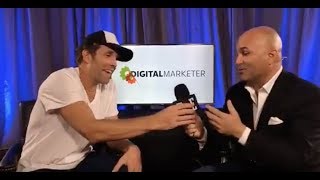
Jesse Itzler went from signed rapper to building Marquee Jet, a prepaid private-jet service, then partnered on Zico coconut water and bought into the Atlanta Hawks. He shares how he got meetings through cold-calling, why he focused on high-ticket customers, and the "brownies" story about standing out by thinking different.
Questions this video answers
Built the company up into $5 billion in sales and sold it to Berkshire Hathaway.
About $250,000 per customer (over the course of a year of actual purchase flight time).
About 4,000 customers.
He ran 100 miles (a 100-mile ultramarathon).
Facebook group: "We Do Hard Stuff". He donates $100 to the charity of the month for participants.
Chapters
Hi, my name is Scott Duffy with Entrepreneur magazine and I am in Los Angeles, California at the content and commerce event put on by Digital Marketer. We're here at LA Live across the street from Staples Center, Nokia Microsoft Theater right next door. And I'm here with my man Jesse Itzler, who I just love Jesse. We know each other a long time, Jesse. We're both big basketball fans. Jesse is an owner of the, of the Atlanta Hawks, one of the founders of Marquee Jets, Zico Coconut Water. But it all started for you in the music business.
You had to bring that up.
Yeah, yeah, yeah. So share with us, all of us entrepreneurs, kind of your path in the music business and the hustle that it took in order for you to get where you got.
Sure. Pass the mic. Okay, cool. Well, it's funny you should bring it up because I don't really believe in resumes in the traditional sense. I believe in life resumes and building a life resume. But since you brought it up, I will, I'll take you back to my music days. I started out at a very non traditional journey as an entrepreneur. I started out in the music business. This is going to sound like a crazy shock, but as a rapper, I was signed to a label not far from here called Delicious Vinyl. And Delicious Vinyl had two monster acts at the time. They had a guy named Tone Loke who sang Wild Thing and Funky Cold Medina, and Young MC who sang Bust a Move. I was signed to that label and I thought that that would be it. You know, they had these monster acts and I was just gonna make millions of dollars on their label and. But of course that didn't happen and I didn't get picked up for a second album. So after I signed to them, I moved back to New York City and that's where just the chaos started and, and I started out doing jingles for professional sports teams. I wrote a song called Go New York, Go for the Knicks. They paid me 4800, $4000. It cost me $4800 to make the songs. That wasn' model for the entrepreneurs out there. But every I did because every team that came into Madison Square Garden said, why don't we have a theme song? And I would have, thinking back, I would have paid the Knicks to do the song because now all of a sudden everyone's coming in and the Knicks like, oh, this guy Jesse did it. So I built a business doing theme songs for professional sports teams and ultimately sold that to a public company called sfx. And the owner of SFX at a timeshare, a private jet. And as a guest on a private jet one day first I was like, people fly like this. This is. I want to fly like this. Which was the start of an idea that my partner and I had for a company called Marquee Jet. And we came up with a prepaid jet card on the NetJet fleet that would give anyone who wanted to fly on their own plane all the benefits of owning a private jet without having to actually own it. So the planes would be available on real short notice. And we built that company up into $5 billion in sales, and we sold it to Berkshire Hathaway, Warren Buffett's Net Jets. And then I got into coconut water. I'm a big runner. I'm gonna run a bunch of ultra marathons. And when I was training for 100 mile race.
So an ultramarathon, just so. Just so people know. An ultra marathon. You're talking a hundred mile, by the way. You look good with that. Yeah, yeah, yeah.
It's all in the list.
It's on the wrist. An ultra Marathon is 100 miles plus.
I mean, technically, it's anything greater than 26.2amarathon. But I think if you were to ask an ultramarathon, an ultramarathoner, they would say it's 100 miler. At least. I do. So, yeah, I ran 100 miles. I discovered coconut water during my training, and I partnered with a company called Zco Zico, which we sold to Coca Cola. And as you mentioned, my wife and I are partners in the Atlanta Hawks. And it's been a wild ride.
So it all started. I'll grab this for a second. So it all started. We talked about music, but you have a great story you shared with me about your mindset about how to think different in a business. Started with brownies.
Right.
Could you share that story?
Sure. Yeah. No, I think that, you know, I learned a valuable lesson early on. I was in college. I was taking a advertising class, and I was at a crossroads in my life. I was either gonna go senior, and I was either gonna go into the music business, which I love, or I was gonna sell a product called Aunt Brownies, which was just a brownie that my roommates, Aunt Franny sent to us. But it was delicious. And I was like, I'm gonna really, when I graduate, I'm not gonna send my resume out. I'm gonna, like, sell brownies. So for this advertising class senior year, we had to create a fictitious brand from scratch. And I said, okay, I'LL use aunt Franny's brownies as my product. And if the class and the professor react positively to it, like, I'll use them as my R&D department, I'm going in the brownie business. So the way the final exam was organized, everyone had a hand in there presentation, which was an advertising campaign and slogan and packaging and mission statement. But five people were going to get picked to do the presentation orally, so and randomly out of a hat. So when we went into class, the professor asked everyone to write their name on a piece of paper and put it in a hat and he would pick out the five names. So the guy sitting next to me was a real jerk. For a long time I didn't get along with him. So I took 20 pieces of paper and I wrote his name on it. I stuffed it in. I was like, ronnie, Ronnie, Ronnie, Ronnie, Ronnie. And when the professor picked out the first name out of the hat, it was mine. Ronnie did the same thing. So I started pitching, pitching my product. And shortly into my presentation, the professor completely cut me off and he said, look, you know, I want to know what's your point of differentiation? And I said, well, I'm a home baked brownie and I could be gluten free if you like. I don't really have a point of differentiation. I'm a brownie and I taste good. And he like, you know, it was like, it was like almost in slow motion and echoing in my brain. He was like, if you want to come out from this school into this big world where there's 7 billion people competitively trying to launch products, whatever it is you do, it better be a much different brownie. And from then on, it really like taught me that no matter what I was doing, I wanted to do it through the lens of if nobody taught me how to do it, how would I do it? How could I be different? How could I? And for a lot of people that's a deterrent and there's a lot of entrepreneurs, but for a lot of people, you know, that could be scary. Like, oh, I. Oh, it shatters dreams. I always wanted to be, you know, a fashion designer, but I decided to go to school for that. I always wanted to be in the music business, but I just, I've never really been in a studio and people get discouraged. But for me, it was a blessing because it guaranteed that I would do things differently and get different results and stand out. So that's sort of been my thing all along. Like, you know, like, okay, I'm going to Launch this. Everyone's, Everyone else is going this way. How can I go this way? But not just to go this way, just to go this way. How can I go this way with purpose and meaning, to attract, you know, quick attention.
Sure, sure. And one of the things that I think, you know, we all face as entrepreneurs is we've got to do the work right sometimes, you know, just showing up is what it really takes. And one of the things that I love is how you actually got your, your, your deal with your record label and how you really worked hard and you just made things happen. Could you share that, that story?
Yeah. No, I mean, I went the traditional route before I went the brownie route. I sent out cd, you know, instrumentals, and I mean, demo tapes and my CD everywhere and wrote letters and, you know, knocked on doors and that didn't get me anywhere. And I kind of fluked into mean. I created my own luck and I really capitalized on the luck. But it was just a really unusual situation. I was at a recording studio, and the session before I came in, a guy named Dana Dane, who was a famous hip hop pioneer in the 80s, left an advanced cassette of his second album. Like, his first album was a massive hit, but no one heard his second album. He just finished it and he left the copy of the cassette on the mixboard. So I borrowed it, borrowed it, and I wanted to hear it. And I was like, I'll just return it the next session. And on my way out to LA to visit a friend, I read on the plane that the owner of Delicious Vinyl, his favorite artist was Dana Dane. So when I landed, I cold called the label, which is a big theme in my life. Like if I want to get something or meet somebody or whatever, it's just like, boom, boom, boom, cold call. And I got all the way up to his assistant and I must have, maybe my New York accent confused her or whatever the New York LA thing there was. She didn't really know. She put me on hold and she came back on the phone and she said, dana, if you can be here at two o', clock, Mike would love to meet you. He loves you. Dana will be there at 2 o'. Clock. Dana's a black guy from Brooklyn, gold teeth. So I showed up and I'm waiting in the office and no agenda other than like, I just got to get my darn thing played, man. Yeah, I'm 21 years old and, you know, when you're an entrepreneur, sometimes you don't think through the consequences. And I wasn't the consequences didn't matter. I needed a record deal. I needed to eat. So he came in, the owner of the record company said, who are you? And I said, you know, I work with Dana, same studio. I just started confusing him. And he said, what do you do? And I said, I rap. And he was like, that's impossible. And I said, well, can I put my cassette in while we wait for Dana? He said, sure. And I played this song I had and on my demo and got the deal. But what's interesting about that is, you know, you mentioned like hustling and getting in the room and this and that. What I found and is since then, and just as the world has evolved into email that so many entrepreneurs and so many people that want to get a result don't know how to send an email. So I mean, I get bombarded with, you know, investment requests or can you help me? Or can I pick your brain? And there's nothing catchy in the subject. The emails are really long. They're not. There's no what's in it for me. And it's just like, it's amazing that there's actually an art of getting your foot in the door and figuring the rest out later. And many people don't know, you know, aren't familiar with the tools that you need to get your foot in the door.
So how do you write, so how do you write a powerful email? Like what's, what's a guide that you give for creating a good hook for that person that wants to get in the door?
Well, for starters, I don't rush. So even today when I write an email and I'm trying to get some point across or I want to get someone's attention or whatever, I try to do it in as few words as possible. So it will take, I mean, I will stare at an email or put it in my, in my draft folder and come back to it and make sure that I have, like, if there's four words too many, how can I get it? Shorter, shorter, shorter. What's my headline that's gonna lure that person in to make them want to open that, he or she open that and react to it. And then also, is it a two way email if someone says, I just want to, you know, hey, Scott, I just want to sit with you and pick. I don't want any money. I don't want you to invest any money. I just want to sit with you for 15 minutes. That is money. That's my most valuable asset is my time. Well, why would I Do that. You know, I mean, I mean, I want to help you. Of course people want to help each other. But you know, you have to really position in a way, like in, you know, a sentence or two or less, what's in it for you? Why am I going to help you? Why is it important that we meet? And there's an art to that and it takes time. But you know those big long emails that are long winded and the last sentence. Delete.
Delete. Yeah, I used to, I remember when I was in my 20s, I worked for a person at one of the big sports networks and he, we were at a Super bowl and he took out his phone and he said to me, he said, just, just watch, I'm going to do. And he was talking about the power of creating a short but impactful message. And if there was an email that came through where he had to scroll down, he'd hit delete. If the message was over 30 seconds, he hit delete. And so it's so important right now. When you were at Marquis jets, one of the things that I thought was so amazing is how fast you guys rose to $100 million in sales. And I think that I had heard, but this may be incredible, I think that I heard at one point that you guys were one of the fastest, if not the fastest company to get to 100 million in sales in the U.S. how did you guys do it? Well.
First of all, we sold the high ticket item. So we sold. Our average cost per customer was about $250,000 over the course of a year of actual purchase flight time. So what was interesting about that is now I love businesses that require fewer customers that pay more money for a product or service. So for example, at Marquee Jet, at $250,000, we knew that if we had 4,000 customers, we'd be a billion dollar company. So we just did them from there. It was just like, okay, all hands on deck. Let's get the 4,000 customers. Let's get them, let's get them. Whereas opposed to zico, we sell 50, $100,000, $2 bottles of coconut water a week. A week. And if 20,000 people fell off, we'd have find 20,000 more people that week, you know, so, so I love the business model, but we did, we did it by, I think, three things. One is, this is gonna sound crazy, but we cared the most. We really overserviced our customers, which created a big word of mouth, friend to friend advertising and marketing campaign. The other thing is we had the Ability to invite people. You know, if you had a jack card and you took, you had seven empty seats, you'd probably take some friends to the football game with you. So we had constant exposure. We were our own pipeline for leads. And we were also on the Apprentice. We took a risk. We were on the second episode ever of the Apprentice before it ever came out. So we didn't know if it would be successful what it was, you know, and our episode did really, really well. So the challenge was the contestants on the, on the Apprentice had to come in and create an ad campaign for us. So we got that built in exposure. But we, you know, we worked hard to get that and other opportunities like that.
Interesting. Two more questions. The first, the first question is, I know at Marquee you had partners, and I would imagine in other businesses you've had partners as well. What are some of the keys that an entrepreneur should be thinking about if they're considering bringing a business partner into their company or starting a new company with partners?
Partners are great, but partners also could be challenging. And I think the most important thing is to think through everything before you enter into a partnership. You know, not just, oh, we've been friends from high school, because when the, when the chips are purple, friendships change. And you want to make sure everything is spelled out for good days and bad days. You want to define your roles. You don't want two people in writing, but also just like, you know, you want to make sure that you guys play different positions. Two shortstops on a team, only one can play. You want to make sure that you have different roles and that's defined.
And, and you just want to make sure that you're aligned in your long term goals. Because you might say, like, okay, my vision is we're going to build this and sell this in five years. And your partner by like, I love coming to work every day. I don't want to sell this in five years. This is my platform, this is my identity. So you just want to be really, really open. And I think, you know, look, people change. So you want, if you have a healthy business that lasts for years, I'm sure you're a little bit different than you were when you were 21 years old. I think I am. So you just want to make sure that the communication is always there. That's always been, I think, a big challenge. Because as you grow and build, you know, it's hard to say, okay, this is to be open on, not unintentionally, but just to communicate everything that's Going on real time.
Sure, sure, sure. When you moved from music to private jets to coconut water, I know there's a lot of entrepreneurs out there that think that they can seamlessly take one success that they've had in one industry and move into another. What do you need to think about if you're right, if you're moving from one space to another? How do you do that?
Well, first of all, I've had plenty of egg on my face too. So I mean, it wasn't. Every transition hasn't been smooth. I've had plenty of losses and I've made plenty of mistakes.
I think that the characteristics are the same. I think you have to become an expert in the category, you have to be really well versed. A lot of the traits are the same, but it gets easier because as you get older and as you've had success, you have momentum, you have a network, you have, you know, it's easier to pick up the emails, don't have to be as sharp as they were to get people as attention. But that momentum is so critical and makes it a lot, a lot easier. But like I said, you have to become an expert. You know, you really, I think in anything, I mean, that's kind of obvious, but a lot of people just assume, I've done this before, I can get by. But no, I mean, you have to think ahead. You know, you have to still be a visionary and you have to build the right team, hire your weaknesses and, you know, and build a new team around whatever it is that you're doing.
Awesome. Awesome. And my last question for you today is, what are you most passionate about today or there are any causes that you'd like to share with us and how could we get in touch with you?
Sure. So I have a Facebook group that I'm passionate outside of my kids and my family and the Hawks. I have a Facebook group that I'm really proud of. It's called we do hard Stuff. And every month I post a physical challenge. I'm very into fitness and wellness and for anybody that completes the challenge, we pick a charity. Each month a different charity. I donate $100 to the charity of the month. And this started with three people in the beginning of January. I'm like, anybody wants to do 2000 push ups, burpees, sit ups, squats. This month I'll donate $100 to the special Operations Warrior Foundation. We ended up, you know, $125,000 later, nine months later, we have tens of thousands of people in the group and we've raised, you know, a tremendous amount of money. So I'm very passionate about. About. About that and just. I call it philanthropy.
That's on. On Facebook.
On Facebook, yeah. We do hard stuff because I think that, you know, you know, like I said, I'm a runner. That big physical challenges really translate into all the areas of your life. So that's what I'm encouraging people to do.
Awesome. Cool. Well, for all of you who are watching on Entrepreneur, I want to thank my buddy Jesse Itzler, and I want to thank.
Yeah, this is unbelievable.
You know, so, okay, so here's the thing, right? Sometimes just about. It's sometimes just about showing up, right? And in a content kind of world, today, we're always producing content. This microphone is fantastic because it actually connects directly into the iPhone. So it just. It makes, you know, what used to be so difficult, so simple.
I want to start interviewing people. I want to walk over. You have this ability to walk. You should be live all the time.
Well, we try.
Yeah, we should constantly be live.
We do. We do. So for all of you who are watching, we are here at LA Live in Los Angeles, California, at the Content and Commerce Conference, the Content and Commerce Summit put on by Digital Marketer. We really appreciate all of you joining us. By the way, make sure to. If you have any questions or comments, put them down there. You know, write your questions and comments. We'll jump in and we'll answer them. And check out Jesse and all the amazing work that you do. Thank you so much, brother.
Thank you, man.
Yeah, you got it.
See you.
Take care.
More from Scott









Business & Burgers-Sequence Collection bracelet for National Entrepreneurship Week

