Scott Duffy interviews Matt Theriault: Epic Real Estate Tycoon, Business & Burgers: Season 1 Ep. 4
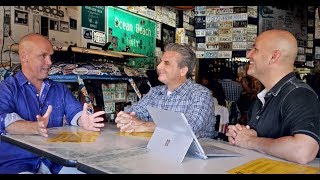
This content was created by Scott Duffy. This content was uploaded by Scott Duffy. This is a YouTube video titled "Scott Duffy interviews Matt Theriault: Epic Real Estate Tycoon, Business & Burgers: Season 1 Ep. 4". It features a conversation between Alan Taylor, Scott Duffy, and Matt Theriault, recorded on November 21, 2017. The episode is part of a series where Alan and Scott explore different cities to find the best burgers while discussing business with various guests. In this episode, they are in San Diego at Hodad's Burgers, discussing Matt Theriault's journey from the music industry to becoming a successful real estate investor and coach.
Chapters
I'm Alan Taylor. My buddy Scott Duffy and I are in search of the best burger in America. Each month we visit a new city to try some of the top restaurants, pubs, and brewhouses while sitting down for a candid conversation with some of the top entrepreneurs, athletes, entertainers, and celebrities. I don't know about you, but I love talking business over a burger. Welcome to business and burgers.
There's just something about San Diego. Sure, it has some of the best weather, beaches, and outdoor activities in the country, but what Scott and I love most are these tight knit communities and beach towns here in SoCal that each has its own unique character. One of those gems is Ocean Beach, a local surfing community where Hodad's Burgers has lovingly called home since 1969. The cherished family business is a favorite for locals, but people come from all around the world to stand in line just to have one of their amazing burgers and frings. Now, frings are definitely not on our diet plan, but Scott and I decided to dive in head first to see if this long standing popularity was all hype or well deserved.
All right, so, Allen, I am so fired up to bring you to Hodads today. When I was in college, I worked a couple doors down the road, so this became my San Diego hometown burger.
I saw this on Triple D. Yeah. They have a crazy double bacon cheeseburger, and there's something special about the bacon. I can't wait.
Yeah, and you get it with them all.
Don't forget the mall I'm in. All right. Joining us is Matt Theriault, a United States Marine Corps and Desert Storm veteran and an accomplished real estate investor and coach. After building a very successful music business, the market collapsed and Matt's world was turned upside down. He lost everything. He went from music mogul to bagging groceries in less than a year. He decided to reinvent himself and his career, and as a result, he created one of the hottest real estate firms in the country, Epic Real Estate.
Rather than simply helping his clients find their dream homes, Epic Real Estate helps its clients build wealth and prosperity through real est.
Matt, it's so awesome to have you here. Thank you for coming down to Hodads to Ocean beach with us.
Yeah, you bet. I wouldn't miss it. I mean, any restaurant on the corner of Bacon street, you know, you know, I had to be here.
Bacon and burgers. That's right.
I want to start by talking about how you got started with your record label.
Yeah. When I got out of the Marine Corps, I spent the next 15 years of my life in the music business. And then when the digital download came along, it just turned the whole industry upside down. And in six very quick months, I found myself bankrupt, divorced and bagging groceries. And it really hit as fast.
So you're in the music industry for 15 years, here comes technology. Everything changes in like a heartbeat. You're so used to out there selling your deal or selling your business or selling your product or service that you kind of know that it's going on.
But you don't want to believe it.
You don't want to believe it. You don't want to fool yourself.
So true.
Yeah. So you wait too long to adapt.
We had a marketing formula and it just worked month in and month out. Our goal, to put out one release a month. And we had this certain ad spend. This is where everything was allocated towards. And it just worked like clockwork for about two years, two and a half years. Just every month was perfect. And then one month it just like, oh, it didn't work as well. So the following month we threw more money at it. No effect. And we threw more money at it, more money at it, and drove it right into the ground. And like, we had no idea what was even going on. In hindsight is crystal clear, but at the time it was happening, we didn't have a clue.
When you got to the spot where you go, I don't have any money, I gotta eat. I gotta go do whatever I gotta do, what was that like in that moment? Where were you in your headspace?
You know, when you go from a seven figure year to $7 an hour, that is quite the transition. All the major labels were laying off tens of thousands of employees at a time. So there were a lot of people immediately in the job space. And it just got to the point where credit cards were maxed out. All of my, my favors had been called in with family and friends and I was like, I got to eat. That was probably my, I don't know, 25th application that I had submitted. So I didn't start at the grocery store. It's just kind of where I ended up.
Yeah, right. And you know what they say, you can't bounce up till you've hit the bottom.
That was your bottom, definitely. It was my bottom. Yeah. So I spent about six months there and it was the world's biggest pity party. I blamed everybody and everything. And I just like, wow, if I'm going to go back and recreate the lifestyle that I had previously enjoyed, I have to do it. It's Got to be me that does it. No one's going to help.
Did your military background help you at all?
I would say so, definitely. You know, when you go through boot camp every day, you wake up with a schedule, and each day is just one step at a time. And, you know, if you just carry out those activities and they compound, eventually you'll get your result. So that was the mindset that I proceeded with.
You know, sometimes the purpose of being in business today is to stay in business tomorrow. And the business of being in business tomorrow is to stay in business the following day until you can figure out what you need to figure out to make yourself proud.
An early mentor at that time, he said something just very fitting for what you're saying. And I don't even know if it's his quote or what it was, but he had said, just travel as far as you can see, and when you get there, you'll see further. The decisions you get to make tomorrow, you don't even know about today. But as long as you stay in motion, it just kind of evolves.
Where did the change happen?
There was a day when I was bagging groceries. We were short people, and the manager said, I need you to be the checker. And so they put me up at the check stand, and I felt like I was hoity toity. I got to do the scanner and.
Go, beep, beep, beep.
And there was this one soccer mom. She came through. She had her kids with her, and then, you know, the thousand dollar stroller. And she had the two kids, they were all dressed up. She was in her tennis outfit. And when she handed me her credit card, her ATM receipt fell out. And I just couldn't help but sneak a glance. And I looked at it, and I remember this number specifically. It was $256,000. That was the balance in her bank account. And that was a very significant number for me because when I was in the music business, every time my account hit 250 was the time that I had needed to make a transfer. And I sat there and thought about, it's been about nine months since I've seen that balance and doing what I'm doing right now, I'll never see it again. That was the change. That was the epiphany.
And so how did you do it?
So I went home, started searching, and had a little bit of a suggestion from my grocery store manager, of all places. He'd say, matt, if you want your life back, you want the money back. Real estate. That's the final Frontier, where the average person has a legitimate shot at creating real wealth. Ironically, the city next door, my aunt, estranged aunt. I hadn't talked to her in 15 years. She'd been the number one real estate agent there for the last 20 or something years. It was amazing. And I was just like. I sent her off an email. I said, can we have lunch? But I woke up in the morning and she had replied. She said, yeah, come on down. Within 24 hours, I was in school for. To get my real estate license. So that's how it started. Did really well the first four years and just kind of realized, wow, if real estate is where the money's at. Based on what I was seeing my clients do, I was like, I think I'm sitting on the wrong side of the desk. I wanted to do what my clients were doing when they were buying and selling properties on their own behalf.
So real estate. Oh, yes. All right. Beautiful. I mean, what do you suggest? This is your joint, right? The Guido. What is the Guido? The Guido.
The Guido is inspired by Triple D's Guy Fieri.
Yeah.
Awesome.
That's a pastrami, grilled onions, ground mustard, pickles, ketchup, Swiss cheese.
You all right with that?
Yeah, I love everything on there.
You good? Three?
Yeah?
Yep. Three.
And then your onion rings. Yeah, yeah. So we gotta do the onion rings.
Oh, my God. Oh, my God.
Yeah, the frames.
The frames.
All right, so real estate.
I made a decision at that moment. I was no longer going to represent other people in their transactions. I wanted to represent myself on my own purchases and own sales. Three and a half years later, I had had enough rental property, enough passive income from that rental property to cover my monthly expenses in three and a half years. Three and a half years. Yeah. It was a really good education. There's a lot of creative strategies involved and. And what happened there after that? Three and a half years, you know, all my friends and family, they're like, how come you're playing golf on a Tuesday when just seems like just last year you were bagging groceries. How did that happen? You know, everyone just wanted to pick my brain and figure out how I did it, and then, can you help me do it? And it just kind of fell into the natural next, I guess, step of that whole evolution was to teach.
Now when you look at teaching, you have this array of technology at your fingertips. I mean, teaching today is not like teaching 10 years or 20 years ago. So maybe you could walk through that.
You know, in many of my entrepreneurial endeavors, I've always operated from the premise that those who educate the market dominate the market. A lot of my business building strategies were small meetings, workshops and presentations, stuff like that. We get anywhere from 10 to 50 people at a time, and those were great for building business because you stood at the front of the room, you positioned yourself as an authority, a place to go for help. When it came to technology, though, I really stumbled accidentally across the technology of podcasting. So I started recording my workshops and my little presentations on a podcast, broadcasting those out. And I think the first day that I was notified that I was live, I had 100 downloads. And I was like, it took me three weeks to reach that many people, and I did it in one day, and then the next day there was another hundred, and then another 100, and then 150. And it started to grow and snowball. And here we are six years later. I get 10,000 downloads a day, and 99.9% of my audience will take what I give them and run with it and go do it themselves. But still, even at those numbers, that 1% that doesn't. They become clients.
So I know that you are like a Yoda of podcasting.
You look like Yoda.
I do look like Yoda.
Okay, good.
The pills are working.
So what are two or three pieces of advice you give to somebody that wanted to start their own podcast?
Well, we're at a place now where podcasting, it's commonly accepted. It's becoming more and more known, and it's becoming a popular business tool amongst entrepreneurs. It's really congested. It's really difficult to stand out. So my advice for a podcaster, someone getting new into it for the purpose of generating business, would be to use a keyword that they think their client would be searching for. You got to use that keyword in your title. Just in mind is epic real estate investing. I have to have real estate investing in my title for business and for burgers.
They're going to find us, right?
That's right.
If your goal is lead generation versus something else, you may take a different strategy.
Right. That's really the decision that you'd have to make is, do I want to be a podcast celebrity or do I want to drive leads for my business? Two totally different things.
Hey. Whoa. Inspired by Triple D's Guy Fieri, the Guido burger is served with pastrami, Swiss cheese, pickles, grilled onions, ketchup, and some spicy brown mustard. The frings are out of this world. That's right, Frings. A combination of specially battered French fries and a mountain of Onion rings, all served together in one big basket. And we've been told that a percentage of that line outside is for Frings alone. This Guido burger is a monster and it's delicious. The Frings are sensational. And the ice cream shake, well, it's gone. And I got a little on my shirt too. So is Hodad's all hype? Definitely not. I guess it's why Hodad's decided to open two additional locations. One in downtown San Diego and the other at Petco Park. Hodad's popularity has followed them there too. But despite the notoriety and expansion of Hodad's, it comes with a heavy heart for its newest owner, Shane Hardin. Shane is a third generation owner after his beloved father, Mike Hardin passed away in 2015. Mike was a cherished and influential staple in Ocean beach and was on a mission to give back not only to his community, but to the military overseas with the Mess Lords, a small group of world renowned chefs cooking and entertaining for our US troops around the world. As his friends and family members still feel the void Mike has left behind, they also remember he lived his life to the fullest and would tell folks that when he died, he wanted to return as himself.
I want to get to the point now. How did you do all this in such a short time? And where are you today?
So something completely unexpected. When I started teaching, teaching people how to do it for themselves. So I taught them how to do what I did in such a short period of time. What happened? There was a small section of that, that client base or that student base. I was like, you know what, this is a lot of work. I have a job, I don't need another job. So a lot of them said, can you just kind of do this with me? That turned into what we call a turnkey real estate investment business where we actually went out for our clients, we found the properties, we rehabbed them, we put the tenant in place, we coordinated the property management, then we sold it as a cash flowing asset for them and found out there was almost a bigger demand for that than there was to learn how to do it themselves. So it started a whole new business.
You didn't just create a product to create a product. You were listening to your customers.
Absolutely right. There was this demand and we already had our own teams in place. We're all across the US and so we basically just leveraged our existing property managers, our existing contractors, and we started fulfilling these orders, so to speak. So there's rental properties made to order, kind of like, I guess you could Describe it. And that turned into a multi million dollar business in about 18 months. Then that started to attract a whole new clientele. We're like, we like these little 50,000, $75,000 houses you got. But I got a big chunk of money. What can you do with that? And that's where we created a fund where they can actually purchase shares and invest in our business. So we have three official heads of our business now. We teach them how to do it themselves. We have the turnkey operation where we do it with them. They call all the shots, we just do the work. Then we have a completely passive operation with our fund. You know, here we are about three years strong now with those three models running. And I could have never even envisioned this for myself. I had put on a bag and groceries.
Do you have to have a big team in order to do that or.
One market at a time? We've got a couple property managers in each market, a couple contractors in each market, a couple realtors in each market. And we just played quarterback from our home office.
So we're talking about team. And I know one of your most valuable teammates in your business is your wife, Mercedes. What have you learned about building a business with your wife, with your family?
Yeah, that's never easy.
I think that what's really made us successful in working together is we have a pretty clear line of what her responsibilities are and what mine are. And there's very little overlap to our day to day activities, which is a.
Great key for any partnership. You know, you're going to have a business partner. You want to make sure that you have non overlapping core competencies.
I guess kind of where our strengths, our core strengths complement each other, is that I am the visionary. I do know what I want to do. I have created the vision, I've created the business model. And she's really good on fulfillment. So it's kind of like I throw her the pass and she takes it all the way to the end zone is kind of our relationship. So there's not a whole lot of disagreement there if you're both winning. It's one of the things that I've. The lessons that I've learned from the failed music business where I tried to wear all the hats, I tried to do everything. I didn't want to let anything go and I didn't want to let control go. And I can see how that cost me in so many places back then. And moving forward, it's like, you know, let's go ahead and just kind of let go and hire someone that knows a whole lot more about it than you do and trust and trust them with that. And it's, I mean with just exponential growth since we've adopted that kind of principle of hiring out.
Hey, dude, just in case before you go, you might want to, you know.
There you go.
Yeah. Now you're, you're ready. Hey man, thanks for joining us here on.
Thank you, Alan.
Great advice.
All right, Scott. Thank you, brother. Not quiet.
Let's get down to business. Now.
I feel like my belly is exponentially growing. But when it comes to real estate and financial investments, here are some of Matt's food for thought as as an entrepreneur, don't try to wear all hats. Hire good people. Give them the resources they need to succeed and get out of their way. When working with your spouse or significant other, make roles very clear and avoid overlap in day to day responsibilities. Remember that industries get disrupted and what buyers want may change from time to time. Watch for the signals that you need to adapt. Stop throwing good money at something that isn't producing. Don't be afraid to reinvent yourself or your business.
Next time on Business and Burgers, we sit down with Jason and Sarah Kenworthy, the founders of Pink Helmet Posse, one of the fastest growing action sports companies in America. This husband and wife team set out to create better skateboarding gear for their three daughters and wound up transforming the sport worldwide, showing that skateboarding isn't just for boys. Join us next time and take a bite out of business on.
Check out more episodes of Business and burgers and our bb blog at our website, businessandburgers.com also, don't forget to visit our Business and Burgers Facebook page and give us a big thumbs up. Join us each Wednesday for an all new Business and Burgers presented by Microsoft, where we get to the meat of a successful business.
More from Scott









Business & Burgers-Sequence Collection bracelet for National Entrepreneurship Week

