Scott Duffy interviews Paul Oster, Founder Better Qualified
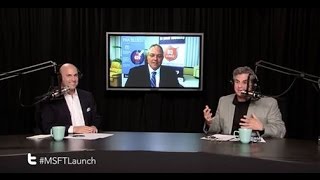
Paul Oster, founder of Better Qualified, explains how entrepreneurs can build business credit separate from personal credit. He covers the legal setup required (corporation or LLC, EIN, state licenses), the essentials for establishing credit (consistent legal name, physical address, phone number, website), and why avoiding personal guarantees matters.
Questions this video answers
Eatontown, New Jersey.
betterqualified.com.
A business (paydex) score of 80.
About $40 per month.
About 80%.
Chapters
Well, hi, everybody. I'm Alan Taylor from Inc. Radio, and this is the Microsoft Launch Program. We're celebrating National Entrepreneurship Week presented by Microsoft. Scott Duffy right here. He is the author of the book Launch. Scott, good to see you again.
It's great to be here.
We've been hanging out all week long for this Entrepreneurship Week thing, and it's fun.
It is. And I am so excited about what we're going to do right now.
Well, who's this guy on the TV screen behind us?
Well, Paul. Paul is the number one leading expert on, on building business credit in the United States. And if you are. If you are a business or you're starting a business, you have an existing business, I think that many people, many entrepreneurs don't realize the opportunity that they have to build business credit unique from, you know, separate from their personal credit. And so Paul is going to teach us how to do it.
Paul, I've been meeting all of Scott's friends, and I gotta tell you, I've never met more cool people in one short week in my life that have such a huge impact on me. And also the folks that are listening and watching. And where are you Skyping in from today?
We're Skyping in from Eatontown, New Jersey.
Nice. Well, talk to us about better qualified because. Well, let me tell you a little story about me. First of all, I recently went in and applied for some business credit, and I wanted to buy some cameras and gear for what we're doing right here. And the folks did a credit check, and I have good credit, luckily. And the guy comes in, he says, well, how much do you want to borrow? And I said, well, I think I can probably get away with about 50 grand. About half an hour later, he calls me up and I'm out eating a hamburger at a McDonald's or something. And he says, hey, you know what? Your stuff is back. Why don't you come in? Let's talk. I went in the front door. He says, come on in, sit down. All of a sudden, he's smiling at me. He goes, by the way, you're qualified for 500,000. I had no idea I had any credit at all, let alone $500,000 worth. So personal credit is one thing, your business a whole other ball of wax. Yeah.
Unfortunately, what most small business owners do is they wind up personally guaranteeing everything. And that could have been the case with you. The bank doesn't really put that out there. No one wants to use the word personal guarantee, but somewhere in that application it says, you are personally guaranteeing for this loan. What we try and teach entrepreneurs and small business owners is you don't have to personally guarantee everything. If you've been in business for a couple of years, we can teach you how to build a business credit score, which by the way, you can build your business credit score a heck of a lot faster that you can build your personal credit score. And once you get to a payday score of an 80, that's considered a perfect score in the business credit world. And now you're talking about automobile financing, equipment financing, credit cards, gas cards, all with no personal guarantees. You could even get mortgages through your tax identification, only with no personal guarantees. And we can't stress that enough. We lived it. So the age old ad of, of learning from other people's mistakes, you know, again we walked into bank of America, we got laughed at, and they said, how's your business credit score? And Eric and I looked at each other and we said, we think it's pretty good. And that's what most small business owners think. They're paying their bills on time, but they have simply failed to build their business credit. If you don't follow the specific steps, you're in trouble.
All right, let's break it down then and maybe talk a little bit about the difference between signing personally and, and having your business stand on its own.
Yeah.
So if you sign for something personally, what that means is if, unfortunately, you join the other 80% of small businesses that ultimately fail, even if you claim bankruptcy, chapter 11, you will be personally guaranteed and.
Obliged to pay those debts. So don't personally guarantee it when you don't have to so that your business can stand on its own credit worthiness. But if you don't follow the specific steps of, of people think it's easy to build business credit. If you don't follow the specific steps, you wind up shooting yourself in the foot. Like, here's a big one. Most small business, these young entrepreneurs, they use their cell phone or they use some magic jack or these crazy phones that are out there today. If you don't have a local 411 number in a directory, guess what? You're not going to get business credit if you don't have a brick and mortar address. It's got to be deliverable. It can't be a PO Box, can't be a UPS address, it's got to be a brick and mortar deliverable address. Because if you don't do that, you're not getting business credit. So a lot of these entrepreneurs jump in the game and they use their cell phones, they're using a home address, and they're not following these simple steps. And then when they go to apply for business credit, they're going to get denied for sure.
So the website you have is betterqualified.com and I imagine all this is available there for the entrepreneurs and people that want to get business credit, right?
Yeah, absolutely. Listen, there's no magic sauce, there's no secrets here. What we want to do is coach the entrepreneur, show them how to do it, tell them how to do it, and teach them how to do it. Look, they can try and do it on their own, but if you guys understand this right, no one has time to do it. If you're running your own business, run your business. When it comes to doing your taxes, don't do your own taxes, Hire a professional. When it comes to building your business credit, hire professional at least for the first 12 months. Once it's up and running and we've built the foundation correctly, then you can do it on your own.
So, Paul, my company's 22 years old and I never had to get credit for my company. I've never needed to borrow anything. I always felt like if I couldn't afford it, I just didn't buy it. So I remember when I was signing, I signed as a CEO for the company. So I'm pretty sure that I signed credit for the company on its own, on its own standing, don't you think?
No.
See, now I'm scared.
There you go.
So again, anytime that you are signing personally, that means you personally guaranteed it. So you should only be being asked for the federal tax ID or the in number. If it's anything else, then most cases you have personally guaranteed it. And again, these creditors are smart. They don't want to make it a big deal that you're personally guaranteeing it. So typically the contract is in like 1214 font and the personal guarantee is in like 6 or 8. It's under the line where you're signing. But rest assured, you are personally guaranteed.
So should I have my attorney look at it beforehand?
Absolutely. And you know, it's not something that needs to be reviewed by an attorney. You have to do a little bit due diligence and just read through the contract and any place where they're asking you to sign, read that section very carefully because that's where you're personally guaranteeing.
I have two questions for you. The first is, let's say I am an entrepreneur that has a fairly young company, or I may have an older company I just haven't focused on establishing business credit. What are the first two or three things I can do today to begin to get myself on the right track?
Sure. Well, let's take it even, take a step back when you're thinking about forming the entity. All entities can all establish business credit. But if you want to establish business credit with no personal guarantees, you can't be a sole proprietor or a partnership because ultimately through the tax process, that gets filtered down into your personal income and taxes. So you have to form a corporation, llc, C Corp, something like that. Once you've done that, now you file for your federal tax ID and you have to get all your state licenses. And then this is the biggest mistake that entrepreneurs make. Okay? I call it the holy trinity of business credit. And that's your name, address and phone number. So if you talk about your name, your legal name has to be accurate and consistent across all your licenses, across all your filings. If it's not, it is an automatic red flag when you're applying for credit. Your address, we spoke about that. A little bit brick and mortar and deliverable. Your phone number, again, 411 directory is a necessity. You could get denied. You could have excellent experiences for years. You could be making lots of money. And if you don't have a 411 number, you could be denied just solely on that. The other thing is having an 800 number. 800 numbers profess credibility, you know, to banks and creditors. So you should really have both a 4:1 local directory number and this other 800 number for sure. And then the last part of that, although it's a trinity, I call it the big three plus a website. Without a website, in today's world, there isn't a bank or creditor that's going to lend you money. They put as much emphasis on that as anything else. Because let's face it, in today's world, if you don't have a website, how are you going to survive?
I feel a whole lot better because I have an llc. I have bricks and mortar, I have a website and I've been doing it for a long, long time. And when I signed, I signed on behalf of the company as a CEO of the llc. So I feel pretty good. It's scary stuff though, right? It's scary.
You know, most entrepreneurs again, they. Someone told them that they should form an LLC for liability and protection, right?
Yes.
And that's great. But what we say is why not build the business and corporate credit under that same very LLC and talk about write offs. Everyone says Oh, I write off my vehicle. I'm not. This is a thousand times better than a write off. If you buy, if you purchase your vehicle through your corporation, it's not a write off, it's a direct expense to the bottom line of your company. So it's a million times better. So forming the LLC is great. Now build the corporation's credit so it can stand on its own.
What if you have lousy credit? What if, what if you have a business, you're an entrepreneur, maybe something went sideways, whatever, and you have to reestablish yourself. What's the advice that you'd give. One or two things that we should do to get ourselves back on the right track.
Well, Scott, our mantra is build, manage and monitor your credit. And if you're not doing that for both your business and personal credit, you're making one of the biggest mistakes entrepreneurs make in the very beginning when they're starting out. How are you going to know where you stand unless you're monitoring your credit on both the business and personal side? And we're not talking about thousands of doll. You can monitor your business credit for 40 bucks a month. And to do that is priceless because you asked me about a couple of things that I've learned in my past 10 years, and I'll tell you this. No one's handing you an umbrella when it's raining. So if you don't know what's happening to your business credit, you have to figure it out because you have to build that business credit profile so you're ready when you need to borrow money. That's not the time to start building your business credit. It has to built and prepared and ready to go.
Betterqualified.com Again, all these tools will be there in order to help people, right? That's right.
Absolutely. Absolutely.
It's great to have you here today. Thank you so much.
Yeah. Now I gotta go and check all my loans. Thanks a lot, Paul.
Well, listen, again, knowing what your business credit is, knowing what your personal credit is, is, is the beginning of making sure that you're ready to go. Look, why do, why do small businesses fail? Because they don't have access to capital they didn't, you know, come up with to get them through six months of trouble. And again, if you go to the bank when you actually need money and you're already in a tough spot, that's not when you're going to get it. Yeah, it's too late.
All right, well, Paul Oster, better qualified.com, all good advice again, I'M sweating a little bit because now I got to go back and look at all my loans, make sure I didn't not pay attention when I should have been. Paul, thank you very much.
Thanks for having me on.
This is again the National Entrepreneurship Week, and we're doing a whole bunch of great programs to help you guys out there that are trying to get into business, make some smart decisions. Check out our MSFT launch and you can find more of these great podcasts.
More from Scott









Business & Burgers-Sequence Collection bracelet for National Entrepreneurship Week

