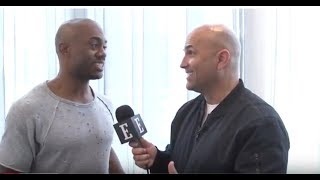
Ralph Brown, a former Nebraska and NFL defensive back, explains how championship teams build tight-knit cultures with detailed coaching. He treats opponents' completions as luck and focuses on the next play, a mental approach he now applies to mentoring and broadcasting.
Questions this video answers
Yes (Ralph Brown confirms his number was retired).
November 21, 2017.
Chapters
Hi, this is Scott Duffy with Entrepreneur magazine and S1 Media. And I'm here today with a good friend, Ralph Brown. How you doing, man?
I'm great, Matt.
Thanks.
Thanks for having me.
Good to see you. So I'm always amazed when I think about your background and the fact that I think you've won championships from like the time you were crawling.
Yeah, like 10 years old. I've been winning championships my whole life.
I mean, literally high school. You went to Bishop, Vermont.
Yes. You.
You guys won it. You went to college, you went to Nebraska, you won the national championship, you went to the pros, the NFL, and you go to the Super Bowl. How do you do that?
Well, I think it's luck. I mean, it's just a fortune that I've been on my whole life, ever Since I was 10 years old, I've been a part of great coaching and great teams and my experiences have been so great. Just on those teams, winning championships, getting that experience and being a part of a great group of people who know how to win, give extra effort and my talent has helped the whole process. But just being a part of great coaching, great teammates, great role players and people who get it and want to be great.
Okay, so when you say they get it, like, because you are like the definition of a champion, having won all those levels. And I have a question. When you walk into a locker room, are you able to like smell it, to sense it, whether this group has the right championship mentality?
Yeah, of course. Just because I've been around it for so long, once I'm around it and around those type of players and the coaching staff, you can tell by how they carry themselves, how they're taught, the inner workings and just the belief that they have throughout practice and in the locker room. And the great teams are very close, they're tight knit, and that's what makes those teams great and how they win those Super Bowls and championships.
Have you ever been on a team that was going through adversity and there was a magic moment, something that brought everybody back together?
Yeah. When I was in New York with the New York Giants my rookie year, we went 74 and the media was all over us. They were telling us we weren't going to win any more games. We were terrible. And then we went on to win our next consecutive games of how many they were. We ended up going to the Super Bowl. And I think at some times we're championship teams. You have to endure or go through some type of adversity to charge you up to get you reassess yourself and get you realigned with your focus. So you can be great in most teams. And most people in life go through that.
Yeah. You know, one of the things that we talked about in the past is as a defensive back. Right. You've been. As a player, you've gone through plays where you performed brilliantly and other plays where you may have messed up, you may have missed the assignment, whatever it is. But what you told me is you have to pick yourself up and you have to focus on the next play. And as defensive back, maybe the winning touchdown is thrown over you, but then you make the big interception. How do you manage your mindset when you're on the field?
Well, for me, I always believe that whenever someone made a catch, it was luck. That's just the way I trained my mind. But whoever made a catch on me, no matter what time or point of the game it was, they were lucky and it won't happen again. And that's the way you have to train yourself. Some people have different philosophies.
They flush it.
They have a bad memory, and that's what you need. But I always believe that whoever caught the ball on me, they were lucky. And that's how I approached every game.
That's so awesome. And I know that you've been involved in business, not just sports. You've had multiple businesses and experiences. What's the biggest lesson that you have learned as an athlete that you've been able to apply to business?
Well, the thing is, you have to know how to build teams, but also the power of knowing. I've known that I'm going to get through rough times. I've known that I'm going to rebuild the teams and businesses that I've been a part of. When you have that feeling, no matter what you go through, it doesn't matter. You're going to keep pressing through and you'll get to the top or whatever the pinnacle of your journey is. You'll end up getting there. Yeah, that's.
That's totally awesome. And then I'd love to talk to you about your time in Nebraska. So I'm a huge college football fan. In fact, your number was retired, isn't that correct?
Yes.
That's so awesome.
Congratulations.
That's amazing. And one time we were talking about the best coaches that you played for and some of the common characteristics, and you mentioned Tom Osborne right away. What made him a great coach?
One thing about Coach Osborne was he was very detailed with everything he did. First, he was accountable. He was A great teacher, but he was a fanatic when it came to details with his practices and the way he just groomed everybody and got 5%, 10% more out of us. That's how we just basically got to the next level. He's somebody that treats everybody the same, from the janitor to the. To the starting quarterback. And we all felt like we were part of a team, and that's why we were so close. And practices are hard, too. Our practices during the week were extreme, so he made practices hard during the week, so then on Saturdays it would be easier. And that's what it was.
Tell me about the things that you're the most passionate about today.
I love giving. I love giving to kids, grooming kids, mentoring kids, giving back to the youth. Just because I was so blessed with my NFL career, now it's time for me. I'm excited to give back to kids, and I feel like a lot of kids don't have guidance. A little bit of loss with social media and how it is in America nowadays, and I just want to give back and try to develop and develop new leaders that can take care of America when I'm gone.
Yeah, you know, you talk about giving back, and it really. It reminds me of gratitude. And, you know, one of my mentors, David Meltzer, over at Sports 1 Marketing, he. He taught me that, you know, when in life, right, you have ups and downs, highs and lows, you know, all that kind of stuff. Everyone does. But when things are tough, what most people focus on is what they don't have, what's not going, right. They focus on the lack. And when you focus on gratitude, when you kind of. When you're able to focus on the things that you do have on a daily basis and give thanks for those things, it shifts your perspective, right? It helps you to realize what you have and just helps you to move forward. And so it's great to hear you talking about giving and giving back and gratitude. Now, I know that you are a broadcaster today, and tell me, what do you like about being a broadcaster?
I like to be able to educate the fans that are watching the game, and I can give them kind of my standpoint or point of view of how that play developed, what they're looking at. I like to teach people when they're watching the game. So I've been a teacher my whole life, and I love to teach. So when they're watching a game, hearing my voice, you're going to get some lessons throughout the telecast of the game. And that's what excites me about it.
That's awesome. Well, guys, for entrepreneur and S1 Media, I want to thank Ralph Brown for being here with us. Thank you so much, man. And we'll talk to you guys again soon.