Scott Duffy interviews Rand Fishkin, SEO expert, Business & Burgers: Season 1 Ep. 13
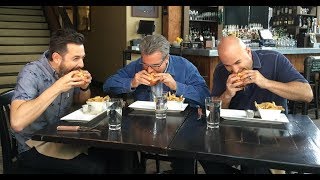
Rand Fishkin, co-founder of Moz, talks about building SEO tools from $500k in personal debt to raising $1.1M in 2007. He breaks down SEO for small businesses into three steps: make your site crawlable, research keywords, and create resonant content. The episode also features Quinn's 8-ounce beef brioche burger with white cheddar, bacon, and Dijon-horseradish aioli.
Questions this video answers
From 7 employees to 134 employees.
Revenue grew from $800,000 to $29.3 million (intro metadata).
Traffic grew from 1 million to 30 million annual visitors (intro metadata).
About $500,000 in personal debt (2005).
US$39 per month via PayPal (initial paywall).
Chapters
I'm Alan Taylor. My buddy Scott Duffy and I are in search of the best burger in America. Each month, we visit a new city to try some of the top restaurants, pubs, and brewhouses while sitting down for a candid conversation with some of the top entrepreneurs, athletes, entertainers, and celebrities. I don't know about you, but I love talking business over a burger. Welcome to business and burgers.
Rand Fishkin started designing websites while he was still in high school. As a young web designer, he grew frustrated with the major search engines and their lack of transparency. He set out to discover the mystery of search engine optimization and share his findings with others. Over six years as CEO, Rand grew Moz from seven employees to 134, revenues from 800,000 to 29.3 million, and traffic from 1 million to 30 million annual visitors. Through Moz and his popular Whiteboard Friday series, Rand quickly became one of the most respected names in the SEO world. His expertise has helped countless companies to optimize their sites and reach their desired audience.
Hey, guys. Hey.
What's up, brother?
Good to see you. Good to see you. This is the right place, though. You're at the right place. Let's get some burgers.
You know, here's the thing. First of all, you have to understand we want to extract great knowledge from you. So what I want to know is, I want to know the Rand story.
We're in Seattle, Washington. This is actually my hometown. It does have a pretty cool startup scene. Obviously, we're dominated by some big companies, places like Amazon and Microsoft. There's a bunch of really cool people doing technology stuff. And that. That is my background. I got into web design in the late 90s. My mom brought home a copy of Microsoft front page. Do you guys remember that software right from the 90s. And I started putting together my, you know, my little web designs. And my mom, who had started a marketing consultancy back in 1981, started getting clients who needed Websites, so called me. I started building them, and that worked out not so well.
What I want to tell you is it became a great success. It was awesome. That is totally not the case. The opposite is actually true. So we spent probably four years trying to get clients, trying to make a go of this business. Instead ended up in 2005 with about half a million dollars in. In personal debt.
Wow.
No real sight line to a business model that was gonna work in scale. We had immense struggles just getting clients, retaining clients, getting clients to pay. It was very, very tough times.
How did you get through that?
A healthy dose of self Denial.
Yeah, yeah, right.
You just sort of convince yourself, hey, that is just external stuff that's happening and it doesn't affect me. I don't care. I'm focused on building some websites.
So it's almost like you avoid it.
Yeah, I totally avoided it. I just didn't. I really didn't think about it very much. There's no way out of it except to go through it.
Do you know how many people have similar stories to this? That's why hearing this and the honesty I really appreciate will help other people to see how they can overcome their own fears and the mountain in front of them.
The saving grace, like kind of the salvation of this company, this effort. It's just me and my mom at the time was a website I started in 2004 called SEOmoz that was built around this frustration that I had with search engines like Google and Microsoft and Yahoo, who were very, very opaque and secretive about their operations. So we had been subcontracting SEO work, right? We built websites and then we subcontracted SEO to other folks. Well, guess what? When you have no money, you can't pay your subcontractors and they stop doing work. So then you have to do it yourself. My process for figuring this out and kind of getting into this world was start this website, SEOmoz, learn the practice of SEO, and then share it back out with other folks. My frustration around the secretive nature of the industry and of the search engines was in a brilliant way to. We didn't know what content marketing was, right? But that turned out to be great content marketing.
Sure, sure.
We were putting out information about how SEO worked. Lots of folks were coming to us. You know, we became kind of an authoritative voice over a few years. And we started getting clients who paid their bills and paid them on time, paid real money. And by the middle of 2007, I think it was June, we paid off the last of our personal debt.
Dude, that's awesome.
That year also coincided with launch of. We had no idea what software as a service was, but we had built some tools that we were using for our own SEO consulting work, and we made those publicly available, but we didn't have the bandwidth to support all the traffic we were going to get from free use. And so we put up a little paywall. You had to PayPal US$39 a month. Turned out that because lots and lots of people were reading our blog who were also SEO professionals, we got a lot of subscribers fast. By, I think it was July or August, we were making as Much money from the software subscription. As we were from the consulting business. Wow. A local venture capitalist actually reached out to us. Michelle Goldberg from Ignition Partners. She was excited about SEO, she was excited about Moz, and she asked whether we would be interested in taking money, which is the opposite of how it usually works. And we ended up raising $1.1 million. November of 2007, we built a bunch more software and data that people started subscribing to. And then over the next seven years, we grew from, I don't know, $400,000 in revenue to $40 million in revenue. Amazing. It's been a crazy journey. Right.
Jeremy?
Chef Jeremy. What do we have here? Chef Jeremy.
Well, this is our signature Quinn's burger. It's been on the menu since we opened almost 10 years ago. Started out as our most popular item, continues to be to this day. So it is a 8 ounce beef burger. I would use an all natural ground beef for that. It's on a brioche bun, and we keep it real simple. It's got white cheddar cheese, bacon, and aioli on there. That's a Dijon and horseradish aioli.
Thank you for letting us come out here and do our business and burger show.
Happy to have you.
Thank you.
Well, guys, bon appetit.
Thank God. Just try and stop me from eating this thing. Exactly. We ready? Yeah. All right.
I like.
That's the real deal.
Solid. Thanks for taking me here. No, it's nice.
As an entrepreneur, particularly a small business, it feels so overwhelming. Like, I'm really good at what I do, but now I not only have to do that one thing, I have to be great at marketing myself online. Because today it's like more people are making purchase decisions before they ever get to the store. Yeah, absolutely.
Well, and this is really tough, I think, for business owners and operators to understand. How do search engines work? How can I get my business in front of the customers who are searching for me and the potential customers who might come to me? Going to Google, to Bing, to Yahoo, and they're typing in. What is SEO?
As an entrepreneur, particularly a small business, it feels so overwhelming. Like, I'm really good at what I do. I have a company and I do whatever, and I'm really good at that, and I want to do that. But now I not only have to do that one thing, I have to be great at marketing myself online. Because today it's like more people are making purchase decisions before they ever get to the store. Yeah, absolutely.
Look, I get that SEO is a challenging Practice with a lot of ins and outs. But at the same time, I think it's also tremendously compelling for writers and content creators and business owners of all kinds. I'll tell you why. So when you are creating something, whether it's a burger or a new eyeglasses company, whatever it is, you want to describe it in such a way that resonates with your customers and your potential customers and their influencers. And the awesome thing about SEO is that it helps you do that. It says, this is what people are searching for, this is what they're trying to find. This is what they want to know about this product, this service, this question that they have, and they want that information right now. If you can serve them in such a way that resonates with them, that creates a relationship, that builds camaraderie and grows your brand association in a positive way, you have an awesome opportunity to earn that customer's business. To my mind, that is beautiful. It's this inbound rather than outbound selling.
It's not just about how you write, it's about the structure, right. And about kind of how you build that article.
People are performing searches on the web. They are structuring those searches in certain ways. They have things that they want from the content that's returned. And then the search engines have technical demands. Before you ever write that great blog post, if you know what people are looking for and you can write the title of the post, the headline of the post in such a way that answers that searcher's query and the content in such a way that it resonates with those searchers and doesn't just answer their query, but answers it in such a way that it earns amplification, People say, wow, that was awesome. I have got to take Scott's post and I've got to tweet it and I need to put it on Facebook and I'm gonna email it to my friends and I'm gonna link to it from my own website. Those are the signals that say to Google or Bing or Yahoo, hey, this is a piece of content worth ranking highly. If you guys want, I actually brought my computer. I could show you how this stuff works. That would be awesome. Alright, let's do it. Alright, so here we are at Bing and I think, let's search for best burgers in Seattle. Bing is returning a bunch of different kinds of results, right? So they're showing me local results. These are coming from their Maps engine. They are local businesses. Because Bing knows where I am, right? It's you know, connecting up to the Dell computer, it can see where the WI fi signal's coming from. So it knows we're in Seattle, probably actually knows we're inside Quinn's. Then as I scroll down, I've got what are called these organic web listings. You don't pay for these, right? This is not a pay per click. This is not a bidding or advertising situation. These are organic results. This is what Microsoft Bing has basically decided are the most relevant, highest quality results. Seattle magazine, the 25 best burgers in Seattle. The reason that this page ranks here is for a few reasons. Number one, Seattle Magazine, super relevant to the city of Seattle itself. And Bing knows that. Then it's also looking at, hey, Seattle magazine has built up a lot of credibility, a lot of authority through links pointing to it from other websites, through engagement that it's earned, through other types of ranking signals. The content that's on there and then this individual page basically has a list of solid places that make searchers happy. Bing has seen that lots of people are very satisfied with this particular result. And so you have to think about all these things as an SEO, right? And as a content creator and as a business owner, you have to think about how do I delight the searchers, how do I determine what they're actually searching for and make sure that my content reaches them? How do I get amplification, how do I get links and social shares, how do I get engagement on these pages on my website? How do I earn authority by getting links from other sites? These are all parts of the SEO process.
SEO. Give me three things for those three letters.
All right, Just three things. Number one, make sure that your site is accessible to search engines, that they can crawl it, reach your pages, index them, and have no technical issues. You can use lots of tools. Bing Webmaster tools. Once your site is accessible, the next thing I want you to do is determine the keyword terms and phrases that people are looking for. And there's a number of tools you could use to do that. You could use the Bing advertising platform. You can use Google's AdWords or Moz actually has a free tool you can check out called Keyword Explorer. Now you know the terms and phrases that people are looking for around your business or your products.
Can we call that bait?
In other words, if I'm going fishing, I want to fish and I want to put bait on my hook.
Yeah, that's the next piece. Okay, that's content.
That's what I'm trying to understand.
So if you're thinking about Fishing, Right. This is essentially like, do I have a rod? Right. Do I have a hook? Do I have a line that's making my site accessible?
Okay.
That's some way for me to actually get in the river, catch the fish. The second thing is, where are the fish? Are they at this part of the stream? Are they at this part of the river? Is this river devoid of fish entirely? Do I need to go someplace else? Right. That's my keywords. And then finally, I need some great bait for that hook. Right. I've got to put content out there that is going to resonate with searchers, earn their engagement, and get amplification. You do those three things, you've got a lot of the SEO process nailed.
I have a question about Millennials. How do brands engage Millennials?
Yeah. I think if you're trying to reach a younger audience, or for that matter, any audience, you need to go where they are, and you need to speak the language that they're speaking. Millennials, folks born after 1980, are a huge portion of the online population, both here in the US and around the world. And you can learn a tremendous amount about them by using tools like keyword research, by using tools, tools that investigate social media channels, by looking at the influencers in any given niche. And that is advice that works really well whether you're targeting millennials, whether you're targeting baby boomers or Gen X.
Right, right, right.
So, Ran, what would be the one piece of advice for Millennial entrepreneurs you would give?
What I would say is this. Identify your strengths and weaknesses. Know yourself. If you can figure out what it is that you're great at and what it is that brings you energy every day when you do it. And you can figure out the things that SAP your energy away and that you're just terrible at. You can bolster that by hiring great people to fill in your strengths, and that let you concentrate.
Fill in those gaps, and you fill in the gaps.
You focus on your strengths, your team focuses on your weaknesses. You can build something really special together.
So that's good advice for anybody, really.
At the end of the day, that's my help.
My deepest respect goes to you. Rand Fishing.
Thank you so much, guys. Awesome burger was fantastic. Thanks to Chef Jeremy. I hope we get to do it again.
SEO is one of the key factors in reaching your audience in today's online marketplace, and Rand left us with a lot of food for thought. Determine what people are searching for and focus on delighting those searchers. Make your site accessible, determine your keywords, and create content that will resonate with your audience. Focus on your strengths and fill out your team with people whose strengths are your weaknesses.
Next week, Summer Felix joins us at Hodads in Ocean Beach, California. Sommer co founded the Draw Shop, a marketing firm whose animated whiteboard videos have gone viral one after another. Summer is a writing and Internet marketing expert who has started and eventually sold multiple online businesses. We discuss how all entrepreneurs must hone a simple course message to successfully market their businesses. Next time right here on Business and burgers.
Check out more episodes of Business and Burgers and our B and B blog at our website, businessandburgers.com and don't forget, visit Business and Burgers on Facebook and give us a big thumbs up. We'll see you next time right here on Business and burgers.
Sam.
More from Scott









Business & Burgers-Sequence Collection bracelet for National Entrepreneurship Week

