Scott Duffy interviews Richard Branson, LIVE In Studio at CNBC
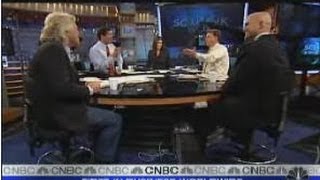
Richard Branson talks about Virgin Charter, a new marketplace for charter jets that exposes empty legs—about half of charter flights fly empty. He also covers Virgin Galactic's space plans, including a mothership unveiling in July, and Virgin's push into clean fuels like algae-based biofuel.
Questions this video answers
January 8, 2014
$200,000
About 50% of charter planes
In July (year referenced in interview)
Chapters
All right. It could soon be a bit easier to fly private and in style. Virgin Charter is announcing the day that it is open for business. Virgin Group Chairman and CEO Richard Branson is here in studio. Also, Virgin Charter CEO Scott Duffy joins us now. Richard, you just over here shopping for a new wardrobe with where the dollar is.
It's a good time.
You know, we've kept our tickets for flights into space at $200,000 and for foreigners, it's a great time to.
It's a pretty good deal over here. Before we get to Scott, tell us quickly what. I think it's interesting that with the backdrop of the economy right now, people like this are not having a problem. You're going to, I mean, this is probably going to do well. We're talking about online chartering private jets, right?
Yeah. I mean, if, and I sometimes I need to charter a private plane, how do I, how do I set about it? And unbelievably, there is no site you can go to where all the, all the charter planes are listed. Where, you know, if you want to, you know, if you want to fly between York and Milwaukee or wherever, you just put that down the time you want to put it. You get all, all the, all those plane operators competing, putting their prices down for you if they actually have an empty leg. I mean, interestingly, about 50% of all charter planes in the sky today are empty because they've dropped somebody off and they're coming back empty or they're going somewhere really. So, so we've actually got a system on the Virgin Charter website where you can actually bid, you know, bid, bid for these empty legs. I think, you know, we've, we've already found, you know, people sort of picking it up for $100 from, you know, flying from Timbuktu to, to wherever. So, so in one, one hit with Virgin Charter, you can, you know, you can vet all the planes that are flying up there and what do you order your plane and hopefully get a good deal.
Scott, when I read this and your CEO, I thought about, oh, my God, this is like Priceline almost, where if there's an open seat somewhere on a charter, that. Just what Richard was referring to, is it really going to, how much is it still going to cost, though? I mean, is it compared to a marquee jet card or something like that, or a net jet card is about the same or less or.
Well, the advantage of charter is that unlike fractional or membership programs, there's no upfront costs, there's no acquisition fees. It's pay as you go and only pay for the time you need.
That is, that's a big difference because I guess one of those cards, I don't know, I think you got to buy a block of time and then.
What'S the start?
You won't actually need to spend the money on a netjet in the future. So you're simply building to go on there a lot of them, the same planes that jets use anyway. So without having to pay the court for a million or the half a million bucks up front, and, you know, we'll be rating every single plane that people fly will be marked 1 out of 10. There'll be what, you know, the. Well, how good the circus is, how good the plane is. So you'll very quickly be able to pick up a picture on every plane. We've obviously Virgin, with its experience in aviation, you've made sure we've got all the, you know, the safest planes flying.
But if you're a NetJet member, don't you get priority? I mean, I don't know what kind of demand there is. I don't frequently travel for private jet. But if you need it for a certain time, if you're a member of netjet, aren't you much more likely to get it?
Well, I mean, because we can tap into every plane. I mean, netjets, you know, they've got, they've got their own fleet. They, they charge you quite a hefty price for using that fleet. You know what, what we've done is we've gone out and, and made sure we've got the best, the best planes out there. We've, we've agreed to have onto our side. If they're not good, they don't come onto our side. So we've got it. We will be, I think, a formidable force to net jets from, from last night, from today.
And what most people don't realize is that the Fractional companies like NetJets are also the biggest buyers of charter in the world. And, and the reason is that on busy days, their demand far outweighs supply, so they end up going to the same operators.
As well. So this is a way of doing that without, without that big upfront.
Yeah, and the fun for the fund, I mean, you know, I mean, having. Talking about environmental benefits when it comes to charter. Charter sounds bizarre, but, you know, if you think that you hire a plane to maybe be dropped off somewhere, it's very unlikely you're coming back an hour later. So that plane then goes all the way back to Pick up somebody else and then it comes back to pick you up again. So, you know, as I said, about 50% of all charter planes are empty. So there's no way that they were able to advertise that those empty legs before. Now, now all those empty legs are going to come onto the market.
And so those emissions are for waste otherwise.
Right. They just, just completely just burn. They've got the pilots paid for, they got the plane paid for and, you know, just fuel is being burned. So any money they get is good, is good money. And so it should bring, it should bring the price of charter down. And then when you've got these new, new planes coming on the midst of million, you know, the million dollar planes, I mean, I think you could find that charter, you know, hundreds of thousands more people will be able to charter planes than charter planes today.
All right, thanks, Scott. We're going to let you go, but we're going to do the same sort of thinking here. As long as we've got you here, we don't want to have to fly you back here.
His ankle is handcuffed to the chain.
Exactly. So you're going to st around. We're going to, we're going to talk about. Because this is a great guy to have on you. You, you know, the reason, the reason.
The markets didn't change yesterday was you had Warren Buffett on the three Hours.
But you cater to a certain. I think there's no elasticity at the top. I don't think so. Whatever. I mean, you're launching today in a period where I would think, wow, launch. Yeah, sure, exactly. But you're going to launch. Launch. When we return, much more with Richard Branson.
That's right. We'll also get his take on the world's most attractive markets. So after a break, don't go away.
We are back with Sir Richard Branson, the chairman and founder of Virgin Group. We've talked to him about his, one of his latest initiatives. But your tentacles are everywhere. I mean, from, from mobile to things like Northern Rock. As you survey the global landscape. Where are we right now?
Well, obviously in pain, mainly because of the banks and, and also, you know, that's obviously ricocheted onto, you know, property development. It doesn't seem yet to have ricocheted on to things like airlines, mobile phone usage and other areas. But normally with recessions, it does, it does cross right over. So definitely in a.
You would agree we're in one.
Yeah.
Are we definitely in a recession?
I mean, it feels definitely in America, you know, Feels like it's in a recession. I mean I've just come back from India yesterday where they're looking at double digit growth and you know, this big smiles on every, everybody's face in India. I was in China a couple of weeks ago and again, you know, big, big smiles on everybody's face. So. But, but America definitely seems to be the wounded, the wounded animal. And, and you know, I think it'd just be nice if you could get your pain over quick and start, start getting, you know, getting. Getting, you know, getting. Yeah. I mean maybe you need a nice sharp drop in, in, in the markets. A bigger sharp Wash it out in the dollar and wash it out. Get on with it.
You, you seem to have displayed somewhat of an appetite for risk when you went in and went for Northern with, with Wilbur Ross. Is, does that appetite transfer overseas? Are there things here that you'd be interested in if these general.
Generally speaking, we were great believers in building companies. I mean we believe that, you know, we just for instance set up Virgin America, the airline here, which is going great and because it, because we set it up from scratch, we got every single little detail right. So it's a really good quality airline to fly. Buying companies is not something we, you know, we'll generally do. Northern Rock was an exception. It was a British sort of famous British bank that was a big embarrassment to Britain and we thought we could save it. And I'm afraid, I think, you know, at the very last minute old labor thinking, you know, came, came in and they panicked and they nationalized it, which bit. But we, we learned a lot in the five months in which we're working to try to save it.
What's your go ahead?
I was just going to say you're talking about politics in Britain. Do you have any opinion on politics here in the United States and which way you'd like to see the election go?
Well, I'm fiscally, I suppose I'm, I'm more to the right but a clear thinker definitely, you know, definitely. Socially I'm, I'm more of a Democrat and, and so, you know, I'm looking more between the Obama Hillary race. I think, I think Obama's got the better chance of actually winning for the Democrats. But it'll be fascinating over the next two days, you know, the difficulty they got. I've got to know McCain on the few visits I've had over the years to the state. He's a good man. So all three, I think from, from looking at America and sort of any one of Them would not be too bad after what you've had in the past.
You've talked about the future of open skies and the danger of protectionist rhetoric here in the States being transferred into policy. You have to have been unnerved a little bit about some of the discussion about NAFTA in Ohio, as much. As much political maneuvering as it may be. How worried are you about?
Well, I think we should all be worried about protectionistic thinking. And actually, I think Americans should be worried about protectionistic thinking. I think that the, you know, the fact that, you know, the fact that, for instance, you know, I cannot own an American airline in America, you know, it's just bizarre. I mean, you know, you've got these.
You can own a quarter, right? Not more than that.
Well, yeah, and we've had to put those, our shares and trusts and so on, but putting Virgin America on one side, I mean, for, for, for other, you know, for British companies to come in and, and, and help improve your pretty dreadful big American airlines, the best way is to have free open market let, you know, let Singapore Airlines come in or an Emirates come in and, and add a bit of quality, you know, to, to some of your carriers. And, you know, for 50 years you've had the most dreadful carriers flying in America. The public have had to put up with them for all this time. You know, let, let open markets sort of sort these, sort these things out. And America should be, you know, the land of the free, the land of competition. Why, why keep protecting these giants that should have died years ago?
Well, not necessarily with airlines, though. But can you understand perhaps the worry about sovereign funds, the worry that financial.
Strategy could be transferred into political strategy by someone with a lot of money overseas?
Yeah, I mean, to an extent. I mean, you can, you can protect against, you know, if there's a particular sovereign fund that, that, you know, is, you know, there may be occasions where government needs to step in, but it should be incredibly rare, I think. I mean, just, you know, we welcome. America right now needs sovereign funds sort of, you know, if you don't want the money, Great Britain are happy to welcome it, say to Dubai and any, any, any other, any other sovereign funds out there come and invest in Britain while America don't want you closing the door.
Richard, you almost sound like our problems here are more compartmentalized than you would have thought 10 years ago. You say, China, India, things are great. We hope you guys get it, you know, get it together here quickly and get through your problems. Almost as if the rest of the world doesn't even have to worry about it. So you think that that's the way it is.
It could have an effect. But I actually think that, I mean, if you say, take India as an example. India was verging on communism, very socialistic state for, you know, 40, 50 years. They decided, okay, let's open, have, have open markets. My God, they're on a run. Same in Russia. I mean, you know, they were communist country. You know, they've opened up to competition and you know, it's exploding. And same in China, you know, communist country. Now it's a little bit hurt that.
We can't give the. If we catch a cold, we don't give the rest of the world the flu. Are you saying that we're less.
It's kind of like a guy who was a.
We're less important global engine now, Richard.
Like, it's like not being able to pick up hot chicks anym. More you have a gut or something.
I think, I actually think America is a lot less important than it used to be. And I think there is, you know, that America is not necessarily going to be the number, number one world economy in the future. So you know, you've got, you've got to, you've got to behave like these other countries get.
Like Austin Powers. It almost sounded like that when you said behave.
Well, just, just get, get your shackles off and get, you know, get and become the competitive country you once were.
When Americans hear you say that we're not as important as we used to be, I think it bothers a lot of people. But isn't there another way to look at it? To say, isn't it a good thing that we don't have to be the sole engine of economic growth in the entire world, that we don't have to be the Atlas carrying around the world economy on our backs.
It's good to spread it out and, you know, it's enough to go around. Americans should do what Well, a lot of them are. I mean, you've got to get in there and get a chunk of the Indian, you know, Indian growth and a chunk of the Chinese growth and a chunk of the Russian growth. I mean, you know, I just seem to be spending all my time on planes at the moment in these countries trying to sort of see how we can launch.
You hate going through security. I mean, isn't it.
It's tough, isn't it?
Yeah, right. Yeah, sure.
How about you fly in JetBlue a lot?
England, the UK you definitely see Virgin.
America, by the way. Sorry. Just get it.
Yeah, I know you put it in. That was a smart move. But I see the Malay sort of spreading east slowly. You don't see it that way. I mean England is definitely slow now. You're in a rate cutting mode here. You don't see that moving to Europe and then eventually.
I'm wondering if it really is different this time. It's never been different before. One of these days it's going to be different now, is it?
I'm willing to bet that India will be, despite what's happened in America. They'll be, they'll go from 9% growth to 10% growth next year.
Really?
I mean they've just, they've just introduced a budget in India where they've put tons of money back into the farming community. That, that's going to put another sort of one and a half percent, I think growth in India. So they would just have a friendly bet. Let's look at it.
Why don't you bet on fuel prices and do a little hedging then? Because they're not coming down for your airline.
No, I mean we are very worried long term on, on fuel and therefore, you know, apart from what we're doing to the, to the climate, we're desperately trying to develop a fuel that can be the fuel of the future. And you know, we've now proven that we can actually fly fuel in our planes that is clean. Now we've got to see if we can reproduce a clean fuel that can replace the dirty fuel. And, and if we don't do that within six or seven years there's going to be more demand for fuel and fuel in the marketplace and fuel prices could go through the roof. So we are trying to develop algae and, and see if we can mass produce it and we think that could, could potentially be the fuel of the future.
Is there a level where the big three automakers here in the States will learn that lesson? And where does, where does gasoline need to be priced in order to get Americans off of their, off of their SUV addiction?
I think governments have got, in America have just got to, you know, they've got to have free tax for clean fuel and they've got to start pushing taxis out for dirty fuel and they've got to encourage people to switch over. I think you've also got to get rid of the tariff that the import duties on sugar in America. I mean you've built your bite. So you're creating ethanol based from corn which is shoving up and by the way we've invested in it I hasten to add, so we've made the same mistake that other people have. But you've got, you know, you've got all this ethanol based from corn which is shoving up food prices. Whereas just across the border you can produce for one acre seven times as much fuel from sugar. So you create food here and bring your fuel in from the Caribbean, from Africa, from Brazil and, and fuel your cars, you know, have a fuel that's competitive with the dirty fuel and it's.
A clean fuel net in your own account are you net long equities?
All my pretty well, all my spare monies I spend investing in new ventures. I'm not, I'm not ready in the markets as such. But, but you know, look, there are some fantastic opportunities there right now and, and if, you know, now I suspect is the time to get in and get, get those opportunities. I mean it's, you know, you can, you're never going to wait till the bottom and there are, you know, there are price, there are shares out there that are priced unbelievably well. So, so I suspect now is the time to start to, you know, to start to get back in and, and accept, you know, may go down a bit further but great opportunities. Are you planning any personality just thinking long term, I mean put the money in there.
Sure.
Do it on and maybe you know.
Three or four years you plan any personal crazy things coming up in the next couple of months that we need to know about to work, I mean to worry about travel to Mars.
Well, our space program is coming very close now to fruition. It's going to be a big, you know, massive, big new business for Virgin will be the only, only company offering space travel. We're unveiling our mothership in July and then the end of the year the spaceship is going to be unrolled and then oh my God, the flights start testing next year. So it's getting very exciting coming close.
I don't mean to embarrass you but I like that Sir Richard Branson writes notes to himself on the back of his hand.
Right. Somebody suggested that our WI fi on our Virgin plane should be free and that because sun cream gets taken away from you when you get on a plane and going to Miami, Virgin Plain we should give free sun cream. So.
I've got to remember not to wash my hand otherwise that idea disappears.
Somebody's already told you that before 7 o' clock in the morning.
That was at a party last night.
If I don't write it down at a party, the next morning, it's gone.
It is great having you. Thanks for spending so much time this morning with us.
Thank you. Pleasure.
More from Scott









Business & Burgers-Sequence Collection bracelet for National Entrepreneurship Week

