Scott Duffy interviews Seth O'Byrne: Realtor And TV Star
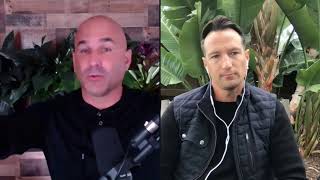
Seth O'Byrne went from college intern to top San Diego realtor by surviving the 2008 crash through quick cost-cutting and building a memorable brand, including a helicopter marketing stunt. He shares how new agents should learn business fundamentals, pick a niche, and stay ready for market shifts.
Chapters
Hey, you guys, this is Scott Duffy. This is what now with Scott Duffy. And it is great to see you here today. We are broadcasting live all across the Internet and I have a really special guest that's going to be joining us today. His name is Seth O. Byrne. Among many other things, he's the co host of HGTV's hot properties and he has so much to share with with all of us. I'm going to give this just a couple of minutes to propagate across the net before I bring Seth in. And, and what I love to do is I'd love to just share with you again while we're letting this propagate, a little bit of Seth's background. So Seth O', Byrne, he started his career in real estate in 2002 when he was a junior at USD University of San Diego, which is where I went to school as well. He has been named the Realtor, Realtor of the Year in San Diego, one of the 50 most influential business leaders in San Diego. He's also the president of the O' Brien team at Compass Realty, stars on HGTV's Hot Properties, and has also appeared on Fox, CBS, Amazon and Apple TV. Seth is also the executive show producer of the American Dream, which we're going to talk about more in just a bit. But let me bring him in right now. Seth o'. Byrne.
How's it, brother? I'm. I'm doing great. Yeah. Thanks for the introduction. It always makes me feel like William Wallace when I get a warm introduction like that. 7. 7ft tall and buff and ready to roll. So I appreciate it. I feel like, I feel like, by the way, if I was applying for a job today, which I'm in real estate, so I'm unemployed every morning I wake up. If I was applying for a job today, I would like you to do my resume.
Well, sometimes, right. Sometimes it's hard to talk about ourselves. And it's a lot easier for other people to kind of share what it is that we've done and you've done so much. And one of the things that I love. We first had a chance to meet early last year when Covid was just hitting America and things were shutting down. And we sat down and talked, and what I thought we were going to talk about was real estate, but instead we talked about entrepreneurship. You talked, and I just thought that your perspective of recession and market changes and what you can learn and how you can come out stronger was so valuable that I really wanted to make sure to bring you back in and now you're a part and a member of our, of our faculty for our academy. And so again, we're really, really proud of that as well. So for first question I have for you is this. You started your career in real estate when you were a junior at USD. How did you get started? And why real estate?
Well, so it's interesting. So when I went into college, I had. I love writing, I love creative writing, I love reading. But more than anything, I like, I like creating, I like the. I love the written word. And for a lot of my life I've really, I really loved writing and literature. And so I was, I was a lit mag nerd all through high school. Every time I would get a girlfriend, I would write like a very sad poem about them which, which worked in high school. In college, it just freaks chicks out. So I had to stop doing that real quick. And then so I got my degree in English and I also was the director of the literary magazine at University of San Diego for four years. I thought that I was going to be dressed very similar to this with like a corded sweater and a vest, and I was going to be teaching college students about Edgar Allan Poe or Emily Dickinson. Like, that's what I thought I was going to do for the rest of my life. And I was really excited about that. But at USD, I very quickly learned when I moved off campus to Mission beach, which is where University of San Diego kids live, I lived right on the beach. That, number one, I loved surfing. Number two, I wanted to live on the beach one day. And number three, college professor's salary was probably not going to get me to the beach. So it really came out of this. San Diego is a big part of it. This is an expensive town and it takes a lot to get into this town. And so I got a internship at a real estate company, which was at the time it was ReMax, which was a big company down here at that time. They're still a large company, but nowhere near as large as they used to be. They were kind of the big guys in town. And I got an office, you know, an internship job there, sending faxes and making coffees. And it was very lowly. I didn't scrub the bathrooms, but I was darn close. But I got to see a bunch of real estate agents. I thought, oh my gosh, this is a way that I could work and this is a way that I could live in San Diego, not have to go move back with my mom, which was really, I think, a lot of college Kids not moving back in with your parents is a big reason why, you know, do a lot of things, especially today.
You know, it's, it's really tough during COVID in a recession to find a job as you leave school, actually, just to get in school, you know, with things shut down, so many kids are staying at home longer before they go into their, their freshman year.
100%. And, and I'm, I, I, I got my job in real estate very quickly. I was selling real estate when I was in college. I very quickly realized that, you know, being in business satisfies a lot of that creative need that I have. I'm a person who has to do things that are creative, and that's a big part of our brand is creativity and art as a form of marketing. And so I got into real estate. I thought I was having fun, but, you know, I was really just. I started chasing income, and very quickly I got into real estate because I just wanted to make money, which is, by the way, like, why a lot of people do their jobs. And I. But I think real estate is more so one of those jobs, because it's a job you can get into really quickly. From busing tables or being a cab driver, Uber driver nowadays, or doing any other job, you can pretty quickly get into real estate. Most over 95% fail within their first 12 months. It's the highest fail rate of, I believe, any profession in America. And other than probably the NBA. But, but for those 5% that make it, and luckily I was one of them, once you become proficient enough and if you work really hard, you can become really good at it. Unfortunately, right as I was becoming as good as I possibly could be, Lehman Brothers crashed. The world came to an end. Bankers jumped out of buildings and in front of subways, cars. I mean, things. It was apocalypse. You know, we laugh about some of it now, but at the time it was pretty crazy.
Right. So you get into real estate and you start to get things going, and then the economy changes on you like this.
Yeah.
So you're in, in this, in this rough situation. Just real quick, before we talk about how you got through that situation and what you learned, I've always wondered how kids in college are able to start buying real estate. I want to talk about that, because I want to ask you that question.
Sure.
I remember one time I asked a friend that, and we were, we were actually at Staples center, and I'm a huge Lakers fan, and Jerry Buss was still alive at the time, and Jerry Buss, the owner of the Lakers. And, and I remember the friend telling me the story about how Jerry got started, how he was in college, and instead of just trying to do it on his own, what he did is he put together a group of friends, and the friends all contributed a little bit of money every month that they pulled together, and they use that to purchase their first building, and they took money out of that building to purchase their second building. So they didn't do it alone. They did it as a group and as a team, which I thought was fascinating. How are you able to get started as a kid in real estate?
Yeah, I mean, well, there's an important nuance I want to be, you know, very honest about. I am very bullish on real estate investing. And I've. This has been a big year for me doing a lot of real estate investing. And, you know, if you follow us on social media, I'm trying to share a lot of what my family's doing. My family, meaning my wife and I, to. To really make real estate investing a core focus of, of, you know, I say the back nine. I'm turning 40 now, so I'm, you know, I mean, do I have more than 40 years left? I hope I do, but I don't know, I had a pretty fun college life.
9. That scares me because I'm older than you are. So I hope we're not on the back nine yet.
Maybe we're on the back 12. But, but like, but anyways, I, you know, real estate investing is a big part of what I do now. But when I got in, I was not focused on investing as much. I was focusing really on sales. But ironically, I actually got involved with a few people that I sat next to in classes at USD. They were my very first people I sold real estate to. And there, there were two women. One was named Rachel, one was named Diane Deanna, who are. Both of which are good friends of mine still and clients. And I helped them buy their first homes. And Deanna and Rachel probably have sold, bought and sold maybe like seven or eight homes since then. Their first purchase was when they were 20, 20 years old. They weren't even able to legally drink. And I mean, that's a big deal. And think about how young that is. But I think there's really two things that are important that I think that most people miss. One is the buying real estate does not have to be overly cash intensive. That's a misunderstanding. Debt is your friend, if you understand how to use debt. And the second thing is that buying real estate does not always have to be sexy. You can go buy really ugly things if you're willing to have an iron stomach to buy ugly things in neighborhoods you might not want to necessarily live in yourself. Because even as we sit here today, there's real estate in San Diego for a couple hundred thousand dollars that you could purchase. It's not sexy. It may barely cash flow, but that piece of real estate will never in the long term ever be worth less. That's, that's the most interesting thing about real estate. You know, even the mighty General Electric could someday be worth nothing. Companies fold. Companies that have been around for hundreds of years fold. It happens. Real estate does not fold in the long term. It never, I mean, even super fun sites, you just, you just don't know.
What your horizon is, how long you can hold on in case there's a market dip or a correction or something like that. Now I want to go back to when, what you learned when the market crashed because I think it's such a great lesson. We get things we can apply today. But first, Melody Johnson is asking her son, her oldest son is interested in getting into real estate and she wants to ask what is the one thing other than studying for the real estate examination that he should be focused on right now?
Wow, that's a great question. So, so there's this wonderful book and I know you've read it. I read it when I got into real estate. It changed the trajectory of my career. It's called the E Myth. Gerber is his last name. And the E Myth, the E stands for entrepreneur. And the basic premise, I'll explain it in two sentences, is being an entrepreneur is not about being great at the thing, thing that you do that your business does, whether that's selling real estate or you know, baking cakes at a bakery or you know, selling, you know, selling hammers at a hardware store. Being great at business and being great at being an entrepreneur is being great at the craft of entrepreneurship, which is business. So yes, I sell real estate, but what I do to become successful selling real estate is no different than someone baking cakes or, or selling hammers at a hardware store. It's about understanding, management, cash taxes, scaling, marketing, advertising, you know, hiring, firing, you know, and nowadays a lot of it, it's, you know, brand awareness through digital marketing, especially in a Covid environment, like when you become great, you can be the greatest realtor as far as being a great advisor in the world and be dead broke. But you could also be a lukewarm agent that's not that good at real Estate, but you're phenomenal at running a business and getting new customers. And you may be the top agent in that city. In fact, no disrespect to any top agents, but there are plenty of top agents out there that are by no means the best realtor in the market, but they are the best business person. And, and I think, I think if you can understand the difference between being great at business and being great at the craft, I think, I think that is where you really learn how to become successful. Because being the smartest at real estate is not actually going to guarantee you success, whereas it's pretty hard to not be successful if you're really great at scaling a company.
That is really interesting. So it's not just about taking the exam, Melody. It's about. It's about having your son really learn how to be a great entrepreneur.
Yes. And just the basic, the basic principles.
Michael Gert, like you just said, Seth, Michael Gerber's the E Myth. It's a great book to start with. Pick up my book, Breakthrough for Entrepreneur magazine, Entrepreneur Press, fundamental things around entrepreneurship, those types of things, and really understand. What Seth is saying is really develop a great understanding of what it takes to not just have an idea, but to build a business. Because as a real estate agent, you are an entrepreneur. You're an individual business owner in effect. Now, you may have the Sotheby's name behind you, but it's your job to get up, to just show up, to create your sales plan, your marketing plan, do your. Correct.
Yes, 100%. Yeah. And I've been with many brokerages. You know, I've. I was with ReMax to start with, which was a big, big international brokerage. Then I went to a small brokerage called Troop Real Estate during the recession, which was, which was a great partnership to have during that time. Went to Sotheby's, now with Compass. Like, I've been through a lot of different brokerages. The, the thing that always makes you successful is what you do. Aligning with a good brokerage, especially a brokerage that has brand awareness in the city that you're selling will help you become more credible to the customer that you're talking to. But what gets you that initial call or that initial contact really, really is you and your understanding of how to market and advertise.
Gotcha. So it's 2008. Was it 2008, this market crash that we're talking about?
Yeah. For me, I got like halfway through 2008, so I was feeling like I was untouchable but yeah, mid 2008 is when everything went kaboom for me.
So when things went kaboom, what in the market crash. And we were talking about the market crash earlier. Were we talking about earlier in your. Kind of in your career that you got into real estate in the market crashed and people were jumping out of buildings and things like that. Are we fast forwarding to 2008? When. When did you first feel the effect of a crash or a dip in real estate?
Yeah, so I, I felt it in mid 2008, for sure. In fact, ironically, right around when I bought my. My, that beach house in Mission Beach. I bought a beach house right off the boardwalk, and I was very excited. I was single at the time, so I had a cool house to show off and a brand new Mercedes, and I thought I was the coolest guy ever. And right around when I bought that, you know, basically million dollar home, you know, in my 20s, then the market crash. And so 08 was when I felt it the most. And boy, I. This was a recession unlike many in that, when it came, there was, you know, there was no warning for a lot of us down on Main street. When it came, it came so fast and so hard. And I think one of the things I learned from that, in addition to everything I've learned from that, but one of the things that I've learned from that, that I thought about a lot with COVID was when the market shifts, you don't wait and see if it's going to get worse. You cut employees, you cut expenses, you move nimble and quick because you can always rehire, but you can never make new money when the market goes down. And if you can't conserve cash quickly, you will be one of the ones that. That get pushed out of the market. You cannot wait.
You can't. That is such incredible counsel, Seth, because I think what most entrepreneurs do when there's a shift, either in the economy or something maybe happens in their industry, is they tend to get on their heels and they wait and they hope. They hope things are going to change. And so what they do, this is what they do.
Yeah.
So instead of making the big cuts, they make incremental cuts. They'll wait to make their first, and then they might hire, fire one, two, or like three people go. But here's the thing. If you're in an industry or you're in a market where things have changed drastically and the circumstances in your business are different, I guarantee you everybody in that company knows what's coming. And so what's happening is if you make incremental cuts and it just makes sense to them, you're gonna have to let more people go. They spend all time, all day, every day, working on their resumes and updating their LinkedIn profiles. They're not doing anything for you.
Yeah.
Once cut super deep. Right. And you can always hire back down the road.
Scott, you hit the nail on the head. And I just.
I'm so thankful for my failures because. And I'm thankful I got into business early. Do I wish that I spent a lot of time traveling with a backpack on my back with a bunch of tube socks and T shirts and traveling Europe and listening to techno music and living that fun gap year life that some people got to live? Sure. But getting into business in a really big way at 20 years old and never letting up on the gas pedal, it gave me the ability to fail before a lot of my peers, which gave me the ability to rebuild before a lot of my peers, which put me probably four to five years ahead of where I would have been. And so, again.
I think that everyone has a different journey, But I love that I got to fail and fail really, really, really hard. Because what I learned then made me absolutely precise. When this. When this last Covid deal hit. When. When Covid hit almost exactly a year ago, I let two employees go immediately and I cut my expenses. I was able to reduce my expenses by 35% in less than 10 days. And by reducing my expenses in 35 by 35%, what I realized was I was able to buy myself an entire year more using my reserves. So essentially, I was able to. If I did not sell any pieces of real estate, I was able to keep my employees on, keep my brand going, and keep my family fed and a roof over our head for 18 months. If I did not cut my expenses, I would have only lasted for six months. And. And then what happened was then the market expanded. I rehired three employees, and we had the best year of our entire life. But that capital I was able to save, though, it was going to turn into my lifeline. It ended up turning into that extra juice I needed to turn. Turn my year into my best year ever. So, I mean, and by the way, always cut expenses. That's the other crazy thing is we. We love expenses when we're doing well. And, you know, when the woman who had made that great comment asking about her son, he'll experience this if he gets into business, and I'm sure he'll be one of the very successful ones as he does better and better and better, you start tacking on more stuff you don't need.
And that slowly eats away at your income. And you have to remember, real estate is a great job, but it is a job. Even if you run it like a business, it still is a job. You have to turn your income into assets. And. Which means if you don't need an expense, don't have it, don't take expenses you don't need, because you have to start squirreling away that money into building your assets. That's the only way you'll eventually retire. Now, I know in their 20s, you never think about retirement. I didn't think about retirement, but now that I'm losing some of the hair on top of my head, dude, I think about it every day. My back hurts when I wake up. So, like, every day I wake up and I go, oh, my back. I need assets. I need assets. Like, you know what I mean? Every time I reach for the Advil bottle, I go, assets, assets. In your 20s. Yeah.
You know, letting. Letting people go is a really touchy subject. It's a touchy subject for people that have been let go and they're upset by that. It's a hard thing to do when you're a business owner. In 2008, I had to let 40 or 50 people go from. From my company. I remember it was like one of the worst experiences I've ever had. I. I felt, personally, I felt terribly guilty. I felt really kind of. I don't even know what the word is. I don't know if the word is shame. I felt embarrassed that I was going to have to do that. There were all these things are going through my head, but what I realized later on, and it was because somebody came back to me and made this point who was let go. They were let go early. And we made the mistake of the incremental thing versus just cutting one and cutting deep is. They said because it was let go early, I was able to. I was. I had clarity. And sometimes clarity is power. Just knowing where you stand is power. She said, I had clarity and I was actually able to move on. You know, if you had kept me around, I would have dragged my feet. I would have missed opportunity. She was able to get on unemployment and things like that. You're not helping somebody. You're not helping somebody by keeping them on longer than you can afford to. And you're not helping yourself, you know, because you're not helping yourself in any way in your business if you do that. So I Just, I guess, my personal experiences, I understand how difficult it can be, but I also understand how important it is. And the people who thrive, like yourself during those times, they learned that when stuff happens, they get on their toes and not their heels. I remember having the opportunity to see Jack Welsh and Jack Welch, who was the iconic CEO of General Electric.
Sure.
He was asked, what is the number one. If you could just give one. The number one piece of advice you would ever give to an entrepreneur. And his answer was, panic faster.
And he said he didn't panic from the perspective of be scared. He meant take the action you need to take right away. And I think that's the lesson.
God, that's brilliant.
So coming out of 2008, what was your next move between two that kind of led you to where you are today? 2008, to, you know, 21.
Yeah.
What is it that you did that helped you to become the number one realtor in San Diego? You know, top 50 most influential people in San Diego, Star of a hit TV show. Like, what was it that you did? What was the formula?
Yeah, you know. Well, I will clarify. I. You know, some days I think my mom thinks I'm the number one agent in San Diego. But, I mean, there's a lot of great agents in San Diego. We all. Our sales go up like this and up and down and up and down. But. But, you know, yeah, I mean, we've been in a really, really precious, precious kind of. We've been up in thin air with a lot of agents that I. I sincerely admire for many years, probably a decade. And I'm really proud of that because, you know, not only because I'm glad that we've been able to build something that works, but I'm also really proud of that because.
I'm standing shoulder to shoulder with people that I consider better than me in a million different ways. And it makes me feel proud to sit at the table with people that I've admired for a lot of my life. But what it took was, in 2008, I realized I had a fairly replaceable business model. I had a commodity business. I was selling a commodity, like a commodity. And I really wasn't doing anything special. I wasn't known for anything. And when you're not known for something, you. That is a little bit of a brand problem. And when a bigger, better batter, better known, better brand, sophisticated competitor comes along, they. They will take your business very quickly. It's very hard to compete against someone who's known for something, you know, in the. In. In the law business. In the legal business, attorneys call it door law. And door law is I'll do law for anyone who walks in the door. So attorneys that have no business are like, oh, you need a divorce attorney, I'll be your divorce attorney. You need contract attorney, I'll be your contract attorney. You need a, you know, any sort of attorney, I'll just do it, you know, And. And that's crazy. And that's crazy. You have to focus on a niche. You know, they say that the riches lie in niches. That is not a saying that people just say because it rhymes and it's pithy. That is the key to success. And what I wanted to do all the way up in 2008 is do any business I could get my hands on, which is what most people want to do. I'll sell an apartment building, I'll sell a condo, I'll sell a house, I'll sell luxury, I'll sell foreclosures, I'll sell any part of the county. But what I realized, and though I didn't burrow into a geographic farm as much as some of my other competitors did, which is. Which has actually done well for me, but what I did is I focused on two things. I'm known for two things. One is I'm known for the University of San Diego, which was my alma mater, which is where I started my real estate business. If, you know, this summer, if you drive by USD, you're going to see bus benches with my face everywhere around USD. As silly as it is, that's one of the greatest ways to be known, because you can't turn into any entrance to USD without seeing me. Those are the same exact bus benches that I got 20 years ago when I first got into my real estate business, which is what got me known as the USD realtor, which I can attribute between 30 and $50 million in annual real estate transactions to. And some of my most important business partners I work with are from my alma mater.
By focusing on farming from that one place.
So you said, by the one place.
I'm gonna go to USD, I know you contribute a ton of value to the school, so.
Yes.
But that. That became a clear focus. I want to say something about the benches.
Yeah.
I was talking to Grant Cardone, who's a trainer in the space, of course. And Grant.
Yeah.
And Grant said to me, we were talking about why some people stand out and others don't. And we were backstage at an event and I said I was talking to a guy, and the guy's Like I am. He was talking to Grant. He's like, I am so good at what I do. I should be making more because I'm the best at this than anybody else out there. And Grant said something I've never forgotten. He said, the best known beats the best every day of the week, all day long. The best. Right. So by you putting those, those things, I mean, you could have people going through there all day that are thinking about real estate, but don't know who to call, who's known. It's a brilliant move.
Well, and what's interesting when you think about personal promotion of your business is you think it's all about ego, but it's actually kind of the opposite. Because. Because top of mind awareness is what makes a consumer make a decision to use a service or a product, not that you're better. See, if you think you're better and you should do business, that's your ego talking. You're like, I'm the best at my craft. Well, number one, that's impossible to prove. But number two, you don't realize that, that if I go look for toothpaste and I'm a little bit of a hippie, so I like my, you know, my Toms brands and my other, you know, non fluoride brands and such, but say I was. I was a guy that was like a Crestro Colgate guy or whatever, I would grab the one that I knew. Not because I knew it was better, but I knew it. I knew of it, and I had brand trust. This is the same thing with realtors. Someone's going to choose me because they knew me. They're not going to choose me because they think I'm the best. Now they hope I'm the best, but they're going to choose me before they even know that. They won't know that till it's way too late, that we're already in escrow. By the time they're like, you know, is this guy good or bad? They go for who you know. It's 100% true, what grant said, and what I recognize very quickly with brand awareness is you have to realize you are replaceable. And if you realize that you're replaceable, brand awareness is everything because that also means that your competitor's replaceable, too. And so if we're all replaceable, it's just about being the one that someone's thinking of at the time. And the number one way to get you to be as sticky in someone's mind as possible is to become known for something. There there are eight. There are 2 million real estate agents in America today. We're all doing the same job.
Who do you remember?
You remember the ones that are known for something and, and so, and, and so that's critically important. So I made that decision.
Wait, okay, so we, we're going to jump back in there. But you said something sparked a thought. So we were talking about replaceable. That was a great point. If we're replaceable, the competitor is replaceable as well. I was talking to Roland Frazier and who I respect so much. Roland's got four current like Inc. 500 fastest growing companies in America. He's just, he's one of the partners in digital marketer. He does all kinds of amazing stuff. So I was talking to Roland Frazier and one of the things that he's. We were talking about is, and this is pre Covid, a friend of mine had just cashed out of a company and decided he'd vested over four years. He'd taken some money out and he called me and he said, I'm going to take the next year off. And he was like 45. He said, I'm going to travel, I'm going to refresh myself, I'm going to come back and I'll plug back in. I said, no you won't. I said, no, you won't. How many friends do I know that have done that either? They've, they've lost a job, they've changed industries, they've. They've cashed out and they've gone away. They come back and they find out that, that getting back in is really, is really tough. And so I was talking to Roland about this and what he said is, he said the moment you stop contributing value to your network, you get replaced. Yeah, the moment you stop contributing value to your network, you get replaced. I'm curious, Seth, what are some things that you do to contribute value, to always stay top of mind.
Wow, that's great, Scott, Great question. And it's interesting is I've experienced a little bit of this actually with my show on hgtv because you know, we filmed, we filmed between the sizzle, which was, which was paid for by the production company but then pitched hgtv. Then the pilot which aired, which then got us the show and then filming for a year. That was a three and a half year process. And in those three and a half years I was.
People think it happens overnight. So.
No.
So you're the sizzle reel to get the gig, then the pilot to see if people like it and look at the data and then filming a season that took how long? All that stuff?
Three and a half years? Very, very close to four years.
Wow.
Four years for eight episodes that were there and gone in less than three months. Yeah. Wow. Three years to get three months. Now, mind you, 45 million views worldwide, and it's been very good for our business, but, dude, it's tough. It's. It's tough. But, you know, like, anything of value takes forever. Yeah, it takes forever. But, you know, like, I mean, Mark Zuckerberg has that quote that I think is so brilliant. Like, that nothing about Facebook has been done in one fell swoop. Every little detail is a line of code. And I think of my life in that way that I love big projects, because once you realize every big project is just a bunch of small things.
You realize there is no project too big because you're very good at doing little things. And once you do little things, over time, you can do very great things, incredible things you never thought possible if you just do one thing at a time. And I think. I think that's what I learned with hgtv. But what I also learned with HGTV is I was so busy filming, I really wasn't touching base with my database. I was very much. I don't want to say I was asleep at the wheel because we were still very much active in selling hundreds of homes a year. But like, my original sphere of influence that really is responsible for most of my referral business, I wasn't loving on them. And. And not because I wasn't thinking about them, but because, you know, I was waking up at, you know, 5:30am to film for five hours, you know, and then after five hours of filming, I was working for another five to 10 hours. You know, I was getting done with work at midnight and then waking up and getting. Putting makeup on to go to set at, you know, that next morning. Yeah, I know people say they work hard or they want to work hard or they're willing to work hard. It's hard to explain what it feels like to work like that, because I don't think most people, when they say they work hard, they don't really know what that level of work is. It's crazy. It's really very unnatural to work that level for that long. It's crazy. But here's the deal. At the end of the day, though, I love hgtv and I love being a part of the show. And when Covid starts to lesson and we start filming again, the world starts filming more stuff again. I hope that we have the opportunity to get a season two. We're sort of waiting around to see what happens, but we would love to continue to do it. But nothing is more important than serving your clients. And what I used to do to serve my clients that I didn't do while I was filming HGTV that, that I now do again is I do one on ones all the time. I mean, in fact, right after this I'm taking someone to lunch for, for a one on one with a client that I sold a home to 15 years ago. And they took that money and then started a development firm in LA and became one of the top developers of ultra, ultra luxury, ultra luxury properties. I don't know if I'll ever do anything with them, but they're doing big things in real estate. I love them, they love me, we have a really great friendship. And they drove down from LA to San Diego two hours so that we could have lunch together and just talk about real estate for 60 minutes after that. I'm taking someone out to happy hour tomorrow. I'm going to try to skip a happy hour and me and a colleague of mine are going to go to a boxing class just so that we can spend time together. A lot of what I do nowadays is spending one on one time with people. And of course we talk about real estate. But more than anything we connected a very deep human level. And I think that that is one of the gifts that I had when I got into the business is that I realized that if I can connect with people on a very human level, I really don't have to be a salesperson until it's time. And, and, and I don't, you know, I, I can connect with, I don't.
Have to be a salesperson until it's time. I connect with people on a human level. I learn what's important to them, what their needs are, but really just getting to know them and yeah, and I don't need to sell until it's time.
And yeah, it's, it's so true. It's so true. I think when people go into sales they think they have to be cheesy about it 247 and, and I'm never too, I'm never too busy for your referrals and you know, you know, blowing people up and asking for referrals left and right. I, it might, sure it works. It's just not my vibe. And listen, you know, 100 to 130 million dollars a year sales business with billion dollars in sales. Like dude, I'm proof positive. You can. You can build a very successful business being you and going to golf and working out with your friends and going on vacations and never missing birthday parties and hanging out with your friends, kids. You can just be a genuine, good person.
And love on people at a deep human level and not make it all about business and do a tremendous amount of business. That's one of the most freeing things. And I'll tell you, as someone who has built most of my business on social media and is a little bit disgusted with the social media, you know, kind of selling everything to everybody all the time on social media and trying to sell each other, on yourself to other people. People are thirsting for real human connection. And if you can do that, talk about give something to your database, give your database something real and raw and human and authentic. Do people remember that? A lot more than, like, I'm never too busy for your referrals.
Yeah.
Because people are. People are tired of being sold to in America.
Well, they are. And people, like you said, they want connection. And as we come out of COVID we come out of this period, it's going to be so valuable. See, I. I think that Covid has given a lot of people an excuse to either be lazy or to provide poor customer service.
Yeah.
Because you can use that excuse for anything. You know, sorry I couldn't get back to you. Sorry we didn't answer the phone. I know our voice, whatever it is. Sorry we didn't go the extra mile. If you just do 1% more every single day than everybody else out there, just, just 1%, that's it. You'll stand out to cesspoint. If you get together with people, people have missed connection, and you get a coffee with them, you play golf, you do whatever you do with them, you meditate, whatever it is you. You'll have that connection. Two questions I encourage you to ask when you're with them and you have that time. The first is, what do you need? Because a lot of the times we forget to ask this, hey, what do you need? And then the second question is, I would say, you know, like, I'm a resourceful guy. I might not be able to do it, but I might know somebody that does. Like, if I do, what are you willing to pay for it? Or what do you. What do you. Because what I'm able to do then is really activate my network and be a resource for that person. And it's not selling, like, truly try and help them get through whatever it is that they need. And fight. And so I found that to be helpful today. So let me. Actually, I want to circle back on one thing. There were two things that you did to stand out when you decided that you wanted to set. One is you. You focused on the University of San Diego, and you really built a marketing clientele around that. What was the second thing that you did?
Ah, great question. And it's hilarious, and you'll love it. It's the funniest, goofiest, most silliest thing. I started showing homes in helicopters.
So.
There was a company called Heli Realtors in Beverly Hills. They existed for a short period of time. They were purchased by Sotheby's. I don't know what they're doing now. I have no idea what became of the company. Maybe they're doing great. I didn't keep track of them much longer than that. But I remember I was very late night into a. Into a YouTube hole, and I found heli Realtors where they would show homes and helicopters. And my average sales price was $400,000, and I never sold a home over $2 million at that point. And I thought, I really want to sell a house to a rich person. I want to sell big baller mansions to big baller. You know, to big ballers. And I don't know how to do it. I'm, like, selling condos, you know, next to Target and Home Depot. Like, how do I. How do I sell rich people rich houses? And it was. Dude, it was the most unsophisticated thing. I go, wow, rich people must love helicopters. These guys are showing homes to people in helicopters. That's like, baller stuff. So I called a local company, and they're called corporate helicopters. Ivar is the owner. He and I have become very, very good friends since. And. And I said, hey, I'm going to shoot a video about selling homes and helicopters. And he goes, do you sell homes in helicopters? I go, no, I've never done it before. And he goes, so you're gonna make a video about how that's what you do and you've never done it before? And I go, yeah. And he goes, seth, let me ask you a question. I go, okay, shoot. He goes, have you ever been in a helicopter? I go, no, I'm afraid of heights. And he goes. He goes, so you're gonna get in a helicopter. You're gonna create a video about how you sell homes, helicopters. To what? Who? To people that come here from China. You go, seth, do people come here from China to buy real estate? I'M like, I don't think so. I don't know. And he goes, so you're gonna make this fictitious video about the service? And I'm like, bro, it's fake it till you make it. He goes, dude, fake it till you make it in a helicopter. That's like a $10,000. Fake it till you make it. Do you have $10,000? I go, yeah, I just closed a house. And he goes, oh, so, like, you don't have a ton of cash? I go, dude, we just came through the recession. I barely have any cash.
Yeah.
And he goes, listen, I'll take your money, but I think you're crazy. And so we went there, and when I showed up, he goes, I got a problem. I go, what's your problem? He goes, well, if you want to show you and a helicopter showing homes to people, we need a second helicopter. And I go, well, why do you need two helicopters? He goes, because we're gonna have to show you in the helicopter up in the air. I go, oh, shit, how much is that? He goes, well, it's about $12,000 in total. I go, two extra thousand dollars. I go, all right, man, I'll do it. And so we rented two helicopters, and I have my friend who is a very dear friend of mine and a girl he was trying to get to go on a date with him, who only kind of agreed to a date, who's also my neighbor, if they were like, ah, we'll go on a date. They dressed up like they were my clients, and I put them in a helicopter. And then I did a whole video about how I show homes and helicopters. And we, you know, we ended. We drank a bunch of margaritas and laughed about it. And we got this video, and I created a thing called aerial VIP and I launched it, and within less than 12 months, my average sales price went from 8. From 400,000 to almost $1 million. I had inked my first $10 million listing. I closed my first $5 million transaction two years later. You know, I was, you know, I had a $20 million listing. I had two $15 million listings. Dude, it worked. It worked. Like, you have no idea how well it worked. And I was, oh, it was crazy. And what was interesting about it was it was fake it till you make it. But very quickly, I started getting all this business. Now, what's really funny is 10 years later, now looking back, I never showed a home in a helicopter, but I, I. I did actually take people up in helicopters after, you know, after they closed on a house. I would take them up and my photographer would take aerial photos of their home. And, and it was a fun treat. And, and I actually do a lot of work with helicopters still to this day. But dude, bro, you can't land in the back of a house in a helicopter. It's illegal. I never even knew that didn't matter. I was just like, whatever, I'm gonna show homes and helicopters and dude, cnn. I was written up in cnn. I was written up in Fox News. I was, you know, I got a story in Wall Street Journal, I was interviewed by the news. No one really paid attention to the fact that you can't land helicopters in the back of houses, including myself and Ivor. And I actually took a helicopter with my wife to go wine tasting in Temecula about a month and a half ago. And Ivor and I were laughing so hard on the way and he's like, Seth, you were like, bro, you were like 31 years old going, hey, dude, can I take a helicopter? And I was wearing a suit that still had the strings in the back because I forgot to take the strings out.
And this horrible tie that I since had thrown right in the trash. And I didn't know what the hell I was doing.
But dude, it worked.
And it worked because I knew one thing for certain. If I created a story big enough that people would pay attention, I would get interest and awareness. And if I could tell a story that was memorable enough, I would gain long term brand equity. And not only did it work, I sit here today because it worked. And it worked better than you even know, but I was willing to do something silly and almost a little foolish and financially somewhat reckless at the time because I had very, very little money to my name at that time because I'd just come out of the recession.
And it worked. And it worked well, it worked incredible. I've spoken on stage all over America about this silly little day that I did this thing. And I think, I hope that's a lesson to young entrepreneurs. Do something stupidly memorable and it'll work.
And it does. And it does. And if I could show homes and submarines, I would, but they don't make them underwater. And at least yet, Elon Musk may be doing that soon, who knows?
Well, you'd have to rent two submarines because they'd have to ship you.
God, I, I, it's like I should have learned my lesson. And here you are, Scott, telling me this. I, it's a good point. I need to, to some reason, but it's crazy, but it's crazy. And at the time that I did it, I remember people made fun of me. And when I released the video, I, I, I, I've done a lot of things that people have, I think in the industry kind of laughed at me because I've done some silly things. But dude, it works. You have to become known for something. You cannot just be another baker, another baker, another gym, another real estate agent, another wealth advisor. You cannot be you. Plus your profession that is not at all memorable. And you know, we now are known really for our marketing. That's what we're known for, is our super creative video marketing. And that's been for almost 10 years now. We've been really well known for that. Our marketing of our real estate, I think is what will probably be known for the rest of the time that our company exists, which hopefully is for many, many decades. But, but, but you know, you got to become known for something and, and, and, and that thing, you know, it worked.
And you know, for when you, when you are trying to, if you're out there trying to think about what should I become known for? And like, how do I do it? Maybe a place to start is to ask your customer what's most. Ask the people what's most important to you. What has to happen? How do you know you're getting what you want? Learn what their needs are. And then after you've learned what their needs are, think about what the fund spin on is how you're, you're, you're kind of to actually solve that one problem for them. Now, one more question. We're going to let you go. One more piece of advice or counsel that you would give to small business owners, you would give to entrepreneurs, to solopreneurs out there to help them get through this tough period that we've been in and come out stronger on the other side.
That's a great question. I think one thing that I did this year, which was the first time I've ever done this, is that Wayne Gretzky, I go to where the puck is going. You are never too small of a business to not anticipate where you believe the market's going to be and change your business to be a more appropriate company for where the business will be and, and what in a very tactile, very, very concrete way. I'll explain. We dove headfirst into digital at the beginning of this year and we said we are the company that can sell your house without showings. When everyone was scared of COVID like we're, you Know, most people are still obviously concerned about COVID but. But we didn't know a lot of what we know about COVID and you know, the virality, how long it lasted on surfaces, things like that. You know, we, we just didn't have information. And we said, we're going to show homes completely virtually. We're going to sell them completely virtually. We're going to do 3D Matterport Virtual Tour scans, we're going to do video marketing, we're going to do virtual open houses. We only had to use that for about a month or two. Then people started recognizing that it wasn't quite as easy to get it as you realized it didn't linger on countertops for 24 hours and such. So people said, okay, it's probably safe to at least view these homes. But we became known this year for someone who became very, very good. In fact, I got an article that was written up in the New York Times that really helped us. We got a lot of business from that about us being like one of these spearheading virtual real estate transactions. And that is a big part of why we did as much business as we did last year was we became known for someone who's really appropriate at that time and had skill sets as we look into the future. One of the things that I did about six months ago is said, people are going to be sick of social media, they're going to be sick of being at home, People are going to want to have coffee, they're going to want to have beers, they're going to want to get face to face again. And I, about six months ago said, hey, in a safe way, I'm going to start getting in front of people because I think my new competitive edge is going to be real human interaction again. I think people want that really bad. So. So I think whatever your business is, whoever's watching or listening to this, look at what's going on now and do a thought experiment over a cup of coffee. Turn your cell phone off and go, here's where the market is. Look back a year and goes, here's what happened in the last 12 months. And then, and then go, just do this. Most people don't do this. Okay, if this is what happened the last 12 months, if this trend continues, where might we be in another 12?
Yeah.
And then when you make that next decision of where you think you might be, think about ways you can alter your business to become better for the customer. I think there could be between 20 and 100% increase in revenue for most businesses if you predict how to become a better suitor to your customer, given that these there's strong market trends that are changing the marketplace right now. And I think if you can predict where they're going to be, it'll be you'll do better for it and promote.
Your yourself as the people that the company that is the leader at that, even if everyone else is doing it. And it seems like it's really obvious you got a New York Times article right. That really helped the business because people were doing virtual. But you planted a flag and said we're the best at you marketed, you became the person. So we have gone. So over time. Yeah, we started with tech problems before we did this and everything. I really appreciate. And I appreciate you. How can people find you?
You know, our Instagram is probably our best way. We put most of our finest content on there. You know, it's Seth o' Byrne OB Y R N E that that would be the best way to find us. And that's a fun way to interact.
Awesome. Thank you so much. And this is WHAT NOW with Scott Duffe, presented by the what Now Academy. Seth Oburn, I want to thank you so much for being here and to all of you who watched and listened today, thank you so much for joining us. We'll be back on Thursday, this Thursday at 11aM Pacific, and we hope to see you then. Take care.
Of.
More from Scott









Business & Burgers-Sequence Collection bracelet for National Entrepreneurship Week

