Scott Duffy interviews Shaun White, 2 Gold Medals, 10 ESPY's.Most X-Games Gold: How He Does It
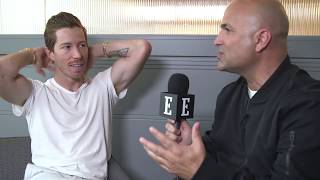
Shaun White talks about building tricks from 180s to 720s, how pressure turns him on, and why he started Air and Style festival. He explains how he learns from failure and stays motivated after winning two golds and ten ESPYs.
Questions this video answers
About seven cars.
16 stories tall.
Beijing (Bird's Nest, China); Austria; Los Angeles.
aaronstyle.com; around March of 2018.
Two Olympic gold medals.
Chapters
Hi, this is Scott Duffy with Entrepreneur magazine and S1 Media, and I'm here today with Shaun White. How you doing, brother?
I'm good. Thanks for having me.
Yeah, yeah. You know, when I'm sitting here and I'm thinking two Olympic gold medals, more golds than anyone else in the X games, I'm thinking 10 SBs, and I'm wondering, how do you still keep yourself motivated?
Oh, man. Honestly, it's one of those things. It's like. It's just in you. I can't really, like, sit back and relax on all those medals. You're always striving for that next thing, and that was like, a moment in time, and that's great. And you should thank yourself for getting to that point to win and achieve those awards. But for me, it just never really ends. It's always like, what's that next thing? And that's what pushes me. It's that next opportunity, and I'm always looking for it.
That's so awesome. You know, I have two young girls, they're seven and nine, and they started skating down in San Diego with Pink Helmet Posse.
Oh, right on. I don't know about Pink Helmet Posse, but it sounds cool.
It's cool. They're all committed to young girls and stuff like that, and they get them out there skating. And what happened when they started is they started watching videos, and we started watching you on YouTube and Tony Hawk on YouTube and all these crazy tricks. And I'm just wondering, how is it that you're able to basically create those types of tricks?
You know, the tricks are. They're. They're kind of like a build on something that's been done before, in a way. Unless it's something so outrageous that it's like you just had a crazy dream and decided to go for something, but it's always built off of something else. And there's a stepping stone trick on your way to get to that place. You know, when snowboarding, I was learning spins, so obviously the first one would be 180. And once I learned that, I built up to a360 and then up to a540 and 720 degrees of rotation. So the last trick I did was a double flip, 1440. So, you know, it just. It's gone pretty far from the first 180, but that's how I got there in that place. And, you know, you always kind of look around you for what people are doing and a way to make it your own, because that's what's so unique about the sport is, it's not about being the biggest and the strongest and this is how you do it. There's no real guideline to how to learn a trick or how to be the best. And you know, these, these techniques have been, you know, how many ways is there to throw a football? I'm sure it's only a couple.
But with skateboarding, snowboarding, these types of sports, it's inspiration driven. So I was talking with Andre Agassi once and he was like, so what if somebody just hits the gym harder than you and they just get so much bigger and stronger and they. I'm like, it doesn't work like that. That's great. They'll look really cool. You know, they'll be ripped. But it doesn't, you know, you have to be inspired to go learn. And so that's a very delicate thing and very, I think, thing that we hold dear in the sport is the fact that like, it's inspiration driven. And the unique way of, the way that you perform your tricks and the music that you play when you drop in, the clothing you wear all feeds into this overall style, component and culture of the sport. So I think that's where I think I get the most excited about when learning new tricks is it's the door's wide open for whatever you want to do.
What's the role of visualization in terms of achieving your goals?
That's huge. I mean, obviously setting the goals is one thing, but then actually obtaining them in the, in the steps you take. I really think about everything, honestly. I think about the music that's going to be played. I think about what I'll be wearing, what the sky. Like, literally what you're going to be wearing, what I'm going to be wearing. Like, you know what I'm going to say to my family, you know, I don't know. It really helps though, because you paint this picture and then you got an idea in your mind and then you. And then. So that's the goal finally, and you can see it in many ways and then you just take those little steps to get there. And I always say that visualization and goal setting is very similar, but it's like any little step you can take in the direction is the right step and obviously, you know, not biting off more than you can chew. So I tend to set very high goals for myself and then low goals. Something that's achievable, that's more fun, more playful. So like one year my goal was to see how many cars I could win Honestly, I was like, I was. I was around 16, so super driving was on my mind. I was like, how many cars could I win? Because they were giving away, you know, cars at these events and so how.
Many did you win?
Man, I won about, like, about seven cars. It was ridiculous. I started donating some because what am I going to do with this? You know what I mean? And. And I guess tax purposes. I was like, I'd rather just give this to somebody anyways. But, you know, the thing was, is that in order to win those cars, I had to win the whole series. So if you're following me, it was a lot more fun and interesting to try to win the cars rather than the scary feeling of like, I want to win the whole series. And so that was a way for me to kind of like, you know, downplay the magnitude of the situation and really make it into more obtainable goal. And so, you know, to be kind to yourself in that way, I find helps me a lot.
Were you the kind of person that always had to win?
Yeah, there's like no way around it. Yeah, I think so. I mean, I had an older brother, or I have an older brother, excuse me. He's seven years older, so he's a lot bigger, He's a lot smarter and stronger and all these things growing up. And so it was just this unbeatable character in my life. And ever since I can remember, like, he beat me at ping pong, at board games. He was better at skateboarding, better at snowboarding, better at everything. And, you know, being in that younger brother position, I was just battling to one day finally beat him in something. But I didn't realize at the time that I was competing with him. But in actuality, I was only really competing against kids in my age group, especially for snowboarding. Skateboarding. And, you know, I was learning tricks that, you know, someone seven years older than me would be learning. So at that time, you know, by the time I was his age, I was already surpassing guys that were much, much older than him because I was learning everything at such a young age.
But, you know, those are kind of those key building blocks and motivation and things. You have to have something to go after, whether it's you want to beat your brother or you want to, you know, sell more cars than the other guy at the dealership or you want it, you know what I mean? Whatever it is, you kind of set those. Those goals and. And I like to make them up if they're not there. There's this kid that used to skate at the skate park named Steve, sweetest guy in the world. And I just wanted to destroy him for no reason. Poor Steve, he's like the sweetest guy ever. And I'm just like, he's gotta go, he's got to go.
It's so funny because, because when, when we first started talking, whenever we'd seen, you know, seeing you around, you can be so mellow, right? But there's such a competitive, you know, fire under, underneath.
It switches for some reason on and off. So like when I'm, when I'm at home, I'm super casual, everything's pretty mellow and I'm just, I'm a pretty easygoing person. And then you put me in a situation of, you know, something's on the line or I gotta win. I mean, I just turn into someone else. And especially even at the start gate, I always trip out people. People get worried when I'm on my way to the competition because I'm so relaxed. They start getting nervous like, dude, like, come on, pump it up. And I'm just sitting there, like.
Listen to easy listening music on the way there. And then like, then I'm getting a little more built up as I'm walking up. And then I actually see the half pipe and I'm standing there, I see my competitors and it just, it just changes, it turns on. It's something I know will happen to me when I get there, but I can't really mimic that in other scenarios. So it's just a rarity that I found over time that I do better in that pressure scenario.
One of the things that I remember Tony Hawk telling me was that it could take years for him to develop a trick and you had to try over and over and over again. And talking to all the entrepreneurs out there, you know, we may go start a business and start something doesn't work and we have to get back on our feet again. How do you do that? How do you go out there and try to be the best and try and do what you do and pick yourself up when things aren't going right.
Yeah, you know, it's tough always to find that motivation to continue on. I don't know, I've always found that it's a very simple but very important lesson of like, what not to do. I mean, honestly, it's like the fact that you can go out there and, and as long as you make, you know, if you learn from your mistakes, they're not really mistakes. It's just this big learning curve. And so, you know, in the pursuit of like not giving up, you then have the time to make the changes and correct the way you've been doing things. So I don't know, I love, I love looking at things. That is such a long term goal. I never really like the short term. Just doesn't matter if you know what the end goal's gonna be. And you know, if you're starting a business and you're failing all the time. Well, good. I'm so glad you got it out of the way now so that you can succeed, succeed later on. I mean, you know, I fell on my run during practice right before the Olympics is my last practice run, and I fell and I was so happy that I fell because I was like, thank God I got that out of the way. I don't fall often. And that was a big one. This is a lot on the line. And I fell right before the event and I, and I didn't let it freak me out. I just went, you know what, thank goodness that happened to me so that I can now go out and, and do what I need to do. And same with business and things. It's kind of like, you know, you learn the mistakes, you learn this ad that you were so excited about to put out, this marketing campaign, it didn't really hit the way you'd hoped. And you get to learn why. And why not? I mean, there's been so many occasions where I had a home run T shirt design or jacket or some apparel, something that I was going to put out and I'm like, this is going to crush it and it doesn't. And you have to learn from that. You're like, well, why, why was it, you know, okay, well, maybe it was a jacket. We were going summertime. Maybe it should have been a little lighter fabric, you know, all these different things that you can do and you learn from that and you move on and then you become an expert in that field. And so I always say, like, go for the long run, don't go for these short term wins. Like, know what you want to do and set forth that motion to get to that point. Don't let little things sway you and be thankful for the mistakes because now you know in the future what to do. Yeah.
What's the biggest lesson that you think you've learned as an athlete that you've been able to apply to business?
I think the persistence, you know, the fact that like I'm, I'm willing to commit. You know, like when I'm standing up there, I have to do a Trick, like, there's. There's only a certain amount of tries I can do into an airbag or little tricks that I can do that are similar to that trick. But at a certain point I have to stand there and go, okay, I'm gonna do a triple flip off this jump. That's a lot of commitment. That's two flips where you're like, maybe I shouldn't be doing this third flip. Halfway through, you have to tell yourself, I'm doing it. It could be icy, it could be snowing, it could be whatever. But you've made a decision to do it, and you have to kind of stick with that and believe in it. And, you know, as long as the goal at the end is the right one, you know, and you believe in it, it'll actually help you get there. And that seed of doubt, I find, is always something that can get in the way. You know, if I asked you to jump over the table and you in your mind had a bit of doubt that you could do it, your chances of actually failing go up, you know, where if you just truly believed and gave it your all, you might. You probably make it, you know what I mean? Or at least closer than you would if you didn't believe in yourself. And so it's that, like, that seed of doubt that you need to push out and really kind of pursue your things with that passion. Yeah, yeah.
Now I know that in addition to everything you're doing in athletics and all the business activities, you. You have a really cool festival concert, everything combined kind of series. Can you tell us about that?
Yeah. So this is something fun I've put all my focus and time into. It's an event called Air and Style. It's a sports and music festival. And we have three of them that actually take place all over the world. There's one in Beijing at the Bird's Nest in China, and then there's one in Austria. And then the third one and newest one to the tour that we do is Los Angeles. And so it's truly like, I describe it as like an X Games type of event meets Coachella. So it's a full on music lineup. Hugh Jacks.
Who picks the bands?
I get to pick the bands. It was, you know, it's so funny. And I'm like sitting there, you know, promoting the event, talking about it. I'm like, you know, this is such a selfish way for me to like combine all the, you know, loves and passions in my life, music, sport, fashion, all these things into one big event. And Then like, you know, if you've ever been to a festival and you're like, well, I would have picked this lineup. I truly get to do that. So I usually call my friends or people I know that I love to see them perform or somebody I've never seen perform, and then I get to invite them to my event. But what an amazing thing. You know, this event started probably 20 something years ago in Austria and I was a competitor there. And then the event grew into China. And they asked me to be a host, to be a recognizable face from the Olympics and things and to explain to the public of China, like what snowboarding is about because it's not as big over there, it's growing in popularity, but definitely not like the US and other places. And so I fell in love with the event. I've always loved to compete there. And I bought the event from the originator, this guy, Andrew Harmont.
And I put my spin on it and my vision and my goal and took the seeds of doubt away and we went for it. And it's definitely been growing year after year. And we do it. We'll be doing the next one. It'll be our fourth, fourth time in Los Angeles at the Coliseum.
And it's just truly something, something amazing. And talk about, you know, mistakes. Gosh, we've made so many. I mean, it's, it's, it's insane. It's. And I'm, and I'm comfortable with saying that because, you know, I'm not a professional at putting on events. I don't, you know, I've never booked bands before and set the budgets and where do the bathrooms go? Like, you got to think of, where are people going to park? How much does parking, how much is, you know, how much is a pizza? Pizza? Like everything you do and curating that experience for the people that come to your event and what are they going to leave with? What experiment? You know, what's the excitement that they're going to see that's different from everyone else? And so it's truly something fun to put my passion and my money, my time, everything into. And then you see people show up and I'll never forget, I was at the first one we did and it wasn't real until my mom showed up. Honestly, my mom just looked at me and we have a snowboarding competition that takes place during the event. I forgot to mention. And the Snowboarding jump is 16 stories tall. 16 stories is huge giant jump made out of scaffolding and man made snow. And my mom looked at Me just like, what did you do? I can't believe this. I could just see the awe on her face of. Of what I had accomplished by putting this event on. And then the thousands and thousands of people that showed up and had a great time, and I see them wearing the merchandise sweatshirts around town. I see them. I didn't have to say anything. They just kind of look at me and point or wave or something, and it's just such a fulfilling thing to see it go from an idea to a tangible event and then people sharing their experiences. Yeah. You know, maybe that next generation of snowboarders, maybe that next generation of musicians that. That person that came there to see their favorite artists perform, and then all of a sudden, they fell in love with snowboarding because they, you know, from la, they've never even seen snow before. I mean, there's so many ways and things to do at the event and ways to look at it that I always, you know, I love hearing, you know, people's takeaway, and that's what you got to ask for. Like, well, what was your. What was. What was your favorite part? What was your least favorite part? You know, the bathroom lines were too long. Okay. No, that, you know, like, all these things that you can. You can improve upon for the next time around. But it's truly been one of those things in my life that has been the most rewarding and frustrating. And that's how, you know you got something good is when it's really frustrating. Like, you gotta work at it, because nothing's just gonna be, you know, given to you in that sense. You gotta work for it. So.
So if we want to be a part of it, we want to. We want to come out. How do we find you?
Yeah, just go to aaronstyle.com and you can get your tickets there. And then just keep an eye out. It'll be around March of 2018.
Awesome.
I'll be there. We'll see you guys.
Awesome. Well, thank you so much, Sean, man. Really appreciate it. From Entrepreneur magazine, S1 Media, we just want to say thank you. Huge thanks to Sean White, and thanks for, you know, inspiring us and just, you know, being a super cool dude. Appreciate it.
I'll take it. Thank you.
More from Scott









Business & Burgers-Sequence Collection bracelet for National Entrepreneurship Week

