Scott Duffy interviews Tara Garrison: Being A Mom & Run A Successful Business During Covid-19, Ep.47
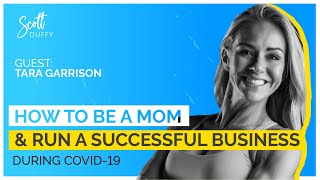
Tara Garrison, a keto coach and single mom of four, talks about running her business during lockdown and balancing parenting with work. She shares her personal transformation, practical tips for juggling both, and advice on health optimization through testing and supplementation.
Chapters
Good morning, everybody, and welcome. Welcome to what NOW with Scott Duffy, presented by SAP. Concur. It is so good to join you this morning. It is Monday morning. There's so much going on today, it's crazy. I can't wait to share. This is gonna be a big week. Can't wait to talk about the weekend. Can't wait to share about what's going on today, what I got going on the rest of this week. Want to share a little bit, Start to tease a big event that you're all invited to on May 21, 8am Pacific to midnight. It is going to be rocking. It is going to be awesome. I can't wait to share that with you. But I got to tell you, it's great to see you and I'm so happy to be back again. This is what NOW with Scott Duffy, presented by SAP. Concur. If you're just joining us or it's your first time to watch the live broadcast on social media, I'd love to ask you to please drop in, drop your name in the comments, the industry that you're in and the biggest challenge or challenges that you're having today so that I can help to shape and craft this show for you. Because that's really my goal. My goal is really to make this about you in solving the issues and the problems and things like that that are coming up as we work through this crisis together. Because look, at the end of the day, we will get through this and we will come out stronger, but. But only stronger when we're together. And so again, I want to thank you for joining. We have about 30 seconds before live on radio and until then, I just wanted to. We're going to let this propagate for just a few more seconds and then we're going to kick things off.
And again, drop your name down here in the comments and I.
Want to hear from you and I look forward to. I look forward to a great show with you. All right, here we go. Good morning. My name is Scott Duffy and this is what NOW with Scott Duffy, presented by SAP. Concur. I want to welcome you from wherever you're listening. You can tune in each day at 10am Pacific Time to watch the live broadcast on YouTube, Facebook, on Instagram, Periscope and LinkedIn or you can download the podcast. This show is for entrepreneurs, small businesses and those thinking about starting their own companies. It's for people who've been affected by this crisis. Maybe they lost their business, they lost their job, they were furloughed or they saw all of their consulting contracts disappear. And for a lot of us, it seemed to happen overnight. Now, our focus today is going to. It's going to be how do you work, how do you run a business when you're juggling being a mom, being a dad, caretaking for your parents and all these other things? Because I have to tell you, like, today has been the most crazy morning. This has been like cray cray with the cherry on top this morning. Trying to juggle all the things that I have going on right now with work. I have a big event that we're going to announce trying to juggle all of that. And also I had to try and do my kids homework with them this morning that they were a little bit late doing. They had forgotten their Chromebooks at their mother's house, so we had to go do that this morning. And then I had to, like, it was just crazy. And I know I'm not the only one that's going through this. I know so many people are going through this right now. And it's something that I would love to talk to you about and I'd love to figure out how we, how we work through that. What are some of the things that you're doing, some of the tips that you have, some of the ideas that you have for really being able to drop into your work and do a great job, do the job that you need to do, but also be a great parent, be a great, you know, daughter or son, you know, with. With your parents or all the other people that you may be taking care of and be responsible for. So that's something I want to talk about today. Now, our special guest today is one of my favorite people on the planet, Tara Garrison. Tara is amazing. She is a keto coach and a trainer. But what really sticks out to me about Tara is that she is a single mom with four kids that somehow has figured out to have an insane competition style physique. She has a thriving business and she is an incredible help to others. And so she is able to juggle all of these things. I thought this morning because I am having my own issues trying to juggle it all. It would be amazing to bring in Tara. And so we're going to have her join here in just a few. A few minutes. But before we drop in, let's talk about the news. And good morning, Tim Slevin. It's great to see you. Your name came up over the weekend. We have to catch up after this. It is great to see you. I want to welcome. Sita, good to see you this morning. Linda, Sunshine West. Great to see you this morning. Greg, it's awesome to see you over here on YouTube. Good to see you. Bill and Jennifer. Tony, good to see you. Steve, thank you guys so much for joining. So in the news today, globally over the weekend, we're at 4.1 million cases of coronavirus, 283,000 deaths. In the U.S. we're at 1.3 million cases and 79,000 deaths, if you believe the numbers. Now, what's interesting is this weekend wasn't a great weekend for. For data. We all want to get back to work, we want to go shopping, we want to go to the beach, we want to take these masks off. But what we saw this over the weekend was we saw the data. The data that's produced by the same people turned a little bit negative on us. What we saw is in many places.
A significant increase in the number of deaths and an even bigger increase in the number of new cases, particularly in areas that had opened up over the last couple of weeks. And so I found that interesting. Also, the number of projected deaths now from the people that have been giving us these numbers that the federal government has been reporting has now doubled. And so over the past weekend, They've announced this 100% increase in the number of projected deaths. So it's kind of interesting because to me, it all just feels weird. To me, it just feels like, you know, we want to open up. Many states are opening up. I see it here in California. I was in LA one day this weekend. I was at my home in Newport beach, in Orange county another. And I see these businesses that are super eager to open and get back to work. And so many stores were open, but then there were others that were closed. It's like, because of the restrictions and the way stores are being able to open, I go to one shop and the owner was there, and there were people shopping, and then I go to the one next door and they weren't allowed to be open. It just, to me, it was confusing and it didn't make any sense. I think that the. The toughest part for me this weekend was walking on Balboa Island. So Balboa island is this historic, iconic place near where I live here in Newport Beach. It is absolutely beautiful. And there's a super little quaint. This super little quaint town and shops, and these shops are all owned by mom and Pops. And over the years, I've gotten to know a lot of the people that are there and that own these Stores. And we talk. We talk about business, we talk about what they're going through. I share with them ideas. So this weekend I had a chance to walk Balboa and it was so sad because so many of the stores that I would normally, that I would have gone to are closed. There were signs up in the windows that said store for sale, equipment for sale. There were people that were boxing their things, that were sweeping things out. And, you know, one of the things that's really a trip about what we're experiencing collectively is we hear these statistics about how tough it is out there for many people, for many of us, for many small businesses. But we don't really see it. We don't really see it because we're all at home. And because we're all at home, it's not like in our face. This was the first weekend where I went out and it was in my face. My favorite restaurant here in Newport beach for the last 10 years closed last week. And so for the first time I'm seeing it. And so it was really a trip. The most recent research says that 55% of SMBs are reporting they're going to be forced to shut down in the next four to five weeks, which is crazy. And one of the biggest points of contention and an area. I want to answer this question, an area where I get a ton of questions over the, over the weekend and kind of the end of last week is around the PPP and how you deal as a small business owner who got PPP money but whose people don't want to go back to work. Okay, I had two calls this weekend with guys, both guys, both business owners. One person had 19 employees and one person had 14 employees. In the case of the person with 19 employees, he had a. He has a company in Florida. Of the 19 employees, only 17 of those employees have chosen to come back after he has tried to re employ them. He got the PPP and he wants to spend it and he wants to employ these people. The problem is they're getting unemployment. And with the $600 a week bonus in unemployment, they're making much more money now sitting at home getting unemployment than they would be if they went to work for him. And this is a real problem. The guy that I talked to here in Newport beach with 14 people, only 13 of the 14 people said they're not coming back. They're going to wait till their unemployment runs out in the special bonus in August. This is really a problem. It's a problem because if you took government money for the ppp.
The odds are you don't want that to be in the form of a loan. You took that money and the purpose was to spend 75% of it. This is what the government laid out to rehire your workers and keep people at work for the next eight weeks. That's supposed to do 75% to workers. 25%. 25% could go to other things. It could go to utilities, your mortgage interest, it could go to rent, things like that. Here's the problem. If people won't come back to work and you're not able to give them the money, you're on the hook for that. And now this grant becomes a loan. So the guys that I talked to this weekend were really frustrated. One of them guy down in Florida, and he's like, I cannot believe this. He said, I cannot believe this. I have tried so hard, so hard to keep my business and I get this PPP money. I think I'm doing good. He said, I think I'm being a mensch, trying to get everybody back to work, and unfortunately, they don't want to come. He said, so I have a business now with no employees that will come back. I can't make money to keep this thing open, and I'm going to get stuck with this loan. This will not be a grant because I couldn't place the money. It will be a loan. What do you do? What do you do? Now, this problem has really emerged in the last week, week and a half. So it's kind of a newer problem for a lot of people. So I'm going to tell you, you're not going to like this. A lot of you aren't going to like this. But I'm going to tell you what entrepreneurs are starting to do. What they're doing is because again, the entrepreneur has a business to run and they have a family to feed, and they have people that they're responsible for. Okay? You as a worker, okay, you may have the same things. You may have not a business to run, but you've got a family to feed. You got to take care of yourself. Okay? So here's the issue. The issue is, again, the business owner does not want to get stuck with this big loan, especially if the employee's not coming back, is going to put them in a worse shape to put them out of business. So here's what they do. What they're doing now is they're calling the unemployment department and they're saying, I have offered and they show the paperwork. I have offered this person a Job. They have told me they will not take it. They're going to stay on unemployment. The thing about unemployment is if you're offered a job, you got to take it. If you don't take it, then you lose your unemployment. So that is what's going to happen. You are going to start to see people that are unemployed on unemployment, who've chosen not to come back to work being reported to the unemployment department. They will lose their unemployment benefits, all of them. They will not be eligible in the future for unemployment to receive those benefits and they're going to lose their job. So I just want you to know, like, this is what's happening and this is some of the trickle down and the domino effect that is being created as a result of everything that is going on. And it's pretty crazy. I'm actually, I'm getting on a second, I'm getting a text about all of this from.
Somebody in the same position who said they'd be reaching out this morning. So, so what I'm seeing right here is again, I'm seeing the same thing. This is a person in LA. This person has just over 50 employees. They're telling me, and the majority of their employees do not want to come back, they want to collect the unemployment. And again, I'm just telling you that if you're a business owner and you don't want to get stuck with that is a loan, that ppp, then this is something that you're probably going to have to do. You're probably going to have to go to unemployment and you're going to have to show that you've offered these people their jobs back. I think that's the only, possibly the only way that you're able to stay out of an issue here. Tara, just wanted you to know. It's good to see you, Tara Garrison, that I shot you an email with an invite. So we can, we can have you jump in to today's. Today's call. Another thing going on today here in Southern California today many people were calling Black Friday in the entertainment or Black Monday in the entertainment business. Yes, they're calling it Black Monday in the entertainment business. And the reason is I spoke to a couple of people at talent agencies, you know, the big iconic talent agencies in la.
One of them I knew just recently reduced all salaries for everyone in the company 75%. But what I heard that today was going to be a day of mass layoffs. And that's what people are expecting. Reductions in at least 20% of the workforces at any of These agencies and where are they going? What's interesting is the areas that are being cut are the music divisions and the TV divisions. And the reason music and TV is that the agencies don't believe that there'll be any live concerts, any music, and they don't believe there'll be any new television production for at least the next year. And so that is. That's what's happening with the agencies. I've also heard from a couple of people that the studios are considering reducing their employee employees by up to 45%. So this is going to be a super, super interesting week to see what happens in the entertainment business now of the companies that are opening. So again, I was out this weekend. It was so amazing to be out this weekend and to be seeing people and to be moving around and exercising and all of that stuff. And I went to a couple of different stores and it was interesting to see the difference and how they opened up and how they responded to customers. So I'll give you some examples because I think these are things that we can learn from as small business owners. So the first is this. The first is Lowe's. Now, Lowe's has been considered a critical business and a critical industry. So it hasn't had to shut down. But what it has had time to do is practice because it's been open. So when I went to Lowe's this weekend, here's my experience. First, I wanted to know if it was open. So I went online. I saw the website come up in Safari on my phone. I have an iPhone. I Google mapped it and it came up there. Both showed that it was open. I called to make sure that it was open. Somebody answered the phone and confirmed it was open. I went to the store. I went to Lowe's. And there was an element of social distancing outside of the store. There was an area that people could line up and there were stickers on the ground, six feet apart. Now, at this time, there wasn't a line, so I was able to walk in. I walked in and there was a reasonable number of people in the store. People weren't very close. They were shopping, doing their thing. It was actually a pretty simple experience.
Then I went to Living Spaces. I had to pick something up. It was like a set thing. I went to Living Spaces, I went on Safari, and I went on Google. I did the same exact thing. I went Safari go the same exact thing. So on one of the things, it said they were open and on the other it said they were closed. I called up this is a national chain. I called up, nobody answered the phone. I thought, what the heck? I drove there, it said, we're open. I walked to the door and it said, sign in. I walk inside and I went to sign in and they said, do you have an appointment? And I said, what's up with the appointment? I don't see anything that says appointment. Where, where, where, where? What's the appointment? They said, you have to have an appointment now to shop in our store. And he said, and we're booked for the next two days. And I looked around and it was this big open space. I didn't see one person on the floor. It was like so crazy. So I said, show me how to make an appointment. Which was the most fumbly dumbly thing on their website I'd ever seen. And I look at this company and I go, this is a big brand. It's a national brand. I don't know for sure, but my guess is it benefited because lots of companies like it benefited from getting government assistance and funds. And to think that they open that poorly really pissed me off because I know that there are a lot of small businesses that would have taken that money and that opportunity and created an amazing opportunity for their customers and would have figured it out. So I really did not. I didn't understand the fumble. The other thing that I just wanted to point out is, is with the airlines. I came from the aviation business. I had a private jet company in the private jet space. My company was bought by Virgin a few years ago, a company I owned. I was around five airlines at the time that Virgin was involved in. And here's the thing. I want to love the airline industry. I know how hard it is. But you know what? Flying on the airline sucks. It just sucks. You know, the seats just keep the space get smaller and smaller. The seats feel like they get tighter and tighter and all that kind of stuff. And they've been making such a big deal about the airlines, about how they're going to basically make flying safe. You're going to have to wear a mask, you're going to have to. All this stuff that we're going to have to do. What they're going to do is they're going to open up every middle seat and that's how they're going to do. That's their part in the social distancing. I can just tell you that United Airlines is the most full of shit airlines out there right now. So there, there are plenty of pictures all over the place of flyers over the weekend. That flew on United Airlines, that packed it up as much as they could, Middle of seats taken, all kinds of restrictions on travelers. Nothing is different for them except for the fact that they got a bunch of money from the government. And that really upsets me because, again, I'm all about you. I'm all about the small business. I want to see us win. I want to see us win. I know we're the ones that find problems, figure out how to fix them, create amazing opportunities for our customers. That's how we roll. So, again, I just wanted to share that with you because that was making me crazy. Tomorrow, I'm gonna be announcing our big event. Our big event on May 21st.
I'll just tell you this today. The event is called Covid. And Covid is like live Aid back in the 80s, but it's for business. And we have assembled a group of it's around 50 of the top celebrity, like founders of amazing companies, athletes, entertainers from a variety of different industries that are going to be on for 16 hours, eight in the morning, till midnight on May 21, and give you the best of what they've got. Not stuff that is theoretical, not stuff they read in the book, but what they're doing today, that's working, and what they're doing today, that isn't working. Because our goal is that my goal is to help you to get through this and get through it faster and get through it together. That's how we get through this stronger and stronger together. So, all right, with that, I want to bring in my guest, because this is just going to be super cool. Let me bring her in. Hold on just a second here. We're going to do this. And there she is. Tara Garrett.
Good to see you. Thanks for having me.
Well, it's amazing to have you here. So I was sharing with everybody at the top that, first of all, I just think you're the bomb. So we're going to talk about our experience working together in just a little bit. But, you know, one of the things I find magical about you is the fact that you're this successful woman, single mom with a bunch of kids, somehow find time to create this competition. Ready physique and body and energy. You train customers, and I know how much you help. And I want to share with people just really quickly how we got to know them. And I want to drop into you, Tara. So.
I have a mastermind called the breakthrough mastermind, And I was fortunate enough to have Taraji for. For one of my events, and she'd been Referred to me by a really good friend, Drew Manning. Many of you may know Drew Manning. And so. So Drew, by the way, he. I think he put on £100 and then lost £100.
It was. It was 76, but close. But in six months. Gained it in six months and then lost it.
Wow.
Shredded to obese. Who shredded again. I mean, props, Drew. That's amazing. Wow.
And he's the author of fit to fat2fit. So, anyway, so Drew introduced me and said, you got to meet Tara. So after the event, I remember I was going through a time where I was really frustrated because I was exercising, I thought I was eating right. I was doing all these things, and I just felt terrible. And right now, like, what we're going through right now, where there's so much stress and so much pressure, there's never been a more important time to take care of our bodies. And so I talked to Tara and I said, I don't get it. I do not know what's going on. And she said, I'm going to help. What she led and oversaw was testing for my blood, my hair, and my DNA. And she took all of those results. She analyzed the data. Don't guess it. Look at the data. And what she did is she put together a plan. She said, you need this and this and take away that. And she put together this incredible plan. It took about a week, week and a half. And since then, I haven't felt this good since I was a kid.
And that's just the diet part of it. That's just the. So I just want to. When everyone. When I do the show and I bring people on and I share stuff, I always say it's not things that I read in a book. It's stuff that I've experienced. So I have experienced these results. So.
Tara, welcome.
Thank you. Thanks. Yeah. Let's begin. I mean, I. This is my life. This is my passion. This is what I eat, breathe, and drink and sleep all day long. So let's. Let's talk about. Let's share how people can optimize. Yeah. Because you've got an audience full of entrepreneurs who love to optimize. And I'm telling you guys, if you can optimize this, just watch. Just wait and see what happens to your whole life. Not just your business, but also your family life, your relationships. It's freaking crazy how on point you can be when your body is working with you instead of against you. So I love. Love talking to everyone, but specifically high performers about this, because they get it. They understand, like this is worth the sacrifice and investment for me to go way higher than I've ever been before.
So let's step back. I want to talk a little bit about your journey. So how did you get to being this top keto coach, personal trainer that creates these results? How did that journey kind of unfold?
Okay, I've got a little picture. Because I feel like pictures are very powerful or very visual society. Okay, so this is me. I'm trying to turn the brightness down here a little bit. This is me before I got in shape actually, actually in this. Whoop. That way. In this picture, I had just run a full 26 mile marathon like a month before this picture was taken.
Wow.
So I was what I thought was eating right, exercising, doing all the things. Okay. This is when I learned a whole bunch of stuff. Okay. And this is after having four kids, by the way. Both of these pictures are after having four kids. So if there's any moms out there or anybody who's got excuses up your, you know, a whole chain of excuses why you can't get fit or can't have, you know, you lost your body forever. No, you didn't. No, you didn't. So, so here's the thing. Most of us, what we have learned to perceive as normal is not normal. And what we think that we need is, is not what we need. So we think, we think that we need first a lot of calories and a lot of goody goody gumdrops in our mouth and very little nutrition. So that's the problem with America and the rest of the world is that we are over. We have an abundance of energy, but we're nutritionally deficient. So we're eating tons of calories, but it's not nutritionally dense at all. That's when we get problems because now our bodies are having an inability to run off all those little micronutrients that we need. Like, we are these extremely complex biotechnical machines that need all sorts, you know, nuts, not just oil and gas. Like, we need all sorts of little tiny nutrients, vitamins, minerals to make these awesome biotech soups that we get to live in every day work correctly. Right? So, so when we eat milkshake and burger and fries as our standard meal, well, sure, we may feel some energy, like right off the bat from that rise in our blood sugar, but over time, our energy is going to go down and down and down and down because we're actually becoming nutrient deprived, we're becoming malnourished while we're getting overstuffed and fatter. And now we have more weight to carry around with less energy to do it. So that's what I found out. That's what I found out, that my perception of what was normal was not normal. And that I actually needed a lot fewer calories than I thought I did to run off. But I needed them to be packed with nutrition. I needed more vegetables, fruits, high quality meats, healthy fats, vitamins, minerals, and we can get into what, you know. The next level of this for me was what I did with you. And that's why I take my clients on these journeys. And of course, I work with their doctors, alongside with them. But when we find out that we have major predispositions for micronutrient deficiencies such as folate, B12, maybe we have a dopamine receptor issue or something like that, now we can help boost the body and the weaknesses that it's having. Saying, here you go, body, we'll help you out right here. And now all of a sudden, we're on fire and we're less dependent on so much sugar, so much caffeine, all these things to keep us going. Because we found out that if we just gave our bodies the thing it needed in the first place, we could actually run with a lot more power.
Let me ask you this. What. What was the transition point from you that. From the one side of the picture, kind of the before, where you just run a race to the after side. What got you like, where did it click?
Yeah, I love to talk about this. And I open. I openly talk about this. It's not, it's not such a beautiful story. It's not like one day I just was like, yeah, I'm gonna be super fit. No, actually what happened was kind of a very, a very sad, sad part of the story, but not right. Like, I have gratitude for all of my journey, but what happened was like, shortly after that, before picture was taken, I found out that my husband at the time had been addicted to pornography our entire marriage. And it was this big secret. And I've asked his permission to be able to share this public publicly. And he said that, yes, because we both talked about the healing that has occurred as one. He learned that he actually didn't have an addiction. It was a religious prohibition of being able to look at it in the first place. That led to him feeling like he had an addiction when it was like once a month, twice a month, maybe twice a week, you know, which is pretty typical for a lot of. A lot of men, you know, and so it's actually interesting because he has stopped looking at it. Side note, since this restriction has, has been pulled away so we can, I like to correlate that also to a lot of food addictions people think that they have. And I'm like, well, your restriction of it I think is what's creating the addiction in the first place. So let's dig into that psychology. But for me at this time, I hadn't done any personal development work. I was very, what I would call very unconscious. And while cognitively I thought this has nothing to do with me, internally in my heart I was like, yes, it does. Yes it does. If I just get hotter than all those poor corn chicks, then I would, then he won't feel the need to do that anymore. So it was a very unhealthy motivation that got me started, that got me, that pushed me over the edge. And the reason I share this is because I really believe. I hear so many high level entrepreneurs and very successful people talk about how an unhealthy motivation is what kickstarted them into the path that they're in now. Like maybe their dad told them they weren't enough or they had a divorce and their ex spouse told them they would never amount to anything. And they knew it and they were like, I'm going to show them, which is not a great healthy motivation. But maybe, just maybe that happened for a reason. Maybe that happened to kickstart you in the path that you're on right now. And if you can go through healing on that journey along the way, then maybe it was all beautiful. And that's what I've experienced. So now what started as this scarcity, not enough, I have to look better, blah, blah, blah, turned into this ultimate fascination with the human body. I was like, this is freaking incredible. I can change my choices and totally shift how I look and how I feel completely. That's extremely empowering. That's what led me on the path of entrepreneurship. It's what taught me I can do anything. I call it the ultimate personal development journey. If you can master your body and the biochemical urges that you have and you can say, hey, hang on Bodi, I love you enough to say we're going to make these changes. And I know like cake at 10 o' clock at night sounds really good, but we're not going to do that because we got something else we're going for that's bigger than that. It's the ultimate personal development journey. And that's what I found throughout this process.
So you decided to become. You really got in, got into this space, and you really dug deep into learning about the body. And.
One of the things that I think fascinates me is that you were going through this journey and you were launching a business, and you were kind of launching yourself, like, relaunching yourself, and you had all these kids. So I want to talk for a minute about how we juggle it, because I've got to tell you, this morning, for me, has been so hard. And.
I know I'm fortunate in so many ways, right? And it has been so hard trying to manage my work, trying to get the kids up and get the kids fed, trying to. When I've got all these other things that are pulling at me. And during this time where, you know, we're in crisis right now, we really, you know, I think a lot of us just really want to stay in. We feel like we have to be locked in. You know, the most important thing sometimes feels like it's making that extra call, picking up the phone, because maybe there's money or a job or a deal attached to it, but you have. We have responsibility. And it could be the kids. It could be the. Our mother, you know, we sita and you know, with her mother, you know, how involved she is and things like that. How do you do it?
Okay, this is how I look at it. Well, one, let me say that I have a strong support network with my ex husband and his wife. Like that. We get along really well, and it's very supportive. I was just texting this morning, hey, Mike has got an appointment at 11 with his teacher on the. You know. Oh, thanks for letting me know. So I do. I'm grateful that I have that support network, and I wish more people could have that situation, but it takes both sides to want it. It takes both sides to want if both sides want it. It's freaking beautiful. Like, it can be amazing. But for on my side sometimes, yes. Like last, my mom actually got Covid, and she's in a nursing home in Texas, and I'm her power of attorney because she had just had a major stroke right before that. So we were like, oh, my gosh, this is such a bad situation. And so I'm. And, you know, not to mention, I just made a huge shift in my business, so I'm in major growth mode right now. And I know you entrepreneurs know what I'm talking about. It's just all day, all night, nonstop crazy, and then all of a sudden, I'm homeschooling. My kids. And I'm a mom's power of attorney. And there's the emotional stuff of, is my mom going to die? Do it. You know, my siblings and are talking about funerals, how we're going to handle that if that happens. And then my refrigerator went out, the whole thing, and I couldn't get someone to come fix it. So I'm like, oh, my gosh. And finally the guy. And I'm having this day, right? And so the guy's fixing my fridge. There's water all over my kitchen floor. The kids are going crazy. I'm trying to do live video interviews all day. Like, hey, guys, be quiet. You know, it's just crazy. And what I have learned, what I've learned, one, two things. One is I love a good challenge. I love to see how I can perform under pressure. Like, I'm like, bring it. And I shouldn't. I probably shouldn't say that, but I do. I don't care. Bring it. Bring it, universe. I got it. I hope it's because I know it's going to be for my own good. I know if I look at it in that light that this is for my own good and my own growth. Even though it sucks in the moment sometimes, I know it's going to. It's going to grow me. The other thing is, I look at my kids. I. As my first organization, and this. This shift came for me from Tony Child's Gradish Shift program. Tony, amazing. I love his. His graduate program has been, like, amazing. I'm actually. I do his little thing every morning, but.
Gratitude. So as soon as I get in that victim mindset of, oh, my gosh, this is so hard. I'm so overwhelmed. It's like a trigger for me to say, what do I need to shift here? What do I. And so the way I look at it is my kids are my first organization. This is the first business that I run. And if I can't lead them effectively, how am I going to. How am I going to lead my organization effectively?
So.
And kids are a great testing ground because kids will not say, like, oh, I don't like the way she's doing this, but I'll just go ahead and pick up the slack anyway. Nope. They are a true testing ground of what a. What kind of leader you are. So I instantly got out of victim mode with my kids through this methodology. Like, I would come, you know, they come home from school, I might be on an interview or doing something, and I come out and there's food all over the kitchen, they've left the bread out, the jelly, you know, there's just stuff everywhere. And I'm like, you know, instantly I want to go in victim mode. Well, are you guys freaking kidding me? I'm working. And, but, and I was like, why are they doing this? One, because I have no established rule in place and two, there's no reward or, or punishment for doing. Why wouldn't they? They're just kids, right? So I learned, I'm like this, this is an opportunity for me to put systems in place that get me what I want. And so looking at them as my first micro organization has, it's really removed all victim mentality from me. I'm like, I'm the one who had four kids. I'm the one who runs this household, I'm the one who runs this organization. And if it's not working, that's a challenge for me to figure it out and get that running better. And since then, man, I've stopped doing a lot for them and I. And it's been a lot more peace in my home.
That's really awesome. And rules. So rules, rewards and punishment, you have to have clear rules. Clear. So the way that you manage business for the way you manage juggling your work and your other personal relationship responsibilities is number one, you think of those as your first organization. And if you can't get that down, how are you going to get your business down? The second, what you do then you do is you put clear rules in place, rules and boundaries. And then the third thing that you do is you create incentives. So there's rewards and there's punishment. If you don't follow the rules, I think that's great. You know, something that I've done is I was, I was really, I was really frustrated about having to jump up and jump down and things like that. Because I'm on like a lot of this. I'm on Zoom. I was on my first call at 5:30 this morning and it's going to go really late at night because of this event we have coming up. And so I'm not saying I work any harder than anybody else. I'm just saying that a lot of us right now, we spend a lot of our time in these video calls. But from time to time my kids may need something and they need me. And I used to try and push it off and hold them off as much as I could. But there's a point where that becomes unreasonable and it's really unfair to them.
And also I think it's Unfair to the person that I'm talking to because I'm distracted and I can't fully jump it, drop in. So. So now what I do is if that becomes a problem, I just address it and I say, hey, you know, there's something going on I got to take care of. Hold on just a second. I put my faint on mute. I put my cam on, and I deal with the issue. And you can. In my case, I found I can usually deal with it like that. If I deal with it, it's the minute before where I'm doing this and creating the resistance.
Right.
Totally don't even need to exist.
Right. Yeah. And they need to know. They need to know that. And you're absolutely right. That's like the weeks. So I have my kids every other week. And so the weeks I don't have, the weeks that I do have them, I try to keep my schedule a lot more loose for all of our sanity, for that reason, because they're. They're humans. There are babies. They need our attention sometimes. So. You're absolutely right. You're right. It's like all they need to know is that they were seen or heard most of the time. And it's like that one minute that you may have taken to be like, to help them with their math problem will save you so much angst the rest of the day. So. Yeah, thanks for sharing that. I 100% agree.
It will. And with. With parents, I mean, I know I've known. We've. We've gone back and forth about. About your mom, you know, you know, I have some. I have a family member that's. That's struggling, that's really had a tough. A tough year, year and a half. And, And. And that's hard, too, because, you know, in these cases, you know, people, particularly if they're older, may feel really alone and really isolated. And I think that it is even more important than ever that we set, like, I've got my gratitude alarm every day. You know, maybe what I'm thinking right now is I should have an alarm in my. In my phone. It's just my touch out with those people alarm. Because it only takes, you know, a minute to write a text or send a video or something like that. You can really change somebody's day and their. Their energy.
Yeah, yeah, there's. And so. And I think for people in that position, if someone is feeling really alone and isolated, getting a sense of purpose of some sort of project that you're working on or something that you're doing Will really help alleviate that. And in. In Tony's little thing here every day I write out my purpose statement every single day. And I also, it asks list one way you can act in generosity today is what he asked. And I think if we all. And it's like, it causes me to think so how I think having a situation system in place every morning where you can think, okay, like, what can I do to reach outside of myself instead of just being all stuck in myself? And, you know, this is sad. Woe is me. I'm all alone. It's like, well, you know how you can stop feeling so alone is you can be the one who reaches out. You. You can be the one who decides what your purpose is and what you're going to build and what you're going to do. And bam, that is gone. You know, So I think a lot of it, if we're feeling very sad and alone and isolated, we can take it upon ourselves to. To help ourselves out of that. And if you know somebody who has a hard time doing that. Yes. That little, that little message of kindness of like, you know, what's so awesome about you is I love how you do this, dad, or whoever it is is so powerful.
You know, what I love that you just said was talking about this idea of having a system. So you basically have a system in place that you follow every day. And what it does is it controls your mindset and it gets you to focus through gratitude on what you have. Right. Versus what you don't have. But also several other things. I have a system. My alarm goes off. I do three things I'm grateful for, three things I love about myself, three things I forgive myself for. I think whatever it is, whatever your system is, it's so important that everybody has a system in place. That we were talking about kids and how you manage kids a little while ago, that you have rules and that you have, you know, restrictions. They're clear in place. These things are so important. And they're so important that you do every single day because that's how you develop momentum. And I've talked about this before, this exponential factor that happens in the universe. You know, it is much better to do something every day for five minutes or a minute, then do it all on Sunday. You need that momentum.
And you'll feel stressed out if you don't create systems. You're going to be like, oh, should I go work out at 9 today? Or 1 or maybe after work or now you're stressed out. Like, just don't. I love the philosophy of. I kind of picked this up from Tony Robbins, talking about when he gets into that cold plunge every morning, there's not a day I feel like getting in there. He's like, don't think. Just do. And I do cold showers every day, too. That's part of my routine. And it's like, I don't remember. Like, yay, here comes the cold, freezing part. I can't wait for that. I don't think about it. I just do it, you know? And if we can get more systems in our place where we don't have to think about it and we just do it, now we're inviting power into our life with less stress. Yeah, that's super exciting.
So how do you, like, how do you stay in shape? This is a big question for me, because I am. I'm like, I'm so busy. And my joy used to be going to the gym. I loved going to the gym. I personally find it hard to work out at home. I find it really, like, the thing that I. Especially now, because I'm. We're all working at home, and we're. The kids are at home or whatever. Like, the thing that I want to do the most is I want to get out and work out. Because when I do it in, it feels like work, right?
Yeah. I'm the same way. What do you do relate to that? I hate working out. Like, at no time ever do I want to, like, lay on my car carpet right here and just start working out. I'm like, no. So this is. This is how I've done it. One is, the first thing is that this is your life. This is your life, and you deserve to have time for you to go work out. So whatever crazy thing you're building, I know you're doing big stuff. I know everybody watching this is probably doing big stuff. You deserve that time for you. Nobody gets that from you. That is a. Like, no one gets to touch my workout time. If I can't make out, make a life schedule in which I can't have time for myself. Myself to go take care of myself. Something seriously wrong. So, like, carve that time out for you and tell people, no, I'm sorry. That's my workout time. And they'll respect it. You know people.
How do you do it with the kids so?
Well, for one, my kids are old enough. Like, my daughter's 14, so, like, in the school year, like, I'll go to the gym before they're awake, right? So she's just in the house, and.
They know we worked out together in Utah really early in the morning. Yeah. So they were probably still sleeping. Yeah.
And then during Corona, by the way.
I just want to tell everybody we worked out. One time I was on a business trip and I try and plan my business trips. Right. You know, it's around a gym and I'm still sore. And that was months ago. You killed me. You killed me.
Scott is a great person. If you ever want a workout buddy that gives way really funny, hilarious reactions to hard set, Scott is your man. It was, I was cracking up. He was like, no, no. But yeah, I think also, you know, taking shifts, like being able to shift for me, like during this time, I'm usually like a 4 o' clock Amer, like go. I got my morning routine down, workout come back before the kids are even up. Like, you know, I didn't do that during Corona. I welcomed this opportunity for rest and recovery. I work really freaking hard on my body and everything all the time. So I was like, nope, I'm going to sleep in as late as I want to. No calls are coming before 10am that's it. And I'm going to look at this. And I just did, I did do a lot of running, distance running, because I'm a distance runner, but that's pretty much it. Just walking, running a few little outside in the grass, you know, little workouts out there to get some, get some sunshine. But I think it's important to be able to, you know, listen and be in tune with what your body's wanting. And that was so forced for me to do this stuff. It just, I didn't think it was necessary. So. But getting up, getting in a flow, getting your dopamine ramped up, I mean, it's such a, it will make you more effective the rest of your day in your work because now you're having this new connection between your neurons and your brain, giving you new ideas and helping you problem solve out of a lot of the stress that you're in. So I say, you know what, Even if it's just walking, it's so worth it to create that time for yourself because now you're going to be more productive in everything else that you do.
And I've, you know, I found that during this time where I've been so sedentary on this computer and things like that, that the, the one thing I've tried to do is like if you, if you can't do any, just do one thing, like do one thing that is that you can do consistently. So the One thing that I can do consistently is drink water.
Beautiful.
So I'm drinking. You'll be proud of me. I'm drinking about a gallon a day right now. Yeah. So I drink a ton of water. And it started with a little bit and I just kept adding to it over time. Took me a long time to actually get up to that much. And so I drink a lot of water I put in. I drink it actually in these things throughout the day. If you can see that.
Perfect.
I squeeze a half a lemon in each one. I use fiber from silver fern. So I use a scoop of fiber in two of them during the day. Half 11 in each one of them. That's so easy. So I do that every single day. The other thing that I do, which I can do every day, is I supplement. So I want to talk about just real quickly. If you can only do one thing a day or a couple things a day that are really easy and they don't require us to get out. We don't necessarily have to push weight, but they're going to make us better. They're going to make us healthier. Water is one. The supplementation. We did hair testing. I know, I know. We did hair testing.
We did.
From anywhere, guys.
So we did. We did the hair test, we did the blood testing, and we did the. We did the DNA testing. And why. Explain to everybody why that is so powerful and also the power of hair testing. Because I don't think people understand how much more effective that can be than blood testing.
Totally. Yeah. Okay, so here's what it is. The reason. The reason I do DNA testing. Now, I'm a firm believer in epigenetics, which means that you can create a different expression of your DNA based on your lifestyle and your environment. But if we take a snapshot of your DNA and we can see that you have a double mutation on a certain gene, and especially one that's heavily research research. There's a high likelihood that you may need nutritional support there. So let's use folate as the example. As an example, because the MTHFR gene mutation is very common. So if you have a high likelihood to not be able to convert folate out of your food, and then we can look at blood tests and hair tests and see other. You know, there's. We look at red blood cell count, we look at magnesium, we look at all these things and we were looking at your predispositions and correlating those to what's actually happening in your body. I just did one the other day on A friend who you know, he's like, yeah, I always have low vitamin D. If you have low vitamin D, can I just like rant for a second? You have low vitamin D on your blood test. That is super freaking important. You can't just be like, I guess whatever doesn't. It's not just some little vitamin. It acts like a hormone in your body. I want you to look at it as you have a hormone imbalance. I can't say this enough. Vitamin D causes so many things to go wrong and it's so common. So if you, you have done a blood test and you have low vitamin D, please for the love of God, get out in some sunshine or supplement vitamin D5000 to possibly 10,000 IU a day. Ask your doctor about it. You need to get that up. Okay, so for example, on my friends, he had a gene snip that said he would be likely to have low vitamin D. He's like, oh, I just did a blood test a couple months ago. I do have low vitamin D. And he's like, I kind of been taking it. I'm like, no, you have to take it. So get out, get some sunshine. You know, that's the best way to do it. It's going to help you not get high cholesterol. Because if you have higher cholesterol numbers, that's not necessarily a bad thing in all cases. But when we match that with high inflammation like crp, which we can check for DNA. If you're predisposed to having high crp, which is C reactive protein, which is one of the most important blood tests you can get, it will tell us how inflamed your body is. So if you have high cholesterol and you have high crp, high inflammation, now your arterial walls, your vein walls are hardened and that's when we see, start to see the problems, right? So these are things that we can correlate like, oh, do I have a tendency for high inflammation? Do I have a tendency for low vitamin D? Let me go ahead and check my blood and see what's actually going on. Wow. I do have high crp and now I can see why. So I better be on top of taking vitamin C and glutathione and anything that can help all these antioxidants, eating fruits and vegetables, sleeping, de stressing, doing these things to help keep that low because I'm going to have personally a tendency for that to go higher. And that's really important to know about yourself. Now, the hair testing, what we test for in hair Is your mineral status, which is actually a precursor to your hormone status. Right? So if you're having. Let's say when I did mine, I was really magnesium deficient. And I was very surprised by this because I was supplementing magnesium without getting too sciency into it. I found some stuff in my DNA that I was like, oh, no wonder. Because basically, I'm in a high adrenaline state all the time. Time. And so that will cause my adrenals, my kidneys, to flush out sodium, magnesium, potassium at a faster rate. So I know that I need more salt and water than most people because of this. And now I take a. A nanoparticle size magnesium, which is my friend who does these hair tests. If you guys want them, I can get Scott a link or something to put up. But it's upgraded formulas. That's who I get it from. And I have. He will give you guys a coupon code if you want one. Scott. But I. I can. You know, you can get the hair test and then find out what you actually need. Because here's the other thing. Sita, she told me I was okay sharing this. We did the hair minerals that's on Sita. And her salt was high, her magnesium was high, her potassium was high. So we don't need to be supplementing her a bunch of magnesium and potassium, you know, so it's important to find out these things.
She was like a whole salt shaker and everything. She figured she needed it. You know, she got the real salt. You know, she got all that stuff. Holy cow.
Yeah, I will. For any keto people, because I know keto, especially amongst entrepreneurs, is popular. Like, let me tell the story of Sita real quick, because Sita was, you know, in keto, we say, take a lot of salt in. You need at least like, two teaspoons of salt a day. And so Sita, being the beautiful little overachiever that she is doing everything so. Right. I was at her house, and I see her putting salt in her hand, and it must have been a tablespoon. I mean, it was a lot of salt. And I was like. And she's just talking, and I'm like, oh. Oh, that was a lot of salt. That was like, a lot. You don't need that. Do you get a headache?
Exactly.
That's a lot of salt. She's like, oh, no. And so then we got her test, like, while I was there. It was, like, perfect timing, and her salt was really high. So she did have a genetic predisposition to being more sensitive to salt. So that's something you kind of can't know unless you do the DNA testing. So that's why I love all of this stuff because now we can actually. No, it's like, oh, 80% of the population is magnesium deficient, so you better take tons of magnesium. We can't really say that anymore. Just find out. You can do a simple test. It's what, like, less than 200 to find out what you actually need.
So, so what was really interesting about the testing that we did is that you looked at my blood, you looked at the hair and then you looked at the, at the DNA and everything was consistent. The blood in the hair.
Yep.
Told a story. And you looked at the DNA and you were able to tell me why. And then when you told me why, for example, I said that I take this and you said, no, but if you look at why, you have to take this with this. And so that's. For me, what happened was it was just a couple of things. By the way, I take liquid minerals, I take liquid vitamins. They're pharmaceutical grade, they're amazing. We can share all these resources with you and stuff like that. But the reason, the reason this is so important to me today, this topic is this.
I was watching the news this weekend, preparing for today, and somebody was on the news and they were talking about the death rate in the United States with COVID So I shared in the show weeks ago, you know, a few things. Number one, the death rate always lags the infection rate. So the infection rate can be on the curve, but the death rate is going to increase. It's a lagging indicator because people have been on ventilators, they've been fighting infection, things like that, particularly older people. And what happens is. And so they takes a little while for them to start dying and dying at scale. So we knew that in May, and we knew in June and July and into August, we were going to see this much higher death rate, even if the number of new cases was going down significantly. We also knew that the death rate in the United States, the average kind of person that was dying was, would be younger than the rest of the world. And the reason it would be younger than the rest of the world is we're so frickin fat. Is it that we're so overweight, there's so much diabetes, there's so many things like that that the body acts in many ways like a person that's much older. And so it was projected that in the United States, the death rate, you'd see a lot more People that got really sick, that were in their 50s and 60s, not just 70s, we knew that. So this weekend I'm watching the news and the person says, he's talking about this, and he's talking about as the death rate is increasing in the country, we're seeing the average age go down. And he says, so the new old is 50 years old. When we're looking at this disease. And I thought, I'm 49, that freaking sucks. That's horrible. And then what I thought about is this. A lot of people, particularly recently, have been really saying to me, you gotta chill out. Because I work so hard, right? I work so hard. And what I do is really emotional because I'm working with a lot of people right now that are struggling one on one, and it feels like taking a lot on. And so when I heard that, I heard what people were saying to me or like, dude, you gotta watch your heart. Dude, you got to watch this. Dude, you got to watch that. And so I really wanted to talk about health today, and that is really why I wanted to have you on. And I am so grateful. If we could only do one thing during the day, because that is all we have the time or the money or the space for, what would we be doing to make ourselves as healthy as we could without one thing we could do?
Honestly, if I have to pick one thing that you can do, I would say sleep more. More. And let me share this real quick, because. Why?
Why?
So at the beginning of COVID I told you I was getting up at 4 o'.
Clock.
I was like that, you know, like, win the day. I'm like, well, everyone else is sleeping. I'm winning. You know, I was totally in that that's you mentality. Okay, Yeah, I already crushed out 10 things where you guys even woke up. But guess what? I also wasn't going to sleep at 8 o' clock at night. I was going to sleep at 11, you know, pretty normally, like 12. Sometimes I'm like burning through and I'm like, that's okay. I can catch up on the weekend. And I know this is bad for me, but right now I'm in go mode. I'm in hustle mode. I just got to do this right now. Well, guess what happened? Covid hit. I decided to start letting myself sleep as long as my body wanted to. I lost at one point, I hit 16 pounds. Lost during COVID Wow. From sleeping.
Wow.
I'm kid you not like, because what happened? And also, granted, I wasn't lifting as much. I'm Sure, I lost a little too teeny bit of muscle mass, but it was a lot of fat mass too. And I'm telling you, I know some of it was a decrease in inflammation, but some of it was because my appetite got went so far down, like, I couldn't stop talking about it for like a week. I'm like, I. Like I'm not hungry at all. Like, I get it with a.
With a correlation to sleep.
With the correlation to sleep. Because when you are stressed out like a mother and you are not sleeping and you're tired, holy crap, I need energy. Let me get it from food and let me actually get it from the food that's going to spike that energy the fastest. So we have carbohydrate cravings, right? We stop having willpower. We want to eat all the bad things because we're just trying to freaking survive. So if we can switch that and we can start sleeping, oh, my gosh, the level of stress goes so far down. I'm actually on a no caffeine kick right now. I was scared to freaking death to do this. I'm only four days in, but already in four days, I'm just so much more chill. And I think a lot of this has all come because I've been allowing myself to sleep. And I will say, like, also on your note, about like, the younger people dying and all this, it's not just obesity. It's the immune system. It's autoimmunity. It's the immune system fighting against itself. And you know what puts our immune system in a really compromised place? When we are eating inflammatory foods all the time. And we're matching that with lots of life stress and very little sleep. So I would say it's not necessarily, like, about your body composition or any of that. It's. It's about the stress state that your body is in. Inflammation is the root of all disease, period. End of story. And the ways to get in a flame are put inflammatory foods in your body. Don't get enough sleep. Maybe over exercise or under exercise. Being in this unhealthy place, that's what messes up our immune system. So I say if you want to do anything to help boost your immune system, and in light of everything going on, freaking get some sleep. Get some sleep. You need it. You need it. And no, I did not want to hear that message two months ago. But I'm telling you, let me be the person to say it's true.
You bought sleep, you bought sleep. So how do we get a hold of you how can people get a hold of you?
I'm all the time on Instagram, Super Instagram coach, Tara Garrison. I'm here on Facebook, Terry Garrison. And then of course, my website is coachterragarrison.com awesome.
Tara, thank you so much for joining. Thank you so much. Amazing to see you.
You too.
Take care. And we're going to switch over here. Just real quick. I'm going to do this. I'm going to do a little this and a little boom on here. Look at how we do this. All right, cool. I want to thank all of you guys for joining today. This is what now with Scott Duffy. You can tune in each day and watch a live broadcast on Facebook and YouTube. You continue in each day on Dash Radio nationwide or you can download the podcast. I want to thank all of you for joining. We'll be back tomorrow. We have an incredible guest, Amelia Antonetti, who is the number one crisis manager. She's probably considered the number one crisis manager in the United States. Whether it is a Fortune 10 company that calls her or it's someone like a Steve Harvey or a Justin Bieber or you see her a Timberlake. She manages crisis for everyone. And she's going to talk about the best ways for entrepreneurs and small business owners to manage through this period. You guys have an amazing day. Thank you so much for joining. And we will get through this. We'll get through it stronger. Stronger together. Take care.
More from Scott









Business & Burgers-Sequence Collection bracelet for National Entrepreneurship Week

