Scott Duffy interviews Terri Sjodin: The Power of Being Scrappy
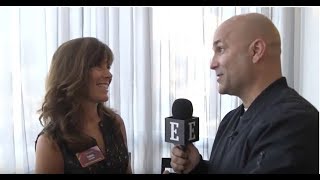
This is an interview between Scott Duffy and Terri Sjodin about Sjodin's career, her two books (Small Message, Big Impact and Scrappy), and practical advice for entrepreneurs. Key points: a three-part framework for impactful messages (Case, Creativity, Delivery); Scrappy defined as having fighting spirit/moxie and using creative, time- and cost-saving workarounds; illustrative case studies (Girl Scout cookie stand in front of a dispensary; Rainforest Cafe prototype) showing small- and large-scale scrappy tactics; and mentorship/heart-and-hustle advice for aspiring women entrepreneurs.
Chapters
Hi, my name is Scott Duffy with Entrepreneur magazine and S1 Media, and I am here with an old friend, Terry Shodeen. And it is so good to see you.
Fun to see you.
We actually, we started in the same kind of the same business, but working for different people. Who did you used to represent?
Early Days? Brian Tracy and Barb Schwarz and that whole crew. So it was a lot of fun. I mean, we were the French women and men that were really creating the groundwork for the early days of the training and development speakers that are now considered icons.
That's right. That's right. And it's so funny because we think about those people today and like, we were so young and they were so young and it was 12. We were. We were. But with. So I actually, I end up leaving the industry. And while I was gone, you were out there dominating the industry.
Well, it was really interesting because we had this bird's eye view of what was happening as the training and development industry was expanding. And I thought there was a place for women and there was a place for women who spoke on the topic of public speaking and persuasive presentation skills. So I thought, wouldn't it be cool if I could parlay my background as a speech and debate competitor into a business and selling environment and really help people to craft more clear, concise, and compelling messaging? So kind of this idea from where we started morphed into graduate work, which turned into my first program, and now, scary to say, 25 years later, wow. Here we are.
Wow. So that makes me. It reminds me of small message, big impact. And so this is a book, small message, big impact. If you don't have it now, you need to go and you need to order it today. It's a book that I actually give to people because it really helps us to understand how to take what it is that we do, break it down into digestible chunks so people can understand it.
Right. Because unfortunately, in today's competitive marketplace, people don't have large attention spans. So how do you get to the point in a shorter period of time? And then the biggest challenge is most people have become very informative versus persuasive. So I really try to help people define that need element that intrigues and inspires a listener to go, oh, wait a minute, like, I've heard this before, but the way you're saying it's really sparking my imagination in a different way and tell me more. And what we're trying to do is just really spark conversation, and then that conversation leads to whatever that intention is that you're trying to communicate.
So what does that process look like? What's the. If I were to break it down for everyone who's watching, what's that look like?
So there's three components to a great message, regardless of length, whether it be 2 minutes, 3 minutes, 30 minutes. So the first thing you want to do is really consider the case. What is the case for your message? Why should they listen to you? And beyond why is how do we get there? So even if you've intrigued me with the why, you also have to show me how. Otherwise it won't have any credibility. And so we're really looking for the credibility and the ethos. Then once you've got the case, we really have to move into creativity. And I'm not talking about a pithy quote or some sort of statistic or a bar chart. I'm talking about what we call an awakening where somebody goes, oh, wait a minute, that's so good. I've heard about that before. And the way you just said it, it's really landing in my mind in a different way. And so now, okay, now I'm intrigued. And through awakening and intrigue, when we tie that back to need, now you're getting people to a place where they go, okay, I want more. And then the third piece of that is delivery. That's speaking in your own authentic voice. It's not the old school, kind of like stiff, rigid, stand here, move here. You know, we want people to use their own voice, their own colloquialisms, their own style. And we sense the truthiness when we know someone's just really kind of chatting with us rather than talking at us. So it's that combination of case, creativity and delivery. And when you merge those three elements together now you get an impactful message.
That's awesome. Now that was your first book and you're a New York Times best selling author and you have another book out right now, which is killing it, called Scrappy.
Yes. So scrappy is defined as being full of fighting spirit. It's synonymous with having moxie, being gutsy, lively, maybe even a tad rebellious. And the simple idea behind it is that sometimes we have to be a little bit more creative to get in the door and make things happen. And you know, people say, especially today.
Because there's so much competition everywhere, right?
And so, and it's not like you just wake up in the middle of the night and say, okay, what am I going to do tomorrow? That's going to be scrappy and creative. There's usually some sort of catalyst. So I spent two years investigating, interviewing, and evaluating the steps of people who really made things happen. Extraordinary, ordinary people, entrepreneurs who found ways to break through in a short period of time and make things happen. So there's lots of times and lots of ways. So there could be small plays, medium plays, large plays. There can be. Sometimes you got to get scrappy on the front end of the game. So let's say you've been trying to access a super, highly desirable prospect, or maybe you need funding for your business. How would you capture their attention when everybody else is trying to do the same thing? So there's some really interesting strategies.
So how do you do it? I'm curious. How do you do it?
Well, let's go to a really big play. Or, you know, we'll start small. We'll start with a small. So one of my favorite stories is I was a Girl Scout, and part of the Girl Scout experience is that you have to participate in the annual Girl Scout cookie drive. And I was tenacious and I was persistent. Right. I would take my order form and try to capture the attention of my neighbors and, you know, encourage them to buy cookies. And it was hard. It was brutal. And the goal is to sell 100 boxes, and it's not easy to sell 100 boxes. So I got the awards, I got the patch. That's great. But fast forward to a couple three years ago, I read an article in the Los Angeles Times about a young gal named Danielle Le. And she and her mom decided to bypass that entire process, and the two of them just set up a Girl Scout cookie stand in front of a legal marijuana pot distribution center in Northern California. And that young lady moved over 200 boxes in two hours.
Wow.
Yeah. And I thought to myself, oh, my gosh, now that was scrappy, right? She. She saved herself a ton of time because she didn't have to go out into the field. She didn't have to take orders. She didn't have to go back and deliver the cookies she didn't have. If she had somebody to change their mind, they didn't want the cookies. She didn't have to deal with that. And so when we're talking about a scrappy effort, not only should it actually be a clever workaround, but it should save you time and money and sanity and really help you get where you want to go much faster.
And what's awesome about. About the book Scrappy is you have so many case studies.
Oh, my.
For two years, you went out there, you talked to Everybody. And you really learned what their formula was. So it doesn't matter what size the business, what stage the business, where you're at today, what your resourcefulness is. You can find lessons that you can connect with to help teach you how to be scrappy in your business.
Absolutely. And a big play. I don't know if you're familiar with Steven Shushler, but he was the creator and founder of Rainforest Cafes. And so he had this beautiful entrepreneurial vision of creating a restaurant chain. And he couldn't get anybody to buy in initially. And. And so he was getting really frustrated. And finally he just, like, had this moment where he said, if I could get people to see my vision, then they would understand. So he converted his suburban home in Minneapolis, Minnesota into a prototype. It was a jungle. So literally it was complete with monkeys and had waterfalls and jungle vines. And he actually had a baby.
Was he, like, the funnest guy?
It was so crazy. And they, at one point, apparently the DEA thought that there might be, like a meth lab. So they bust into his house at like 2 o' clock in the morning and found just a jungle. It was supposed to be jungle. But through his vision and through his entrepreneurial scrappiness, ultimately what he did was he was able to attract one individual who came in, saw his vision, said, I believe in this because you believe in it so much. He got his first funding, and now the Rainforest Cafe is one of the most successful themed restaurant chains in history. And he's, you know, gone on from there. So, you know, sometimes you have to get scrappy, but usually there's some funds, frustration or element that you're trying to bypass, and through a clever workaround, you can get there.
One of the things that we've talked about in the past is the role of successful women business leaders like yourself mentoring younger business women. If you were to give some advice to someone, a woman out there who was thinking of starting a business today, what would that. One or two pieces of advice, what would that look like?
Right. So I really believe in the power of heart and hustle. Right? That's really the essence of scrappy. But I always say this, like, let's keep it classy and scrappy. And the easiest thing to do, I think, if you want to find a clever workaround, is to find an amazing mentor who can really help you to kind of leapfrog past a lot of the traditional systems. So through mentorship, and then what I would call heart and hustle and being a little scrappy and clever, you know, you have this really interesting combination of talents and traits and then a little chutzpah. You know, you gotta keep going at it. And the truth is that anything worth doing is worth doing consistently and through great mentors over time. Sometimes you have to hop mentors, because maybe one mentor got you this far, but you need a different mentor to get you to the next place. And that combination strategically gives you tactical, practical, real world data that you can use to pivot when the markets change or when you're looking to expand. And I think that's really the essence of it.
That's such a great point. And I think when looking for mentors, I think it's really important to do a couple things. One, find mentors that are. They have already been where it is that you want to go. Right. Because there's two things that people listen to. They listen to opinion, and they listen to counsel. And to me, opinion is it comes from somebody who may have the best intentions in mind, but they haven't actually done it before. So they're giving you your opinion versus counsel. Comes from somebody who's actually accomplished what you like. They have really walked in the footsteps that you want to match. And so their advice is something that is really true based on experience.
Absolutely. And the trick to mentoring is this. Like, I've heard people say things like, you know, I had a mentor before, but it didn't really do anything for me. And I would say to them, that's not the mentor's fault. The burden really lies with you. A great mentoring relationship is dependent or driven by the protege. It is not driven by the mentor. So they think that it's like, not like Yoda went to Luke Skywalker and said, I'm going to give you this data. Luke had to pull it out of him. It wasn't like Daniel's son. And Mr. Miyagi said. Mr. Miyagi, like, give me the download. Right? He said, no wax floor, paint fence. Right. He made him do the tough work so he would glean the nuggets, but it was really protege driven. He had to do the work first in order to get the nuggets. And I find that that's really a metaphor for all mentoring relationships.
So before we go, I'm actually going to grab a copy of Scrappy, because this is one of the books that I give the most to people. So if you haven't purchased it yet, go out and buy Scrappy. It's an amazing book.
Thanks for being here.
I'm so proud of you.
Thank you.
Thank you.
And so for all of us at entrepreneur and S1 Media, again, go buy Scrappy. Have an awesome day.
More from Scott









Business & Burgers-Sequence Collection bracelet for National Entrepreneurship Week

