Scott Duffy interviews Tom Bilyeu: Business Improvement And Mother Teresa
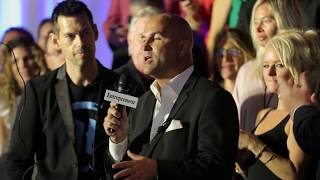
Tom Bilyeu on founding Quest Nutrition to fight metabolic disease and building Impact Theory to shift how culture talks about mental health. He shares the manufacturing problems that nearly killed the company and his morning routine: up early, gym, meditation, reading.
Questions this video answers
57,000% growth in manufacturing.
60 pounds.
Goes to bed at 9:00 PM.
@tombilyeu (spoken as 'ombilyeu' in transcript).
Chapters
Everyone, welcome. This is Scott Duffy with Entrepreneur and Entrepreneur magazine along with S1 Media. And I'm here with Ryan Long and City Summit and in Los Angeles, California. Let him hear you.
And we have an amazing guest for you today, Tom Bilyeu, who is just somebody I respect so much. Everybody, big hand for Tom.
So for those of you who don't know, which is probably very few of you, Tom is the co founder of Quest Nutrition and the founder of Impact Theory. And we have a whole lot to talk about today.
Let's do it.
And the first thing is this. The first is I always hear people talk about their why, you know, why it's so important to business to be rooted to your purpose. And I know you had a big why when you started Quest Nutrition. Can you talk to us about that a bit?
Yeah, definitely. So growing up in morbidly obese family and when you love somebody, you can't help but not judge them. And so just wanted to see great things for them happen. And Mother Teresa has a great quote. She says, nobody will act for the many, but people will act for the one. And so as I was thinking, I'd been chasing money for the 10 years leading up to that point and just hit the horrific realization that I was the cliche of money can't buy happiness. And unfortunately I had not yet read Simon Sinek's book start with why Amazing. But that became the mantra that really sat at the core of my partner and I's viewpoint moving forward. We said, we're not going to chase money anymore. The next company is going to be something predicated on adding value. It's going to be passion based and we're going to ask a fundamentally different question, which is what would we do and love every day even if we were failing? And so for three very different reasons, me being connected to my family that had struggled so profoundly, wanted to create food that people could eat based on taste. And it happened to be good for that. And our mission was to end metabolic disease. And so that sat at the heart of everything we were doing, from ingredient selection to how you market to what kinds of products you make. Everything went through the filter of is this actually going to move us towards any metabolic disease or not?
And did you know anything about food, by the way, you look really good kind of interviewing me here.
Did you know anything about food and food preparation and nutrition before you started this company? Which by the way, was the, was it the fastest, the second fastest growing private company in the United States here? Big hand for that.
So to Answer the second question first. We are the second fast growing company, which is definitely a chip on my shoulder. But we grew by 57,000% in manufacturing, which is like unheard of. So it was absolutely bonkers. It was really fun to be a part of. We knew about food and nutrition from an individual perspective. So I had lost 60 pounds. My partners and I talked obsessively about nutrition when we had a technology company, which was one of the reasons we knew we wanted to start a food company was that's what we talked about all day. And we had seen the just tremendous transformative powers of real food. So we knew that, you know, let food be thy medicine. Like that was one of the things that really made a lot of sense to us. So we believed that that was going to be the solution to the problem when you're looking at it on a global scale. So we knew we had a lot to learn because we didn't know anything about manufacturing food at scale. And that's where the game gets very weird and very challenging very fast. And everyone told us what we were trying to do couldn't be made. Which by the way, if somebody's telling you that, that is a very good sign. If people think you're crazy, you're either about to fail spectacularly or change the world. And I think it was Einstein that says it. People believe in your idea, then it has no hope. So it really does need to be something that is coming out of left field. It's really, it's not an incremental improvement. It's a total rethink of the problem.
So if people don't believe in your idea, what was that? That was really profound. Yeah.
If people don't believe in your idea, that's a great thing. It's because people can't see what you see. But the truth is you may be about to be really wrong. And people have to understand that. And you've got to have the conviction in yourself that, that you understand something that other people don't understand. It can't be blind belief. It's got to be belief rooted in you see something, right? So you've got to see the path from where you are to where it becomes big. But if you actually can see that path and you understand, like we understood human metabolism and I think that's really important. So we were looking at the food, not just what's going to sell, but what's, when you take your blood, what's the metabolic response of the food that you eat? And so we had the discipline to understand that when we went to a co manufacturer and said, hey, make this bar for us, and they said that it couldn't be made, the reason it couldn't be made is because for the last 50 years, every piece of off the shelf equipment has been manufactured in lockstep with the use of high fructose corn syrup. So once you understand that was the choice, which is mind boggling, it's crazy. There's whole reasons we won't go into them now, but that realizing that, oh, okay, so it can be made, we just have to make new equipment. And so because we were willing to make that choice, because we never intended to be a manufacturer, but we realized to end metabolic disease, we can't compromise on the nutrition to make the bar we want at scale, we're going to have to become a manufacturer. And so that's what we did.
Wow. Wow.
So do you mind if I borrow this one second?
So one of the things that I remember in our first conversation was you had this incredible routine. I'd say a lot of people might say it's a crazy routine for when you go to sleep. But it's interesting because people who are really successful do things different. What most people would say is crazy. Can you tell us about your routine?
Yeah. So the important thing to understand about me is I am profoundly lazy by nature. And because people see what I do now, they think that I'm trying to be funny, but I am absolutely not trying to be funny. And my entire routine is designed to counteract that. So there was a period in my life where I would lay in bed for up to three hours because it was too cold to walk across the room and put on a sweatshirt. For any entrepreneurs, that's a crime. That is literally a crime because it's not moving you towards your goals. So that was like step one. I realized I needed mechanisms to stop things like that from happening because I wasn't going to be able to trust myself in the moment. So if, you know, Tony Robbins and that man changed my life, one of the things he talks about is identity drives behavior. So if you want to change a behavior, don't focus on the behavior, focus on the identity. So I say to myself routinely things like, I'm the type of person that fill in the blank. So I'm the type of person that gets out of bed in 10 minutes, no matter how tired he is, if I've slept for at least five hours. So if I wake up after five hours sleep, and this happens routinely and it's two in the morning I'm still getting out of bed and I'm going to go to the gym immediately because that's my rule. System mandates that. And I'm the type of person that follows my rules. So I'm very careful about what rules I put in place. But I go to bed at 9pm like it's a religion. So I'm in bed at 9 by 2am, I've gotten five hours. So there are many times where I wake up at that time. My next rule is I'm out of bed in 10 minutes or less. So I get out of bed. My next rule is, the first thing I do is go to the gym. So I go to the gym even if it's two in the morning. I do my workout, which are preordained as well. I immediately meditate, then I go into thinkitation, then I. Then I read and then I do my important things list so I can. Depending on what time I wake up, I'll have a six to eight hour day before my first employee shows up. So you start to realize these are the mechanisms, right? The mechanisms kick in. So I'm not. There's nothing in my bright line scenario which you'll notice I never said eat because I don't eat that entire time. So I don't have like wiggle room in my mechanisms which allow you to be deadly efficient.
Amazing, right?
So I mean that all sounds so gnarly.
Who holds you accountable, man?
So this is the truth. So it's moments like this where I tell people what my code is. And humans have an innate desire to be congruous with what they say. So for me, I could lie and you guys would never know. And like no one's awake, even my wife is sleeping. So if I stayed in bed for 11 minutes or three hours, like literally no one would ever know. But I would know and I would know. It was incongruous with the things that I say. So when I tell you guys this is what I do and you clap, I feel really good about myself, to be honest. Right. It's all ego, felt wonderful, is amazing. But that would be completely hollow if it weren't true. So the game you're playing isn't success, it's not money, I promise. It's neurochemistry. So the way that I feel by sticking to my rules is so enjoyable and makes me feel so good that it's easy to stick to the rules. Because whatever minor enjoyment I would get from laying in bed, it just doesn't compete with how good it feels to become someone you're proud of.
What was your inspiration for impact theory?
So going back to when we started Quest, there, there always were two problems that I wanted to address. And problem one is the pandemic of the body, which is very visible. People understand it. It's probably touching everyone in this room from being overweight, obese, diabetes, cancer. I mean, the whole slew of metabolically related things and potentially metabolic diseases. So people get that one. There's not a lot of convincing to do. But if you start to look around at the pandemic of the mind now, where the leading cause of death in Australia for young men is suicide, let that sink in for a second. The second leading cause of death among young men in the US is suicide. Depression and anxiety are literally. They're pandemic proportions. It's crazy. So back at Quest, we played a game, no bs, what would it take to end metabolic disease? And we realized the answer was you had to make food that people chose based on taste and it happened to be good for them. So don't try to change behavior, try to leverage it. So when I look at the pandemic of the mind, it's two parts. One is the body. And I think as more data comes out, people are going to realize their microbiome is probably at least 50% of the problem with depression and anxiety. I won't go into that here because it's business. But the second part is directly the mind. And how do we affect the belief system of somebody who doesn't even know what a belief system? And the only way to do that is through narrative. It's the only thing that's time tested mother approved for any 80s kids. So I knew that I was going to be dealing in the realm of narrative and giving people characters and stories that they could look up to, that they could see themselves in, that would very quietly really begin to reframe culturally what we think of as valuable. And if you know Joseph Campbell and the power of myth, and he talks about how back in the day rituals meant something. There were these huge demarcation points between being a child, being an adult, being single, being married. You knew where you fit into the group, all of that's gone. And we're seeing the echoes of that, because mythology no longer carries the potency because people don't believe in the literal words of the myths that we have now. Whereas I think because of what's happening in social media, you can show somebody how, forget about Superman as Superman, think about Superman as allegory. The yellow sun is your passion, let's say. And this is very true for me. So as I was going through a crisis in my life, I had this image flash in my head of Superman. And I thought, whoa. Like, what's my yellow sun? And my yellow sun is when I feel passionate about something like saving my mom and my sister. I can show up at 2am on a Friday and make protein bars long after it stopped being fun. After I'm tired not knowing if this is going to work but believing that it's real, you'll fight that much harder. And you can take so many characters that are being made right now, but nobody, no studios have the discipline to tell only that kind of story. So there's one correlate. If I say I'm going to see a Sony movie or a Warner Brothers movie, you don't know anything about it. But if I say I'm gonna go see a Disney movie, you know about it. So if Disney is the most magical place on Earth, we want to become the most empowering place on Earth. That's great.
We have time for one question.
Does anybody have one question for Tom? One question for Tom. Yes, Ryan. Hey, Tom, thanks again for coming by.
It's my pleasure.
Just real quick, if you can just give us maybe three of your top books. I was on the phone with you the other day, and I just love what you had to say. Three top rates.
Yeah, for sure. So number one, the most important book in the English language is Mindset by Carol Dweck. I think that's absolutely critical and it will change your life. And if not you, there's definitely somebody in your life that would benefit from that.
That one, I think is universal. And I have a book list for anybody who cares. It's 26 books long now that are like the Base Foundation. I think everybody should read for this audience. And this guy happens to be here. And I really believe in this book. It's called Disrupt yout by Jay Salmon. Jay's here. That book is. Is. Is what every entrepreneur should read right now, given today's climate.
When you have to buy that book, you have got to buy that book. It's fantastic.
Yeah, it's fantastic because it's real. And if you take his advice, your life will be better and you'll come up with amazing businesses as a result of that. If you let it, it will change the way you think. And that is the highest compliment I can pay any book. Disrupt you and Jay Samemit, who's actually here somewhere.
J7 so.
So one more question for you, Tom. One more question. How can how can we find you? How can we find Impact Theory and just become a part of your community?
So we're the most social company ever. So you can find me at ombilyeu across every social Instagram, Facebook, Twitter, and YouTube, most importantly, where we put out about seven hours of content every week.
Wow. Wow. All right, everyone, a big hand.
And for Scott Duffy, an entrepreneur, everyone here at the City Summit here in Los Angeles, we want to thank you. Go to entrepreneur.com if you haven't picked up this month's issue of Entrepreneur magazine. It's on newsstands everywhere. We look forward to seeing you next time. And thank you so much, Tom.
Thanks for having me.
More from Scott









Business & Burgers-Sequence Collection bracelet for National Entrepreneurship Week

