Scott Duffy: Leveraging Your Network & Selling "The Right Way" During Crisis, Episode 22
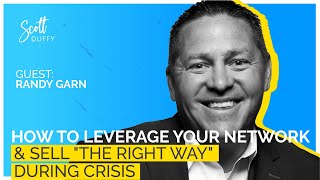
Randy Garn talks about building relationships during crisis: serve before you sell, focus on your top 5-10 strategic contacts, and give them time, money, or introductions first. He covers Zoom setup basics and how training businesses pivoted to digital offerings when live events stopped.
Chapters
Good morning everybody and welcome. Welcome today to what's what. What Now? Listen to me. What Now An Entrepreneur's guide to Managing through Coronavirus and Uncertain times. I'm Scott Duffy and I want to what I want to thank you. I want to welcome you so much for coming again and joining us today. I'm going to give just a couple minutes for people to start to see this broadcast as it propagates across the Internet or coming to you live from Facebook, from YouTube, from Instagram, from LinkedIn and Periscope. And I'm so happy to see all of you again. I had such a great morning. I'm feeling so good. I was pumped up. I got up early, got a lot done, had some amazing conversations, was listening to some Swedish House Mafia just a little while ago. I was drinking my first of four warm lemon teas.
And I'm just feeling good. And I can't wait to get the show started and to share with you everything I've learned over the past 24 hours. We have an awesome guest coming on today. We have got one of my best buddies. Randy Garn is going to join us in about 15 minutes. And Randy, Randy is a two time Ernst and Young Entrepreneur of the Year. That's the highest award you can win as an entrepreneur in the United States. He has built $100 million plus company and in the training space he's a venture capitalist. And in the training space today he is one of the most powerful and influential folks behind the scenes as well on the stage. And so I'm really excited to get Randy on our show today to share with us not only the experiences that he can share with some of the biggest and most iconic trainers and influences influencers today and how they're shifting their business, their businesses in light of coronaviruses virus. So for example, what they're doing now that they can't throw live events or now that their masterminds have been canceled, what they're doing in order to pivot and to adapt. And so Randy will be here to share all of that with us today. In addition to talking to all of us about when the right time is to monetize your business.
In a time of this coronavirus. And the reason that this is such an important topic is I can't tell you how many people have written to me over the past two, three weeks. And they feel the sense of guilt. They feel this sense of like they are supposed to give everything that they have away for free because people are struggling right now. And the challenge is without getting people to pay for their services, how are they going to pay the rent? And so we're going to bring Randy on and he has got some really tremendous insight with regard to how you build relationships and how you monetize those relationships during this period. So we're going to give it just about another 30 seconds for this stream to propagate. We're coming to you live from Facebook and YouTube and Instagram and Periscope and in LinkedIn. And again, if you're new, this is the first time that you have watched this show. If you could drop into this stream and please write down your name in the comments, your name, the industry that you're in and the biggest challenge that you're having today so that we can tailor the rest of this program for you and also share with us the wins. I got a message today from my good buddy Jason Kim. Jason Kim from Entrepreneur Organization. Jason was listening to our show last week, to this show and.
He heard a broadcast that was focused on how to pivot your business and how to go out and talk to your customers and find out what they need most and how they want to receive it. And as a result of hearing that show, what he shared with me is he decided to pivot his business and use scrap material to start making masks because we have such a shortage of cloth masks out there. And yesterday, in one day alone, he reported that he sold over 5,000 masks, which is just awesome. And I'm so proud and want to congratulate Jason and all of you who are pivoting today. So with that, let's roll. So good morning. My name is Scott Duffy and this is what Now A guide to managing through coronavirus and uncertain times. I want to welcome you from wherever you're listening. You can tune in each day at 10:00am Pacific Time to watch the live broadcast on Facebook and YouTube, listen nationwide on Dash Radio throughout the day or download the podcast. This show is for entrepreneurs, small businesses and those people thinking about starting their own company. It's for people affected by this economy. Maybe they lost their job, their business, they were furloughed or they were a consultant and they saw all of their contracts canceled and it happened just like that. It's for people asking, what do I do now and how do I come out even stronger on the other side? Today our focus will be what is. It'll be on what is the right way to sell and to convert during this crisis. And our special guest on the show is Randy Garn. Randy Garn is a two time Ernst and Young entreprene of the year. Randy built Prosper, one of the iconic brands in the training business, a private label coaching site to $100 million business before selling. He's a venture capitalist, and he is one of the most powerful and influential people behind the business training space. So when you look at the top business trainers, influencers, icons, the odds are Randy is in business with them. He has helped them to build their business, or right now, he's helping them to adapt their business to these uncertain times. So we're gonna have Randy in in just a few minutes, but before we get started, so I saw some really interesting data today that I wanted to share. And first of all, in the stock market February 19th, check this out. How fast things changed. February 19th, the stock market reached the highest level it ever had reached in history, and that was on the 19th. Three weeks later, on March 13, it was down 35%. It's crazy how quickly that happened. Customer service. I thought this was an interesting, interesting number. Customer service wait times. So if you're planning to make a call and be on hold with customer service wait times, their averages have gone up from 5 to 18 minutes per call. And 25% of people now abandon calls because they think they're holding on for too long. And mortgage forbearance has increased nearly 2000%. And so what is mortgage forbearance? That is when you, as a mortgage holder, call your bank or your lender and you share within the situation that you're in. And instead of foreclosing on a property, what they do is they negotiate new payment terms with you. And by the way, if you have not done that yet, I highly recommend to call the company that you have a mortgage with. Call your lenders, call your credit card companies. This is an excellent time. Everyone is willing to work with you to re. To redo your terms and to get help from those lenders.
Zoom. So a lot of people have been asking me about Zoom and what I think of the Zoom tool. First of all, I love Zoom. I use it every single day, multiple times a day for my business. But Zoom has had some problems. They've had some challenges over the past few weeks. And I want you to think about this, want you to think about what Zoom and their leadership is dealing with. In December, the average number of daily users per day on Zoom was 10 million people. So in December, 10 million people on average, use Zoom. In February, the average number of users was just over 10 million people per day. Last week, the average number of users per day was over 200 million people. 200 million people. So think about, as a leadership team, not only the challenges that that company is dealing with in terms of scale, in terms of ramping up its support, but also in terms of security. And I know that that management team is on top of securing Zoom and making it more secure for you. And we've talked in previous broadcasts about how to protect your Zoom calls so that no one can get in, no one can take over, and things like that. But today, before we bring Randy on, I want to share this. I want to share how you look good on Zoom. And this is really important because for most people today, Zoom and that call, that interaction you're having one on one with someone, or that interaction that you're having with a group in a virtual happy hour, or that interaction that you're having with your customers, that is your brand. You know, I run a exercise at one of my conferences. I've been doing this for years. And here's what I do. In the morning, on the first day, when people arrive, what happens is we have like a continental breakfast that's set up. And so there's, you know, some, like, there's, there's, there's fruit and there's bagels and there's juice and there's coffee and things like that. And the people who are coming in, what happens is typically they're meeting for the first time. And so while they're casually eating, they're talking and they're learning a little bit about each other. Now, after about a half an hour of this, what I do is I open up the main room where we're going to have the event, and you figure we have about 20 to 30 people that are there. And what they walk in and see is they see folding tables that have been set up in the shape of a U. So they're set up in the shape of a U. And then there's chairs right along the tables, and in front of each chair, there's a placard. And your job is to go and pick a chair, and you write your name on the placard or that nameplate, and you put it out in front so everyone can see who you are. And then what you'll find is a stack of note cards. There's one note card for every single person that's in that room. And your job's simple. All you do is you look around and you write down the name of each person. And on a single note card, you write down the first five things that come to your mind. When you see them, when you think of them.
And it's an incredible exercise. And then what we do is we take all of the note cards with a person's name and we put them all together, we type them all up. So figure, 20 people in the room, five comments each. That's a hundred different ways that people are seeing you in a heartbeat. And typically people's responses are like crazy. They are totally surprised that the impression that they're putting out there is completely not in line with the image that they think people have of them. So for example, somebody that is maybe really outgoing, maybe seem obnoxious to some people, and then there's other people where those people, maybe they're quiet and they're reserved, they may be perceived as being a little bit more stuck up. And so the question I have is, what would those note cards say about you? And specifically, as you're using tools like Zoom, like Google hangouts, like Cisco, WebEx and other tools like that, how does your presentation, what does it tell other people about you? Well, here's a few things that I want to share with you in order to put your best self forward when you're communicating with others in a video type of live format. So the first thing is this. The first is test before you use. So if you have been sent a Zoom link or yesterday I was sent a blue jeans link, I'd never use bluejeans.com. so if you're using a new service, make sure you get on the call early because you typically have to download an app and you want to make sure, you want to make sure that you have the time to download it so you're not late to the call. The second is use an HD camera if possible. I use a logi, a Logitech camera logi. It shoots in 1080 and can come down from there. Costs about 100 bucks. Plugs into the back of my computer with a usb. But it will make your presentation look so much better. So I highly recommend an HD camera. Third, make sure you get your audio right. So a lot of people these days are using Apple's wireless earbuds. And what you'll find is the sound, the quality of the sound is terrible. And that has again, even though people are a lot more forgiving because we're all at home today, the voice, the sound quality is the number one thing on video that's going to determine the impact based on research that people have or what people think about your brand. So I would highly recommend either having something like this, a USB plugin digital camera that also has an audio input that'll be much better than your computer. Or you can buy a microphone set up like this. I think this setup costs like 50 bucks. This is a Marantz microphone and it came through Amazon with a special deal with a boom that connects to my desk. Screws in right there. Super easy to use. You'll see our next guest, Randy. Randy's got a great microphone set up on his desk. And so again, the sound quality is the number one thing that people take away when determining what your brand means to them when watching one of these video presentations. So sound quality is important. And again, if you don't want to invest in something like this and you're not going to get the camera, I highly recommend a wired setup that goes into your phone or into your computer. It could be the old like Apple EarPods as an example. Next, when you log in, you can always go into your settings and in your settings, in the preferences of all of these apps, you can choose whether or not the video and the audio are off before you start on the conference. So I highly recommend go into the preferences, make sure that audio and video are off. And so when you get on, you can make sure to get yourself all set up. And when you're ready, hit audio first, open up the camera and then hit video. By the way, another tip, the camera that I have has a little lens cap that folds down. This is very common today. And so what I do is I keep that closed until I'm absolutely ready to go on, even if my video camera is live, and then I open it up when I'm absolutely ready. That way, again, you make sure to put your best foot forward. With regard to light, I would say the only thing that I think is important is with regard to your lighting, just make sure that you not sitting in a place when you're holding your phone or you're on your computer where you have so much light coming in typically from behind you, like you have a glass door behind you that you get blown out and people can't see you. So just be mindful of that, that's all. With regard to light, audio is much more important. Add a beauty filter. So virtually all of these online conferencing tools in the settings have a filter. And if you click yes to allowing them to use the filter, what it will do is it will try to strike a balance with the light coming through the lens to help make you look in the background look a little bit, a little bit better for you. Also, you may Want to add a backdrop. So for example, if you go on to zoom, they have, if you go into the preferences, they have backdrops already preloaded and most people don't know you point and click and you have a professional backdrop that they drop in. Or you can upload pictures. And right now if you do a Google search for zoom backdrops or video conferencing backdrops, this has become a big business during this pandemic. There are lots of people out there that are selling these backdrops for A$2 each. So again it can significantly affect your presentation to others. Next, find your angles. So one of the mistakes that we see people make is they'll use like a laptop and the laptop will be real low and the camera will be pointed up like straight into their nose. Or what'll happen is it'll be set off too far from to the side. So what I recommend doing is just practicing your angles. Ideally you're talking straight into the camera. Okay. Or secondarily you have the camera at a slight angle down on you. And then third, your third option would be have having it come up. But if it's coming up and you're looking down at the camera, you want to make sure that it's not just the straight up the nose shot, but you're getting enough of your face in there as well. That's really important. Screen sharing. Most of these tools have a screen sharing option. Just make sure that you're in control of it so someone else can't take over your meeting. Hand raising. If you have a big group and you're asking questions, you're doing Q and A. Nearly all of these tools have some type of hand raising functionality, but they call it different things. So people can click a button which is effectively raising their hand to you as the person who's running the call. And then from there you can select the person and their picture will come up. Also, one last thing, one last thing. In Zoom, there's a great integration with Slack and I know a lot of you use Slack. If you have Zoom and Slack connected and you're in Slack and you type in Zoom, it will automatically generate a Zoom link for you without you going anywhere else. You can click on that and boom, you're in a meeting with the rest of your team. So that's a great pro tip for, for you right there.
I highly recommend that you guys, that you guys take this council because this idea of working from home is not going to go away. When we all go back to work, we're going to be working from home for a while and jobs that we had in an office. Even when we're all back to work, our role may be shifted to at home. So again, something that you want to invest your time in today. And the last thing I want to share before bringing Randy on is this. Every day I love to share some inspiring stories and some ways that companies are adapting in this environment. Yesterday I shared with you a story about Formula one racing and how Formula one racing and Mercedes Benz have teamed up and they invented in less than one week a non invasive ventilator that can be produced so fast that in the first couple of days they produced and shipped 40 to hospitals at a much lower cost than anything else in the marketplace. Again, I love to say this, you give an entrepreneur a big problem and not quite enough time to solve it. It's amazing what they can do. And today we're getting word that Apple, who has manufacturing facilities all over the world, Apple is now building face shields for medical professionals. They're now building face shields. And so again, everyone is pivoting in this market. If you are in the puzzle business, the puzzle business is taking off. Board games are blowing up and so just some areas that are doing really well in some bright spots in this economy.
So with that, I want to bring on one of the greatest guys I know he is. I'm going to bring him in right now. Here we go. Randy Garn. Randy again, total stud, two time.
Ernst Young entrepreneur of the year. Built a big business and sold it. Venture capitalist in, in Utah.
And really is, is the best person I have ever met in understanding how to build deep business relationships and then convert those and then monetize those relationships. So Randy, first of all, welcome to the show.
Scott, great to be with you, my man. You doing good?
I'm doing good man. I'm feeling great today. And second, I got so many questions for you. Let's start here. What is the most effective way to, to building relationships during this crisis? What are you coaching people and advising people to do?
That is a really great question.
For me, it is you, you should always dig your well before you're thirsty is one thing. We're in an environment right now, Scott, where people are not in the mood to buy.
And so if you're coming straight at it, in trying to sell directly at it, you got to change their mood. And you just got, you have to understand that. And so my, it's, it's exploding for me and it's because you have, you actually have built up hopefully those relationships over time that you can actually manifest in crisis is just like this. Does that make sense?
Yeah. I can't hear you, Scott.
There we go. It seems that the way that people are trying to stay connected today.
Is primarily through social media. A lot of people that we know are doing live streams, they're doing group calls through Zoom and other tools. And so they have this kind of one to many group broadcast type of approach to staying relevant into building relationships. Does that work? Or is it more important to connect with people one on one today?
So it honestly, it doesn't change. It doesn't change. Being able to. Being able to one build relationships that turn into, you know, value to each other is still going to be that the fundamentals are never going to change. The way in which we do it have changed. And so you have to think about, we are now in the digital transformation age. Like it's here. It just squeezed us right to this spot that was always coming. But I will tell you, people have to now be able to understand how to build relationships more important now than ever before. And you actually might need to take a deep breath. And I always say one of my keys to success is serve before you sell.
Serve before you sell. So one of the things that I'm hearing kind of like a consistent theme with entrepreneurs, and it's probably something that I hear, I see in my threads more than anything else as it relates to selling right now is there are a lot of people that feel tremendous guilt asking for the order today. Especially, you know, Randy, you and I are really close to the training industry. And so right now people are coming to us and they're asking, you know, what does this mean to me? What should I do? And they need counsel. And we know a lot of people, a lot of our best friends are the biggest trainers in the space. And the challenge is, is that because we have or other people, you may have a business where you make masks for doctors today or other pharmaceuticals, you may have a business that does something else that is so needed today. There's this energy out there that's telling people that they shouldn't charge for what it is that they provide, that they should be guilty, that they should be giving it away. Because this is a time where people need help, where. What do you think about that? What's your take?
I think there's a way to do it right and there's a way to do it wrong. And I think today what you need to do is drive tremendous value if what you're offering is actually going to make their life better and improve their life. You just have to get them again to understand that value of that product or service that you're offering. This is not a time to sit back and be like, I shouldn't sell or nobody's going to buy my product. In fact, I'm. I'm the exact opposite of that. Like, there's never been a better time than to double down on your skills. There's never been a better time to invest in yourself. There's never been a better time to start building software you've always wanted to build. There's never a better time to start thinking about, dude, how am I going to manifest what I'm going to do when I get out of this? Like, you need to start working now. It makes me so. I get so frustrated, and maybe it's just me like, dude, this is the greatest time ever to build relationships that you can manifest now and later on. Like, when I. When I hear somebody like, hey, the government told us to watch TV for, you know, four weeks, don't screw this one up. I mean that. I just get. I get fired up inside because, dude, I love building relationships, creating value, and investing in myself. So if you're not buying things, if you're not learning, and if you're not scaling up right now, then you need to really rethink that. If you're not investing in yourself and buying things that will make you better or make your company better or your people better, then you are messing up, in my opinion.
You know, you are. One of the things that you do is that you work with people.
Who have made a ton of money. Who have made a ton of money. Millions, tens of millions, hundreds of millions, billions of dollars. And these are your clients, these are your customers. And in lots of cases, what's happened is they've made all this money, but their relationships are a mess. Their kids don't like them, their health has just gone down the toilet, and they hire you to help them to kind of get their life back. I don't know a better way of saying it. And the connection that you have and the connection that brought them to you is one on one. And what I found over the past three, four weeks is that what's been much more powerful than broadcasting is the idea of narrow casting. It's been reaching out to people individually, one on one, and really asking them, you know, how are you doing? And how can I serve? I mean, how are you doing? What's going on with you? What's going on with your family? How can I serve you. How can I? So, you know, what do you need? And what I've had to do, because I'm trying to reach out to a lot of people is I have to keep these conversations short. So they may be 10 minutes, but people know that I'm checking in. And I know, you know, I know that you are really big on one on one. How are you approaching this from a one on one standpoint? And then what I want to ask is, as you're out there and you're talking to people and you really get in like this vulnerable place with them, how do you then. How do you then sell them? How do you convert that to a sale? And, like, the energy not getting all funky?
I think that. Well, first off, I'm also. It's good to check in on people, but it's also good to take action. Yeah. And like, a lot of times I'll actually find out what they need and connect them with the person that they need, or I'll do something for them that they need. Like, it's good to check in and know, hey, I'm here for you. You need anything. But actually, what's better than that is to maybe send them a thousand bucks and say, dude, this is going to help you right now. I've been thinking about you. You might want, you know, this might be good for you. You might want to send them a book or buy them a course or a program that could be helpful for them. Yeah, what I'm saying is you might want to invest in your relationships right now. You actually personally may want to spend money and give, to give and give because you love them, give because you truly care about them. Give because you want them to be better, not because you want a transaction from them.
You know, and it's giving them what they need the way that they need it. And this is so important. A couple really personal stories. I remember when the market crashed in 0809, and I went through kind of my kind of hardest period where I lost a ton of money and I was upside down. And I had several people that I knew that were.
That had a lot of money. They had a lot of money. And there were times where I would go to them and they knew the situation that I was in and they would ask, how could I help? And in some cases, I'd say I could really use a loan. Or I could really. I could. I could use a thousand bucks right now. You know, I need money for the groceries, I need money for the gas, I need money for the rent. And what I found is a lot of those people would say, well, look, here's the thing. I'm not going to give you money right now. What I'm going to do is I'll coach you or I'll train you, or I'll. I'll buy you a book. I mean, you know, like, lots of stuff like that. And I know that they were trying to be kind. At least I believe they were trying to be kind.
Yeah.
And I think they thought they were doing something for me, but what they really were doing was making me feel like shit. What they really made me feel was awful, because I never wanted to ask anybody for anything, and I was. And they had the financial means to be able to do it. And so I think that. Randy, your points well taken. If we're in a position where financially we can invest in others, and if what they need is money to give them just a little bit. I was in that situation over the holidays where I had several people reach out to me that had gone through hard times, and they were really upset the day before Christmas, and they. They didn't have money to buy their kids. And so I gave them the money to buy their kids, the. The one present that they wanted the most, because that's what they wanted and needed then, you know. And so. So, Randy, how do you determine if you're going to invest cash in somebody, who to give money to and who not to give money to and how much to give?
Well, and sometimes. Sometimes, you know, capital will help and money will help, but a lot of times it's actually. It could actually be strategy and a different thinking and mindset. It can actually be relationships that they need that could actually move the ball forward and help them to pivot. So you just need it. You need to be really. You need to really think about.
You really need to think about what they need. And I think understanding what their needs are really, really important. And a lot of people be like, hey, just thinking of you, which is awesome. I'm not saying that's not awesome, but I am saying, like, it is good. Like, if you really care about somebody, what's our most valuable asset? It's time. Our most valuable asset is time. So if you're giving that individual time and really understanding what their strategic needs are, then you can be like, all right, hey, let's help you find the right capital, or let's help you find the right relationship, or let's change the way you're thinking, and let's work on your strategy, because it's either the direction they're going, it's capital that they need, or it's strategy. And then, then you can, then you can figure out what those needs are. I also think that it's also a time where you also have to take a deep breath and figure out who your most important relationships are right now. It's not a time to do a huge wide cast. And I'd rather have four quarters than a hundred pennies.
That is awesome. I'd rather have four quarters than a hundred pennies right now. And when you're developing. So I call it the, the, you know, you're saying the four people, the five people that you spend the most time with. And.
How do you determine who those people should be? Should they be people that are already in your life or right now? Are you thinking about where you may want to go as we get out of this cycle and basically shaking it all up like an Etch A Sketch and developing a new five? How do you approach it?
So it's really interesting. Yeah, I actually, I just talked to, I just Talked to Harvey McKay right before we jumped on here, and he's the best. He's been a tremendous mentor of mine. I love, I love his book, you know, never trust the naked man that give. That offers you a shirt. So you gotta think about one of the things that I've really been successful at is strategy. And a lot of people say, you know, business strategy. I'm really good at human strategy.
And if you look at, like, the most important. The people are more important than things always.
At this time right now, you know, I, I, I have a friend that's really, really sick. He has Covid. And, you know, he has all the money in the world to be able to fight it, and there's nothing he can do there. It's a, it's a tremendous equalizer. And, you know, the most important thing to him is, is his friends. And if you think about that, do you have a strategy? And I'm asking all of the listeners this and you. Have you taken time to figure out who the top five people are that are most important in your life? Do you know who they are? Have you written them down? Have you taken time to figure out who are the top 10 people that would move your business forward? And how do you do a strategy to develop a relationship with them? No matter if it's a long game or if it's a short game? How do you do that? I did that years ago, and I said, these are the people that I love. Like, and Respect. And now I'm doing business with them and they're my best friends. And so take a deep breath at this time and be like, don't be just shotgun approaching this. Get really dialed in and really snipered on who those top five, who those top ten relationships are for you. And so if you take a minute during this, this shutdown or this reset or whatever, for me, it's not a shutdown, it's a fire up, baby. It's like Brandon said, you know, yesterday to me, he's like, dude, it's ready. Let's go. Time. It really is like, we've been through this. We've got this. We are going to get through this. We're freaking America. Like, we are entrepreneurs. We are resilient, we are tough, we are strong. But we're only strong together. And we're only as strong as our freaking network. We're only as strong as the people that we surround ourselves with. Who are the five people that you could call at 2 o' clock in the morning and be like, bro, I'm in trouble. I'm in crisis. I need you. Now. I've had two of those calls.
Yeah.
And I've been there for them. So, like, it's like, who are your tough people? Who are your tough friends? Who are the ones you can rely upon? Because there does come a time where money isn't going to get you where you want to go. And this is one of those times.
And you know what? That energy, Randy, that you just shared, so I know when you were talking about those two people, and I think that we talked about, one of them is it's from a place of love. And I think that what this is doing, this whole situation is it's forcing us to bring the love back into business. Because that's really what this is all about. You know, we've got to love ourselves. We have to love our customers. We have to love those people around us. And that's the way that we're going to be able to move forward. If there's a positive something that comes out of this thing that we're going through, this crisis, it's that on the other side, we have more compassionate business. And, you know, just as Steve Mellon, one of my oldest buddies, you know, is saying here today is, he's saying, shep Gordon says, it's called compassionate business. Business strategy and compassion can coexist. It's a win, win. And Steve, I mean, it's so. It's so true. And Randy, before, one thing I really want to make sure that we cover today is how people in the training business are adapting to what's going on. Because you know, whether it's, I mean some of the people that you're partnered with, that you work with, you know, you're out there working with people like Brendan Burchard and Dean and Tom Bilyeu and Lewis Howes and Tony Robbins. And these are the people that you're talking to every day. And everybody at the top and everybody else who has a training business that relies on live events for income, that sells masterminds, it smells, sells group events. You know, for a lot of them their business has completely stopped. And so what are you seeing people doing that's working and where are they making money today?
I mean honestly there's been several people that I'm, that I'm, that I'm working directly with. Brendan is one, one, you know that we are taking the high performance Institute, high performance habits, corporate world and decreasing the cost, increasing the call up quality and being able to scale through technology. A lot of the trainings in the past were face to face. Yeah, we've been doing live events forever. So how do you take your content and put it digitally and offer it online and still offer tremendous values? I talked to a woman entrepreneur that is amazing. And she did, she was doing eight to nine live events a month. She moved them all online. Her sales were down, but her costs were way down because she wasn't having to get hotels and travel and all of that. Her sales were down but her profit was up. She offered the same exact thing.
Wow.
There are ways to be able to do that. And I actually think this is a, this is a time where live is going to come back and it's probably going to come back stronger than ever. You know, we were actually in a period of time where live events were so fun. People wanted to connect. I think once this is lifted it's, it's going to come back. But I think that you have to be, you have to be a dual sided marketplace in the training space now more than ever you have to have an online platform. You might as well set up a continuity program. We're building out a lot of softwares and a lot of training programs that are putting them online. And so I think what I'm seeing right now is the training space is a complete evolution in a very positive way.
That I think we've got to really look at this as we are in the digital transformation age. As I'm my buddy ramel from Microsoft, 9,000 people in Dallas, and they're pivoting hard to this whole digital transformation. Think about your workforce, think about your labor, think about remote work, think about the future of work. We have to think about that in the training space. This is the greatest time ever to be in the personal development, the training space, whatever it is, because this is the currency that people need, is we got to increase our skill sets.
And what we're able to do is by going online, we can keep our costs low. We can test in a way that we can't test if we go live and have all of that overhead that's attached. You know, the, the thing that I always ask like to just to talk to people about when they're building their first training program is who is your target? Who's your target? Customer avatar. And without going down that whole road, you know, one of the things that's really important to get your arms around is would you rather have a rich customer or a poor, poor customer? Because you could be the best person in the world doing what it is you do, but if your customer is poor, you're going to be broke because they can't afford to pay you.
Yeah.
And so what's interesting about what, you know, I know you have been doing with, with Brendan and high performance is, is you're taking a program to reach customers to companies. And at the end of the day, these are people that will be able to write a check that you can depend on. They can grow and scale with you. And now on the other side, it takes longer to get a corporate deal done. It might be harder to fulfill a corporate deal. The person that you're dealing with every day, who wrote that contract with you may get moved, may get replaced, the division may be closed, and all that goes away. So what I would always suggest to people is if you're gonna go execute a strategy or for example, you go to companies, make sure you don't sign one deal and stop and have all of that risk built in. But instead you're talking to multiple and doing business with multiple businesses and to spread that risk. Like, I know Randy and I, we always talk about that, how important that is.
I mean, a hundred percent, you have to. And, and also it's the thing that's happened. It's the delivery of the fulfillment that matters. It's the. It's every company.
What does that mean? Share with us what that means to you.
So a lot of times, like, a lot of times, like we'll. We'll be having to do a live event or be Be face to face or, you know, and I think that's really important. We have to now shrink that down. What I'm hoping of one thing that comes out of this is our ability to move business forward through relationships with technology.
And be able to close deals via Zoom. Because what I've noticed in the past is like we'd have these.
Let me, let me step back to that. So we're able to move deals through the pipeline more efficiently. And then the in person close happens on Zoom versus hopping on a plane and flying across the country. It's on Zoom.
Yes, that's exactly. Yes. We have to move to that currency. We have to move to that process. We have to get good at it. And just like you're saying, you have to have your camera set up, you have to have your mic set up, you have to stay focused, focused. You have to do one on ones on Zoom. Really, really well. I am hoping that we move to that place because I know we have to. I had a ton of, I had a ton of meetings this like this week. I was supposed to be in New York.
Yeah.
You know, and then after that I was going to LA, and then after that we were going to the UK. We're going to Sweden and a meeting with some CEOs out there. None of that's happening anymore. But we're still moving stuff forward because the relationships were deep and already set. But now we have to get to a point where we are not waiting for a face to face to close a deal. We're not waiting to just build these relationships and doing it. So you've got to think about now how you do things a little bit differently to build those relationships in the digital world, which is handwritten notes, which is maybe sending them a really nice video and getting them to know you a little bit more. One of the CEOs that I'm working with, we, we, I had a friend, they had dinner together with their wives. They'd never. They're closing a big deal. They said, hey, let's go out to dinner. And they did it at home and they did it together with their wives. And they're like, you know what? That freaking cool on Zoom.
Yes, that, that is. That is so good.
That is, that is so good. And it's really freaking weird also, I gotta say, because I love one on one face to face.
Yeah.
I love being in front of people.
Giving people a huge hug. It all come. I mean, dude, I'm very, very personal.
Randy, you're a lover, not a fighter. You know Although I know you were like a bull riding champion in high school.
But that's the point is that, is that somehow we're gonna have to develop a skill that enables us to have that same kind of connection or a very similar connection, an emotive connection through video and from our living room, our kitchen table that we used to have when we were in front of somebody and we were giving them a hug. And by the way, if you're listening to this and you are a trainer, you're a coach, you're somebody who is looking for a program to create. Here is the program. Do a program on how to effectively sell over zoom. Do a program and teach. Because here's the thing, our friend Dave Corbin has this great expression. You are either performing, what does he call it? You're either brand building or you're brand slaughtering. Your brand building or your brand slaughtering, and there's no in between. And so what we have to become is experts at using this new medium to communicate, to convince, and to convert. And so, Randy, you know, what you're sharing is so important.
Are there any extra pieces of advice, kind of like bonus tips, extra hacks that you've used in order to connect with people through this video medium?
Is it. Is it the way that you're talking about them? Is it the types of questions that you're asking? Is it. Is a. How do you do it?
Well, there again, and I think you gave some good advice with making sure you have a good microphone, making sure you have good lighting, making sure that, you know, you're focused.
I think a big part of it is that, you know, if people like you, they'll listen to you. If they trust you, they'll buy from you, they have an experience with you, they'll never leave you. If you transform their lives, then they'll be a disciple of you and start referring tons more people over to you. And so my, my advice, would you.
Would you repeat that? That's really powerful.
Yeah. If they listen to you, they like you. If they trust you, they will buy from you. If they have a tremendous experience with you, they will never leave you. But if they have a real transformation with you, if you change their inside, if you change their heart and their mind, then they will become a disciple and refer tons of people to you. I've watched so many people do this, and this is what I help people do, is really, I don't need to be a front man. Dude, I love. I'm an operator, I'm an executor. I Love getting my hands on the meatloaf and really growing businesses. But I do think you have to be really aware that the best sales right now is that are the ones where somebody else has set the table for you.
And how does that happen?
So you have to. This is through relation, through only other ways, relationships. It's not, it's not who you know, it's who knows you and what they think about you.
Hmm.
So like Dave said, you are either a brand destroyer or a brand builder. You're either a producer or you're not. Like too many people freaking play business. Now, you either get the job done or you don't. But a lot of shortening that window today is finding out who the treasure map to the treasure is finding out who a referral, a good person that can refer somebody to you. Wow. And so your whole life, and this is what I do really well, is I will set the table for my friends. I will be a promoter for them because I love them and I know that they're never going to steer anybody wrong. And that's how the cell happens. And that shortens that cycle. It would be different if I was going to the, you know, it would be different if I was going to the new president of IBM that's starting, I think today. But I've already referral to him through somebody else. Right. So we're taking height, like I've already got a referral into him, but somebody else says, you really need to talk with Randy Garn. He's amazing. It's different than me being like, I'm amazing. You need to talk to me. Does that make sense what I'm saying? That is in the digital world, you never know who the treasure map to the treasure is.
That is such a powerful piece of advice. Who is the treasure map to the treasure? It's like I always say, I used to think when I was younger, if there was an idea or there was something that I wanted to do, just say yes. You know, you're supposed to jump on it, just say yes and figure out how. But what I learned as I got older was you say yes and you figure, who knows how? And then that's who you go to. You don't try and figure it all out yourself. And in the same way, I think what you're saying is in order to get the deal done, instead of, instead of trying to do it all yourself, find the treasure map to the treasure. Find that one person, but that one person isn't somebody that hit you up on LinkedIn, that you haven't talked to in 10 years or became your, whatever they call it on LinkedIn, your friend or something like that, your friend and then is asking you for help. It is important that you make the time and you commit the time to develop a relationship that is so deep that the first thing that that person thinks when you ask for help is yes, that before you even ask for help, that person is thinking, I can help Randy and I want to help Randy. So how do we do that? How do we, how do we get to that with somebody?
How do we develop that level of relationship?
It's, it's a long game, Scott. I wish there was anything, anything different than this. It's, it's your relationships, your reputation. Do they trust you? Do they like you? Do they love you? And that happens over a period of time. And I know that people may be in an urgent state right now. And so the best way to do that is to call upon those relationships that you've already built. Now if you haven't dug your well right now, you need to start taking this time to build those relationships.
And then you also need to be fearless about like your own personal brand strategy, whether you're in a company or out of a company, whether, you know, I sit on several boards, like we're doing, we're building some tremendous, I mean, we built Western Governors University with Solutions Stream and, and others. But it's like, what's your, you know, what is your personal brand? And what do people think of when they think of you? Do they trust you? It's your greatest currency is your integrity and your trust. And so say no when you need to. If you can't do something, say you can't do it because that's how you build that up over the long game. And so you need to start, you know, if you're younger, if you're 20, 30, start building up relationships and start thinking about who those top five to ten people you want to get to know. Start doing it now. If you're 30 to 40 to 50, start doing the same thing. But think about, make sure that you always do what you say you're going to do. And it's a long game. Follow up, take action. Action is the best way to break anxiety. And if you have anxiety about relationships, start serving before you sell. Start treating the Uber driver and the CEO the exact same. Treat everybody the same, because you never know whose brother you were just with that you treated like crap. And then all of a sudden you're trying to do a deal with his brother. In law, and it can come undone in a second.
Would you tell that story? Do you know the one I'm talking about? It was the person's wife. We were together. Do you remember that? Yeah. Do you remember the one? The only one I'm talking about?
I've got several stories, both on the success side. I mean, we just finalized a huge deal from something that I did 10 years ago that manifested now, I mean, because of the way you treat somebody. But, yeah, we were. We were just in the middle of closing a pretty big deal, and we're in New York. And I mean, this. I can't make this stuff up. This is actually 2007, right before the big. The other one. And, like, we're growing, we're exploding. We had a huge deal done. We were in New York. We go to the elevator. There's three of us. One of the guys with us is a banker. And there's a lady, she's carrying this huge box of stuff, and she's rushing to the elevator, and we're all getting in at the same time, all four of us. And she knocks into one of the guys that we're with. And he's like, lady, are you serious? Like, what, Are you kidding me? And then all the whole ride, the whole 15 pours up. He's like, just belittling her. And I'm just like, you got to be kidding me. I'm like, bro, you gotta take it easy, dude. Like, I'm like, man, can I hold the box for you? He's like, dude, look, you got all over this. My jacket. I mean, are you kidding me? We go up to the 15th floor. It opens up into their office. Okay? It opens up into their office. This lady with the box gets out with us, goes over to the receptionist, she's like, jen, how are you doing? And then she's like, hi, guys. Hey. You know, John will meet with you now. Just go in his office. Go in there and if you can just sit for a minute, his wife is gonna take his box of stuff that she has for him in there first. And then he just wants to say hi to her. And I literally, like, my throat just. Just dropped.
Oh, my gosh.
And he comes out, and, you know, she's in there for three or four minutes. He comes out, he says, guys, come on in for a minute. He's like, I know you guys flew all the way out here from LA and from Utah and other places, but the way that you treated my wife, I will not do business with you and so appreciate it. Deals off. You guys might as well just head back home and let's circle back up maybe next year or something. And you know what that means. It's, wow.
How many times do you treat. It's like, how do you show up for everybody in your life? Like, treat everybody with kindness. You never know who they are and how it comes back to you. And karma is for real, but actually, so is being kind and so is being a good human. Is the best business strategy I've ever had in my life.
Amen. Amen. Amen. You know, without even saying anything to others, without even taking the first step towards relationship building, our habits are telling people about us.
Yeah, right.
They're, you know, people who are fit. You know, when they show up and they look fit without even thinking about it, the person who they're talking to, that conveys a sense of self respect, discipline in their approach, commitment, things like that. And the question I would ask all of you is, what do your daily habits tell other people about you? And is that thing that they're telling people about you in line with the brand that you need to get from where you are today to where it is that you want to go? Randy, we have got 60 seconds. 60 seconds. One final thought.
I want. I mean, right now at this time, and I think right now at this time, we do need. We need empathy. We need love. We need to treat everybody with respect. But that doesn't mean you can't. If you have something that is awesome for them, don't be afraid to offer the product or service that you have. If they really need it, it's going to bless their life. 2. Do as much as you can for as many people as you can, as often as you can without expecting everything in return or anything in return. And watch what happens in your life.
Amazing. Hey, if you enjoyed this show and Randy, you know I love you, man. It's so amazing. If you guys enjoyed this show and appreciate Randy being on, if you could just do one thing, that's all we ask, is just share it. Just share it with your group, share it with your friends, share it with your peeps. Because what Randy is talking today is truth. And Randy, I want to thank you so much for coming on. I know how busy you are. I know you agreed to, like, first thing in the morning, we got up and you were like, yes, whatever I can do. And so I really, really do appreciate you and appreciate you being on here. For all of you that are listening, this is what now A guide to managing through coronavirus and uncertain times. You can tune in each day at 10am Pacific Time to watch the live broadcast on YouTube and Facebook, listen nationwide on Dash Radio, or download the podcast. I want to thank Randy Garden for joining us today and to all of you, thank you so much for being here and we'll see you tomorrow. Have an amazing day.
More from Scott









Business & Burgers-Sequence Collection bracelet for National Entrepreneurship Week

