Scott Duffy on How to raise money & find resources during this pandemic, Episode 42
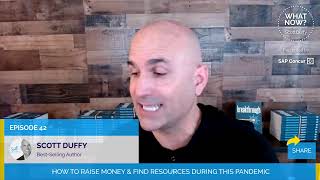
Scott Duffy walks entrepreneurs through raising money outside government programs during COVID-19. He covers bootstrapping, bartering, loans, convertible notes, and equity raises, with specific focus on building an investor avatar and using a drip system of materials to pitch. He warns about protecting your voting rights and liquidation preferences when taking equity.
Chapters
Fired up today. Really looking forward to looking forward to a great day ahead and weekend. And I want to welcome all of you that are joining from wherever it is that you're listening in. Whether you are joining From Facebook or YouTube, you are watching live on Periscope or LinkedIn, I want to thank you. To those of you who are listening on DASH Radio throughout the country, I want to thank you for listening each and every day. We have a really big show ahead and and.
We have a lot to talk about we have a lot to talk about today and next week starting Monday. I was just reviewing the guest list. We have got some amazing guests that are coming in. They're going to be coming on the show next week. Every day. Starting at the bottom of the hour, we'll bring in another top entrepreneur, athlete, celebrity entertainer who's going to share with you what what they're working on today, what they're working on to help them get through this period and come out stronger on the other side. So again, I want to thank all of you for joining and we're going to let this stream propagate for just a couple of minutes before we actually go live on radio. And if you're here for the first time, if you're watching for the first time, what I'd like to ask you to do is this. If you could drop your name and in your industry in the comments and any challenges like the biggest challenges that you're having today in as well, any questions that you have, I want to use the show and shape it around you. That is my goal. So again, really excited to be here. We have a big day ahead. We have next week is going to be insane. I've got some incredible people that start coming on starting Monday and then we have a big event. Maybe make sure that you mark down May 21st. May 21st from 8am until midnight. We have got an event that we're going to announce on Monday which I cannot share with you and we have a ton of just like the top people, the top celebrities, athletes, CEOs in the world that are going to be coming in to share with you what they are doing today to adapt to pivot, where they're finding money to help you, to stabilize yourself, to stabilize your finances, stabilize your businesses and come out stronger on the other side. Milton, good morning to you. I want to say good morning and thank you for joining. Sita, I want to thank you, I see you there as well. Ashley, thank you for jumping in and to all of you again, if you're listening on Facebook or YouTube. You're going to listen to the show today on Dash Radio. I want to thank you so much for listening. We are just about to get started here. Got about 15 seconds. Again, big day today and thank you all for joining. And here we go. Good morning. My name is Scott Duffy and this is what NOW with Scott Duffy, presented by SAP Concur. I want to welcome you from wherever you're listening. You can tune in each day at 10:00am Pacific Time to to watch the live broadcast on YouTube and Facebook or listen nationwide on Dash Radio or download the podcast. Now this show, this show is for entrepreneurs, small businesses and those people thinking about starting their own company. It's for people affected by this economy. Maybe they lost their business, maybe they lost their job, maybe they were furloughed, maybe they're a consultant and they lost all of their contracts and it seemed like it happened almost overnight. It's for people who are asking what do I do now and how do I come out of this stronger on the other side? And today our focus is going to be on where to find capital. So we've talked a lot over the past month about where you can find capital from government resources. So for example, we've talked about everything from unemployment to those personal stimulus checks we were supposed to get in the mail. We've talked about the Eidl, which is the emergency injury to disaster loan. We talked about the ppp. Well, today we're going to talk about non government ways of finding capital today. So whether it's bootstrapping or borrowing or raising capital for your business, what I want to share with you is really a recipe, a formula for not only finding the capital but the resources that you need in order to get through this period. So we're going to have a great show today also again beginning on Monday, we will have a guest on every day starting on Monday, starting at the bottom half of the and these are people. They're awesome. I was looking down the list today of people that we have coming on for the next two weeks and these people are all the very best of the best at what they do in their businesses. From the person that ran, you know, the brand for the Virgin group to talk to you about marketing to Mitch Thrower sold his the last company Events.com for over a billion dollars and now is running Events.com, his latest startup, which is the biggest events platform in the country to talk about what people who were throwing live events were doing eight weeks ago versus what they're doing today. Where they're finding revenue and how they're building or adjusting or adapting their businesses. So we've got incredible people that'll be here as well. And so I'm really looking forward to that. So let's get to the news first, the number of COVID cases worldwide has just passed 3.3 million confirmed cases, with 234,000 deaths now in the U.S. we have over a million confirmed cases and 63,000 confirmed dead. Now, depending on who you listen to, the curve is flattening in some places and there's hotspots in others.
New unemployment figures came out yesterday, and we talked about that yesterday morning, and the numbers were staggering. And like I predicted seven weeks ago, I really expect them to continue to increase, but at an accelerated rate between now and the end of May. I think that May is going to be the toughest month in terms of new employment, unemployment from this, from this pandemic. And it's really, it's just so interesting because.
We all want to feel a sense of certainty. We all want to feel certain about something. We want to feel certain with regard to, you know, what's going on with this virus. We want to feel certain about when we're going to get back to work. We want to feel certain about whether or not we have a job. We want to feel certain about whether or not we're going to get some of this government stimulus. We want to be certain that.
About all of these different things. And we live in a time where there's so much uncertainty that it's really unsettling. You know, also, we get on television or we open up our web browser in the morning and we look at news sites and we see a world out there. We see Wall street that's just killing it. Wall Street's doing that.
April was the best month, the best month that Wall Street's had in decades. The S&P 500 is only off 15% in the last seven weeks. Like, we look out there and we see one world, and then we come home as small businesses, as entrepreneurs, as sole proprietors, as contractors, we come home and we feel a much different reality. And so it's confusing. And what we really want today is certainty.
In fact, yesterday I was, like, certain about one thing. I was certain about one thing yesterday. And it was, I had to get out of the house and I needed to walk around because I was stir crazy. And what I wanted to do is I wanted to go to the beach. Like that was my thing. And today I'm in Newport beach. Usually I'm up in LA today. I'm in Newport beach, coming to all of you. And. And I came down here right after the show, and I'm like, I'm going to go to Newport beach because Newport beach was open yesterday. Orange county beaches were the first to open here in California. And so I'm certain that I'm going to feel amazing after I get a chance to walk around and get in the water, get in my car, I start driving. I'm about 15 minutes into my ride. In California, Governor Newsom does his daily press conference, and the first thing he announces is, they're closing Newport Beach. They're closing the beaches in Orange County. So I'm in the car, all my stuff packed, on my way down, thinking about what. Like, that was the thing I was certain about yesterday, and then that goes away. And the reason I bring that up is that it just feels like that today. It just feels from day to day, like we may start to get our grounding, our footing around one thing, and then that one thing shifts or that one thing changes underneath us. Now we look at the wall, we look at Wall street, we look at television, and it looks like things are great. But for us, we're managing through all this uncertainty. And I just want to let you know that if you are a person that feels any of that, you're a person that has experienced any of that, I just want you to know that you're not alone. I want you to know that we're all in this together. And I want you to know that every day, what I want to do is help provide you guys with context about what's really going on out there and also what people are doing, how they're shifting, adapting, changing the ways that they do business in order to capture income, in order to capture revenue. Today, I want to say hello to a few people this morning. I want to say hello to Rima. Good to see you this morning. Joe Ingram, so good to see you this morning. Helen, it's great to see you this morning. Bob and Bill, thank you so much for joining over here on YouTube. I want to thank Aaron, thank you for joining.
And Erin spelled E R I N. Thank you for joining as well. And to all of you that are listening on Facebook and YouTube and Periscope and LinkedIn and on Dash Radio, thank you so much for listening. By the way, if you get any value out of this show today, or you've gotten any value out of it in the past, if you could just do me one thing, you can do me One favorite and that is share. Share this with your family. Share this with your friends, your coworkers and workers and other people that could use this kind of help. And again today our focus is going to be on where to find money. Not from the government, but where to find money in other places for ourselves, for our businesses.
Unemployment.
So in the last 24 hours, I've gotten a lot of DMs from people who are really frustrated, not because they haven't received unemployment that they have applied for, but because they haven't heard anything. They haven't heard anything about the status of their unemployment. If you're one of those people, I just want you to know that you're not alone. Just check in. I would go to the website every day. I would call, make sure that you know that your application continues to move forward. Make sure that you see an application, that you see a number attached to your, your application. Super important personal stimulus checks. If you haven't received yours, go to sba.gov make sure to click on that website. There's a blue button. They may not have your. They may not have your banking information. So what you'll have to do is very simple is you'll click on that button, you'll put in your bank account, your routing number, some personal information to identify yourself and authenticate yourself, and then they can get that money to you on the PPP again. I just, every day I remind you of this. People ask me, how do I get it? What's working? I see people over here getting it. I see people over there getting it. Most of what I hear is people are still waiting. The people I know who have gotten the PPP funds all have the same characteristics. Number one, they went to their community banks or number two, they went to places like lendio or Cabbage, which are online tools that will help you to apply once and then distribute and your application to over 300 different banks. I really recommend if you're still waiting for PPP funds, there is no harm in applying in multiple places. It will probably help your chances of getting the loans. So I would go out and I would use a service like this one service. You do it right, you work with them and they push it out to many.
So for people that are looking for cash outside of the government, maybe what you're looking for is a loan for your business. Maybe you're trying to figure out how to structure a deal for your business. Maybe you're trying to figure out how to go and raise capital in this market. Let me share with you Some ideas on what people are doing that's working today. Because I'm always trying to answer the question, what now? What are people doing now today that's working and helping them to move forward? And the answer to that question is always changing. So here is what is working now. Number one is bootstrapping. Bootstrapping for resources. So let's talk about that for a second. So I first got my, like, early lesson in how to bootstrap 30 years ago when I was working for Tony Robbins. And this is a crazy story. So when I worked for Tony Robbins, what I did is I would be a part of a team. So as a part of a five to seven person team, depending on where we were. And what I would do is I would go from city to city and I go to a city for two to three months at a time. And what me and the rest of the team would do is we would go and we would speak to companies and we would give a portion, a piece of Tony's seminar. So we give a workshop. And the goal from what we did from our training was to upsell people into going and seeing Tony live or to have him come in. And back then, his big course was called the Power to Influence. So a lot of what I did was sales training. So here's the thing. The way we would travel is we travel in his group for two to three months. When we went to the next city, we were given a box. We would go get boxes, FedEx labels, and that was it. A plane ticket. We get a plane ticket, we get on a plane and we go to the next city. And when we would land, this is how it worked. We would land. We didn't have cars, we didn't have phones. We had some meetings that were set for us. We had a place, but we didn't have some of these basic essentials. And it was like, so what are we going to do? And what we had to learn how to do was to get scrappy. And so what we do is we would all. We did this every single time. We would all get together as a group and we would. Each person would be assigned a different thing that we needed. So, for example, there'd be one person that would be assigned to cars. There'd be one person that was assigned to finding cell phones. One person of this. Some people would get gyms, some people, some people get other things. Office supplies was a big one. Business cards. Like, we didn't have cash for any of this and we didn't have expense accounts. There was nothing.
So what we had to do was we had to learn how to be scrappy. We had to learn how to basically barter and trade and create value where value didn't seem like it existed. And so what we do as an example is we would go to a car dealership and we would convince that car dealer that we had these resources. Our resources were our training. It was tickets to go see Tony. It was working one on one with their salespeople and doing things like that.
In order to help. And we would ask them. And we get cars for like eight people for up to three months at a time. Like, who does that? Here's the thing. There is a total underground economy that exists out there. There is this barter economy that exists where people are trading for services. And this is one of the things that you need to do right now, because it's not always about money. It's about getting services to help you to move forward. So what you have to ask yourself if you want to be good at bartering, good at trading, is this. Number one is what is your currency? What is the currency that you have, the things that you have to offer other than money that you can trade with other people? Number two is who are your trading partners? Who are the people in your network that or your friends networks. But ideally, you go to your network first that are able to provide you with the things that you need. So if you need a website developed, who in your network is a website developer, what you do is you make your list so you know what your currency is, you know who your trading partners are. Then what you need to do is figure out what is the deal so important? Okay, what is the deal? What are you going to do that you know, you could do for free and crush and kill and over deliver on in return for the services that you need and the energy needs to be right? The energy has to be right. So here's what I mean. Say for example.
You gave me $20 and I gave you $100 bill back. You gave me 20 bucks, I gave you $100 back. You would do that trade every single day of the week because you made out. When I asked somebody for money, that's the energy that I always want to come from. If you give me $20, I'm giving you $100 back in value. It's the same thing when you're trading and you're bartering. If you're asking, you're getting $20 in services, you want to give $100 in value back. It's all Energy. And the energy is greater than the matter. And it's the energy that is going to drive this whole thing for you. It's super important because when people don't get paid, they fail to pay attention. And the only way to keep their attention is to over deliver. So what you've done is you've identified what your currency is, you've identified who your trading partners are, you've identified what is the deal, what am I willing to do so that I'm able to give $100 in value for every $20 that I take? And then the last thing is, what do I need most? Because the thing is you can only do, you can only barter with a finite number of people because there's only so much time in the day for you to do this work for free. So you have to really prioritize what you need the most. Right, what do you need the most? Stack, rank it, what do you need? Second, what do you need? Third? And you need to make sure that you don't offer so much in one deal that the other deals you're not able to fulfill them. And do that 20 to 100 type of energy exchange rate. So that's really the key to bartering today. Okay, so that's number one. And there's more people today willing to barter than any time that I've ever seen. Because there are a lot of people that aren't working, they're looking for work. They want to demonstrate to somebody that they can provide a service and do a great job and they want that business.
So let's say your business is beyond bartering. You can't. You need cash, you need real money. Excuse me. So there's a couple of ways to think about this. Okay? The first is in terms of a loan. So let's talk about the different kinds of loans we can get. Okay, the first kind of loan, first of all, we need to understand about a loan, these things. Number one, how much money is it that we're asking for? How much are we asking for? That's number one. Number two is what is the interest rate? And is the interest rate simple interest or compound? Is it one flat interest rate? I'm being lent a thousand dollars, I'm paying 10%. So I'm going to owe you an extra hundred dollars for this loan or does it compound? So it's $100 and $100, 100 and 100 more. So how much do I need? Is it simple or compound interest? And then what is the term of the loan? How long is this loan going to be.
And is it going to be a year? Is it going to be two years? Is it going to be three years? The fourth thing is, is this loan going to be guaranteed or not guaranteed? Either you're going to guarantee that you pay back or you're not going to guarantee that you pay it back. Now, if you guarantee something, are you guaranteeing with your personal resources and your personal assets, your own cash in the bank, your car, your house, whatever it is, or are you guaranteeing against your business assets? So if I default, I can't pay the loan? Am I going to have, Is that lender going to go back? Are they going to take kind of my house, or are they going to take my restaurant? Are they going to take my business? But my personal bank accounts and my personal house, all my personal stuff is separate. So you want to make sure from the beginning that's clear. Because if you want to go and get a loan today, you don't want to waste time. And so what you need to do is create a perfect target avatar for who's going to lend to you. And so you really need to understand and make a decision up front about which one of these things that you want to do. So again, as an example, here's what happens as an example.
You go out, you decide that you want to raise $100,000, you're willing to pay 10% interest, it's simple interest. And you're going to personally guarantee this, or you're going to guarantee it against your business. So I would start with those things and getting really clear about what that deal looks like. Also what I would do is I would have some kind of default parameter in there. So if you're in breach, if you're late on the payment, or if you can't pay the whole thing when it's due, some type of curative measure, you have 30 days, you have 60 days, you have 90 days in order to resolve the issue or to come to a new agreement with the lender before they would go and they would be able to go into any of your other assets and resources and draw from them. So super important in terms of a loan. So we've talked about barter, we've talked about loans. A lot of people ask me about convertible notes. What is a convertible note? A convertible note is when you have a loan, it's a document that is a loan. And so you look at the same things. You look at how much do you need, what's the interest rate? Is it simple, or is it compound, what's the term, how long is this person lending to me for? When's everything due? Okay, and is it guaranteed or is it not guaranteed? And if it's guaranteed, is it guaranteed against me personally and my personal assets or the business assets? Okay, so we look at those things. Then with a convertible loan, what can happen is at the end of the loan period, typically at the end of the loan period, so say it's a two year loan. The end of the two years, the person who gave you that money has an option. They can either get that money back and you're done, the loan is over, or that loan can convert. It's called a convertible note. It can convert into equity or into ownership of your business. So that's another option. Now there's a lot of different ways that you can do convertible notes, but at a high level, that's how they work. So what we talked about is we started today by talking about government programs that could bring you cash. And then we said, okay, let's shift from government programs to more private practice. Right? Private sector loans, capital. And we talked about first the idea of bartering and what you have to do to be an effective barterer. And then what we did is we talked about loans and what you need to do if you want to go out and find a loan. Then we, and how it's structured. Then we talked about convertible notes, which is how you would convert a loan into equity. Now what happens if you just want to go and raise equity today? What does that look like and how do you do it? So raising money is an art. And it is, it is a lot of, it is a lot of hard work.
I've never raised, I've never been around. I've raised, by the way. So everything is firsthand. I've raised tens of millions of dollars for my company and for other companies. So I have firsthand knowledge and experience in all of these areas. I'm talking about today, by the way, everything I'm sharing today, none of it's stuff I've read in the book. Everything is based on my personal successful experience doing these things now as it relates to going and raising capital for equity.
So this is where people really stumble. And they stumble because when you're raising money, first of all, you typically don't realize it until you start it. It is a full time job. And somehow you're supposed to do your full time job and raise money, which is a full time job at the same time. So just know that if you're doing it it's going to take a lot of time. That's the first thing. Second thing is you are going to be negotiating with people. You're going to be dealing with people every single day while you're raising capital, where this is all they do. This is their job. So while you're learning, because this probably isn't what your best thing is like, while you're out there trying to figure it out and run and balance your business and dealing with that stress, and you go home and it's there and all this stuff.
The person that you're negotiating with is doing one thing. They're just negotiating you down, like, because they know how to do it, and that's their job. That's the thing they do every day. So we need to make sure that you are really equipped, that you really understand how to do this, like at a gut level. And so let me give you some tips on how to do it and how to save time getting to that cash. So it's really interesting, having been on both sides of the table as someone raising money and as an investor, what happens. I work with somebody, they're about to go and raise money, and then one day they get really excited and they call me, and they call me, and they're so excited because they got the big meeting. I call it the big meeting. So the big meeting is a meeting where somebody who we think is an investor has said they're really interested in learning more about our business. And so they schedule time for us to meet. And when we get there, we do a great job. We give our pitch. They're really engaged, and we think they're going to write a check.
But what happens is they fall off the map or they disappear, or they come back and they say no. And we get. So what happens is the entrepreneur calls me and they're so bummed out, they don't know why this person said no. They don't know why. So here's what it is. Entrepreneurs or investors are in the business of making money. And as a result, their primary job is to protect their downside risk. And so to do that, what they have is a very specific formula, a very specific criteria for what kind of things they invest in, how they invest in them. And what you need to do is make sure that you're talking to the right people about your deal. You need to create your perfect, ideal target investor avatar. This is a perfect representation of who's going to write a check for your business. And this is what it looks like. What it looks like is this number one, where has this person made their money? This is so important. Where has this person made their money? Because people invest in things that they know. They invest in things that they understand in order to minimize their risk. So as an example, if I have a tech deal and I take it to a real estate investor, the odds are they're not going to put money into this business. And you may have heard that this person invests a lot of money, just not in this kind of business. And here's why. What's going to happen is they're going to look at your tech deal and they're not going to know how to make sense of it or how to judge it or how to evaluate it. And by the way, if you do get them to be an investor, maybe for some reason they buy your personality or they bought your pitch, they will be the, the worst investor that you've ever had that you can ever imagine. And the reason is that investor, once they put their money into your deal, will always be on top of you. They'll always be in nervous knots because they won't know how to understand if the deal's doing well and really call bullshit. And they also know that if something isn't working, they aren't going to understand how to come in and how to fix it. So the number one thing we have to understand is where did our target investor make their money? If they made their money in restaurants and we have a restaurant deal, that's a great start. If they made their money in tech, consumer, tech, consumer Internet sports sites, that's a great start. So you want to get as very specific as you possibly can with where they made their money. That's number one. Number two, what stage of company is it that they like to invest in? So important what stage? So for example, if I go to somebody and I ask them to invest in my deal and I'm at the idea phase, but they invest in companies that are much further along. They invest in companies that not only had an idea, but they built a product, they launched it, they found product market fit, they have achieved a certain amount of revenue, a certain amount of net profit. Like if you go to that person for your idea stage company, you got a disconnect. Just like the person that had the big meeting, they had a great pitch, they had an awesome pitch, they have a great business, they're just talking to the wrong person. They because it's the wrong time in their company's life cycle. So again, what stage does a person invest in? Do they like startups and ideas and early stage stuff. Do they like companies that are a little bit further along? Right. Do they like companies that are way further along? So you want to find that out. So where do they make their money and in what stage do they invest? The next thing that you want to ask is is and you want to find out when building your target investor avatar is what is the average size check they write? What's the average size check they write? So as an example, if you go to somebody and you ask them for a million dollars and they write $10,000 checks, you have a problem. If you ask them for 10,000 but they write million dollar checks, it's an equally big problem. So what you want to do at this stage is you want to find out what is the average size check that my target investor writes? Is it 10,000, 25, 100, 250? Is it a million dollars? Okay, so again we're putting together our target investor avatar next. We want to find out what is their expectation for their return on investment. What's their expectation for return on investment? And this is so doggone important. So are they expecting to get double their money, triple their money? Are they a venture capitalist that wants 40 times what they put into this deal? So get on the same page with what their expectation is for return on investment next. What you want to find out is you want to find out what their timeline is. When is it that they want to get this money back? I mean, so important do they expect this money back in a year, in two years and three years? Are they a long term investor? So they want to be in this deal for the next 10 years. These are the kind of things that you need to find out. We want to find out these things up front because if we find these things out up front, it makes it so much easier for us to get what it is that we're looking for. The next thing is we want to find out what is the decision making process. What's the decision making process?
Who is involved at what stage? Are they involved or are you the only person that's involved? So many times for, you know, for small investors, for angel investors, for people like that, what happens is, is they're the only person involved in the decision. So you just need to make a, have a relationship with them. But other times you're dealing with a bigger firm or a group of investors or a syndicate and so there's a lot of people that you're going to have to convince and sell. And what happens oftentimes, particularly with earlier stage companies or people that are raising money for the first or the second and the third time is this. What happens is they go out there to raise capital and.
They go and they find out that there is, you know, they go and they sell somebody really hard and they think they're so close to getting the deal done and they've just been building a relationship with that one person. And then.
When it's time to get the deal, like this is your big, like, we're getting it over the finish line, they find out this person has to go and bring it to a group of others. And so our timeline for getting this money and closing this deal has gone from really soon to sometime, oh my gosh, this is going to take another two or three months. So the first thing that we have to do when raising capital and we're selling equity is get clear on who are our target investor avatar is. That means we need to understand, number one, where did they make their money? Number two, what stage do they invest? Number three, what's the average size check they write? Number four, what is their expectation for return on investment? Number five, when do they want to see their money back? Number six, who's involved in the decision making process? Number seven, what is their timing? So that is the first step. Now the question people ask me is, they ask me, well, how do I find that stuff out? And the answer is really simple. All you have to do is ask. By the way, if you ask someone these questions, if you sit down with somebody that's been introduced to you as an investor or that you meet as an investor and you say, hey, I got a question, you know, where have you made your money in the past? You know, what stage of company do you like to invest in? What's the average size check that you write? What's your expectation for return on investment? When do you want to see your money back? Are you the only one that makes a decision or are you part of a group and you guys all weigh into the decision.
And what's your timing on this? Like, are you actively investing now or are you on hold for some reason? If you start your conversation by asking an investor those questions, you will have won them over for life. They will know that you really have your stuff together. Like, you really have your stuff together and you're a professional. Most important, they will know that unlike the 99% of people, they talk to you super respect and value their time. You value their time because just like that, before you even talk to them about your business, just like that, what's happened is you've qualified or disqualified them, and if they're not the right person for you, then don't spend the next hour pitching them. Because here's the thing.
If you're the right or the wrong person at this stage, a lot of them don't care. And if you're the wrong person and they know or at the wrong stage coming in, I mean, here's what you are. You're market research. You are market research. You are research they're doing on behalf of companies. They're already invested in your market research for your competitors. That's what you are. So what you do is you get really clear on this. And then here's the thing.
If you are not the right fit for that person that you're talking to, if they're not your target investor avatar, well, the odds are, number one, they're going to be so happy that you got through that so quickly that you're going to have rapport. And the odds are they're going to know somebody that is your target that they're going to be able to refer you to. I find that the fastest way to move a deal is to get really clear on who I should be talking to, qualify and disqualify within the first 60 seconds of a meeting and then move on. So that's number one. Number two, how do you keep a deal moving? So this may be one of the hardest parts of raising money is how do you get a deal after you talk to somebody? How do you keep the deal moving? How do you keep that person engaged? How do you keep that person continuing to stay focused on your business?
Because let me tell you a problem. I have lots of friends in the Bay Area that work for venture capital firms. And I remember talking to one of them about a year ago and I was asking him about deals and deal flow and he was telling me that his firm got over 10,000 business plans a year. 10,000 business plans a year. And what's interesting is, you know, five years, the way a business plan came to you was this. You would get a plan and it was like we'd all been taught to write these 40 page plans, these really long plans, and they were really detailed in this. So imagine you've got 10,040 page plans and you're supposed to look through all this and read it and evaluate it. Well, what happens is there's so much there. There's so much there that the investor, you know, things move slowly and they push a lot off their desk. They throw a Lot out today. It's all about feeding information to people in bite sized chunks. It's all about feeding information to people in bite sized chunks. Here's what I mean. What I mean is if you give an investor too much information today, it's like giving them nothing at all because they'll just throw it out. If you give an investor too much information today, it's like giving them nothing at all because they'll just throw it all out. So what I always recommend and advocate is what I call the drip system. It's the drip system of communication when raising capital. And what I do is I make sure that I only feed information into in bite size, super digestible, easy to digest chunks of information. And I do one at a time. So as an example, and by the way, when raising capital, what people want on the other side and what that means to them, what they need and how it needs to be delivered may be different for everybody. When raising money, one size never fits all. And that's another advantage of the drip system. Instead of getting somebody everything and maybe it's not what they want right now and maybe it's not the way they want them, you get them one thing, you engage with them and you keep moving forward. So here's an example. When you first engage with an investor, you know the place that you start is with your 32nd pitch. And you got to have this nailed down. They can digest that. This is my name, my title and my company. Here's what we do, here's the market that we serve, here's how they benefit, and then you get into the rest. My name is, my company, My name is, my title is and my company is. That's number one. This is what we do. Here's the market that we serve, here's how they benefit. Maybe let me give you an example. If you can do all of that in 30 seconds, you have got this person hooked. The problem is what, when most people explain what it is they do, if I ask somebody what do you do? They talk a lot, but they don't tell me anything. And so to develop the perfect 30 second pitch, your perfect commercial, what you need to do is become great at nailing the answer to each one of those questions in one sentence each and one sentence each. My name is, here's my company, My name is, here's my title of my company. Here's what we do, here's the market that we serve, here's how they benefit. Let me give you an example. Do you have a need for this? Is this the kind of company that you invest in. Right. This is the way I go with it. So that's number one part of our drip system. We want to keep this deal going. Person's hooked. They say, tell me more. Great. What's the best way for me to get information to you? Would you like me to email you or text you? Let's say they say email. That's what most people will say. What you do is instead of following up with an email that's this long, that has a 40 page business plan and like all these financials and stuff like that over where they open it and they're so overwhelmed. Again, giving somebody too much information today is like giving them nothing at all because they'll just throw it out. What you do is you drip information. So what you do is. It was great to meet you. Here's a little bit more about our company. And that's one paragraph. So you went from one 30 second pitch, a few sentences to one paragraph. And then what you do is you follow up again with one page. That is your one page executive overview, maybe that's one to three pages. It's your executive summary. And then after that, what you do is you start to elicit and get questions and you go to a PowerPoint presentation. That PowerPoint presentation is somewhere between 15 and 20 slides. That's it, Right. And then what happens is what's happening is you're giving them one small piece of digestible information, one small piece of digestible information that they can take in, absorb and go, yes or no. And then you just keep moving it on. This is the way you keep a deal moving today. It's not by giving them too much, it's by giving them just enough and hooking them right. In digital marketing, like in copywriting, the purpose of the subject is to get people to read the first line. The purpose of the first line is to get people to read the second line. The purpose of the second line is to get people to read the third line. That's the way I want you to think about raising money and keeping your deal moving forward. Does that make sense? So we've developed a target customer avatar. We're using a drip system of information. So we're hooking people, we're giving them stuff easy to digest and we keep the conversation going in small bite sized chunks. What will then happen is they're going to start to ask you questions in more detail. You know, I have a question about your market, I have a question about your customer, I have a question about how you make money. I have a question about your team. Now, instead of giving them everything, what you want to do is answer their question in one page. Okay, you had a question about our market. Here it is. Boom. And you address their specific question. You had a question about our team. Boom. You see, then what you do is instead of sending them a whole deck, 40 pages, you send them one thing they can look at that specifically is related to what it is that they want more information about. Boom. Get that question. What's the next question that you have? You get it back one page. Boom. Do you understand how this particularly in like a, like a, what's it called? A twitch, a TikTok, a 6 second, a 15, an 8 second world, how this works? So this is how we keep a deal going. So we've developed our target customer avatar and we're using the drip system of communication. Now the question is, what's the deal? And in terms of structuring a deal, there's several different ways that you can do it. We talked earlier about a loan. You can go out and you can get a loan. We talked about convertible notes. You can go out and you can get a convertible note, which is a loan that has the option to convert into equity in your company, or you can just go out and you can sell equity. So those are the three most common options.
But there's things you really need to watch out for if you're raising equity. Again, I shared with you earlier that when you're raising money from somebody, the odds are they are a pro, they are a professional at raising capital. This is what they do, it's not what you do every day. And so what happens is there are certain things that they will negotiate and you'll think that you're negotiating big wins on your behalf, but what you don't realize is you're giving away the store. So let me share with you a couple of those things, a couple of ways to protect yourself once you, if you decided to raise equity. And the first is this.
The most important thing to negotiate is not simply how much equity you own in the company, it's not how much you own. I know people that own 90% of their companies but don't control them. So here's what I mean. It's not just about who owns the equity, it's about who controls the decision making processes. So as an example, what happens is somebody goes out and they sell equity and they're raising money. And what they do is they really spend a lot of time trying to make sure that they get, you know, they own 90% of the company when the money comes in, or 60% or 50%, 51%. They're the majority owner, somebody else owns 49. They fight as hard as they can for equity and the investor beats you up on it. And eventually they say, you know what, you win, you can have it. They push away, they just send it to your attorney, it's yours. And so what happens is they turn the doc around and you own 99%, you own most of the equity in the company. But what they put into the document is they have put in certain rights that gives them decision making power. And this is where you need to watch out. Decision making power that you didn't pay attention to. So, for example, they get to pay attention, they get to make the final decision. They have more votes. Again, it's not about equity, it's about who has the votes, who gets to make the decisions and how does that work. Again, the way it should work, the way it works at least most is If I own 50% of the company, I have 50% of the votes. If you have 50% of the company, you have 50% of the votes. If I own 75%, I have 75% of the votes. If you have 25, you own 25% of the votes. But what will happen is an investor will say, you can have all the equity, that's okay, you win, but you're not paying attention. And in the documents they say, I have 80, I have 90% of the votes. And you didn't pay attention to it and you signed it. And here's what happens. It's the votes over certain things in your business. They may have the controlling power, the decision making power, and the votes for who runs the company. I know people that have raised so much money and thought that they scored the deal of their life and were fired the next day as soon as the deal closed. Because what they didn't realize they did, they didn't realize that they signed away their decision making power about who's going to run the company and who's going to be on the board and things like that. So it's, you know, who's going to control your job, who's going to control the cash in the business, who controls the major decisions in the business and things like that. Does that make sense? So you want to, again, you want to. It's the votes. It's the control, the decision making power. That is one thing that I want you to pay attention to. I also want you to pay Attention to something called preferences. So preferences are typically things that an investor puts in a deal that impact how cash is distributed. And typically how cash is distributed in the event that there's an exit, meaning there's a big financial win, the company goes public, the company is sold, an investor comes in and people get to cash out. So typically the way this works in a deal is If I have 50% of the ownership in the company and you have 50% of the ownership or equity in the company and somebody comes in and they buy the company and there's this pot split of cash, I get 50% and you get 50%. What a preference does is it says that the investor not only gets this, but they also get that. So a frequent thing that you'll see like in Silicon Valley, with the preferences, when money comes in, the investor gets what they invested times 2 or 3 or 10 or 20 or 30 or 40 or 50 before you get a dollar.
So entrepreneurs, particularly raising money for the first time, don't pay attention to this. They don't pay attention to who has control, the controlling voice and decision making power and what the preferences are when there's a big financial win and money comes out. So what'll happen is they'll be like super stoked, they'll be super excited. We just did this big sale and they're like, they're adding up, you know, on a calculator what they're going to make, but they forgot or they didn't even know that their investors would get 1 or 2 or 3 or 4 or 5 or 10 or 20 times what they invested before they ever saw a dollar. So the investor ends up walking away with almost all the money and they walk away with almost none. This happens all the time. So again, my job here is, you know, I think that my role and my job is to do everything that I can to protect you. It's to help you to see around corners. It's to help you to know what's coming. It's to help you to anticipate what you need to know and when you need to know it. It's to help, you know, what now, what do I do now in order to protect myself and really come out stronger whenever it is, this thing is over. And so again, when it comes to raising money outside of getting this government stimulus, the goal I had today was to share with you how people are raising capital and kind of what that looks like and what that means. So again, just to review, and we have just a few more minutes, number one, if you're raising if you need resources and access to resources, right? There's a bunch out there. The first is the government stimulus, which we talk about every day, right? So you've got potentially have access to unemployment, the Eidl economic injury disaster loan, the ppp and, and there's personal stimulus checks that you'd be getting in the mail. And we've talked over and over about how to get access to that money. The second thing that we talked about today was we talked about the idea of bootstrapping. So somewhere between getting this money and maybe going out and getting money from a third party, how could we become the difference between having resources and being resourceful? How could we be resourceful and bootstrap? Get the things that we need.
In order to move forward. So what that can mean. That could mean going out and getting help on your design work or your social media or your website. It could mean help getting sales or whatever and not having to pay for it during a trade. And we talked about the way that you bootstrap is this. You come up with, number one, what your currency is, what it is that you have to offer. We talked about on top of that, what it is that you need. Coming up with a list of the things that you need that are non cash. Three, we talked about putting together a list of your trading partners. Who are the other people in your network that have the things that you need. Number four, we talked about the deal. What is the deal? The specific deal? Number five, we said, look, you gotta over deliver. You gotta. Because when people aren't getting paid, they sometimes fail to pay attention. So how are you going to over deliver? What does that look like? And we talked about an energy exchange. That means for every $20 you give me, I give you 100 back. That's the place I want you to come from. So we started there and then we said, let's say you've gone from bootstrapping to now you want to try and get a loan. Okay, so we want to get a loan. How do we do it?
We said there's a few things you need to understand. Number one, how much money and do I want to get in this loan? So how much? Number two, is it simple or compound interest? Is it simple or compound interest? Number three, what is the term of the loan? What is the term of the loan? Number four, is it guaranteed? And if I'm guaranteeing this loan, is it against me, my personal assets or is it against the business, my business assets? Okay. And number five is really, who am I going to use to help me to put together this legal document. Because you got to have a great attorney. Okay, so that's your loan. And then we said say we get past the loan and we're going to go raise money and sell equity against our business. What is it that we do? So here's what we talked about. We said the place that you start when raising equity is to create the perfect investor avatar, target investor avatar, the perfect representation of who it is that would want to write a check and will write a check to you. We said this person has to make money. They've made their money in the same business or industry that you're in. We have to know what stage of business or industry they like to invest in. We need to know what is the average size check that they like to write. We want to know what their expectation is for return on capital.
We want to know what their timeline looks like, their horizon, when do they want to see their money come back? So important. And we want to know are they the only person or are there more people that are involved in this decision making process? That's your target investor avatar. And then we said once we found and connected with this person, how do we keep a deal moving forward? And what we talked about was, we talked about the drip system of communication. What we talked about was instead of giving somebody everything, giving them something, giving them something that was really super easy to digest, that they could make a decision on and then move forward. Feeding information on bite sized chunks. I shared giving somebody too much today is like giving them nothing at all because they'll just throw it out. So we said if you are using a drip system for raising money, what that means is you've nailed your elevator pitch because that's your first, first communication. We said that means my, my name is my, my name is, my title is my company. That's number one. This is what we do.
This is the market that we serve. Here's how they benefit. Is this the kind of business that you invest in or is there someone else that you know that, that likes to invest in this kind of deal? That's your pitch. If they're interested, they want you to contact them. Is it more convenient for me to contact you in email or in text? Say it's email, which it probably will be. Don't send them everything. Send them one thing, a simple paragraph and a one page summary tied to that executive summary. Let them digest that. If they want more, it goes to a 10 to 20 page PowerPoint. That's what it is. That you do. And from there you start customizing your answers. So if they say, I want information about my team, the market, these other different things, instead of sending them a bunch of stuff they have to sift through, send them one page max that specifically answers that question. You had questions about the market. Here you go. You had questions about our team. Here you go. You see, by doing this and dripping information, you'll be able to keep them engaged and moving along.
Then finally, what we talked about is, then what we talked about was.
Raising equity. And if you raise equity, we talked about some of the things that you need to pay attention to and some of the things to watch out for. And I said, there's really two big things that we want to watch out for. And the things that we want to watch out for are control, slash, decision making power in the deal, who gets to make the most important decisions? You can own 99% of your company and not have the power to make any decisions, including if you should have your job or not. So what you want to do is make sure you not only pay attention to the equity, but also decision making power. And then you also want to make sure to pay attention to preferences. A preference, again is it's about finance and money. When money comes in, how is it distributed? And what will often happen is an entrepreneur won't pay attention to this. And so what will happen is there'll be a big exit, they'll make a lot of money, there's a lot to be distributed. And what happens is instead of that money being split pro rata, meaning I own 50%, you own 50%, we both get 50% or I own 60%, so I get 60% of the money, you own 40%, you get 40% of the money. Instead. What happens with a preference is the investor gets more. So it might be 1 times 2 times, 10 times, 20 times what they invested in, the deal goes to them first and then the money is split the way you thought it was going to be. So you want to pay attention to control and to preferences.
So, holy moly, that is a crash course on where to find money, how to barter, really, how you get loans and you raise capital. The big picture today, this is what people are doing today. This is how you do it. And I know there's a lot there. If you have any questions, please feel free to drop them in. Drop them into the comments. I'd be happy to help to answer those when we come back next week. Next week we have a whole different format. So starting next week, half the show is going to be me interviewing a special guest. We have top celebrity entrepreneurs, athletes and entertainers that will be joining us, sharing their lessons. So many are inspiring. So many are just like yours, you know, but you only see the public image, and we're going to get those people to really open up for us.
I remember one time I was talking to Damon John and I said, I said, it's such a trip, Damon. I said, people forget because they see your billion dollar apparel brand, right? Or they, they see what you're doing on Shark Tank and they see all these companies that you're invested in. They forget how hard it was for you to get started. And he sat back in his chair. We're having a burger, actually. And he said to me, he said, scott, when I got started, people just don't know that, you know, for years I worked Red Lobster. He said, I worked at the Red Lobster restaurant chain. And he said, and I bootstrapped and I bought. And he said, and I did everything I could during those shifts to get extra tips. And that tip, those tips, that money, that's what that's helped me to build fubu, he said, that's how we started. It was, it was a Red Lobster. And he goes, and it wasn't for a few months or a year. He said, it was for years. It was for years. He said, when I got started, it started by me being able to buy one hat as a template, and then it was two hats and then it was one T shirt and it was two T shirts. And the thing is, sometimes we forget in media that we're all the same. We all start in the same place. I've never met anybody that built something spectacular that started with everything they needed. What they did is they became great at identifying what they would need, the resources that they need today, right? And they got those things that they needed today, and then they moved on to the next thing. So I hope this information helps today. I hope you have an amazing weekend. I look forward to seeing you on Monday. We got some exciting stuff ahead and I look forward to all of you being a part of that. Until then, you guys have an amazing weekend. Take care.
More from Scott









Business & Burgers-Sequence Collection bracelet for National Entrepreneurship Week

