Scott Duffy: What To Do, When You Don`t Know What To Do, Episode 30
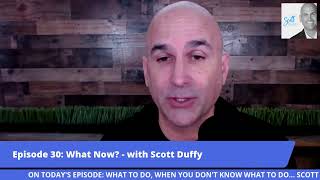
Scott Duffy walks through what small businesses need to do right now during COVID-19: how to navigate PPP loans, EIDL applications, and unemployment delays. He breaks down the cash crunch, reports from LA on furloughs and airport collapse, and gives concrete steps like working with community banks and getting SBA confirmation numbers.
Chapters
Good morning, everybody, and welcome. Welcome to what now with Scott Duffy. It is good to have you here and good Monday to all of you and thank you for joining again. This is Scott Duffy and the show is what Now. And I want to thank all of you for joining today.
We have a big week ahead and there's a lot of news from the weekend and so much to get into. Today is going to be a really big show and if this is the first time that you have ever dropped in, make sure to leave your name in the comments, leave your name, the industry you're in and what is the biggest question that you have today or thing that's going on in your business. So I can use that information to shape this show. We are coming to you live on Facebook and YouTube, Instagram, LinkedIn and Periscope and you can also listen nationwide on Dash Radio throughout the day or download the podcast. We're gonna wait just a couple of minutes for this stream to propagate. We go live in one minute and I just want to say hello and welcome to all of you. If you watch this show in the past and you've gotten value, if you wouldn't mind, please shoot this out, go ahead and stream it to your friends and your families and other small business owners that could use this information again. I'm so happy to see you here. Patrick Carney. Hello. Will Watson. Hello. And good morning. Happy Monday to you guys. What a weekend. What a weekend and what a week we have ahead. What a week we have ahead.
Sita Thompson, good morning to you. Good to see you here. Good to see you here as well. All right, we have about 30 seconds again. We're going to let this stream propagate for just a little bit longer and then we're going to go live. I want to thank all of you for joining. And again, if it is your first time, please, when you from wherever you are, drop your name into the stream. The industry that you're in and the biggest challenges that you're having, you're facing so I can customize, customize this program for you. Jim, Yvonne, Bobby Jo, so good to see you tomorrow or today. So good to see you today. And here we go.
Good morning. My name is Scott Duffy and this is WHAT now with Scott Duffy. I want to welcome you from wherever you're listening. You can tune in each day at 10:00am Pacific Time to watch the live broadcast on YouTube and Facebook, listen nationwide on Dash Radio throughout the day or download the podcast. Now, this show is for entrepreneurs, small businesses and those thinking about starting their own company. It's for people affected by this economy. Maybe they lost their job, they lost their business, they were furloughed or they saw their consulting contracts canceled. And for many people, it happened just like that. It's for people asking, what do I do now and how do I come out of this even stronger? And I'll tell you, we have a lot to share today. It was a big news weekend. We have a big week ahead. And I'll tell you, our focus today is going to be on this simple question. What do you do when you don't know what to do? Because if there was one thing I took away from the weekend, it was uncertainty and mixed messages from the media, from the press, from the mayors, from businesses, from everybody. So what do you do when you don't know what to do? A quick update on the news this Monday morning. The US now has 761,000 cases confirmed confirmed of coronavirus and is reporting 41,379 deaths. Some good news, approximately 20 states have begun the process of easing stay at home restrictions and big cities like Las Vegas are starting the process of reopening. Las Vegas is hoping, is hoping to begin reopening as soon as Memorial Day. Now, there has been a ton of pushback to reopening because of a lack of testing that's available. So this is testing to show if someone's sick. It's testing to show if someone's immune. But there's a problem. People need to get back to work. And we got to start to earn money so that people can pay their rent, their groceries and their employees. And the challenge that we have is that the testing, even though we keep hearing from the federal government that it's coming and it's awesome and all that kind of stuff, it's not anywhere close to where it needs to be. We've done roughly 5 million tests in the U.S. we have about 400 million people in this country. And and so we're going to need to wait for these tests that have been created, whether they're to determine if you have coronavirus or to determine if you have coronavirus antibodies and potential immunity. We have to wait for these things to be manufactured, distributed and to get to us. And because a lot of people don't feel like we have that time, we may end up going to work and reopening a bit early, maybe too early. But a lot of people would say we don't really have a choice. And don't forget there's a lot of people right now that are working from home. But most people in the US cannot work from home because their jobs require them to be hands on somewhere else. And it's not just people. It's not just people. And this is really important to understand that cities need the economy to get moving so they can generate taxes as well, tax revenue. So this is, this is a trip. I want you guys to grok this, okay? I'm here in Los Angeles, so let's take LA as an example. The city of LA has really been, I think, a case for leadership in this crisis. The nation in large part has followed LA's lead. And I want to give a huge shout out to LA Mayor Eric Garcetti, because I think he's done a great job. I mean, I really think he's been top shelf. He's been in office for seven years here in la. During that time, he's doubled the city's cash reserve fund, done a lot to improve infrastructure and social programs. But I think what's really important today is to talk about how he has handled, how he has handled this crisis. So as it relates to Covid.
LA was the first place in the United States with a stay at home order. Most people think it was New York. It was actually the city of LA was the first to issue a stay at home order. And then later that day, Gavin Newsom, the Governor of California, issued one. And then the following day, New York did. LA was the first place in the United States to ask all of its citizens to wear a mask. You know, in this case, it was a cloth mask. And then it was after that in California and New York and the rest of the country.
And maybe this is one of the reasons that LA has done better than expected, is that it has been so proactive in terms of, you know, just kind of being out front. But last night.
Last night, Eric Garcetti, the Mayor of Los Angeles, delivered the state of the city. So every year he's required to deliver a State of the City address before he releases the new budget. Louisiana is on a July through June.
Fiscal year. So today he's got to unveil the new budget for beginning in July.
And what he talked about was pretty dire. And I got to tell you, it really caught me a little bit off guard. And let me share some of what we learned yesterday, just about Los Angeles.
Because of a loss of tax revenue, sales tax revenue, over the past five weeks, it appears the city may be as much as a half a billion dollars short. A half a billion dollars short for next year. Which is just mind boggling. And some perspective on the city during the Great Recession in 2008, 2009 LA saw a 13 point percent unemployment rate. A 13 point percent unemployment rate. But check this out. Late yesterday afternoon Loyola Marymount University here in Los Angeles came out with a new study, the most recent data that shows that 55% of workers in Los Angeles are now unemployed or furloughed. That is crazy. That number 55% of workers in Los Angeles are now unemployed or furloughed. That's according to Loyola Marymount University, came out late yesterday afternoon. And let me give you an example of how a particular industry is affecting the economy.
After 911 LA lost 1/3. This is pretty interesting. So I was in the travel business or no, I was over, I'm sorry at Fox Sports at the time. But check this out. After 911 LA lost 1/3 of traffic at LAX. They lost 1/3 of traffic at Lax. And it took 10 years to recover from a 30% loss.
In the past five weeks, LAX is down 95% in traffic. So it's really pretty amazing. And I say this on the context of it's not just people but it's cities that, that need to get back to work so that we can go back to work and we can pay our bills and we can pay our rent and our food and our employees and begin to thrive again. Now the other thing that we've seen is because of the sharp reduction in travel, people aren't driving to work, people aren't flying. There has been a huge reduction in the need for oil. So oil prices have plunged. You know, it's crazy. In 2008, 9, when, when the market crashed, oil just before that had gone up to close to $140 a barrel. $140 a barrel. Oil has dropped to under $12 a barrel today. Under $12 a barrel. It is really amazing. And that's because there's more oil out there that nobody knows what to do with. 70% of the world's oil storage is now completely taken up and by the end of the month oil we should be at 100%. There's literally nowhere else to put it. Pretty crazy. So okay, we know all this stuff, this isn't necessarily great news, but it is the real, real. Let's talk about some good stuff. How's that? Because we are going to get out of this and we are going to come out of this stronger on the other side. That's one thing I know for sure. And by the way, if My stream is going in and out. I stream every day to multiple channels. And over the past week, you know, Internet traffic is so high that the stream keeps going on and off different channels. I see we're having trouble with Facebook today, so I apologize for that. Nothing we can do. So some cool news. The team, when I was at, when I started this company, Smart Charter, which ended up being acquired by Virgin, the Virgin Group, the idea was to create Expedia but for private jets. And when I did that, I brought in to my team some incredible engineers from jpl, NASA jpl.
And.
What was really cool is that several people on my team were involved in developing the Mars rover. So today, the Mars rover, it is literally on Mars. It's 140 miles away. The Mars rover is now being controlled because NASA JPL, they've sent people home. The Mars Rover, 140 million miles away, is being controlled by people at home. Everybody is at home, which is just, just amazing to me. So if they're able to control the Mars Rover 140 miles away from home, what does that mean for the future of work, and what does that mean to you? Well, the workplace as we know it is being completely reconfigured each and every day. And, you know, it started. I think that this statistic is amazing. You take a look at the banks. 90% of Goldman Sachs's workforce is now at home. 70% of JP Morgan's workforce is now at home. We're talking like 2, 300,000 people in the banking industry have gone from working at banks and in big buildings to working at home. And the question becomes, do white collar jobs, you know, even come back? Is it really necessary for you to, to have to go to work if you're a white collar worker when this is all over? And what does that mean for blue collar jobs as well? So just, just a really interesting morning again. When I saw, when I heard the data around Los Angeles last night, I. It just completely. It completely blew me away. And I'll tell you, I cannot wait for all of us to be able to get back to work and into some kind of new normal. But what I know is, I know that whatever new normal is is going to be a lot different than what we've been used to up to this point.
So let's talk about cash, because this is something that we do every day. Unemployment's likely to hit 25 million people at our next count. The question I have is, did you file? And if you filed for unemployment, I would love to hear from you. Either.
In one of the threads or if you could send me a direct message to let me know if you filed when you filed and whether or not you got it or not. Because I'm trying to track this. What I'm hearing is I'm hearing that people in the state of California that filed three, four weeks ago still have not heard back. Still have not heard back. But in other states, unemployment is starting to catch up to people that have filed with regard to personal stimulus. Did you get your deposit check from the government? If you're eligible and you did not, make sure you go to irs.gov when you go there. There's a blue button. Click on that, and there's a place for you to enter your name, your Social Security number to. To verify yourself and your banking information, your bank account number, and your bank routing number so that you can get your money direct deposited. If you don't have a bank account or you're afraid to have money sent to your bank account, they can also send you a paper check as well. It may take a little bit longer. Eidl update. No idea. I don't know anyone that this has worked for. But let's talk about the ppp. Okay, the ppp, the Payment. The Payroll Protection Program. So that was out of the $2 trillion CARE Act. That was the three and a half billion dollars that was set aside for small business. Okay.
Here'S the thing.
The SBA has done more lending through its partner banks in the last 12 days than in the last 14 years combined. That is amazing. I mean, that. That statistic just blows me away. Because what we hear about is. We hear about, oh, my gosh, there was this awesome sounding program that was announced by the government, and as small business owners, we'd be able to apply to get money from this program. And that pro. This program was. Was gonna basically get us cash that we could use to help put people back to work, to help pay our rents, pay our utilities, pay our mortgage interest. And if we use the majority of that money to do those things, that loan would convert to a grant that we wouldn't have to pay back. Sounded great. Here's the thing. 1.6 million people applied for this loan in just a couple of weeks. The money ran out in less than two weeks. And we found that there were some big companies there. There are private equity firms. We found out Shake Shack and other public firms were actually going after this cash.
So where does that leave all of us? Let me tell you where that leaves us. Pissed off. Where that leaves us is pissed off. I can tell you, I have never heard, heard people. I've never heard small business so upset with Wall street and so upset with the government as it relates to this program. But here's what I also know. What I know is that this money is going to be replenished. So according to Marco Rubio, who's in charge of the Small Business Committee that's working on this plan this morning.
He expects that money to effectively be doubled. So we could go from the original 350 to another $350 billion in stimulus. That bill, he believes, will be passed on Wednesday or Thursday of that week. That application process, he believes, will be completely different than what you've been asked to do so far. It'll be easier. It'll be more streamlined. It'll be a lot simpler to do. It'll be a lot simpler to do. Also, he said he believes that there'll be an additional kind of gating factor built around this, meaning that it is intended that this bill and the way the application online process is being set up, that the money will go into the hands of the people that need it most. It will really get to small businesses, and it will get to small businesses faster. And I believe that Marco Rubio is really working on our behalf, and I believe that he's a part of a big system where there's a lot of complexity. What he shared this morning is he said when we got this out, the first phase, he said there were a lot of problems in phase one. And he said, and the reason that there were problems like the ones that I've described is that they tried to get it passed and they tried to get the bill in, into the hands of the money, into the hands of as many people as they possibly could, as fast as they possibly could. And so that meant they had to just not spend the time negotiating for some of the things like I've talked about this morning, rules and requirements that make it so people like you and me, small business owners, are the ones that get access to this cash. Make it so the big companies and the PE firms and the Wall street firms don't have access to this cash. Make it so that people who are micro businesses, solopreneurs, momopreneurs, have access to this cash. And what he made clear today is right now, those negotiations that are taking place. And that's why it's taking longer for all of this to get passed, for these rules to get set up. He also said that I want you to know, he said that the new site with the new streamlined application was going to take some time to build. So even though they haven't passed the bill, what he's asked is he's asked them to begin building the site now, so it's ready when this bill gets passed. So I think that this is some good news for Main Street. I think that this is what we really wanted, if it manifests on Main Street. And so, again, it's all new information within the last couple hours, so I wanted to share it with you. Also, if you're planning on applying for the ppp, let's say you went to a bank and the bank said, hey, we were told that there's no more money. We were told that we can't take more applications. That doesn't mean that you shouldn't do these three things. Number one, make sure that you have a relationship with a community bank. Go in and meet the bankers, talk to the bankers, tell them all about your business. Get everything ready that you're going to need to have ready in order to get your loan. That's number one, because this money will become available and you want to be first in line. Community banks have been the best, the easiest, the fastest, the most successful place for small businesses to get these loans. Number two, take a look at some of the online tools that are available. So, for example, I know several people that have had success submitting their PPP loan through lendio. Lendio is a service. It's an online service that will help you to prepare the application, and then it will send that loan out to over 300 banks. Okay, sends that to over 300 banks in order to effectively bid on or choose from your business. And so what's cool about this is, what's cool about this is the people I know that have used Lendio, everyone I know has been able to get their loan approved. In that last batch, they've been able to get their loan approved. And then what happens is once it's approved, it gets pulled from the other banks. So you don't have a lot of duplication, right? One company, one bank takes it, and then all the others are your. Your application disappears from those, from those places. Also, I need you to understand the difference between an SBA approval number and a bank approval number. There's two. So a lot of the times when you're approved, your bank will tell you that you're approved, and they may give you a confirmation or some type of verification number. And what I'm here to tell you is that doesn't necessarily matter for this program. You want the verification or confirmation number that comes from the sba. That's the one. When you have that one, you know that you're good and that your money is going to, your money is going to come through from, from the government. So make sure that you know the difference and you ask for the SBA's confirmation number. That is super, super important.
So with that, I'd love to say hello to some people that have joined us today. And again, I apologize. I can see that we're going on and off in different parts of Facebook today. We look like we're good everywhere else but for Facebook. What I'll do is I'll repost this after. I'll take down the patchy video and I'll repost a good video for all of you to, to be able to watch later today. So with that, let me say hello to Kimberly.
Hello, Kimberly. Good to see you. Filed for unemployment on March 18th. Still have not received anything yet. And you are in California. And then I see here you applied as a sole proprietor. They had me file Certify on the 5th. Even at 0 due now it's not having me certify and I'm waiting for the 28th. Interesting, interesting. Rob Adams. How you doing? Rob, what is the range for small business? I believe that very large businesses are included under the label. It is not just the small mom and pop businesses. So Rob, my understand. Well, first of all, you could get up to a maximum of $10 million from the last version of the PPP. So from that original 350 billion, you could get up to $10 million. Many of the companies that got the money did not need the money. So I talked to a banker, I talked to a banker as an example directly, and he told me that over 50% of the.
Applications that were approved by his bank, by his bank. 50% of the applications that were approved by his bank, the businesses didn't need any money. They had really strong balance sheets and they did not need this loan. But the banks looked at it and they said, hey, it's a safe bet. And so.
My belief is in this next version of the bill that should be coming this week, they're going to make it. So if you have a really strong balance sheet, you don't really need the money if you're a really big business, that you're not going to be able to qualify for this next round. And I really believe, based on what I was I heard today, it is intended for smaller businesses, for true SMBs, micro business, because that's by the way, that's 85% of the businesses in the United States. Almost all the businesses in the United states have under 20 employees. In fact, almost all of those have one or two. There's solopreneurs or there's two people in the business. So that's really who needs this money right now.
Kimberly So I have not heard of any new developments on rent or mortgage forgiveness, and I'm incredibly disappointed I haven't heard more from the federal government on this versus deferring. And I can tell you that none of this deferral stuff makes any sense, because if your utility company is saying, we're going to defer your payment, you don't have to pay for the next three months, but then the following three months, you have to make it up, or your car company says that, or the company that you're renting from, the person who you're renting from says, look, you can defer your rent for three months, but in the fourth month, I need the rest back. That is, that's really a problem because there's no way anyone's going to be able to make up all of that shortfall at the same time. I can tell you this. LA Mayor Eric Garcetti again has been a leader, and he is all over the president and the federal government to pass a bill that gives true, by the way, it's got to happen. There's three different things that are happening here. One, you got to suspend mortgages, okay? So the person that you're paying rent to or you're leasing to if they don't get your rent isn't in trouble because they can't pay their mortgage. So you have to suspend mortgages, not defer them, but suspend them and basically rewrite the contracts. You have to, you have to suspend rents, not defer them. But number three, you got to take care of people who are renting, and that rent is their food, that rent is the money that they live on. So there's really three levels of things that you need to watch out for. Eric Garcetti has gone to the federal government and LA's mayor, and he has put in in place what he hopes they, they will pass, which is a plan to take care of all three. And so we'll see what happens. I'm kind of hoping as LA goes, the rest of the country seems to have gone in this crisis. So I'm hoping as, as LA goes, in this particular area, we see that.
What I found also in this crisis is that Garcetti and Gavin Newsom, the governor of California have been pretty much on the same page with regard to things. So it will be interesting to see if Governor Newsom does that. I think that the challenge is many of the mortgage companies aren't just California based, they're nationwide. And so that creates kind of an additional level of complexity. So I know that's a long answer.
And I hope it but I hope it answers your question. Jim Blakemore, it's great to see that Facebook is working for you.
Craig Collins, it's good to see you this morning. Helen, good to see you this morning. Daya, always good to see you. And Sarah, Jim, so nice to see all of you this morning. So let's dig in a little bit here.
One of the things I always like to talk about is how companies are adapting, how they're shifting, how they're adapting in this market to find new opportunity because the goal isn't just to come out, but it's to come out of this crisis even strong, longer.
Interesting stat that as of today E commerce spending is up 30% in the last month. Okay, so where's the opportunity for you? The opportunity is where's people are buying. So consumers have started to shift their focus from stock fights, from stockpiling food in supplies to the big shift which is entertainment and games. Book sales are up 295% in the last 30 days. So if you're thinking about launching or writing that book that you wanted to book and you wanted to put that out here, people are reading books. And this is so interesting because when you study the data, what you find is less than 10% of the people who ever buy a book. This is a long standing fact. Ever get first past the first chapter? Less than 10% of people ever get past the first chapter. But today with all of us at home, there's been a 295 increase in the number of books sold. Cleaning supplies have been up 235%. Online sport and outdoor equipment, I don't really understand. This one is a 122%. Toys and game sales are up 119% and a lot electronic sales are up 86% in the last 30 days.
So what do you do this weekend? So I planned on talking about something completely different this morning. And then this weekend I got a call.
From a friend and he said, I don't know what to do. I'm looking out the next 90 days and unless I get a huge infusion of cash, my business is going to go out of business. And more important than that he said, it's not just the business. I think I'm going to have to declare bankruptcy. He said, I have a little bit of cash. And I said, what else do you have? He said, I have an incredibly smart team. An incredibly smart team. He said, I've got some really awesome, really awesome technology and proprietary stuff. And he said, and I've had a loyal customer base.
And I said to him, you know, it's interesting. I've been through this three times. In 2001, when we had the dot com crash, I was dotcommer. I pulled my money out before, almost all of it before, But I watched what people did, the people that were successful and got themselves on their feet again super fast. Then in 2008 and 2009.
I watched people got themselves on their feet again really fast. And then I remember I used to be a member of ted and I used to go to those TED conferences, if you guys know what TED is. And I remember I was on a bus on the way, and I was talking to the big conference hall, and I was sitting next to my buddy Jim.
And I said, what do you see? And this person was on the board of FedEx and really successful guy. And I said, jim. I said, when times are crappy like this, in your experience, he was what? I always looked at Jim as a sage. I said, what do you do? What do people do to come out fast? And he said, easy, partner. He said, you partner is what you do. One plus one equals 200. That's what he said to me. One plus one equals 200. And so I really thought about that. And I looked around me and I saw the people that really came out fast were the people that didn't try to go it alone in many cases, but instead what they did is they partnered up with other people, and together they were able to figure it out, and they were able to come out of the crisis stronger and really ineffectively. Not just save one business, but both businesses. So if you're thinking about partners or you want to consider maybe a partnership, here is what I need you to consider. This is really important because most business partnerships fail in the first nine months. Okay? Almost all business partnerships fail in the first nine months. So it is incredibly important if you're going to partner, to make sure that you go in knowing the right thing. So the first is this. When you're looking for partners, number one, you want to make sure that you have the same. You have an overlapping customer, so you have a target customer that is identical or next to identical. That's number one. Number two, you have non overlapping products. So instead of selling more of the same thing, you have the same target customer, but now you can also sell that target customer, this, this thing over here. Number three, because they're not, they're not, they're not overlapping. Your product offering is complementary. It's not competitive. It's complementary. It's not competitive if you start with those three things. So if you start with.
Overlapping target customer, but non overlapping products and complementary offerings, that's the first place that you start when you scan the market looking for a potential partner. Next you look for opportunities. You look for where the opportunities, if we partner to increase our cash, it could be from combining the cash that we have so that we can extend our Runway. It could come from increasing our sales. It could come from consolidating in the market so you're able to charge a higher price. It could come from things like that. Another opportunity could be overnight, you could increase market share. So one plus one could mean all of a sudden you absorb 50% of the market or 60, or you control 70% of the market. So there's the increase in cash, that's an opportunity. There's the potential increase in market share. And then never overlook this. There's the potential increase in brain share. There's the potential increase in brain share. Right. So being a Silicon Valley guy, what I found is one of the most common reasons that company A buys company B or company A partners with company B is they want access to your people. And that is incredibly valuable. Now, what are the characteristics of really good business partners?
I've got a laugh right now a little bit because I see my friend Lori Taylor here and I want to say hello, Lori Taylor. And Lori, we have some experience around all of this. We have some experience around crazy partners. So by the way, how many of you have experience with a partner that's just nuts. With a partner that is completely off their rocker with a partner. You don't even know how you found this person in the first place. Have you guys ever been there? Because I know, I know I have. And Lori, I know, I know we have in a deal as well. Anyway, what are the most common characteristics.
Of successful partners? Number one, you got to share the same vision. So you have an identical. You have the exact same vision for where it is that you want to take this thing. Because if you get started and that and you're off in the wrong direction, Even if it's 1%, take a look at what happens to that 1% in a day, in a week, in a month, in a year, in that nine months that I shared with you. Where most partnership ships fail, that's where you are destined to fail. So you have to make sure that you have an identical vision for where you want to take this thing. Number one. Number two, you've got to have different temperaments. This is so important. If you pull people in, you pull partners in and you're all like super type A, you all have the same like, yeah, you're higher or you're all like super mellow. Doesn't work. What you need is you need different temperaments that complement each other. So usually you've got the high energy person that's balanced out in the business by somebody that might be a little bit more moderate or more temperate. Right? Or you may have. So you know what I mean? So you've got a common vision, but you have different complementary temperaments. Next, number three, you have to have different functional expertise. So if you bring two people that are salespeople together as partners, there's a few things that happen. Number one, if you have investors, people don't like to pay for the same job to be done twice. So that's always a problem. Number one, so, so one of those people usually ends up being told to leave. So that's number one. Number two, the all the goal of a partnership is that one plus one equals 200. So what you want is you want people that bring different things. So you may have a salesperson that combines with a BD person, or you may have a tech person, like a developer and a salesperson. That might be an awesome partnership. So you've got the same vision, you've got different but complementary temperaments, you have different but complementary functional expertise. And then you have non overlapping networks. You have non overlapping networks. So important. So what this means is you're not going out to the same people. What this means is if you combine forces, you effectively double or triple your reach with your product because you combine each other's lists or each other's network. So again, so important if, if you're wondering what to do right now and you think that there's a shot that you may not be able to make it or at least make it alone. What I would suggest is open your mind up to business partners and partnerships. And I'm just, I'm going to review really quickly. The first is when you first start to scan the market, look for partners, potential partners that have an identical target customer as you do. They have a non overlapping product Ideally. So you can combine these two products and they're complementary, and you have complementary offerings. That's the first way I scan. The second way I scan is, I think, gosh, if we combine my big market share with their big market share, we control this market. That's appealing also. So that's number one. Second thing is, you look at what kind of opportunities could be created so you know what to pitch. So it could be an increase in cash, it could be an increase in your ability to sell, an increase in combined market share, an increase in combined brain power, and there's so many more. And then finally, if you get to the point where you've identified a potential partner and then you've clearly articulated and you've come to the same kind of decision with that potential partner, that there's a real opportunity here. Now we have to make sure that we're the right fit for each other, that personally, we're the right fit for each other. And so what do you look at, you make sure we have an identical vision, number one. Number two, we have different temperaments, but they complement each other. Number three, we have different functional expertise that complement each other. And finally, we have none overlapping Networks. So again, 1 plus 1 equals 200. Now, looking at the market in 2001 when it crashed, looking at the market in 2008, when it crashed, what I found is many of the most successful people I know, people that were just ballers that went through. Went through it during those periods and came out on the other end, like, really strong, this is what they did, is they found partners. So something that I love you guys to consider as well.
With that, I'd like to say hi to my buddy, Dr. V. Duck Vong. So good to see you here today, Helen. Great to see you here today, Lori. Like I said, it's really good to see you here today. Will Watson.
I'm curious what you guys are going through.
What, what are you guys feeling today? What, what are you feeling.
Right now? When you woke up this morning, what are you feeling? What kind of things are. Are keeping you up late at night, getting you up early in the morning? What are you doing that's working? What are you doing that doesn't seem to be getting any traction? What do you see other people doing out there? Is there anything that you've read that really connected with you? Is there a podcast that you're listening to? What are you doing that you can share with the group?
This really helped so that we can help others? Because I think that.
What makes us all Stronger.
Is empowering others to empower others. You know, Sita taught me, my Gigi, my guru, Sita Thompson. Last night, we were talking about energy and we were talking about our energy fields. And when you look at data, what is really incredible and just blows me away is that our energy, so energy is so much bigger than matter. And our energy can extend out 28 miles.
28 miles. What you're thinking, what you're saying, the way that you feel. So everything that we do has an impact on others. So if it has an impact on others, why don't we empower others? To empower others, to empower others. So we don't just get through this stronger, but we get through this stronger together. That's what I'm cheering for, that's what I'm rooting for. So the more you can share with us in this group, and I'm talking to all of you, I'm talking to all of you on YouTube right now, and Facebook and LinkedIn over here and Periscope and Facebook. The more we can share with each other, I think the more we all rise together and the faster that we rise, that we rise together.
So, again, I just think it's really, really important today that we.
That we think about partners. And I think when I. When I look back at the most successful business deals that I've done, when I really look back at how I made my career, where I made all my money, it's all been through partnerships and it's all been through kind of extending my reach through those partners. So, again, I just wanted to share that with you, with you today. We have got so much to announce this week. I've been teasing this for the past couple of weeks. We have a big event coming up. It is May 21, so mark that down on your calendars. May 21, it is 8am to midnight, 8am Pacific time to midnight. And it will be the biggest event of its kind ever on this planet. And it is intended to benefit small businesses and people who are on the front lines who are fighting for us. We have some of the biggest companies in the world who have come in to sponsor the biggest celebrity entrepreneurs, entertainers, athletes, trainers who are coming in to share their stories because their stories are not much different than yours, and to share inspiration and what they've learned and how they're getting through this period, how they've gotten through tough times and how we can all come out stronger. Some incredibly practical lessons. Also, again, just. Just sharing a little bit, giving you a little bite. We are Building the world's biggest virtual gift bag. So it is a gift bag of free products and services from the top brands in the world, big business brands, big training brands with all kinds of free stuff to help you, small businesses, to help small businesses, to help micro businesses, entrepreneurs, solopreneurs, momopreneurs, datapreneurs, all of uspreneurs. And so that's all stuff that we're going to be announcing this week. We were so close to doing it this morning, but again, the Mythical Man Month. So if I. If you haven't heard me talk about the Mythical Man Month, it's a really interesting concept to understand in business. In the late 60s, the original CTO of IBM wrote a book called the Mythical Man Month. And it is like a. It's like a bible in engineering school. It's one of the first things that you read in a lot of engineering schools around the world. And basically what it does is it lays out the software development process. And one of the things that you learn in the Mythical Man Month is, and by the way, what that refers to is when you are planning out a software development project, you start with a calendar and you say, how many people or how many men would it take one month in order to do this thing? And then you ask yourself, if I put a second person, if I put two people on this, does it cut the time in half? And what you typically learn when you're doing, when you're building software, it's kind of like writing a business plan, is that the more people that you add to the project, the more you actually slow it down because a developer uses a specific language, but kind of writes that code in their own way. And so to bring somebody in to their code and to have them get caught up and stuff like that, and then sometimes it just takes a whole lot longer. So adding more people doesn't necessarily speed up the rate of being able to get something done. The second thing that you learn is the closer you get to the end of any software development project, the closer you get to the end of any software development project, the further away you actually are from the end. The further away you actually are from the end, because that is when all of the bugs come out. That's when, like, you know, when you get so close to launching something like we were today, you're so close, and then you realize you did this wrong, or there's the wrong date here, or you use the misspelled somebody's name over there, or, or this part about the product isn't Right. Or we forgot to change this out. That's all the bugs. Like, how many times have you sent something out and somebody writes back to you? You're so proud of it. Hey, you spelled this wrong. And you're like, dude, come on. How many times have you done that? It's the Mythical man month. You're so close now. You got to go back and you gotta remake the PDF, you gotta remake the website, you gotta remake the email, you gotta redo the board. So that's where we are. That's where we are with this. That's where we are with this event. We're so damn close. But it's going to be great. And, and I'm really looking forward to sharing it this week. Also this week we're going to be changing the look and the feel and all of this stuff around this show. So we have got an incredible sponsor that we. It's just amazing, just amazing. That has helped to put. Helped me to give me the resources I needed to put together this big event. And they are going to be coming in to this show. And each day we will spend half of the show with an incredible guest. And these are some of the top people out there just making amazing stuff happen. And so I will do the top of the hour in the second half of the show will be an incredible guest.
And some Q and A from all of you, which will be super cool. So that's what we have coming up this week. I just, I just want to tell you guys before we leave today, I want to tell you this, that.
Like.
I know it's not easy right now. Gosh damn it. And I know it's not going to be much easier anytime soon.
But we will get through this and we will get through this together.
Now is not the time to isolate yourself. Now is not the time if you're having a hard time to disappear. Now is not the right time to feel like you're going through this alone or that you're embarrassed or you're ashamed of a circumstance. Now is the right time to dig into community. Now is the right time to join others. If you're a woman, Sita, could you post your group? They meet every day. It is incredible what you guys are doing for.
It's incredible what you guys are doing for particularly women entrepreneurs. You've created this incredible community. This is the time for all of us to not only to get out there and be a part of communities, it is the time for all of us to watch out for people, is to take a look around you. And if you see somebody that is having a hard time, you see somebody that's a little bit more quiet, a little bit more distant, a little bit less responsive, a little bit more with the shoulders down, a little bit more with the chin down, right? Somebody that's breathing is opposed to, they're breathing a lot more shallow. If you see somebody like this, you see somebody that's putting on a ton of weight, you see somebody that's really struggling right now. Even if you can tell because you know intuitively, your gut always knows. What I ask you to do is to reach out to those people. I ask you to spend time with those people, I ask you to force those people onto the phone and onto a video and like make it your duty to this planet, make it your dent in the universe to make sure that you just connect with them. And can, I can tell you, when I went after the 89 recession, I was down. And I was, I was as down as I'd ever been. My buddy Dave Meltzer, that frickin guy would not let me loose. Every single day, every single day Dave called me or made me call him for an entire year. And if I didn't call him, if I wasn't around that day, that guy would get so pissed off at me like it would blow up our friendship. He was so mad at me. But you know what? The thing is, it all came from love. And what's interesting is that when we're down, sometimes the last thing that we want to do is talk to people. Like we don't want to tell them how hard things are again today. But you know what.
We'Re all going through it. And I'm not saying that we have to wallow in whatever, but what I am saying is I want you to, to watch out for people and tell them you love them, tell them you got their back, tell them you're going to watch out for them and do it, actually do it, actually do it. Because I can tell you that what Dave did for me was incredible. And I hated him for it a lot of the time. I really did. I hated him for it because it made me every single day get up, show up and no matter how I felt, connect with him. And every day when I did that, he just said one thing to make me feel good. I love. You know, you got me. If there's anything that you need, let me know every single day. And by the way, that means so much to people. So. And I want to be here for you guys for that. If there's anything you need, please reach out to me. But again, our goal is to empower others. To empower others. To empower others. And that is how we have a big impact on the universe. We are out of time. I can see right now. I want to thank all of you guys for joining today. We will be back tomorrow at 10am Pacific Time. And until then, I want you guys to keep asking yourself this one question. What now? What do I do now to help move myself forward? You guys have an amazing day and we'll talk to you tomorrow. Bye. Bye.
More from Scott









Business & Burgers-Sequence Collection bracelet for National Entrepreneurship Week

