Scotty Duffy interviews Summer Felix of The Draw Shop, Business & Burgers: Season 1 Ep. 14
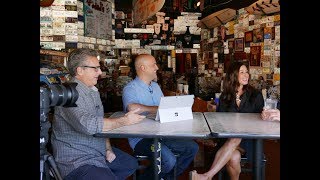
This is a Business & Burgers episode (Season 1, Ep. 14) recorded on-location at Hodad's in Ocean Beach, CA featuring Scott Duffy, Alan Taylor and guest Summer Felix (co‑founder of The Draw Shop). The episode mixes food commentary with a practical interview about whiteboard animation video marketing, Summer's background in internet marketing (starting ~2000), lessons learned selling a previous business, and actionable advice for entrepreneurs—especially on knowing your numbers, simplifying core messaging, and prioritizing personal health/work balance.
Questions this video answers
Hodad's, Ocean Beach, California
Season 1, Episode 14
November 21, 2017
Around 2000
About nine years
Chapters
I'm Alan Taylor. My buddy Scott Duffy and I are in search of the best burger in America. Each month we visit a new city to try some of the top restaurants, pubs and brewhouses while sitting down for a candid conversation with some of the top entrepreneurs, athletes, entertainers and celebrities. I don't know about you, but I love talking business over a burger. Welcome to business and burgers.
We're back at Hodad's in Ocean Beach, California to try their famous bacon cheeseburger. Malts and frings are must have sides at Hodad's, so. So we'll have to get some of those too. Joining us for this feast is Summer Felix. Summer saw immediate success when she co founded the Draw Shop. Everyone has seen their now famous whiteboard animation videos and they have been selling like hotcakes for cheeseburgers ever since. Summer specializes in helping her clients find their core message so they can effectively and efficiently relay that message to their desired audience.
Oh my gosh, I'm so happy that you made it today.
I'm so excited.
This has been kind of like my San Diego hometown burger since I was in College. In about 30 minutes when this place opened, opens, it's going to be packed. It's not only going to be.
So tell us about the Draw Shop.
So the Draw Shop is a whiteboard animation company. We do video marketing and we specialize in whiteboard animation. So a lot of people go, what's that? Well, you've seen people drawing on a whiteboard. Everybody's been in the meeting where somebody's drawing on a whiteboard. Well, this is taking your message, illustrating the ideas and time lapsing the hand so that it goes as quickly as you hear the voiceover. So it makes it so your brain is going, I have to watch this. I have to see what's happening. I understand the concepts because I'm listening and seeing illustrations match those concepts.
So one of the things that I love the most about you is your expertise around Internet marketing. And you've been in Internet marketing really since it was a thing, right?
Since Internet happened.
Since Internet happened.
Back in, I want to say 2000, with my ex husband, we started an Internet marketing business. How can we help people repair their credit was the initial business we first started and that lasted about nine years and then we sold that business. But that was the best lesson I had in terms of marketing because you're trying to get people to understand what you do in such a short amount of time. And it was at that time where it's like, okay, if you attention span people have on the market. Exactly, exactly. It started with Google, AdWords and all these little ways that you could start to use the Internet to market your product. How can we do this? How can we tell them what it is that we do in a really short amount of time, that they get it and that they're so inspired to buy?
And that's so hard for most business owners. You ask them what they do, they go on and on and on. And you still don't. You don't get it.
Exactly.
Well, in the world right now, it's less is more.
Right.
You have a certain amount of time, a finite amount of time to get that hook in, to reel them in.
Exactly. And if they're not entertained in like, seconds, it's like, bye, see ya.
Okay, so you started with your Internet business, repairing credit. When you did your sale, you said you sold that company.
Yes.
So what did you learn during that process of selling a business?
I would say one of the biggest things was know your numbers. You see the money coming in, you're spending it just as quickly. Yeah, we can do this, we can do that. Know what your ROI is going to be when you invest something. Another thing is really, you know, vet out the relationships that you have. So a lot of times people are so quick to make that strategic partnership.
When we first met, you were doing a lot of writing, and one of the things that I really started to learn from you was, who's your target? Who's your customer? What's the value you provide to your customer? And how to say that in just a few seconds.
Right.
So how do you do it?
I mean, it's all storytelling. So after selling that business, I really went hardcore into copywriting, which led into ghostwriting. And the biggest thing I saw was people getting stuck in their own curse of knowledge. They had so much going on, so much that they did so proud, as they should be. But they needed to make it much simpler because they want to put out this book that talks about every single thing that they do or every service that they offer, how they can be the best coach to you, the best financial advisor. But really what people want to feel is connection and trust with you. And how can you do that? Just talk about a few things, make them so, so simple and so clear to understand, and you gain loyalty that way. So I would take them through this process of, you know, what are, what are the things that people are skeptical about with working with you? What are objections they might have? What is it that you do that's different than somebody else. What have people told you? And some people like to get so stuck in their own what they think about themselves. And I'm like, no, no, no, no, no. What does your audience say? And who is that audience? Who's the avatar that's on the other side reading your book and who are you speaking to? Get confused on who their audience is. You know, they think they're talking to themselves. And the people that they're just gonna, like, blow away. It's like, well, remember who you're talking to.
I see something happen.
Here we go.
Look at that. You gotta love a place that brings out the desserts. First. We went with the bacon cheeseburgers this time around, and Scott and I made both ours. A double. Ocean beach is Scott's old stomping ground from his college years, and Hodad's was his go to burger spot. This double cheeseburger brought him back to the good old days. And it tastes just like he remembered. Delicious. Hodad's always has a lot, and it's not always just for the burgers. Many people come just for the frames. A mountain of onion rings and battered fries. And I can confirm they're worth standing in line for.
So many people feel entrepreneurial and they would love to start their own business, but they just don't know what to do. We had somebody come over about a year ago, and they were fixing our satellite. So I asked him, I said, you know, how long have you been doing this?
And forever.
I said, do you like it? And he looked miserable. And I said, so, you know, why don't you do something on your own? And he said, you know, I just don't know what it would be that I would do. And so I said, go ask the people you spend the most time with. If somebody came to you and asked for something, what would you refer me for? And then I gave my phone number. I said, shoot me a text at the end of the week and tell me what they say. A week later, he text me. He said, guess what? Those five people all said the exact same thing. In fact, one said that I could charge them in order to perform the service. Sometimes we just take for granted what we're good at. What's common sense to us isn't common sense to everybody else. So to kind of finish this story, what he ended up doing is he texted me about three weeks ago, one year later, and what he told me is he has a business that did 250,000 in the last year.
Wow.
Right? So it's all about Kind of figuring out, what's that one thing?
Well, you don't know because you're so lost in what you're good at every day, because you are the expert in that. I always tell people, what do people know you for? And we ask that even when we do videos, what will people remember this video for? What is it that they're going to tell other people about? And it can't be 20 different things. You know what I mean? It's got to be one clear message that's like, wow, that totally hit me. And I'm sharing that with everyone.
Let's talk about that in the context of the draw shot. Okay. What was the inspiration for the draw shot?
Actually, the inspiration was a video that we saw, a TED Talk by Daniel Pink that was turned into whiteboard video. You probably know it was awesome. Pretty famous. Eric and I were working with a client together, and he sends me this video and just says, what do you think? And I pretty much said, wow, let's do this. And so we always talked about, you know, what are other ways we could work together? So I actually had another client that was looking to do a video, and I said, hey, what do you think about trying this? We tried it for that guy. It blew his control video, like, out of the park. Like, he was amazed. He had another friend that saw that and said, will you do one for me? The next thing you know, we sold four videos before we even incorporated. And we were like, wow, this is a big deal. We started it in Eric's garage was our little studio with all the lights up and trying to figure out, how can we do this? And then by the next month or two, it was all right. We got to get an actual studio. And it just grew and grew and grew because they just. They convert like crazy. And it wasn't just how cool whiteboard was. It was, how are you telling the story? What is it that you're saying in this video?
So I've used Draw Shop from my own company four or five times. I probably referred 10, 15 customers to draw Shot. I love the end result. What gets me so frustrated is it is so hard to figure out what that core message is and how to say it simply. But you have a process that you take people through.
Yes.
Could you walk us through that?
So we take people through a questionnaire. We call it a creative brief, and it's literally 20 questions, and probably five of those are just your general contact information. So it's not even that many questions. But they're so specific. We just like pull from you, extract from you all the very necessary components. Because on a phone call, people will talk for an hour about all the things that they do. But all we need are the juicy parts. So we just pull out from them very specific details.
You don't get a lot of characters and you don't get a lot of space. So you really force.
We're forcing you to be specific about what you do. You have this chance, let us know.
At the end of the day, it's all about learning how to really connect with your customer.
Yes.
I'd like to ask you about being a female entrepreneur. Yeah. What are two or three tips that you give to women about growing a successful company?
The number one thing is don't try to be. Don't try to be perfect. And that's what I see a lot of female entrepreneurs struggle with. Because you are trying to be the best spouse, you're trying to be the best mom, you're trying to be the best in your business. And you don't have to have perfect balance. And everybody says, keep it balanced. Well, sometimes the balance is understanding that it's not always going to be balanced. There's going to be times where your spouse requires more from you. There's going to be times where your kids require more from you and your business. So if you always have those in check and kind of do an inventory of like, how am I doing in this section and that section, then that's great. That's balanced enough, in my opinion.
So you really have to make a decision, because in order to be great at anything, you have to be unbalanced. You cannot be in perfect balance. Sharon Lechter always says that the only way to be in perfect balance is to stand straight up on two feet. As soon as you take that first step forward, by definition, you're off balance. So it sounds like what you really need to do is figure out what your priorities are and kind of where they stack, rank, and measure that way.
And above all, your priorities should be yourself. I mean, honestly, you've got to take care of yourself. And so many people feel so selfish doing that. But you really have to, because you're not going to be good to anybody.
Where did you learn that, though? Because I think most entrepreneurs think that the first priority is the business. Yes, and I'm last. And I've had that problem myself for a long time.
You know what teaches you that is when things go to hell. Because I remember back starting, you know, back in my early 20s, and that was it. That's what I thought was the correct thing to do. Your, your work is everything before everything. If you're a true entrepreneur, that is what you put your time into. And then I learned, you know, like, well, that's not necessarily true because without your health, without, you know, love and happiness and fulfillment and adventure and all that other good stuff, it's like, what's the point? That's the reason you're doing it.
So Shane says he's gonna let all the customers in now. They've been standing in line waiting to get in here and have a great burger. I told Scott a long time ago, I love talking about business, but it's got to be over a burger. So I think we can all agree that these burgers are absolutely amazing.
Amazing.
Outstanding.
We had a great time talking business with Summer over those monstrous bacon cheeseburgers. Here's some food for thought. Know your numbers and know your ROI before you invest. When sales are coming in, it's easy to get carried away. Watch your spending. Don't get stuck in your curse of knowledge. You may wear many hats, but you have to simplify what you do into a clear and concise core message.
Next week, we head to Hollywood's Pono Burger, where they focus on making burgers the right way. Joining us is Chris Stoikos and his legendary beard named Grizz. Chris is a serial entrepreneur and the CEO of the Dollar Beard club. He specializes in building and maintaining teams of experts to run businesses independently. And he has his fingers on the button of today's youth. And he knows what it takes to sell a younger, hipper consumer base. Join us next time as we talk burgers, beards and business right here on Business and Burgers.
Check out more episodes of Business and Burgers and our B and B blog on our website, businessandburgers.com and don't forget, visit business and burgers on Facebook and give us a big thumbs up. We'll see you next time right here on Business and Burgers.
More from Scott









Business & Burgers-Sequence Collection bracelet for National Entrepreneurship Week

