157 | Making People Matter in an AI World | Scott McInnes with Cleo McCormack Live

In this live episode of the Building Better Cultures podcast, host Scott McInnes interviews futurist and leadership coach Cleo McCormack. The conversation weaves through Cleo’s unconventional career—from a beauty‑brand creative role at Wella to leading AI‑first initiatives in tech—highlighting how her background in extracting ideas from people informs her approach to change management. She recounts building an AI co‑creation room that augments consultants, captures flip‑chart content, and enables rapid process mapping, and describes rolling out low‑code AI assistance across 56 public‑sector departments. The core of the dialogue centers on a perceived “loneliness epidemic” and the erosion of people’s sense of mattering in a hyper‑connected yet isolated world. Cleo introduces the concept of a “mattering project,” a personal impact framework that asks individuals what they would hate or love others to say about them a year from now. She argues that leadership must shift from the all‑knowing “hero” to a vulnerable, authentic “mirror and multiplier” that amplifies authenticity throughout an organization. Because no formal playbook exists for this new era, she designed a dual change framework that blends organizational communication with leader coaching, emphasizing storytelling, future‑scenario workshops, and pre‑mortem thinking. The discussion also explores future‑of‑work models: humanocracy (self‑led teams with full accountability), flattened org charts, and a potential gig‑centric, AI‑mediated landscape. A recurring theme is the skill of “subtraction”—the ability to deliberately stop doing low‑value work, a concept borrowed from Adam Grant’s research. Cleo illustrates how AI can be used as a reflective tool (e.g., prompting multiple perspectives, simulating historical thinkers) rather than a replacement for human connection, and she stresses intentional design of time saved by AI to foster deeper interpersonal engagement. The episode concludes with practical coaching tactics, such as pre‑mortems, multi‑chair perspective taking, and leveraging negotiation frameworks (Fisher & Ury) to surface shared interests.
Chapters
We sleepwalk into someone else's version of the future like sheep, and we don't challenge that. And that would be, that would be the worst thing that could ever happen for me, when we have more power in our little finger than we realize, with our imagination.
Hello there and welcome to this episode of the Building Better Cultures podcast with me, Scott McInnes. Something a little special for you over the next 2 episodes. I think this is going to be a real treat In October 2026, we recorded 2 episodes in our Dublin offices with a live audience. I had great fun talking to our 2 guests, and it was so nice to have such a strong sense of community and connection in the room. Anyway, enough of me. I really hope you enjoy this episode.
Welcome to this episode of the Building Better Cultures podcast here in the Tara Building with Cleo McCormack and our live studio audience. Well done, good work team. Cleo, lovely to have you.
Oh, thank you, it's a real honour to be here and thank you to everybody for coming on a Thursday night for this podcast. I've been really excited about this for the last couple of weeks.
Thursday is the new Friday.
Oh, it certainly is. I believe.
To get us going, tell us a little bit about you, audience a bit about you, what your journey has been and where you are today?
I have had a bit of a squiggly career. So I worked in— for a global beauty company called Wella. So you might remember the ad, you can tell a Wella woman by the way she wears her hair. Taxi drivers used to love singing that to me all the time. But like that, again, it was all about helping people create images and extracting ideas from people's mind and helping them transpire into photo shoots, into, like, a piece of art that was hair. Those skills really helped me when I went into tech and everybody said, God, what are you doing in tech? That's really hard. And I said, well, people are people. They have an idea, something in their head as a leader they want to do, and I have to help them unlock that idea and then help them create the rungs on the ladder to get there. So fast forward 5 years in Version 1, head of Oric Dev. I came in as an executive coach, leadership team, Built the org dev function, and then the CTO came to me, and I told you this, and he said, "We want to be an AI-first company," and I said, "I'm going to stop you right there. Is this the turkey's voting for Christmas?" And like this was three years ago, and he went, "No, no, no, no, it really isn't." He said, "We want to augment all of our consultants with intelligence on top," and he said, "We want to create a moat that will be an offensive and defensive strategy," and he said, "We need to be three steps ahead of our customers," and We need to make the mistakes ourselves. And he said, so I want you to do the training. And I said, I'm going to stop you again, sorry. And he said, yeah. And I said, this isn't an L&D problem. This is a change management problem. And I would say opportunity, because what you're doing is fundamentally affecting people's identity, and we need to be really mindful of that. And he said, what do you need? And I said, I need you to listen to me, and when I tell you to communicate, I need you to communicate. And I said, and understand that this has changed. L&D, of course, is important— capabilities, skills, all of that. So that turned out to be really well. And then he said, could you do that for clients? So we built the AI co-creation room. So it was a room with robots. We have these little huggy face robots that are ambient. It's a smart room. So we bring people in, and the joy isn't the room. It's not having to write things on flip charts. So the room takes pictures of the flip charts, and then I can tell the room to start process mapping things, to do decision workflows, to build things. And on the break then, like back at the start when I was trying to extract an idea, I can say, is that what you were thinking about? And they were like, yeah. And then we're able to do forecasting. If we multiply that forward for 5 years, what are the unintended consequences? We could build personas into the robots. Like, we load CPOs in talking about the future. And I put a shop steward in, you know, someone from a union, and they were like, well, you're talking about people who aren't in the room. And they were all like, oh my God. And we were like, we came up with nothing about me without me. And then we did loads of cool stuff. Most recently, we rolled out AI low-coding assistance across 56 public sector departments. I was working with the NSA, the British government, doing that. So Loads of interesting things were happening. Starting a new job on Monday, have to figure out how to do it, but I'm going to be fine, you know, Director of the Institute of Future Work. So thank you. So I'll be knocking on everybody's door.
Excellent. There's a lot going on in the world of work right now. There's a huge amount going on. What are you seeing? What are you seeing out there?
I think we have a loneliness epidemic. never mind AI. I think people chronically feel they don't matter. And every iteration of the tech bros are saying, you might as well just give up work now. You know, AI is going to take your job. You know, eat whatever you want because the nanobots will make your bodies better and we'll all have universal income. And, you know, those tasks, they're not important. They're grunt work or low level. You know, just let that go. Those tasks are people's identity. You know, people like their tasks. Because a lot of people's worth is tied up with their job and what they do, their job title, and the tasks show how I deliver tangible value. And from coaching leaders, they really struggle with not doing themselves and coaching. So you can't just break that overnight. So couple that with the fact we've never been more connected and never been lonelier, and then AI working with agents is making that gap wider. So that's what I'm seeing at the moment, is that The connection is missing between people, and we need to remind people that they matter and that we can't do it without them. And AI won't take your job. Maybe parts of it, but not all of it. Yeah,
it's interesting, the idea of tech making that gulf of connection wider and wider. And that's what we found out in our research earlier this year, that it seems to be the more tech that we have, which is supposed to be connecting us, actually we feel more disconnected.
Yes. Like, how is that? Like, when I used to watch Star Trek when I was younger, they used to have, like, the thing where they could go, right, Scotty, beam me up now. Like, you could talk to somebody on your videophone. You can ask it any question. You have the smartest device in the world in your pocket. Hands up, who likes video calls? No? Do you know, this brilliant piece of research— there's a book called The Power of Strangers. I'd highly recommend it. And we have an awful tendency to predict things wrong. We think things are going to be terrible. So they asked people, I want you to sit beside someone you don't know on the train. Right? Oh, God, no. Especially English people, they hate that, right? And it's like, how do you think you'd feel if you had to strike up a conversation? That would be really awkward, and they'd feel awkward, too. So they asked them to do it and just lean into it. And surprise, surprise, they were like, that was great. I found out they lived down the road. And they were buzzing. And the science of happiness says that altruism and doing nice things for people gives us a boost in our dopamine. Because we're happy while we're doing it, we're happy walking down the road thinking about it, and then we're happy again telling somebody about it. So why don't we do it? Do you know? Because we've created devices to keep us away from each other so we don't have to do the one thing that makes us happy.
Yeah. And of course, with Lou, I think, you know, we might be very, very well connected, but actually we are very, very much apart. And I think there's a bit of— I don't know the science behind this, you probably do— but a bit of physiology in there that the fact we're not in each other's presence Physically, in real life, that's a big challenge. There's signs and signals and chemicals and stuff that we're missing out
on. 100%. Like, and I know we're going to be talking about high performance later on, but like the power of being in that co-creation room with physical people, that when everybody— do you know that magic when everybody's synced up and you're all like, all your brainwaves have this beautiful symmetry where everybody's joined up and the energy is electric? You can only get that from physical presence. You know, you can do a lot online, and I think it's absolutely amazing, but the power of, as you said, being in a room with somebody. And also, when we're watching the screen on a video call, it's like as if you're presenting in front of a mirror, right? So there was research done during COVID on this, that you're, you're, you're kind of autocorrecting yourself in real time because you're watching yourself in a mirror. Yeah. while you're talking to people. So that's like me talking to you through the mirror. So you have this artificial, like, you know, like boundary between us. So I used to say to leaders, turn off the camera for yourself so you can put the 3 little dots so you can't see yourself, but the camera's still on. And that makes a big difference. But as you said, you only have visual clues to hear, so you have to work harder.
Yeah. So let's go on to leaders then. That was a A beautiful segue. And let's think about the context that you so well described there of all the things that are going on and all the challenges, and that challenge with connection. What do we need leaders to be doing in order to get the very best out of their teams in that context and in that context as we look forward?
This is a great question. It's probably not the skill question that we were thinking about, but we had a brilliant conversation a few minutes ago and I talked about something that I used to teach our leaders called The mirror and the multiplier. So leaders are the mirror and the multiplier. So they're the mirror for success, and their behavior multiplies and reverberates through the organization. And a lot of leaders don't understand that. So if you're vulnerable and you're authentic with people, that is mirrored and multiplied back in. So the day of being the all-knowing person— you were promoted for Shoe Harry, the concept of you learn from a master— those days are gone. It's like the democratisation of information. Anybody can find out. So the leader is transitioning from being the all-knowing one to a wayfinder, a sense-maker, a coach. But the most powerful thing is vulnerability, to say, I don't know. Like, I feel scared too. To the best of my knowledge, this is what we think, and these are the decisions we're making based on this. Like, how nice would that be to go, Once I understand why you made that decision, I back you, I get it. I think that that's really important.
Do you see organisations providing their leaders with the skills to be that leader and that manager? Because I certainly don't, so I'll be interested in your take on that.
This is really interesting. The answer is no, because the Chartered Institute of Professional Development for HR, they did a piece of research that 50%— and people keep me honest— 50% of what CEOs are doing today, they've never done before. So no one— there's no playbook for it. No one has trained them. But what I would argue is we have done it before. We've all experienced change. But we have to channel into a time where I had to get on board with something I wasn't really quite bought into and be honest and say, you know, I wasn't really bought into X, the cloud, when it first came out, or I was the last person to get a mobile. I get this is hard. But this is why we're doing it. So I would say authenticity, knowing that there is no playbook for this at the moment, but all the more reason to not try and be the smartest in the room, to be the most human leader. So that kind of led me to designing my own change framework because I felt like a lot of the change management frameworks that are in the market, they were very much you, the sponsor— and you know this better than anyone— go over there and make them change. We don't have to do anything. We've given you budget and licenses and they have a problem over there. And I'm like, no, Houston, you have a problem. So the leader— the change management framework is a dual framework that what the organization and the leaders need to do. And really the start of that is communication. That allows me to go in and coach them to be vulnerable, coach them to give clarity over certainty, to storytell. Like, it's very hard for people to buy into a future that they can't see that image in your head. So what we do is a day in the life in 2 years' time, multiple stories from the future. I was chatting to Maurice from Tesco Ireland, and hopefully he does this, but I was saying, why don't you run a competition of what people think Tesco in 2035 will be like? How amazing would that be? You know, it doesn't have to be the leaders. Use the intelligence of the organisation.
Well, you're creating vision from the experiences of the people that are working on the ground and actually doing the jobs.
Exactly. Yeah.
So, you talked about human leadership. I think that's reasonably straightforward. Authenticity, I think, is reasonably straightforward. Vulnerability, and I totally take your point about not having all the answers, but I also wonder, is there a point at which if we're too vulnerable, if we're too, I don't know the answer to that question, I don't know how to do that, I don't know how that works, I don't know... If you say that too much, do you lose then credibility with your team, and how do you find that balance?
Oh, what a question. I really like this question. I think vulnerability without a plan would get you there. So if you were just vulnerable and you didn't have a plan, people would be like, oh my God, like, we're rudderless. But if you said, we haven't done this before, it's uncharted, but based on all this information, this is a high probability of success. It may not be successful, but that's what I think. Do I know this to be true for a fact? No. I would back somebody doing that. And if they just said, look, we haven't done this before, we're breaking things as we go, we'll just see how it goes, that's not really enough. So hopefully that answers your question. Vulnerability with a plan. So address in this moment how we all feel, and then when the present moment is uncomfortable, go to the future. You know, what will it be like in a few years' time, possibly?
Yeah, love that. Let's come back to that idea of connection. that we spoke about earlier on. And we had a really good conversation when we did the pre-call about the idea of mattering.
Oh, yes.
Now, I'd never heard— I'd never really heard about this before. I don't know if anybody else in the room has heard about it before, but we had a great conversation. I'd love to explore that a little bit. Maybe start off by telling us when we spoke about it on the phone, what exactly did you mean?
So mattering, I got a gorgeous gift of this book, The Power of Mattering. And me being me, I was like, where did he get that idea from? And I went down a whole rabbit hole. And I discovered it's a concept around connection and leadership. And it's, do you know what someone's mattering project is? So a mattering project for somebody, a great way to find out is to say to them, if you left in a year's time, what would you hate if someone said about you? And they'll tell you. What would you love if they said about you? What mark do you want to make on this organization? That's someone's mattering project. That's what's important to them. So Zach Mercurio took it forward in his book, The Power of Mattering, and we've talked about this at Lend. But it's really simple. It's, I see you, I see what you bring, and I can't do it without you. And the problem is we wait till the job is done and then we thank them when it's finished, right? But we don't thank them on the journey. I see that's really hard. I see how hard this is. This is tough. None of this is easy, but I'm so glad you're here. Because we wouldn't be able to do this without you. And I presented this at the Irish Hotel Conference, Para-Mattering, and I was like, someone dealing with a tricky customer, go over to them and say, that was really hard, you know, you handled that really well, I'm so happy you're in this role. Imagine how powerful that is, you know, it's making people feel they matter. So with AI, we have to remind people that they matter. Yeah, AI is great, but we can't do any of this without you. It doesn't dream, it doesn't come up with ideas, it needs your ideas and your dreams, so we need you here.
If memory serves, you talked about— was it a funeral speech when we spoke before?
Yes, oh yes, and the sales guys hate when I talk about this, right, because I always call it like a post-mortem and they think that's really morbid. And I always say, you know, if you were given a speech about somebody and if we'll say when they retire, right, You'd hate it. You'd hate it. Like, what did that— you know, I always go with leadership teams. What do you never want to say? What would you never want them to say? And they'd say things like, what did they even do? You know, or like, you know, I don't want to be known for this. So the pre-mortem is the idea of reverse engineering what you don't want to happen to what you do want to happen. That's really important. And I do that myself regularly where I say, If I want that to happen, how close am I? If I want people to say, she made a difference, so what's my purpose? So my purpose is that people— we tend to look to other people in positions of authority and we believe their version of the future. And my purpose in life is to help people create multiple versions of the future. Because as Virginia Woolf said, the future is dark and that's exactly how future should be. That's brilliant. I think she said that. But I'm going to believe she did. And the idea is that the future isn't written. And CIA operatives talk about something called anxiety plus one, right? So— and I always talk to my kids about this. They can't get too anxious about the future because there are too many variables. Right. So they go into the field and they scan based on the first couple of days. And they don't go any further because there's so much interference. There could be a tsunami. There could be anything. There's too many variables to predict. So I think that, like, that's what I want to do is help people and give them hope and say human ingenuity is amazing. We envisioned Star Trek and now we're able to move one proton across the room. We're getting closer to Star Trek. So if we envision it, we become magnetized towards it. So we envisioned Terminator. So I think we need a couple of other films. You know, so let's think about films where it's a tech utopia. And it's all about human thriving, human brilliance, which I stole that from Robert McGillican-Porrigg, so we better put that on record. So human brilliance with people and the tech enabling that. So you asked me about the post-mortem. The post-mortem for me was that we sleepwalk into someone else's version of the future like sheep, and we don't challenge that. And that would be That would be the worst thing that could ever happen for me when we have more power in our little finger than we realize with our imagination.
Amazing. Thank you. Nobody had a round of applause before.
Really? Thank you.
How do we unlock brilliance in people? How do we create the environment in which they can give that and they want to give that.
I love Angela Duckworth and Angela Duckworth's book on grit. Like, when I was 7, I thought I wasn't smart. Like, I used to sit in school and like— I'll start getting upset now— I was in with my son's teacher, and I promise I have a point, and she said, I just think Ronan is a dreamer, he's 7. And I said, do you know that's a trauma response? I said, he's leaving his body and he's imagining Marvel universes while you're talking to him. because he doesn't think he's smart. He thinks he has a brain that's really small. And I used to feel like that. And I said, I used to be 7 sitting there, and I'd— I love Lord of the Rings, and I'd have a whole world in my head because your body is really, really good at keeping you safe. So when you feel chronic shame that you think you're not smart, then your body will lift you out of that. And it was only when I was older and I was about 40 and my NLP teacher said to me, you're not in the room, Cleo, you're not in your body. And I was like, how does she know? No one's ever said that to me before. She'd come back in the room. And I used to teach mindfulness, and so I had to orientate myself. And I said to the teacher, I want you to ground Rowan before you start teaching him. I want you to bring him back into his body. And I think there's— Angela Duckworth talked about grit, and she said intelligence will only get you so far. That made me feel better. But it's the grittiest people are the most successful, the ones who will not give up. And that is me. It's about tenacity and drive, and forget about IQ. And I think that's really important. But my second point is her new book, which is about situation, or Situated. And it's about you have to be in the right environment. Like, I had all the same ideas when I worked in Walla, but like, I didn't have the resources to make things happen because I was surrounded with different people. So I wasn't situated for success. So to unlock human brilliance, Be really careful where you're situated. Keep asking yourself, am I in the right plant pot? Do I need to hang out with other flowers or other plants with different soil? And we've talked about this, and that's human brilliance, because human brilliance is when— is the power of the collective and each champion you. So sorry, it's a bit of a long-winded answer.
Super, super. Let me go back to mattering. We talked about mattering earlier on as being that idea of having something that really belongs to us. And I wonder, as AI starts to come more and more to the fore, and we end up just going down these rabbit holes where we're just playing with our computers and stuff's coming up and it's asking us more questions, we get more into that, actually, it then becomes in charge. Yeah. And I wonder what organizations and individuals can do to either harness that in a way that helps to kind of build their mattering or support their mattering, or Is mattering doomed?
I think that mattering is less about the AI and more about the leadership, and it's more about the team. Like, once you know what mattering is, will you ever forget that? So you can't unknow that. And I think once leaders know what good mattering looks like, they can't unknow that. That's an intentional choice. And maybe they're a psychopath, but anyway, who knows? But now most people, when they know that, then they can correct. AI won't give you that. It will just be an echo chamber. So I think we need to intentionally design training for humans to catch people in magic moments and make them feel they matter. And to remind them that there's loads of HR complaints that are beautifully written and they're like, oh my God, we were talking about this actually. Like, for example, you were having an argument with somebody and let's say you're an attachment parent, right? And someone else is a cry-it-out parent and you go on social, you go on the AI and you go, Find me all the research about why they're wrong, right? So really what you're doing is exacerbating the otherness of each other. So I have built my AI, and I think organisations should do the same. So in my sentence I said, I'm not always right and neither are you. I want you to give me 3 different perspectives for any problem that I bring you. Challenge my thinking, show me where you got your answers, and always ask me 5 questions to clarify. And use Fisher and Ury's negotiation, Get into Yes. So Fisher and Ury said that interests, needs, and positions, right? That's a negotiation. So what is someone's position? Is, I'm an attachment parent. Their position is, I'm a cry-it-out parent. But really, it's in both our interests to— let's say we're parents— to get our children to get along and model good behaviour. But the underlying need that's not being met is we both want to be a good parent. So if you can train the AI to challenge your thinking to say, But really what I'm hearing is you both really want to be a good parent. You're just coming at it a different way. You could use AI for good, you know? And that's so easy to do with settings. And the leaders then, you know, telling people that that's what they're using it for. Because I realised it was just making me more angrier, but it was taking me further. It was othering people. You know, like, I coach a lot of people and they say to me, but AI told me that I need to cut them out of my life. And I said, is AI in the room with you? Do me a favor. I want you to create a persona of the person you're arguing with, and I want you to create 2 other people in your family, and I want you to ask the AI to give the perspective of each of them and see what happens. And I said, oh my God, they asked all these different questions, and from someone else's perspective, it might be different. And in coaching, that's 3 chairs. You know, it's like, okay, move yourself into the opposition. What would a fly on the wall say? Why can't we use AI that way?
Yeah, yeah, very smart. Because it could be 100 people if we wanted it to be.
Absolutely. You can make a whole— like, I have Freud, I have Nietzsche, you know, like, you might as well. They're not going to complain, they're dead, you know. So like, don't use Brené Brown, she doesn't like that. And fair enough, she's alive, you know. But you could— I often say, okay, Jung, what would you say about this situation? What would Nietzsche say? Just expand our thinking.
So as we talk about AI and plugging dead people into our language models,
what
does the future of work look like, do you think? Like, we've talked about what work is like today, we've talked about the world of work, there's loads of change going on, there's tons of stuff happening. What does the world of work look like in the future? Future work?
So I was thinking about this today for something else, and I think that there's probably a couple of different probabilities, and we have the power to make this a reality. We can intentionally design AI to allow us more time to connect with each other and go, wouldn't it be amazing if we could do this? Wouldn't it be great if what wasn't a problem anymore? And we get high off each other's ideas and, you know, like a boost. And if we did that and we built on each other's ideas and we came up with fantastic things and we started to move org design around more intentional building time. And work became more co-creation of ideas. And I do think that we need to move into an era of humanocracy. So it kind of fell out of favor. Humanocracy is like self-led teams. So if you imagine that teams at the moment have learned helplessness because management is fractional. So you do the performance review, you do the salary review, you do this. So you don't actually really own anything. You own a bit of it. And that creates learned helplessness of, well, it's not my fault, you know, or I don't want to do it because what if I get it wrong and I don't own all of it? And it's like, I think we need to— with agents, if we're going to be managing humans and agents, we need people to be fully responsible and accountable. So to have agency, humanocracy says that you will fully own your part. And as we see for scenario 2, which is the org chart flattening and one person having 12 direct reports, if that's to work, which is a kind of a matrix hybrid, you need those direct reports to have full accountability for what they own, not waiting for decisions, not owning a little bit of it, fully accountable. And then there has to be a set of beliefs and standards. So the first one is the utopia, and that's very human-centric. The second one is about accountability and design. But that could just be transactionally to get things done, and it's not accounting for building in human skills. And then it goes even further then into that, you know, work becomes more and more fractional, and we get like a Hollywood model where we come together to do like a project together. It's a gig economy, and people are at home talking to their AI. That's really sad. So there is a lot to be said for that. But let's make that better. It doesn't have to be that way. So if we were to make that better, if you think of psychological safety, Amy Edmondson, she talked about the Chilean miners, right? So the Chilean miners came together to rescue people. They were all experts from around the world. How did they become a high-performing team instantly? And it was they were curious. They stayed curious and said, I don't have all the answers and neither do you. Like the AI, deep listening, I really want to hear what you have to say, and they became high-performing teams. So if we are going into fractional, how do we make it brilliant and really human?
Something you mentioned there, and it was interesting because it was something that popped up on our socials this morning because it was something that popped up in our research where somebody had said— I'd asked a question— but is AI, if you use AI more, is that not giving you back time in order to spend more time connecting with the humans in your team? Love this. And the answer was, no, it's just given me more time to do more work.
Yes.
And of course, the challenge with that is that organizations are looking at this and going, well, this is fantastic. We can get even more out of people than we could before, and more money, and more shareholder value, and more everything. How do we avoid going too far down that route? And how do we get to a place where actually what we're doing is we are really intentionally taking that time that we get back and saying, I'm gonna spend 30% of that time, 50% of that time actually being with my people. How do we do that?
I think it comes back to something that you asked me, which was a really difficult question, which is what is the number one skill of the future, right? And I stole this from Adam Grant. It's subtraction. And subtraction is knowing what to stop doing. Because see everything we said there about we're getting loads of value, we're gonna create loads of artifacts, that report, we're gonna make it 40 pages, we're gonna give everyone a pre-read. Whoa. are we solving the wrong problems faster? How do we know it's actually adding value? Or are we just creating more noise? And I was talking about subtraction. Subtraction is— Adam Grant did 8 different studies where they— you've seen it— they brought people together and they got them to come up with ideas to make something better. And they always add things on, but no one takes things away, right? And they did a Lego set and they said, make this structure more stable, they added more Lego bricks on. They didn't just take one brick away. Yeah. So we never think, 'cause that implies a loss, but sometimes is, is that report still necessary? Like, does it need to change? Do we need to edit it? Are we just creating more noise? And I was talking to my husband about this today, and he said, you know what? He said, like, I actually think that the mid-tier workers are producing more work than ever. But the poor people, the leaders at the top, they're the ones who are employed for taste, discernment, wisdom. They have so much to read and they have to wade through all this new AI stuff because they're the ones who is accountable. So I actually think the number one skill of the future is subtraction. It's being able to decide what not to do. So what is the vital few and the trivial many? And 80% of it is just noise, you know, because we want to be productive. So I think the skill of the future is being really crystal clear about what parts of that deck or that thing will get someone's attention, will make the decision better, and getting rid of the noise. So it's about being an architect of attention.
Which of course isn't about doing less work, it's about doing better work.
Better work, the right work. Yes, yeah.
Yeah, yeah.
Did that answer the question? Or did I answer a different one?
No, no, you absolutely answered the question. And that, and that was indeed my last question. Okay. We're out of time. Chloe, thanks so much. Really appreciate your time.
More from Scott
Leaders can't assume connection happens automatically #LeadershipLessons #EmployeeExperience

The hidden reason your remote team feels disconnected #TeamConnection #HybridWork
This is why people actually stay at their jobs #workplace #culture #retention
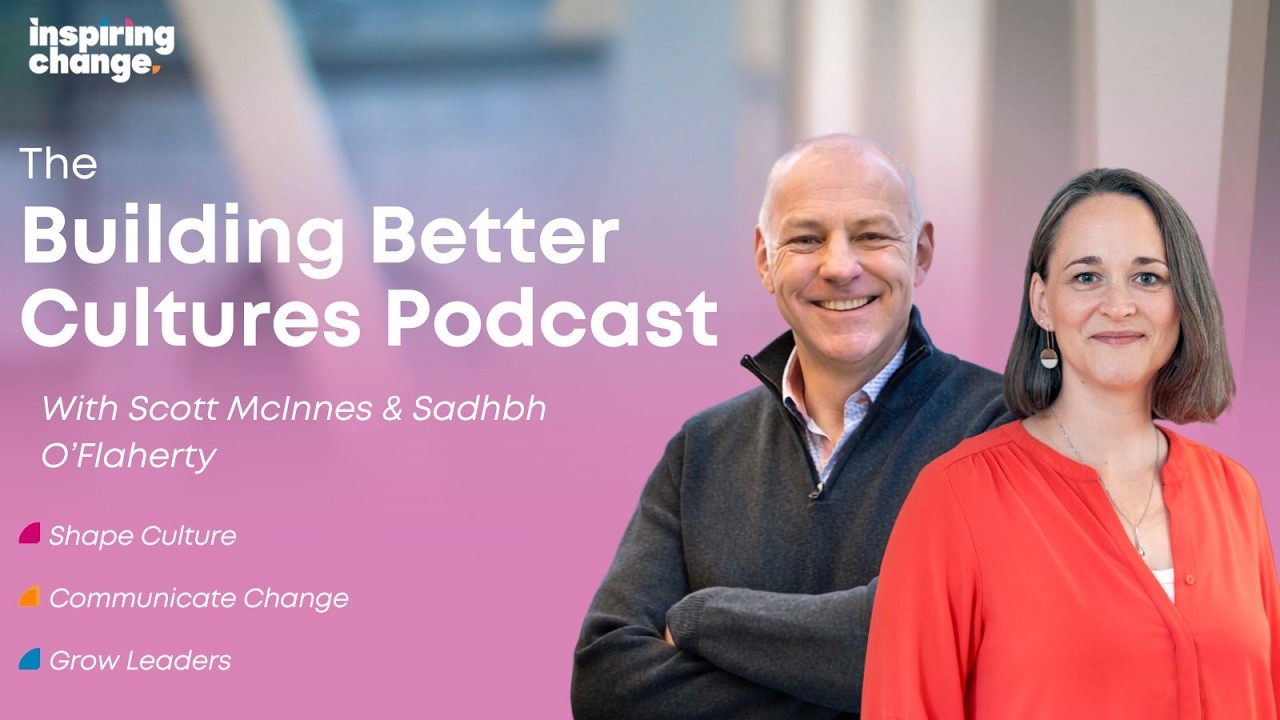
156 | Inside Disconnection at Work: Bridging the Connection Gap Report with Sadhbh O'Flaherty


155 | The Overlooked Art of Building Connection at Work | Scott McInnes with Christine Armstrong