EQ-i 2 0 Certification Training Course - What's Involved And Which Learning Partner Do I Choose?
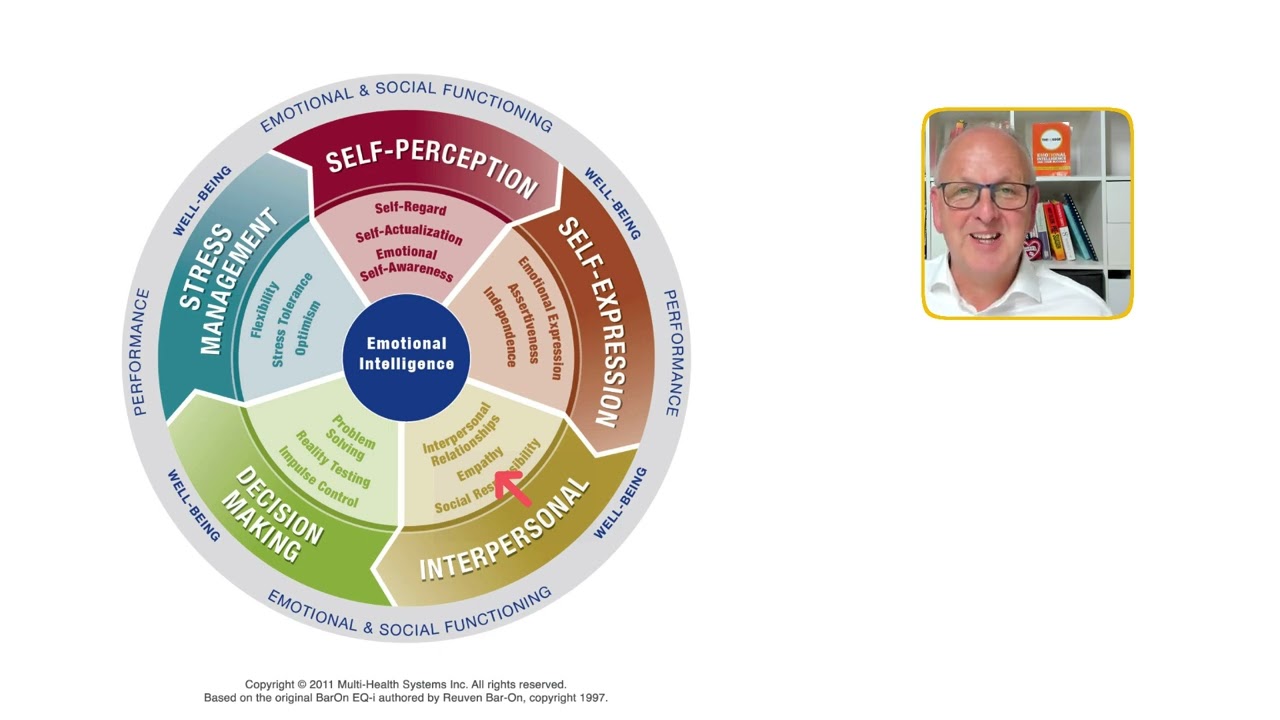
Scott Watson, a Certified Master Trainer, walks through the EQ-i 2.0 certification program: online modules, a two-day live training where you take the assessment and get 90 minutes of feedback, then a timed exam. You get five report formats and access to templates, case studies, and ongoing support without recertification fees.
Chapters
Welcome, I'm Scott Watson, Certified Master Trainer of the EQI 2.0 and EQ360 certification training program on behalf of Multi Health Systems Incorporated. This video is a brief overview of the certification training program, what's involved, and what is available to you following the event as well. So please bear in mind before we begin, the EQI 2.0 suite of tools It remains the only scientifically validated and most rigorously tested emotional intelligence psychometric assessment tool in the world. Many claim to be based on science but haven't got the rigorous testing and norming that the QI 2.0 has. So if you're an in-house HR or learning and development professional, or whether you're an external coach or consultant, this video will just share with you some of the points of why you may wish to become globally certified in the EQI 2.0 suite of tools. So let's get going. First of all, it's a 2-day event, 2-day live event, whether it be virtual via Zoom or in person. There are pre-event learning modules to complete online, which are simply— they're less than 90 minutes in total, but they give you a flavor for the EQI 2.0 model, the EQ360 model, and also help you understand in more detail about the science behind the model as well. Then you also get your own EQI 2.0 assessment. So first of all, you can understand what it's like to complete the assessment as your colleague or client would, and also enjoy a 90-minute feedback discussion with me or a member of my certified team too. This really helps you bring emotional intelligence to life for yourself, whether it be personally professionally, or indeed both, because emotional intelligence isn't just a personal or professional skill, it's a life skill. So during that discussion, we explore what's in balance with your EQ results, what deserves some attention, which may be out of balance, and also the benefits and potential drawbacks of high results and the benefits and potential drawbacks of low results. But we don't just look at the results, we understand how to create more balance in certain situations so you can deliver even more value, communicate what deserves to be communicated, manage stressful situations, or whatever it may be, more effectively. Then it's into the 2-day live learning. This, even if delivered virtually, it's not a PowerPoint slideshow. It's an immersive, enjoyable, collaborative, learn-by-doing learning experience where you'll be partnered up with fellow participants and actually analysing their reports and feeding back on their results as well. So Even though it's very positively challenging, it's not so challenging that it becomes, my goodness, what am I doing? Everyone finds the first few hours on the first day a bit of heavy lifting because there's so much to think about. But then in the afternoon, it all begins to make more sense. And then day 2, when you continue practising and learning other points, it's just really straightforward and even more enjoyable. Then Following the event, not immediately after the event, you can do this at any time you want. There is an online exam. If you don't enjoy exams, call it a quiz or a puzzle. But this is where not only will you have demonstrated the acquisition of competence and technical skill throughout the 2 days, but this is where you bring it all together in terms of what have you remembered, what have you learned, and how can you apply it. So there is a 2-hour time limit for the online exam. It has to be done in one setting, sitting, but it usually takes about an hour. You will have all the information you require, you'll have all the resources you may ever need to successfully complete this exam and become certified globally as an EQI 2.0 and EQ360 Practitioner. Then following that, you get access to an abundance of resources in the MultiHealth Systems online learning library. This is where you can download your logos to demonstrate your new certifications. This is where you can download sample reports so you can help people understand, whether it be clients or colleagues, what kind of information is going to be produced. It also includes case studies because emotional intelligence can sound a little fluffy, tree-huggy. It's not. This is where it shows you how organizations across the world have successfully applied the EQI 2.0 model of emotional intelligence to deliver great value. So that is what's, uh, involved. But let's take a quick look at the EQI 2.0 model itself. There are 15 competencies. We won't go through all of them here. There is a link to some more resources below this video, but we've got the 15 competencies: self-regard, self-actualisation, emotional self-awareness, emotional expression, assertiveness, independence, interpersonal relationships, empathy, social responsibility, problem-solving, reality testing, impulse control, flexibility, stress tolerance, and optimism. Okay, that was all in one breath. You don't need to remember everything at this point, but just have a think about this. If a leader is very empathic, really caring about relationships and other people, but their empathy is in the high range, which we will explore during the program. They're demonstrating a high level of empathy. Isn't there a potential risk that the leader may not have the tough talks that deserve to happen to keep things on track or get things back on track because they value harmony so much in their relationships? It might be, well, 'My colleagues are doing so well over here, so this is just an allowable weakness.' Nope. So, just because someone possesses and demonstrates a high-range result such as empathy doesn't make it always a positive thing. Harmony is always wonderful, very enjoyable, low maintenance, but sometimes it's what's not said that causes the problems rather than what is said. What if a leader, for example, is highly optimistic? Isn't it wonderful and inspiring and engaging and we're all in this together? That's fantastic, isn't it? But if that leader, or indeed group of leaders, are so optimistic and so eager to get moving on things, they may forget to plan. They may agree to crazy timescales that can't be achieved. They think they can in the moment because they're eager and they're wanting to give things a go and they may be wanting to be helpful for that stakeholder or group. But further on down the line, it can become demoralising, demotivating, and lose an employee's engagement, emotional engagement, if it's here we go again, here we go again. And if you've read on LinkedIn and Facebook more these days about emotional self-awareness, there is a lot said about emotional intelligence is all about self-awareness. Well, as you can see, it's just one of 14 competencies. Now, some people with low-range self-awareness may go from normal functioning to angry with Immediately, with no middle ground, there's no stages of changing in the emotions or moods. They're just there. That's low-range self-awareness, and they don't know it's happening. It's just outside of their conscious awareness. On the other side, if someone possesses and demonstrates high-range self-awareness, surely that's a good thing, a better thing. Well, in certain situations, yes. That person is likely to spot the emotional climate of a team, of a group, of a meeting. They're also likely to pick up on small nuances in people's communication and behavior that other people don't because their emotional radar is constantly on. Good thing, isn't it? The downside of this is that person, that leader, whoever they may be, is likely to have a very busy internal monologue where they overthink things, they overanalyze things, they can potentially overworry about things and not know when to switch off. It's rather like on my Mac, if I have 15 different programs open, at some point they're all, they're all taking memory, they're all taking space, headspace. At some point it's going to either just give me the beach ball of doom so I can shut some programs down or just freeze until I switch off. The same applies. High-range self-awareness can have a downside too. So that is just a brief overview. Remember, this is scientifically validated model and it's rigorously tested. It's not something that's just been produced and then sold. Now, the resource page with Multi Health Systems, you access this when you have successfully completed the 2-day live learning program and then the exam as well. There are resources in here, a guide to using assessments, there are PowerPoint bundles, to use for training programs. There are case studies, there are reports, and so much more. Now, the key point here is, if anything, I want you to do more than pass an exam. I want you to be able to deliver value right off the bat, straight out of the gate. And this is done by coming along and learning, coming along, giving things a go, learning how about the model, how to apply the model, how to deliver value, and then passing the exam. The resources available to you are there forever. There's no recertification fees or anything like that. Once you're certified, you're globally certified in these two very credible and much sought-after assessments. Now, this is what happens after the event, you achieve two globally recognized certifications with Multi Health Systems. There are five different report types that you access: the workplace report, the leadership report, the group report, the education report, which is for graduates, the EQ360 report as well. You have all of these resources. Each of them are underpinned with the EQI 2.0 model, but they all focus on measuring different things. The leadership report is particularly fantastic. I use it so often with aspiring and existing executives. They absolutely love not just the information but what comes from it and what value they gain. It's a scientifically validated model. There's no renewal fees. And also, key point here is, I don't know if you've ever joined a gym and then after a week or two or a month or two not bothered going or not bothered going as much. Well, The key thing in terms of how you become a credible, sought-after EQI 2.0 practitioner, whether you're in-house HR and L&D or external consultant or coach or facilitator, is by keeping on doing the workout. Now, I don't mean coming back to me or my team every week, but I mean applying the learning, finding opportunities to apply the learning, noticing what's going on around you and how people are interacting. The key thing also is coming back to do a refresher training. If you ever wish to come back and do a refresher training, you do it as my guest. All you need to do is bring along a workplace report that you buy, and we go into the pricing there as well. It's very low, but you come along and refresh your learning as and when you wish to, or as and when you think you need to. Come back as my guest. There's no additional fee. Just come along and help other people learn as well. And then the key point here, the final point is post-certification coaching support. I want you to avoid getting certified and then thinking, where do I go from here? What do I do? What if I don't use the model or the assessments for 3, 5, 6 months and I've forgotten everything? Well, I'm really not keen on you developing a dependency on me or my team's input, but what we want you to do is know that for the first 5 or 6 reports that you produce that you're going to be feeding back on, facilitating a meaningful discussion on, come back, send them to us, which you can do, uh, data protection-wise you can do because we are supervisors on behalf of MultiHealth Systems. Let's go through the reports together and make sure we're seeing the same things, where to join the dots, what nuances there are in the report, so you can deliver as much value as possible for the trusting client or colleague or group. Now, another point here is you don't always have to use the models and the assessments to deliver or facilitate a training program. Just using the EQI 2.0 model as a base gets people thinking about their own emotional intelligence. So it isn't I get qualified, and I can only do these assessments. We do 3, 4-day programs with clients over a period of months that are underpinned with the EQI 2.0 model and our skill and experience and knowledge, etc., but they never do the assessment. But we can still deliver value there. So the key point, uh, to consider is, is now a good time for you to become certified in Emotion Intelligence. I think in the UK there are 4 other training providers that can provide this, but whoever you choose, make sure that the support following your certification is available free of any additional cost. Make sure that you can go back and refresh your training free of any additional cost. If you're making the investment once, why continue to make it when you can have this resource available to you. But whoever you choose, it's the same syllabus. The manner in which the syllabus is delivered and the value of the learning is different with whoever you choose. So that is a brief overview. Thanks for sticking with me if you've stuck this far. And here is the link to visit if you want to find out more about becoming certified in the EQI 2.0 EQ360 program, scottwatsontraining.com, and from the top bar menu, just choose EQI 2.0 certification. There are only 2 or 3 each year because we're so busy with corporate clients, but we do find the opportunity occasionally to do in-house programs. So I'm Scott Watson. If you have a question, you're welcome to pop the question in the box below or email the team through the website. Okay, take care.
More from Scott









Emotional Intelligence Training for Managers | The Hidden Cost of Low Self Awareness

