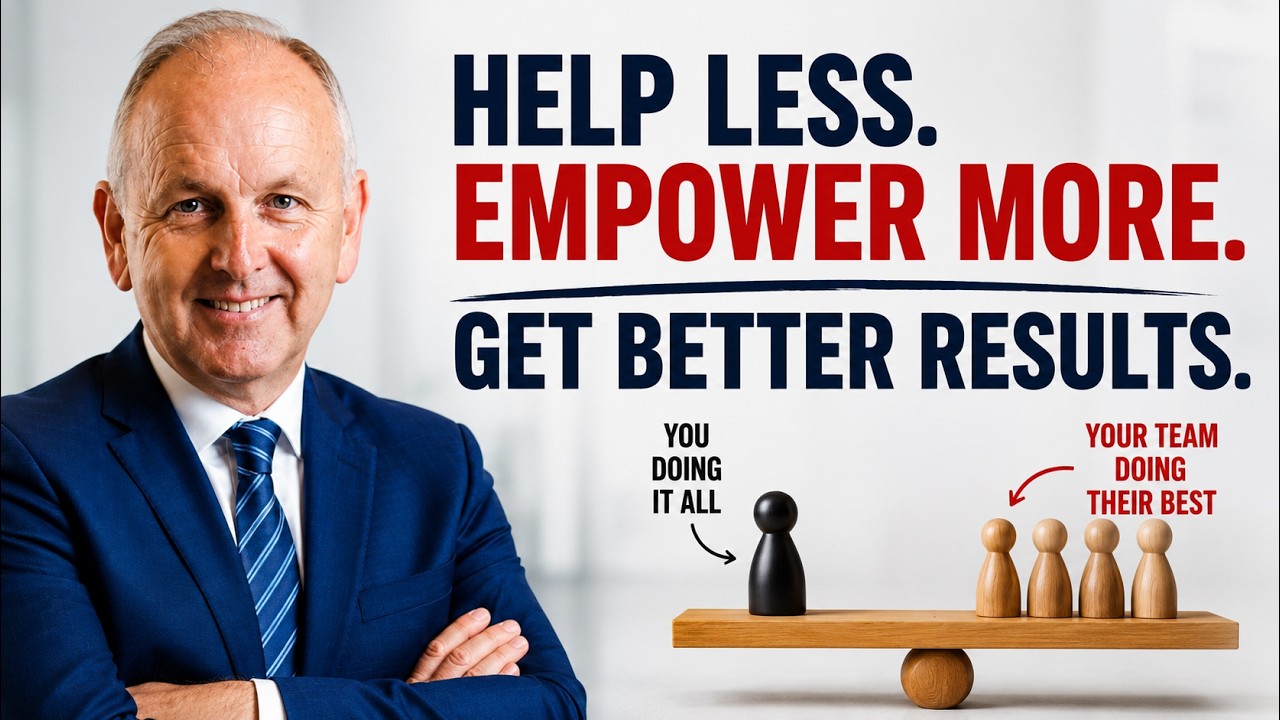
Managers who constantly solve problems for their teams can accidentally make them dependent and burn themselves out. Instead of jumping in, ask questions that help your team find their own answers, and set boundaries that let them build resilience and accountability.
Chapters
As a leader, being socially responsible is one of your greatest strengths until it perhaps becomes your biggest trap. You care deeply about your team, you want to contribute, you're often the first to step in, guide, support, and say, "Leave it with me, I'll sort it out," or "What do you need from me?" to be genuinely helpful. And in many ways, that is what can make you such a valuable human-centered leader. But if we press pause for just a moment, because there's an uncomfortable truth to consider. High social responsibility is a double-edged sword. In the EQI 2.0 model of emotional intelligence, social responsibility refers to your desire and willingness, perhaps even eagerness, to contribute to a wider group, to their well-being, to the contribution that they make, and to be of service, to do the right thing for the greater good. It sounds noble, and it is noble. But there is a risk that comes with this. When it's dialed up too high, you can risk becoming everyone's gatepost to lean on, the fixer, the rescuer, the default go-to person for every emotional wobble, indecision, or difficult situation or dropped ball that sometimes happens. And if you're not careful, you can unintentionally create a culture where your team gets very comfortable leaning on you and not learning for themselves or taking personal responsibility for decisions that are theirs to make and actions that theirs to actually take within their role. Here's what happens over time. You become overstretched. Your own priorities slide. You begin to perhaps feel emotionally exhausted but guilty for saying no to any request that's made of you. And even more importantly, your team stops developing the emotional muscle, the resilience, the resourcefulness and accountability that they should be building. Why? Because you keep stepping in and you're always there. It's not that your help is bad, being helpful is good, it's just too constant, too available, too easy to access. Leadership isn't about being everyone's emotional safety net, it's about creating an environment where people feel supported, empowered and encouraged. And you can still do that, but within a boundary. So, What can you do to create more balance for your own social responsibility and support your colleagues? First of all, reflect on your pattern. Are you helping because it's needed, or are you helping because it's your habit? Secondly, start asking instead of solving. Try, "What have you already thought of as a solution?" "What do you suggest to me that would fix this or improve this?" "What do you think needs to happen?" Next, set healthy boundaries. Helping isn't about over-functioning, it's about enabling others to function better. Because while social responsibility is a powerful leadership quality. When unrestrained, it turns you into a crutch. You'll still be the person your team trusts, but now with balance, they'll also grow, contribute, and become more capable because of you, not just comforted by you. Leadership isn't about always giving more. It's about giving wisely and knowing when to step back so others can step forward. Please have a think about where balancing your level of social responsibility may be helpful for you personally, professionally, and those around you and your organization too. It can work wonders.