How To Pay Off Your Home Loan 200% faster
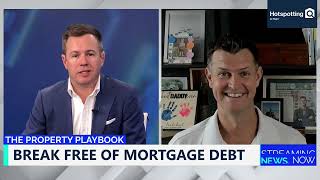
Tim Graham talks with Scott Parry, founder of Crown Money, about strategies to pay off Australian home loans in a fraction of the standard 30 years. Parry covers mortgage management, financial planning, and how to increase borrowing capacity for real estate investment.
For many Australians, owning a home debt free feels like an impossible dream. Banks are designed to keep us in debt for as long as possible. But what if there was a way to break free faster? I'm Tim Graham and the property playbook starts now. Today I'm joined by Scott Parry, founder of Crown Money. He's spent the last 20 years helping Australians pay off their home loans in under 15 years. And Scott currently closes off a home loan for one of his customers and every 23 days. Scott, thank you so much for joining us.
Hey, how are you, Tim?
Good, mate. Thanks so much for being here today. So, Scott, why don't we start. Tell us, how did you start Crown Money?
I think business is pretty simple. It's really about asking people what they want and finding a way to give it to them. So When I was 20 years of age, I just went around and asked 100 Australians what they wanted to do financially, what was the most important goal for them. And nine in 10 just said, I just want to pay my house off. I just want to own my own home. When I dug a little bit deeper, really came back down to financial security. And if you own your own home, no matter what happens to you, if you get sick, injured, lose your job, you're not going to lose that family home. So I've just basically spent the last 20 years crafting financial strategies to ensure that that client is debt free well before retirement and on average in 15 years compared to the 30 year standard term.
Yeah, well, I mean, just think about how much money we save if we can pay off a mortgage in half the amount of time. So. So as I understand, every 23 days you're making a phone call to a customer and saying, guys, you're debt free, let's rip up the mortgage. That's got to be a pretty good feeling.
Absolutely. I honestly still pinch myself. It's the best part of my job, sitting across the family and saying, you now are free from mortgage prison. Every month, everyone reacts differently. Some people start crying happy tears, some people don't believe me, some people want me to check the numbers. The overarching feeling is that this client is now got a pay rise of whatever their mortgage repayment was, let's call it $3,500 per month. And I've got a three and a half thousand dollars per month net pay rise. And what that does for that family is unbelievable.
Yeah. So let's talk about, you know, why, why does it take 30 years to pay off a mortgage in the first place? What are some of the biggest traps that people find themselves in, well, you.
Got to take a step back and think, are the banks really after your best interest or their own? And so they design loans to keep you in debt for as long as possible. That's their financial incentive. The longer in debt, the more interest you pay. And so what they do is they front end load these 30 year principal interest loans with the interest up front. And so for the first three to five years, 85 cents in every dollar that you're paying, the bank doesn't go off the principal and goes in interest. And so very unfortunately, clients are then trying to chase the cheapest rate. They'll refinance back to the start of another 30 year loan every three years. And thinking a cheaper rate is going to find them a cheaper mortgage, when in actual fact it's more expensive because they've just extended the loan term.
Yeah, I suppose for many homeowners, they think about refinancing to a lower interest rate is the best way to save money. But you'd probably argue that it's actually keeping them in debt way longer.
Absolutely. That's why six in 10 Australians are retiring with a mortgage, because they've just spent the last decade or two refinancing every three years to find a cheaper rate because that was giving them a cheaper repayment. Told by the banks that that's a cheaper loan. But everyone's looking at the wrong number. You're looking at the rates and I want you to start looking at the loan term and the total interest paid. That is the number one most important number. The shortest term is the cheapest loan, not necessarily one with the cheapest rate.
All right, well, let's start talking about your system. It obviously helps a homeowner pay off their mortgage in under 15 years. So what are some of the strategy used to make this possible?
First and foremost, we've got to do the exact opposite to what the banks are telling us to do. And obviously the banks want us in debt. So they're telling us to bank our income into a savings account or an offset account and then make a monthly, fortnightly, weekly payment towards a mortgage. We need to flood that mortgage with as much principal as possible. And there's no better way than getting every single dollar you earn to come directly off the principal and offset the interest. Then we obviously coach our clients to make sure that they're optimizing their income. We're segmenting it so they know it's in the right at the right time. And then we automate all their money. And as soon as we put the automation in place, the amount of stress that's come off that family shoulders don't have to worry about bills anymore. They can just do what they do best, which is earn money and spend and we take care of the rest.
Yeah, right. I mean, I mean, for, you know, for many years, we've sort of been told that offset accounts are good, credit cards are good if you can use them. Well, are you suggesting that we cut up the credit cards?
Always. I've got a little fetish. I love chopping up credit cards. I think I'm Australia's number one plastic surgeon. With the amount of credit cards that I've chopped up, it's the number one thing that we can do because credit cards encourage unconscious spending. And what I mean by that is, anytime I see a client with a $10,000 credit card balance or a $20,000 credit card balance, that's them putting their hand up and said, I've spent $20,000 more than what I've earned. And that's what the credit cards are there. They want you to spend more money than what you're earning. And we know if you're spending more than what you're earning, you're going to be in trouble regardless what strategy you're using.
Yeah. I mean, obviously for credit cards, everyone was interested in the points, but those, you know, the point systems that they have just aren't used to be. Scott.
No, I mean, back in the anset days, they were pretty right. But these days, I mean, you've got to spend $300,000 to get a free kettle. So they've watered them down tremendously. There's not a huge amount of value. And there are even Visa debit cards now that actually give you frequent flower points for just spending your own cash.
Okay. Well, I mean, one of the biggest financial challenges for any homeowner is managing cash flow and, I suppose, avoiding debt. So what are some of the biggest tips that you've got for maintaining financial discipline?
I think the key is having a system or a plan in place. No one's got a plan. And what does that mean? You're on a bank's plan. And if you're on a bank's plan, it's not going to work out too well for you, but very well for the bank there. So first and foremost, you want to separate your income from your living expenses. That's critical because we as humans will spend what we have direct access to. You put $2,000 into my account. I'm going to spend $2,000. And so by giving yourself a set amount of money to cover your food, fuel, fun. Make sure every dollar you've got working for you off the principle of your loan and then you've got your income going into that, but your living expenses are into a separate account. Gives you clarity. And then tracking and measuring. We all know if you want to lose weight, you need a set of scales even like as simple as counting your own steps. I know if you are counting your own steps, you're going to be conscious about taking more steps. And so we measure everyone's savings rate. I think not enough people do that. Like what percentage of your income do you keep? That's the most important number what you earn is. So we measure everyone's savings rate, the surplus cash flow position, the equity they create in their home every single month. But the most important number is your debt free date. And to this day I've never met anyone who knows that debt free date when I've asked them. But is the most important day because that is where you're free from mortgage prison. And so we're consistently weighing people in, tracking them, measuring them to make sure that they know they're on track to hit that 12 year goal or 15 year goal and free from mortgage prison. And then they get that $3,500 a month net pay rise.
Well, so from what I understand, after doing a session with you and your team, you can literally at the end of that session say this will be the date that I will almost guarantee that you'll be debt free. Is that accurate?
Yeah. We sit down, we run full projections, cash flow scenarios and we say based on all these projections, we can have you debt free in 2040, for example. And this is the day and we work that plan and every month we're on, we're graphing that to that date of 2040. So there's milestones, check ins and we're always making sure that if we are ahead of the plan. Great. That you can start to ease up a bit. Take the family a few more holidays, which we're all about is experiences. And then from there, if things aren't doing so well, we've got strategies on how can we help reduce your fixed expenses. So we audit all of our clients fixed bills like gas, electricity, broadband health insurance. How can we drop those expenses down? We've set up group buying discounts with major shops such as Coles, Woolworths, Amazon, Uber, just for our clients to help reduce their everyday expenses in this cost of living crisis. That creates more surplus. That surplus is paid off the principal and accelerates that debt free day.
Yeah. Wow. I've got to say, it's. I think most people know what to do when they go to a gym, but the reason we have personal trainers is it holds us accountable. You sound like a personal trainer for finances.
100%. We definitely use that analogy, saying like, just because you got a gym membership doesn't mean you're going to get abs. But if you got a gym membership with a personal trainer, with a nutritionist, with a psychologist and a strength and conditioning coach, you got a pretty good chance of getting that result. So that's what we bring to the table. We say to our sort of clients, we're like your family cfo, where you guys are the CEO of your own family and we come in and just run all the money for you guys, measure everything, track everything and make sure that you're hitting your goals. And most importantly, you've got some progress to show for all the hard work you've been doing. Because people, they can't really work too much harder than what they're working. And so what that means they've got to optimize the money that they are earning, get it working for them, put a plan in place, and then we've got a fantastic result.
Yeah, right. So Scott, obviously you're here on the property playbook, so we want to talk about real estate as well. How does all of this tie into the investment plan? You know, obviously I would think if I'm paying down debt on my own or occupied, that's got to help increase my borrowing capacity and maybe that gives me an opportunity to buy more real estate. Would that be accurate?
Absolutely. That's our superpower, is we've got one of the most generous borrowing capacities in Australia with our funding lines. But more importantly, because we're accelerating the debt reduction and our clients are paying their houses off 200% faster, that means their own occupied debt with their bad debt is lower. That means their borrowing capacity is higher and it fast tracks that next property purchase. And so we work with a lot of companies that they're trying to help their clients build portfolios. The mortgage is the biggest hurdle to that cash flow wise as well as borrowing capacity wise, we start to eliminate that mortgage and then all of a sudden we freed up the borrowing capacity, we freed up the equity and then we can run some debt recycling to turn that bad debt into good debt.
Okay. And if you're in a position where you've got the ability to Borrow to borrow to buy another property, Would you suggest that you do that or would you continue focusing on the owner occupier? Get that down first before investing?
That's an awesome question. I just seen over my last 20 years of doing this that if you are waiting to be buying that investment property until you paid your house off, I think you're going to miss a lot of growth, a lot of opportunities. And so for us, what we're really big on is giving our clients borrowing capacities. And what they do with that is entirely up to them. But it's always good. Clients want to know, what can I do, when can I do it? And so from there, sitting down with experts like hotspotting say, okay, this is my borrowing capacity, what would you do? If you or me with this borrowing capacity, where would you buy and why? And so that's the information that they need to then have the comfort that they're going to make the right decision. The reason why a lot of people don't push that button because they just have the fear of making a mistake. And so they know the mortgage pay down strategy is safe and secure. It's just mass income minus expenses minus interest equals debt reduction. Whereas the whole property investment has big question marks about will it grow, what's the cash flow scenario? So because we're giving clients that data, that peace of mind, then they have the confidence to move forward well before they pay the house off. And as a result of that, they're starting to grow their portfolio and that means that they're going to be in a much stronger position come retirement.
Very good. Well, Scott, finally, I suppose for anybody who wants to take control of their mortgage and fast track their way to financial freedom, where should they start? And I'm also curious to know, with your services, do you have a fee for service or how does it work?
Yeah, we charge an implementation fee. We do a full financial game planning strategy for all our clients, we do all the cash flow projections and then we say, okay, based on what you're currently doing, this is where we're going to be able to get you. And as a result of that, we look at an Apple vs Apple comparison with their current loan structure and how they're managing their current cash flow. And we always say to clients, if we can't outperform what you're doing by yourself in the first 12 months, we refund all the implementation fee. We only charge a once off fee which is put on top of the loan amount. We're not a big believer in ongoing fees. We're just there to try and help clients pay off their debt as fast as possible. We implement everything and then work with every client every month until they pay the house off.
That sounds like an incredible service. Scott Parry of Crown Money, thank you so much for joining us. For anyone who'd like to reach out with Scott and connect with his team, it's www.crowdmoney.com. thanks again, Scott.
See you, Tim.
That's the play for today. This program has been brought to you by hotspotting.com this is ticker, and we'll be right back.
You're watching Ticker.
We'll have more in just a few minutes.