I’m 50, Still Owe $700K on My Home - What Should I Do Now?
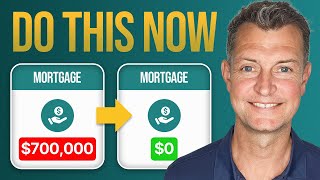
A 50-year-old with $700K left on their mortgage gets advice on paying it off before retirement. The speaker covers tracking finances, boosting income, automating payments, and finding accountability to make it happen.
You're in your 50s, you've got a massive mortgage of $700,000 and you're looking down the barrel of retirement with a home loan. You're not alone. More than six in 10 Australians at the moment are retiring with a mortgage. And that's because they haven't put the plans in place previously to make sure they retire debt free. So this is based on 23 years of data, results and actually helping clients own their home. I'm very privileged where every 28 days I get to sit with the client and say, you're debt free, you own your own. I'm very privileged where every 28 days I get to sit with a client and say, you're debt free, you own your own home today. What that does for them and their family is phenomenal. They've all of a sudden got all their income back in the hot little hand where it belongs to put towards lifestyle experiences, family and friends, or even more investments. So this is something that I have seen before. I have helped many, many people in your situation get out of this. But the most important part is to take action and implement because the end of the day, if you keep doing what you're doing, you're probably going to get the same result. And unfortunately for banks, brokers, that's the name of the game. They want to profit from your laziness. And when you're resetting the loan term every three years to find a cheaper rate, they're getting paid again and you're stuck in a much longer and more expensive loan. So you're in your 50s, you want to get on top of your mortgage and make sure you're actually retiring debt free. The first thing you need to implement is to make sure that you've got some tracking and measuring in place. Now, knowing you, you probably don't know what your surplus cash flow position is, you probably don't know your savings rate or your net worth, but you do know your body weight. And so this is really just about applying that same strategy. It's like, well, we track our body weight, we track our steps that we're taking every day while we're not tracking our money. And so like business owners, we use software such as Xero to track their business financials. And we do something similar where we, we've got wealth tracking software which we implement for you and it tracks all those sort of things, your savings rate, your debt free date, what day we actually own your home. Seeing that move based on your expenses, your net worth, critical number, you know, it's Your financial body weight. So once we start tracking, measuring everything, all of a sudden we know what levers to pull. More importantly, how can we help you save more money as well as make more money? So when we're doing both of those things, we're reducing the debt and increasing our asset base at the same time. You're in a position where you've got a much bigger retirement nest egg and the mortgage is evaporating before your very eyes. I mean we've got clients, our average, I mean paying 456% more off their home loan in the first 90 days. Same income, same loan amount, a 456% increase in the first 90 days. And so that's the power of tracking and measuring everything. Once you've got the tracking, measuring in place, you then want to start optimizing your income. And what that really comes back down to is getting every dollar deposited into the loan account. Separating your income from your living expenses, that's critical. Just to give that clarity as to where you're at at the end of each and every week, at the end of each and every month. And then the tracking measuring just keeps us on track to make sure we are hitting our goals and our milestones to have that home paid off before retirement. So that there the income is your most powerful wealth building tool. A lot of you sitting there with it sitting in an offset account, maybe even just in your savings account, it's not working for you off the principal. And so what we want to do is reduce principal and offset interest. And the best way to do that is to have that income deposited directly into the loan account. Then from there we want to make sure that all of your bills are automated. Our clients are lucky enough where all of their expenses are direct debiting out of their home loan account. So that covers gas, electricity, phone bill, insurances, all their bills automated, don't have to worry about money anymore, so they can worry about what they're great at, which is earning and spending. So getting that income optimized is critical. Separating your income from your living expenses, the segmentation of that, just making sure that it gives you that clarity and that guilt free spending. And then from there you really want to be making sure that you in a position where ideally you can automate everything. And so once everything's automated, the beautiful part about that is you set up once, you never have to worry about it or think about it again. It's happening in the background. So the automation is the key to your time. You're so busy with Family and friends and work don't have time to be looking at the money every week or every fortnight every month. And probably why you're in this position. We just haven't had the time, prioritized or dedicated to automate a system that just happens without you having to think about it or put any time, effort or energy towards it. So we've got the automation in place, we've got the tracking measuring place, we're optimizing our income. What we then want to start looking at is how do we actually get to a point where we're on focused flooding the principal with your income and so offset accounts sitting there. They're offsetting interest, which is cute, but you need to flood the principal with your income so you can benefit from that reverse compound interest. And what I mean by that is every single month, as your debt's coming down that home loan, so to the interest repayment. And the faster that debt comes down in the first few years, the more aggressively you attack it, the quicker that interest comes down, the more money coming off the principal each and every month. And this snowball effect starts to really compound. And so, I mean, we've got clients paying $100,000 off their home loan in one year because they're at the very end of that snowball, that hill where it's just been rolling and rolling and rolling. They've got such a little interest cost to pay each and every month, the rest of their income can sit off that principal and start to get a hundred thousand dollars a year in debt reduction. Imagine paying 100,000 a year off your home loan in just one year. These are the results that our clients getting on this home ownership plan. Then once you've got all that in place, you want to start looking at accountability. Who are you being accountable to? We all know we perform better when we have an accountability partner. That is you go to the gym, you have a personal trainer, you're going to get fitter. And so we apply that same strategy to your money. Like we keep you accountable. Obviously the tracking measuring is like you weighing yourself in. And then from there we're also saying these are the goals we need to hit by this date. This is a set amount of money by this date. So time dated and specific, so you know exactly what you're aiming at. Once we get all that in place, you have got a full plan laid out for you. These are the metrics, these are the milestones. This is what we need to be hitting to have that mortgage down and out by the time you retire. So accountability is huge. And if you obviously want to get the best results, you've got to be accountable to someone because we are our own worst enemy. And so I'm the same. You know, I put X amount of money into my bank account every single week or fortnight a month. I'm going to spend that because I know no one's looking. All of a sudden, I know someone's weighing me in. I know that I'm being looked at, I'm being held accountable. I'm going to be conscious. And that shifts my behavior, my spending behavior shifts because I'm now consciously spending as opposed unconsciously spending at the moment. If you're using a credit card, we need to wipe the credit card out, go onto a cash diet. Why? Because we spend unconsciously on a credit card. If I ever see a client, I've seen so many of them over the years who has got a 10,000 or a $20,000 credit card debt, that's them putting their hand up, saying, I've spent $10,000 more than what I've earned, or I spent $20,000 more than what I've earned. And so credit cards, debt cards, they're financial quicksands. We just don't need them. We've got emergency funds and we've got buffers in place so we're financially stable that we don't need to be leaning on a credit card there. So cash diet is the way to go and making sure that that accountability is there because that's then changing the way that we spend, because we know we're being watched, we know we're being held accountable and tracked and measured. And so just that shift, that behavioral psychology shift of being aware that you are being tracked and measured for your own good to get out of your debt, obviously. But we just perform better when we're being held accountable. Financial coaching is critical. Like if you're not getting outside help, you only know what you know, and there's so much you don't. I I've been doing this for 23 years. I'm still learning every single day new strategies, new ways of doing things like how to enhance your borrowing capacity, how to actually make sure that your tax returns are paid, every single pay for any investments that you've got, how to obviously get every single dollar you've got moving forward and creating and compounding towards a much greater net worth there. So that financial coaching, what we're really, really good at is helping reduce fixed costs for our clients with group buying, discounts et CETERA for Coles, worse, all those sort of places that we're spending regularly, but also how to increase our asset base. And so what that really does is when we're reducing debt, reducing our liabilities, we're increasing our assets, all of a sudden you get that delta and you in a position where you're in a much stronger financial situation than if you were. If you're trying to go it yourself. You know what I mean? Like, you look at people who are really good at anything, they've got four or five coaches. I mean, if you want to get really good at money, at least get one coach. Doesn't have to be us. It's just someone who's in a financial position that you'd like to be in and getting advice from them. What would you be doing to optimize my situation? And so that there is really where the coaching comes in on basically what you can be doing each and every single month to optimize your financial life. Like, do you have a will set up? Do you have asset protection in place? Do you have a financial plan in place? Do you know how much soup are you going to retire on? Do you know exactly what property to buy? Why, where and when? What areas are going to be the best growth over the next 12 months? Do you have exact amount that property may cost you if you would invest in property per week after tax, do you know what your capital gains tax position will be after five years or 10 years if you were to sell that property? So this is what a coach does. It just gives you all this data and information and then tells you how to optimize it so it's actually working for you and fast tracks your growth. You know, I mean like there's no shortcuts, but if you don't make mistakes, it makes the path a lot easier, a lot quicker to get through there. So those are some of the charges you need to be doing right here, right now to make sure that you are going to retire debt free. Don't continue to keep doing exactly what you're doing, which is I'm on the offset account, I'm paying weekly fortnightly payments. It's not moving the needle. I'm getting a cheaper rate. It doesn't move the needle. You've tried that. If getting a cheaper rate worked, how come you didn't pay your house off during COVID when the rates were 2%? You had no entertainment expenses. Have you ever thought of that? The rate isn't the factor here. It's a long term and the Shortest term loan is the cheapest. And as a result of that, the quicker you're in debt, the quicker you got all your income back because you don't have a mortgage pay every single month. That's the game. And so if you want to get a 3,4000 dollars a month net pay rise, pay your house off, it's like getting a second job. Everything becomes a lot more enjoyable and easy there. So those are the key strategies you need to start implementing to make sure you are retiring debt free. And we don't have the bank just taxing our income by 70, 80% of the repayments that you're making. You know, I mean like 80% of every dollar you're paying towards the bank doesn't go where you want it, which is off the principal. It's going to in interest. But then you keep resetting the loan term every three years trying to find a cheaper rate. It's like someone trying to finish a marathon and going back to the start line every 3km. Like you're not finishing the marathon, do something different. What you're currently doing isn't working. And so these are the strategies which we just need to make sure that we're on top of. I'm just going to recap again. Okay, so we need to make sure we've got tracking, measuring in place because what gets measured, gets managed and we know how to improve it. Then obviously you want to make sure that your income is optimized. You want to make sure everything in your financial life is automated, whether that be dollar cost averaging, salary sacrificing, the super, making sure that all your bills are automatically coming out of your home loan. Then from there you want to make sure that you have accountability. We've talked about the benefit of a personal trainer at a gym and why you get fitter. Once you've got the accountability in place, then you're in a position where you bundle all that together and all of a sudden things start to move a little faster than what they currently are. So that's what I would do if I was in my 50s with a $700,000 mortgage and I wanted to make sure I was debt free before I retired.