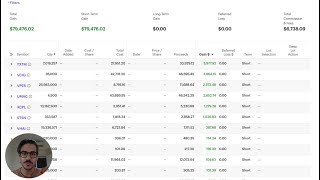
A trading journal forces you to document every trade and review what actually happened versus what you planned. The speaker provides a free template and argues that writing down your rationale, position size, and results is how you stop fooling yourself and spot what's actually working.
Chapters
Human nature tends to highlight the positive and downplay the negative. As traders and investors, especially beginners, it's crucial to document every action you take and why you take it. And the best way to do that is by utilizing a trading journal, especially if you find yourself holding one successful position while ignoring multiple bad ones. That's where the trading journal comes into play. By recording all of our trades, the good and the bad ones, we create a record of our trading activity. In the journal, it's not only about the technical data, it's about capturing our thought and reasoning behind going into that trade. So how can you keep track on your trades and learn from your mistakes? Down below in the description, you can find a link to a free trading journal I created. It's free for you to use and will help you drastically. Comment down below if you use the journal. If you find yourself not using a digital journal like me, I highly recommend using a physical one. Either way, the best way to use a trading journal is to write down what stock you take, how much you take, why why you take it, and of course your plan. Then once that trade finishes, you can check if you managed to stick to your plan or not. If you didn't, well, you have a problem and you have a lot of things to work on. And if you did, that's good. Even if you took a loss, you need to understand that investing and trading is more about discipline than everything else. And if your mind lacks that, well, you're in trouble, mate. That's