When two companies merge into one, both usually benefit and their stocks often rise. Reverse mergers let private companies go public fast and cheap by buying a shell company, creating huge price moves on OTC markets.
Chapters
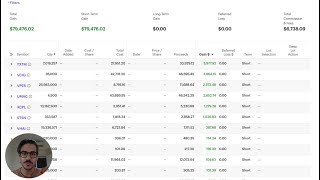
A merger. A merger is the fusion of two companies into one. That means two different entities, let's say X and Y, merge into one and form company T. Unlike a buyout, when one company buys the other, it's more like a hand-to-hand situation and not like a buy a car situation. And before we actually dive deeper, it's important to understand the concept of a merger, but it's not that important to understand why different mergers occur and the different scenarios for a merger. You just need to know that merger usually causes the stock price to go up. There are many types of merger and why companies do merger, but honestly, merger always occurs for the benefit of both companies. After a merger, the stock price of the involved companies change and change a lot. This is heavily influenced by market potential and expectation. It also is determined by the share structure and the new share structure and overall market sentiment. Understanding this can lead you to make a lot of money from merger plays, as these 5 factors play a heavy role in the price of the stock. But there is one type of merger you must know, and it's not other than the reverse merger. A reverse merger is basically another way for one company to become public. Unlike the IPO, which is a process which takes a lot of time and a lot of money, this is more of a shorter solution, and it basically happens when a private company just buys enough shares from a public company and swoops in, kind of like a hostile takeover. Now usually these publicly traded companies are shell companies, and that's the reason they're there. A shell company basically means the company has minimal to no recent activity. There is no IP, there is nothing in the company, hence it's called a shell. The main benefit of the reverse merger, unlike the IPO, is the time. An IPO can take several months to several years, while a reverse merger can occur within weeks or months. And let's not forget to mention it's a lot cheaper. So what's the downside of the reverse merger? In highly respected stock exchanges like the New York Stock Exchange or the NASDAQ, they oftentimes are being perceived as cheap. But in other stock exchanges like the OTC, this is actually the biggest catalyst a company can have, oftentimes causing the stock in the OTC to pump hundreds if not thousands of percent, as you can see here. So in summary, if you know about these mergers and reverse mergers, you can make a lot of money, especially in the OTC. And for a reverse merger, it's cheaper, takes less time, but it's considered less prestige unless you are in the OTC.