#010 - Power of Transformation ft. Shaka Senghor
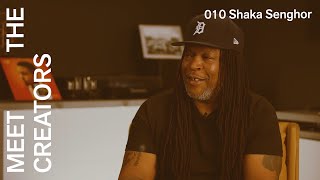
This is a Meet the Creators podcast episode interviewing Shaka Senghor about his transformation from long-term incarceration to New York Times bestselling author, producer, tech executive, and advocate. Key themes: journaling and writing begun in solitary confinement, deliberate manifestation (Oprah, bestseller goals), the power of storytelling rooted in Detroit culture, mentorship/cabinet relationships, and his current creative and corporate work.
Welcome to Meet the Creators, a podcast dedicated to the art of business and the business of art. Tune in to better understand the value of creative minds in marketing and business as we build the bridge between business and creative artists.
Hey, this is Jordan. I'm super excited to present our next guest, Shaka Senghor. Our mutual friend Van Jones introduced us and told me, watch out for this guy. He's making big moves. And that's indeed what he's done. A New York Times bestselling author, motivational speaker, advisor, advocate, and father. Check out this new episode of Meet the Creators to see what else Shaka's been cooking up. We're so excited to have you on today for Meet the Creators. We go way back.
I know, right? It's like throw back out in this joint.
I know.
Feels good be here, though. Super excited to be in conversation with you.
For people who don't know who is Shaka Senghor?
That's such a loaded question. I often get asked, who is Shaka Senghor? And I think what tends to happen is people want me to kind of focus on one area as a definitive thing, but the reality is I'm a very complex human being. And, you know, most notably, the thing that means probably more to me than most of the things that people know about me is just being a dad. So I'm a dad. I am a creator, writer, producer. I am a tech executive. So I get a chance to navigate the world of technology, and I'm just a human being on a dope journey is what I tend to kind of call it.
I have a cool little backstory for people that don't know, but we actually met through. Through Van Jones, and we went out to Detroit to just film something, some other thing. But we. I ended up taking the photo for your first New York Times bestseller, which is right here.
Can show. You know, it's so interesting, like, when I. When I look at that cover and I think about the process of actually, you know, that book is going on to do incredible things. New York Times bestseller a few times over. It's wild because six years straight, every day for six years, somebody has sent me a message about the impact that this book has had on their life. But to go back to that moment when we were trying to figure out what the COVID would look like, I just started sending photos, and this photo happened to be one, and the publishers was like, that is the photo. So super excited that we're able to share that moment. It's a book now that's touched more hands than, you know, either of us probably would have imagined. Globally, the book is embedded in multiple institutions, universities, and so it's just mind blowing, I think, about how many people has read that book and get a chance to see that incredible photo you took.
It's amazing because I remember one of our first conversations. You were talking about your aspirations of becoming a New York Times bestseller, and just fast forward. Just watching your journey evolve and see you accomplish all these amazing things, and it feels like you're still just getting started has been incredible to witness.
Yeah. Well, thank you so much for bringing it up. I think a lot of people don't really understand my journey. They think it was kind of like one of these things where I just popped up out of nowhere and was successful. But there's many, many layers to my journey. And I don't even know if you know this story, but I really want to take you back to when I first started writing. So my writing of books started as a result of me writing a journal. And I was in solitary confinement at the time. And during that particular stretch, I actually ended up being in solitary confinement for four and a half years straight. But while I was on that journey, I came to this point in my life where I began to question, like, how did my life end up there? You know, I grew up, I wanted to be a doctor. I wanted to help people. I wanted to be a healer in some ways, because some of my best engagement had came as a result of, you know, being in the care of a doctor. And I thought I wanted to be able to give that gift to people. And so when I was in solitary, I began to just kind of examine my life. I was reading philosophy, came across this quote by Socrates that said, the unexamined life isn't worth living. And I was like, wow, first of all, what does that mean? But I began to ponder on that, and I started journaling. And I realized through my journaling that I had never accomplished anything to completion. I had started many things, but never really finished anything. And that bothered me. You know, I'm like, how do you live and experience life on Earth without some testament that you've actually been here? And so I started journaling and asking these very deep questions of, like, how did my life end up in this space? Once I got through that process, I was like, you know, if I'm going to turn my life around, if I'm going to live outside the walls of prison, I need to have a tangible representation of that transformation. And so that's when I set this Goal. It was a crazy, ridiculous goal to write my first book in 30 days. And, you know, I didn't have a typewriter. I didn't have a laptop or anything of that nature. I was handwritten. I didn't even have, like, an old school ink pen, because in solitary, they don't give you, like, real ink pens. They give you this very flimsy pen. And so I took that and I rolled it up in some paper, and, you know, I had a little experience rolling things up. So it's like, you know, But I rolled it up and I wrote for 30 days straight. And I finished my first book. And I remember after I finished it, two things popped in mind. One was, a book isn't a book until somebody else reads it. And the other is, what do I want to do with this book? And so the first thing is, I laid on the floor of my cell and I hollered up under the door to the guys on the cell block, and I was like, yo, anybody want to read my book? And a couple of guys like, man, nobody want to read your book. This ain't Oprah's book club. At first I got upset because I'm like, at this time, I'm like, you know, I'm a boss in the joint, you know, but we're in solitary, so what can I do, right? And. But then the thing that happened is it popped in my mind, what do I want to happen with my work? And so I wrote that down as a goal. Like, you know what? No, that's not Oprah's book club. But at the top of the list of people I want to read my work, I wrote down Oprah Winfrey. And then I was like, well, what else do I want to happen? I want to be a New York Times bestseller. So I wrote it down, and I wrote that down in my journal. And it's something that I always go back to today. No matter what I'm going through in life, no matter how tough things are, I know that I am a master manifester. And I know that writing it down is the beginning stages of making a thing real. And so now when I see New York Times bestseller, I kind of have this kind of inside wink to myself, like I told you, you know, it's kind of my conversation with myself, like, I told you I was gonna make that happen. And so, you know, that part of the journey is something special. You know, anytime I see my books in the hands of readers or on shelves in classrooms, I always go back to my beginning story of when I first began to write.
That's beautiful. There's so much to unpack there. Let's start with the power that you had to visualize being a part of Oprah's book club and a New York Times bestseller. Now, that doesn't happen overnight or by chance. What was your process? How did you stay inspired? And you're doing this in solitary confinement. And then obviously it's been a long journey after. But yeah, what was high level? What was the journey to kind of get there for you?
Yeah, absolutely. You know, one of my. One of my favorite quotes from one of my favorite rappers, Big Sean, as he said, you know, 10 years must have been an overnight success. And, you know, he. When he. When he says that line, you know what it does? It really speaks to the reality of what people think happens. And so I would love to, like, kind of walk you on that journey of, like, how did it happen? You know, so for me, you know, when I was in prison, I was fortunate to meet some incredible mentors. Some of the most brilliant, brilliant, engaging men I've ever encountered. And they guided me to books. And they started off with fiction books. Iceberg Slim, Pym, Donald Goins, Dolphin, like, these very hood books. And then that led me to Malcolm. And when I read Malcolm X's autobiography, the thing that stood out to me more than his advocacy was his intelligence. Most of the time when you talk about Malcolm X, people think about black nationalists. This man was fighting for human and civil rights. But what really sparked me was his intelligence and his curiosity. And so I began to just read all type of books. You know, I was reading philosophy and world history and, you know, all these things. And there was one particular book, as a man thinketh, by this author named James Allen, that I began to read. And he talked about how, you know, our minds and our spirits are like gardening. And we basically reap what we sow and what we cultivate and what we nurture. And the idea was that thoughts are things and thoughts manifest into our outward outcomes. At first I was like, ah, this is crazy. I didn't think myself into prison. I was trying to figure out ways to get out of prison, but through journaling. As I began to go back, I was like, wow. I actually thought myself into that environment. I created a narrative. After I got shot When I was 17, I said that I would shoot first in conflict. I grew up in a neighborhood where we heard the narrative that you're going to end up dead or in jail. And so all of that became like my subconscious kind of story. And what he talked about in the book that really resonated the most with me is about this idea of the law of attraction. And when I went back and I looked at my journal, I was like, wow. I attracted, you know, the world of prison to become my reality. And I was like, okay, if this is. If this is true, this idea is true, then first of all, what is it that I want? And then how do I attract that into my life? And so the first step for me was after I wrote my first couple of books, I fell into a bout of depression because I realized I had this gift, but I was in an environment where I couldn't give birth to it. So the first thing was like, I need to get out of prison. And, you know, in order to get out of prison, I had to get out of solitary confinement first. And so I was like, okay, I'm gonna test this thing out. Like, this is what I want more than anything. And I wrote the warden a letter. And, you know, it was the first time that the warden ever responded to me. And basically what I proposed to him was this idea that was rooted in philosophy, and it was about, what is the truth? And do you respect and do you honor the truth? And so the way that I set the conversation up was I said, I'm going to tell you a story about who I am and who I've been since I've been in prison. When I came to prison, I had no intention of following the rules, as you can clearly look at from my record. I was like, but I've always been a man of my word. And so when I walked in prison, I told that I wasn't following the rules. And clearly, I'm in solitary confinement. So if nothing else, you know, I'm a man of my word. And if you believe that to be true, then you have to believe everything that I'm about to say after this. And so I told him if he gave me an opportunity to get out of solitary, that I would focus on developing my craft as a writer. I would type up my books, I would figure out a way to get them out into the world and focus on life as a writer after prison. And the warden actually wrote me back, and he said, despite my hesitation and what I have experienced in this environment, somehow your letter is one of the most compelling I've ever read, and I'm going to advocate for you to get out of solitary. And so he began to advocate, and it took another two and a half years for me to get released. Once I got Out. I typed up all the books I had written, and I blindly sent them out to random publishers and people who I thought would publish my work. I still have letters, I have rejection letters where there were, you know, publishers who was like, you know, we're not interested in your work right now, or we have such a backlog of work. And I even wrote Jay Z when he was the president of Def Jam. And I still have this letter. And basically what I said is that, you know, I have an insight into the street culture that you all rap about, but I write it in books and stories. And I think you also started publishing division and put my work out into the world. Right. Of course, I've never heard back from Jay Z, but true to the laws of attraction, I've met Jay Z a couple of times. And so just the idea of, like, magnetizing intentions, they manifest in real ways for me. Right. So I ended up sending these books out, never getting answers back. And then I bought this book on self publishing, and it taught me everything that I needed to know about how to publish a book. And so I saved up money. I hustled on the yard. I saved up the money that my family sent me. They would send me $25, $50, and I just scrounged that money up. And at the time, I was dating my youngest son, Sekou's mom from prison, which is a whole other story. And, you know, and I told her what my dream was, what my vision was, and she was like, I'll help you manifest that. And so I published my first book from prison in 2008. And then I got sued by the prison because they thought that I had got a book deal. The concept of what I was writing seemed so real to them, and the way we were putting it together seemed so real to them. They didn't know that we had started our own company. And so they sued me for the cost of my incarceration, which was about. About a million dollars. You know, clearly I didn't have it, but they sued me nonetheless. And two years later, after three parole board hearings, I got released. And the first thing I did, June 22, 2010, is one day after my 38th birthday when I walked out of prison, was sold a book in the parole board parking lot. And I've been selling books for over 12 years now. Started off self published, and, you know, I eventually began to make my way.
Wow, that's incredible. I knew bits and pieces of it, but to hear it all together, just. It's crazy to see how you start and Then where you're at now, and to kind of go back into the power of storytelling, because I think that's something that I want to learn more about, is not only were you an avid reader that then inspired the writing, but what do you think the importance of storytelling is?
That's a great question. You know, I actually think of life in stories now. You know, at this point in my life, at this point in my career, the thing that I think about as important, and it's one of the reasons I was really, you know, intentional about wanting Oprah to read one of my books, is, you know, stories tell our truths, they tell our lies, they tell our hopes and dreams and nightmares and all the things that make up this beautiful tapestry called humanity. And I think it's important for us to own our stories and for us to be the architects and distributors of our story to the world in a way that honors our humanity. Oftentimes, people are telling our stories, and we're the subject. But, you know, for me, when I was in there reading, you know, I was reading some of the most brilliant writers in the world, you know, and studying them and really understanding, I think, like, you know, Harlem Renaissance, you know, I highly encourage everybody to read those brilliant authors, you know, the, you know, the Gloria Naylors of the world, the, you know, Zora Neale Hurston and Langston Hughes and Claude McKay and Ralph Ellison, because they captured the world as they saw it back then. And. And now, even when you go back and you read their works, you're like, man, they was telling us what was going to happen all along. And I think that's the importance of storytelling is like, we have to honor our history, we have to honor our legacy, but we also have to honor just the moments we're in, the things that are funny to us. I actually started off writing fiction. I have a curious mind. I have an adventurous mind. And I wanted to tell stories that I just didn't see coming from, you know, our environment. You know, stories that were true to people who grew up in places like me. I grew up in the city of Detroit, Eastside, during the height of the crack cocaine era. It's a predominantly black city. You know, when I was growing up, the mayor was black, the chief of police was black. And so I had a very unique experience when I think about the rest of America. And I wanted to tell stories that come from that place. You know, the stories that, you know, I think are important to help people really understand the gift that our city has been to the world. You Think about Detroit. Motown started there. Everybody I know knows at least one Motown song. Techno music started there. A lot of people don't know that story, that history, the current industry. Love it or hate it, the reality is it's one of the biggest, most consistent industries for years. Like, that started in my hometown. And so I just wanted to tell those stories about that rich culture. And, I mean, Detroit has one of the, I think, if not the largest population of Middle Eastern people outside of the Middle East. A lot of people don't know that. You know, I take people to great restaurants when I go home and help them experience, you know, this magical world of, like, the infusion of Middle Eastern food with Detroit soul. You know, it's special. And so I just think it's important for us to own our stories. And especially now, at this point in my life, you know, the things that I'm writing about are things that's relevant, that I often don't see show up in other writings. And so I wanted to be true to that. And I just feel honored to be one of the many storytellers and people that can really talk vastly about what it means to be human.
I love that, and I love how no matter where you are in the world, you're always repping the D. Always.
Yeah. I mean, Detroit is such a special city. It's a tough city. It's a city with so much grit. And when I began to wear my D hat all the time, it was really because I know there's kids back in my community who come from where I come from, where they've dealt with child abuse, they've dealt with a parent being incarcerated, they've dealt with high levels of gun violence and, you know, the lack of resources. You know, one of the devastating things that I experienced walking out of prison was going into a school that was in worse condition than any prison I'd ever been in. And that was the most heartbreaking thing for me when I thought about, you know, when I thought about those kids and how we fail them, you know, as a society where we're investing more in prisons than in schools. And so, you know, I wear the hat for, you know, definitely for my city, but it's more so for those kids, you know, because I want them to see, like, no matter how, you know, many times you fall down in life, if you're willing to get up, you know, if you're willing to start writing a new narrative, not just literally, but figuratively, you know, you can actually win at life, you know, but you gotta do two things. One, you gotta master your thinking, and two, you gotta take all excuses off the table. So when they see me with the D hat, they know what's up for real.
I love it. You got on Oprah's book club. You're also homie with Oprah. You have your New York Times bestseller. What are you working on now? And what's your vision for the future?
Yeah, so what am I working? I mean, I'm working on tons of things now. Just executive produced a documentary on Detroit techno, which I'm super excited about. I'm a producer on the A and E show 60 days in, which was very interesting to, you know, really be thinking about the world of incarceration. And, you know, I'm doing incredible work in the tech industry right now. I am the head of sales and success culture, so I get a chance to work with one of the best sales teams in the world. Our company is called Trip Actions, and we basically handle corporate travel management and expenses. And an all in one solution that's like so fun to sell because I actually use it and it's life changing. Like, I travel effortlessly with ease. I don't have to worry about a whole bunch of rigmarole around receipts and things like that. But what's special about my work there and why it matters is so much more. Work is about stories. Sales is really about what are the stories that you're telling that really helps the person you're selling to understand why your product is the best fit for all the things that they need. And so to be able to do that, to be able to have fun with my colleagues, to take them on these trips around, how do you even insert a story into a conversation casually and authentically? And then how do you do it at extremely high level and at scale? So it's fun, you know, and it kind of gets me out of the world of like my social impact work, which will always be important to me. I'll always do work that speaks to, you know, people who are system impacted, coming home from incarceration, going into the system. I'll always do that work. You know, I always lift that up and support the other incredible leaders in that space. But, you know, there's times where I'm like, I don't want to deal with all that. You know, I want to have fun. I want to do something that stretches my brain, stretches my imagination. You know, One of the things that I reflect on a lot is our CEO, Ariel Cohen. He's also a friend of mine. So, you know, it's really incredible. But something he said to me stuck with me. And he said, you know, shock of the world knows your story and you know, but that's not all of who you are. Like, you're smart, you have insights to share that are valuable. And I think that you can add tremendous value in the corporate world. And, you know, now to be in a space where I've grown in the company, I was originally the head of DEI and I get a chance to do something else, which is fun and, you know, and I'm working with like, I mean, these are world class leaders, these are the best in the industry. Incredible engineers, incredible customer success team. And so to be one of the chosen leaders in that space based on my intelligence, based on my talent, based on my ability to tell the best stories like that, that means a lot and it speaks volumes to the company of our culture. Most people wouldn't hire me. You know, I was convicted of second degree murder. I spent 19 years in prison, seven years in solitary confinement. So not a lot of people would say, hey, we feel comfortable having him in the company, let alone comfortable having him in the company at a very sensitive, you know, part of the company. You know, I'm handling high, we're having high level sales, right. And you know, we're on sales calls with big companies and things of that nature. But one of the things I always love and respect about Ariel and is that he saw me as a full human being and he didn't hold me hostage to something that happened 30 years ago. And, you know, he saw my talent, you know, so that work is incredible. Loving being a dad, that's, you know, it's not really work. It's, you know, it's life, you know, and I'm loving, growing, just, you know, in a relationship. You know, I recently got engaged. That's, you know, super important. Definitely growing me up as a man, you know, and helping me think about how do I want to live like the rest of my life and what does all this stuff mean if you build it and you don't have anybody to share it with. So those are the things I'm excited about. But I do want to go back to Oprah because Oprah actually is the homie in a real way. And I have such a high level of respect. First of all, just, you know, where she comes from, people forget about it. Like she wasn't handed anything. Like this woman works so hard to manifest all that she's manifested, but she's just a great person. When you get a chance to know her. And I can tell you I knew I was going to be on her show at some point in my career. That I did know with certainty, because I believed it and I wrote it down, and I knew I would manifest that and that gravitational pull. But what I didn't know was that our interview would have such a soulful impact on both of us and where we have this connection that's, you know, something that I never would have, you know, thought would have been, like, a real thing. I thought we would do the interview. The interview would go out into the world, and, you know, things great will happen with the book, but there's moments where, you know, I'm fortunate to be in conversation with her. And, you know, we talk about manifestation and visualization and, you know, to be able to do that. And she's sweet and she's kind. You know, she's also tough. You know, she's. Cause she's real. She cuts through all the things. And, you know, a great example is I was, you know, kind of on the fence about moving to LA from Detroit. You know, I didn't want to leave home. You know, my family is there, my friends are there, the culture there is just magical to me, you know? But I knew that I had a purpose that was calling me to be in la. And I remember just kind of going through a list of people who I know are big decision makers. And I sent them all, you know, different texts. And Oprah called me, and she was like, I have one question for you. And she was like, what are you afraid of? And it literally sent chills through my body because I wasn't thinking about fear. And I realized that all of the excuses I was making was rooted in fear. The fear of leaving my family behind, the fear of leaving my friends behind, the fear of what happens if I don't make it, what if I'm not good enough? You know, all the things that subconsciously were there. And I began to tell her these things, you know, and I was like, you know what? I'm afraid to leave my family line. She's like, where are you at right now? And I'm like, I'm actually in the airport getting ready to fly to London. And she was like, you've actually left your friends behind already, right? And she was like, you know, the reality is people who love you, they will always be there. And you'll go back home and it'll be just like old times, but they'll be cheering you on from afar. And she's like, when I go back Home, My friends are still there. We sit on the porch like old times and, you know, sip on whatever we sip on. And that was just kind of like. I don't know if she knows this, but she gave me wings in a way, you know, because I truly do value her opinion and the way that she thinks about life, you know? And so it was just. It's incredible. It's really a deep relationship, and it's not an everyday relationship. It's just. But when we connect and when we vibe, it's always real, you know, it's always just full of this energy that is really special and magical. And it started with manifesting her into my life.
I love how that kind of came full circle for you, how you visualize it, you manifest it. But an important part of most people's journey is also the people that you keep alongside you that you can bounce ideas off of when you're unsure of things or, you know you're going to take a risk. And I feel like that weaves together so beautifully. You manifest it. And then she was the one to help, I'm sure, amongst other people, give you that little push to really go on the ledge and take a leap of faith.
Absolutely. I mean, I have incredible, incredible friends in my life. Incredible people. But there's something different about an Oprah puss.
Yeah. Yeah.
I mean, it's just real. And I mean, like, everybody who's my friends in my life, they know, like, there is just something different. Right. Because, you know, if you watched her career and her life, that she truly is a master manifester and she cuts through all the things. Right. And so, yeah, it's special to have just great people in my life that I can go to. And I go to all of them for different reasons, you know, And I think that's something, as a creator we don't talk often enough about, is the importance of having kind of like your cabinet, you know, you're people that you can count on, you know. Excuse me. One of the things we don't talk enough about as creators is, like, the importance of having your cabinet. People you can count on, people who are going to be so real with you that it might hurt sometime, but it's going to allow you to be the best version of yourself. A great example of that is, you know, one of my other dear friends, Ben Horowitz. It's like my brother, and whenever I'm working on something that's around writing, he's the person I sent it to in that formative stage, I'm Gonna send it to Ben before I send it to Oprah, because I know Ben is going to tell me all the things that I don't want to hear, but all the things that I need to hear. And that's so important to have people in your life that can say, look, I see where you're going with this, but I know you can to hone it in and be a little bit tighter and smarter and all those things. And so I'm just fortunate to have attracted those people into my life. You know, so interesting thing that I've really thought about in the last year or so is all of the incredible people in my life. Like, I attracted them into my life. I didn't go out searching for them. Like, I didn't send over my book. Somebody else gave her my book. I didn't meet Ben by going up to his office and being like, hey, can I take a meeting? Oprah actually shared my story with Ben. And then Ben and his wife Felisa, who's like my sister, they reached out to me. So it's like, really, your life begins to magnetize to you, people you should be in relationship with. And I'm sure it's the same for them. Like, there was a draw for me to be in their lives in a way that we're all connected, you know, and it's really. It's just the beauty of being intentional about what you want to happen in your life.
Totally. What advice would you have for people who are following their dreams, aspiring writers, creators? Because it's not an easy path. It's not like a plug and play kind of thing.
Yeah, no. The path of a creator is lonely at times. It is hell at times, you know, so much self doubt, it's so much uncertainty. You know, Two things that I would say is, one, you have to learn how to affirm yourself for the small things. And what I mean by that is like, you know, when we're in the world of creativity, I believe people who are creative, they have an innate desire to share. And they want people to receive whatever it is that they create if it's a visual piece of art. I imagine as an artist, you're illustrating, you're painting, you're composing, and with the end result in mind is that somebody's going to see this and it's going to cause them to catch their breath. And sometimes we can get so focused on that part of it, we forget about the miracle of being able to bring that into existence. And so what I would say is that self affirmation and acknowledgement and gratitude are the greatest gifts. Like, don't worry about if you get the book right. Did you get that sentence right? Does that sentence feel good to you? Did you discover a new word that you can't wait to share that came from your own research or your own curiosity? Can you paint something that impresses you first? It makes you feel good. It makes you feel like, hey, this is a gift I was given. This is the divine gift. Like, none of this stuff is, is, you know, it's not easy, you know, and then the other thing I would say is don't focus on what other people are doing. You know, what's for you is for you. And you will drive yourself crazy if you get lost into, well, why does this person have what I, what I'm, what I desire at this stage in their life? And I haven't got there yet. The reality is you don't know what that person's journey has been. Right? A lot of people, they look at my work and they like, well, you know, you got the Oprah blessing. Well, ask yourself this. Do you think Oprah just sits up and read things that aren't good? You know what I'm saying? So let's start with, this is actually good enough for her to read, you know, to spend time with. This is one of the busiest women in the world. Do you think she has time to read something that's less than stellar, less than great, less than life changing and thought provoking? So credit what it actually is that I've created and then understand the journey it took me to create that. Right? I've been writing now for, wow. I've been taking writing serious for 23 years now. And so, you know, I didn't get my first success. You know, my book Right My Wrongs debuted on a New York Times bestseller list. I was about to turn 44, you know, so it takes time. You know, I had to go through some things to get where I'm at now, right? And so what I tell people is if you pay attention to your own journey, you know, you gotta kinda put those blinders on like those racehorses and like box out to other people. And it doesn't mean that you don't lean in to get inspired because I'm, I'm inspired by artists, like, of every kind. You know, videographers, cinematographers, painters, you know, editors. Like, if you are artists, like, I'm like, yo, that's crazy how he did that. But I approach it with a spirit of gratitude. And what happens is that Gratitude comes back. You know, other people start to appreciate you as an artist. Like I, you know, my work in criminal justice is incredible. My work in tech is incredible. From a creative standpoint, I am an artist to the core. And so I've been able to have all these just incredible experience with other artists. So I would say those two things are the most important.
I love that. And so hard today because social media is that default to always compare. But you're right, you don't know the other person's journey.
Cool.
Is there anything you would like to share?
Yeah, there's tons of things I like to share and talk to you all day. First of all, I'm happy to be in conversation with you, but kind of continuing on that train of thought, something I just thought about. I don't know if I've ever shared this story publicly or with you, but the idea of, like, attracting into your life. Right. So I'll tell you this last story. 1994, NAS releases Illmatic. And at the time, I was at Michigan Reformatory. So we didn't have access to, like, whatever the music stations were that were playing hip hop. We had to rely on books and magazines. And I was reading Source magazine, had never heard of Nas. Saw that he got five mics. So I read the details of what the album was supposed to been about. I order it on the tape. Back in the day, we didn't have CDs or anything, so I ordered it. Took a few weeks to come, and it finally arrived. I'm laying down on my bunk and I'm listening to what I believe arguably is one of the most cinematic albums of all time. And I get to this song, One Love, and it's this beautiful letter that he's writing to a friend who's incarcerated. And I remember just jumping up off my bunk, like, damn, like, somebody out there is thinking about us, you know? Even though he was writing to his friend, the fact that he wrote it as a song meant that he was thinking about people who were incarcerated. And so I decided to pay homage to the album by getting a tattoo with Ill Matic. And this was before tattoos were really sophisticated in prison. And so I go up and I go into the recreation center, we go into the shoe room, and I let this guy tattoo the words Illmatic on my arm. And then I was like, you should just throw a dog on there, biting through a chain. And it ends up being the worst tattoo ever. But the tattoo meant so much to me because when it would remind me of that song, fast forward, I Meet Ben, who I talked about earlier. And one of the things we have in common is our love for hip hop. And I remember when Felicia first called me, she's like, you know, have you read any of my husband's writings? And I started reading Ben's writings, like, man, this guy really understands. Already understands culture. And she asked me, like, who's your favorite artist? I'm like, nas. And she was like, that's actually one of Ben's friends. And I was like, that's crazy. You know? And so fast forward, I meet Ben, I tell him the story of the tattoo. He calls Nas, and, you know, he's like, hey, you know, tells Nas a little bit of a story, and then he gives me the phone. And so it's like the wildest thing is I'm like talking to Nas and he sounds just like he sounds on the album. And I tell him the story and I just tell him. I was like, you know, oftentimes as artists, you know, and as men, like, it's hard for us to say that we appreciate you from the heart. We'll be like, yo, yo, yo, we love your joint, blah, blah. But it's very superficial because we're not given permission to, you know, talk from our spirits and from our souls. And I just told him, I'm like, you know, this is what that meant while I was incarcerated. You know, fast forward, I meet Nas and we had that first kind of like, awkward exchange, was like, what up? What up? You know, and then we. I meet him again, where we actually pick him up to take him to a concert, to his concert where he's performing. And, you know, I get a chance to be on stage and I'm watching him perform, and it's the most mind blowing thing ever. Especially when he gets to one love. Cause he's like, you know, if you got a love when incarcerated, put your lighters in the air. And the whole crowd just is like, you know, this is how much prison has impacted people. Fast forward. We hang out one day. Me being in Nas, it's one of the best hangout days I've ever had in my life. Because for six hours, we listened to old school hip hop, sip great yak, had just a great, great conversation about culture and music. And what was so interesting is in that moment, it wasn't being the vc, it wasn't Nas the artist, it wasn't shocking the writer. It was just three teenage guys just falling in love with hip hop all over again. And then probably a year or so later, I get this Text from Nas. And he was like, yo, can you write something for this song? And I was like, what the hell is happening right now? I was in my office by myself. We in the middle of COVID And I'm like. I'm like, I don't even know what to do. I'm like, dancing around my office, like, yo, nah, just ask me to write on the song, right? And then I was like, okay, so when do you need it? And he was like, I'm in the studio right now, so, you know, if you can get it to me. I'm like, yo, this is crazy now, right? Cause I'm like, I'm gonna write it. I need to take my time. I need to do other things. But I was like, you know what? Challenge accepted. You know, show up. And so I remember writing this piece, voice recorder. I sent it to him, and he was like, I got it. It's poetry. I'm gonna give it to my producer, and we'll see what happens. And so, you know, I go on about my life, and, you know, of course I'm telling my friends, like, yo, Nas asked me to be on the joint, and I don't hear back. So I'm like, for a while. Like, I didn't hear from him for a while. And so I was like, dang. You know, like, it's the self doubt conversation, right? It's like this thing that we have. His artist was like, man, maybe that wasn't good enough. And then I was like, well, if not Silvia's not good enough, it's not like, just some average Joe being like, that wasn't good enough. So it's cool. It's all good, right? One day, I'm looking up and I see the promotion for the album come out King's disease 2. And I'm like, wow, this is so trippy. Because the color scheme of King's disease 2 is the exact color scheme that we were literally working on as we were putting out my latest book. And so I sent Nas and Note, and I was like, man, it's incredible, you know, to see the album cover. And I was like, you don't believe this? Like, my book cover is similar colors, you know? And he's like, yeah, I can't wait till you hear our song. I was like, what? Like, what the. Like, yo, it actually happened, right? And so I hit Ben, and Ben was like, man, like, yeah. He like, I can't wait for you to hear it. Cause, you know, he had the inside scoop, and then album dropped, and it's Just been such a beautiful journey to see people who are in a whole nother space that is appreciating a different part of my writing story, you know? But none of that would have happened if I wouldn't have had that moment where that song hit me so deeply that I was willing to change my physical being to encapsulate what that mean. And then had I not been able to tell Nas that story where it resonated with him, you know, and then he's read my work, and, you know, he's like, I'm one of his favorite authors. So I'm one of his favorite authors. And Oprah said that my memoir is one of her favorites. So, like, literally, I've already won at life. You know what I mean? But there's many more things to win at.
Something that I learned from you is how much words hold meaning and impact. And so when I'm speaking, I try not to say, like, that's crazy. That is pure magic.
It's magic. Yeah. One of the things I say in the song is believe in the magic of who you are, because what you believe is everything. What someone believes about you is nothing. And I live my life based on that.
That's beautiful. Where can people find you? What are your socials? All that good stuff?
I am easily found up on the Shaka Senguru on every platform, so, yeah, I'm easy to find.
Awesome. Well, thank you so much for taking the time out of your busy day, and I loved this conversation. It's probably my favorite one yet, but thank you.
Oh, well, thank you so much for having me. I mean, as an artist and as a writer and creator, I think these conversations are special and give us an opportunity to talk about things that we really get fired up about. So thank you again. It's truly exciting, and you're part of my creative journey forever. So we're locked in. But thank you so much for having me. Thank you for tuning in to meet the creators. I hope you found value in today's episode. Don't forget to subscribe to our podcast and please share with a friend.
More from Shaka
Joe Rogan podcast Shaka Senghor #shakasenggor #podcast #joerogan #interview #jre #jreclips
Surviving a Shooting at 17 Joe Rogan X Shaka Senghor | Joe Rogan Podcast | #shorts