Exploring Inner Worlds: Shaka Senghor on Dignity and Truth
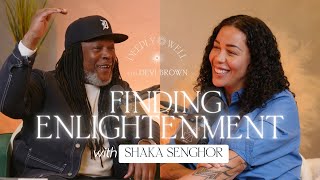
Shaka Senghor spent 19 years in prison, including seven years in solitary confinement, before becoming an author and advocate. He describes how reading, writing, and meditation transformed him inside, and discusses the 2.5 million people currently incarcerated in the U.S. and the dehumanizing systems that trap them.
Questions this video answers
19 years.
Seven years (four-and-a-half of those years confined in one place).
Over 1.5 million views.
Over 2.5 million people incarcerated at any point in time; about 17 million people who have felonies.
"Righting My Life, Death and Redemption in an American Prison" (memoir, cited as a bestseller) and "Letters to the Sons of Society" (released in 2022).
Prior to prison, I lived a very traumatic life. You know, from about 13 to the age of 19, I was, you know, imprisoned by this ideology that my life could only end in one of two ways, dead or in jail. The horror of what I witnessed in solitary confinement was the one thing that I was afraid of. This system is designed to break them beyond repair, but my spirit being able to be intact when I left that environment is nothing short of a miracle.
Welcome to Deeply well, A Soft Place to land on your journey, a podcast for those that are curious, creative and ready to expand in higher consciousness and self care. I'm Debbie Brown. This is where we heal. This is where we become. Today's show has been about two years in the making. Maybe it is one that I have been so excited about and I just have a feeling that as you settle in to listen to this show, you might want to get your journal, keep it handy. You might want to get some tea and you might just want to find, if you're able, a comfortable place to sit. As we dive in to the story of a truly, truly incredible person, today's guest is Shaka Senghor, who currently serves as the President and Creative Director of Shankar Senghor, Inc. Shanka is a distinguished, distinguished author with his memoir Righting My Life, Death and Redemption in an American Prison achieving recognition on the New York Times and the Washington Post bestseller list. His sophomore mainstream release, Letters to the Sons of Society was released in 2022 to critical acclaim and was a two time Porchlight bestseller. His 2014 TED talk, with over 1.5 million views, why youy Worst Deeds Don't Define you'd featured in the Year and Ideas Roundup. Shaka is the recipient of numerous awards. He was recently recognized by the Oprah Winfrey Network as a soul Igniter and the inaugural class of the Super Soul 100, a dynamic group of trailblazers whose vision and life's work are bringing a higher level of consciousness to the world around them and encouraging others to do the same. He has taught at the University of Michigan and shares his story of redemption around the world with top businesses, universities and and in popular media. Today's Shaka's priority is shifting societal narratives by creating content with deep social impact and high entertainment value.
Woo.
Welcome to the show, Keith.
Thank you so much for having me. It's such a pleasure to be here. I know this was, you know, a couple of years in the making, but I believe in divine timing and so I am super excited to be in conversation with you.
Oh, I'm So happy. And we. On the drive over here, I was thinking about when we met. We met a couple years ago, which is why I say two years in the making, because that was like our moment of meeting. We met in New York. We were both at the Mental Wealth Alliance Expo, which is a phenomenal, incredible event that has gone on for the last three years. That is the brainchild of my dear brother, Charlemagne, the God. And I remember, you know, we both were there, we were each giving our own talks, and I think we were on some panels and we were just being with just the gort, gorgeous community that comes out there. But we just clicked right away. And I was like, you gotta get on the podcast, please.
Yeah, I mean, I think that's the beautiful thing about Vibrations, right? It's when you're showing up authentically and that space is so magical. You know, it's one of the many things that I love about what Charlemagne and Dr. Alfie has created. This, like. It's a community of people who are on this kind of quest of really understanding this deeper purpose in life, and so connecting instantaneously just felt, you know, so authentically true to what that space really embodies.
Yeah, absolutely. You know, it's interesting reading your bio because it's. I mean, it's chocked full of just incredibly substantial and impressive things kind of in a range, like in a multitude of ways, like in the business world, in the human world, in the. Really in the understanding that you are a master teacher for the world, that you're in high service with what you have experienced in your life and the way that you have. Have moved through it and used it. But even in reading this, it's like it doesn't. It really doesn't kind of scratch the surface on the depth of experience in your inner world, you know?
Yes. It's the funny thing about bios, you know, I always cringe when hear my bio being read, because you're right, it doesn't really encapsulate all of who I am and what I'm about and the journey I've been on, I think it's great that we're able to kind of timestamp these moments in our career life. But when you get to, like, that deeper meaning and a deeper purpose, like a bio, can't quite capture that, which is one of the reasons I actually write, so I can fill in kind of the things that's kind of between the lines.
I love that. I told you before the show got started, I walked in, and I think the first Thing I said was I didn't wear mascara. I mean, I never do, but sometimes when we film I do. But it's because I, I just, I was like, you know, she gonna cry. There's gonna be some stuff going down on today's show. I have a couple notes in my phone. So I don't just know I'm gonna dip my head for a second to look, but it's. I'm not on the ground. Where I would love to start with you. You know, something I've been thinking about is we. And I'm. I'm very curious your thoughts on this. When I think about the way that purpose moves through my life and the way that God speaks to me, there are certain streams of thought that I have been exploring since childhood and I didn't know why. Multitude of things, like very specific things to the human condition. But I remember being in my awareness young and I've always just kind of tracked it. So growing up I, I didn't directly know anyone that had been incarcerated. I grew up with a single mom and it was really us. So I didn't, I wasn't in close community with a lot of other people having big experiences in that way. But it was something that was always kind of, you know, I think by nature of growing up in LA and some of the places I grew up by nature of being, you know, woman in a family of color, I think that's an experience we're always hyper aware of and always in some ways connected to. Even if it's not your interpersonal family. And I remember just since childhood, I have always thought about what happens to the brain and the heart in prison. And I never really understood why, but it's something I have always, always thought about. And I think since I've come into all of the work that I do now and the way that I see the world now, it's like, I know we know this, right? And people have been on the front lines of prison reform for centuries, for decades have known this and have said this, but it's just, it is so inhumane, cruel. And it does not work. Absolutely, it does not work. We are putting people back into the world in pieces, in shards, and it's making it, it's, it's, it's like the most. Next to like slavery. It is the most gaslighting I think we could ever do to a collection of people in this society. You know, it's.
Yeah, no, I mean, it's one of the saddest, you know, parts of our culture is how we have handled these systems that have a profound impact on not just the black community, but the world at large. When you think about, you know, there's over 2.5 million people incarcerated at any point in time, about 17 million people who have felonies. And so, you know, when I think about even my reentry into society, I had to do a lot of work before I got out. And one of the most heartbreaking things that I experienced to this day is watching someone come home who really isn't whole. It's almost nearly impossible. You know, I remember at one point, people used to be like, you're an anomaly. And I used to reject that, like, I'm not an anomaly, like so many incredible human beings in that environment. And while that's true, there's some things that I had to discover on my own journey in regards to how deeply and profoundly impacted my life was by incarceration. You don't go through that level of trauma and not come out with deep scars. A lot of those scars are invisible for a lot of us because we come out as kind of high performers. And even that. That. That ability to perform at such a high level is really triggered by our trauma of not wanting to fail and not wanting to be tripped up and trapped back into that environment. And so it's kind of like. Like, you're on this. You're. You're running. You know, you're running from this past. And so in recent times, I really started to kind of peel back the layers. And what I discovered was that one, I came home with arrested development. You know, I went to prison when I was 19 years old.
My God.
But that was only the beginning of my understanding is that prior to prison, I lived a very traumatic life. You know, from about 13 to the age of 19, I was in the streets. And the level of trauma, though the street culture has been glorified, we just don't talk about. We don't talk about the trauma that young black males specifically experience in our walk through life. And so for, you know, six years before I even got, you know, arrested, I was, you know, imprisoned by this ideology that my life could only end in one of two ways. Dead or in jail. Both my older brothers had went to prison. Many of my friends had went to prison. Many of them had been shot, killed. And so I walked into prison with trauma. And then that trauma was compounded by the violence and brutality of the system. And so when I began to really start to think about that, I'm like, the fact that I'm here having this conversation with you. I recognize it as a miracle. I don't take these things for granted. I wake up in the spirit of gratitude of that my life is definitely blessed in a myriad of ways, right? Yes, I'm talented and all those things, but my spirit being able to be intact, you know, or somewhat intact when I left that environment is nothing short of a miracle. And so where I grieve is that I see so many men and women come home and their families are excited to have them home as they should be, but their families are unaware of this deeper sense of trauma that we're navigating. So it's the arrested development. It is the indignity of being in an environment that strips you of whatever semblance of humanity you have left. And it starts very early on. You know, I tell people now, like, one day of incarceration is enough to break a human spirit. You know, when you have someone, your first experience of being stripped of everything, like the physical stripping of your clothes, the access to parts of your body that you haven't even, you know, looked into, and to know that that's normalized in that environment, you know, so that brutality playing out over and over is where, you know, I'm constantly thinking about how do we humanize and help people understand that we can't hope for people to come out and live a productive life if we are unwilling to recognize that this system is designed to break them beyond repair.
Break them beyond repair. God. Ah. I just want to sit in that for a second. Because this is our humanity, right? Like, this is. This is not something to just, you know, just say, wow, that's deep. It's like, let it in your heart. Wherever you're listening in right now. I want you to think about the way that you relate to the word dignity, the way that you are able or not able, based on life experiences to feel safe inside of your body and the way you would react if you didn't have the ability to make any choices for yourself, especially choices about your own body. It's. It's just. And, you know, we obviously, societally, we split this into this kind of conversation and narrative about right and wrong and who deserves what and what is, you know, recourse for a certain kind of behavior. But my belief and understanding of the human spirit and of the soul and of God is you don't. It's an incredibly rare kind of experience to find yourself in that kind of environment and not have had been abused or traumatized in some way first.
Absolutely.
We are only as good as the choices we have access to. Right. And it's like society always wants to talk about making better choices and do something different. And it's like there is a legion of people that the choice is dark or dark. Right. Like, there's not a higher choice that you can make. You're only. You can only do with what's in front of you, what you have access to. I want to. I want to read this piece from your book that was incredibly powerful for me. And to me, this speaks to the greater essence of how we are designed to come into enlightenment. So in your book, you shared and just to kind of center this for everyone. You did 19 years in prison. You did seven years in solitary confinement, and four and a half of those years were in one place with no movement.
Yes.
It's such a miracle to have you here. Thank you. Thank you. In your book, you said instead of solitary confinement cell, it became a university, it became a creator's den, it became a meditation room. There was nothing more liberating to me than being able to reimagine the most brutal of environments as something positive. How do you get there in the midst of that?
Yeah. That's such a profound question and one that I have been, you know, answering, you know, within myself for a long time. And, you know, there were things. Again, it's miraculous that I was able to get there. And part of that miracle was just being literate, you know, wow. My. I was really fortunate. I met some of the most incredible mentors in the world. These are men who were in our serving life sentences. These are men who. Some have died in prison. These are. These are men who saw something redeemable in me, and they guided me, the books. And I was fortunate that I was literate enough, you know, that I can actually read and read these books. And so, you know, books became like a portal into other worlds of possibility. Reading people's story who had went through adversity, who had overcome adversity, who had to navigate the brutality of the systems that existed during their times. You know, those books helped me understand that no matter. No matter how many times life knocks you down, you can get up. And if you decide to get up, you have to get up swinging. And so I began to kind of structure my days almost as if I was at a university. And I would study a different subject matter each hour. Whatever books I had access to, sometimes I was fortunate to be able to order books. I would hustle and barter books, you know, so I had my friends they used to smuggle me cigarettes down into solitary for me to sell. And they would basically peel the back of law library books open, flatten the tobacco, wet it, and then they would, you know, glue it down with toothpaste, put it in the books. Then I would get it, I would let it dry out, and I would just, like, roll up these little cigarettes and I would have guys order me books. I would have them order me notepads so that I can write. But those books were portals, you know, they were portals into another world. And I know I would not be here if I was not literate. You know, when the. When the. When the OGs, as I call them, when they was trying to help me see that, you know, I could. I would one day be free. I just didn't believe it. You know, I was 19 years old, looking at two decades. I mean, at 19 years old, you can barely think two weeks down the line, let alone two decades. And so words alone weren't enough.
Yeah.
And when they introduced me to books, it was really interesting because it wasn't the books that people think like, they introduced me to books like Pimp by Iceberg, Slim Doping, Donald Goins. But those stories cracked open the idea that I can escape, I can get out of prison anytime I wanted to by opening up a book. And then once those books were exhausted, they was like, now read this Malcolm X autobiography. And what I saw in Malcolm's story was this determination, this will. I know people, you know, think about his work as a. As an activist or human rights, civil rights, you know, leader. But what I saw Malcolm as was an intellectual. Oh, yes, you know, somebody who was curious, somebody who was willing to read a dictionary from A to Z. And what Malcolm's book did was it led me to all these other books, you know, it led me to reading philosophy and understanding, you know, self help books and poetry. And, you know, some of the most brilliant writers from the Harlem Renaissance were like, you know, I was able to escape into those worlds, you know, but also read for. To escape in other worlds, like Jackie Collins, Hollywood Wives. Like, those books were like, so turned up. And, you know, Sidney Sheldon and Stephen King and, you know, all these books allow me to escape, you know, and that was how I was able to maintain my sanity. It was a book that even helped me become aware of what happens when you're in solitary confinement. There's a book called Cages of Steel. And in the book there's a psychiatrist, he's outlining exactly what solitary confinement does to the human mind. And How. And this book was really about how they broke up the Black Panther Party, Black Liberation Army, Native American Indian movement. The idea was to use solitary confinement as a tool to really drive people crazy. And so when I would see myself drifting into some of the things that he outlined, I would just grab a book, and a lot of times I would just open up to any pages and start reading. And usually it was like, you know, Nelson Mandela. You know, it was Assata Shakur. It was as a man thinketh. And so just the ability to grab a book and open a page, it jarred me out of that moment, you know? And then, you know, I'll tell you, this last point. This is when I knew I had to fight for my soul. You know, there were two things happening. One, I wanted to transform my life because I had a responsibility to my oldest son. But I also knew I had to save my soul. And I remember this officer coming to my cell, and he wanted to do a strip search, and I'm already in solitary confinement, and this guy was uneducated, you know, inarticulate. He looked very, you know, just ragged and torn down. And I remember saying to him, like, I will not give you the dignity of stripping me. So whatever the consequence is for that, then let's come on with the consequence. And what I decided upon was that I would never let anybody who was intellectually inferior to me dictate the choices and the decisions that I make in my life. That's how I knew I would never go back to prison.
Wow. Wow, wow. That is so powerful. And that. That power, right? That's the transcendence, that knowing that under that is the enlightenment in such a profound way in physical reality. Wow. There's so much of what you just said. I was trying to keep track of my notes in my mind of, like, I want to get back to that. I want to go back to that. Okay, first, just interesting to me, When I was 13 and 14, I read Pimp, and I read Malcolm X, and both of those books were really revolutionary to me in a lot of ways in understanding the human psyche, the human condition. And I've kind of noticed. So Malcolm X has been a hero of mine since I was 8. That's when the Denzel, Spike Lee, Malcolm X movie came out. Four hours long.
Wow.
I remember it was the summer, and I would spend the days by myself at my aunt's house, right? Everybody got to work, so I was there, and I would turn on the tv, and I remember it was playing on a loop in HBO on HBO @ the time. And I watched it every single day of the summer until I learned four hours, until I learned it by heart. And so I think Malcolm X is one of the greatest beings to ever grace the planet. And I think we are so incredibly fortunate to. He was not alive in my lifetime, but within my lifetime, his work has been very felt and relevant in powerful ways. But something I've noticed, and I'm curious what you think about this. You know, I've noticed that there's always two versions of a hero at any given time in history, right? So while we had Malcolm, we also had Dr. King, we had Martin. But while I can see, feel, feel profoundly grateful for the power of Dr. Martin Luther King, I felt more connected to Malcolm's message. Very similar. When I think of other heroes in my life, like Tupac has been a lifelong. I've been in a lifelong deep connection with his music. And I think that there is something to having a traumatized experience and being able to come into the power that you just described in that cell that resonates with my soul, based on my life and the complex trauma I've experienced. And the radical nature of that is something that is always much like we're describing in how people end up in prison. It's like those that are a little more radical in that way, whatever that word means to society seem to be invoke such a violent reaction in people. So it's like you're already traumatized, which is what got you. You know, for those that know Malcolm's story, for the know, those that know Pac story and many more, you're already traumatized. And you move through all of that to find this power inside. And then the world sees it, and it makes them so uncomfortable and so scared that they want to invoke even more trauma and violence on you. Hearing you speak right now answers this lifelong question I've had about Nelson Mandela. Something I have always wondered is, how do you do 30 years alone, stripped of your dignity, stripped of your family, to have your own, you know, rest and nourishment, you immediately lead, and you lead from love. That has always just boggled my mind. And hearing you speak now, I understand what the path is. It is this. It is this profound awakening inside.
Absolutely. Yeah. You know, inside of us is just these beautiful, unexplored worlds. You know, when people hear my story, sometimes they're like, you know, I can't imagine myself going through you, what you've gone through. I mean, I couldn't imagine it either until I was There and being able to explore that internal world, which I found that, you know, when you think about Mandela and you think about Malcolm, is that that was something that they both had in common, is the exploration of their own worlds and asking questions. One of the things I got really into philosophy while I was in solitary. I was always curious about, you know, how does the mind work? And I remember reading the apology and Socrates said, the unexamined life worth living. And when I began to examine my life, I began to journal and write down, like, what happened to me? You know, I started to ask these very essential questions. How did I go from honor roll scholarship student with dreams of being a doctor and an artist to serving on my most promising years in prison? And that led to me just really being honest about what had happened. The level of trauma that my body has experienced and has been through is probably unimaginable to most people. The brutality of the street culture that I lived in. You know, most people can't even comprehend the magnitude of the suffering that happens in that space because so much of it is glorified. And so for me, it's that internal journey that I'm always inviting people to go on. It's like the journey of self is beautiful, it's powerful, and you'll unearth so many things about yourself that you didn't even believe was possible. And it all ties back to, you know, what you were saying earlier about the traumatic way that our lives play out up until the moment where people are confronted with our innate power. You know, struggle has been ordained from birth, right? Like, we know, we know the mother's story of giving birth. You know, we can, you know, viscerally experience, you know, a woman pushing a child out through sheer labor and, you know, exhaustion and pain and all the things. We don't know the child's story. Cause they can't articulate it, you know, other than with a cry. Wow. But when you think about what that struggle is to get out of the womb, doctors pulling on your head, mamas pushing you from outside. So we come into this world through struggle. I mean, even through conception, you know, there's a war for sperm to reach the egg. It's not like a easy, chill pathway. It's like, you know, I got to get there, you know. And so that's ordained. It's in us, you know, to navigate adversity, to overcome obstacles, to overcome barriers, to entry into this thing that we call the world. And so when you recognize that that is cellular, that's in our cells, it's in our DNA. And you attach to that through that internal journey. And you recognize, like, I was born through struggle, you know, and I fought to be here. You know, every human being that is on this earth right now fought to be here. And I think when we began to honor that, we actually begin to learn how to fight in the best interest of our own health, well, being, salvation, our humanity. But when you take that for granted, it's easy to extinguish that. And what happens is when you come up against a force that is making you, forcing you to confront your unwillingness or inability to recognize what your humanist is, you have to extinguish that flame. And so, you know, what PAC represented was, here's what it means to be human as it exists in this world from a black male perspective. And that's threatening and that's challenging. And some of those challenges existed within him. He hadn't quite reconciled, you know, and so it shows up in these external ways. And, you know, you think about Malcolm and the person who pulled that trigger. What did Malcolm represent, you know, to that person? When it comes to having to extinguish that beautiful humanity, that complex humanity that challenged us to think differently and to fight for a human right, which is just basic dignity, you know, the things we're still fighting for today and we're figuring out today. And, you know, sadly, we're still confronted with people who want to extinguish that, that. That flame. You know, they do it in a very much more sophisticated way now. But, you know, my. My push is for as humans, if we start to collectively go inward and recognize our connectivity to every human being that we encounter, like, we can win the war. You know, we're losing battles right now, but we can win a war, you know, but we have to be willing to acknowledge and reconcile that. You know, this journey was ordained for us.
Yes, yes, yes. I was talking recently with a new friend, Dr. Tobias Escher, who's based in Germany, and he does. He's a neuroscientist. He does a lot of studies on the brain and on trauma. And he just got funding for this new study where they are proving a genetic response that there is a certain demographic, certain percentage of people who have had complex trauma where the opposite effect happens on them, where their body is actually, actually like catalyzes into this almost superhero like experience where you actually have so much more energy to accomplish, your brain works faster, you're able to have these breakthrough thoughts, you're able to accomplish this kind of highly varied and expansive Life doing a lot of different kinds of things. And of course, you know, on the other side of that, you have a trauma that can really keep you stuck and maybe completely repressive all of the innate gifts and powers that exist inside of you. But there is this response that some people have where it almost turns you into superhuman and you are able to accomplish feats that the average person could and the person that has the most privileged background or family experience could just absolutely never have. That's what I hear in your story. And I think it's so incredible that we're even having advancements where we can study the brain in that way, because I think there's many of us that feel that way, that have certain kind of experiences that should utterly crush you. Like, it doesn't make sense to not only keep going, but to keep going with a level of peace or poise or joy or groundedness, you know, but that is a possibility with the kind of acceptance of what is present, but the openness to expand in other ways, even if your physical reality doesn't. I'm a meditation teacher. I'm curious, what were some of your most powerful experiences with meditation? How did that feel even when you got started? And where does it take you? And do you still do it?
Yeah, no, absolutely. I still meditate. You know, I remember when I first encountered the word meditation. I wasn't quite sure what it really meant. And I was reading a random pamphlet in solitary. This was the first time I was in solitary. And you know, I would read anything I can get my hands on. And I remember it offered. It's a very, what seems like a simple practice of just like 5 second inhales, 5 second exhales. Free your mind. Release the energy. And my mind went bonkers. I mean, every horrible traumatic experience came up, you know, all the things that I was responsible for, all the things that had happened to me, you know, and then it was interspersed with imaginations of dreams. And I was like, yo, this is. It's almost like that ticker tape at the bottom of like a ESPN screen where it's like non stop information. And, you know, so early on it was frightening, you know, but what I didn't realize was that I was getting an opportunity to know myself and to appreciate myself and to value like the space that I hold on the earth, you know, and it began to become a thing that I kind of came back to. Like, it wasn't, you know, my life was not like one of those just kind of come to Jesus moments that people often Imagine for someone who was incarcerated, it was just a series of things. You know, it was a series of trying and trying to figure it out. And what was for me that helped is I was willing to go on a journey to understand me, and I was willing to fight through the discomfort of confronting ugly things about my life. You know, and when I. When I think about, you know, your earlier point of this resiliency and this kind of superhuman way of being, I know it's a response to, like, I've seen the worst of it. I've seen the worst of it. And if. If you can get through the moment, I believe this is what I Learned through my meditations. 1. This is one jewel that I live by. If you can get through the pain of the moment, you can come out on the other side of anything. And. And I know that to be true. You know, solitary confinement was extremely brutal. When I went to prison, there was nothing that I feared in terms of physical safety. I had been shot. I had shot people. I had duck bullets. I have had people duck bullets. So I had built. Been through all the trauma. I had been beat and jumped and robbed and, you know, all the traumas that, you know, comes with the suffering on the streets. So I wasn't afraid, you know, going in. I wasn't afraid for my physical safety. You know, I grew up with older brothers, grew up fighting, you know, from the east side of Detroit. It's like fighting as a right to pass. So I know how to take care of myself. So I wasn't afraid of that. The horror of what I witnessed in solitary confinement was the one thing that I was afraid of, is that this environment would claim my mind. One horrific event I talk about in the book is when this man set himself on fire.
Oh, my God.
And he did it as a result of being bullied by the officer. So these officers would harass him about his sexuality. And he set himself on fire in a cell. And what I remember most about it is one of the most haunting things I've ever experienced is that he began to do what I believe I'm not sure, because I couldn't translate, was a prayer. It had the cadence and the rhythm of a calling out to a higher being in Spanish. And then he set himself on fire. And, you know, I remember just sitting with that, you know, they took him out of the cell, put him in suicide watch cell, and they brought him right back, like literally within 24 hours. And he set himself on fire again. And then they eventually took him somewhere else. And I remember Just sitting with the thought of, like, when will my time come? When will my breaking point come? There were people around me who were what we call cutters, which meant that they would take anything that they could to, you know, cut their bodies and, you know, or cause harm to themselves. You know, one man, he swallowed a battery, and, you know, one man cut his. This is, like, graphic. But he literally took a staple and cut his genitalia up. And so this was every day. Every day, Every day. And the officer's response to it would be to come with what we call the goon squad or their extraction team. And they would basically come in with shields and pepper spray. Pepper spray. The person come in, wrestle them down. And then these bunks that we had, they had these. These circular pieces of steel that they could loop the things that they tied us down to the bed in. And so that was day. That was every day. Every day you're waiting on the moment when you've reached your own threshold. And so that was the only thing I was ever afraid of, is that would I reach that moment? You know, and eventually I got to a space where I knew I would never reach that moment to speak, the space I told you about earlier. But that's the only thing I ever fear was, like, I would lose my mind in there, and I wouldn't be a human when I came home, you know, And I've watched men leave there that were broken and men that leave there who are scary human beings because they've been so damaged. And, you know, and I would think to myself, like, would I be okay with this person living next door to my loved ones in this condition? And so the interesting thing for me is that we are called to accountability. You know, if you serve time in prison, when you get out, you have to be accountable. People want you to make it right with your community. They want you to toe the line. They want you to follow all the rules. And our responsibility is extreme. You're on parole. You're not quite out of prison. Parole agents come to your door whenever they want to. They come into your home, they search for weapons, they say, search for things that are illegal. You know, you go through all these things and. And whatever people's belief about that is, you know, it's fine, okay? We need to be a little more responsible. We need to be monitored more. Okay, got it. What is society's responsibility? What is the system's responsibility? What is the system's responsibility to the community? If you are destroying human beings and there's no culpability there's no responsibility, there's no accountability. That is problematic. And like, that is something that we have to address and I try to address in my work by having these conversations.
Yeah, yeah. The first thing that I thought of when you said, you know, make it right with the community is like, that's such a challenging thing to reconcile within your own body, depending on your experiences. Because if your community never made it right with you, your community failed you. And that's part of how you became the person that entered the prison system. It's like, where, where societally do we expect all of this knowing and all of this work to come from? You know, for most people, like, how do we have this expectation, what experiences is anyone having in prison that would lend itself to them being able to now have this emotional depth and capacity when they re enter the world? It's absurd.
It is. It is. It's absurd and it's obnoxious. Yeah. The average reading level in prison is third grade. When you think about the level of trauma without any therapeutic healing.
Yes. Is non existent without even, you know, when we think about how sensitive our nervous systems are. Right. And we're now finally beginning to really unpack that collectively. And you are in a system like a prison. Right. Where you are not getting adequate access to fresh air, you're not getting adequate humane access to sun. Right. To being anywhere in the world. You do not have a bed, a real bed. Right. And you are forced to be in situations that really press against your dignity and your safety in so many ways. You have fluorescent lighting everywhere. Right. They're cinder blocks, concrete, steel. These are all things that make you completely disassociate from your physical body. There is not a way to really heal and grow yourself in that space in any capacity. You are coming out worse.
Yeah. And when you, when you talk about the physical body, you know, those are just environmental things. Things.
Yeah.
We don't even think about. You know, you go on a visit, you get strip search every time you go on a visit. So just the indignity of that repetitive reality in order to go and spend time with your loved ones and then to try to come back and carry those memories is immediately disrupted by a strip search. There's no agency over your physical being. Yeah. You don't own your body. You know, I. I remember getting a tattoo and going. Getting taken to solitary. I got caught getting a tattoo. And so I was written a misconduct about my physical body and what I could or could not do to it. You know, health care was deplorable you know, I went. I had like a back injury from like, lifting weights in prison. And I didn't see a chiropractor until I got out of prison. And when you're talking about nervous system, it made me think about that first experience. I went to the chiropractor. I remember going into the. The. The. The room where they do the X rays. And like, it was such a foreign experience to me that I was like, miss, I misheard the information. But the lady was like, you know, I just remember her pointing me like. Like, get up there. I clammed on top of a file cap. And I laugh about it. Cause it's like, so ridiculous. I was literally sitting up on top of a file cabinet when a lady came in and she was like, why are you sitting up there? I was like, I thought you told me to get up there. She's like, no, she's like. I said, you put your stuff right there. You know, but it was the most ridiculous. I mean, it was like a tall file cabinet. I was like, these people are so bizarre. Why does she have me, like, climbing on the chair, getting up on this file cabinet? And it was just the reality of not even having the human experience of just going to have a regular doctor's visit to figure out, you know, all the things. So, you know, the environmental factors people don't consider is that. And this is part of our society, right? We're. We're very punitive. You know, when someone does something that we don't like, we're punitive. We're like, cancel that person. Lock them up. Throw away the key. There's a brutality that exists in us as human beings that we don't really acknowledge. Like, you know, part of it is like, we still operate out of our reptilian brain a lot when it comes to other people who have offended or hurt us or disagree with us, for that matter. And. But what people don't think about is over 90% of people who are incarcerated will at some point come home. And we have a collective responsibility in how they come home. You know, I talk to my friends all the time about the nature of watching people go in and out. And people like, that's so stupid. It's like, why would this person get out after all those years and go back? How is this person taught to function? Like, I had to learn things in relationships. Like, you know, when I went into prison, I was 19. I was a kid. I never had an adult relationship. Yeah, I didn't have conflict resolution skills. I didn't know, like, oh, argument doesn't mean finality, because in prison, it definitely means that. It means, if not finality, it means that an argument escalates to high levels of violence. What do you do with that when you come home and you get into a conflict with somebody who aren't even thinking about violence, but this is your only way of being. For decades. And so I'm like, you know, I remember getting to arguments with my son's mom when we were together, and I'm like, I can't shank this lady. Like, it's like, it's not the way that you resolve conflict. But I had never saw a argument that did not end in violence.
Yeah.
That, you know, for like, 20 plus years. Right. So there was no, you know, the only repair was who was going to leave the cell block, you know, voluntary or through brute force. And so when you grow up in that and then you come home and you're expected to just act civilly. And we're not putting the things in place to ensure that people are coming home healthy and whole. To me, that's more criminal than whatever led them down that path in the first place.
My God. Yes, Shaka, I would like to talk to you as sadly I get to the close of this episode. I wish we had a couple more hours. There's a lot, so much more. But when you got out, talk to me about how you started your journey of cultivating joy. How did you start? Because another thing that I've just really deeply connected with that you've said is freedom, to me is gratitude. Freedom is dancing for no reason at all. It's laughing late into the night. But the greatest expression of freedom to me now is the ability to emote and cry. Freedom is trusting that the moment you're in is divine. That's what I choose to believe. This statement is from a man that has accessed deep joy, an inner fire, an inner reservoir of innate goodness. How did you start to court joy in your life and bring it in?
That's a great question. You know, it took me 17 years before I cried while I was incarceration, incarcerated. And I was in a visiting room when it happened. And the friend who had came to saw me, she panicked. It was like, you know, are you going to be in danger? Because you, you. You cried. And I laughed so hard at her panic, you know, because I was so happy that I had re gained the ability to be a full, emotional human being in terms of joy, you know, getting out of prison early on, my joy was just in the hustle of selling books out of the trunk of my car and seeing that smile on people's face after they've heard my story and I've sold them a book, and them following up and being like, yo, I read your book. It had me up all night. Because I, you know, I love to hustle, you know, that, that, that there, there was some good that you learned from hustling in the streets. And I love that. You know, I love that energy of just like pursuing a dream and a vision. And then it was just like friends, you know, I have friends that I can laugh deeply with and richly with and, you know, the experience. I have a. I have a wild family. My family is just like, you know, I have this. A total. Was a total of nine of us. My younger brother was murdered, you know, two years ago. My younger brother Sherrod was. Was murdered in. In July 21st. So there's eight of us siblings, you know, and then we have cousins who we kind of function like siblings because all of us are like in the same age range. And my family is hilarious. It's just non stop hilarity. Like as soon as you walk in, somebody's cracking jokes or, you know, somebody's telling a funny story. And so my deepest joy is in connection to people and then just being in my purpose. Like when I'm writing, I'm in a whole other flow state. You know, it's my. It's probably one of my greatest, you know, ways of really experiencing personal joy is like writing. I'm a. I love music. I'm a. I'm a big, big music fan. I love the artistic process. So just studying how other people create art and it's, you know, it's so great. And I wish other men would lean into the idea that, you know, life doesn't have to be solely about all the things you're responsible for. You know, if you can pay attention to children. Like, children have so much fun, you know, doing nothing, like making, turning and tearing a box up and turning into a thing. And I love that. So, you know, a lot of my joy is in being a dad, you know, and really being present with my son and all the iterations of where he's at in life and mentoring, you know, you know, I get to meet these cool, funny, you know, high school kids and college students who are just like, on this, you know, unmarred journey of, like, we want to change the world, you know. So to me, joy is found in pretty much all the things I do, you know, sometimes as simple as just taking a drive and riding with my music really loud because I'm, you know, still got that. That element of myself that's like, I'm so hood. But, you know, I just try to find it in deep conversations and being intentional about creating space for that. And, you know, and I'm. And I'm still getting to this next level of it. You know, it's like I'm a workaholic. I'm all. My mind is always just kind of ignited with, like, what am I building? What am I doing? And so, you know, I've learned to give myself some grace and really just take the time out to, like, find joy in doing nothing. It's like. It's actually really dope, you know, I love when I don't, you know, when I can sit at home with jogging pants and a hoodie on, and that's it. I don't have to go anywhere. I'm. I'm so excited. I'm so joyful. So I find it in a lot of things.
Ah, thank you. Thank you. As we close out this episode, at the end of every show, I offer our community what's called soul work. So very often that is a practice, some kind of a devotional mindfulness practice, or it's an inquiry of thought to kind of savor after this episode ends, to apply to our own lives, to think about. So I would love to ask if you have any soul work you'd like to share.
Yeah, this is. This is what I. I would love for this community to do is just take a moment and recognize the very moment that you're in, the very moment that you're hearing my voice is a sacred and divine moment. And lean into that with a spirit of gratitude that we're fortunate and that we are blessed to have the sensibilities in the physical presence and the spiritual presence in the heart, to feel all the things, to be present with all the things, and to really just lean into. We're only here in the moment that we're actually here.
Beautiful. Thank you so much. Everything, all the ways to connect to Shaka, his Instagram, his website, and both of his books will be in the body of the summary of this show. So if you're an apple, you scroll down Spotify, same thing, click through. You'll be able to connect in all the ways. And I want to bring to the forefront again. Shaka's latest book is Letters to the Sons of Society, A Father's Invitation to Love, Honesty, and Freedom. It's available now. Please Go get it. And his first book, writing My Wrongs. Life, Death, and Redemption in an American Prison. Pick those up, sit with them, be with them. Start your meditation practice, everybody. I'm always going to say that. Shaka, thank you so much for joining. And I just hope that I have the privilege and the pleasure to be in conversation with you again. I'm so grateful for all of the ways that you've shared on this show, for everything you have chosen to transcend into in your life, and the way that you share that with all of us through your work. Thank you.
Thank you so much for having me. Truly an honor. Thank you so much.
Namaste.
Namaste.
More from Shaka
Joe Rogan podcast Shaka Senghor #shakasenggor #podcast #joerogan #interview #jre #jreclips
Surviving a Shooting at 17 Joe Rogan X Shaka Senghor | Joe Rogan Podcast | #shorts