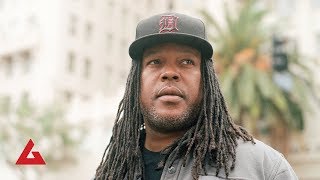
Shaka Senghor delivers a first-person monologue describing his journey from a promising honor-roll student in Detroit to addiction, violent crime, and a 17-to-40-year prison sentence for second-degree murder. Entering prison at 19 and initially labeled "the worst of the worst," he underwent a transformation during solitary confinement through mentorship, intensive reading (Hughes, McKay, Mandela), and receiving a letter of forgiveness—leading him to atone by dedicating his life to helping others avoid the path he took. He is the author of the New York Times bestseller Right of My Wrongs.
Questions this video answers
Right of My Wrongs (New York Times bestseller).
17 to 40 years for second-degree murder.
19.
Four shots.
Detroit.
Socrates said, the unexamined life isn't worth living. And it was through examining my own life that I realized I hadn't been living. My name is Shaka Senghor. I'm the author of the New York Times bestseller, Right of My Wrongs. Life, Death, and Redemption in American Prison. I grew up in the city of Detroit. I was an honor roll scholarship student. Really smart kid, you know, who could have been anything in the world. Unfortunately, I got seduced into drug culture, became addicted to crack cocaine. At the age of 14, I was robbed at gunpoint. I was beaten nearly to death. My childhood friend was murdered, began to carry a gun, and I ended up firing four shots that tragically ended the man's life. I was subsequently arrested and convicted and sentenced to 17 to 40 years for second degree murder. At the age of 19, when I entered prison, I got in so much trouble that the warden labeled me as the worst of the worst. I began to believe that about myself. It wasn't until I was in solitary confinement that I really shared that mentality and to open up my mind to the possibilities of returning to who I knew I was destined to be. The mentors I met inside are men who were serving life sentences. They saw something in me that I didn't see. And they started introducing me to all this different literature. Langston Hughes, Claude McKay, Nelson Mandela's work, and writers who had been through traumatic experiences, but who still found a glimmer of hope to keep them moving forward. The combination of reading those bodies of work, getting a letter of forgiveness from a member of the victim's family, I realized that I had to take my destiny in my own hand. I had to do the hard work. So I stood in the mirror literally in tears as I thought about all of the ways that I hurt myself. And I began to apologize and began to really heal. And then the last step for me was atoning. Serving time is one thing, but I don't really believe that that's the way that you repay your debt to society. And so I made a decision, a conscious decision, that as long as I live, I would always utilize my voice in a way to help men and women make better decisions than the ones I made and help interrupt that cycle before they end up in prison. This is the work that I feel like I'm destined to do.