How I Reinvented MY LIFE After Prison | Shaka Senghor & Light Watkins (Full episode)
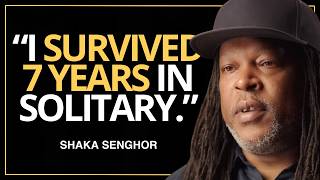
Conversation (YouTube interview) in which Shaka Senghor recounts his trajectory from running away at 14, involvement in drug culture, being shot and later imprisoned for causing a death, to serving 19 years (7 in solitary) and becoming a writer. In solitary he began journaling, finished a first book in 30 days using improvised pens and prison paper, and wrote multiple novels and memoirs. He self-published Crack Vol.1 (2008), hustled book sales after parole (first hand-to-hand sale celebrated annually), and eventually gained wider attention when Oprah read his self-published memoir and invited him to interview. The chunk covers prison economy (tokens → stamps → food items), influences (MLK, Mandela, George Jackson, Donald Goines, Rakim, Nas), parole efforts (warden advocated for his release from solitary after a persuasive letter), post-release work (mentoring, writing for a local paper, teaching, speaking engagements), and personal reflections on manifestation, mental health, and fatherhood.
Questions this video answers
Served 19 years in prison; 7 years in solitary confinement.
Crack, Volume One (self-published, 2008).
He set a 30-day challenge and finished the book within 30 days.
Flagrant Foul and Shadow Watchers.
Tokens (initially), then postage stamps, later items like bars of soap, ramen, and mackerel.
And on that visit, I found out that my sister. My older sister, she's one year older than. Her name is Vanessa. I found out that she was battling addiction, and it was heartbreaking because this was my best friend, and I wasn't there to help her, support her, protect her, all the things that we think we're responsible for. And it was heartbreaking. And so I ended up writing about what that felt like to know that my sister was now in this world of addiction and knowing that I had come out of drug culture.
Shaka Sanghor. It's an honor. It's a pleasure to have you on at the end of the tunnel. Thank you so much for making the time.
I'm super excited to be here and truly honored and looking forward to this conversation.
All right, so I want to. For people who don't know your story, we're not going to go into the detail because you've done a thousand interviews. You've been interviewed by Oprah, like, everybody. So can you just give us a montage of where you. How you went from 14 years old running away to being in that cell block and writing that article? Like, what happened in between in those years?
Yeah. So, you know, at the age of 14, I decided to run away. Excuse me. From the age of 14, I decided to run away from our household. You know, dealt with a lot of levels of abuse, which, you know, to your point, I've been interviewed about and written about. And so when I ran away, I was honor roll, scholarship student with all the promise in the world, and I found myself seduced into the crack cocaine trade and experienced all the horrors of that culture. I was beat nearly to death. I was robbed at gunpoint. And when I was 17 years old, I was shot multiple times standing on the corner of my block. And 16 months later, unfortunately, I tragically shot and caused a man's death and was sentenced to 17 to 40 years in prison. I ended up serving 19 years of prison, and seven of those years ended up being in solitary confinement. But it's in solitary confinement where I actually started writing and started taking it serious and wrote my first book in that environment.
Okay, so before we get to your first book that you wrote, there are a couple other things that I think are important to point out. Number one, you became a student of letters.
Right.
You were devouring books of people who had written letters. And so what were some of those books that. That really made an impact on you?
Yeah, I mean, I've read so many books throughout the course of my incarceration. You Know, I remember the letters that were most resonant with me, you know, Martin Luther King Jr. S letters to Birmingham, you know, from Birmingham Jail. I remember just how striking it was for him to really talk to the clergy with such high level articulation.
But.
Also with just the spiritual commitment that he had made. Nelson Mandela, who's definitely a hero of mine, and some of the letters he was writing home and the things that he talked about, and Laura Chesterfield letters, which was a whole different take on communicating to his son. So I was just devouring, you know, different books, W.E.B. du Bois and, you know, many others. And as a form of writing, what always resonated with me with those books, one of the most powerful books, George Jackson, Soledad Brothers, where he writes all these letters to his dad and to Angela Davis, who many people know. But one of the things that was always struck me about those letters was the intimacy and the vulnerability and that just level of transparency which I think, you know, when transmitted through letters just is something, you know, that's so sacred and divine, you know, even when you think about what it takes to sit down and compose your thoughts in a most intimate way to share with one other individual. So those were some of the pieces that I was reading while I was inside.
And had your dad been writing you at that point from the very beginning, or did it take a while, or when did he start sending you letters?
Yeah, my dad. So those were the most important letters. With letters from my dad, shout out.
To James C. White, by the way.
James C. White, my dad, he's a beautiful letter writer. And, you know, early on, you know, from the beginning of my incarceration, we wrote, you know, to each other and. And what I think about the most is his honesty and the vulnerability and the way that he communicated. And we were able to talk about things that really can be complicated to talk about, especially as father and child, but also just as men. I was growing up, I was growing from a teenager into a man over those years with very different experiences.
And.
And I think him writing letters may have come out of his military experience, but he wrote lengthy letters. It wasn't just like, hey, son, how are you doing? You know, it was like, very detailed what was going on in the world, and he's definitely the source of inspiration for this book.
Yeah, well, that's one of the things that stood out to me because I'm actually. I've written hundreds of letters in my life and I've received hundreds of letters, and you don't meet a whole lot of People who are, you know, into write letter writing like that. So I was really excited to read your letters. But one thing that really stood out was the length of your letters. And you. You're an author. I'm an author. So we kind of think in. In word count sometimes, you know. And just my guesstimation was that your letters in that, in the book Letters to the Sons of Society were probably about a thousand, maybe 2,000 words per letter. And I know when you write letters, it's mostly first draft. And so I was curious about that as I was reading. I was like, is this really first draft? I mean, were they really this long and this detailed? Because they're written perfectly, or did you have to go back and add in details or fact check things or, you know, edit them a little bit in order to publish them?
Yeah, I mean, the reality is, you know, anytime you bring in a book to market, you know, you have editors who are going to come in and be like, ah. But I'm. I'm actually a very. Like, when I'm in a zone, I like to write all the way through. And sometime before I actually, you know, especially with this book, before I even sat down and wrote the letters, you know, I would spend time thinking about what is most important for me to share with my sons. And so where it would start, that would be just a stream of consciousness that I will actually write on my phone notes. And the reason that I. And I learned this from August Wilson. So I was watching an interview with August some years ago, actually, while I was incarcerated, and he talked about how he would write out things on, like, napkins or things that were disposable. So it didn't feel like he was making a full commitment and he didn't feel the pressure of it happening to be a thing. And so, you know, what I took from that is like when you're struck by a thought is to just get it out. And so the way that I've approached all of my writing is about. It's really about getting those initial thoughts out. And a lot of times with me, they're very complete, they're very lengthy. It's very just me in a zone. You know, I may be on a plane and I'm just, you know, I spend that time just writing on my notes and then I'll transfer that to a document. And I'm like, oh, wow, this is a whole thing. And I think it's part of the dynamic with my editor and I is that we have a very great relationship, but it can Be stressful at times because I write so much, and they're like, oh, we gotta trim this down and blah, blah. And I'm like, but it's so good. Like, I can't take that line out. See that metaphor? That's simile.
Or got to kill your babies as they.
As they say, you got it. You got to, you know, got to kill them off, you know? So, yeah, I'm pretty much like, when I. Whatever, you know, Especially with this book, these were moments of me just zoning out and thinking about what it was that I really needed to share with my sons.
Who's your editor, by the way?
So I got an editor named Derek Reed out of Penguin Random House, so.
Okay. Okay, cool.
Yeah.
So you mentioned MLK's Birmingham letters and Mandela's autobiography. And what I remember reading about that is that relates to your experience is when MLK was in the Birmingham jail, he wrote that letter on toilet paper. He wrote it on because, you know, he didn't have, like, he didn't have anything to write with or write on. He had a little, I think a number nub of a pencil, and he wrote on that. And. And. And Mandela, you know, he had to write his thing in secret, and they were, like, burying it so the guards wouldn't find it. And the one time they did find it and they got rid of it and he had to rewrite it from memory and all of this kind of stuff. You mentioned that you had a flimsy little pen, because obviously it's a real pen. You could use that as a weapon. So. And you started writing it on whatever you could in the dim light of, you know, whatever you could see. So talk a little bit about that process when it. When it actually started. And. And what is the. What are the rules? Like, can you write a book? Like, how do you do that? Because you also talked about how you didn't have any money on the books and your friends kind of abandoned you a little bit, and, you know, you became, I guess, the Stowman, as they call it in prison, the guy that sells stuff. You know, that's. That's at a crazy markup. Yeah, with the crazy markup. Oh, what was the currency, too, by the way, in your prison?
Yeah, yeah.
So.
So it changed over time. When I first went to prison, I was at Michigan Reformatory, and we used to get these little tokens. Like, imagine kind of like Chuck E. Cheese tokens. And I think we had a $1, a $5, and a $10 one. And so that was, you know, every two weeks, you can, if you have money in your account from working or from your family, you can extract up to $75 in tokens out. And that was the currency. That's how people gamble. That's how they paid for, you know, things that were kind of off market, you know, so whenever the commissary store wasn't open, we would open our own stores and hustle in the cell block. And so basically what I, what I would do is I would just load up, you know, and then wait for people to run out of things. And there was very specific times when, you know it's going to happen. It's like they're coming on that tail end of that two weeks. People are running out of cash. So they would get stuff for credit. And it was like 100 markup. So if you come get some cookies, if you come get the tokens, 50 cent and tokens, you owe me a dollar token next, you know, draw day. And then there was this one specific Saturday they used to serve this fish that we call butt naked. Fish is unbreaded, lump of, you know, something that smells like a pond. And so nobody eats that. You know, they're like, yo, give me some cookies, give me some chips. And so that was, that was the market. But then over time, and he, you know, they took the tokens out to kind of disrupt the economy, the underground economy. They took the tokens out and then stamps became the primary, you know, means of making money. And one of the things about the stamps was that you can send stamps home and your loved ones can take them to the local store and get cash in exchange. So I would load up on stamps and like, send, you know, hundreds of dollars worth of stamps home. And then my family would send me the money back. And then they took the stamps out, and then it started becoming like bars of soap and ramen noodles and mackerel. Yeah, yeah, mackerel, whatever you can get. So that started becoming the currency in there.
But.
But to your point about the writing, so when I first started taking writing serious, I was in solitary. So I didn't have a typewriter or word processor. I literally just had. Had this pen that they give you in solitary, and it's really flimsy. And so when I, when I, when I was struck with the idea to write, it actually started with me journaling first. And I was like, you know, during my journal, I realized I had never completed anything. So I challenged myself to write a book. And when I wrote that book, I, you know, first, before I even Start. I was like, I'm never gonna be able to finish a book with this pen. So I took that flimsy pen and I rolled it up in news and like, not newspaper, but paper, you know, like the commissary paper that we would get. And that made an ink pen. And then I was able to write for hours on end.
And what were you writing on? Did you have like typing paper or what was your. How are you writing? Were you writing your book on?
So I would get notepads. So I was. Even though I was a solitary, I still had a couple of hustles going. So some of my friends, they would, they would smuggle, they would smuggle cigarettes to me and, you know, and I would use those cigarettes to basically hustle. So, you know, if a guy wanted a cigarette, I'd be like, give me, you know, three notepads out of the store. And, you know, that's how I would get notepads. Then they also have like this prison stationary that you're. Every month you're allotted about 20 sheets of paper. And so I would get those, you know, the guys would get them and they're like, they're not doing anything. I'd be like, yo, run that. Let me get that. And so, you know, I still have to this day all of my writings from prison. I'm so, so lucky and fortunate that I literally have everything that I've handwritten. I have my journals, I have the first drafts of my novels that I wrote. I have the versions of them that I typed up. Once I was able to get to a word processor, the ink is real light because I would run out of ink and then I would just use carbon paper sometime. And sometimes I would just be like, long as I can see the imprint on the paper, I know what's there. But I have all those things and a lot of them are actually on prison based paper.
Okay, so your first book that you wrote, was that the one that eventually became Righting My Wrongs, or was this a different book? And then second question is, what. What genre of novels were you in there writing?
Yeah, so my, my first book, actually, the first two books I wrote, I haven't even published those yet. I'm sitting on them very intentionally because I want to ensure that they're ushered into the world in a way that they really deserve to be and that they get the kind of attention that they need. For me, you know, especially as who I am as a writer today, you know, some things I need to go back and do, but the first two books I wrote were novels. One is called Flagrant Foul. It's about this young lady who plays basketball, plays street ball, and she kind of gets caught up with something that happens in her community.
And.
And then there's one called Shadow Watchers, which is also almost like a futuristic superhero movie. I mean, book, I'm speaking a movie into existence now, but a novel based on these young people in inner city who are trying to figure out how to solve problems in their community and address systemic racism and oppression. And then the books that I first published, there's a series I have called Crack, and they're about this detective, this detective named Detective Jensen. I was inspired to write detective stories about Walter Moseley. But my greatest inspiration, honestly, as a writer. Well, there's two inspirations that I draw from. One is Donald Goins, who is the godfather of what's now termed street literature. Those were the first books that I was really reading that I saw myself in. You know, I saw the community that he was talking about. I saw the experiences that he was talking. He was talking about because I had lived them. And so that inspired me to write fiction. And the greatest inspiration from a. From a, you know, more literary standpoint is actually Rakim. You know, I think that Rakim is, you know, a national treasure as a writer. You know, when you think about, you know, his first couple of albums and how he played with words and how he played with metaphors and similes like that inspired me. You know, when I think about how I want my words to strike the page, I think about, you know, Rakim. I think about Nas. You know, I think about people who have pinpoint accuracy lyrically, because I think that translates very well on the page.
So for, obviously, probably most people listening to this have never been inside of a prison. And can you just set the scene? Okay, so now we're in the period of your life where you're writing more or less prolifically in the solitary confinement. What is that? What's the day in the life like in terms of your writing and whatever else is going on in that. In that six by nine foot cell?
I'm happy you asked that. When I think about where I was at the time that I was writing, there's a few things that comes up. There's obviously the pain of the experience. And solitary confinement is something that I will forever advocate to have ended. I think it's the most barbaric and inhumane treatment that we can inflict on people consciously and with our tax dollars. And, you know, I Think to lock a person in a cell or a cage, you know, for years at a time is crude and unusual punishment. And the environment that I was in, the thing that struck me the most about it was the high level of mental health challenges that the men around me were faced with and the way that that showed up, you know, whether it was men who were cutting themselves so that they can get taken to a hospital and receive some type of care and comfort from somebody who treated them with humanity, or whether it was just the personal attacks on each other, from slinging feces on each other to sleep deprivation by banging on the toilets in their cells. It was a very chaotic environment. Every day it was super noisy, and there was always the officers coming to extract people from their cells. And they come as 10 officers fully adorned in what looks like hockey apparel. And they would come and extract people and take them to whether the suicide watch sale or other sales, which meant they spray pepper spray, and that just goes through the whole unit. So there was days where you would just, you know, I would be sitting on my bunk and all of a sudden I'm coughing and whatever because they're spraying pepper spray without consideration for everybody else around us, around them. And it was chaos, you know. And at one point, you know, I started to question whether I was actually losing it because I wasn't reactive to so many of the things that other people were as reactive to. And I was like, well, maybe I'm the one who's losing it in there. And they've got it all together. And that's the. Excuse me. And that's the psychological challenge of being in an environment where it's so chaotic and nothing is normal and there's no idea of when you're going to get out. You know, kind of similar to what we're dealing with, with the pandemic, in a sense, that uncertainty is always looming above you. And so, you know, for me, writing in that environment required, you know, a lot of ingenuity. You know, I had to rate to what's the optimum time. And typically it was once the lights were out, you know, in the cell block, then things would kind of quiet down. And so I would stand by the window. It's a little small window at the back of my cell, and a little bit of light that filtered in. I would write from that, you know, and then sometimes I would lay on the floor and write from the little bit of light that leaked up under the cell door. So I was always just finding different ways to do it. And then I Created just kind of a consistent cadence of like, you know, what I want my experience to be like. This is once I started realizing that, you know, we may not be able to control our circumstances, but I believe we can always control our reaction to them. And so I began to set myself up as if I was at university. I would study, you know, philosophy in the morning. You know, I would go from philosophy to, you know, world history, from world history to African history, from African history to Eastern philosophy. And then I would get into literature and then I would make time to just read. And then after I got done with that, then that's when I would write. So I just made sure that I consistently kept my mind moving forward. I think people lose hope when they can't take that next step in their mind. And so those things allowed me to just every day to add some type of value to my life and to my experience and really just to keep me moving forward.
What about more practical considerations such as exercise, food, water? Was that adequate when you were in there?
Well, the exercise part, that's up to you, you know, and so I definitely exercise every day. I would take my mattress and roll it up and then I would tie a sheet around the mattress and then I would loop another seat through the mattress and then I would curl the mattress. And so that's how I would do my curls. I would do like shoulder presses and then, you know, I would just do push ups and other calisthenics. And so that was part of that bake in routine, you know, just to keep my body moving forward. Meditation that was so important to me is like the ability to process my mind in a way that emptied out all those negative self defeating thoughts. You know, journaling that was very practical. You know, practice for me is like to really get things out of my mind in regards to food. We were solely reliant on whatever they were serving, you know, so that was, that was, you know, oftentimes not the best. The portions are very skimpy. You can't buy solitary, I mean, commissary out of the store when you're in solitary. And so the only edible thing you can buy are cough drops. So cough drops became like candy as well as currency. But that was it, you know, and you can't save, you can't hoard food because if they catch you with any food that you saved, basically they will put you on food restriction. And then you would get a big lump of what's called food loaf, which is all the food mashed up and baked into this Brick. And so, you know, to avoid that, you have to eat, you know, whatever you can before you turn your tray in.
All right, so under all those conditions, you wrote your first book within 30 days. Did you know it was good? Or how did you get any validation? You pass it around, let the other guys read it. How does it work?
Yeah. So, you know, I remember setting very intentional, you know, parameters for finishing the book, because when I was journaling, I realized that I had never completed anything. You know, I had. Only thing I had completed was a ged and so I was like, you know, I want to challenge myself. And so I challenged myself to write this book in 30 days. And I got it done. And I remember thinking to myself, well, a book isn't a book until somebody reads it. And so I asked the guys on the cell block, I'm like, yo, anybody want to read this book? You know, And a few guys was like, no, we don't read that. Blah, blah. You ain't, you know, this ain't Oprah's book.
Most of these guys can't even really read. They're operating on a third grade reading level.
Yeah, yeah, there's definitely a third grade reading level. But there's surprisingly, you know, some guys who figure out, you know, how to. How to get through books, that resonate with them, you know, that's why I think Donald Goins was so important in Iceberg Slim. I think you put more effort into something when you can see yourself in it. And, you know, one guy, he was like, yeah, send it over to me. And I remember, like, I had to send it over on a fish line. So we would make these lines that we would attach stuff and slide it up under the door so that the other person could pull it in. And so, you know, I remember sending it under the door and thinking to myself, this is my only copy, as the last part of it slid on the door. And if you don't give it back, there's nothing I could do. Cause we're in solitary. But I remember him getting it, and I didn't hear from him for a couple of hours. So I started getting really nervous. I'm like, oh, man, he gonna keep the book then that's gonna turn into a whole conflict when we get back to the yard.
But, you know, you gotta turn back into the old shaka.
Gotta go back to the, you know, thugging it out on the yard and, you know, trying to avo at all costs, you know. But I remember him coming back to the cell door, and he was like, yo, man, this is one of the best books I ever read.
Wow.
And I did, like, a little dance, like, in my cell. I was like, yo, I did it, blah, blah. And then I had this moment of clarity. I was like, well, he's in solitary confinement, so probably super bored.
His judgment is a little bit skewed.
I'm like, I could have sent him a recipe over there. He'd have been like, man, it's the best chicken noodle soup ever. And so, you know, I was like, you know, I got to get my work out. And I eventually started sending work out to one of my brothers. He's my stepbrother, but we don't identify the step. You know, he's just my older brother. His name is. We call him Kid, but his name is Will Red. And I remember sending my older brother the book out, and, well, initially, I sent him some short stories first. And I remember him writing me, and he hadn't wrote me much in prison. My older brother, he was like the one brother who had never had a brush with the system, never got caught up in the streets. He played ball for high school. He went to college. He was doing all the right things. And to this day, he's just an incredible example for me as a father, as a husband, and all the things that he does. Really, he inspires me. But I remember getting a letter from him, and he was like, man, you know, he's like, I read all this stuff, you know, when I was in college, and I read all these different things people wrote. And he was like, you write better than most people I went to school with. And I was like, wow. You know, like, that validation meant something. You know, it was like, this is something, you know, I could take serious. And so I continued writing. And then I started, you know, once I got out of solitary, I started sharing the books in the cell block. And just that grapevine of, like, guys come like, yo, man, when can I get the book next? I heard so much about it when guys started to talk about it, you know, that you have no connection to. They don't know nothing about you. That's when I was like, okay, I'm on to something.
Okay, so as you're writing, were you recognizing any patterns? Like, if I tell more stories, if I'm, like, completely raw and honest, that's the stuff that connects with people the most. Or were you just kind of like just stream of consciousness and just writing whatever was coming to you?
I think a lot of it was, you know, as I talked about early being really Influenced by hip hop. And, you know, I think about, you know, some of the artists that I've grown up loving, and the ones that always resonated with me was people who rap very cinematically, the great storytellers, you know, the cool G rap, you know, you know, the Nas's. And people who are very. Can bring you into their world. And that really, you know, from a storytelling structure, the way that I've approached it is that I want people to feel like they're a part of this world, that they're having the experience of the characters, that they can smell the environment, they can taste the environment, you know, they can be grossed out, they can fall in love, they can be angry, they can be, you know, they can laugh, like, you know, all the things. So I think that instinct really came from reading a lot and listening to a lot of hip hop. And what I started finding consistently in the reactions to my work is people would say, I felt like I was there. I felt like I was part of the experience. And so that became kind of, you know, a thing where I was very intentional about, you know, setting the scene and really setting up those connecting points and, you know, the metaphors and the similes that really align with that more cinematic storytelling.
At what point were you aware that you were going to get out? And what was your. When you found out and now you're writing these books and you're getting this response. What was your plan in your head right before you actually walked out of those. Those gates? What were you thinking was going to happen with all of this?
Yeah, so I was, I was. I was excited, you know, when I. When I wrote the first couple of books and, you know, for years they were just like tight, you know, in folders I was carrying from, you know, safeguarding with, you know, with my everything. And, you know, during this time, you know, there was this uptick in, like, literature that was coming from, you know, communities, you know, like real communities, like, you know, Terry woods, you know, True to the Game, you know, Sister Soldier, the Coldest Winter Ever, you know, Quan, you know, Animal, like all these great literary, like, to me, they're literary giants, right? You know, they may not rise to what people typically frame as literary, but I think if you can communicate a reality from an environment, you know, that makes people feel something, that makes people feel connected, that makes people feel like they can see themselves in those stories, like, that's greatness to me, you know, and that's what they embody. And so I saw the way that they were hustling. You know, they were hustling books. And, you know, also come from that era where, you know, DJs would hustle, you know, the tapes in the neighborhood. You know, I used to DJ and we would sell a mixtape for $2, you know, too Short hustling, you know, his album out of the Trunk and Masterpiece. So I knew those stories. Cause I was reading, you know, VAD Magazine and Source and, you know, keeping my ear to the street. So I knew that I can get out and sell books. I just had to get out. That was the big part of it, was getting out. And that was something I didn't know. You know, I didn't know if I was ever getting out of prison, because that's what they told me. Like, you were dying here. And so the first step was getting myself out of solitary and then getting to.
You did that with a freaking letter?
Yeah, yeah, I wrote a letter to the. To the ward, you know, and it was a mixture of writing a letter and reading all these philosophical books. You know, I challenged them on a philosopher, on a philosophical idea of what the truth is. And basically what I did is I wrote the war in the letter. And I said, you know, and I prefaced it with, you know, what you're going to read is my truth. And if you follow the pattern of what my experience is, they line up with exactly what I said when I came to prison. I said I wasn't following the rules. And I've been pretty consistent with that. Which means that you can agree or disagree with me not following the rules, but what you have to agree with is that I told the truth. And if you believe that the truth is the most important thing, then everything that I'm about to tell you in this letter moving forward, I would hope that you acknowledge that as truth as well. And that's when I told him, if you give me an opportunity to get out, I'm going to pursue this writing thing. I'm going to take it serious. I'm going to stop doing the things I was doing on the yard to get in trouble. And I'm going to focus on becoming the best writer that I can be. It was the first and only time that a warden has ever directly wrote me back. And he said he was so moved by the letter and he believed my truth that he's going to advocate for me to get released from solitary. And he ended up doing that. And so it still took about two years because he had to go to his higher ups. But once I got out, you know, I Started typing those books up. I had a little word brother's word process. It was a brother ML500. I had that little word process. You can only see, like, half of a sentence on that little screen. And I would just type, type, type nonstop, you know, for days on end, transferring those books to type, you know, manuscripts. And so I did that, and that's what I shared in the cell blocks, those type manuscripts, you know? And meanwhile, I started putting the business plan together. I started kind of walking through what I wanted to happen with my writing. You know, I was very intentional about where I wanted to land at and what I wanted it to become when I got out. You know, I wrote in every genre you can think of. I started with, you know, fiction. At one point, I wrote some erotica, which turned into a whole different things because, you know, it was a mixture of me coming from being a hustler to evolving into, like, a real writer. And so it was like, okay, I can write, and I know I can move products, so I'm gonna get out and I'm gonna hustle these books. And so, you know, I ended up meeting Sekou's mom. Sekou is my youngest son who I write about in the book, But I met his mom while I was incarcerated, you know, and we started exchanging correspondence, and she was like, you know, what is your plan for life? And I was like, I'm happy you asked. Here's what I want to do. And I sent her a whole business plan, a whole breakdown of how I was going to disrupt the literary scene, how I was going to approach it, the places I was going to go. My goal was to get out, get a job, save that money, buy some books, take those books, hustle them everywhere I could. Buy more books, hustle them, rinse and repeat. And she was like, wow. Like, she's like, I'm with it. Like, let me help you. You know? And so we ended up joining forces, and I actually published my first book from prison in 2008, crack, volume one. And as soon as I published a book, I got sued by the Department of Corrections for the cost of my incarceration. But I didn't let that deter me, you know? And, you know, I went up for parole that same year, got denied, went back up the following year, got denied. And I decided I wasn't going back to the parole board at that point, and I was just going to do the time. And the reason I had, you know, thought about that was it was hard watching my dad and at the time, who was my girlfriend it was hard watching them suffer, and I wanted to relieve them of getting their hopes up high, only to have them dashed by my denial of prison parole release. And so, fortunately, Sekou's mom came to visit me the same day. And I sat in that visit room, and I was in tears. You know, it was heartbreaking watching her come through, you know, security and get patted down and have to take her shoes off and have to open her mouth and have to be touched and all the things. And I was like, I didn't want her to suffer through that anymore. And so when she walked in, you know, I was like, I gotta break up with this woman, you know? And so, you know, as soon as she sat down, you know, I go into this whole spiel about, you know, we have to break up. And, you know, I broke down in tears and, you know, just let me cry and get it out. And then she was like, you're absolutely going to your next parole board here. And, like, you know, you can get it together and get back up in there, but we didn't come this far to give up, you know. And so, you know, I ended up going back, and I got paroled on that third try, you know, and as they said, the third time was the term. And so the first thing I did when I got out of prison, you know, I went from. They took me from the prison to the parole officer. I had to check in with my parole office. And, you know, Ebony, who was Sekou's mom, she pulls up her and my oldest son, Jay. And, you know, there was a brother who was getting out. His name is Prince Montgomery. He was getting out the same day we had met on, like, the last 60 days of my sentence. And he's like, man, I'm about one of your books when I get out. And I thought he was talking about once he got home and kind of like got himself together, but, you know, he had money in his account, and they, you know, they gave him that. And, you know, he was like, yo, did your girl bring them books? And she was like, yeah, I got him in the trunk. You know, I'm like, yo, pop that trunk. You know, And I remember him giving me the books were only $15. He gave me $20. I didn't have no change because I didn't have no money on me. And he was like, man, keep that extra five, man. I'm happy to support you. You know, so every year we celebrate our freedom anniversary, but we also celebrate the moment of my first actual hand to hand book sale, you know, And I've been selling books ever since, so.
Yeah, yeah, you talked about selling books to put gas in your Honda Accord, and you were going around mentoring kids and all that. I imagine you never. You never dreamed in a million years that you'd be interviewed by Oprah and all of this, you know, from. From one of your books at that time. But talk about. Talk about what those next breadcrumbs were along that path. Like, I know there was a college or something that was interested in one of your. Your books.
Yeah. So actually, I did think that I would be interviewed by Oprah. Okay. But I'm going to tell you why. You know, I believe. You know, I believe in the laws of attraction. I believe that we can manifest into our lives the things that we desire. And I was super intentional about what I wanted to happen with my work. So I wrote it down. I was like, you know, if I'm going to be a real writer, Oprah has to read one of my books. And for me at that time, that's the validation that I needed to confirm this was a life for me as a writer. I was like, I want to be a New York Times bestseller. I wrote that down. You know, so I was very intentional about writing down exactly what I wanted to happen. And, you know, of course, it didn't happen in the way that I imagined. I imagine I'm just gonna send her the first. You know, send her crack Volume One. You know, Oprah's gonna read that and be like, yo, it's really going down in the hood. You know, I need to be in tune with that. But it didn't work out like that. But what did happen is there was a professor who was at SUNY State University, New York, Binghamton, and she had been introduced to me by a young lady who used to edit their paper, who I had became pen pals with while I was in solitary. And she got my first book, and she assigned that book to her class, and then they ended up inviting me to come speak. So my first professional speaking gig was at, you know, she had moved from that college to a college in Wisconsin, Platteville. And that was my first gig. So that was kind of like, the beginning of, like, you know, this is, you know, really starting to happen. Like, I'm. My book is, you know, in a college, officially part of college curriculum. And so that was the first kind of thing like, hey, this is. This thing can happen, you know, and so I started doing these talks, but I was also doing work in the community, and I was using literature as A means to mentor kids at the school called Cody High School on the west side of Detroit. And then there was another one in a suburb called Tri county, in a suburb of Detroit called Southfield. And I was using literature, and I ended up winning this award called Black Male Engagement Leadership Award. And that allowed me to write another book called Living Peace. And it was kind of like a workbook that I used in my mentoring program. And that experience really opened up the world to me, you know, so after I won that award, the organization, they would invite me to these gatherings. And I ended up going to one of those gatherings. And that's where I met the director of MIT Media Lab, Joy Ito. And Joy, you know, invited me to learn about the Media Lab. So I went from, you know, nearly two decades in prison to being in Cambridge, Massachusetts, at MIT Media Lab with all these crazy robotics and 3D printing. And, I mean, like, it was like, you know, and I talked about in my TED Talk, when I tell people it was like Fred Flintstone walking into an episode of the Jetsons. Like, that is no exaggeration. Like, I didn't know anything about technology. The Internet hadn't been created before I went to prison. There was no smartphones, there were no iPads. None of the things that we, you know, now have at our disposal. So when I walked to the Media Lab, I was just like. I mean, there was one thing that stuck out to me out the gate. There was a car that basically folded up the wheels and parallel park. And I was like, yo, this is crazy, right? But it sparked my imagination, you know? And from there, I just was like, anything is possible, you know? And so I went on to do, you know, Ted and, you know, be interviewed by Oprah, which was one of the most groundbreaking experiences of my life, because that was like five years after I'm out, you know, But. But the thing is. No, go ahead.
I was gonna say. The other thing that I want people to understand is that when, you know, when someone gets out of. I've had family members in prison. When you get out of prison, it's hard to get an apartment, it's hard to get a car, it's hard to get a job, it's hard to get a bank account, Right, because you have to report that you're a felon in each of those cases. And so one of the biggest priorities is rebuilding and getting back on your feet financially, et cetera, Especially as a man, and especially as a man in his 40s. No one's feeling sorry for you. If you can't pay your bills. So a lot of your family, lot of your friends were telling you, hey, Shaka, don't tell anybody you've been. Just keep your head down. Go get you a decent job. And you kind of defied all of that because you believed in yourself so much. So I just wanted to make a note of that because I think it adds a different. Adds context to the courage you had to have to really lean into your story and to use that.
Yeah, absolutely. You know, I tell all my mentees that what you believe about yourself more important than what anybody else believes about you. And when I came home, you know, I know my family had, like, the best of intentions. They really wanted me to just find a job and live the rest of my life, you know. You know, I come from a working class community, you know, people who work for the factories and, you know, work in social work and things of that nature. So they just like, if you can get a job, you'll be fine. And I put in for jobs. It wasn't like I, you know, I didn't come out like I could just pull magic out of the air in some random way. I knew I had to have a game plan, you know, but it was hard to get hired, you know, And I ended up. I would get these little random jobs, you know, My first job actually was writing for a local newspaper. And every job that I've had since I've been out of prison have come through these very unconventional ways. I ended up posting, like, I opened up a Facebook page because I knew the marketing side. I'm like, I got to get to reach the people, right? I don't know nothing about this social media. I just know it's people on there and they need to be buying my book. And I remember making a post and just saying, you know, if there's any local artists, send me your music so I can write a music review. And I had two missions in mind. One was to get access to free music, and the other one was just to keep my writing skills sharp. And there was a woman following me at the time who was the managing editor at a local newspaper called the Michigan Citizen. And her name was Zenobia. And Zenobia was like, hey, can you do reviews for us? And I was like, sure. You know, so I write these two reviews. And then she called me, was like, hey, come pick up your check. And I was like, what check? You know, what are you talking about? And she's like, oh, we're paying you for. For those reviews. And it was like $25 or something. But I was like, wow, I made some money writing these reviews. And so I just started writing. It was like a couple extra dollars coming in, you know, $50 extra a week. You know, I wasn't making a ton of money. I didn't have a job. And so every penny counted, you know. And then one day she hits me up and she was like, you know, one of our staff writers isn't available. Can you cover this story? And I went and wrote this story. It was about this man. His name is the Loren Harper, Detroit based theater actor. And he had his movie coming out about, you know, it's about this church, et cetera. And I remember going to interview him and, you know, the story, the movie that was coming out was fine, it was cool. But his story was fascinating. You know, he had been addicted to crack cocaine for, you know, a long time in his life, and he found theater therapeutic. And he found that that art form as a means to help with his healing. And he was also running a drug rehab program and using art to help people find their way. And so I ended up writing his story. Weeks later, after the paper comes out, the managing editor, she calls me in and she gives me this stack of mail and she's like, we've never got this much mail for an article in this newspaper. And so they just started offering me the opportunities to cover different stories, and then they allowed me to go out and find stories. So a lot of my friends, to this day, I found them through writing their stories because they were small business owners. Actually, one of my best friends name is fame Clement Brown Jr. He's a fashion designer, owns a store called 313. I write about him in a book. I met him covering writing about his business at the time. And now we've been friends for 11 years. So that's kind of the pathway forward. Then the mentoring program, I ended up winning that award. It came with a $25,000 stipend. I was able to pay myself for the month, get some supplies, do the programs. And then that following year, that organization hired me as a consultant. And so it was like all these little, you know, consulting one offs, just enough to pay the bills, just enough to get from point A to point B while I continue writing. But it was during that time, you know, as I was doing all these things, when people would, you know, they were reading, you know, hearing about, you know, crack Volume One. But they would always say to me, like, you don't sound like someone who's been in prison and they meant it as a compliment, but it always dressed up something really hurtful to me, because when I was in prison, I met some of the most brilliant men in my life, and that still holds true today. And I know some incredible people. My network is full of some of the most brilliant scientists and venture capitalists and entrepreneurs and actors and writers. I met some of the most brilliant men in prison. These men are my mentors. They are the men who guided me to books. They are the men that saw something in me before I saw anything in myself. And so that bothered me, you know, And I was like, you know, I need to tell people about how I went to prison, because my story isn't unique. You know, inside our prisons in America, there is a wealth of talent, a wealth of genius, There's a wealth of creativity, entrepreneurship, and good people who unfortunately have either made decisions that landed them there because a series of things that happened in their life, or people who were falsely accused. And so that's what inspired me to right and my wrongs. And, you know, I wrote that book, self published that originally in 2013, and hustled it like I hustled the rest of the books. But there was something different happening with the response to that book. You know, I started to see this uptick in this groundswell of people, like, this is an important book, and this book needs to be out in the world. And so, you know, we hustled the book. You know, I remember sending, you know, one person who supported me. They bought books for every prison in America. They were so moved by the book. They was like, if you put together a list of all the prisons in America, I'll write you a check to send books to them. And I remember, you know, putting together a little crew of my friends and my brother, and, you know, we sat in my garage and we packed, you know, over a thousand books and sent them to prisons. In Sekou's mom, we sent them to prisons literally all over America, you know, and so eventually, I was doing a talk, and after I did the talk, there was a woman there, and this woman, her husband came up to me. Later on, like, after the talk, you know, sure, you've done these talks where they have, like, the kind of happy hour room, and everybody's just kind of chilling after work. And I'm sitting there, and this brother comes up to me, you know, super clean cut brother, you know, very polished. And he's like, I'm really upset with you, you know, And I'm like, oh, man, what did I say in my Talk that offended him. You know, I'm thinking he's about to be like, you know, I'm tired of hearing these, you know, come from the hood stories. You know, I think he's about to land to me, you know, and I'm, you know, I'm like, what's going on? You know, how did I, you know, how did I offend you? He's like, you know, my wife is in the room reading your book. We supposed to be out here having fun, getting some time away from the kids, and she don't want to leave the room, you know, and so we had, you know, we had a laugh and, you know, finish the night with drinks and all that. It turns out that his wife, who's now a dear friend of mine named Andrea, she used to work for Oprah. And so the book to Oprah.
The self published book.
Yeah, the self published one. Oprah gets the book. And she's like, why would I read this book? This guy's on, on the COVID you know, with tattoos and barbed wire fences and he's been in prison for murder. Like, why? Why would I read this book? You know, and what Oprah said is that she took that book and kept moving it around her house because she doesn't throw books away. And finally when she was moving her operation to la, she said she was like, let me just take this book. So she took the book with us. She's on her plane, says she got 50 pages in. It was like, I gotta interview this guy. And Oprah has gone on to say that our interview was one of the best in her, not just in her career, but in her life. And that, you know, right My Wrongs is one of her favorite books of all time, one of her favorite memoirs. She said it was her favorite memoir until Will Smith dropped his memoir. So I might have got bumped out. I don't know yet. But.
What was that day like when you got that call? Was it Andrea that called you or Oprah's other people that called you?
So Andrea called me first and was like, you know, Oprah wants to interview you. She wants you to come out to Hawaii. And I was just like, well, what actually happened was. So Andrea calls me, she comes to an unknown number at the time. I answer it because I answer all unknown numbers at the time. I'm like, you know, I got to. Might be some business, it might be some deals, I don't know which one, but let me gamble. Answer the call. She's like, hey, Shaka, you know, you know, I'm Going to talk to you, blah, blah. And then the phone disconnects, and she calls me the next day, and she's like, I'm so sorry. Something was going on with the kids, blah, blah, blah. She was like, but I was calling you because Oprah wants to interview you, and I want to connect you to her producer. And I was like, wow, she wants you to come to Hawaii. So she connects me to the producer. Producer is like, you know, yes, she wants you to come this, that, and other. Start, set it up. So I'm hyped. I'm like, yo, I'm going to Hawaii. I ain't never been. Only thing I've ever seen is like, Hawaii 5o when I was a kid. And so I'm hyped up. I got this idea of how I'm gonna be greeted getting off the plane. And, you know, the producer calls back and like, oprah doesn't want you to come to Hawaii. So my heart literally just sank. I'm like, in my mind, I'm like, what, is she reading the book that she changed her mind? And he was like, you know, she actually wants you to come to her home in California. And I was just like. I remember on a plane ride there reflecting back on what I wrote in my journal about being interviewed by her. And really, you know, that moment for me solidified everything else I had wrote that I desired to manifest in my life. And I knew with absolute certainty that all the things I wanted to happen would come to fruition, because that moment happened, you know, and, you know, it was a surreal experience. You know, from there, we end up becoming friends. And, you know, it's still surreal to this day. You know, whenever I get a message from her or, you know, anything of that nature, I'm just like, wow, like, yo, Oprah, just text me, you know, but it's the power of manifestation, you know, And I remember her saying to me, you know, you are a master manifester. And that stuck with me and has stuck with me to this day.
Well, you know, I also, you know, hearing this story and reading about it in your. Your book, I think it's important for people to understand that manifestation goes hand in hand with, follow through, putting in the work, with staying focused, with almost being obsessive about. About your mission. And one of the things I've written recently is how when you.
When you.
When you take a leap of faith in the direction of service, it's addictive. It's addictive when that. When those two guys, you know, who you thought were about to ambush. You actually wanted a hug from something you wrote. You know, I'm sure deep down that that was inspiration for you to keep writing in that same transparent way. And a lot of people would think, oh, in order to get on Oprah, I have to, have to, have to be represented by Random House or, you know, you got on Oprah from a self publish that you got the deal because you were on, on Oprah, you know, and so I think the message that I'm, that I, that I got from this is, doesn't, doesn't matter what it looks like from the outside in. What matters is are you operating in alignment with what you're feeling inside. And as long as you keep doing that, you'll receive the internal validation to keep doing it more and more. Because we all want to help. We all want to, we all want to use whatever we can to help people. And as soon as you see the light turn on in one person's eyes, you know, that guy who bought the book from you coming out of prison, I mean, that's, that's such strong validation that you're, you're doing what you're supposed to be doing. And so, so that's, that's such a powerful story. And by the way, people listening to this, all of these little vignettes that we're talking about are in your most recent book, Letters to the Ton to the Sons of Society. And so there's another vignette that I wanted to touch on in our last few minutes together, which I think is also important. Right? So you've been interviewed by Oprah, you've been interviewed by Trevor Noah. You have money coming in, you're giving speeches probably for tens of thousands of dollars, and all of that, that, and you wrote to your sons that while all of this, quote, success was happening, you felt miserable.
Absolutely. Yeah. You know, so what I, what I tell people, and I'm happy you articulated the effort that goes into manifesting the things that you desire in your life. You know, oftentimes people look at people who, in their opinion, have made it right. And I think that's super subjective because everybody's bar is different, you know, but the work that goes into it, the commitment, the dedication to learn to really understand, you know, what I needed to do to be successful as a writer and to really get my words out into the world, that's no sleep, that's relentless pursuit, perfection and the craft and really understanding the language. But there was also a whole nother thing happening. I was returning to a world that Was foreign to me. And, you know, I always explain it to people like this, is that when I got out of prison, it's like I was on seven different lanes of traffic all at one time. You know, I was reconnecting with my family. I was trying to be a father, I was in a relationship, I was trying to find employment. I had to understand this new world of technology, which people had grown up with for years. And I got to learn all this immediately. You know, I realized I had PTSD that hadn't been resolved from prior to me going to prison. I had been shot and had never seen a therapist. You know, the fear of going back to prison. So there were so many things going on, and my reaction to that and my response was to hustle harder, to keep going, but also to party harder and to hang out and to, you know, drinking excess and just, you know, random women and all the things that, you know, were numbing the real problems that were existing internally. And so there was a commitment that I had to make to resolve those things. But what I wanted to set up for my sons was the truth that when you see a person who is in a more public space, don't assume that everything for them is easy or that they somehow have a charmed life that doesn't come without adversity, obstacles, uncertainty, insecurity, self doubt, all the things that can send you down a different direction. But what I've learned about this law of attraction came from me actually journaling. And it started with me asking myself this essential question. How did I land here? And that came from me reading philosophy. You know, I was reading Socrates Apology, and he talked about the unexamined life not being lived, you know, and so I began to examine my life and ask that question, how did I get here? Like, what happened that landed me here? When I had a dream of being a doctor, you know, I'm supposed to be helping save lives, and here it is, I'm in prison for taking a life. And so that made me realize that I had magnetized into my life, my current reality. When I was in prison, you know, I had certain thoughts that led me down that path. If I got shot, I was like, I'm shooting first. That was a narrative that began to play. Excuse me. That was a narrative that began to play both consciously and subconsciously, and that manifested in me shooting and taking a man's life and ended up in prison. And what I believe that is, if it worked in the absolute negative, then it can work in absolute positive if the underlying truth of you attracting to your life, what you think about and then take action on the most. And so when I began to take these action steps, I started seeing different results. And it doesn't mean that it didn't come without the complications. It didn't come without the setbacks, without the turnbacks, without the no's. I received a ton of no's. Like, I can't even tell you how many. You know, I remember before getting a book deal, a agent had me fly out to Boston after he read the book. Had me so excited. I'm hyped up. I'm like, oh, I'm about to get this book deal. My book is going to be everywhere. Which was the thing for the book deal, right, was distribution. It wasn't about, you know, making money because I was making money hustling the books. It was like distribution, making that easier, et cetera, right? And he says to me, I can make this a bestseller if you turn it to fiction. And I was like, so you want me to make up my life as if my life did not exist? As if these traumas aren't real, as if the things that happen weren't real and that they can only be imagined through a character? Sir, I kindly decline your offer. You know, because I'm willing to bet on myself. And I know that if I go hard, if I do what I said I came to do, that I will produce those outcomes that I, you know, destined to produce. And that's the essential messaging, you know, especially for, you know, my sons. And when I say my sons, like, yes, this book is. And these letters are written to my biological sons, but I'm a mentor to many nieces. And even though this is my son's, the lessons in this book aren't gender specific, they're life specific. And I think that's really important for people to understand that the takeaways in his book are rooted in not something that I imagine, not some type of theory or philosophy I have. These are real, lived experiences that produce real lived outcomes.
What has the response been from your sons? Did they give you real time feedback that kind of inspired you to write the next letter and the next letter? Or were you. Or was it more of a therapeutic sort of experiment for you?
I think it was more therapeutic for me to really think about, you know, I think of these as my legacy letters, you know, when all is said and done. And, you know, I wrote this in the height of COVID and social unrest where, you know, we weren't even certain about what the world would Even look like, you know, the next day. And I just knew like, I had an opportunity to memorialize these moments for my younger son, but also speak to some things that hadn't been addressed. My oldest son, currently, my oldest son doesn't have any interest in reading the book. And you know, as people read it, they'll understand why, you know, what that experience is with he and I. But just recently, you know, I let my younger son read some of the chapters. Some of them are a little, you know, a little bit more mature than he's ready for.
So there's, he's like 10, right? Nine or 10 at this point, age.
10, but he's very precocious. But he's still, still my 10 year old baby, you know. And so there are some chapters, I'm like, okay, you got to get like maybe two more years, you know. But I remember letting him read the opening, you know, the intro and his reaction was hands down, like, I don't care what else happens with this book, I don't think there will be another reaction to this book that's better than his reaction to the intro to the book. And like, that was just like, it was the best experience ever, man, to see him hop up out of his chair like, what, your dad brought you the pro wings? And he don't, you know, he has a little bit of context, but you know, to write it in a way that somebody who doesn't even have that experience can have that kind of reaction. I was like, okay, this, this is going to be good. So the most exciting thing is seeing how it resonates with people.
And you had that one letter at the end. I don't even want to go into it because I want to people to read it for themselves. But about, about Jay, your older son, that scared. I was like, oh my God, what's, what happened?
And.
Cause I didn't hear about this. But yeah, it's an interesting twist at the end of that letter.
So yeah, I mean, that moment when it happened and it speaks back to what I'm talking about in the book is we have a lot of people theorizing and philosophizing about black boys and black men and what our experiences are with gun violence, with prison, with policing in our communities. A lot of those people don't have the lived experience. And I only wanted to write from the experience that I've actually lived and speak to things, you know, based on what I believed on, you know, as it relates to those experiences. And that, that is the opening letter of the book and what happens there, you know, it still haunts me to this day. Like, you know, anytime I even talk about what that experience was like for me and my family, and especially me as a dad, having to communicate that to my dad, you know, it's just the mostly charged part of the book that, you know, was a real experience and I learned a lot from. And I think a lot of the lessons of life, you know, that I believe are in that chapter.
What's something about you today as a public figure that you feel like most people don't get about you?
I think that most people don't get that I'm not as serious as they believe me to be. I like to joke, man, you know, I have a great sense of humor. You know, I'm happiest man when I'm just around people and we just talking smack and you know, we just listening to music. I am the biggest hip hop fan. When I tell you, like, people see some of the things, like I was just on a song with Nas on his latest album and people were like, oh my God, blah, blah, like I'm like, y' all don't even know. Y' all don't even understand what this like, means to me to like, you know, be on a song alongside somebody who I revere because of my reverence for hip hop as a culture. And I'm not one of them old heads that's like, I only listen to old stuff and these new cats, man. I'm listening to everything. I'm, I'm, you know, I'm, I'm listening to NAS one minute, 21, Savage the next minute I'm, you know, listening to Rakim and Dennis Roddy Ricch and you know, I'm listening to all my Detroit artists, Big Sean and you know, T. Grizzly, Saw the Baby and then I'm going back to the oldies, PE and Ice Cube and things like that. But music really moves me. It's my soul, it's something I love. I'm super passionate about. And so those are things that people wouldn't, wouldn't know that music and humor are what really get me through life.
Beautiful, man. Well, I just wanted to loop back around to, to childhood for a moment here and just thinking back about the milk crates, milk crate conversation and the versatility of that and the multi use nature of that and, and thinking about the trajectory of your life, how you kind of, you know, it's very much, to me it's, it's, it's a reflection of, of how you've been used for multiple purposes. Right? And. And I think you're just getting started, actually. I think. I think that this journey for. For you is still in the early days. You know, you still. I think you still have a lot of life to live. You have a lot to do teach, you have a lot to leave behind in your mentoring role, in your writing role. And. And so I just want to acknowledge you for. For being so focused. And, you know, you wouldn't wish isolation or solitary confinement or prison on anyone. But I'm sure another question that may come up for maybe you or for other people is, would you have been as prolific as a writer had you not been in that kind of situation? And so I don't think that's a question with an answer, but. Because we can never know. But I'm just. I'm grateful for everything that you've experienced, because if. If you hadn't been through those experiences, we wouldn't be having this conversation right now. Perhaps. Who knows? So. So anyway, thank you for making the best of everything you've experienced and then for sharing your story so openly, so transparently and so honestly, because I think that is. That is the secret to good writing. It's not about grammar. It's not about sentence structure. It's about honesty. If you can write honestly, you will connect with people. People will be touched by your words.
Absolutely. Well, thank you so much for having me, man.
More from Shaka
Joe Rogan podcast Shaka Senghor #shakasenggor #podcast #joerogan #interview #jre #jreclips
Surviving a Shooting at 17 Joe Rogan X Shaka Senghor | Joe Rogan Podcast | #shorts