How to Escape the Mental Prisons Holding You Back - Shaka Senghor's Incredible Journey
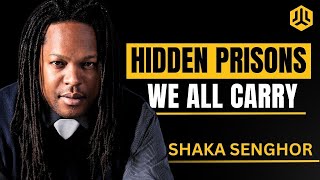
An extended interview with Shaka Senghor about his journey from committing a fatal shooting and serving 19 years in prison (including ~4.5 years in solitary) to becoming a bestselling author, mentor, and speaker. He describes mentors who guided him to reading (over 1,500 books), the books that shifted his thinking, journaling and fasting as resilience practices, lessons on vulnerability and leadership, and how to help others escape 'mental prisons.'
Questions this video answers
17 to 40 years in prison (convicted of second-degree murder).
Over 1,500 books.
He served a total of 19 years in prison, including approximately 7 years in solitary (and a specific solitary stretch of about 4.5 years after an altercation with an officer).
Monthly voluntary three-day fasts (and enduring food restrictions such as 'food loaf').
I got into a conflict and fired what turned out to be four shots that tragically caused the man's death, for which I was subsequently arrested, charged with open murder, and sentenced to 17 to 40 years in prison for second degree murder.
Can you go deeper on some of the people you met that changed your life while you were in prison?
Those mentors, they guided me to books. I read over 1500 books throughout my incarceration. And I was a voracious reader, as I am now. Knew that was going to give me an opportunity to imagine a new life for myself.
The most powerful prisons aren't the ones made of concrete and steel. They're the ones we carry with us. Built from grief, anger, shame, trauma, and self doubt. Prisons have doors, and those doors can be opened.
I had every excuse in the book not to succeed. I chose to lead a great life that removed every excuse. I'm not going to allow my past to define me.
Let's go to your story, man, because it's super inspiring and there's a lot to get to. So growing up, you're an honor roll student, you have dreams of becoming a doctor one day, Scholarships, all this stuff. And then you are 17 years old and you get shot three times standing on the corner of your block in Detroit. And then 14 months later, you also made an interesting choice. Interesting is probably the wrong word. You made a choice that changed your life forever. What did you choose to do that day?
Yeah, you know, when I think of that night, that pivotal night, 1991, two in the morning, I got into a conflict. And I had created this narrative after I got shot when I was 17, that said if I found myself in a conflict, I would shoot first. And 14 months later, I got into a conflict and fired what turned out to be four shots that tragically caused the man's death, for which I was subsequently arrested, charged with open murder, and sentenced to 17 to 40 years in prison for second degree murder.
What. What happened that night? What made you choose to shoot first?
You know, when I reflect back on that night, I think there were a combination of things. And one, one, I always just want to start with this. It is one of the most regrettable, horrendous decisions that I could have ever made that night. And because I think it's important for people to understand that decision was filtered through high levels of gun trauma, child abuse, et cetera. And it's not an excuse, it's an explanation. Because I think it's really important for people to understand how a human being with so much potential can arrive in that moment. And for me, what it came down to is simply being afraid. I was afraid that something was going to happen to me, and I reacted out of that fear in the most extreme of ways and tragically caused a man's death. Something that I live with to this day. No matter how much forgiveness I've received or how far away from that incident I am, you know, the reality is that that's one of those things that is permanent. It's one of the things I try to piece to young people about, understand the permanence of a 30 second decision.
You go on to serve 19 years in jail, seven of those years in solitary confinement, which blows my mind. I want to dig into some of the things that happened over the course of those 19 years. One of the things you talked about and you've written about is the importance of mentors, even mentors in prison. Can you go deeper on some of the people you met, including the ones who were. Who were there for life, but some of the ones that you met that changed your life while you were in prison?
Yeah, you know, when I served a total of 19 years, and, you know, I describe it as, you know, a tale of two worlds, Basically, it was the best of times and truly the worst of times. And in the midst of that horrendous environment, I discovered, you know, some of the most incredible human beings imaginable. These are men who are serving life sentences, and they just came equipped with so much wisdom about what's on the other side of a prison sentence. As you can imagine, when I went In, I was 19 and I was facing nearly two decades. So I didn't think anything was on the other side of that prison sentence other than dying in prison. Because at 19, you just can't imagine two decades in the future that you'll ever be out of prison. And so those mentors, they guided me to books, and those books completely shattered all of the old narratives and really opened me up to the possibilities that there could be a life after this environment. But I had to be willing to do the work.
What were some of the books that you read initially that opened your eyes to the power of books?
This is always one of my favorite questions. I've read tons of books, a lot of philosophy, you know, Plato, you go into, I mean, you know, Meditations and Machiavelli. And, you know, I read all of these incredible, you know, philosophy books, But I really started with books that were not considered philosophical. They were books with titles like Pimp by Iceberg Slim. Dope Fiend by Donald Goins. Black Gangster by Donald Goins. But what those books did is they became my gateway. And they became my gateway to just understanding that the written word held treasures that I can unwrap anytime that I was willing to venture into a book. And so I began to read everything. Stephen King, Sidney Sheldon. You know, the most transformative book, I would say would be Malcolm X's autobiography, because I saw myself in that story. But I, I probably read over 1500 books throughout my incarceration. And I was a voracious reader, as I am now, but I knew that that was going to give me an opportunity to imagine a new life for myself.
Wow.
Isn't it cool?
What Like, I remember I didn't grow up like a super curious kid. I'd read like sports books, but like little ones, not like a lot. But then remember getting my professional life and somebody gave me good to great, that book about like going from good to great from a business. And I remember finishing it thinking, this is insane. Like how, how, how much I've learned just from reading a book. And what I think the cool thing about that books can do is one then leads to the next and the next and the next, because you didn't even realize like the power of just the written word. I'd love to hear more about you. Like 1500. That's crazy. And I, I, I'd imagine, you know, I haven't been in, in jail, but it sounds like that's what you were spending the bulk of your time doing, either talking to mentors or reading books.
Absolutely. So when I, when I was a kid, when I was about eight years old, I learned how to speed read. And I, it was one of the things that I loved. And you know, my, my love for reading started with me getting on, getting put on punishment. So whenever my parents would put me on punishment, you know, there was no tv, no radio, there was only encyclopedias. And so I know a bunch of random things. Like literally, I probably know some of the most random facts. My son is always amazed when we're watching Jeopardy. And he's like, how you know that, dad? I'm like, probably from a punishment when I was about your age. But what, what books did for me was they allowed me to escape in, in the, in the most literal sense of getting out of the world that I was in. And so whenever I was in my cell, which was a lot because I spent most of my time in higher security levels, I just read, you know, I would read anything and then I would Break it up to where I would go to the library and I would get, you know, five fiction books and two non fiction. And so it gave me a great balance, you know, and people underestimate the power of fiction to really speak the truth. And so I'm still a big fan of fiction. I don't read it as much as I used to because I'm busy reading other, other, you know, nonfiction things. But I looked at books as a portal into other worlds. And I really understood early on that that portal into other worlds was one. It was a blessing because the average reading grade level in prison is third grade. So I was fortunate just to be literate in an environment where literacy is not the norm. And it's something that I will never take for granted. That's why I'm still, you know, read as much as I do now, because it truly is a privilege.
One of the other things that can lead to, especially in your case, is becoming an excellent writer, right? Reading. I know if, whenever, if I get any sort of writer's block, it's usually because I haven't read enough or I haven't been reading enough enough. And so you obviously read a ton of books and then started writing and now you're a New York Times best selling author. We all, I, I was just rereading your most recent one leading up to today, like having struck. Struggling to stop. You know what I mean? Like that's when you know a book is good, when you're really struggling to put the thing down or struggling to. I like to read on the elliptical. It's kind of weird, but like on my iPad and I'm just going forever, which is kind of good, right? Because I'm working my body and my mind at the same time. But, but I think that's the mark of a really good book when you really struggle to stop. So what was it about reading that led to be, led to you becoming such a good writer?
That's a great question. This is probably like my other favorite question because I love the craft and to be a practitioner of the craft, you have to do it every day. And so for me, what reading that it inspired me, like just learning new words and you know, reading some of the greatest writers ever, just I was always fascinated with their minds, right? Like, you know, I think about Stephen King and like how incredibly curious his mind had to be for him to be that, that brilliant of a writer. And so for me, I just fell in love with words. You know, I fell in love with the ability for people to Transport me into other spaces. I love autobiographical writings because I just love really exploring a person's inner world and how do they think about adversity, how do they think about happiness and joy? And it just allowed me to feel those things. And I knew as a writer, I wanted to be one who captured the senses, the senses that people experience. I wanted to be able to really transport you into that world and keep you there as long as possible so that you can really get the depth of what it is that I wanted to share. And so I'm happy to hear the new book is resonating in such a way that you were able to burn a few new calories. So that's. That's always a great sign.
What also has this journal, like, feel almost like you're letting me read your diary and.
Yeah, I don't know.
We kind of like that idea. And it's also really scary. Some of the people you've written about, especially in your childhood, where the potential abuse and your parents having regrets over maybe not protecting you, like, that's. It's hard to read. But also, again, maybe the wrong word, like fascinating. To read about your story and how you're willing to kind of put it out there. That takes some guts. I'm curious about your willingness to be vulnerable and to have the guts to share the. Just the raw truth of your pain, of you having to be resilient, of you fighting through, of the difficult conversations you. You've had with your parents. Right. I love just to hear how you approach that and your willingness to publicly share it.
Yeah, that's a great question. You know, it's one of the things that I had to reconcile very early on as a writer. And I think the reason I'm able to be so vulnerable is because I discovered that I can actually write a whole book through journaling. So about 25 years ago, when I first started this, the deep, transformative journey, it started through journaling. And through that journaling, I was just able to get so real with myself and so honest. And it was the most healing experience I've ever had, was to be able to. To speak to my truth, speak to the pain points. You know, the things that I'm talking about in this book, I think are invaluable for society, especially for, you know, people navigating their own hidden prisons, things that they haven't been able to talk about. And I wanted to be a guide in that way because I've really lived through some tough things, things that are unimaginable for Most people, and most people will never live through a lot of these things. But there are some things that we all grapple with. Shame, anger, guilt, you know, grief. No one's going to get through this life without going through grief. And I felt like the work that I've done over the years to kind of fortify my spirit and really equips me with all the things I need to share in such a vulnerable way and give other people, you know, permission to do so as well, which is how I really arrived here.
You wrote that prison, it's designed to break you. But what you discovered is that the most powerful prisons aren't the ones made of concrete and steel. They're the ones we carry with us, as you said, built from grief, anger, shame, trauma and self doubt. Here's what I've learned. Prisons have doors, and those doors can be opened. How do you help others? Maybe people who haven't gone to prison, but maybe they have prisons within their own mind. How do you help people open up the prisons within their own mind?
One of the ways that I help people open up is, is helping them recognize that they have a community of people who have broken free. What I discovered on my journey was that I was in prison before I ever stepped foot in the cell, and I was free before they ever let me out. And I discovered that when I realized that I had bought into a narrative that was handed down to me early on that said your life can only end up in prison or dead. And when I looked around my community at the gun violence, I looked at how many of my friends had been murdered or ended up in prison, I bought into that narrative. And once I discovered that I can change that narrative internally, I knew that one, I had to create community of other peoples who desired that. And so that started in prison with doing study groups and things of that nature. And since I've been out, I've been able to share in such an open and honest way that I get people from every walk of life you can imagine, from ultra successful VCs to just the everyday person trying to unlock, you know, a thing that they felt has held them in place. And being in community has really created space for one us to share. It's one of our, the most natural things we crave as human beings is to really connect with other human beings. What has happened in society is that we started to shame people for being vulnerable, specifically men. Men were taught very early on that we can't cry, we can't be soft, we can't show any care and what I'm saying is that I am dispelling that myth because I've already lived through the toughest things imaginable, so I don't have to prove toughness. And what I've been able to do is articulate the power of vulnerability, the power of being present in your own life and really taking a risk and a chance to be in community with others who seek the same thing. And I think that's one of the greatest unlocks that we all have access to.
It's a really powerful part of your book, your most recent one and you quote Brene Brown. And I think she's been a champion with this stuff too over the past few years. What has happened in leadership Shock, I think is there are some people though who use it as a, as a tool to manipulate other people. And I don't like that element of vulnerability. Right. They over share or, or they share some sort of trauma that maybe isn't even true because it's, they use it as a tool to hopefully get people to like them or to feel bad for them. So how do we, how do we get this right? Like how do we make sure that we share in a raw, true, honest way but not overshare or not overdo it to where it starts getting to be like, like cringy to some people because they feel like people are using it in the wrong way.
Yeah, that's a great one. You know, I think that human beings, we as a species, we have this innate ability to really suss out the truth. Right. And so authenticity in vulnerability is the super unlock and being true to your center. Right. Like I, I, I knew going into corporate that, you know, I couldn't be as candid about my experiences. I could maybe be in a non profit or a setting, right, where kind of sharing trauma is a, you know, healing way that you get things done. But in, in corporate what I found is true to what you said, right there is the, the ability to exploit and you know, we also have, we always have to be aware of that. But I think when you have great leadership who leads with vulnerability and saying, hey, here's the direction the company is really going in, I'm not going to sell you on the idea that everything is okay and so that professional vulnerability is important for leadership. Now a leader coming in and saying, you know, me and my wife got into a dust up last night and I think she was really wrong, that that is like very manipulative and very, you know, dishonest in terms of like what it means to be a vulnerable leader because now you're just dumping your, your problems on your whole team and wanting us to solve for it. But I think that honesty in terms of saying, hey, here's how you're performing, you know, you really, you really ace this and, or, or hey, I think you can step it up a little bit and do it in a way that's not weaponized is one of the most empowering things you can do. And I've had that experience. You know, I had a great CEO at our company and we would have these very candid, kind of sometimes knock down, drag out conversations. But I knew that he wanted me to be my best because that's what we built the foundation on, is that, hey, we're going to agree to challenge each other, to push each other to grow together, and we're going to be in this thing together and we're going to not agree all the time, but if we are always honest, we'll get to a desired outcome. And to me, that's great leadership.
Great leadership. Sign up a really healthy culture too, where you can disagree, you can commit, you get going, but you're not afraid to see it and say it. One of the people you write about in your acknowledgment section, which I enjoyed reading, is a guy that I feel like I've read has been talking about you for a while is Ben Horowitz. You wrote thank you for being the dopest, rawest and realest friend and brother. What's that relationship like with Ben Horowitz? And how did you guys get so close?
Yeah, Ben. Ben and I are like literally like brothers. It's one of my life experiences that when I look back on the likelihood of us becoming, you know, really best friends and great friends is something nobody could have written that script. We were from vastly different experiences. But the thing we have so much in common, you know, and it really started with like a great conversation over music, which stemmed from he met Oprah. Oprah told him about my story. He shared that with his wife Felisa. Felisa looked me up and was like, hey, we would love to go out to dinner with you all. And I talk about that in the book. It's a great, great story. But from that dinner, Ben and I ended up hanging out one night till about three in the morning, literally just talking history, culture, business, you know, music. And that was kind of the, the bridge that, that really brought us together. You know, you think about someone like being doesn't need new friends. Right. If anything he has to protect himself from, you know, many people trying to become friends. And the same with. With myself, it's like, I'm. I'm very nice and kind, but I'm not super. Like, hey, let's just, like, pal around. Like, we got to really build trust and we got to build authenticity. And so our relationship, man, is as real as it gets. You know, he's one of the people that I go to when I have an idea about something and. And he gives me just, you know, honest feedback, his thoughts, and the same with him, right? He'll come to me with an idea and, you know, if it's an amazing dope idea, I'm like, yo, I love this. If not, I'm like, you know, have you thought about it this way? Right? And so we get a chance to talk about life, you know, how do we impact the world? I think I'm the leader that I am now at this stage of my life, in my career because of, you know, our conversations. And I'm just fortunate to have friends across many sectors of my life that. That we just get to the truth really, really fast.
You know, one of the commonalities I've seen shotgun people and leaders specifically, who have sustained excellence over an extended period of time is. Is that right there Is that they surround themselves with. With high character, highly competent people who are willing to tell them the truth, and you're willing to tell them the truth. And again, hitting back on the mentors thing, which we started on earlier with, with what you learned in prison from. From some of those wiser, older people who got you onto books, that kind of kitchen cabinet, or that personal board of advisors, your foxhole group of friends. I feel like that is. Is absolutely one of the things that separates the great, most productive achievers in the world from those who are just average or good. Can you go deeper on your creating your who of being very intentional about those people you choose to have in your life?
That's a great question. And that actually goes back to my time spent in prison. And we had a very distorted philosophy around how you built friendships. And the criteria was, when you look at this person, are they willing to serve a life sentence for you, or are they willing to die for you? So it's the most extreme kind of social connecting points and in the most extreme environments. But fundamentally, what it came back to is, does this person really have your back in your best interest at heart? And what we developed in there was accountability. You know, if you say you're going to be on the Yard this day to study, you know, to be in a study group about a book we are all reading, then you have to show up and be accountable. And if not, you owe us push ups, you know, you owe us laps on the track, you owe us pull ups to prove that, hey, I wasn't just dismissing my responsibility and I'm going to be accountable. And so that accountability factor became really integral to how I think about friendships. You know, how do you show up as a father is really important to me. How do you show up if you're married? Like, those things are really important because those are the, the building blocks of your life, right? It's like, how do you treat your family? Are you loyal to them? If you can't be loyal to your family, it's impossible for you to be loyal to me. And I think the same shows true in work, right, where you have attrition, you have people who are just on board for the good parts of the business. But what about when things go wrong? Are those people going to get in the trenches with you? And if you really understand their personal ecosystem, you'll know what type of character you're dealing with. That's the criteria, you know, of friendships for me is like, can we get honest with each other really fast? I mean, I've had friendships that started in one conversation that's endured, you know, forever. You know, one of my best friends, he's now free. His name is Calvin. I talk about him in the book. He did 24 years for a crime he didn't commit. And the way he showed up as a human being with joy and laughter. To this day, as much as I've gone through, I'm never sure if I can get to where he's been. But he's one of the people that I can just talk his ear off about. Here's what I'm dreaming about. Life, you know, and he's always there and, and now he's free and living his life and, and we keep each other accountable. You know, he's, he's in Detroit, I'm in la. We check in. Hey, are you. How's, how's things going with what you're building? How can I support, you know, if, if, if either of us are kind of like falling off, you know, we're, we're pushing each other, you know, and so that to me sets up success in so many other areas of life. Fatherhood. I wouldn't be the father I am without the friends that I have. You know, being a husband now, like, I wouldn't be able to navigate a relationship without having people who I trust who have done it, you know, far longer than I've done. And so all those things kind of ladder up to business and life and entrepreneurship.
Well, having those people that have your back, especially when it's tough or everything, whether you're in prison or not. When you were in, though, like, how. This may be a stupid question. How scary was it? Like, violence, like, physically, all the stuff that you hear about, was that real for you? Did you have to deal with that? How did you manage it if it was real? I am curious about that.
Yeah. I mean, the first prison I went into was called the Gladiator School is Michigan Reformatory in Ionia. It was called the Gladiator School. And it was like, you know, the extreme levels of violence. You know, you're dealing with 1500 or so young guys from between the ages of 15 to like 27. I mean, my first day in prison, a guy got stabbed in the corridor going to the child hall. And it set the tone for what I understood that environment to be. It's going to be the most extremely violent. You got a choice in whether you're going to be a lion or a lamb. And, you know, you had to be willing to defend yourself. Now there's tons of ways to stay out of the mix of things, right? Kind of stay to yourself, don't gamble, don't play basketball or football, or get in a mix of. Of everything. You can kind of try to fly below the radar. This is a tough environment. It's very predatory. It's very alpha male oriented and, and violent. You know, violence rules the county yard, right? Like, might is right in that environment. And so, you know, I always tell people, like, I wasn't a model, you know, prisoner by any stretch of the imagination. The first part of my incarceration, I mean, I was in maximum security, I accumulated about 35 misconducts that ranged from assault on staff, assault on inmate, dangerous contraband. I was in it, but I had also come from a violent street environment. So really it was like another neighborhood. And sadly and tragically, that's the case for a lot of, a lot of the men in there. But fortunately, you know, we began to realize that we had the choice and the means to kind of change the narrative of that environment. And so instead of a first reaction, violence became kind of a last resort. You know, we learned to be diplomatic, but the reality was diplomacy only worked as far as you were willing to go in terms of violence if necessary. And, you know, it took years for me to kind of work that out of my system and recognize that my ability to articulate things from a diplomatic standpoint was, you know, master level in terms of skill set. And it allowed me to really resolve problems in a non violent way.
How do you manage that now? I mean, it's different. You're, you're out in the world, but there's still, you know, there's still moments where people have to defend themselves or, you know, anything happens, you're, you're a family man, right? You protect your family above all else. Do you ever experience any of that now? Or how do you use some of the skills that you develop while in prison of maybe not having to, to use violence or to be violent or even to defend yourself? Because if not, you could, you could be really hurt or killed. What did you learn in there that you now use out here?
What I learned in there is that violence, especially reactionary violence, is typically born out of fear, being afraid. And if you think about a prison environment, so much about that existence is proven that you're unafraid even when you are afraid. And what I've learned, you know, as a man and just growing up and navigating life is that fear is okay. Fear is actually a safety tool, is probably the thing that kept our ancestors from getting, you know, mauled by lions and tigers back, back in the day. Just a healthy dose of fear. And so what I've learned is that one, try not to put myself in environments that even can escalate to a conflict whenever possible. Right. And which isn't always doable. Right. I've had, you know, dust ups happen since I've been out in society where I was like, okay, I have a choice here. And what I centered on is like, I know who I am. Like, I don't have anything to prove in this, in this outcome. So how can I help this person who. I'm really looking at a child showing up in an adult body. And once I was able to see the child in people, it stops me from being overreactionary. Then there was another part of me that at one point I was afraid to actually become angry because the last time I had become really angry almost led to me never getting out of prison. And so it wasn't until I gave myself permission to be a full human being and to say, you know what, I'm actually really angry about this situation and I can think about something that's harmful to this person, but I'm not going to react to that thought. And Then I'm going to develop other thoughts, right. And so I started to think about who this person is as a human being. And now that takes a long time to get there. Right. That's development, repetition over time. But I think if you just started to practice it where you can see the child in a person that's acting out, what is this person afraid of? Why are they showing up so angry and something that doesn't even rise to the occasion to be angry about. And if you can see that child in that person, it really equips you to have more empathy and compassion and to be able to stand on whatever principles that you have without escalating to a thing that becomes a potentially violent conflict.
What was the event that almost caused you to stay in jail?
I got into a conflict or physical altercation with an officer which led to me being in solitary confinement for four and a half years. And so this officer and I, we got into this conflict and it escalated into a full on fight and I ended up being sentenced to an additional two years in prison and what turned out to be four and a half years in solitary confinement as a result. And it's the thing about my prison experience that it took me years to reconcile that I didn't think that I was wrong in my reaction to the, the instigation. But in hindsight there were, there were steps that I could have took, even when it was escalated, to walk away from that situation. And I just wasn't willing to back down. And it potentially, you know, it almost cost me the rest of my life in prison.
One of the things you talked about in the Resilience chapter, Chapter six, is every month while you're in solitary confinement, you would fast for three days. Why would you do that?
So one of the ways that whenever the officers were upset, they could concoct a means by which to deprive you regular food and put you on food restriction, which consisted of what we call food loaf. So they would take all the food of the day, mash it up, bake it into this brick, and then serve you that for a meal. And usually they took all the leftover food from the week and just mixed it up with oatmeal, and jello, compounded it into this brick, and then they would serve it to you. And so because I was in there for, for an assault on an officer and some of the officers didn't like me, I had to prepare myself for them depriving me of food. And that was the initial start of it. And but what I discovered that it was one of the greatest, you know, lessons on resilience and discipline and healing and quieting the mind and the body and learning to trust myself, you know, trust myself in moments of extreme hunger, that I would be all right. And it's the thing that I, you know, I apply to this day. You know, not necessarily the physical fast, but more of that mental toughness and resilience and knowing that whatever adversity I'm. I'm going through, I have the mental fortitude to. To navigate my way through it.
I feel like voluntary hardship is a great way to prepare yourself for the inevitable adversity that you will face, even though that's unknown. So something like one of the phrases I like to use is just take the stairs. So, like, when the stairs are right next to the elevator, or like an escalator at an airport, just choosing the one that's a little bit harder. It's still not that hard just to walk upstairs, but it's a little bit harder than just standing on an escalator. And I feel like that's a much smaller version of you choosing to prepare yourself that you might not get food. And so you want to mentally and physically prepare yourself to do that. How. How do you do that in other elements of life? Or how could that be helpful for other people to prepare themselves for the inevitable adversity that's going to strike for them?
Yeah, I think that's a. That's a great question. It's one of the reasons that I wrote the book. What I realize is that none of us get through life without suffering at some point. None of us are going to get through life without adversity, without hardship. I mean, it could be a sick parent. It can be a loss at a job. You name it, we're going to go through it. And I think that practice of, you know, challenging yourself, right, setting a goal for yourself, I mean, you know, I do it as a writer. You know, you have to be disciplined to finish a book. Now, I love chaos. I love to write on planes, trains, automobiles, when a lot is going on around me. But with inside that, there's still the discipline, right, of showing up and making sure I'm pushing myself. And so what I would say. What I would say to your audience is that don't be afraid of challenging yourself. Pushing yourself, setting a goal for yourself, whatever it is, you know, whether you want to write, whether you want to get in shape, whether you want to get that job that you really desire, just put in that extra work and see that work as the discipline, see that as the fast. Right. That extra hour a week, you know, can change your life's outcomes. You know, and if you're willing to do it and you'll be so proud of yourself is the other part. You know, I remember the first time I did that three day fast. You know, the, the first time I tried it, you know, I didn't succeed. I stopped it like day two. But I was, I was proud, you know, when I got to day three and, and I was even prouder when I got to it like the third or fourth time because at that point it was easy. And so like, you know, giving yourself to something to be proud of is something I always encourage people to do. You know, writing in your journal, meditating, exercising, whatever that thing is that you feel gives you a sense of accomplishment. I say do it consistently and it's a game changer. Yeah.
When you choose it for yourself and then you do it and follow through. One, you're, you like gain trust and I believe confidence because you do what you say you're going to do, you follow through, you followed through on something hard. And I think confidence needs evidence. And at that point you just regularly were creating evidence for yourself that you can do the hard thing, whatever the hard thing is. And I think that's portable to other parts of your life. Like I can do the three day fast. I've proven to myself I can do the hard thing. I have this evidence. So whatever the next hard thing is, perhaps it's one that I do not choose. I can do it. I can do that thing. And I think that's, that's a big part of your story too, of resilience, of, of choosing to do that because it, it prepares you for whatever that hard thing is going to be. And you'll be better suited to handle it and to get through it and to thrive through it by regularly practicing it for yourself.
Absolutely. And it's exactly what you say, is that evidence? Right. Like, you know, I, I, you know, when I, when I was writing a book, you know, my son was diagnosed with type 1 diabetes. And when I tell you it was one of the hardest things to have to reconcile in real time. You know, as a dad, you know, I've done everything I can to protect my son from my experiences and what my life was and you know, to have such an incredible kid, have to grapple with a life changing event and to be a dad and have to sit with that and be present with him and be his strength when he's going through the most difficult time of his young life. Like those prior lessons really equipped me with like how to be steady. You know, the vulnerability was there. You know, I had to be vulnerable with my son and say, hey, you know, this is a tough journey and sometimes life gives, you know, challenges to warriors that, you know, you didn't ask for, right? But it was given to you. And I wouldn't have been able to do that if I hadn't gone through and overcome those tough things, especially the self imposed ones, because they allowed me to get over the ones that were not, not, you know, ideally chosen. And so I encourage people to think about those moments in their life when they're going to be confronted with something tough. And it's not to scare people, like, you know, just the inevitability of life, right, is that you're going to go through things and, and some of them aren't going to be extreme. And, and what I tell people is you can't get into the trauma comparisons, right, because your, your challenge doesn't have to be as tough as that, but you're going to go through life challenges, right? And if you prepare yourself, you're just better equipped to navigate those things and lead and come out on the other side with positive outcomes.
You also become more composed. You write about composure. You say it's a lifelong practice. It's the art of balancing ambition with patience, of navigating the rip currents of life without losing your sense of self. It's about standing firm in your identity even when others try to impose their narratives on you. Composer so key from a leadership perspective. Shaka, you know this and I feel like again, your work can really help people develop this skill. And I believe it is a skill to develop. You feel like a very composed leader, a very composed human. What have you done to develop this, this really useful skill of being a composed person?
When I think about what really led me here, it was journaling. Because when I, when I journal, I would go back and read the times when I wasn't composed, when I didn't have it together, when I lost my way, when I allow circumstances to drive my actions versus me really accessing them and knowing the cost of losing it, right, which was, you know, led to that fatal night of pulling that trigger. And when you have something that is a reminder that that serious and that deep and that life changing, if you can tap into the conscious awareness that there's a different path you can take, you can help other people find that within themselves. You know, one of the One of the things that I learned being at the company, we, you know, had to navigate the pandemic as a travel and expense company when travel completely came to a halt. And I mean, our CEO could have said, you know what? That's it for this company. I'm going to build something else. But his ability to see the future and to calm everybody in the company by pulling us together and saying, here's our strengths, you know, let's look at all this stuff on paper. Here's what we've actually accomplished. It's the same thing for me as journaling. I was able to go back and say, you know, here's my weaknesses. You know, this anger, this is what this anger has led me to. What about the times I navigated life when I wasn't angry? And what was the positive outcome that created. So having that evidence, right, is why I. I just encourage people to journal throughout the book. I keep coming back to the power of writing it down and seeing it, because once you've kind of written it down, you own it. And when you own it, you can control it. And when you can control it, you know, it's easy to become composed, right. And not lose it in traffic when somebody cuts you off or, you know, some. One of your colleagues are not being earnest and honest and you're just like, you want to lose it in that all hands meeting. You can kind of sit with that and say, you know what? I'm going to lead with, with a positive outcome in mind and not derail this whole thing because I got caught up in the moment. And I think that's some of the unlocks that I offer because we all had those hidden prisons that, you know, you can go in and out of them. You know, in, in. In the design of the book, I put a door that lily is open because, like, sometimes you go back into these prisons, right? You don't always get out and stay out. Some of them can pull you back in. Grief being one of them, right? It's easy to get pulled back into that. You can be triggered by a song or an experience or someone else dies or you lose another opportunity. But if you have those tools in your toolbox, you know what to do every time.
Let's get practical for a second when it comes to journaling, because I'm with you. I think you don't fully know what you think or believe about something until you get the thoughts out of your head onto the page. What is your journaling? Is it just blank page free write? Are there prompts Is it a combination of those? Like, what's, what's your journaling like actually look like when you do it?
So one of the, one of the things for me, I, I give myself permission to be completely in presence, like just super present with myself. And so it looks a lot of different ways. Right. I have actually about 20 different journals, and some I may choose one day because I like the texture of the paper. My wife brought me this beautiful kind of tattered journal. It's one of my favorites to write in because the paper is kind of ruffled. And just that feeling of writing on that paper really kind of moves my thoughts forward. Sometimes it's. I'm in the shower and I'm just like, I'm struck by, by a thought and I'm like, you know what? I hop out and I journal in my notes on my phone. You know, sometime I'm reading a great book and I'm struck by something that triggers a whole train of thought. So most of my books have like some of the best internal dialogue that I have with myself. And so what I try to do is, is structure, I think is really powerful and beautiful as our boundaries. I think you can get so super free in those, but also kind of deconstruct some of those things because what's inside must come out. And so I try to give myself permission to just get it out as, as whatever way, you know, I'm feeling. And. And then there is also that very meditative, intentional. I got some cold train playing in the background, candles lit, lights are dim. I'm in my office and I'm just in the zone of free flowing thoughts, which I, which I really love. Love that as well.
You write a lot from where you're at right now.
I do. So I come out, I come out here. I write a lot on planes, which is like one of my favorite place to write. You know, whenever I'm traveling, I get excited when I have like a long flight because I'm like, oh, I'm about to get a lot of writing done. But yeah, you know, I'm. I'm here in my office sometime late, two, three in the morning. And then, you know, sometime I'm just sitting on the couch and zoned out, depending on, you know, what my wife or my son is doing. And, you know, I just try to find different spaces. You know, I go. And it's different phases too, right. So when I'm in that first kind of ideating phase, I'm. I'm mostly in public spaces because I just, I Love observing people and behavior. And, you know, I have my headphones on, you know, zoned out. But then when I get down to that deep storytelling, this is. I'm kind of hunkered down in my office.
It's kind of interesting how everyone has their different way. Like, I personally love, love the early, early morning hours. It's dark. I don't turn the lights on. It's just the light of my laptop. My family's asleep. It's just me, you know, like, I don't have to answer to anybody for maybe an hour and a half or so. And it's like, let's go and get it all out. And it, I feel like it's just an amazing. That combined within a physical workout. I don't know if there's a better, for me, a better way to start the day than to get all the thoughts out, to get all the writing out there, then physically punish my body, like in the weight room or running or whatever. It's like, let's go. That's just an amazing way. I think everybody needs to find their, what their thing is, like, figure out their way. I do think writing, though, should be a part of that. For all leaders to get clear, to understand themselves better, to really figure out, like, what you believe about something. You just got to do some of that, that, that hard work of getting those thoughts out. And I feel like that's something that you've. You're really, really good at.
Yeah, no, I, I agree with you. No, I, I start a day with meditation. Usually I just try to, to meditate. And then I do like a gratitude offering of just finding small things that I'm thankful for. And I, and I, I think it's so powerful. Powerful. Now we have so much technology at our disposal. You know, journaling can look any kind of way. You know, sometimes it's a voice memo. You know, if you're, if you're super busy and you're like, you know what? I don't got the piano pad handy. Throw that voice memo on. Because you, you. It's. When you're in the moment of it all, there's something so profound about being able to go back, you know, and see how you thought about a thing in the moment versus you've had time, you know, so, you know, those are great unlocks for, for, for leaders. And I really hope people just take all of these kind of exercises, these kind of tactical things and, and really apply them to life. You know, this, this book was so fun to write, and it was tough to write as well. But. But what? What? Really, the fun part of it is I know that it's going to help a lot of people unlock their full potential. And like, that just brings me so much joy to know that I'm additive in that way.
Yeah. One more thing from the book, chapter 10. I just love this quote you use. I'm probably going to use it at some point for a future book. So you write about success, and there's this Florence Nightingale quote that you have to start it that says, quote, I attribute my success to this. I never gave or took any excuse. What does that quote mean to you?
To me, it means everything. You know, when I'm mentoring, there's two things that I really challenge my mentees on. One, take every excuse off the table. The other one is master your thinking you can master your destiny. And for me, the excuse is really built into my experience of getting out of prison with a felony and having a felony on my record, being convicted of a violent crime. Having spent two decades in prison, I had every excuse in a book not to succeed. And so for me, even though other people thought those excuses should lead to me leading a mediocre life, I chose to lead a great life. And I chose to face those adversities head on, face those obstacles head on. Find a way, make a way, create a way, ask for a way. And that's how I consistently have shown up in my life. And it's led to one of the most magical lives ever. The things that I get a chance to experience, I talk about in a book, is something that is beyond most human beings comprehension. But the secret sauce to that is I removed every excuse. I'm not going to allow my past to define me. I'm going to choose a future of my own making. And then I'm going to put the work in. And it's going to be tough, and it's going to be hard, and doors are going to be slammed in my face and closed, and people are going to, you know, hold me hostage to the felony. And I'm going to keep putting one foot forward every single day, every minute of the day, every second. And if I continue to do that, life will look different and I will be able to live and experience life in a beautiful, magical way. And that's what I've done, and that's what I want to show other people how to do.
I never gave or took any excuse. Master your thinking. Master your destiny. The book is called how to Be Free, A proven guide to escaping life's hidden prisons. Shaka Extremely not surprising considering your TED Talk and all the other things you've written. It's extremely well, well done. And as I told you, I'm just standing there, like, moving on the elliptical, not stopping, just swiping to the next page because it's, it's, it's really well done. So thank you for writing it and thank you for being here, man. I would love to continue our dialogue as we both progress, man.
Absolutely. And thank you so much for having me. I'm looking forward to sharing these stories with, with your listenership. So truly, honor to be here.
Awesome. Thank you, man.
More from Shaka
Joe Rogan podcast Shaka Senghor #shakasenggor #podcast #joerogan #interview #jre #jreclips
Surviving a Shooting at 17 Joe Rogan X Shaka Senghor | Joe Rogan Podcast | #shorts